Tuesday, December 5, 2017

The City of Brass (The Daevabad Trilogy, #1) By:S.A. Chakraborty

The City of Brass (The Daevabad Trilogy, #1)The City of Brass by S.A. Chakraborty
My rating: 5 of 5 stars

I have always been in love with mythology, legends, and visiting other worlds. I don't really know why but lately stories that reach into the desert sands and the "feel" of 1001 Arabian nights, I have found especially appealing.

The City of Brass is a stunning read, a lush, beautiful world that pops off the page, characters you are automatically invested in, and easily to me, the beginning of a trilogy that I am already itching for part 2.

This book is worth your time, and a great trip for your holidays when you want to get away from the parties and visits and stuff (and you will). I am very glad this was my 50th book of 2017!

View all my reviews

Monday, December 4, 2017

Books Go Marching Off To War!

When Books Went to War: The Stories that Helped Us Win World War IIWhen Books Went to War: The Stories that Helped Us Win World War II by Molly Guptill Manning
My rating: 4 of 5 stars

They don't call them The Greatest Generation for nothing! I knew they were called that because of the sacrifices they made during World War II. What I didn't know was that part of their legacy was solidified after the war.

Soldiers in WWII LOVED to read. Some of them hadn't so much as picked up a book outside of mandatory school reading. However, when they got into the Army and Navy they realized they had a lot of boring down-time. Without video games and things like movies not being readily available or portable, soldiers turned to books.

In turn, books transformed themselves for the soldiers, who needed lightweight reading material. The publishing world's predilection for hardcovers didn't work mobility-wise. Thus paperbacks took off like gangbusters and millions were shipped around the globe to wherever the armed services were stationed. This was not an easy task and much of the book focuses on this undertaking.

I was fairly, though not 100%, sure what I was in for when I picked up When Books Went to War: The Stories that Helped Us Win World War II. I mean, I didn't expect to read about gun-toting novels marching off to war. On the other hand, could the title be referring to propaganda tracts printed and sent to the various fronts? Nope, it just refers to the dissemination of good old normal books, some of which became very popular amongst the ranks.

When Books Went to War describes how the reading generation of the war years created classics out of forgotten books -The Great Gatsby is one example- which now we take for granted as having always been consistently popular. That period also created a whole generation of educated youths who hungered for learning once they were done fighting. That was the big take-away of this book for me. The young men coming out of the war were disciplined machines with a drive and ability to consume knowledge. On the GI bill, they went to college and tore through more books, studying harder and getting better grades than the career students from rich families that prior-to constituted most campuses. The former soldiers then went into business administration and engineering on a scale never seen before. That, to me, is the lasting legacy of the Greatest Generation. It wasn't sitting on their laurels and patting themselves on the back for the brave and noble work they'd done during the war. It was what they were then able to accomplish after their tremendous sacrifice and struggle.

This is quite a good read. However, it's a book about books, so go into it with that in mind. It's not going to be a scorcher. When Molly Manning isn't writing about how books were transported and distributed, etc she's often giving a rather dry summary of the war. Having said that, you're here on Goodreads.com, so you're already a book nerd, ergo I have a feeling you'll get some level of enjoyment out of this. Now, I'm off to find a copy of A Tree Grows in Brooklyn to find out why it was arguably the most popular book amongst American soldiers!

View all my reviews

The Many Mulliners

Meet Mr. Mulliner (Mr. Mulliner, #1)Meet Mr. Mulliner by P.G. Wodehouse
Reviewed by Jason Koivu
My rating: 3 of 5 stars

I've read so many P.G. Wodehouse books now that, without looking, I can guess when each book was written. It's my parlor trick/super power.

Now, you may say, "Koivu, no one cares. And furthermore, you're an idiot." However, when you consider that Wodehouse wrote over 70 novels (not to mention dozens of plays, story collections, movie scripts, and whathaveyous) over the course of some 70ish years, that seems a tad more impressive, does it not? It does not, you say? Well then, sod off, my friend, sod off!

Wodehouse's oeuvre is extensive to say the least, and his style of writing progressed from decade to decade in the early going. To take a general view, he started with light-comedy romances and gradually moved into comedy-heavy romances, until finally settling with full-on comedies with romance touched upon as a plot device. It was a progression that made sense. In the 1910s-20s, when his career took off (he started with off-time writing earlier while working as a banker) ladies loved the dime-store romance novels. Eventually that wore off as the saccharine-sweet drippy-lovers stuff ran its course. Being witty and not especially deep and brooding, comedy was his only recourse.

The transition period is an interesting one for Wodehousophiles, and that's where Meet Mr. Mulliner falls in. This 1927 collection of short stories, based around tales told at a local pub about a family of young men named Mulliner, is fun and light-hearted as almost all of Wodehouse's work, but you can see him shedding some of the sappy stuff in favor of the funny. This is a relief. Even if you're a romance fan, the old "Jane...", "James...", "Jane!", "James!" replete with longing looks routine is so outdated as to be unintentionally hilarious...for a moment, then the reading of it gets tedious right quick. I can take a bit of the lovey dovey, but I'd rather be slapping my knees. Meet Mr. Mulliner drops right in between there. Maybe I never slapped a knee, but the corners of my mouth raised up some now and again, while my brow lightened.

Is it worth a read? Only if you're already a Wodehouse fan. I wouldn't recommend this otherwise. Having said that, if you are a Wodehouse fan and you've exhausted all of the Jeeves and Blandings stuff, get on this Mulliner thing!

View all my reviews

Sunday, December 3, 2017

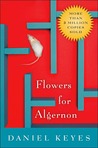
Flowers for Algernon

Flowers for AlgernonFlowers for Algernon by Daniel Keyes
My rating: 5 of 5 stars

When Charlie Gordon, a mentally disabled man, undergoes an experiment to increase his intelligence, his life changes in ways he never imagined. But will the intelligence increase be permanent.

I first became aware of Flowers for Algernon when it was mentioned in an episode of Newsradio. I forgot about it until that episode of The Simpsons inspired by it, when it was discovered Homer had a crayon lodged in his brain. I'd mostly forgotten about it again until it popped up for ninety-nine cents in one of my BookGorilla emails.

Flowers for Algernon is one of those stories I wish I would have read years earlier. It's simply marvelous. It's about the nature of intelligence and how intelligence can be divisive. It's a very emotional book.

Personally, this was a very powerful book for me. For a lot of my time in school, I was way ahead of the curve and didn't really click with other kids. As Charlie's intelligence grew, eventually surpassing even the scientists that experimented on him, his feelings of isolation increased and I felt a lot of kinship toward Charlie. His difficulties fitting in were the cherry on top of the loneliness sundae.

As Charlie's intelligence grew and he comprehended things from his past, it was hard not to feel sorry for him. Once he starts sliding backward, the book keeps getting more and more sad. Keyes doesn't mind kicking you in the emotional junk, that's for sure.

I love the way the book is written in periodic progress reports from Charlie. It's perfect vehicle to show his increase in intelligence and eventual decline. There were man-tears shed over the course of the book. I had to set the book down a few times to keep from sobbing in my cube.

Flowers for Algernon is one of those rare science fiction novels that transcends the genre. Five out of five stars.

View all my reviews

Friday, December 1, 2017

The Pedlar and the Bandit King


Kirby Crow
Self-Published
Reviewed by Nancy
4 out of 5 stars


Summary


Scarlet of Lysia is an honest peddler, a young merchant traveling the wild, undefended roads to support his aging parents. Liall, called the Wolf of Omara, is the handsome, world-weary chieftain of a tribe of bandits blocking a mountain road that Scarlet needs to cross. When Liall jokingly demands a carnal toll for the privilege, Scarlet refuses and an inventive battle of wills ensues, with disastrous results. Scarlet is convinced that Liall is a worthless, immoral rogue, but when the hostile countryside explodes into violence and Liall unexpectedly fights to save the lives of Scarlet's family, Scarlet is forced to admit that the Wolf is not the worst ally he could have, but what price will proud Scarlet ultimately have to pay for Liall's friendship?


My Review


Once again, I’m going to gripe about authors who split novels into small parts. I don’t mind so much if the entire story is written and in my possession. I really dislike waiting forever between installments, cruel cliffhangers, and unanswered questions. Furthermore, when I pay $4.99 for a story, I want it to be complete. Otherwise, I feel I’m getting ripped off.

That said, I really enjoyed this captivating and atmospheric fantasy just as much as I did when I read it in 2011.

The author has created an intriguing world, with a variety of races and ethnicities living in close proximity. Scarlet is a young pedlar who is a member of the Hilurin, an ancient and dying race. Overrepresentation in government and fear of Hilurin magic has subjected them to undisguised resentment and hostility. Despite the fact that the Hilurin are a generally reclusive people, Scarlet is restless and enjoys the life of a traveling merchant.

Liall comes from the far and frigid Rshan and is chief to a tribe of Kasiri charging merchants and travelers a toll to access a busy mountain pass. As Scarlet has been travelling the pass for free since he was 14, he resents having to pay a toll, particularly one that involves sexual favors.

Though Liall is intrigued by Scarlet’s background and attracted to his pretty face, the two men don’t get off to a good start. I thoroughly enjoyed their conflicts and the tricks Scarlet played in order to bypass the Kasiri and avoid paying his toll. 

““Calm down, it’s only a game, lad!”
Scarlet threw Liall off, wiping his mouth on his sleeve, and stood several paces away, his chest heaving and his eyes spitting hate. The silly cap had fallen off and revealed his midnight hair underneath, though his bangs and the fringe of disheveled hair around his face were grimed with the flour he had combed into it. With his legs tangling in the wide skirt and his padded bosom jiggling, he looked ludicrous, which only made the men laugh harder.
“No!” Scarlet shouted over them. “It’s only a game to you! I’ve lost work on your account. It may mean nothing to you if I go back to my family empty-handed, but I’m only a pedlar. If I don’t work, I don’t eat, and my parents are getting old. They depend on me. Unlike you and your kind, I can’t just steal whenever I need something!””

Buried under Scarlet’s deep dislike for Liall is a smidgen of attraction for the White Wolf.

“Yes, Liall was a handsome man, but a detestable one, and as compelling as he was, Scarlet would not be pressured or pushed.”

After Scarlet’s life is endangered, though, it is not too difficult to like Liall, especially as the reader gets perspectives on events from both characters and Liall is fully aware of how badly he screwed up.

I loved the slow burn of their growing relationship and their adventures, and Scarlet’s inner strength and innocence. There is a variety of interesting secondary characters and wonderfully detailed and vivid scenes from the world they live in. This story also explores friendship, family relationships, and discovering oneself. Bad things happen, Liall remains a mystery, and both men have serious challenges to overcome.

I very much look forward to joining Scarlet and Liall on their journey north.

Thursday, November 30, 2017

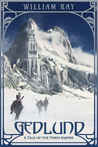
Gedlund

Gedlund (Tales of the Verin Empire #1)Gedlund by William Ray
My rating: 3 of 5 stars

Tammen Gilmot is a young educated man that joined the army as a common soldier. Tam's goal is to see the world and get experience to write a book, but he quickly realizes he likely made a mistake. Tam is heading to dangerous Gedlund, a land where the Lich King rules the living, the dead, and things more frightening than both.

Gedlund truly was not what I was expecting when I first picked up the book. It wasn't until around 33% before anything felt fantasy like. Prior to that there were fights with goblins, mentions of Elves, and talk of an undead Lich King, but nearly no real magic to be seen. The storytelling was slow for much of the early going. My biggest complaint about the story is that large portions of it felt needlessly long. I was more than 200 pages into the story before it really caught my interest.

Gedlund did display a level of intricacy that I didn't notice until further into the novel. At the beginning of each chapter there were excerpts of hearings, reports, books, letters, and other bits of information that all took place during or after the Gedlund invasion. Once I finished the book I flipped back to the excerpts as they were telling a story that details the future in an interesting manner.

Nearly the entire story was told from Tam's point of view, but at about 58% of the way into a book a new point of view character was shown. It was slightly jarring to get a new point of view character after so much of the tale being told by Tam. That being said, I'd say that one of the two additional point of view characters seemed warranted.

One thing that surprised me was the utter lack of respect everyone had for common soldiers. If a person who isn't wealthy joins the Queen's Army they are treated like criminals on a work release. People, including the majority of their families, want nothing to do with them. It's truly hard to believe anyone would sign on for so much danger when nearly everyone would hate them for becoming a regular soldier.

The characters in Gedlund were largely average, the type of characters depicted by one or two characteristics and little else. Two characters particularly stood out to me, the affable Captain Valdemar (Val) Hoskaaner and stern Corporal Glynn. Val is an easy to like character as he's largely everything a writer could want in a hero. He's kind, brave, heroic, and uplifting. Despite being the Captain, Val was in the mix of every battle and would not ask anyone to do what he was unwilling to. Glynn is largely Val's opposite, but no less brave and heroic. Tam was ok, but I would have enjoyed Val or Glynn as the main character more.

Gedlund is a solid story that's different and deeper than it's description.

3 out of 5 stars

I received this ARC from NetGalley in exchange for an honest review.

View all my reviews

The Mad Lancers

The Mad Lancers: A Powder Mage NovellaThe Mad Lancers: A Powder Mage Novella by Brian McClellan
My rating: 3 of 5 stars

Ben Styke is a war hero and commander of a garrison in Fernhollow. Fernhollow is a small relatively peaceful out of the way town until a Kez Squadron spends the night. Major Prost, The Fatrastan Governor's brother, beats a local business owner for asking him to pay his bill. Styke intervenes on the business owners behalf and the real trouble starts.

Ben Styke is one hell of a killer which for the time period is fine, but he has an equally fierce temper. I can't help but feel as though if anyone with the slightest bit of diplomatic sense had taken Styke's place when confronting Major Post that the entire book would be different. Styke acts first and thinks second and Fernhollow suffers because of it. When he's thinking he's a horrifying monster to face. Styke is the biggest hammer in a world full of nails. He can't help but smash them. Styke fights like Rocky Balboa. His face may be all bloody and he may be unable to see, but you should see the other guy.

The Mad Lancers felt somewhat unnecessary. Perhaps at some point as Gods of Blood and Power progresses I will be curious about the Mad Lancers origins and the beginning of the Fatrastan Revolution. Right now I'm uninterested by Fatrasta and it's history. Styke is a curiosity, but I largely wonder if he was the inspiration for Kez's Wardens. He's the most physically resilient and powerful non magically augmented individual in the Powder Mage universe to date.

The Mad Lancers was a solid origin story of the military group with the same name.

View all my reviews

Wednesday, November 29, 2017

ROSEMARY'S BABY BY IRA LEVIN

Rosemary's BabyRosemary's Baby by Ira Levin
My rating: 5 of 5 stars

”She opened her eyes and looked into yellow furnace-eyes, smelled sulphur and tannis root, felt wet breath on her mouth, heard lust-grunts and the breathing of onlookers.”

Nightmare? Passionate dream? Real? How could it be real? It can’t possibly be real.

 photo rosemarysbaby_zpsxdtqp8se.jpg

Rosemary Woodhouse wants a baby. She is married to an actor named Guy. They have recently broken another lease to take an apartment in the exclusive Bramford Building. Guy, who glibly uses his acting skills to spin stories, has no difficulty extracting them from the first lease to take the open apartment in the Bramford. After all, that is what Rosemary wants.

Whenever any of us look back on our lives, we can usually point to a specific moment in time when we made one decision that sent us down a pathway that led us, hopefully, only briefly, astray from the pursuit of happiness. None of us, or maybe I should say few of us, can see the future. We have to make our best guess, hopefully based on more logic than a hope of luck. The apartment at the Bramford had more Gothic overtones, detailed woodwork, and certainly a more interesting location than the other apartments the Woodhouses had looked at. Although smaller than some of the other places, having a hip apartment, especially to young pseudo-intellectuals, is much more important than a few extra square feet of space.

They should have kept the first lease on the other apartment.

I can’t help but think of Bram Stoker every time the Bramford name dances before my eyes on the pages of this book. Strange things have routinely happened in this apartment building. Unexplained, sometimes brutal, deaths have occurred too frequently to be ignored, especially if you are an inquisitive man, such as Rosemary’s dear friend Edward Hutchins. He, on further investigation, finds that there are far more sinister stories surrounding the history of that building than are known by the general public. He discourages Rosemary from continuing to live there, but she is a rational, modern woman who doesn’t believe that a building can have sinister connotations.

 photo Dakota_zpsdijghawi.jpg
Polanski used the Dakota for the outside shots of the Bramwell building.


She might ignore the past and the warnings that come with it, but she does feel flutters of unease that are based more on what can easily be quantified as primordial superstition than on any real basis of fact. Coincidences do happen and can seem ominous or alarming to someone who is already hearing the tap tap tap of paranoia on the door of reason.

Their next door neighbors are Roman and Minnie Castevet, who seem to be a well meaning, overly friendly, almost smothering, older couple. They are delighted to hear the news when Rosemary is pregnant. They suggest a more fashionable obstetrician and even a different regimen of vitamin enriched drinks than what her previous doctor had recommended. Rosemary goes along because Guy is so insistent, but the longer it goes on, the more suspicious she becomes of everyone’s motives.

Run, Rosemary, run!

I’ve been wanting to read this book for years. I’ve put off watching the famous movie by Roman Polanski because I wanted to read the book first. The story has become such a classic icon that people know the bare bones of the story without ever having read the book or seen the movie. The pacing of the book is simply a superb example of a writer who knows how to build tension and unease. By the time Rosemary is approaching the bassinet to see her baby for the first time, I was biting my knuckles, and the hackles on the back of my neck were not only raised but vibrating. I know what she is going to see, but until I read the words, I can hold off fully realizing the implications.

 photo Rosemarys20Baby_zps99ijzckj.jpg

I loved the fact that Rosemary is a reader. Two books that were mentioned that stand out were Flight of the Falcon by Daphne Du Maurier and The Rise and Fall of the Roman Empire by Edward Gibbon. I love it when books are part of the lives of the characters I read about. I’m a huge fan of Du Maurier and plan to read Rosemary’s choice soon. I was even more impressed by her taking on Gibbon. I have six volumes of Gibbon staring me in the face every time I pick my next book to read. Yes, yes, I will read Gibbon. I must read Gibbon to call myself a reasonably educated man.

Rosemary’s Baby was published in 1967, the year of my birth, and has held up superbly, certainly much better than I have. It is a quick, flashy read that will give chills and thrills to all but the most jaded modern reader.

If you wish to see more of my most recent book and movie reviews, visit http://www.jeffreykeeten.com
I also have a Facebook blogger page at:https://www.facebook.com/JeffreyKeeten

View all my reviews

Monday, November 27, 2017

Raking Up an Old Bond

Moonraker (James Bond, #3)Moonraker by Ian Fleming
My rating: 3 of 5 stars

Moonraker gets cartoonishly fiendish with its plot and villains, making this the first of the James Bond books to feel like a James Bond movie.

Pure Cold War spy bliss, this book taps into our collective fear of mass annihilation after the successfully brutal bombings of Hiroshima and Nagasaki. A war hero has offered his vast fortune, ambition and knowledge to create and construct a missile supposedly capable of defending Britain in case of attack. A test of the missile is scheduled soon and Bond is put on security detail, because something just isn't quite right with the whole situation, so thinks he and his boss M.

Iam Fleming's own spycraft knowledge from having worked in intelligence during WWII is put to good use in these books. For a genre guy, he's also a decent writer. Doesn't it seem like all public-school-trained Englishmen know how to string along a decent sentence or two?

This is the first book in the series where we get a real decent in-depth look at M. It was a pleasant and unexpected treat to get to know M more intimately and see a little bit about what makes him tick. The book in general was fun, even if the bad guy and his righthand toady were a bit over-the-top...maybe it was fun because they were soooo dastardly!

View all my reviews

Grade A Murder

A Murder of QualityA Murder of Quality by John le Carré
Reviewed by Jason Koivu
My rating: 4 of 5 stars

I haven't exactly rushed to read John le Carré's books, but whenever I've gotten around to it, I'm always glad I did!

The man can write. He's not the best. It's not all perfect, but it's damn good. The words just flow. The plots are solid. The characters feel like real people, which is sometimes a knock on mystery/crime writers. Carré spends more time rounding out his characters than your typical who-dun-it writer. Sometimes that means the action slows down and the intensity slackens, but that's all right. A change of pace is good!

A Murder of Quality goes old school. Literally, this is about the students, professors and institution of an exclusive boy's prep school. Think Eton. Tradition and having "the right stuff" are of paramount importance. The school has standards to maintain and by god they WILL be maintained!

Does that mean certain individuals, who are just too individual, need to be permanently removed like a blot might be scrubbed away? Former intelligence officer George Smiley is discreetly on the scene to discover what he can.

Smiley is a central figure in many of Carré's books. He's a likable old chap. Sensible, smart and crafty, and rather unassuming. No, not at all pompous. You root for him to take it out of the windbag or bring the snooty character down a peg. Without being overtly charming or particularly outstanding in any way, it's amazing how easily you suddenly find yourself rooting for Smiley.

This low-key character blends into the background of this equally low-key book, and yet you still pull for him from the edge of your seat by the end. A Murder of Quality is another book of quality by Carré!

View all my reviews