Wednesday, April 4, 2018

STILL LIVES BY MARIA HUMMEL

Still LivesStill Lives by Maria Hummel
My rating: 5 of 5 stars

”For the four years I’ve lived in Los Angeles, the Rocque Museum has been my workplace and my university, offering me a degree in contemporary art and the cosmopolitan life---brilliant as the blues in a Sam Francis painting, decadent as a twenty-four-karat cast of a cat testicle. Most days pass in a pleasurable blur of words and pictures. Most nights I hate to leave my little office, especially on April evenings like this, when I can look over my mess of proofs, out to the greening city, and imagine I am still happy.”

 photo Blue20Sky20Painting20Sam20Francis_zps4tkf7y1x.jpg
Blue Sky Painting by Sam Francis

Unfortunately, we can rarely appreciate how happy we are until the moment has passed.

For Maggie Richter, Los Angeles offers an opportunity to find a career where she can work with intelligent, creative, and passionate people who care about the same things she does. Any relationship with L.A. would be listed on Facebook as complicated, what with its convoluted history involving more crushed dreams than realized aspirations. It is a place where glimmering fantasies are merely shimmering shapes that never fully materialize, and luck is as necessary as talent. Maggie knows that, with a city like L.A., there is give and take, but right now she feels she may have given too much.

”What happened between us still mystifies me: how two lovers can move to a city, and the city itself wraps around them like vines, pulling them apart, pushing them toward others, until they become so entwined in their separate lives that they can no longer recognize what they once felt, or even who they once were.”

Greg SHAW Ferguson, or I guess I should just call him SHAW since he is trying to morph himself into the Prince or the Sting or the Moby of the art gallery world, drops Maggie like a bag full of fire ants and scatters her emotions in all directions. Soul mated for life? Well, at least until he meets Kim Lord.

Kim Lord has a reputation for producing edgy, progressive art, but she has been out of circulation for a while, so this new exhibition, Still Lives, that she does in conjunction with the Rocque Museum, is not only going to reestablish her reputation, but also give the Rocque some much needed publicity, as well.

Maggie needs to meet someone new.

Work is still a great way to meet potential mates because of the ridiculous amount of time we spend with people we toil with, but for Maggie, the percentages are not so good at the museum. ”Of the less than fifty percent of museum employees that are men, half are gay and a quarter are married. The other quarter tend to date cocktail straws.” Ok, I laughed out loud at cocktail straws. I’ve met a few of those California cocktail straws who seem to exist on celery, coffee, and cigarettes.

The other problem that can not be denied is that Maggie is still hung up on Greg, pardon me, SHAW. She is suffering as a swan, a penguin, or a gray wolf, all creatures who scientists tell us mate for life. The problem is Greg seems to be a bunny, a ground squirrel, or maybe a flighty chickadee.

She can’t just move on, even though she knows she should. She has some caring friends who encourage her to jump back on the horse (Maggie does have a horse incident believe it or not), and she begins the endless setup dates of friends of friends that are bandaids on a situation that really needs a tourniquet.

 photo Judy20Ann20Dull_zpsn5xnc6ll.jpg
Model Judy Ann Dull was murdered by Harvey Glatman in 1957. Glatman took several pictures of his victims tied up in numerous poses.

And then there is Kim Lord’s face everywhere, even in the art for the show. The exhibit is highlighting women who have been brutally murdered, such as Elizabeth Short, famously known as The Black Dahlia, Nicole Brown Simpson, and Judy Ann Dull. In Lord’s art, it isn’t Elizabeth, Nicole, and Judy, but Kim Lord herself who is posing in the place of the original victim.

Can you imagine being constantly reminded of your rival everywhere you turn? Rival might be the wrong word, for how can one compete with the explosive vivacity and intensity of a force of nature like Kim Lord?

Then Lord has the audacity to go missing.

Suspect #1 Greg SHAW Ferguson. That middle name comes in handy now because serial killers, terrorists, and murderers are usually identified with all three names in the newspaper. Not much farther down the list of suspects would probably appear the name Maggie Richter. No middle name necessary at this point.

It might not be the best decision for a museum copy editor to become a gumshoe, but she is driven by a need to find out what happened to Lord, free Greg, and in the process hopefully find herself again.

These art museum people who populate this novel are culturally tuned in and have many similarities to the bookstore people I used to hang out with. They are clever, jaded, cruel, caring, driven, spontaneous, but capable of still believe the world can be made a better place. They don’t want a job. They want a calling. These are my kind of people.

Maria Hummel has a light touch. She is observant and descriptive in clever ways, with word choices that bring a smile to my lips. She makes me want Maggie to do more than just solve a mystery. I wanted her to go beyond just imagining being happy. I wanted her to find a way to BE happy.

I want to thank Megan Fishmann and Counterpoint Press for supplying me with a free copy in exchange for an honest review.

If you wish to see more of my most recent book and movie reviews, visit http://www.jeffreykeeten.com
I also have a Facebook blogger page at:https://www.facebook.com/JeffreyKeeten

View all my reviews

Monday, April 2, 2018

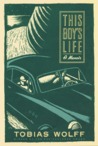
This Boy's Life

This Boy's LifeThis Boy's Life by Tobias Wolff
Reviewed by Jason Koivu
My rating: 5 of 5 stars

I don't know if I've been specifically targeting good reads subconsciously or if I've just been lucky that they're falling into my lap. Regardless, the kinda funny, a little sad, quite insightful This Boy's Life by Tobias Wolff struck the old chord with me and continued that trend. Long may it last!

As a somewhat rudderless boy myself I enjoyed this story of a somewhat rudderless boy growing up with only a transient mother and the occasional uncaring, abusive stepfather. This is a fairly typical coming-of-age tale, which in this case includes vignettes on getting into fights, making and breaking friendships, girls and their potential for a horny young man, trying to be cool, cars, guns, etc and then some.

Published in '89, this feels a whole lot older. Probably because it mostly describes things that happened in the late '50s and early 60s. It reminds me a bit of A Christmas Story in that way, just more morbid. Perhaps likening it the tv show "The Wonder Years" would be more to the mark. Yes, just think of the young Tobias as a more real, less Hollywood-chipper Kevin Arnold.

Wolff's prose is a joy to read. Every once in a while he lays down a sweet-ass line that makes ya go "hmmm". *does the Arsenio move* There were times when I got quite lost in his words. However, this is a particularly intimate memoir and there are a few intense moments that draw you right into the scene, making you hold your breath and possibly pray for a positive outcome. That's quality writing.

While I doubt this will be a five star book for everyone, Wolfe's writing style and the stories he told were utterly relatable in my mind. The book felt familiar to me and some of the aspects of my own coming-of-age story. However, even readers who can't relate personally to the content should still be able to derive a good deal of enjoyment from it.

View all my reviews

The West-Coast Block

Cinnamon Kiss (Easy Rawlins #10)Cinnamon Kiss by Walter Mosley
Reviewed by Jason Koivu
My rating: 4 of 5 stars

When I feel like a west coast version of Lawrence Block's Matthew Scudder series, I turn to Walter Mosley's Easy Rawlins series, and so far I haven't been let down.

Scudder is a white, middle-aged New Yorker, who's been through some shit.

Rawlins is a black, middle-aged Los Angeleno, who's been through some shit.

The narration of both relates a world-weary, experience-wise character with a plethora of baggage that keeps him simultaneously on edge as well as away from the edge, for who will care for their children or at least pay the child support should they act rash and get their head blown off?

Cinnamon Kiss is the tenth in the Rawlins series, which is set in the '60s. This one takes place in '66, so approximately a year after the Watts Riots and just as the hippie movement got going. Rawlins heads north to San Francisco to take on a high money case that could keep him from having to take part in a more lucrative, but more dangerous job: a heist that he would do if he had to, because his daughter is dying of a rare disease that would cost dearly to treat if it were even attempted.

As you see, Mosley is great at putting his MC's back straight up against the conflict wall. Human emotion and humanity's wide-ranging behavior infest everyone who walks through his scenes. There's barely a stiff to be found, unless we're talking about the dead kind.

I loved the look back at the Haight-Ashbury scene. I enjoyed how Mosley portrayed the older, war vet Rawlins as completely new to and somewhat baffled by these long-haired, free spirits. The mystery and detective work Rawlins is tasked with is quite contentious and plays hard upon the character's moral indignation. At times the book slides into heated romance that gets slightly pornographic to the point of feeling a bit out of place, but really it's just taking the old detective fiction of the '40s and '50s one step further than they were already treading.

Every time I finish one of Mosley's great books I always end up telling myself, "I need to read more Mosley!"


View all my reviews

Sunday, April 1, 2018

Eats, Shoots & Leaves

Eats, Shoots & Leaves: The Zero Tolerance Approach to PunctuationEats, Shoots & Leaves: The Zero Tolerance Approach to Punctuation by Lynne Truss
My rating: 4 of 5 stars

Eats, Shoots & Leaves: The Zero Tolerance Approach to Punctuation is a humorous book about punctuation. Who knew punctuation could be so entertaining?

As someone who writes a fair bit (half a million words on Goodreads alone), I know my way around a sentence. However, when this popped up on Amazon on the cheap, I was powerless to resist, like my dog on a piece of cat shit.

In Eats, Shoots & Leaves, Lynn Truss takes us on a Bill Bryson-esque odyssey through a forest of commas, apostrophes, colons, semi-colons, and exclamation marks. Incidentally, did you know an exclamation mark is called a dog's cock in some circles? I did not.

Truss' writing makes things like how to properly use an apostrophe entertaining, using amusing phrasing and real life examples, offering up rules like "Don't use commas like a stupid person." It isn't all laughs, however. I normally avoid colons and semi-colons but I feel like she's given me a greater understanding of them.

There's not a whole lot more to divulge. It's no surprise this short but sweet book is a best-seller. It's very accessible and as entertaining as a book on punctuation can be. For grammarians and writers alike, Eats, Shoots & Leaves is a fun yet useful book about fairly boring subject. Four out of five stars.

View all my reviews

Friday, March 30, 2018

Paperbacks From Hell: The Twisted History of '70s and '80s Horror Fiction


Grady Hendrix
Quirk Books
Reviewed by Nancy
5 out of 5 stars


Summary


Take a tour through the horror paperback novels of the 1970s and ’80s . . . if you dare. Page through dozens and dozens of amazing book covers featuring well-dressed skeletons, evil dolls, and knife-wielding killer crabs! Read shocking plot summaries that invoke devil worship, satanic children, and haunted real estate! Horror author and vintage paperback book collector Grady Hendrix offers killer commentary and witty insight on these trashy thrillers that tried so hard to be the next Exorcist or Rosemary’s Baby. It’s an affectionate, nostalgic, and unflinchingly funny celebration of the horror fiction boom of two iconic decades, complete with story summaries and artist and author profiles. You’ll find familiar authors, like V. C. Andrews and R. L. Stine, and many more who’ve faded into obscurity. Plus recommendations for which of these forgotten treasures are well worth your reading time and which should stay buried.


My Review


This book was fantastic!

It covers horror fiction from the 70’s through the 80’s, with a little glimpse of the early 90’s.

Eight easy-to-read chapters with clever titles like “Hail, Satan,” “When Animals Attack,” “Creepy Kids,” and “Real Estate Nightmares,” explore different themes within the horror genre and the cultural anxieties prevalent at the time these books were written.

The writing was light, humorous, informative and imbued with a deep love for the horror genre.

“Sometimes a firm spanking is enough to drive the Devil out of a teenager, but usually they have to be shot in the face. Dogs are good and often form armies to assist humans fighting Satan, whereas cats can go either way.”


Back in the 70’s and early 80’s, I was still attending church regularly, so you can imagine how conflicted I felt reading books about the Devil. They were fun and addictive and I had to be resourceful about finding good hiding places for them so the evil eyes on the covers wouldn’t terrify my grandmother. I got bored with them quickly, though, and later on had more fun reading about creepy kids and nature going wild.

Some of the covers in “Real Estate Nightmares” look very familiar. I’m sure those books graced my shelves at one time, yet I have no memory of reading them. Which is surprising, really, since high crime and good friends leaving for the safer suburbs was a huge concern of mine. Then Bernard Goetz expressed the rage felt by New Yorkers tired of crime by shooting four thugs who wanted to rob him. My dad and I proclaimed him a hero, while my mom and brother felt he may have overreacted. By the time the crime rate plummeted in the city, I was already gone.

I appreciate the high quality of this book and plan to buy a copy to keep on the coffee table. It has a durable cover, thick pages and eye-catching, colorful images. This brought back a lot of pleasant memories for me and makes me want to seek out the titles I haven’t read and reread the ones I enjoyed.

Here’s the list I’m aiming to read before I die:

Thursday, March 29, 2018

The Storymaster

The Storymaster (The Dragon Masters)The Storymaster by Vincent Trigili
My rating: 2 of 5 stars

The Storymaster is the keeper of tales of old which he primarily shares with his great grandchildren now. When they ask for a story he tells them of David's Last Ride, a tale of the last of the dragons and their riders.

The Storymaster is somewhat underwhelming. It tells a story within a story that neatly ties back in hopes to appeal to readers. Unfortunately the last of the dragons and whatever secrets they may hold truly weren't all that interesting to me. It seems likely the main series stories will be different, but this short story doesn't seem to add anything overly important.

View all my reviews

Tuesday, March 27, 2018

Fabius Bile: Clonelord By: Joshua Reynolds

Fabius Bile: Clonelord (Warhammer 40,000)Fabius Bile: Clonelord by Joshua Reynolds
My rating: 5 of 5 stars

I think Fabius might be my favorite character in this universe. I am pretty convinced he is House M.D. in space. Good and bad is relative to him and THE ONLY THING..that means a thing is his goals.

I really like his crew of characters and honestly most of the Emperor's Children are kinda hard to like. But this story is great and I loved it more than the first book. Also it had a bit of a twist that I really didn't see coming but it cemented my like of the character.

good stuff (I am slowly working my way back up to longer reviews, be patient with me)

View all my reviews

Carcharodons: Red Tithe By: Robbie MacNiven

Carcharodons: Red TitheCarcharodons: Red Tithe by Robbie MacNiven
My rating: 5 of 5 stars

Yeah, I am still on my Warhammer kick..

THIS is awesome, I love the fact that the Carchardons are a "different" chapter, they really have taken on the characteristics of their namesakes (sharks). These soldiers are really as alien as you would expect and their conflict with the Night Lords is a brutal affair.

I like the author's method of showing them at war, they aren't supermen blowing through enemies, they are a blood wave force of death, silent destruction.

Even if I stop my WH40K trip, I will continue diving into the tales of this chapter, Highly recommended.

View all my reviews

Monday, March 26, 2018

A Short Reacher

Not a Drill (Jack Reacher, #18.5)Not a Drill by Lee Child
Reviewed by Jason Koivu
My rating: 3 of 5 stars

I think Lee Child wanted to write about virginal Canadian woodlands, so he penned this quickie. More on that later.

You're probably familiar with Jack Reacher the character by now, if not via the books, then probably through Tom Cruise's movie version. My wife would watch an in-house tech-vid on widget production if it starred Cruise, so I've seen the 2012 Jack Reacher movie a few times by proxy. It just plays in the background as part of an all-disaster-and/or-zombie-flick marathon looped forever while she sits on the couch -her command center- getting the editing done and admin work caught up on her wedding photography business. Brain candy movies are the best background noise for the work environment! And, as far as I can tell, that's what this Reacher stuff is, brain candy. That ain't a bad thing!

Having heard all about these books and skimmed a few, I thought I'd test the waters by dipping my big toe in the shallow section. So far, not bad! I didn't expect much, after all, Not A Drill is essentially a long short story and there's not much time to get a time to get much done in a mere 50 pages.

As mentioned before, in this one Child spends much of his time describing a primeval Canadian forest. The descriptions are so lush you can almost smell the clean, verdant air. I love a good hike in the forest, so I was all right with the very little action that takes place in Not A Drill. Almost nothing happens. There's a mysterious lock-down on the woods as the military moves in and tries to move everyone else out. Reacher can't help himself. He just has to stick his nose in there and find out what's up.

This was a nice baby step into the series. I'll gladly take another.

View all my reviews

Spade Tells a More Than Almost Interesting Story

Almost InterestingAlmost Interesting by David Spade
Reviewed by Jason Koivu
My rating: 4 of 5 stars

I'm a sucker for a comedian's autobiography. I figure, even if their life turns out to be uninteresting, at least there's a good chance I'll get a laugh or two out of the book. David Spade hasn't lived the most exciting life and he may not be the funniest dude in the world, but that didn't stop him from making this a fairly enjoyable book.

I read this on the tails of Tobias Wolff's excellent This Boy's Life and they're both similar in that each memoir contains estranged fathers and strange stepfather's. But that's pretty much where the similarities end. David Spade is funny, imo, but he's no writer. He lacks Wolff's eloquence, but hey, so do most people!

With that being said, I listened to him read his own book and can tell you, the man can perform. He outshined Amy Schumer's disappointing autobio, which I listened to a few months back. It wasn't so much that the content was necessarily better, rather it was the delivery. He's able to sell his stories and enliven his bits with a punch of inflection and energy in just the right place. That's important, because otherwise his snarky attitude and slacker's voice could've sunk this book.

Almost Interesting breaks no new ground in the memoir genre. It starts at the beginning. however, Spade is smart to quickly rush through his early years, picking out only the most poignant episodes of his childhood. Then he dwells on his formative adolescence for a bit longer. But this is the thing that kills me...Almost immediately he starts in about "chicks" and "getting laid". While he is quite self-aware and not a total creeper, this becomes a recurring topic from the pages regarding childhood right up to the end of the book.

I'm not surprised by the above. I happen to have first-hand knowledge of Spade's attempts with "the ladies". Late one night at a Taco Bell in Beverly Hills round about '97 or '98, my buddy and I were getting our taco fix on when in walked David Spade. He had a baseball cap pulled way down over his eyes in an attempt not to be noticed...as celebrities do, and thus get noticed. The huge bodyguard shadowing him didn't help his covert operation. I noticed him right off, but didn't bother him. In fact, nobody did even though a few were pointing and nodding, so he probably would've got in and out with no fuss like he seemed to wish to, except that decided to make a play on this gorgeous, 6 foot, all dolled up woman over at the hot sauce island. She barely looked at him before taking off. The bodyguard's demeanor never changed through out, so either he was a true professional or he'd seen this scene played out a few times already. Ah, poor David...you sinner. (Yes, that's a light Tommy Boy reference.)

Speaking of Tommy Boy. It's one of my guilty-pleasure favorites. Joe Dirt, too! Yes, they're "stupid" brain candy, but man, there some genuinely funny moments in both. So, part of my desire to read this bio was to hear a little backstory on both movies, not to mention his time on SNL. Spade delivers with some solid anecdotes here. I thought he might dwell on Chris Farley's tragic death and its affect on him, but Spade proves to be above playing for sympathy on that account. The book makes clear the deep impact Farley's friendship had on him, but he draws the line at revealing too much emotionally personal info.

If you're not a fan of Spade's personae, this won't change your opinion and you might as well steer clear. For all other's, I can recommend Almost Interesting and suggest listening to this surprisingly fun audiobook.

View all my reviews