Showing posts with label England. Show all posts

Monday, September 18, 2017

Old Grump Treks Across the UK

The Road to Little Dribbling: Adventures of an American in BritainThe Road to Little Dribbling: Adventures of an American in Britain by Bill Bryson
Reviewed by Jason Koivu
My rating: 4 of 5 stars

For all its stogy, stoicism and unspoken rules of social etiquette, England is a peculiar place full of strange people doing odd things. Many and more are found here in The Road to Little Dribbling: Adventures of an American in Britain.

American-born writer Bill Bryson has been living in England so long he's written a sort of 20th anniversary sequel to his popular Notes from a Small Island. While The Road to Little Dribbling may sound like more of the same, Bryson made sure to steer clear of the sights he visited the first time around.

Following very loosely what he has dubbed the Bryson Line...

description

...the longest straight line through Great Britain that doesn't cross the sea, Bryson samples a bit of the countryside and a little of the city life in the heart of England and Scotland. It's often a delightful and upbeat view of the land and its people. History buffs and jolly old England enthusiasts will find a lot to love here.

On the other hand, this is not a book for the young. Middle-aged, part-time curmudgeons will find a kindred spirit in Bryson, who gets grumpy over the littlest of nuisances:

"Out of the corner of my eye I noticed a little oik of a kid about 13 years old in a Chelsea shirt at a bus stop eating a bag of crisps. When I came back a few minutes later the boy was gone and the crisp packet was on the ground. There was a bin three feet away. It occurred to me, not for the first time, that if Britain is ever to sort itself out it is going to require a lot of euthanasia."

He's that old greybeard in the group that's always asking "but why?" (much like a 5 year old actually) and who will argue a pointless point to everyone's annoyance and just won't let it go.

But for the most part, Bryson likes England and in this book he mostly likes what he sees, so the reader is treated to a lovely tour of a quaint country with a fairly congenial tour guide in The Road to Little Dribbling. Recommended!


View all my reviews

Monday, December 12, 2016

Medieval House-keeping

The Empty Throne (The Saxon Stories, #8)The Empty Throne by Bernard Cornwell
Reviewed by Jason Koivu
My rating: 3 of 5 stars

Like books four and five in the GoT series, much of this book feels like housekeeping. Perhaps I should say, hallkeeping or castlecleaning.

I thought maybe in The Empty Throne our half-Dane, half-Saxon hero Uhtred of Bebbanburg might finally regain his lands and castle, but instead the story veers away from what it seemed to be leading up to and turned its focus on the bigger picture. That's annoying, but perhaps it's for the best. The get-my-castle-back storyline was getting stale. Besides, if he got the castle back, that would be the end. In the very least, it would take a lot of wind of out this series' sails.

Like any and all Bernard Cornwell novels, there's fighting and at least some skirmishes, but this one was low-key compared to others in the series. There's a lot of discussion. Hell, there's essentially what adds up to a court room drama at one point. The fighting that does take place feels inconsequential to the bigger picture.

The book starts with a narration by Uhtred's son, which is done to keep up the suspense created at the end of the last book. However, I think Cornwell might've had a two-fold reason. I believe he wanted to give the son a try-out in the lead role. After all, Uhtred's no spring chicken. If Cornwell wants to keep this series rolling, sooner or later he's going to need a replacement for his hero. I know I'm ready for a change.

View all my reviews

Monday, February 9, 2015

Yorkshire Goes A Bit Dark

All Things Wise and WonderfulAll Things Wise and Wonderful by James Herriot
Reviewed by Jason Koivu
My rating: 3 of 5 stars

Shit gets real this time around, all too real.

I was not thrilled with the start of All Things Wise and Wonderful, because from the get-go we learn that James Herriot is going to be writing about his wartime experiences. Frankly, I wanted more of the same - warm and fuzzy stories with a bit of low-tension drama about life as a country vet in the north of England as dished out in the first two books of this series.

description
Vet/writer Alf Wight, aka James Herriot

However, instead of going fully into war stories, which would've been fine I suppose, what we get are remembrances of past vet calls mixed in with brief and mostly unsatisfactory tales of training for the Royal Air Force. The vet stories are told as flashbacks, which takes some of the steam out of them, while the RAF stories never really get off the ground.

Just the same, if you've read and enjoyed Herriot's work up to this point, don't let my complainy-pants squawking deter you from diving headlong into All Things Wise and Wonderful. You'll find plenty of enjoyment in the tales Herriot doles out for this volume. Warning though, the overall tone is more somber in this book compared with the first two. I guess that can't be helped, what with WWII being a focal point. But I must say I was blindsided by the story that ended (view spoiler). That was a slap in the face after a lovely day out on the Dales!

Tuesday, February 3, 2015

Midwife Crisis

Call the Midwife: Farewell to the East End by Jennifer Worth
2009
Reviewed by Diane K.M.
My rating: 4 out of 5 stars


Blimey, this memoir was bleak. 

Jennifer Worth's third book about her years serving as a midwife in London's East End in the 1950s was much darker than the first two. It was well-written and the stories were all compelling, but it covered some serious stuff, including babies who died during delivery, botched abortions, children killed by tuberculosis, a father who prostituted his daughter on a ship, and the Contagious Diseases Acts.

I need to pause here to explain how horrified I was to hear about the Contagious Diseases Acts, which was passed by British Parliament in the 1860s. It allowed police officers to arrest any girl or woman they suspected of being a prostitute and to check her for venereal disease. Reportedly some officers took full advantage of this and basically raped the women while doing their "exam." There is such a story in this book, and it is dark, man.

"Any woman of any age could be subjected to this horrifying treatment. At the time the age of consent was thirteen, so a child of that age could legally be regarded as a woman. The Contagious Diseases Act affected only working-class women, because upper-class women never walked in the streets alone, but would be accompanied or in a carriage. Men of any age or class were exempt from arrest and examination, even if caught in the act of soliciting, because the Act of 1864 was specifically designed for the control of women."

The Acts galvanized the women's movement in England, and mercifully the CDA was repealed in 1886.

The case of the sea captain who encouraged his daughter to sleep with every man on ship, including himself, was also shocking. The midwives learned about her because the girl had become pregnant, and good ol' Chummy was the one who helped deliver the baby on board the vessel. The story had a nice coda because that night Chummy met an officer she eventually married. 

There are also lively stories of Sister Monica Joan, who discovered the joys of taking a cab ride instead of the bus, and we learn about the woman who runs the local pub. The end of the book discusses how the neighborhood changed in the 1960s, and why the midwives and nuns eventually closed their practice. 

"One by one the docks closed; air freight had replaced the old cargo boats, and the dockers became redundant. At the same time demolition of bomb-damaged and slum property started, and people were rehoused out of London in the new towns. For many this was life-shattering, particularly for the older generation who had lived their entire lives within a radius of two or three streets, close to their children and grandchildren. The rehousing programme tore apart the extended family, which had provided the unity and been the strength of East End life for generations."

I listened to all three of Jennifer Worth's Midwife memoirs on audio, read by Nicola Barber, who was an excellent narrator. This third book is filled with a lot of history and social issues of the day, which was interesting, but I had hoped for a little lighter fare. I would still recommend it, just be prepared for some sad tales.

Monday, January 26, 2015

Jerk Of Arc

The Red Queen (The Cousins' War, #2)The Red Queen by Philippa Gregory
Reviewed by Jason Koivu
My rating: 5 of 5 stars

Now is the Spring of this woman's discontent...
Cause, I mean, talk about bitter!

In Philippa Gregory's The Red Queen the prominent historical figure from the War of the Roses period and eventual mother of King Henry VII, Margaret Beaufort is portrayed as one who felt God had destined her for a higher calling, of which she was robbed, and for which she was forever after embittered.

The story follows Margaret from when she was a little girl daydreaming about becoming the next Joan of Arc, an English version of the virginal saint. Historical fiction writer and avid researcher Gregory gives us a probable glimpse into what it might have been like to be a very young, very highly placed lady within the court of England during the 15th Century. A very young lady who is contracted to marriage before she can speak, who is married off by the age of 12 to a man twice her age and who is made to give birth - preferably to a male heir - by the tender age of 13, there is no place in such a girl's life for dreams of Joan of Arc.

While the crux of the story hinges upon the trials of Margaret, it is the War of the Roses, fought between the Houses of Lancaster and of York that moves the action forward in this tale. Without the war, the narrative would bog down into a long-winded list of Margaret's complaints. At times they take a tiresome turn nonetheless. However, Gregory does do an excellent job of building characters, whether it be the complex Margaret or the light but exacting hand with which the author draws up more two dimensional players.

I say "players" because while reading this, one can't help but think of the Shakespeare play King Richard III, being that Richard - that son/sun of York - is such an important figure in this tale. You may remember Richard is not portrayed kindly in the play. In fact, because of that play he is often lumped in with some of the more reviled historical figures ever to soil the Earth. In The Red Queen Richard is given somewhat of a reprieve. Don't get me wrong, you'll still be rooting against him, however, Gregory removes some of the heavy load of pure evil that Shakespeare dumped upon his poor, humped back.

Speaking of dual natures, Margaret herself is not always seen in the best of lights. As a story's heroine, there are times where she is hardly likable. Kudos to Gregory for maintaining character, and thus story, integrity. Tell it like it is and let the chips fall where they may! Sometimes that makes for the best fiction, and The Red Queen, as a historical fiction, definitely ranks right up there!


Rating: 4.5 stars

View all my reviews

Monday, December 29, 2014

Glorious Viking Gore

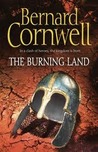
The Burning Land (The Saxon Stories, #5)The Burning Land by Bernard Cornwell
Reviewed by Jason Koivu
My rating: 4 of 5 stars

If reading this series doesn't make you wanna scream like this... http://ledzeppelin.alexreisner.com/so... ...then I just don't know what will!

The Burning Land continues Bernard Cornwell's bloodthirsty, battle-heavy and viciously violent viking saga.

England is still broken up into pieces. The Danes are threatening to overrun the land. Saxon King Alfred (later known as Alfred the Great) was holding on to Wessex and holding out hope of one day uniting the entire country under his banner. But needs the help of fighting men like our anti-hero hero Uhtred of Bebbanburg.

Though he's a pagan and acts like a Dane, Uhtred is actually a Saxon, who was raised by those viking Danes. He reluctantly works for Alfred, even if the piously Christian king and all his self-righteous priests get up Uhtred's nose. He's a fierce, skilled fighter who doesn't mind getting his hands dirty and his nose bloodied. It's what he's good at. However, he doesn't like to be anyone's lapdog, so any chance he gets, he heads north to threaten the impregnable fortress at Bebbanburg, his rightful seat of power, currently held by his usurping uncle.

Cornwell is a dab hand at crafting this particular character. You'll find him in the long-running Sharpe series as the titular main character. Cornwell is also quite adept at writing very exciting and highly realistic historical fiction. You're in capable hands on both counts. I especially like that he includes afterwards of real history information at the end of these books to let you know the true story behind the fiction. In this one he admits to falsifying the character of a historical figure to fit his novel and goes on to give a recommendation for further and more correct reading on said figure. That's a conscientious writer for you!

The Burning Lands is a particularly tight volume in this series. Each scene is meaningful and the action feels fast. Any lapse in the forward progress is a joy to read as Cornwell does his best to paint vivid settings and to portray all, from Saxon to Dane, man to woman and peasant to King.

View all my reviews

Monday, December 15, 2014

Pub Quiz-Type Info About Pubs

A Dictionary of Pub, Inn and Tavern Signs (Reference)A Dictionary of Pub, Inn and Tavern Signs by Colin Waters
Reviewed by Jason Koivu
My rating: 4 of 5 stars

That title, A Dictionary of Pub, Inn and Tavern Signs is very specific and very correct. That's exactly what this book gives you, an alphabetically arranged list of pub names and words most commonly associated with the trade. So, while enjoyable if you're interested in the topic, this is not super exciting reading.

It's hardly academic either. Just the same, it's thorough enough for the casualness of the topic. I just wish some of the entries were a bit more detailed:

Custom House Found in many coastal towns, these are pubs that were formerly the local customs officer's headquarters.

Soooo, "Custom House" is named after the custom house. Got it.

Some are more detailed, but only slightly:

Cutlers Arms As the name suggests, this sign relates to the cutlery trade and is particularly associated with the Sheffield area, although also found elsewhere.

So, "Cutler's Arms" is in regards to cutler's arms and it's found...in places. Wow.

Jumping off the snark-wagon for fairness's sake, the reader is occasionally given a good, chunky entry like:

Green There are a multitude of green people, animals and objects named on inn signs. The Green Man, a pagan symbol, shows the face of a dead man with greenery growing from its mouth. It symbolizes life springing from death. Jack in the Green is a living personification of the same figure, though some signs show Robin Hood. Green Man and Still is thought to have indicated a publican who was also a herbalist. Uniforms are commonly depicted, as in the Green Coat Boy, an inmate of a home for fatherless children, as opposed to orphans who are remembered in the name Grey Coat Boy. Military connections are found in Green Beret, Green Howard, named after the regiment, Green Jacket and Royal Green Jacket. Quite different are Green Carnation, a reference to the flower habitually worn by Oscar Wilde, Greendale Oak, a large oak tree in Mansfield that had an arch cut through it to accommodate a roadway, Green Dragon, Green Gables, Greengage, the plum, Green Gingerman, a reference to local trade in green ginger, Greenhouse, Greenmantle, a novel by John Buchan (1875-1940), Green Parrot and Green Tree, a colloquial name for the oak.

Entries such as that makes me, a chronic penny-pincher (or pence-pincher in this instance), cringe a little less when I think of the ten pounds I spent on this thing while on vacation with my wife in a little shop in The Shambles in York, UK.


Ratings Note: 3.5 stars


* * * Appendix: Personal Pub Favorites! * * *

Ye Olde Cheshire Cheese
description
descriptiondescription
"Ye Olde Cheshire Cheese is a public house in the City of London, England, located at 145 Fleet Street, on Wine Office Court...at this location since 1538...rebuilt shortly after the Great Fire of 1666...The vaulted cellars are thought to belong to a 13th-century Carmelite monastery which once occupied the site. The entrance to this pub is situated in a narrow alleyway and is very unassuming, yet once inside visitors will realise that the pub occupies a lot of floor space and has numerous bars and gloomy rooms." - Wikipedia

The Cheese is hands down the funnest pub I've ever been to. It's like a playground for pub enthusiasts. On your first visit you'll find it difficult to...well, find. The pub is on a main street, but down a dark, narrow and unassuming alley. Once inside you can actually get lost. Do wander around and investigate the many catacomb-like nooks and numerous floors, especially the crypt-like bar below.

The Golden Fleece
description
"The Golden Fleece is an inn in York, England, which has a free house pub on the ground floor and four guest bedrooms above. It was mentioned in the York City Archives as far back as 1503.[1][2] The inn claims to be the most haunted public house in the City of York." - Wikipedia

Ye Olde Fighting Cocks
description
descriptiondescription
"Ye Olde Fighting Cocks is a public house in St Albans, Hertfordshire, which is one of several that lay claim to being the oldest in England." - Wikipedia

Cocks...heehee!

View all my reviews

Monday, November 10, 2014

Go To England, Visit St. Albans, Thank Me Later

The St. Albans MapguideThe St. Albans Mapguide by Michael Middleditch
Reviewed by Jason Koivu
My rating: 5 of 5 stars

I am in love with these guidebooks and no one's going to stop me marrying them!

Michael Middleditch produced only a few of these very informative Mapguides and they were mostly of major destinations: London, NY, Paris, and Amsterdam; all except for this one. St. Albans.

descriptiondescription

Where the F is St. Albans?! You'll find it just north of London, about a 30 minute train ride, and thus it makes for a very manageable and delightful day trip out of London.

Why delightful? Well, for tourists it packs in, pound for pound per square mile, the most sights of interest you're likely to see outside of London. It's great for walking about in circular routes that will take you by the famed cathedral and historical pubs like...

Ye Olde Fighting Cocks (tee-hee!), one among a handful which are vying for the "oldest pub in England" title.
description
(I love that one of the top googled pics of this historic pub includes my brother [seated, center] and my mom [rightside, in blue top, facing away])

...as well as the not-to-be-missed Roman ruins (like a very mini Colosseum and better than anything I saw in London!) and their accompanying museum (informative for adults and kid friendly too).

description

If you go, try to include a walk along Fishpool Street with its dangerous-if-you're-drunk sidewalk, something to be wary of for visitors of excellent pubs like the Red Lion.

St. Albans is a marvelous little place that is more than just a postcardy photo-op. It's a living, working town that combines a bit of fun for vacationers who also want to see - maybe not the work-a-day world of Bedford, Bethnal Green or Slough - but something closer to a slice of England's reality beyond the holiday set. Middleditch's booklet does a bang up job of encapsulating the town's sense of community, what it has to offer and just overall illuminating this little patch of England.


View all my reviews

Monday, April 21, 2014

A Suspect Title, But A Great Kids Book!

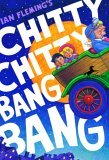
Chitty Chitty Bang BangChitty Chitty Bang Bang by Ian Fleming
Reviewed by Jason Koivu
My rating: 4 of 5 stars

"I'm not interested in your Shitty Shitty Gang Bang," is essentially what I told my bestbud back in elementary school when he was trying with all his ernest might to make me see the light and enjoy the wholesome, family-fun goodness that is this book. This was at a time when he was listening to Weird Al and I was learning how to bang my head to Quiet Riot.

Fast-forward about 30 years…I've finally read Chitty Chitty Bang Bang and I see the light! This book is delightful! There's kooky characters, a fast car, magic, old timey British thugs, mysteries, adventure and spelunking!

Basically this book is made up of a handful of short stories cobbled together in linear fashion so that they read like one continuous novel. That is one of the reasons I hesitate to give this a full 5 stars. That and the plot is not always as riveting as it could be. Even looking at it from the perspective of my younger self, I know at no age through out my life would I have been 100% satisfied with the ease with which the Potts, that enthusiastic family of wackos who own Chitty Chitty Bang Bang, get out of pickles and tight jams. The deus ex machina of a magic car makes it all too easy.

Nonetheless, these are fun tales and I think in a year or two I may attempt reading them to my young niece, who will no doubt say to me, "I'm not interested in your Shitty Shitty Gang Bang."