Food: A Love Story by Jim Gaffigan
2014
Reviewed by Diane K.M.
My rating: 3 out of 5 stars
Warning: Do not read this book when you are hungry. The discussions of pizza, cheeseburgers, bacon, doughnuts, steak, and all kinds of yummy foods could break your diet.
Comedian Jim Gaffigan loves food and talks a lot about it in his standup routines, including his popular bit on Hot Pockets. This fun book talks about the different foods he likes and dislikes, and his favorite restaurants around the United States. I was tickled to note that I had eaten at a few of the places he mentioned, and filed away other recommendations for future trips.
He has a good sense of humor about being overweight, and says he never takes food or restaurant advice from a skinny person because they aren't passionate enough about food to overdo it. He also takes issue with the dieters' claim that Nothing tastes as good as thin feels. "I for one can think of a thousand things that taste better than thin feels. Many of them are two-word phrases that end with cheese. Even unsalted French fries taste better than thin feels."
I think my favorite section in the book is when he shows a map of the U.S. and has divided it into different food sections, such as Coffeeland in the Northwest, Seabugland in the Northeast, Steakland in the Plains, Wineland in Northern California, Mexican Food land in the Southwest, Super Bowl Food land in the Midwest, etc. He reserves the distinctive name "Food Anxiety Land" for New Orleans, because the food there is so good and he whenever he visits he panics because he feels he never has enough time to eat enough of their delicious food.
I also liked that Gaffigan doesn't call himself a foodie; instead, he prefers the term "eatie."
"I don't have anything against foodies. I appreciate their love of food and I envy their knowledge and culinary escapades, but I'm generally satisfied with what I've been eating. Foodies seem to be on a never-ending search for new restaurants and interesting dishes. I don't have an insatiable desire to discover what makes something taste good or to find exotic combinations ... There is plenty of regular food I still want to enjoy."
This is an amusing and enjoyable book and I frequently laughed out loud while reading it. I recognized some parts from his standup routine, but it was still funny in print. My one criticism is that it is a bit long for a humor book — it's more than 350 pages. It was my mistake that I tried to read it straight through, when it's better to give comedy a little time to breathe, like wine. Trying to gulp a humor book down in one sitting means it will get repetitive and taste like slop. However, I would still recommend this to anyone who likes Gaffigan's humor or who also likes American food; just don't try to imbibe it all at once.
Now if you will excuse me, I need to go order some pizza.
Tuesday, February 17, 2015
The Secret History
The Secret History by Donna TarttMy rating: 4 of 5 stars
When Richard Papen joins an exclusive group of Classics students, he has no idea of the secret world of drugs, alcohol, and violence he's about to be thrust into. When one of the students winds up dead, can the rest cope or destroy themselves?
Yeah, it sounds like the crime books I usually read but it's a whole lot deeper than that. This is one of those Big Important Books, full of things like themes and literary references. Like Jim Thompson getting the sauce under control and writing about college kids.
While Donna Tartt tarts it up a bit, the plot is straight out of the noir playbook. Rich kids get in trouble, cover up a murder, commit another murder to cover up that one, and continue down the path of self-destruction. Fortunately, Donna Tartt can write the shit out of things and the whole is much greater than the sum of its parts.
The characters and the writing set it apart from many similar books. The characters were a well-realized bunch of overly-privileged college brats and their disintegration was very well done. Tartt's writing was several notches beyond what I expected.
That being said, I did not love this book hard enough to crush it to death against my manly chest. While the writing was good, it took forever for things to actually happen. I thought it was well done but I'm not precisely sure I actually liked it. Another thing about it that didn't set my world on fire is that I've recently read The Likeness and felt it was a little too soon to read about such a similar group of asshole college kids.
All things considered, I guess I was enraptured enough to give this a four. It was good but probably overwritten for what it was.
View all my reviews
Monday, February 16, 2015

Reviewed by James L. Thane
Five out of five stars
This is a classic hard-boiled novel, the first book in a series that would ultimately run to twenty-four books published between 1962 and 2008. The series featured a brutal, smart, amoral professional criminal known only as Parker who worked with crews of other professional criminals and usually focused on robbing banks, armored cars or other such targets. Parker was not a professional killer, although he never balked at killing anyone who got in the way of the job at hand.
He also never hesitated to kill anyone who double-crossed him, and as the book and the series open, Parker has been double-crossed in the worst possible way, shot by his wife at the end of a job and left for dead. The wife then ran off with one of Parker's partners from the job, along with Parker's share of the loot. Needless to say, Parker, who luckily survived the attempt on his life, is not in a good mood when we first meet him, and Stark's introduction of his protagonist ranks as one of the best in crime fiction.
Pissed at the world and determined to get revenge, Parker is stalking across the George Washington Bridge into New York City, a "big and shaggy" man, with "flat square shoulders and arms too long in sleeves too short....His face was a chipped chunk of concrete, with eyes of flawed onyx. His mouth was a quick stroke, bloodless."
"Office women in passing cars looked at him and felt vibrations above their nylons....They knew he was a bastard, they knew his big hands were born to slap with, they knew his face would never break into a smile when he looked at a woman. They knew what he was, they thanked God for their husbands, and still they shivered. Because they knew how he would fall on a woman in the night. Like a tree."
Parker has traced his wife to New York and arrived there virtually penniless. He's determined to deal with her and, through her, to find the partner who betrayed him and stole the money that was Parker's share of the job they had pulled.
It won't be easy, and complications ensue, one after the other. But Parker will not be deterred, even when he learns that the man who betrayed him has used his money to repay a debt to the Outfit and is now protected by them. To get his revenge, Parker will have to take on the Outfit all by himself. But what the hell does he care; he won't rest until he gets what he's owed.
Richard Stark is the pen name of Donald Westlake, a prolific writer who is otherwise best known for the comedic Dortmunder crime novels that he wrote under his own name. But the Parker novels are really his crowing achievement. They are taut, spare stories cut close to the bone and without a wasted word. And there's absolutely nothing funny or redemptive about them. Parker's is a tough, brutal and dangerous world; there's no room for any sentimental nonsense and watching him make his way through that world is one of the most enjoyable experiences in the world of crime fiction.
As a side note, this book was ultimately filmed twice, once as "Point Blank," in 1967, starring Lee Marvin as Parker, and again in 1999, as "The Hunter," with Mel Gibson in the role. The Lee Marvin Version is much the better of the two, and Marvin captures the character about as well as anyone could.
Going Back To The Old School
Players Handbook by Gary GygaxReviewed by Jason Koivu
My rating: 4 of 5 stars
Tired of being a boring accountant or a lowly sales rep at a big box chain store? The cube farm got ya down? Well, open up the Players Handbook and turn yourself into a wizard or assassin! Come on, grow a pair!...A pair of pointy ears and become an elf! Sick of being 7' tall? Try a dwarf's skin on for size! The sky's the limit when you jump into the world of Dungeons & Dragons!
Okay, let's be honest, your own imagination is the real limit. TSR, the company that made D&D, put out this game and created books like this one, which gave gamers pretty much all they'd need to create worlds of fantastical fun. How far you took that fun and ran with it was entirely up to you.
The Players Handbook was the book the players used to create their characters in preparation for the game. Honestly, I had just as much fun creating characters as I did in playing the actual game. You were giving birth to potential, creating an alternate you! How exciting is that?!
Character creation usually started with the player picking what class (profession) and race they wanted to be. Let's start with race...
At this point in the game's history, round about 1980, D&D had on offer humans, elves, dwarves, halflings, gnomes, half-elves (a human/elf mix) and half-orcs (a human/orc mix).

Because orcs are generally evil beings, it was assumed that the half-orc was the result of orc-on-human rape, to put it bluntly. So, you can see why years later - especially after the game was attacked in the early '80s as Satanic by Bible thumpers - D&D removed the half-orc race from the game as a character option.
Some people really cared about race. By which I mean, they REALLY wanted to be elves. I wasn't very particular about what race I was. Lord of the Rings was my first intro into fantasy, so I was a big fan of hobbits, which were called halflings in D&D to avoid a lawsuit from the Tolkien family one assumes. The problem with halflings and most non-human races was that there was a limit to how far they could advance in level, which was the measuring stick for the experience, knowledge and skill you obtained while adventuring. These ethnic limitations could be seen as racist, quite frankly. That's right, I just called D&D racist. Seriously though, I never really did understand why they put a cap on it. If any players know, please fill me in.
The other main character factor, and usually more important to players than race, was what class you wanted to be. Class was the term used in D&D for what adventuring profession you chose. It didn't matter if you flunked out of high school. You didn't need a degree to become a cleric, druid, fighter, paladin, ranger, magic-user, illusionist, thief, assassin, or monk.
I'd be embarrassed to know how much of my young life I spent in wonderful agony trying to decide which class to choose, as well as creating characters that I knew damn well would never be used in a game. Holy hell did I love this part of the game!
I was quite young when I first started playing D&D, 9 years old, I believe. I played with older kids, who knew what they were doing. They got to play the difficult (and fun) classes, like the wizards and thieves. I played the simple ones, the warriors and priests. The warriors hacked and slashed the monsters with weapons. The priests generally sat back and healed the wounded. There wasn't a lot of intricacies going on there for me in the early going. Later I got to play a paladin, a noble knight with the power to heal. This character is the ultimate in angelic goodness. To be a paladin you really have to want to stand high on that pedestal of moral incorruptibility. It was a full-time crusade against the demons and devils of the underworld as well as the evil-doers blighting the earth.

The assassin and monk classes were late-comers to the game. They were also early-exiters. When Dungeon's and Dragons popularity soared, so did the flack TSR caught for its more evil and violent nature. Assassins being people who exist solely to terminate life, didn't set well with some gamers' moms. I guess TSR figured the thief class was besmirching their good name enough already.

Look at that happy, shirtless thief! If it said "7-11" above that door it would totally remind me of my days living in LA!
I think the monk got the can, because his skills unbalanced the game. He was not a holy man, but rather styled more like the fighting Shaolin monks. It was all about the martial arts with these monks. They could mess monsters up six ways to Sunday.
OH! One more class before we move on! The bard. This musician-adventurer was such a late-comer to this edition of D&D that he was included in the appendixes at the back of the book. The bard was a combination of fighter, thief, and druid (nature-based spell caster) who played an instrument with magical affect. Oh yes, and he/she also automatically acquired new languages when advancing every few levels. This jack-of-all-trades-master-of-none was such a ridiculous hodge-podge of a character that some dungeon masters (the game referee) refused to allow it in the game. The less said about the bard, the better.

Most people chose a class suitable to their skill scores, aka ability scores. What the hell am I talking about? Well now, this is the really fun...and the really frustrating part of character creation. Each character has a set of abilities: Strength, Intelligence, Wisdom, Dexterity, Constitution, Charisma. These were the physical and mental make up of your character. Your score on each determined your skill level in that area and usually determined what class you'd pick. The ability score was determined by a random roll of dice. That's where the frustration part comes in. With six categories to roll for, seldom did you end up with an across-the-board killer character. Usually you'd get one or two good scores but get stuck with a couple really low scores, or worse, all your scores were average, meaning you weren't really good for anything.
A lot of ability score fudging went on. I played with one kid who flat out gave his character maximum scores in all categories and told me with a straight face that he'd rolled it up that way. There's "dumb" luck and then there's "What, do you think I'm an idiot?" luck. We only played together the one time. I mean come on, I understand getting a little creative or allowing the occasional do-over, but this kid had basically plugged in his NES Game Genie, beat the game on invincibility mode and tried to pass it off as pure skill.
Okay, now that you had the basics of who and what your character was, it was time to kit him/her out with weapons, armor and provisions. The Players Handbook had all that covered with prices included. Oh yeah, you had to pay for this shit, my friend.
Here's an instance where the game got a little more complicated than necessary, in my opinion. Honestly, who needs to know the speed factor of a club or how much space is needed to wield a fauchard-fork…and what the hell is a fauchard-fork anyway? Some players gobbled up such roleplaying minutia. Not me. Incorporating that crap slowed the game down considerably. Sure, when I got older and became the dungeon master, I tried to keep things realistic and used common sense for plausibility's sake ("No, you may not light that on fire, it's under water."), but I seldom referred to the rules. I knew them pretty well, but for things that really didn't matter that much in the grand scheme of things, I'd just wing it.

One of the best parts of playing Dungeons & Dragons was casting some of the wicked awesome spells the game makers came up with. Half of this book is just about spells. Pages and pages are filled with full and fun descriptions on the different kinds, what they do, how to cast them, and sometimes what you needed to cast them.
Firing off fireballs was always everyone's favorite and often first choice, but lordy, D&D gave you so many other options with spells like Invisibility, Lightning Bolt, Mirror Image, Shocking Grasp, Charm, Web, Conjure Animals, Wall of Fire/Ice/Stone/Iron, Hypnotize, Exorcise, Polymorph, Regeneration, Fly, Wish, Monster Summoning, Disintegrate, Speak with Dead and Raise the Dead. That last one might seem a little sinister, but boy did it come in handy when your pals went down.

My favorite instance of creative spell use came from my cousin Jeremiah, who was quite young at the time. He was playing a druid and the group he was with was getting their butts handed to them by an evil giant who'd already pounded one character into the ground. Miah told me he wanted to turn himself into a hummingbird and fly into the giant's ear to peck at its eardrum. You're not going to find that one in the rulebook! I had to allow it, I mean, the kid came up with a such great and fun idea, of course I was going to make it work. I rolled dice to fake that I was checking to see if his plan worked and let him know that he'd successfully flown in and distracted the giant, which gave his group the opportunity to recover and take it down. Miah was playing with his older cousins (just like me back in my early days) and was often ignored, making his input minimal, so this was probably his most proud moment.
The Players Handbook was absolutely indispensable if you wanted to play the game. All the same, it could sometimes be more practical than engrossing. For instance, it seemed to have endless lists, tables and charts. Hell, if you needed to know how much a chicken cost, there's a list of livestock with prices. Btw, the going rate was three copper coins. Granted, the game might not hinge on the rise and fall of the fowl market, but such details definitely added more depth to the layers of imagination Dungeons and Dragons could potentially suck you into...while providing more information than any player would ever really need.
Oh, before I go, I would be remiss if I didn't mention the book's iconic cover, which caused me to add gem-eyed statues to more than a few of my own adventures. The artwork within varied in quality, but that Caravaggio-esque cover - with one of the most realistic depictions of the dungeon crawl in action - kicked many kinds of ass! The image is so well known, it's spawned more than a few mock-ups...


View all my reviews
Sugar Ray And The Sweet Science
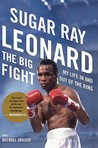
The Big Fight: My Life In and Out of the Ring by Sugar Ray LeonardReviewed by Jason Koivu
My rating: 4 of 5 stars
Boxing champ Sugar Ray Leonard KOs the squeaky-clean image that made him famous in his revealing autobiography The Big Fight: My Life In and Out of the Ring.

Beginning with his tough childhood in a rough city suburb, the book moves through his triumphant gold medal Olympic performance and into an unintended pro career peppered with the pitfalls of fame, which constantly threatened his personal and professional life.

Some passages could be longer and segues occasionally misfire; however, even those scenes that fail to deliver the expected punch at least provide interesting anecdotes from a life filled with high contrasts. Boxing fans will enjoy the many colorful reminiscences of his former bouts against such luminaries as...
Roberto Durán

Tommy "The Hitman" Hearns

"Marvelous" Marvin Hagler

Leonard details the strategies he used to defeat his opponents in the ring, but by the end of the book you realize his biggest opponent was always himself.
View all my reviews
Saturday, February 14, 2015
We aren't in London Anymore
FOXGLOVE SUMMER
Ben Aaronovitch
Gollancz 2014
reviewed by carol
★ ★ ★ ★ 1/2
I haven’t yet been able to review a Peter Grant book immediately after finishing. I suppose I’m basking in book afterglow. Once again, Aaronovitch writes an engrossing, unpredictable urban fantasy, perhaps his best yet.
A good story, a generous sprinkling of dark police humor, decent police procedural all combine for a read that fully occupied my Sunday afternoon.
Chuckles as I started:
Sarcasm about family:
“I sighed–policing would be so much easier if people didn’t have concerned relatives. The murder rate would be much lower, for one thing.”
About procedure:
“‘I’m fairly certain you’re violating our human rights here,’ she said.
‘No,’ I said with the absolute certainty of a man who’d taken a moment to look up the relevant legislation before leaving home.”
About official-speak:
“I made a mental note to wheedle the list of old codgers out of Nightengale and get it properly sorted into a database. Hugh’s ‘grapevine’ might be a useful source of information. If I’d been about four ranks higher up the heirarchy I’d have regarded it as an opportunity to realise additional intelligence assets through enhanced stakeholder engagement. But I’m just a constable so I didn’t.”
Okay, maybe that’s not that funny. I thought so, but then I’m the sort to read the corporate bulletins, marveling at the abuse of language.
What I really love about Aaronovich–srsly, now–is that he brings a much looked for but seldom found level of social commentary to his urban fantasy. Grant has dark skin, and is painfully obvious out in the posh suburbs. At one point, there’s a nice little aside when he notes the casual joking racism from an officer he’s just met. He considers his normal snide comment, half laughing, half calling it out but then decides to let it go with the assumption that the officer wouldn’t even recognize the rebuke. I’m always impressed the way Aaronovich weaves multiculturalism into his tales, in the most ideal of ways: acknowledging a different cultural experience, but not fetishizing it or diminutizing the truth of the experience. Grant understands the because he is a dark-skinned copper he will end up being ‘poster boy’ for the investigation. There’s a world of cynicism, weariness and acceptance in the role he plays for the suburban police.
Grant has his own prejudices about the country, partly because he feels so out of his element, only going into the country when required on school trips.
“The air was still fresh but the sun was already sucking up the moisture from the fields and you didn’t need to be chewing on a straw to know it was going to be another hot day.”
There’s also writing that is nicely balanced between description and action, occasionally even making a foray into lyricism:
“The pack [of reporters] has swept back into the village less than ten minutes after they’d left, and come boiling up the cul-de-sac like the return of a tide, licking at my heels as I ran up the path and only stopping at the hedge line because it was held by a special constable called Sally Donnahyde who was a primary school teacher in her other job and so wasn’t going to take any lip from a bunch of journalists. The kitchen was at the back of the house, but I could still here them as a restless murmur, like surf on a pebble beach.”
Oh yes, I liked the mystery, one of the most coherent storylines yet. The supernatural take is interesting, even if it comes to a somewhat familiar ending, but I appreciate the modern twist. It did trouble me somewhat that this might be a plot point that comes back to bite Peter in the butt, which led to unpleasant echoes of Dresden. But again, that’s what fairy tales and mythology is about, putting the storyteller’s spin on a cultural archetype.
Characterization is decent, with the majority of time spent on Peter. I don’t mind; he’s an interesting, thoughtful lead. I came to like his country partner. This time, Beverly Brook’s role seemed appropriate and a little more fleshed out, if still slightly incoherent (must she always speak in riddles? must we have weird watery dalliances?)
In a rare moment for me, I would have liked a little more punctuation; at times it takes a minute to figure out the inflection (see above quote). But that’s a stylistic quibble.
The ending, perhaps, was almost the least satisfying part of the story. Oh, don’t worry; everything wraps up nicely with no nasty cliffhangers, except that giant multi-book arc that’s going on. No, it is that the ending seemed a little too cinematic, and meant to appeal to the current UF reader, instead of being more character consistent. But that’s me, and I’d be happy to discuss below with spoiler tags.
Still, Peter Grant remains one of the most consistently satisfying UF series out there, and I remain committed to reading whatever Aaronovitch releases.
Four and a half country stars
from my blog at https://clsiewert.wordpress.com/2014/12/17/foxglove-summer-by-ben-aaronovich/
Ben Aaronovitch
Gollancz 2014
reviewed by carol
★ ★ ★ ★ 1/2
I haven’t yet been able to review a Peter Grant book immediately after finishing. I suppose I’m basking in book afterglow. Once again, Aaronovitch writes an engrossing, unpredictable urban fantasy, perhaps his best yet.
A good story, a generous sprinkling of dark police humor, decent police procedural all combine for a read that fully occupied my Sunday afternoon.
Chuckles as I started:
Sarcasm about family:
“I sighed–policing would be so much easier if people didn’t have concerned relatives. The murder rate would be much lower, for one thing.”
About procedure:
“‘I’m fairly certain you’re violating our human rights here,’ she said.
‘No,’ I said with the absolute certainty of a man who’d taken a moment to look up the relevant legislation before leaving home.”
About official-speak:
“I made a mental note to wheedle the list of old codgers out of Nightengale and get it properly sorted into a database. Hugh’s ‘grapevine’ might be a useful source of information. If I’d been about four ranks higher up the heirarchy I’d have regarded it as an opportunity to realise additional intelligence assets through enhanced stakeholder engagement. But I’m just a constable so I didn’t.”
Okay, maybe that’s not that funny. I thought so, but then I’m the sort to read the corporate bulletins, marveling at the abuse of language.
What I really love about Aaronovich–srsly, now–is that he brings a much looked for but seldom found level of social commentary to his urban fantasy. Grant has dark skin, and is painfully obvious out in the posh suburbs. At one point, there’s a nice little aside when he notes the casual joking racism from an officer he’s just met. He considers his normal snide comment, half laughing, half calling it out but then decides to let it go with the assumption that the officer wouldn’t even recognize the rebuke. I’m always impressed the way Aaronovich weaves multiculturalism into his tales, in the most ideal of ways: acknowledging a different cultural experience, but not fetishizing it or diminutizing the truth of the experience. Grant understands the because he is a dark-skinned copper he will end up being ‘poster boy’ for the investigation. There’s a world of cynicism, weariness and acceptance in the role he plays for the suburban police.
Grant has his own prejudices about the country, partly because he feels so out of his element, only going into the country when required on school trips.
“The air was still fresh but the sun was already sucking up the moisture from the fields and you didn’t need to be chewing on a straw to know it was going to be another hot day.”
There’s also writing that is nicely balanced between description and action, occasionally even making a foray into lyricism:
“The pack [of reporters] has swept back into the village less than ten minutes after they’d left, and come boiling up the cul-de-sac like the return of a tide, licking at my heels as I ran up the path and only stopping at the hedge line because it was held by a special constable called Sally Donnahyde who was a primary school teacher in her other job and so wasn’t going to take any lip from a bunch of journalists. The kitchen was at the back of the house, but I could still here them as a restless murmur, like surf on a pebble beach.”
Oh yes, I liked the mystery, one of the most coherent storylines yet. The supernatural take is interesting, even if it comes to a somewhat familiar ending, but I appreciate the modern twist. It did trouble me somewhat that this might be a plot point that comes back to bite Peter in the butt, which led to unpleasant echoes of Dresden. But again, that’s what fairy tales and mythology is about, putting the storyteller’s spin on a cultural archetype.
Characterization is decent, with the majority of time spent on Peter. I don’t mind; he’s an interesting, thoughtful lead. I came to like his country partner. This time, Beverly Brook’s role seemed appropriate and a little more fleshed out, if still slightly incoherent (must she always speak in riddles? must we have weird watery dalliances?)
In a rare moment for me, I would have liked a little more punctuation; at times it takes a minute to figure out the inflection (see above quote). But that’s a stylistic quibble.
The ending, perhaps, was almost the least satisfying part of the story. Oh, don’t worry; everything wraps up nicely with no nasty cliffhangers, except that giant multi-book arc that’s going on. No, it is that the ending seemed a little too cinematic, and meant to appeal to the current UF reader, instead of being more character consistent. But that’s me, and I’d be happy to discuss below with spoiler tags.
Still, Peter Grant remains one of the most consistently satisfying UF series out there, and I remain committed to reading whatever Aaronovitch releases.
Four and a half country stars
from my blog at https://clsiewert.wordpress.com/2014/12/17/foxglove-summer-by-ben-aaronovich/
Friday, February 13, 2015
Black Juice
Margo Lanagan
Eos
Reviewed by Nancy
5 out of 5 stars
World Fantasy Award for Best Collection (2005)
Summary
In this extraordinary short story collection, human frailty is put to the test by the relentless forces of dark and light, man and beast. Each tale offers glimpses into familiar, shadowy worlds that push the boundaries of the spirit and leave the mind haunted with the knowledge that black juice runs through us all.
My Review
Based on a Goodreads friend’s review, I went to the library in search of Margo Lanagan’s Tender Morsels. It was not available, so I borrowed a collection of short stories titled Black Juice.
A little review on the back by author John Marsden caught my eye:
“I want to hire a plane and write BLACK JUICE across the sky so that people will read these intense, rich, disturbing stories.”
Indeed, each story in this collection is richly described, dark and disturbing. Almost too dark to be shelved with books for “Young People”, but what do I know? I have no children and really have no idea what they enjoy reading or how sophisticated their tastes may be. Black Juice is beautifully written in a mature style that is suitable for adult readers as well.
Each of the ten stories features a young character, and explores his or her role in society and within the family. Many issues are explored – love, death, relationships, abuse, marriage, freedom. The stories are set in fantastical worlds that share some similarities to our own, yet are very different.
Some of my favorites in this collection were “Singing My Sister Down”, told from the perspective of a young boy who watches and sings along with his family as his sister is being punished for killing her husband. “Red Nose Day” is about two young snipers who go out on a shooting spree in revenge for past injustices.“Sweet Pippit” is a lovely and touching story about elephants in search of their beloved handler. “Earthly Uses” is a very sad story about a young boy who searches for an angel to bring back for his dead grandmother.
I will definitely read more by this author…later. Right now I’m emotionally drained.
Labels:
5-star review,
Nancy,
SF,
short stories,
young adult
Wednesday, February 11, 2015
THE GIRL WITH THE PEARL EARRING BY TRACY CHEVALIER
Girl With a Pearl Earring by Tracy ChevalierMy rating: 4 of 5 stars
“I heard voices outside our front door - a woman's, bright as polished brass, and a man's, low and dark like the wood of the table I was working on. They were the kind of voices we heard rarely in our house. I could hear rich carpets in their voices, books and pearls and fur.”

The Girl With the Pearl Earring
When the Vermeers came to visit Griet’s home she had no idea they were there for her. Her parents had decided, given their near destitution, to find Griet a position as a maid with a wealthy family. Her older brother had already been placed in a Delft tile factory. It was now her turn to earn the food that made it’s way into her belly. She was, after all, seventeen.
Johannes Vermeer was a master painter, recognized even in his own time as one of the best, but he was a slow painter. He would only paint when he was inspired to paint. An empty purse or a rumbling stomach were never enough inspiration to make him paint faster. He averaged only two to three paintings a year. As someone who has always admired his paintings I do wish he had been more prolific with his brush, but the fact that there are so few paintings by Vermeer make them all the more precious.
Griet is thrown into this chaotic household. The house is brimming with children, too many children even by the standards of the day. Catharina, Vermeer’s wife, liked being pregnant and though the added burden of a new mouth to feed each year places extra financial stress on her husband and her mother Maria Thins she is oblivious to the consequences. Their fortunes wane and fall based more on the property incomes of her mother than on the commissioned paintings of Vermeer. Each year the purse strings get pulled a bit tighter.
There is one patron, a man who has bought several Vermeer paintings, who they all have to curry favor with...Van Ruijven. His wealth infuses him with an air of entitlement. He is used to getting what he wants and when he sees the wide eyed beauty who has just joined Vermeer’s household he decides he wants her.
Vermeer has found from the very beginning that Griet is different. She sees the world as a painter sees the world. He finds reasons to have her help him by grinding paints and assisting with the objects that populate his paintings. It is only natural that a young girl would start to have feelings and dreams regarding a man such as Vermeer. He is not only talented, but he is also attractive with those gray eyes that see so much more than anyone else.
”I did not like to think of him in that way, with his wife and children. I preferred to think of him alone in his studio. Or not alone, but with only me.”
She becomes very adept at lying so she can spend more time in the studio.

The soldier in The Procuress reminds me of Van Ruijven. One of the most interesting things about this painting is the precariously perched pitcher. It makes me so nervous that I want to reach into the painting and move it to somewhere safer.
Van Ruijven, like odious men always seem to be, is adept at finding young women alone. He is not wanting to gossip with her or exchange thoughts about the weather or to woo her or to cajole her into parting with her charms. His hands with fingers like hooks push against her clothes weighing the curve and shape of her. She has to fend him off without offending him.
Griet has another man in her life, not one that she would choose, but one that is infatuated with her. Pieter, the butcher’s son, wants to make her his wife. Being the wife of a butcher is a dream for many women because she and her family will always be well fed. A butcher is miles away from dream landscape of being the wife of a master painter.
Tracy Chevalier has deftly conceived the possibility of The Girl with the Pearl Earring being a maid in the Vermeer household. With each new revelation the tensions between Griet and Catharina tighten like lute strings pressing into tender flesh. Maria Thins, a realist, runs interference between all parties as best she can, but Catharina beset by jealousy and churlishness has difficulty seeing the bigger picture. I’ve read where other reviewers were disappointed in this book. They felt that very little happened, but they must be the same people who think baseball is boring.
I was on the edge of my seat while reading this book as if I were watching a ten pitch at bat in the bottom of the ninth with two outs. The deception of the pitcher trying to outmatch the quick hands of the batter. The shifting of the outfield depending on the ball the pitcher intends to throw next. The subtle communications between the catcher and the pitcher. Add a base runner at first and now the situation feels like Griet trying to maneuver her way through a world of lust, deviousness, and deceit. Does she run or does she wait for something to happen?
There are lots of moments that need no dialogue as Griet experiences impossible longings…“I could not think of anything but his fingers on my neck, his thumb on my lips.” There are things we can’t say because they can not be unsaid.

Scarlett Johansson played Griet in the 2003 movie of The Girl With the Pearl Earring.
The painting that Vermeer paints of Griet is a compromise to Van Ruijven who wanted much, much more. With her direct gaze at her audience and the slight parting of her lips this is an acceptable form of pornography, slightly scandalous, fodder for gossips, but not anything that could bring unwanted attention from the authorities. It gives Griet a shiver to think of her captured innocence resting under the lecherous eyes of Van Ruijven, but better a painting than losing that which she wishes to give her future husband.
I bought a canvas copy of The Girl With the Pearl Earring last year. The print is gallery wrapped which gives the painting animation as if it can jump away from the wall and walk into this life. She is hung over the staircase with enough light from the window over the door to show off the skill of Vermeer to illuminate. When people walk in the door they are struck as millions over centuries have been struck. People who don’t know a Vermeer from a Dali have to take a moment to access and appreciate her lustrous beauty. From where I sit to read I can see her and occasionally she catches my eye, a flirtation that makes me feel years younger.
”I looked at the painting one last time, but by studying it so hard I felt something slip away. It was like looking at a star in the night sky--if I looked at one directly I could barely see it, but if I looked from the corner of my eye it became much brighter.”
View all my reviews
Tuesday, February 10, 2015
Dysfunction Junction
The Wild Truth by Carine McCandless
2014
Reviewed by Diane K.M.
My rating: 2.5 stars out of 5
Reading this book was like pulling over on the Interstate to gawk at a 20-car pileup. You know you shouldn't be staring at the mess, but you can't look away.
Carine McCandless is the younger sister of Chris McCandless, who became famous after his story was published in Jon Krakauer's book Into the Wild (which was also made into a movie, directed by Sean Penn). This summary is from Krakauer's Author's Note:
"In April 1992, a young man from a well-to-do East Coast family hitchhiked to Alaska and walked alone into the wilderness north of Mt. Mckinley. Four months later his decomposed body was found by a party of moose hunters ... His name turned out to be Christopher Johnson McCandless. He'd grown up, I learned, in an affluent suburb of Washington, D.C., where he'd excelled academically and had been an elite athlete. Immediately after graduating, with honors, from Emory University in the summer of 1990, McCandless dropped out of sight. He changed his name, gave the entire balance of a $24,000 savings account to charity, abandoned his car and most of his possessions, burned all the cash in his wallet. And then he invented a new life for himself, taking up residence at the ragged margin of our society, wandering across North America in search of raw, transcendent experience. His family had no idea where he was or what had become of him until his remains turned up in Alaska."
I have read Into the Wild many times and loved it. I had a strong, personal reaction to McCandless' story because he reminded me of a loved one. When I heard that Christopher's sister had written a book about him and their family, I knew I had to read it. While I am glad I did, the story now bothers even more.
Carine said she wanted to write this memoir to show why Christopher chose to leave his family. "I wanted to explain that going into the wild was far from crazy; it was the sanest thing he could have done."
Her book does give some context to Chris' actions. The simplest explanation is that their parents, Walt and Billie, fought a lot, yelled a lot, and things often turned violent. When they were younger, Chris tried to protect Carine from the abuse, and he once told a friend he felt guilty for abandoning her when he left for college.
A more complicated explanation is that in addition to the domestic abuse, Walt had another family. He had six children with his first wife, Marcia, and was still married to her when Chris was born. Walt split his time between the two homes, and he constructed elaborate excuses for his extended absences and the other children. (Walt's "fiery temper" and the marriage overlap are briefly mentioned in Krakauer's book, but Carine's memoir is much more explicit.)
It wasn't until Chris and Carine were much older that they learned the truth about Walt's first wife and their six half-siblings. Carine wrote that Walt's duplicity greatly upset Chris, and he fumed for years about it.
"I believe Chris went into the wilderness in search of what was lacking in his childhood: peace, purity, honesty. And he understood there was nowhere better for him to find that than in nature."
I was fascinated by Carine's story, but also repelled by it. I liked learning more about Chris' life, but she spends a lot of time discussing her boyfriends and her failed marriages and her materialistic needs. It doesn't take a psych degree to see that Carine made the same mistakes as her mother, and some of those choices upset Chris. I would not recommend this book unless you really want to learn more about Christopher McCandless, or if you want to delve into a seriously dysfunctional family.
P.S. One good thing that came out of reading this memoir is it prompted me to reread Into the Wild. Man, I love that book.
The Immortal Life of Henrietta Lacks
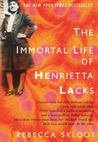
The Immortal Life of Henrietta Lacks by Rebecca SklootMy rating: 4 of 5 stars
When a poor black woman dies of cervical cancer in 1951, her cancerous cells live on. But what happens when her biological material generates billions of dollars for the drug and pharmaceutical industry, leaving her dirt poor descendants in the lurch?
Yeah, I know I wrote that like the teaser for one of my mysteries but the only mystery here is how people who have profited from the diseased cells that killed a woman can sleep at night while her kids and grand kids don't have two nickels to rub together.
The Immortal Life of Henrietta Lacks is really two stories. One of Henrietta Lacks and her cancer cells that lived decades beyond her years, and the other of Rebecca Skloot and the surviving members of the Lacks family.
Henrietta Lacks married her counsin, contracted multiple STD's due to his philandering ways, and died of misdiagnosed cervical cancer by the time she was 30. However, the cancer that killed her survives today in the form of HeLa cells, which have been taken to the moon, exposed to every manner of radiation and illness, and all sorts of other experiments.
While other people are raking in money due to the HeLa research, the surviving Lacks family doesn't have a pot to piss in or a window to throw it out of, bringing me to the real meat of the book: The pharmaceutical industry is a bunch of dickbags. Imagine having something removed that generated billions of dollars of revenue for people you've never met and still needing to watch your budget so you can pay your mortage. Fair? Shit no, but that's the way it is, apparently. It also seems illogical that you can patent things you didn't create but again, that's the way the cookie crumbles.
The Immortal Life of Henrietta Lacks is an eye-opening look at someone most of us have never heard of but probably owe some sort of debt to. Also, it drags the big money pharma companies out in the sun. Sadly, they do not burst into flames like the vampires they are. Four out of five stars. I'm going to go read something happy now.
View all my reviews
Subscribe to:
Posts (Atom)