Friday, January 22, 2016

Skin


Kathe Koja
Dell
Reviewed by Nancy
5 out of 5 stars


Summary


As a sculptor of metal, Tess is consumed with the perfection of welds, the drip of liquid metal, addicted to the burn. Her solitary existence ends when she meets Bibi. A self-proclaimed "guerilla performance artist," Bibi pushes her body to the utmost in her dancing, sculpting it into a finely tuned machine. But the limits of her body frustrate her. With Tess, she creates a performance art of mobile, bladelike sculptures and human dance that becomes increasingly violent and dangerous. Still this is not enough for Bibi. Her desire to grow and transform leads her to body piercing, then to ritual cuttings and scarrings. And further. Though Tess breaks their partnership, she cannot stop Bibi's dark exploration of the limits of her body. Her search is self-destructive, all-encompassing...unstoppable.


My Review


After a second read, this book is still disturbing. The unusual prose style and choppy sentences may be irritating for some readers, but I found the writing very stylish, poetic, and sensual, evoking images and sensation, vividly portraying Tess' emotional pain, burning like the metal she controls and shapes to her will, and her friend, partner, lover, Bibi's gradual descent into madness.

Skin is very different from other horror books -- no creepy, supernatural happenings, no vampires or werewolves, or excessive amounts of blood -- just the very real pain of tortured human souls.

Thursday, January 21, 2016

Secret Wars (2015-2016)

Secret WarsSecret Wars by Jonathan Hickman
My rating: 4 of 5 stars

Life, the world, and even the universe is ending. The reason, because two worlds are colliding.
description
description
The defenders of Earth 616 have done their best to stave off their end, but the time has come.
description
Some run from the end and suffer loss.
description
A few stand against the end...
description
and are rewarded for their efforts.
description
Doom is a God that saved the world and created the Battleworld.

The tagline leading into Secret Wars was everything dies and I must say the concept bummed me out. I was pretty negative about Secret Wars as it started and then my feelings were initially justified. The beginning was slow and the world felt like an extra science fiction version of Game of Thrones with a wall holding back the undead and specially chosen fighters who defend the wall. Everything changed when Reed Richards reappeared.
description

Doom had taken Reed's family as his own. Susan was his wife, Franklin his biological son, and Valeria his biological daughter.
description
The tension picked up because there was no way Reed would live in a world where his family was Doom's.

The pace moved quickly from there and the rest of the story was action packed. Some unexpected events took place and I happily read late into the night to finish the story.

In the end Secret Wars was surprisingly good and an undeniably emotional story.

View all my reviews

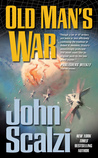
Old Man's War

Old Man's War (Old Man's War, #1)Old Man's War by John Scalzi
My rating: 3 of 5 stars

We all have regrets and things we wish we could do differently if life would allow it. What would you be willing to do to have an honest chance to live life over again? In Old Man's War that's not a philosophical question it's a real choice and one that many senior citizens take gladly. One such senior citizen is John Perry who on his 75th birthday chose to live his life over again.

In order to get that second chance John joins the army, well the Colonial Defense Force (CDF) to be exact. The CDF only takes the elderly for recruits and the elderly are only too happy for a shot to do things over again. No one knows exactly what to expect short of a 2 year minimum term in the CDF fighting aliens over planets to colonize. Anyone who survives their term gets the opportunity to colonize one of the planets they and their brethren bled to claim.

Old Man's War has a remarkable concept in which the CDF only recruits the elderly to fight for them. The opportunity for a second chance is amazing as the recruits find out, but the work they're required to do is far deadlier than anyone could have imagined. As one of the military personnel so callously stated that after 10 years three quarters of the recruits would be dead, "But remember back home, you most likely would have been dead in ten years, too frail and old, dying a useless death." There are tons of encouraging pep talks like this, in all honesty this was one of the more encouraging pep talks of the book.

The first third of the book in many ways read like a comedy. A bunch of 75 year olds who just said and did what they want came together laughing, joking, and having a good time all while wondering how everything would go. This was the best part of the book to me.

The remainder of the book focuses on the former geriatric recruits as they've been transformed into warriors. I don't want to get into details of the change because that is easily one of the most interesting parts of book. The rest of the book reads like any other generic sci-fi story. People fight aliens, aliens fight people, and when many of the aliens win they eat the people.

Old Man's War has tons of creativity jammed into it starting with their remarkable concept. Some parts of the overall story don't make a ton of sense to me though. For example I don't understand why it's so crucial that the CDF goes around colonizing planets at all. At no point does the author inform us that the Earth has become dangerously over populated or that the natural resources have been exhausted so new resources must be found. One additional plot point made the concept seem a bit pointless, but as it's an important part of the end of the story I won't spoil it.

All in all Old Man's War was an interesting story that kept me intrigued from beginning to the end.

View all my reviews

Wednesday, January 20, 2016

WHILE THE CITY SLEPT BY ELI SANDERS

While the City Slept: A Love Lost to Violence and a Young Man's Descent into MadnessWhile the City Slept: A Love Lost to Violence and a Young Man's Descent into Madness by Eli Sanders
My rating: 5 of 5 stars

****Eli Sanders won the Pulitzer Prize for his compassionate reporting about this crime.****

”They had feared him, and it was fear of a certain kind. Not the primal, salable fear of violence, not fright of the unexpected arriving with sudden brutality from an unknowable beyond. Theirs was fear of a known man and an outcome not yet known but likely to be grim. Fear of a person who, regrettably, had lived and delivered pain already, a man intelligent enough to impress yet with seemingly no handle on when his disjointed thoughts, speech, and actions might be headed. Or, if he did have some premonition, no firm brake, internal and external.”

Sometimes crime is very easy to understand. Someone gets mad and kills their spouse, someone desperately needs money and robs a convenience store, or someone embezzles their company. We can understand the frustrations that motivate such crimes, but what we have a harder time understanding is randomness. A crime that doesn’t have a neat bow tying together the motivation and the deed.

I’ve puzzled over many acts of violence, trying to bring the threads together that culminated in such a seemingly irrational result. We want to understand because with comprehension we feel safer, in control. We can even convince ourselves that this violence has nothing to do with us because we will never find ourselves in a position to allow someone to hurt us...like that. Reading about or hearing about violence, for most of us, is just a blip in our day, a blink of the eye, a shake of the head, and maybe a brief moment of reflection. We then watch a news story about a puppy saved from drowning.

A crime happened in this book, and if there had never been a crime, there would have never been a book, but this book is about more than a crime. It is about the failure of our society to understand that the crime is happening long before the final act of violence. I was pleased to see that the publisher has listed this book as a Social Science book instead of a True Crime book, though when I was a bookseller I would probably put the book in both sections. True Crime readers are ravenous for new material, and this is a book I would have wanted them to read. This is a book that goes beyond genre. Comparisons have been made to In Cold Blood because of the lyricism of the writing, and also because Sanders pushes beyond just the facts to discover a greater truth than just innocence or guilt.

We are very good at putting people in prison, but almost incompetent in our ability to treat the mental illness that contributed to their acts against society. Isaiah Kalebu finally did something that forced all of us to pay attention to him, but we had numerous chances to help him before things in his head reached critical mass. ”It was now a few weeks after his twenty-third birthday. In the span of four months, he had run a route that is typical in a system that routinely fails people like him, a route that led from his mother’s care to the police, from the police to the emergency room at Harborview, from the Harborview emergency room back to his mother’s care, from his mother’s care back to the police, and finally, from the police to jail.”

”What happened to him? How does somebody become this guy?”

Isaiah’s father was a strict and distant person. It is hard to say which hurt Isaiah the most: the occasional spats of hard discipline or the fact that his father had very little interest in him. None of us like to be ignored. We all need nurturing, and it is even better when we get positive attention from more than one person. Having layers of people who care about us give us multiple chances to be sustained by some well meaning advice or an act of kindness. America may put too much emphasis on independence. One of my aunts told her son to pack his bags and be out of the house as soon as he turned 18. She did relent and let him finish high school. In Europe, it isn’t unusual to have several generations living in a house, all contributing to the collective wisdom of the household, but probably also, at times, contributing to the discord as well. People have to learn to get along. Many hands shape each family member. A person growing up in that type of household has many examples to show him the way to live his life.

On his mother’s side, Isaiah is the fourth generation of a family tree filled with cases of mental illness, some treated, some not, some treated well, some treated not well at all. She does what she can for Isaiah as she fights her own demons and tries to hold herself together to stay out of the mental health care system. Too many of us see mental illness as a weakness, something conquerable with will power. It has taken me years to understand how incredibly naive that thinking is. If I had any doubts about the need for continued education about mental illness and the need to change our collective thinking about mental illness, Sanders eliminated any uncertainty with the way he systematically shows how we continue to fail people with mental illness. We criminalize when we need to treat.

”What Isaiah still didn’t have was a relationship with someone who had time to hear his whole story, someone who could sit alongside the young man, talk with him, look with him into his experiences, its beginnings, its possibilities. Instead, he continued to be seen in pieces. That is, whatever piece of him seemed most pressing in whatever particular authorities had to deal with him at a given moment.”

If we are judged by one of our acts and one of our acts alone, without someone caring enough to bring the full mosaic of our life together, the person we are seen to be becomes a very simplified distortion. We become angry that people or the system are looking at us with blinders on and can’t possibly see who we are when the sum of our parts are actually brought together. Isaiah was angry.

Isaiah finally did something that got our full attention.

He raped two women and killed one of them. ”Indifferent silence. Unanswered cries. A murderer and rapist running away through the night. Cruelty unchecked.”

We had chances to control this outcome. Isaiah was telling us through one action after another that he was building up like an overwound clock to something more tragic. Someone with the right qualifications could have looked at his mother’s past and his relationship with his father and seen a recipe for problems. Couple that knowledge with his actions, and one could unequivocally determine that the young man needed help. We failed him. We failed his victims. Sanders makes a great case for why the justice system needs to be updated and streamlined so that we see the accused, the sum of the whole, as well as the crime. He makes an even better case for why we all need to understand mental illness. Few of us are not touched by it either directly or indirectly. We need to quit seeing mental illness as embarrassing and as a battle that everyone must fight alone.

I was impressed by the compassion that Sanders brought to the victims Teresa Butz and Jennifer Hopper, but also to Isaiah Kalebu. We find out who they were/are beyond the ring of police tape when all three of their lives intersected and changed forever. If we think of this book as a True Crime novel, I can without hesitation say that it is the best I’ve read since In Cold Blood. If we consider this a book about social issues, I can say it is the best book of that genre I’ve ever read, but any book that expands my thinking and moves the needle on how I see an issue is certainly more than a book trapped in any one genre. Isn’t that one of the definitions of literature?

If you wish to see more of my most recent book and movie reviews, visit http://www.jeffreykeeten.com
I also have a Facebook blogger page at:https://www.facebook.com/JeffreyKeeten

Check out my In Cold Blood review

View all my reviews

Tuesday, January 19, 2016

Hell's Bounty by Joe R. Lansdale

Hell's BountyHell's Bounty by Joe R. Lansdale
My rating: 3 of 5 stars

Hell's Bounty is a riotous and sometimes tortuous weird west horror gambol by the brothers Joe R. Lansdale and John L. Lansdale.

We start with shadows and wingy things at the belfry, and a wooden box containing red lights burning hieroglyphic-like inscriptions.

Quill has put many a man in Boot Hill cemetery, and as it happens a solitary woman, he's our bad guy but he's not your average bad guy. He's possessed by something particularly nasty that wants to end the world as we know it.

'He hadn’t liked her singing, caterwauling was more like it. She had sounded like a cat with a stick up its ass. Even the horny miners and cowboys in the saloon applauded when she hit the floor. She was not only a terrible singer, she’d had a face that could drop a raccoon out of a tree at twenty paces.'

Our bad guy come good guy is short fused bounty hunter Smith, he rolls into Falling Rock and sets off an explosive chain of events courtesy of the stick of dynamite he carries in his belt.

What's the single most important, no hang on, vital consideration when throwing a stick of dynamite with the intention of blowing the bollocks out of something? Well, if it's got a short fuse, then throw that fucker quick. Unfortunately Smith doesn't heed that advice and his next port of call is a wheelbarrow of body bits in the bar of Hell's waiting room.

Smith's not done, in fact he's regurgitated and immediately needed back up on the ground floor by Satan himself, the bartender from hell, the dead are rising at that behest of something old and evil, and Smith is the chosen one to save the day.

I enjoyed the first part of Hell's Bounty, there was plenty of humour amidst the saloon patrons with some great characters like Payday and Double Shot as the story unfolded. The final battle sees the return of legends such as Jesse James, Wild Bill Hickok and Quantrail to assist with the horde of the dead but I lost interest as the story gradually descended into an all-out action zombie killfest storyline. Silver disintegrates these dead folks and there seemed to be shed loads of it about, more common than dirt. All told started off good fun but ended up a touch repetitive with nothing that stood out.

Also posted at http://paulnelson.booklikes.com/post/...


View all my reviews

After The Fog Clears by Lee Thompson

After The Fog ClearsAfter The Fog Clears by Lee Thompson
My rating: 4 of 5 stars

'You have to do what is uncomfortable to go anywhere worthwhile…'

After the Fog Clears is a harrowing tale of loss, betrayal and destructive madness all packed tightly into an emotional kaleidoscope.

After receiving a frightening call from his Nan, Luther Anderson rushes home through the deep fog and early morning stillness, speeding, his blood screaming he narrowly avoids a young child unwittingly playing at the roadside. Not quite as lucky is the Saginaw police officer Nathan Hazzard chasing Luther, he loved the chase but the fog was dense and he didn't see the child until it was too late.

'Listen to the squawk of a radio so you don’t have to hear the unrestrained volume of a torn-apart heart. Close your eyes so you can’t see a stricken mother outliving her little one; a woman who wishes she could follow him, to protect him, to never fail him again. Whisper to yourself, and to her, and to the thing she holds: Eventually the fog will burn away…'

This single act, the death of a child, sets off a devastating chain of events for all concerned, the cracks and obstacles blighting the paths of these characters are ruinously explored amidst deceit, disloyalty and ultimately, death.

Lee Thompson is adept at portraying flawed characters and their destructive actions, this story is certainly shrouded in darkness. It's difficult to see any goodness for the main part and there's no light at the end of this tunnel. The ending could have been handled differently in my opinion, for the half dozen characters this story revolves around to all come together in the same place was way too convenient. It didn't however ruin my overall enjoyment of the fluid writing and desperate characters.

Also posted at http://paulnelson.booklikes.com/post/...


View all my reviews

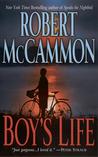
Boy's Life

Boy's LifeBoy's Life by Robert McCammon
My rating: 4 of 5 stars

While riding with his father on the milk route, Cory Mackenson witnesses a car plunging into a bottomless lake with a dead man handcuffed to the steering wheel. Will they figure out who the man was before the memory destroys them?

Yeah, that's not a great teaser for this. How do you summarize a couple years in the life of a young boy?

I tried hard not to like this book. For the first quarter of it, it wasn't hard. Boy's Life feels overwritten for what it is and Robert McCammon was trying so hard to write like Stephen King that you could taste it. I thought about tossing it back on the to-read mountain. Then it grabbed me. I wolfed it down in less than 24 hours.

While it has some crime and horror elements, Boy's Life is a coming of age tale more than anything else. It reminded me of Stephen King's The Body (aka Stand by Me) at first, but it's a lot more than that.

Cory is eleven when the story begins, growing up in a small Alabama town called Zephyr. While the mysterious dead man in Saxon Lake kicks off the tale, it's really about Cory getting older and world-weary in Zephyr. Since the story takes place in the early 1960's, the civil rights movement and Vietnam are lurking in the background, as are the rise of corporations.

Cory's adventures with his pals were a lot of fun but also harrowing at times. I loved the beast from the lost word and Nemo Curliss. For a twelve year old, Cory was sure in the middle of a lot of weirdness, though. The bit with Rebel added this book to my man-tears shelf. Was Vernon Thaxter a stand-in for McCammon himself?

I thought about giving this a five but couldn't. While I enjoyed the book immensely, I felt like parts of it were cobbled together from various Stephen King tales, like The Body, Christine, Pet Semetery, and others. Also, it seemed excessively wordy for what it was at times, like I mentioned at the beginning.

All things considered, Boy's Life was a great read. Four out of five stars.

View all my reviews

Monday, January 18, 2016

Your going in - tip of the spear, edge of the knife. Ready? Let's go!

Horus Rising (The Horus Heresy, #1)Horus Rising by Dan Abnett
My rating: 5 of 5 stars

"When xenos threaten the existence of humanity - who you gonna call?"

Mangasm in print right here!!

What a opening Horus Rising has. I recall reading it for the first time many years ago and thinking "surly the end can't be the beginning of the novel." I was so confused. How wrong I was, we're now thirty novels into the series, with no sign of it ending. It's not just that juxtapose - the beginning has impact - it's forceful. It'll grab you and take you on a ride at terminal velocity. Best grab the sick bag!

Dan Abnett introduces us to the Luna Wolves, Space Marines from the planet Cathonia. You could argue that Horus Rising becomes overawed by a type of celebrity-showcasing of a who's-who of the 30K universe. It really doesn't though. What really makes this book stand out are the foundations laid. There is great emphasis placed on a shared-brotherhood, a camaraderie we see lacking in current 40K novels (in my opinion), along the lines of honour and a resolute secularism. There's intelligent prose to be found here, it's not all about being a superhuman with unmatched strength and stamina - there's also a philosophy of being. Loken is certainly searching for this throughout.

That being said, there's bolter-porn to be found here also, from the outset in fact. Do not fear, this isn't a philosophical treatise to bore you to death. It's a novel about conquest, that being the crusade that the Emperor has tasked/burdened the Astrates and humanity with (let's be honest, it's a big world out there). What really was a joy to read was the foes arranged against the Space Marines. You'd think it would be Orks or Elder, no no. Dan Abnett comes up with some of his own races. The Megarachnid are a biological being, they breed and consume, they seem to be a earlier existence of the Tyranids. There is also the Interex, former colonists from Terra who have found themselves devoid of contact with their human brothers due to the Age of Strife (warpstorms stopping space travel).

Characters really make a novel, this being no expectation. Dan Abnett has created some of the best characters in both 30/40K to date. We're introduced to the concept of 'The Mournvial' who are akin to a advisory council to Horus. Made up of 'worthy' captains of merit, such as Abaddon, the first captain, Aximand, Loken and Torgaddon. They rather remind me of the A-Team. Abaddon as Hannibal, who comes across as a brilliant tactician, if a little hot headed. Torgaddon as the wise-cracking comedy relief, who becomes staunch friends with Garvial. Aximand is much more the level-headed member, so I guess that would make him Face. That leaves Garvial Loken, a individual who is the dissenting voice. He offers his own views, which help him to fit his role as devil's advocate within the Mournvial - he certainly isn't BA Baracus, but then I could see him saying "crazy fool" for my own amusement. He's too much of a starch arse for that.

There are some fantastic side characters of note. Eidelon, commander of The Emperor's Children, arrogant, aloof and altogether what I would call 'a tool.' Saul Tarvitz and Lucius are a wonderful foil, one being a pragmatist and shall we say grounded captain and the other hot-headed and cock-sure. They really complement each other. Although the Space Marines are the centre stage, the more human characters that populate "Horus Rising" are just as interesting. A primary iterator Sindermann and the remembrancer Euphrati Keeler are both interesting and very well written. Obviously Abnett uses them to give effective contrast to the Astrates. Did I mention First Chaplain Erebus of the Word Bearers? No, fuck him then!

It's obviously worth mentioning Horus *sarcasm*. He is charismatic, a leader. He is both humble and aloof - without appearing so. The Primarch uses such tools as the Mournvial to maintain, if you like, a neutral perspective, especially when engaging with military personnel. This is shown throughout the book and works fairly well, but at times did make me think that a leader should speak his mind at all times.

Horus Rising is one of those benchmark books, not just in Black Library's arsenal, but in the whole science fiction genre. It's Grimdark, space opera and an apologetic war mixed all into one bag.The series as a whole is getting more and more exposure, it's a New York bestseller. It's one of the best novels in the series, being the first, this is no small feat. Give it ago, even if you aren't a fan of Warhammer 40K, this series stands on its own. What do you have to lose? Do it, do it NOW.


View all my reviews

Mean magic with some rollicking dark[ish]/high[ish] fantasy thrown into the mix.

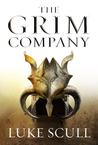
The Grim Company (The Grim Company, #1)The Grim Company by Luke Scull
My rating: 2 of 5 stars

"It is better to fail in originality than to succeed in imitation."

I've used that quote many times to reinforce to students how important it is to be original when composing a essay. It's so easy to be influenced by a journal where you believe part of it answers the question to which you are posed perfectly. Perfection is a myth, something we strive to but find it frustratingly impossible to obtain - but maybe the perfection you seek should be from your own mind and thoughts, not other's. Aspire is different to inspire, don't you think? I believe this is a problem with The Grim Company - please read on.

My main problem with The Grim Company was that I had read the story before, or something very similar to it. There are too many parallels to other stories I've read by writers such as Joe Abercrombie, Glen Cook, George R R Martin and many more. Of course writers are going to be influenced by other writers, but for me this wasn't a original story. I'm going to try to explain why I think this and also my relative disappointment with the characters created by the author - this being they (to me) came across lifeless and devoid of, well, character.

Grim Company is a debut high/dark/grimdark fantasy trilogy by Luke Scrull. The Gods are dead, slain by the Magelords some five centuries ago. Humanity is on its own, but now they are ruled by those mages. There is one who can challenge the mages, Davarus Cole who has Magebane - a weapon that makes him impervious to sorcery. Cole has a destiny, to become a hero. He yearns to slay Salazar, a Magelord who rules Dormina with a tyrannical flair. To help him reach this goal, he has The Shards, who are a group of rebels - although Cole finds himself held back by their leaders lack of action, Garrett.

While this is going on, demonic forces are gathering to the north. The only thing standing between them are a loose confederacy of Highlander tribes (basically Vikings). A Shaman, who commands these forces - meanwhile he is pursuing the former Sword of the North, Bordar Kayne, who fled along with Wolf aka Jerek to the south. Their paths become entwined with members of the Shard.

In-between this we're presented with the Eremul , the Halfmage, a mage who Salazar let live on account he hides his magical abilities and turn informant. Life's a bit crap for Eremul, as he is half the man he use to be, literally speaking. His manservant Issac, helps Eremul get around (so to speak) and turns into a rather adapt aide for both his master and, well everything he turns his hand to.

There is another side story going on (four in all) which introduces the reader to Ylandris, a sorceress, who seduces the King of the North so she can realise her dream of becoming queen. What she begins to realise is that the King isn't really in command and finds herself thinking how to depose the Shaman aka Magelord of the north.

So here's my problem with the characters - Bordar Kayne personality is devoid of anything that would appeal to the reader. It's wooden, like it's been hammered out and played out by the writer many times over for perfection. The author does describe The Sword of the North as 'in his prime' many times over - but then continually reinforces to the reader how he is old and flagging, aches and pains override his ability to fight. However he seems to walk through anything thrown at him. It doesn't help as Bordar dialogue read like it was forced by the writer to give him some ounce of personality. Now his companion Jerek is likeable up to a point, but after a while his personality grated at him. It was like he was thrown in only to give it a Mark Lawerence-esque "fuck, cock and cunt" linguist lesson to the reader. I've no problem with rough language in a story. After a while, you just think that character has nothing to offer but that 'fun' trait. He is easily prone to violence, even a flipping alchemist annoys him, for no reason other than being one. Females, he doesn't like females... 'cunts' apparently. In fact the only person he 'half' likes is Kayne and even then they almost come to blows.

I want to talk about Davarus Coles, possibly the worst leading character I've ever come across in any fictional story I've read. I'm not just saying this for impact or trying to be 'edgy and cool' - he sucks! Seriously, the story goes he has a destiny; to follow in his father footsteps and become a hero. Fine, understandable in a way. He is neither the anti-hero which some of George R R Martin's and Mark Lawrence present us in their stories, but a insufferable, deluded, annoying, whining git. He rather reminds me of that person who big themselves up constantly, but when it comes to doing something, they fall way short. He has such cliché lines like; "I'm a hero, this is what I do." I get the author has written this character that way, but too much 'page time' has been given to a character who actually brings nothing to the story.

Having said that I did end up rooting for the bad guy, Salazar - wrong? Maybe, but then the heroes in the story weren't really written in a way where I'd end up rooting for them. We end up finding out why he helped kill the gods and why he is so hard on his people. It's explained in a way where you feel for the bad guy! The Magelords may have become ruthless and unforgiving in their rule, but once the explanations is there, well I felt it was justified to a point. The Halfmage was interesting in his witty retorts to those who mocked him. The story isn't helped by dialogue that (as I've mentioned) seemed to be forced out by the author - I'm trying best to explain how the majority of main characters came across to me; false and lifeless would be the best analogy I can come up with.

There are some interesting world creations though; The Augmentors, sort of a magically enhanced police force appealed. They are a extension of Salazar's power and gifted with differing abilities such as; enchanted armour, blurring speed, never tire, etc. Talking about magic, I wanted to mention that I'm not a fan of fantasy with heavy magic involvement within its pages. However Luke Scrull does make the magic subtle mostly. Mind you, on a scale that borders on genocide.

I think the real problem with The Grim Company is that there is no defined protagonist or anti-hero - there all just mixed together in the hope they carry the story. There doesn't seem to be any real antagonist either. Salazar isn't such of a bad guy, just the 'guy' who is put there to make you feel like there is some kind of evil in the world - it just didn't sit well with me - that was my conclusion towards the end. Another issue for me was the predictability of where the story was going. Something many reviewers have mentioned but glazed over. The story is very A-B, you know where Cole is heading. I've mentioned Salazar.

So the last thing I wanted to mention was how similar part of the story is to GRRM. To the north we've got demonic powers looking to come south and devour the people of Trine in The Grim Company. The people are weak, both those who are defending the north and those south - due to civil war and a populace being ruled in a iron vice. GRRM - same thing when you think about it. Though the powers north are presented as a more 'natural' evil. There is civil war in Game Of Thrones the north is weakened due to the death of Ned Stark, due to this civil war for the crown. The Grim Company a death of a important Magelord weakens the people. Game of Thrones the king is poisoned and the realm reverts to civil war. Hmm. In The Grim Company the Demons are coming and the people are near powerless to stop them - well unless Kayne goes back north and walks through them. Much like this novel.

Apologies if I sound a little cynical - I found the similarities to similar to a few other author's stories. Imitation is fine, but there is a limit surely. I did enjoy a few of the characters as mentioned, but didn't find the story original enough to warrant me liking it more. In fact it borrowed heavily from other fantasy novels, in my opinion. I'm not suggesting plagiarism as it's not. Maybe you will find it differently, in which case I hope you do as there are some ideas here that could possibly work really well.


View all my reviews

Heroic Flyers

The Wild Blue: The Men and Boys Who Flew the B-24s Over Germany 1944-45The Wild Blue: The Men and Boys Who Flew the B-24s Over Germany 1944-45 by Stephen E. Ambrose
Reviewed by Jason Koivu
My rating: 4 of 5 stars

Slow down with that zipping and zooming about, whipper-snapper! This is a far tamer tale. Like the planes Stephen E. Ambrose is describing herein, his prose plods along at a steady, satisfying pace. These are not jet fighters, these are workhorses carrying out a task.

The Wild Blue: The Men and Boys Who Flew the B-24s Over Germany 1944-45 is just as much the story of George McGovern as it is of the pilots and crews of those famous World War II bombers. McGovern is most famously known as the Democratic candidate who lost to Nixon in the 1972 election, the year the Democratic National Headquarters was raided by Republican operatives in the dead of night during a little incident you may have heard of called Watergate. Prior to that, he piloted one of these finicky, taxing aerial beasts.

description

Ambrose wisely uses McGovern's wartime experience as a template and as the narrative thread for his treatise on the B-24, infusing a dull, non-fiction text with a human element, a technique in vogue with popular, modern day historians. The people like a good story. McGovern's life is perfectly entertaining in this context, but Ambrose heightens his book's readability by adding in the stories of other pilots and those of McGovern's flight crew. All of which turns a book about a plane into something much more humanistic. The reader can't help but develop an attachment to these courageous men.

The Wild Blue is a solid niche book for those familiar with WWII, but who want to have a deeper understanding of this specific facet of the war.

View all my reviews