Monday, February 1, 2016

This is what NOT to do when bored with college.

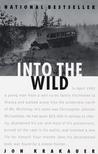
Into the WildInto the Wild by Jon Krakauer
My rating: 5 of 5 stars

"A man who's passions leads him into the wild"

Doesn't it seem such a simple context to write about a event that has happened. It's something that can been seen through many documented civilizations, back to the Egyptians. Without delving into a whole historiography essay, we know through some, what is considered primary sources, is sadly inaccurate or (perhaps more so) difficult for a mind influenced through a modern intellect to understand or grasp the eras we are reading about. Have I bored you yet? Stick with me Trooper!

Jan Krakauer, who himself has adventured throughout the wilds of American, decided to write a book upon Chris McCandless own Odyssey. Chris was a native New Yorker, from a wealthy background, a over achiever and some would say, a idealist. I feel (and having experienced this myself) words can have a hold over you, especially when you're searching for something to believe in (or to escape from). Chris McCandless was influenced from works by Leo Tolstoy, who was a master of fiction through portrayed extreme moral views. Rene Descartes, well how long do you have? One of the first to come up with the philosophical view of 'natural science.' Descartes theories such as 'Dualism' (Passions of the Soul) would have had a influence upon McCandless no doubt. Jack London, a atheist who wrote a fictional account of 'his' own adventures through Alaska. The book was called The Call of the Wild written from the comfort of his own home, having never ventured out too Alaska. Some say London was a recluse and a drunkard, couple that with apparent sexual appetite that would leave most 'vanilla' individuals in shock. Such a poignant tale would have had (and arguably did) a profound impact on the 23 year old.

Why have I bothered to wrote all that out? I'm trying to give the reader a idea just how words have power, strong meanings, underlying tones, powerful imagery and cryptic metaphors. As a idealistic 23 year old, it could only have helped 'guide or hinder' Chris.

It's easy to build up the picture of Chris as a university jock throughout the narrative. A spoiled boy, indulged by his parents but pushed into higher education. What happened was the New Yorker and graduate from Emory began to rebel. With his relationship already deteriorating with his father, it really came across throughout the narrative how Chris, A) Blamed his parents for the way he was, B) Lead by words from Descartes, Thoreau and London decided to disenfranchise himself from society that he felt was interfering with his own beliefs. I believe Descartes said something along the lines that a good government should not be seen. Can't say I've heard of a modern government not to have interfered in people's lives in some way!

I'm waffling. Eventually after Chris's graduation from Emory (and very nice university by the way!) he jumped into his banged up (but reliable) old Datsun and motors on towards his big adventure, where he is soon self-styled as Alex The Supertramp which we discover he names himself throughout his diary entries. He is never to be seen again by his family, Walt and Billie, only his sister receives a post card from him. McCandless's travels take him from Mexico City all the way up to Alaska. By a mixture of hiking, hitching rides, rail road jumping and taking the odd job, where he eventually hits Yukton.

Chris really comes across in the narrative as a considerate, generous and loving guy (when he chooses to be) this is (perhaps) embellished by Jan Krakauer, but during moments when he stops and takes work, he builds lasting relationships with those folks. Even the guy giving him a lift to the Stampede Trail really took to McCandless. It kind of hit home this guy isn't just on a adventure, it's a personal quest for him. Yes, of self discovery, but one of escape as well. What's he running from? Perhaps the pressure from expectation from his family, the everyday grind of society, his father or has he just reached that breaking point of giving up on himself? A question you may ask yourself as a reader when coming to the facts of Chris's demise.

OK, so last couple of points. Jan Krakauer, the author of Into The Wild is very biased towards defending Chris. There's no other way to see it. I'm not just saying that, you can see Jan's staunch defence of the New Yorker by just reading the narrative. Especially towards the end where he attempts to explain McCandless mindset by bringing in his own experiences. Which for me is wrong when attempting to write a piece of non-fiction/factual piece (perhaps I've fallen into the same trap with this review hah). When Krakauer introduces the book in his authors note, he clearly states -

"I won't claim to be a impartial biographer.'

A few lines down the same paragraph, Jan makes it clear that his authorial presence does interrupt the narrative which draws from his own youthful experiences. My main problem with this, where does the actual facts end and Krakauer's experiences take the lead? It's bemusing that this is presented as a non-fiction title, when the author has allowed the facts to become diluted with his own passion and experiences. It's a concern that I felt I needed to mention. The majority of primary sources are gathered from postcards Chris sends to those he has met on his travels. Etchings that were been made by Chris in his final place of rest. Also the real essence of Chris's character is shown to the reader through highlighted passages in certain literacy works.

To many Chris McCandless was a unprepared idealistic youth, living with tales from London, Tolstory and Descartes. Recklness goes hand in hand with being young! Did he prepare for the harsh realities of the Alaskan snow desert, no! Was he prepared to live off the land for the summer of '92, to some extent. Was he idealistic, yes. Was he a fool for doing so, no. He was a brave intelligent young man, fed up with society and the 'isms' that underline our current social-structure. He died, possibly by error of judgement, or possibly by just giving up. I don't know. Even with the medical jargon Jan Krakauer evidences', I prefer to think Chris McCandless as a type of modern day explorer. You should follow your passions in life, as what else is there! Live the life you choose to live, not what other's expect or decide of/for you. Surely there is purpose to such a ethos? Idealistic, but then that is me.


View all my reviews

Friday, January 29, 2016

The Last Men on Earth


Mark Allan Gunnells
Red Door Productions
Reviewed by Nancy
2 out of 5 stars


Summary


The world as we know it has ended in plague. Only two men seem to have survived, traveling alone, forging a bond that one considers love and the other considers convenience. Until another survivor, a young woman, is added to the mix. How far will one man go for love...?


My Review


I like how Mark Allan Gunnells manages to create characters with substance in such a short format, injecting horrifying little twists and keeping the reader on edge. For that reason, I always look forward to reading his stories.

This one, however, was way too short for me to develop any feelings about the characters. The twist wasn’t especially surprising either.

After I reached the conclusion, my feelings ended up being similar to the story’s narrator.

“I felt nothing. Not guilt, not horror at my actions, but no particular pleasure either.”

Thursday, January 28, 2016

X-Men Legacy: Prodigal

X-Men Legacy, Vol. 1: ProdigalX-Men Legacy, Vol. 1: Prodigal by Simon Spurrier
My rating: 5 of 5 stars

This is David Haller perhaps better known as Legion. He's the Omega Level Mutant son of Professor Charles Xavier. Which sounds great except that David is called Legion because he has at least 100 personalities in his head, who each have their own mutant powers. Oh and David struggles to keep control of these personalities. His father, with some help, built a mental prison to aid David's sanity and assist with his control of his powers. During the events of Avengers vs X-Men, Charles left David at a Telepathic Psyker commune of sorts.
description
David gets help for his mental problems while helping others. When Professor X was killed by a Phoenix possessed Cyclops, David's mental prison broke and the inmates are running loose. Now David must find a way to control the legion of personalities in his head, while he decides what to do now that his father is dead.

Prodigal was interesting as it is almost exclusively told from Legion's point of view. I really didnt know much about Legion except the facts and his role in Age of Apocalypse. Legion is a pretty awesome character. He's one of the strongest beings in existence, but he's hindered by the personalities in his mind. Any of his personalities can take over his body if they catch him in his mind and use their share of his powers. It's not hard to see why Professor X kept him in a coma induced state for much of his life.

David is also great because he has a fun sense of humor. He makes a ton of funny references and delivers some memorable lines.
description

"There it is "fight." These two've known nothing but violence and youse want to fix it at paramilitary spandex school."

"The dream is fine. I just think the way he went about it might have been (say it say it say it) wrong."

"The bloody X-Men there. Dad's technicolor mutant militia."


Prodigal was refreshingly familiar yet new and exciting. I wasn't expecting the storyline at all and I'm pumped to keep reading the series.

View all my reviews

Uncanny Inhumans: Time Crush

Uncanny Inhumans, Vol. 1: Time CrushUncanny Inhumans, Vol. 1: Time Crush by Charles Soule
My rating: 5 of 5 stars

When Thanos arrived on Attilan and threatened the Inhumans, Black Bolt sent everyone away through Eldrac the door. This resulted in many Inhumans scattering throughout the world. Since that day no one knew what happened to Ahura, heir to the throne of Attilan, the son of Black Bolt and Medusa.
description
It seems one person knew where Ahura was.
description
Black Bolt sent Ahura into the past with Kang the Conquerer to protect him from Thanos and the incursions.
description
Black Bolt also brought terrigen mist in order to allow Ahura to undergo his Inhuman transformation.
description
description
description
Since the incursions appear likely to destroy Earth, Black Bolt asks Kang to keep Ahura. Kang agrees, but only under the condition that Ahura will belong to him even if the Earth is saved. That Ahura would belong to Kang forever! Black Bolt agrees. After Secret Wars ends and the world is restored, Black Bolt goes to reclaim Ahura and Kang is not amused.
description
description

Time Crush was interesting and intense. I am familiar with Kang the Conqueror, but I didn't fully comprehend how dangerous someone who controls time could truly be. Kang is not an enemy any wise person would choose which really demonstrates how desperate Black Bolt was to save Ahura. This was especially touching because Black Bolt in the past had allowed Ahura to go through a lot of bs because the genetic council feared him and because they didn't provide the OK for Black Bolt to reproduce. I'm glad to see the genetic council and a few other annoying parts of the Inhumans have gone away. Ahura and Black Bolt have a tense relationship to say it nicely. Despite all that Black Bolt has no intention of letting his son down again.

This volume was the first time I ever read a comic book arc as it was released. It was fun to do because I am currently obsessed with the Inhumans. Ever since Marvel announced an Inhumans movie and Black Bolt unleashed the terrigen bomb over New York, I've been paying close attention to the Inhumans. Uncanny Inhumans is the main title of the new Inhumans movement and I've been really pleased with the results thus far. It's fun that they've included the original Inhumans along with the Nuhumans, who are Inhumans who didn't know they were Inhuman until the terrigen cloud transformed them.

Time Crush was a great start to the Uncanny Inhumans and I'm excited to see where the story heads in the future.

View all my reviews

Wednesday, January 27, 2016

IN THE HEART OF THE SEA BY NATHANIEL PHILBRICK

In the Heart of the Sea: The Tragedy of the Whaleship EssexIn the Heart of the Sea: The Tragedy of the Whaleship Essex by Nathaniel Philbrick
My rating: 5 of 5 stars

”I turned around and saw him about one hundred rods [500 m or 550 yards] directly ahead of us, coming down with twice his ordinary speed of around 24 knots (44 km/h), and it appeared with tenfold fury and vengeance in his aspect. The surf flew in all directions about him with the continual violent thrashing of his tail. His head about half out of the water, and in that way he came upon us, and again struck the ship."
—Owen Chase, first mate of the whaleship Essex.


 photo Sperm20Whale20attack_zpsqtog9pqm.jpg

“There she blows!” was as much a part of my vocabulary as a child as “Launch the torpedoes” or “Geronimo” or “Remember the Alamo.” I wasn’t using it correctly, as I was not hunting whales in the middle of Kansas, but I did use it as a rallying cry for a charge against my childhood chums as we chased each other from one end of the farm to the other. Of course, in 1820 when a sharp eyed lad in the crow’s nest spotted a spume on the horizon, he would yell down to his crew mates, “There she blows!” and the chase would be on.

The Nantucket ship Essex was commanded by a newly commissioned captain by the name of George Pollard. The ship, an old vessel, had always been thought of as a lucky ship, given that it had returned so many profits to the owners. Much of the crew was green and were on their first whaling voyage. The ranks of Nantucket sailors had been filled out with some African Americans and some men referred to as offshore men, meaning that they were not of Quaker Nantucket stock.

Early in the voyage, they hit a squall that nearly heels them over. “For the green hands, the sound alone was terrifying: the shrieking of the wind across the rigging and then a frenzied flapping of sails and creaking of the stays and mast.” Can you imagine that sound? I’d be convinced that I was about to perish, especially when the ship begins to list. Captain Pollard does not spring into action as quickly as he should, but does finally give the right orders, and the good ship Essex rights herself.

It was a foretaste of what was going to be a disastrous journey.

In the 19th century, over 200,000 sperm whales were harvested for their spermaceti. (770,000 in the twentieth century. We always improve at killing things.) A normal sized whale will have about 500 gallons of this semi-waxy substance in their heads. When exposed to air, it turns to a semi-liquid and looks...you guessed it...like sperm. This oily substance was used to lubricate machinery during the industrial revolution and to light lamps. Eventually, this oil was replaced by lard and then by petroleum, which probably saved the sperm whale population from extinction. Yea, petroleum industry! The whalers also harvested the ambergris from the digestive tract of the whale, which was used as a fixative in perfume. Women didn’t know it, but when they sprayed those beautiful scents on their necks and wrists, they were also spraying whale digestive juice on their carefully coiffed skins.

 photo d8eca934-8ff4-4911-a720-a226d9850ad2_zpslvw32ntl.jpg
A sperm whale, what a beauty!

In this era, they did not have harpoons that are shot out of a cannon; they had to row right up next to the whale, and someone with the right skill and strength thrust the harpoon into the side of the whale. These are large mammals, the largest toothed whale, reaching upwards of 80 feet long (now only about 65 feet which has been attributed to the excessive hunting of the largest males who, therefore, did not have a chance to pass on their genes.) and weighing 45 tons. They also have the largest known brain of any extinct or modern animal weighing in at 17 lbs. If they can avoid the harpoons of man and keep out of the reach of Orcas, they can live up to 70 years. Once the harpoon was in the whale, the sailors became the fastest moving humans on the planet as the whale would try to escape by fleeing at upwards of 27 mph while pulling the boat and crew along with it.

It is about finding that sweet spot in the harpoon so it is balanced perfectly in your hand. You can smell the whale. You can hear the grunts, groans, and farts of the rowers as they try to keep you level with the creature. Your face is slick with whale spume and sweat. You know you might only have one chance at this. You let go the thunderbolt in your hand and hope you will hear the meaty impact of a man killing a god.

It wasn’t unusual for green hands to upchuck over the side as they watched the death of a whale. Nathaniel Philbrick gives a description below that left tears stinging my eyes. There is something so majestic about a whale that even the most primitive thinkers among us must feel on some level that killing a whale is an affront against a higher power. When you kill something larger than yourself, something that displays such intelligence, you have to feel the world has been diminished.

”When the lance finally found its marks, the whale would begin to choke on its own blood, its spout transformed into a fifteen-to twenty-foot geyser of gore that prompted the mate to shout. ‘Chimney’s afire!’ As the blood rained down on them, the men took up the oars and backed furiously away, then paused to watch as the whale went into what was known as its flurry. Beating the water with its tail, snapping at the air with its jaws--even as it regurgitated large chunks of fish and squid--the creature began to swim in an ever tightening circle. Then, just as abruptly as the attack had begun with the first thrust of the harpoon it ended. The whale fell motionless and silent, black corpse floating fin-up in a slick of its own blood and vomit.”

 photo Moby20Dick20Rockwell20Kent_zpsjflnn9rs.jpg
As I was looking through Rockwell Kent’s art for Moby Dick, I was surprised how well I remembered each of the sketches even though I haven’t read the book for decades.

So they take the oil, some blubber, and the ambergris; those parts had ready value that made Nantucket in the heyday of the whaling era very wealthy. ”The rest of it---the tons of meat, bone, and guts---were simply thrown away, creating festering rafts of offal that attracted birds, fish, and, of course, sharks. Just as the skinned corpses of buffaloes would soon dot the prairies of the American West, so did the headless gray remains of sperm whales litter the Pacific Ocean in the nineteenth century.” As I was reading this, even before Philbrick brought forth the comparison to the eradication of the buffalo in the same century, I was having flashbacks to Butcher’s Crossing by John Williams.

I had to stop and go read something else for the rest of the day. I needed a break to absorb what I had read and also to create some distance between myself and the horrifying images of whales dying that Philbrick so vividly shared with me.

As I did with the buffalos in Butcher’s Crossing, I also found myself rooting for the whales.

Something triggered in one whale, a monster 85 foot creature, who instead of fleeing from these puny humans turned around and crashed into them. ”Instead of acting as a whale was supposed to---as a creature ‘never before suspected of premeditated violence, and proverbial for its inoffensiveness’---this big bull had been possessed by what Chase finally took to be a very human concern for the other whales.”

 photo Sketch20of20Essex20by20Nickerson_zpsdiojdvyp.jpg
Thomas Nickerson, the cabin boy and youngest member of the crew, drew this sketch of the attack.

This St. George of the deep, more dragon than man, with two mighty thrusts with his head turned the Essex into a splintered, sinking wreck. This story of the Essex is what so famously inspired Herman Melville to write his masterpiece Moby Dick. A commercial failure when released, over time has proved to be a canon of American literature. The story of the Essex has continued to be taught in American History classes, inspiring children with the tale of survival. Moby Dick may not appear on many high school syllabuses anymore. The daunting 600+ page count is simply too much for the curricula of the school system, but I did see it appear on a college syllabi not too long ago; unfortunately only excerpts were being studied.

The survival of eight crew members out of a total of twenty is harrowing indeed. A new captain used to taking orders instead of giving orders listened to some bad advice from his first and second mates. 95 days in a boat could have been shortened to mere weeks if he had stuck to his original thinking. There are some interesting discussions about the demise of all the black sailors and of most of the offshore men. In fact, the only three offshore men who survived are the ones who opted to stay on an island rather than continue in the boats. The Nantucket men stuck together, and all five who stayed in the boats who survived were Nantucket men.

Philbrick will describe the effects on the body, experiencing extreme thirst and the metabolic rates. Women and older people with lower metabolism actually do better in cold water or in cases of extreme hunger. As gallant as vigorous men like to be, giving extra rations to women and older people, they actually, logically, should be keeping those rations for themselves. Men with high muscle content, who naturally need more calories, will suffer the quickest loss of mass and will die first.

Captain Pollard is older and slightly rotund, which gives him an advantage over the younger, leaner sailors. As food and water disappear, they must resort to the most desperate of measures. ”The men were not much more than skeletons themselves, and the story that would be passed from ship to ship in the months ahead was that they were ‘found sucking the bones of their dead mess mates, which they were loath to part with.’

Flesh
Blood
Bone
Marrow


There is a 2015 movie based on this book that is also called In the Heart of the Sea starring Chris Hemsworth, Benjamin Walker, and Cillian Murphy.

 photo In20the20Heart20of20the20Sea_zps5sqxrfgw.jpg
I love the visual that the movie poster conveys.

If you wish to see more of my most recent book and movie reviews, visit http://www.jeffreykeeten.com
I also have a Facebook blogger page at:https://www.facebook.com/JeffreyKeeten


View all my reviews

Tuesday, January 26, 2016

Wonderland

WonderlandWonderland by Jennifer Hillier
My rating: 3 of 5 stars

When a boy goes missing, last seen on top of a Ferris wheel in Wonderland, and a rotting body is later found in the same amusement park, Deputy Chief Vanessa Castro sets her sights on the amusement park. What evil is lurking beneath the theme park's facade?

Wonderland was a bit of a rollercoaster, pun intended. Vanessa Castro is new to Seaside, a Washington town supported largely by Wonderland, a theme park. Since the entire town's livelihood depends on the park, she runs into quite a few roadblocks during her investigation.

For my money, a thriller has to have a certain amount of misdirection. This one certainly had its share. I thought I knew who the killer was at the 20% mark but I was in the dark until the book was nearly over. Hillier sidestepped a lot of the usual thriller cliches, although the obligatory insta-love/hookup was there.

I did like the Vanessa Castro character aside from the times where she was clearly thinking with her vagina. She was torn between duty and her love for her daughter, as well as having the guilt over her husband's death gnawing at her. Actually, a lot of the characters had hidden depths. Bianca Bishop, the sultry CEO of Wonderland, came from a broken home and wasn't the bwa-ha-ha villainess I originally pegged her as.

The disappearances of boys with the Wonderland look tied nicely into the park's sordid past. Like I said, Hillier led me by the nose through most of the story. She's a clever one. Another thing that I liked was that while Wonderland took place in a theme park, I wasn't beaten over the head with lots of carnie stuff. I'm looking in your direction, Joyland.

While I didn't think it was fantastic, Wonderland was a pretty good thriller and I'll read more of Jennifer Hillier's stuff. 3.5 out of 5 stars.

View all my reviews

Monday, January 25, 2016

A romping pantomime showcasing people's obsessions with secrets and confessions.

SurvivorSurvivor by Chuck Palahniuk
My rating: 3 of 5 stars

"Pacy, inventive, often funny, dark, disturbing and plain weird! Welcome to the mind of Chuck Palancuick"

Testing, testing, one, two, three

Are you reading this?

Testing, testing, one, two, three

Is this thing on?

Testing, testing, one, two, three

Yes Chuck, I get that you like writing a lot of that literacy term called, drama of sensibility. Maybe it's time to look at using something different.

Survivor makes Fight Club look like a mild experience when leading towards the angst spewing forth from the authors mind. Pessimistic is the word I'd use. Half glass full sort-of-guy? No, more like empty glass sort-of-guy.

So, say hello to Tender Branson, our narrator and crazy-guy ex-cultist and now a handy man/chef, who is (soon to be) the last survivor of a religious suicide cult. The opening starts with Tender narrating how he hijacked a Boeing 747 and then leads on to how he found himself in that situation. Why's he hijacked a plane? He wants to go out in a blaze of glory (que Bon Jovi, thanks). While yapping into the recording blackbox, he tells the reader about his experience within the Creedish Cult, which is overlapped with narrative from his life outside the cult - that working for a rich-to-do couple and his past-time hobby - picking up the phone and giving those in need advice... to kill themselves. Life is dull, the world isn't kind, so why bother? Here's the empty glass sort-of-guy metaphor. Even when stardom hits, he is still the death-wishing, dull, pessimistic persona that begins to grate in the prose later. I did enjoy how Tender's stream of consciousness unravelled throughout the narrative. What I didn't, was how depressing the read was. I was feeling like I needed to shower after reading or grabbing something alcoholic to sedate myself. I was soaked in irony.

The writing style is just lax, informal, yes, lax to the point of being sketchy. At times I was having difficulty piecing together what was being said, especially between Tender and Fertility (great name). Their dialogue, at times, made absolutely no sense at time. It was in affect wordplay, that is all. Overlapping themes are placed to both confuse and entice the reader to piece together what the hell is going on. Very clever. We've got themes of religion, fame, pornography, sex, philosophy of life, drug abuse, how to eat and lobster and how to keep to your daily planner. Brilliant.

There are some strong comparison to Fight Club the social dissolution one man has against society, yes. Homemade recipes and self tips on how to remove stains too how to make bombs and chemical weapons, yes. One man's narrative with so many twists and turns, involving ambiguous characters and towards the end, leading to death, yes. Why change it if it isn't broken? Well, it's just lazy writing to rehash something over and over again. Take note. Good read, just a little on the 'read it, skip it' sort-of-thing.

We're all living within this fake plastic hotbed of social dissatisfaction - celebrities rule and we feed them.

Welcome to planet Earth.


View all my reviews

A man might be thought wealthy if someone were to draw the story of his deeds, that they may be remembered. Not so in this case.

Swords of Good Men (The Valhalla Saga, #1)Swords of Good Men by Snorri Kristjansson
My rating: 2 of 5 stars

"Swords of good men who are rather, dull!"

About a decade ago, there was a film released called The 13th Warrior which also, like this book, had a Viking/Fantasy theme. Based upon the writings of a real Caliph of Baghdad, Ahmad ib Fadlan - it was rather enjoyable. The tales of Beowulf weaved in, with the bowels of Hel being unleashed upon a small village in a relocation. Besieged on all sides to a unrelenting foe, it takes one man (a foreigner) to stem the tide. If you've read Eaters of the Dead by Michael Crichton, then your know the jeist of the film. Herein lies the problem with Snorri Kristjansson's Swords Of Good Men, it's almost a exact replica, with name and location changes to the previously mentioned book and film. As you might have gathered, the novel is essentially a non-historically/fantasy themed book. I'm not sure the places mentioned in Snorri's novel actually existed - I'm only guessing, but I don't recognise any of the locations by name.

Essentially the first 200 pages are really about setting the tone, for what I felt, was a fairly solid read. There isn't much going on, other than the author attempting to flesh out his characters (of which there are MANY). The main character here is Ulfir, a 'nobel' Swede, sent with his cousin Gerri (by the King of the Swedes) to familiarize himself with the Viking-way. During his time, Ulfir gets bogged down in a lustful romance and politicking within the town of Stenvik. While Ulfir is having his fun, religion is changing, there is the White Christ as well as the old ways (Thor, Freya, Odin, Valhalla, etc) battling for provenance over Norway. King Olav is attempting to bring the North of the country under his banner and belief of Christianity. While in the South, the old ways hold sway. So there is disagreement amongst the populace, surprise!

I'm rather telling a 'story' here, but to cut out the guff, the town of Sternik finds itself besieged by true Vikings. With Ulfir locked in, along with the Chieftain Sven, Harold, a rather brutish chap and pig-farmers to boot, things get interesting - to a extent. The real problem with the novel is that for 340 pages, it really gets bogged down with too much talking and not enough doing! I'm interested to see, from the authors point of view, how a town during this time would interact with each other, but not for 220 pages. There's no action, there's no broads, there's no booze! This is a book about Vikings right? Hmm.

Here is a small list of main/middle characters; Ulfir, Gerri, Sven, Harald, Sigurd, Egil, Audun (who is rather a awesome persona!), Skargrim, Thora, Valgard, pig-farmers, Lilla, Sigmar, Thorvald, Prince Jorn, King Olav, Runir, Harvar, The Twenty, Ragnar, Oraekja, Finn. There is more, I've just grown tired of listing them. It's was a real chore for me, to cut through the characters - at times I felt the narrative wasn't descriptive at all. Just literally putting a name down on the page doesn't work, you need to really flesh out a persona for the reader to 'imagine' - well in my opinion anyway. I moaned to someone that the characters seemed 'dead' and there was no real likeable one - well other than Audun towards the end, but I won't spoil that.

The authors prose style is solid, no flares of brilliance sadly. For example, when the first attack on Stenvik takes place. Sven's rousing speech is rather amusing, it's meant to inspire seasoned warriors:

"We will strike fear into them, we are the nightmares that frighten children..."

Children? The protaganist (in this novel) isn't a anti-hero, he is meant to be a likeable rogue not the opposite. So why say something that doesn't fit the persona you are trying to build. For me it just didn't ring true. There were other lines that didn't sit right with me also. I should go back through the book and highlight them, but I just don't have the time, sorry about that.

The mystical element to the book comes from Slude, a sort of wisp/witch/not sure-thing. She can command men by touch and sense alone, no not jumping in bed for a bit of rumpy-pumpy (what even is that?). I really felt this element to the book didn't need to be there. I feel fairly strongly that the story itself would have held up better without this. It kind of rubbished, for me, all those mighty warriors at her command. Mind you, they say Agamemnon had the mightiest host of warriors ever, and it didn't work out to well for him. Given that, he didn't have some harpy with magical powers!

If I was sitting with the author right now, I'd say cut out the mystical element and come out with something more befitting the theme and tone of the era. Make sure your characteristics of your main character fits with the personality. I admire anyone who can piece together a novel, but for me, this was a fairly bad read and haphazard at best.


View all my reviews

The Life and Times of Bill Bryson

The Life and Times of the Thunderbolt KidThe Life and Times of the Thunderbolt Kid by Bill Bryson
Reviewed by Jason Koivu
My rating: 5 of 5 stars

Bryson played my funnybones like a xylophone!

The Life and Times of the Thunderbolt Kid is about growing up in the '50s. It's the sort of coming of age tale that educates along the way. God, I love this stuff!

It very much reminded me of the classic movie "A Christmas Story". Here on Goodreads, amongst all you worthy readers, I'm ashamed to say I haven't yet read the short stories by Jean Shepherd that the movie is based upon. But if they're anything like the movie then they're filled with remembrances of how things once were, which is the path Bryson takes. It's a nostalgic road at times. At others, it is sarcastic. Almost always it is humorous and engaging.

Bryson has a way with words and a talent for feeding you history without making you gag. He also has my kind of sense of humor, so together these things are bound to deliver at least a very enjoyable read. However, this Thunder Bolt rockets into the stratosphere with HYPERBOLE!!! You read that right, Bryson often, intentionally writes over-the-top when describing outcomes and consequences of his many childhood tales. "Little Johnny's" chemistry set doesn't just blow up, it lifts the roof off the house. This is how a kid would tell the tale and it sets the perfect tone, creating a book that really draws you into those heady kid days where summer vacations lasted years, simple joys or disappointments were end-game emotions, and anything seemed possible.


View all my reviews

Friday, January 22, 2016

Skin


Kathe Koja
Dell
Reviewed by Nancy
5 out of 5 stars


Summary


As a sculptor of metal, Tess is consumed with the perfection of welds, the drip of liquid metal, addicted to the burn. Her solitary existence ends when she meets Bibi. A self-proclaimed "guerilla performance artist," Bibi pushes her body to the utmost in her dancing, sculpting it into a finely tuned machine. But the limits of her body frustrate her. With Tess, she creates a performance art of mobile, bladelike sculptures and human dance that becomes increasingly violent and dangerous. Still this is not enough for Bibi. Her desire to grow and transform leads her to body piercing, then to ritual cuttings and scarrings. And further. Though Tess breaks their partnership, she cannot stop Bibi's dark exploration of the limits of her body. Her search is self-destructive, all-encompassing...unstoppable.


My Review


After a second read, this book is still disturbing. The unusual prose style and choppy sentences may be irritating for some readers, but I found the writing very stylish, poetic, and sensual, evoking images and sensation, vividly portraying Tess' emotional pain, burning like the metal she controls and shapes to her will, and her friend, partner, lover, Bibi's gradual descent into madness.

Skin is very different from other horror books -- no creepy, supernatural happenings, no vampires or werewolves, or excessive amounts of blood -- just the very real pain of tortured human souls.