Monday, September 28, 2015

FBI Agent or Mobster?

Making Jack Falcone: An Undercover FBI Agent Takes Down a Mafia FamilyMaking Jack Falcone: An Undercover FBI Agent Takes Down a Mafia Family by Joaquin "Jack" Garcia
Reviewed by Jason Koivu
My rating: 4 of 5 stars

Part of me wants to be a mobster. Part of me wants to be an undercover agent. Most of me is scared shitless to do either, so I'm happy to live vicariously through the exciting life of Joaquin "Jack Falcone" Garcia.

FBI Agent Garcia spent two and a half years undercover infiltrating the Gambino crime family, specifically targeting capo Greg DePalma, an old school mobster newly out of prison and on the rise within the regime.

Garcia relates his exploits in a conversational fashion that is jovial and engaging. You almost forget he's working alongside ruthless, violent criminals who would likely end him if they discovered the wire he wore to record their every word. However, the tension is often high and, as a reader looking for a thrill, I was happy to find my nerves rattled more than a few times.

The life of a mobster sounds not entirely unappealing at times, if you believe what Garcia has to say about it. He seemed to fit right in, as if he was made for the role. In fact, though it's never stated, one gets the sense that DePalma saw in "Jack" the son he wished he'd had, as witnessed by DePalma's desire to have "Jack" made. That is flat out amazing, to have an FBI agent not only be able to work incognito with the mob, but to fool them so thoroughly that they wish to make the agent one of them!

Garcia was clearly unhappy with the FBI. For its part, the FBI may have jerked Garcia around a bit because they felt he was enjoying his assignment a little too much. Whoever was in the right, the fact is that some readers may be turned off by the amount of sour grapes vented through out the book.

For me, that hardly dampened my enjoyment. I got the chance to learn about the modern day mob and it felt like I was getting to be a good fella for a couple hundred pages, and that to me is a good read I can't refuse.


View all my reviews

Light Laughs With And About Amy Poehler

Yes PleaseYes Please by Amy Poehler
Reviewed by Jason Koivu
My rating: 4 of 5 stars

An autobio from a funny lady I admire? Yes, please!

Of course I want to learn more about a woman who's made me laugh for a good long while. For a stretch of time there, Amy Poehler was the only funny thing SNL had going for it and then she created one of the more endearing characters in television on her hit show Parks & Rec. How can you not love a confident woman who makes you laugh?

Many have not loved her book, Yes Please. I blame the reader and high expectations. For one, readers, you shouldn't read a comedian's memoirs, you should listen to them via audiobook. Performance is their thing, so why would you think they'd translate perfectly through the written medium? Secondly, the high expectations of a book put out by a comedian on the top of their game leads the readers into thinking that whatever this person touches will turn to gold. Not always true, especially if said comedian didn't want to write the book in the first place.

...And Poehler definitely didn't want to write this book. In fact, she spends too much damn time at the beginning telling the reader how much she didn't want to write this book. That is a bad beginning. I'm often wary of memoirs that go meta. It tells me that the author is straining for things to write about and it also chimes a dissonant tone. Who wants to be involved in anything with an unwilling participant?

Once the rocky intro is out of the way, Yes Please gets down to the good stuff. Poehler gives her fans a smattering of her life's story, even divulging her occasional naughtiness. She's a middle class white girl from the New England 'burbs...very little drama there, but at least she's willing to dish a little dirt on herself, what little there seems to be. Honestly I don't read this for "the dirt". I'm more interested in their success story arc and how it all happened. Inevitably it comes down to hard work, but no matter how many times I read that, I find it reassuring.

I think that this is not a beginning to end tale of her life from birth to present has annoyed a few people. I didn't have a problem with that. I do however agree with the detractors who complain that the book goes off the rails once too often. For instance, long lists of not-so-funny alternative character names and the like could have been dispensed with. I would also add that not all of the celebrities called upon to contribute little bits and blurbs through out the audiobook were successful. My hero Carol Burnett, for instance, sounded sad and tired.

Still, I maintain that the audiobook is the best way to enjoy this. There's plenty of laughs that I just can't imagine being had without hearing them.

View all my reviews

Friday, September 25, 2015

Identical


Ellen Hopkins
Margaret K. McElderry Books
Reviewed by Nancy
3 out of 5 stars


Summary


Do twins begin in the womb?
Or in a better place?

Kaeleigh and Raeanne are identical down to the dimple. As daughters of a district-court judge father and a politician mother, they are an all-American family -- on the surface. Behind the facade each sister has her own dark secret, and that's where their differences begin.

For Kaeleigh, she's the misplaced focus of Daddy's love, intended for a mother whose presence on the campaign trail means absence at home. All that Raeanne sees is Daddy playing a game of favorites -- and she is losing. If she has to lose, she will do it on her own terms, so she chooses drugs, alcohol, and sex.

Secrets like the ones the twins are harboring are not meant to be kept -- from each other or anyone else. Pretty soon it's obvious that neither sister can handle it alone, and one sister must step up to save the other, but the question is -- who?


My Review


My grandfather was a prick. He was an alcoholic and a gambler. He had anger issues and extreme mood swings. He was liberal with his money at the race track and when he was out drinking with his buddies, but it was a big deal if my grandmother wanted a new dress or my mom needed a new pair of shoes. I always hated the way he treated my grandmother and my mother and hated the way they behaved when they were around him. I hated visiting my grandparents on Sundays after church and especially hated being left alone with my grandfather. He died peacefully in his sleep at the age of 86. It was too good for him.

Though I had no reservations about reading Tricks, some of the issues in Identical were a little too close to home for me, and I was afraid of triggering unwanted memories. My fear cast aside, I decided to borrow the unabridged audio version from the library. While my vague memories remained far in the past, I was able to feel a deep emotional connection with the characters. Ellen Hopkins must have teenagers of her own, or is very knowledgeable about the problems that can affect them. Her characters are solid, believable, and strong. As much as I enjoyed the narration, I find that the author's intimate writing style and loosely constructed free prose is meant to be read. After listening to the audio version, I borrowed the book just to see how the 16-year-old identical twins, Kaeleigh's and Raeanne's thoughts were shaped.

The story is told in alternating perspectives by the twins and covers myriad teenage problems, including father-daughter incest, eating disorders, drug abuse, mental illness, promiscuity, and cutting. While the characters were easy to get to know, I found the issues covered a bit too overwhelming and excessive foreshadowing revealed a plot twist that was not a big surprise to me by the book's conclusion.

Still, a mostly satisfying read and I look forward to Hopkins' other titles.

Thursday, September 24, 2015

ALL THE WRONG PLACES BY LISA LIEBERMAN

All the Wrong PlacesAll the Wrong Places by Lisa Lieberman
My rating: 4 of 5 stars

I’ve been friends with Lisa Lieberman for about as long as I’ve been a member of Goodreads. Over the years she has frequently tipped me off to great movies and books. In particular, I’m grateful for her recommendation for me to watch Jean-Luc Godard’s amazing film Breathless. When I heard she had written a novel about Hollywood abroad in Europe during the 1950s, I dropped everything and devoted myself to reading it. I knew it would be well researched, intelligent, and brimming with all that wonderful information that I know is so beautifully arranged (unlike the clutter in my own) in her head. Instead of a traditional review, I thought it would be more interesting for me to ask Lisa a few questions about how this book evolved.  photo d946c068-16e4-4777-bd54-0c6054c8278e_zpsudfq8qns.png
Breathless directed by Jean-Luc Godard

Jeffrey Keeten: Previously, you've written some very serious books about tough subjects. I still see a writer concerned about the bigger issues even though your choice of expression has changed from history to fiction. I liked the way you weaved the history of the time period into the book. You took a book that could have been categorized as a Hollywood cozy and made it into a more profound book tackling contentious issues. For instance: McCarthyism, sexism, racism in London, and even the fate of children in Europe still facing harsh conditions left over from the war in the mid-1950s. As almost a counter balance, you worked in elements like Princess Grace's wedding and Queen Elizabeth's coronation. Were you drawn to the issues of the 1950s for a particular reason? What created the click in your head that said I need to write this book?

Lisa Lieberman: As a historian of postwar Europe, I’ve been inhabiting this period for a long time. My nonfiction addresses some pretty depressing issues, as you note: suicide, including those of Holocaust survivors; the German occupation of Paris; war crimes and the trials of French collaborators after the war; terrorism and torture in French Algeria; the crushing of the 1956 Hungarian revolution. Even as a nonfiction reader, I’m drawn to dark topics. My bookshelves could rival those of Woody Allen’s character in Annie Hall (Alvy’s books all had “death” in the title).

 photo 707fbede-461f-40e3-bf17-0103bb248862_zpsjyz8vrpp.jpg

But I’m actually a fun-loving person, and my taste in films reflects this. Musicals, mysteries, British comedy, French caper movies, satire, romance. It just so happens that the 1950s was a prime era for all of these genres, in addition to noir, which I also adore. So that’s where I tend to go, when I want an escape.

When my father was dying, in 2008, we watched a lot of old movies together, and after he passed away, I had a hard time getting back to my work. I found myself watching more movies, and gradually this story began to take shape in my mind.

Jeffrey Keeten:Cara is a nontraditional private eye, no trench coats, or gats, or worn shoe leather in this book. In fact, the mystery plot spends most of the book trapped in her subconscious. Did you set out to write a 1950s murder mystery or did you you want to write a book about 1950s Hollywood, and the mystery element evolved with the writing?

Lisa Lieberman:I was thinking about writing a mystery featuring blacklisted Hollywood people, and got the idea of having it narrated by a young girl who comes of age over the course of the story, only understanding the clues of the mystery that haunted her childhood as she gets out and about, lives a little. Noir, as a genre, has more psychological depth than, say, 30s melodrama, although I didn’t want to make my story too dark and convoluted (it’s more Hitchcock than noir, really; no accident that it ends up on the French Riviera, with the characters staying in the same hotel where Grace Kelly’s character stayed with her mother in To Catch a Thief.)

 photo Carlton20Hotel_zpspsosshww.jpg

Still, there was a good deal of serendipity involved. Some of the characters and plot developments were planned, others emerged in the process of writing. Who knew that there was a DP camp in Trani (which I picked randomly by looking at a map, to determine a good spot for the car to break down on the way to San Giovanni Rotondo) and that, to get to it from Reggio di Calabria, one passes through Valentino's home town? The journey was exhilarating, waking up each morning and not knowing quite where I'd be going that day. Looking at old issues of Vogue to outfit Cara for the film festival? Learning about the Roma in Italy? Reading trashy Hollywood bios to help flesh out a character? Lots more fun than frequenting the Bibliothèque Nationale or listening to Holocaust testimonies at the Fortunoff archive at Yale!


JK:Cara's brother, Gray, is a fascinating character, so fascinating in fact that he overshadows his sister in the early part of the book. Did you have anybody in particular in mind from real Hollywood that you based his character on?

LL:I was reading Charles Chaplin, Jr.’s bio of his father, Charlie Chaplin, and came upon this poignant passage. He and his brother were collateral damage in their parents’ divorce, and he said that he didn’t think anyone in the world loved him enough. “I want more out of this life. I want to achieve something worthwhile as an actor. And so, when things are low and tough, and it seems I’m getting no place in my career, when I have no answer if people ask, ‘What are you doing now, Charlie?,’ then is when I drink.”


JK I couldn't help noticing you slipped Cary Grant into the book. Any particular reason why the dashing, debonair Hitchcock favorite was given a cameo?

LL: Pure self-indulgence. I love Cary Grant (if you search my blog, you will find that I’ve reviewed a ridiculous number of his films — even some bad ones). Surely, I’m not alone in wishing I could have met him, if only fleetingly.

 photo Rudolph20Valentino_zpsl1qiiold.jpg


JK: Rudolph Valentino died too young in 1926, but the specter of him still lingered over Hollywood for decades. I thought it was interesting how you found a way to place him in your plot. The question remains though, if you could have dinner with Valentino or Cary Grant which would you choose?

 photo Cary-Grant-and-Rosalind-R-001_zpspf53drol.jpg

LL: Dinner? Cary Grant. The way he traded insults with Rosalind Russell in His Girl Friday, the back-and-forth with Katherine Hepburn in The Philadelphia Story, his comic timing in Bringing Up Baby and Holiday, suggest he’d be a delightful table companion, even if we were only sharing a hotdog. Of course, I’d hope we went somewhere posh, so I’d get to see him in a tuxedo.

With Valentino, on the other hand, I imagine a more wordless encounter. We might begin by dancing a tango, with the evening evolving from there. . .

JK: I love this quote you put in the book from Valentino. ”I am merely the canvas upon which women paint their dreams.”

JK: As I was reading the book, I kept thinking the Director Luca was based on Roberto Rossellini. I still have issues with him over how he, in my opinion, took away too many key acting years from Ingrid Bergman. Am I on track or did you have someone else in mind?

LL: Bingo. I wanted Cara to come under the sway of an Italian neorealist director, and he fit the bill: serious, thoughtful, passionate about art and women, not as self-obsessed as Fellini. He was generous to a fault, stayed on good terms with all his ex-wives and mistresses. Ingrid Bergman’s autobiography provided tremendous insight into his character. She forgave him for the way he treated her, by the way.

JK:I read Donald Spoto’s bio of Bergman this year so my resentment towards Rossellini is still too fresh, but I’m sure I, too, will eventually forgive him. :-)

 photo Bergman20and20Rossellini_zps2yqvyerx.jpg

JK: This is a natural book for a wonderful soundtrack. Music is layered into the plot. Did you listen to specific music as you wrote the book?

LL: I’ve always loved 50s jazz and the “gypsy jazz” of Django Reinhardt and Stephane Grappelli, but in the course of researching the time period, I learned that there was a Calypso craze in England at this time. Trinidadians came to London to help repair the war-damaged city and brought their music with them. The musicians gave themselves fabulous names: Lord Invader (he wrote “Rum and Coca Cola,” but wasn’t credited for it), Lord Kitchener (the basis for my character Dory). This wasn’t the clean Calypso later popularized by Harry Belafonte. Some of the lyrics were quite racy, and English audiences loved it — Princess Margaret included.

JK: You bring up Kahlil Gibran's book The Prophet (1923) in the plot. This book seems to have a resurgence about every twenty years or so. In the late 1980s when I was in the book biz, I sold copies like crazy. It was a big book of the 1960s counterculture in America. Does this book have special significance for you?

LL: No special significance for me, but the mid-50s was one of those fad periods you refer to, and Gray would have been exposed to it during his youth in the 30s, so it seemed like the perfect birthday present for him to give Cara.


JK: Cara Walden has a slightly sordid past by the tender age of 17. In fact, she has had a child already and has given it up for adoption. Hollywood is an adult world where child actors grow up fast. Cara is attracted to all the wrong men, but really to me it was the environment in which she was growing up. It seems natural for a romantic, attractive young girl to fall in love/lust with those handsome actors. There is a particularly brutal, embarrassing scene on one movie set with a man she thought she was in love with. How much control over her own body did a young woman have during this time period? Not only with giving a child up for adoption, but with recourse for an assault? Silence or no work?

LL: Yes, I think it is the environment that destroys actors, men and women, then and now. Too many tragedies to list, but just think of Judy Garland being put on diet pills and being “persuaded” to have an abortion when she was married to her first husband, because her image in those days was of a younger girl.

In the 50s, and even in the 70s, when I was a teenager, sexual assault was not talked about, not even at slumber parties when it was just girls. Victims kept quiet; nobody wanted to hear about it, for one thing., and there seemed to be something shameful about it. After she was raped in 1974, Connie Francis bravely spoke out, but every interview is prefaced with an account of what a good girl she was before it happened. (“I had a very traditional upbringing and a mother and father who loved me. I was a very disciplined performer. I didn't go to clubs after a show. I didn't drink or party. I'd go back to my room with my aunt or my mother and play Scrabble. I was never abused. My manager was very protective. I never saw agents directly. I never knew the old show business story about having to deal with the producer on his couch. I was a virgin until the day I married at the age of 25, didn't have affairs. When I fell in love, I got married. . .”)

 photo Connie20Francis_zpsbvobrpgg.jpg
Connie Francis

Women who report sexual assault are still expected to prove their innocence, but it’s getting easier to come forward, I think.


JK: There is a hint on the front cover that states 'A Cara Walden Mystery' which would indicate to me that you are planning a series. Are you working on a follow-up? And will it be in the same time period?

LL: I’m just putting the finishing touches on the sequel, Burning Cold. This one is set in Budapest during the failed 1956 Hungarian revolution, taking off from the classic film directed by Carol Reed and starring Orson Welles, The Third Man. Graham Greene wrote the screenplay and I’m kind of channeling him for this one. After this, I’m be visiting the remnants of French colonial Vietnam, then we're off to Paris in time for de Gaulle’s return to power in May of 1958, followed by a jaunt to Cuba to meet Fidel Castro and witness the end of the Batista era. Never a dull moment.

 photo f91174c0-5a4d-4205-a788-a307d63bf168_zpsrxfqpbbu.png

JK: The Third Man is a terrific movie and one of my favorite Welles movies along with Touch of Evil and The Lady from Shanghai. With Graham Greene added to the mix how could the movie be anything less than a masterpiece?

I want to thank Lisa for being such a good sport about answering my questions and for tipping this reader off to this intriguing, well researched book that is filled with references to great films, body swaying music, and inspiring literature. I felt right at home in the pages of this book and look forward to experiencing more 1950s Hollywood as Cara finds herself on location in Budapest.

Do check out Lisa’s website at: http://deathlessprose.com

If you wish to see more of my most recent book and movie reviews, visit http://www.jeffreykeeten.com
I also have a Facebook blogger page at: https://www.facebook.com/JeffreyKeeten


View all my reviews

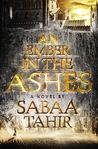
An Ember in the Ashes

An Ember in the Ashes (An Ember in the Ashes, #1)An Ember in the Ashes by Sabaa Tahir
My rating: 3 of 5 stars

Laia is a young woman who was unfortunately born into a caste without rights. Anyone among the ruling class can do anything to her and her people without repercussions. She lives in the shadow of this fear and one day her nightmares become real. The Martial Empire comes to her home, slaughters her grandparents, and arrests her brother for treason. She manages to escape, but vows to rescue her brother regardless of the cost. Laia agrees to spy for the Resistance and in exchange they will free her brother. Her target is the Commandant, the master of a brutal military school named Blackcliff.

Elias is a young man living a life he never wanted. He's about to graduate from Blackliff and then he plans to escape forever. If he's caught he'll be brutally murdered.

An Ember In The Ashes was a good novel. I immediately found myself caring deeply for what was happening to Laia and Elias, two unfortunate souls living out their place in life. I also felt strongly for Helene and Izzi two young women who were forced to go through hardships with the point of view characters.

Sabaa Tahir really captured brutality in the Commandant, the trials, and life in general. I often felt sick because of the circumstances the characters faced and what they had to endure.

While I thought the novel was good there were a couple of parts I disliked. I really didn't like when Laia and Elias were together. They had an unbelievable connection through most of their encounters. The two of them together felt like forced instant connection which is particularly insane since Laia hated Masks and Martials in general. Elias risking as much as he did for her also didn't make any sense to me.

The other part I disliked was the ending. It felt like someone peed in my soup. It felt like I was a kid again, someone let go of my balloon full of helium, and I was forced to watch it float away. The book had so much buildup and intrigue, but it felt like it ran out of ideas at the end. There were major points that weren't touched on enough. Instead of leaving me intrigued or curious, they left me feeling annoyed.

In the end An Ember in the Ashes was a solid novel that unfortunately left me disappointed at the end.

View all my reviews

Return to Honor

Return to Honor (Powder Mage, #1.5)Return to Honor by Brian McClellan
My rating: 4 of 5 stars

My very first thought on Return to Honor is that I definitely enjoyed it.

Return to Honor is a straight forward story that takes place in between Promise of Blood and The Crimson Campaign. Field Marshal Tamas gives Vlora a solo mission to track down a prielight guard who worked for Charelmund and has information that exposes Adran plans and numbers.

The short story has the familiar feel of the Powder Mage world while reinforcing certain points from the series such as an extremely skilled swordsman being capable of holding off or defeating a powder mage.

It was good to get Vlora's internal monologue since she's the most hated person on Tamas's side over cheating on Taniel. She's clearly torn up over the repercussions of cheating on Taniel, particularly the loss of her adoptive father's love.

On a side rant How weird was Taniel and Vlora's relationship? They grew up together and were practically siblings. I guess it would at least make holidays easy having the same father.

Overall 4 out of 5 stars. This is for anyone who likes the Powder Mage trilogy, short stories, and novellas.

View all my reviews

Tuesday, September 22, 2015

The Invisible Man

The Invisible ManThe Invisible Man by H.G. Wells
My rating: 3 of 5 stars

A scientist invents a invisibility drug and slowly goes mad. Chaos ensues!

I read this as part of a colossal Invisible Man group read. We're all familiar with the basics of the tale. For a story written before R'lyeh sank beneath the waves, it was surprisingly readable.

So a scientist named Griffin invents a serum that makes him invisible. What's he do with it? Become an even bigger douche nozzle! Griffin becomes invisible and is suddenly above the law, stealing as he sees fit and cheapshotting people who can't see him. Sadly, I think a lot of people would let their id take over under similar circumstances. While on the surface, it's the tale of a dickish scientist, it's more about what people do when no one is watching and what they'd do without fear of punishment.

The book is pretty slim and Griffin spends most of it being a bullying shit to people when he's not relating his backstory. The concept is still interesting after all these millennia but I like the works inspired by it better than the genuine article. 3 out of 5 stars.

View all my reviews

Monday, September 21, 2015

A History of 1927 America

One Summer: America, 1927One Summer: America, 1927 by Bill Bryson
Reviewed by Jason Koivu
My rating: 4 of 5 stars

I know I'm Johnny-come-lately on the Bill Bryson bandwagon, but I am fast becoming a full-fledged fanclub member!

Honestly, I'd read just about anything that dude wrote. In fact, if I can convince him to write my obituary, I'm going to throw myself in front of a bus the first chance I get just so I can read it!

The title of One Summer: America, 1927 explains pretty clearly what's between the covers. And oh boy, what a whole heck of a lot happened that year! Here's some of the highlights >>>

Charles Lindbergh's historic flight across the Atlantic
description

The Great Mississippi Flood
description
The worst national disaster in U.S. history at the time, affected well over half a million people.

The advent of television
description

First real talkie, The Jazz Singer
description
Brings about the sudden death of silent films.

President Calvin Coolidge
description
Least hard working US President of all time.

Babe Ruth broke the current home run record
description

Lindbergh's story and that of flight in general takes up a large portion of this book. Babe Ruth and the Yankees also feature prominently. The tragic trial of Sacco and Vanzetti is discussed at length. But it's not just a book about the historic events of '27 or a relating of the principle players and their doings, but rather an all-era-encompassing work that takes in the broad epic of America's strange, exciting, dangerous, and in the very least, interesting happenings.

Bryson is a great storyteller. Here he does an excellent job in putting the reader into the time and place, giving you a feel for the general undercurrent of the people, the importance of an occurrence and its aftermath.

But it's not all about 1927. What led up to the big happenings that year are just as important to the greater understanding of the thing, and Bryson sets the table admirably. He also placates the curious by giving us the epilogue of the major players and events of this time, so the reader gets that comforting closure.

All in all, One Summer is a very satisfying way to endure a history lesson!


View all my reviews

Friday, September 18, 2015

The Evening Crowd at Kirmser's


Ricardo J. Brown
University of Minnesota Press
Reviewed by Nancy
5 out of 5 stars


Summary


For many, it is often difficult to imagine gay gathering places in the decades before the Stonewall riots of the 1960s, and nearly impossible to think of such communities outside the nation's largest cities. Yet such places did exist, and their histories tell amazing stories of survival and the struggle for acceptance and self-respect. When Ricardo J. Brown died in 1999, he left a compelling memoir of his youth and experiences as a young gay man in St. Paul. After being discharged from the navy for revealing his sexual orientation to a commanding officer in 1945, Brown returned to his hometown with a new self-awareness and a desire to find a group of people like himself. He discovered such a place in Kirmser's.

A small neighborhood bar owned by a German immigrant couple in St. Paul's downtown, Kirmser's served working-class customers during daylight hours, but became an unofficial home to the gay men and lesbians who gathered there nightly in the years following World War II. The Evening Crowd at Kirmser's introduces us to often humorous but frequently tragic stories of those who would become the author's friends: Flaming Youth, a homely, sardonic man who carried the nickname from his younger years ironically into middle age; Bud York, the "All-American Boy," who seduced all with his wholesome good looks and confidence; Dickie Grant, a likable, gentle boy who is arrested for writing bad checks and is murdered while in prison; and Dale, the author's best friend, who suddenly loses his job of six years after an anonymous note informed his employer that he is gay.

A revealing look at the origins of gay culture in a mid-sized city and among working-class people, The Evening Crowd at Kirmser's is destined to become a rare and unique classic.

My Review


After reading Jeb and Dash: A Diary of Gay Life, 1918-1945, I decided to look for other books about gay life before Stonewall and found this little treasure at the library. As much as I enjoyed Jeb’s observations of the world, the historical details, and glimpses of famous personalities, I found his story somewhat dry, plodding, and lacking in personality.

I breezed right through Ricardo Brown’s story of his early sexual experiences, his brief military career and dishonorable discharge for disclosing his homosexuality to his superiors, his family, the friends he made, and the bar they hung out at. Owned by a German couple, Kirmser’s was the only sanctuary for the gay and lesbian working-class inhabitants of St. Paul, Minnesota in the 1940’s. Even with the daytime crowd safely at home, one had to be careful entering the bar in order to avoid being seen. In those days, it was essential to live a double life, or risk abandonment, harassment, termination of employment, or arrest. Among friends, it was still necessary to be cautious. No one wanted to disclose too much personal information, or to be seen together outside of Kirmser’s. Engaging in subterfuge and lying was the only way to survive.

“We didn’t always trust one another at Kirmser’s, but we did have a feeling of kinship. We had been brought up in stable, family-oriented, religious homes, and we tried to apply the values we learned there to the small brotherhood and sisterhood at Kirmser’s. We might be jealous of one another, suspicious, even hateful at times, but there was no denying our blood bond. We were family.”


In a time where men and women were expected to adhere to rigid gender expectations, deviating from the norm resulted in humiliation and punishment by well-intentioned family members.

“After Ruth introduced us, we stood there for a few minutes talking. It was hard for me to concentrate on what the mother was saying, because I was trying not to stare at Ruth. Her cheerful, unassuming confidence was gone. She stood there, stricken, our stocky little packer from Kirmser’s, in a pink dress with a lot of buttons on it, in ladies’ shoes and nylon stockings, her face pink with embarrassment, her lips painted. She was almost cowering, as if she were trying to draw in upon herself, to somehow conceal this awful exposure.“


When things were bad and people needed an escape, there was always the movies.

“Movies gave us an enchanted, shared sensation, like sex without the body parts. It was something you could almost feel embrace you, a ghostly encounter, and we responded, tense, expectant, enthralled. We were manipulated toward the cinematic climax with emotions so strong, of such rarely touched depths, that we alternately laughed or cried until finally, at the end, an involuntary shudder and a profound relief spread through the audience like an immense ejaculation. It was escape. It made anything seem possible. It was a feeling so breathtaking we never wanted it to end.”


Though this is a short book, it is well written, engaging, and comprehensive. The intimate style exudes humor and warmth. While there is a glimmer of happiness for some of the characters, all of them suffer hardships and carry on with strength and dignity despite the prejudice that was a fact of their lives.

Thursday, September 17, 2015

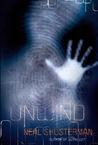
Unwind

Unwind (Unwind, #1)Unwind by Neal Shusterman
My rating: 5 of 5 stars

The Heartland War was the country's second civil war. It was fought over pro-life and pro-choice. When the war ended a new law was enacted. Abortion was illegal, but children between the ages of 13 and 18 could be unwound. Unwinding is a process where a child is surgically dismembered and by law every part of them must go to someone else. The theory being if every part of the child goes to different people life doesn't end. Three young people Connor, Risa, and Lev now face the process for different reasons. Connor has a habit of lashing out in words and actions so his parents signed him up for unwinding. Risa is a ward for the state and isn't considered special enough to continue living. Lev is a tithe, a child born and raised to be unwound. The three of them are running for their lives and hoping against hope to survive.

Unwind is one of those books where I wanted to jump into the book and fight almost everyone. I wanted to fight the parents who signed their kids away, the state counselors especially the one who said "my nephew was unwound there", all the lackadaisical juvey-cops, and every other person who looked away rather than helping the lawfully murdered children. If it wasn't for the kind people who care enough to do something throughout the book then I'm not sure I could have finished it.

So the three protagonists Connor, Risa, and Lev represented the three different type of children who were unwound. Connor's parents signed his life away, the foster care system vetoed Risa's life, and Lev was born to be unwound. All three types sickened me for different reasons. The notion a parent would choose to have their child dismembered seemed unfathomable. It surprised me that the threat of unwinding didn't lead to docile children who'd try to destroy the world once they reached 18. I imagine I'd be too scared to do anything wrong while unwinding was a possibility. Tithing a child shows religion at its worst. The parents and pastors even used the bible to justify tithing a child.

The foster care wards being sent for unwinding was different yet equally disturbing. Because of the drastic change in laws with unwinding an additional law was created, storking. Storking allows new parents to leave their child on someone's doorstep and if they aren't caught the family is legally obligated to take custody of the child. This in turn leads to the overloaded foster care system with limited funds. Which leads to teenage wards of the state often being sent for unwinding if they aren't deemed valuable enough to society.

The story is rife with concepts that are familiar. The pro-life pro-choice argument that leads to war is one that our world is facing today with little to no signs of ever ending. The juvey-cops and doctors felt every inch like the Gestapo hunting down Jewish people during the Holocaust.

Unwind made me want to scream and thrash to think about how people could just stand by and do nothing. Especially since people, me included more often than I'd care to admit, are unfortunately quite like this even today.

View all my reviews