Sunday, February 4, 2018

Heroes of Red Hook

Heroes of Red HookHeroes of Red Hook by Brian M. Sammons
My rating: 4 of 5 stars

Heroes of Red Hook is a collection of Lovecraftian tales starring men and women of color, LGBT people, and other people spurned by society in the 1920's.

I contributed to the Kickstarter for this so it was high time I read it. Heroes of Red Hook contains eighteen tales, ranging from average to exceptional. Unlike a lot of collections of this type, I didn't consider a single one to be a dud.

It started a little rocky, though. Out of the first four, only two contained elements of cosmic horror. However, things soon kicked into high gear.

The tales featured a wide range of Lovecraftian elements, though Shub Niggurath, Dark Goat of the Woods with a Thousand Young, made more than its fair share of appearances. Quite a few of the tales feature characters that welcome revisiting.

Standouts of the collection include Beyond the Black Arcade by Edward Erdelac, The Backwards Man by Tim Waggoner, Hungry Ghosts by Cody Goodfellow, and Men and Women by Oscar Rios.

Heroes of Red Hook is a very well produced anthology of Lovecraftian tales, in content, theme, and presentation. If you're looking for a compelling anthology of cosmic horror, this one shouldn't be missed. Four out of five stars.

View all my reviews

Saturday, February 3, 2018

"Black Star Renegades by Michael Moreci is a great read


"Black Star Renegades" is a seat of the pants, loads of action, space opera romp. In Michael Moreci's hands, you won't find a technical description of the FTL drive of the star ship. And, I could care less, because this adventure novel packs in all that one wants in space opera. A young hero/savior, with a moody weapon of mass destruction, leads/ cajoles a rag tag revolution against an evil empire of world destroyers and killers. This is not deep thought, but it is big fun. Buckle in boyos and go for a ride.

Cade Sura and his older brother Tristan were scooped up off Kyysring, a back water world, home to criminal gangs and extra legal enterprises, when they were youths by Ser Jorken, a Master Rai (think Jedi) from the Well. The Rai are a noble group dedicated to enforcing galactic peace.

Fast forward ten years and the universe is threatened by the world destroying Praxis, an empire that has the War Hammer-a star killer machine, that literally eats your star. The Praxis have subjugated planets and destroyed the stars of planets that won't submit.

Cade and Tristan are now young Rai's and they have been sent on a secret mission to claim the Rokura, a super weapon forged by the legendary warrior Wu-Xia, that is supposed to be claimed by the "Paragon" who will wield it in a time of terrible tidings to bring order to the universe. Tristan is super brother, the one everyone thinks is best able to wield the Rokura. Cade is the nobody younger brother that everyone thinks is reckless. The Rokura is located in a giant Spire on a world surround by destructive weather and evil Praxis forces.

After a thrill of a space ship landing, fights and thrills on the way to the top of the Spire, the brothers reach the chamber where the Rokura is in a status field, but betrayal awaits them as well. Cade ends up with the Rokura, but he is not really the "Paragon" and it is an uneasy alliance between the young Rai and the moody semi sentient weapon.

Cade makes it back to the Well with the weapon, where the Masters barely welcome him and immediately the Well comes under attack by the Praxis. Ga Halle, the Praxis evil leader, and her evil special warriors - the Fatebreakers- are there to reclaim the Rokura. Cade joins up with Kira Sen, a fighter pilot and the leader of the elite Omega Squadron to escape the attack. Kira has a plan, she wants to destroy the War Hammer. In the attempt to escape the Praxis, Cade and Kira end up back on Kyysring, where Cade runs into his old friend Mig, an engineering genius, who has befriended a killer robot - 4-Qel. Cade and Mig's reunion is of course, not fun, and throw in attacks by the Praxis again, and the four join forces on the run to head to Mithlador, a mining planet where a super element is located that can help with Kira's plan to destroy the War Hammer. Mithlador is also the location of Percival White, a former Paragon who gave up on wielding the Rokura.

The young heroes and 4 Qel meet up with Percival, but the meeting does not go well, shockingly, and the Praxis arrive just in time to mess up Cade’s meeting with Percival.

Mig is captured by the Praxis who demand that Cade turn over the Rokura to them in return for his friend, but the heroes have their own plans, and joined by the Omega Squadron and others plot a rude upset to the Praxis plans. There will be plenty of individual fights and Cade will mix it up with a traitor to the Well. And the Rokura will have to act at last.

Fueled by a highly readable plot, great action and engaging characters this novel delivers in spades. It’s high fun and big rewards. Don’t miss it.

Friday, February 2, 2018

Spectacularly Broken


Sage C. Holloway
Loose ID
Reviewed by Nancy
3 out of 5 stars


Summary


Turns out naked and hungover on the floor is not the most strategically sound place to be when your dad comes home early. Take it from someone who learned the hard way: nineteen-year-old Lysander Shepherd – son of movie stars, spoiled brat, enthusiastic proponent of drugs and orgies... and now, unwilling resident of Oak Hill Manor, a retreat for troubled teenagers.

Before he knows what's happening, his designer duds have been switched for tie-dye shirts in therapy team colors, and he is surrounded by an assortment of misfits: a timid nerd, a mute girl, a hyperactive kid... and captivating loner Cai Fields, who is admittedly pretty hot, but seems to hate the world in general and Lysander in particular.

Soon Lysander struggles with lies, withdrawal, and several uncomfortable revelations that he never intended to make, but he also gains surprising amounts of support right in the middle of secret late-night parties, fisticuffs over doing the dishes, and, of all things, croissant blackmail. Even as Cai and Lysander finally give in to the irresistible attraction between them and make a grasp for happiness, their darkest secrets remain – secrets with the power to destroy everything they've fought so hard to have.


My Review


I have such mixed feelings about this book.

On the plus side, it is well written, engaging, warm, funny, and sad.

19-year-old Lysander parties hard, has too much sex, and has no clue what he wants out of life. His father is a famous actor and absentee parent who provides everything but the support and structure kids need while they are growing up.

Beyond frustrated, Lysander’s father sends him away for a few weeks to Oak Hill Manor, a retreat for troubled children. He is accompanied by his cousin, Finn, who shares a resemblance, but lives a totally different life.

At the retreat, Finn and Lysander are in separate groups with other troubled teens. While participating in group therapy sessions, games and activities, they get to know each other and form friendships. Lysander keeps a low profile, not wanting to reveal his background to others. How he accomplishes this is a spoiler, so I won’t say anything more. I will just say it is fun, clever and entertaining.

Though it wasn’t difficult for me to warm up to Lysander and his newfound friends, I was disturbed that kids were grouped together seemingly without any regard for the problems that brought them to Oak Hill Manor. I felt the therapists and staff were lacking in knowledge, sensitivity, and had little regard for confidentiality. The problems faced by the retreat attendees were portrayed in such a shallow and simplistic way that I very nearly set the book aside. I’ve read other books that dealt much more sensitively and realistically with serious trauma and mental health problems. This wasn’t it.

If you can overlook this, enjoy the story for Lysander’s thoughtful narration, his growth, the love and friendships that anchor him, and the touching revelations between father and son that had me tearing up. I would have preferred an open ending rather than the conveniently happy-sappy ending that diminishes this story’s worth.

I’m still glad I read it.

Thursday, February 1, 2018

Road of the Lost

Road of the Lost: Book One of the Judges CycleRoad of the Lost: Book One of the Judges Cycle by Aidan Russell
My rating: 2 of 5 stars

The magical forest Miradep has found itself swarming with those who do not belong. The Dark Elves and their Ogre allies are infesting the forest and endangering those they come across. Reslo, a Sylan Elf and Guardian of Old Column Road, finds himself thrust into the dangerous events with the unwanted help of two brand new Knights, Sir Jerah and Sir Gratas. The Knights were also sidetracked from their mission of finding their orders champion who went missing in Miradep along with a legendary sword. This unlikely trio are the only ones who can protect those they love from all out war.

Road of the Lost is an ambitious and action filled story. Unfortunately those aspects are both good and bad. I enjoy vast world's filled with lots of details and tidbits, but unfortunately the story was more focused on establishing the world for sequels instead of telling a strong and coherent story. The first 35 percent or so of the book was spent largely going from one aimless fight to another without paying any real attention to why things were happening. At roughly 35 percent a largely vague and trite plot is unveiled, find the crystals, save the forest, and perhaps the world.

The main characters Reslo, Jerah, and Gratas didn't really resonate with me. For most of the book Reslo was annoyed with Jerah and Gratas, Jerah and Gratas were annoyed with Reslo, and I was largely annoyed with all three of them. Their interactions were supposed to come across as funny or at least pleasant at times, but they didn't do anything positive for me.

The best part of the book were the plentiful fights and battles. The three main characters were certainly not afraid to find themselves in a shuttle and the book did a good job describing their battles.

Road of the Lost laid a lot of the groundwork for the Judges Cycle series and hopefully that work pays off more in the sequels.

I received this ARC from NetGalley in exchange for an honest review.

View all my reviews

The Crimson Vault

The Crimson Vault (Traveler's Gate, #2)The Crimson Vault by Will Wight
My rating: 3 of 5 stars

Damasca and Enosh find themselves preparing for war. Simon is torn about who to side with, Alin or his fellow Valinhall Travelers. As all this is happening an even worse threat emerges, the Valinhall Incarnation is free and intends to kill the king and anyone he deems unworthy.

The Crimson Vault was a solid sequel to the House of Blades. It suffers from being the middle book in the series as it's trying to set a lot up at once. The most disappointing part is the increased point of view time from Alin, Leah, and some other travelers. Alin is a spectator for the majority of the book which leads to the reader learning seemingly all of Enosh's plans. Leah is important, but I find her uninteresting. I wanted to see more point of view chapters from Simon, Indirial, and any of the other Valinhall Travelers. I came to see them and got too much of Alin, Leah, and some random characters.

The book took on a quite political storyline. Two opposing sides each with useful points, but unwilling to cooperate. The Damascans bound the uncontrollably powerful incarnations at the cost of 9 lives a year. The Enosh found that detestable and wish to free the Incarnations in order to stop the sacrifices. Yet they don't consider the possible devastation a single Incarnation could cause let alone all 10 of them. Neither side seems totally right or wrong. Either way people will suffer and die.

The strength of the series continues to be the Valinhall Travelers. Simon and Indirial are the two characters I found myself being most interested in and concerned about. Kai is strange to put it mildly, but interesting. The book doesn't show enough about Denner to get a good feel for him, but he seems like a solid character when he appears. Honesty I would have enjoyed the book more if it was told entirely from their point of views.

The Crimson Vault wasn't what I had hoped for, but it was good enough that I will be reading the next book shortly.

View all my reviews

Wednesday, January 31, 2018

THE GARDEN OF BLUE ROSES BY MICHAEL BARSA

The Garden of Blue RosesThe Garden of Blue Roses by Michael Barsa
My rating: 5 of 5 stars

”I didn’t trust his death. Father was an author. He was words. You can’t kill words---can’t lock them up and drive them off a cliff.”

 photo Blue20Roses_zpsyeap70si.jpg

The Crane children were raised on tales such as Charles Maturin’s Melmoth the Wanderer, Bram Stoker’s Dracula, and Matthew Lewis’s The Monk. Not to mention the lurid tales of Edgar Allan Poe. The ”virus of fear” was planted in their lives early, and the tendrils of dread have spread into every nook and cranny of their brains, coloring everything they see with sepia tones of gothic gloom, creaking stairs, window rattling angst.

What is real? What is mere fabrication from a vivid imagination? I wonder about that all the time. Did I really see that, and more importantly, did I interpret what I saw correctly? The spectres of ghosts and the antics of hobgoblins often seem to dance and skitter about on the edges of my sight. A glimpse of something half seen is but fodder for speculation and the inspiration for quills of shivers to prickle my spine.

Those same quivers of unease frolic along the highways and byways of my neurons as I collect the pieces of this plot to assemble a portrait of insidious intrigue.

Klara, the daughter, attempts to leave. She marries and tries to have a life away from her father, away from the air of apprehension that smothers this house as words of terror trickle down from the attic where John Crane, The John Crane, works on his next creature born of midnight ink and ghostly paper. Klara fails to flourish... out there. She slinks back to the family hearth, bearing more unease than when she left, shattered by the knowledge that her world, once large, has shrunk to the confines of her father’s existence.

Milo, the maker of models, is the narrator of our tale. ”I blended flesh---cinnabar red, yellow, white, olive green---and dipped the brush’s tip. Now the final touch. To breathe life into my lips.” There are varying degrees of strange, and part of the intrigue of this novel is observing enough of Milo’s behavior to decide just how odd the young man is. He is an unreliable narrator, but at the same time, so compelling that I am continually convinced of his version of events. If we think of his life as a mirror reflecting his existence, there is a crack in the corner, and with every creak and groan of the Crane home, that fissure lengthens.

Everything is fine, well as fine as it can be, until Henri shows up. Klara has decided that she wants to build a beautiful garden in honor of their father and mother. She hires Henri, who proclaims himself a great artistic gardener, but he seems to have shed his past like a python casting off his old skin. Milo is naturally curious and concerned about the influence that Henri so quickly achieves over Klara. They are at war from almost the very beginning, a battle for Klara.

”I sent a whisper across his sweat damp back, an insinuated magical word:

‘Malevolent.’

I told myself it was a powerful word, one that Father always loved, with its shades of reverent and violent and malignant. Yet as soon as I’d uttered it, I realized my mistake. Because suddenly it was more than a word. More than a spoken one, I mean. I saw it hanging in the air like an invisible word cloud. What was happening? Henri turned and flashed his yellow teeth. Then the word was gone, bits of its dismembered letters dribbling down his chin. I saw a footless a, severed m, decapitated e. I backed up, moved a chair between us, a flimsy barrier that I was sure would do no good. Yet I clung to it for something tangible to hold onto.

Is this how a fictional character reveals himself?”


A character from his father’s novels keeps rolling around in Milo’s head like a guardian angel of mayhem. Keith Sentelle is/was a psychotic killer and not a role model for anyone. A talon tipped question leaps out of the shadows...who created Keith Sentelle? Was it The John Crane? Or was it Milo? And while we are on this subject, who wrote the...well, I can’t really go there.

I can’t trust what Milo perceives.

The flimsy wall between fiction and reality is perforated with large gaping holes, slashes and gashes, rips and tears, and monster spore litters the ground on both sides of the tattered remains of the ramparts.

”...there was Henry walking through a greenhouse in a loose tan shirt with rolled-up sleeves. I gripped the chair’s leather arm. But I couldn’t look away---my curiosity was aroused. I found myself searching for stitches, scars, rivets---signs that he’d been made---or the unholy aura of a creature summoned from another world.”

Was the death of the Crane parents an accident?

There are so many questions that wiggle their way through this plot. I hunted those questions with a knife, trying to pin them to the floor or to the door or to the ear of a whore. I was careful not to sever them, or one becomes two. Answers are untrustworthy. These words, paragraphs, pages must be read with a spry mind. One cannot remain naive and hope to find a path back to reality.

I’ve seen that people are starting to compare this novel to the works of some of the great psychological horror writers, and they are right in doing so. Michael Barsa has written a brilliant novel with so many beautiful layers. I would read, ponder, and carefully consider all the suggestions of what has been dangled before me before I would read more. Rarely does this occur to me anymore, but my first thought after finishing this book was...I need to begin reading this book again. Barsa gives many nods to those writers who have come before him and I hope he continues to write in this genre. Gothic tales have always been a favorite of mine and I can see Barsa carving out a new genre...modern gothic.

If you wish to see more of my most recent book and movie reviews, visit http://www.jeffreykeeten.com
I also have a Facebook blogger page at:https://www.facebook.com/JeffreyKeeten

View all my reviews

Tuesday, January 30, 2018

Markswoman (Asiana, #1) By: Rati Mehrotra

Markswoman (Asiana, #1)Markswoman by Rati Mehrotra
My rating: 4 of 5 stars

I am fairly vocal on things I don't like as is 95 percent of the internet. However, I am open to anything. I never cared much for the young adult genre. (I will discuss reasons elsewhere)

I didn't realize Markswoman was this genre to begin with, but this is a case where the strengths of the tale and writing overcame my ideas of percieved "weakness." The worldbuilding is top notch and rich, a post apocolyptic future that is thrown back to past times is a setting I love, I loved the concept and the depth of the world Ms. Mehrotra created. I enjoyed the characters, which is always a plus.

My only issues are mostly mine, The story falls firmly into most YA tropes, although for me, the pluses balance it out, and things sort of fall flat at the end, (but considering it's the first of a series, that could be explained)

It is a fun read, worth the time if you are a fan of everything I said above.


View all my reviews

Monday, January 29, 2018

Graham Greene's Quiet American

The Quiet AmericanThe Quiet American by Graham Greene
Reviewed by Jason Koivu
My rating: 4 of 5 stars

Relationships are complicated by human failings. It's one of British author Graham Greene's themes, and it's fair enough and true. And in Green's world a happy ending is, at best, an ambivalent one. This would explain why I have such a hard time enjoying his books.

He was a great writer. His stories often get to the heart of the matter, eventually. The problem is, he wrote so accurately about human behavior as to make his novels quite trying to one's patience. If you're looking for flawed characters making bad choices for psychologically sound reasons, at least in their own minds, well then you've come to the right shop.

The Quiet American is set during France's "Vietnam War", the one before America's. I believe it was called the First Indochina War, and it stretched from the mid '40s to the mid '50s. This book reads like a news article forecasting a coming war, for it focuses on an American militant outlier's involvement in a conflict well before the U.S. government would eventually get involved.

The story follows a British journalist covering the war, who meets a seemingly naive and mysterious American with idealized notions of what's best of the native population, and who swoops in and steals the Brit's bit of foreign good-time fluff. The American's off-the-cuff charm, the Brit's loveless love, and the aloofness of Vietnamese love interest that finishes of the love triangle, all three of these principle participants are mostly in it for themselves, for their own motives, but they are neither good nor bad people. They are just people.

The military conflict mirrors the human relationship, and the same questions can be asked of both situations: "What are you doing here?" and "Why are you interfering?"

I keep trying to enjoy Greene's books, but it just ain't happening. I mean, yeah I gave this 4 stars (it would be a 3.5 if I could use halves) because it is good writing. However, it's just never thoroughly enjoyable. There's always a certain "gloom" about his work. It's often slow, too, though it never grinds to a complete halt. However, I will continue reading Greene, because it deserves to be read.

View all my reviews

Sunday, January 28, 2018

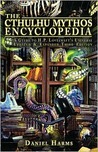
Cthulhu Mythos Encyclopedia

The Cthulhu Mythos EncyclopediaThe Cthulhu Mythos Encyclopedia by Daniel Harms
My rating: 4 of 5 stars

The Cthulhu Mythos Encyclopedia is a reference book detailing the works of HP Lovecraft and his contemporaries, as well as those influenced by them in the ensuing decades, relating to the Cthulhu mythos.

I've been on the periphery of Lovecraftian fandom for a couple decades, starting with Black Seas of Infinity: The Best of H.P. Lovecraft. With the amount of material out there, it's hard to know where to start. With this book, I finally feel like I have a guide.

The Cthulhu Mythos Encyclopedia is an exhaustive exploration of the Cthulhu mythos, detailing such mythos staples as Cthulhu, Nyarlathotep, and Randolph Carter, to tangently related characters like Conan, to later derivative works like Titus Crow. Throw in creatures like the Nightgaunts and books like the Book of Eibon, and you've got a ton of material to digest.

The best part is sources are mentioned. If you want to know where the information from the Dagon entry comes from, the book has you covered. If you want to know where The Blasted Heath is mentioned, ditto.

This book has quite a bit of depth and there must have been a staggering amount of research going into it. What other reference book has multiple origins of Abdul Alhazred, the mad Arab who penned the Necronomicon and the origin of the word Tekeli-Li?

The Cthulhu Mythos Encyclopedia isn't really a book you want to read from cover to cover. However, if you don't know Fthaggua from the Fungi from Yuggoth, you'll find this invaluable. Four out of five Fhtagn stars.

View all my reviews

Friday, January 26, 2018

Diventando: The Vessel


J. C. Wallace
Amber Allure
Reviewed by Nancy
2 out of 5 stars


Summary


Owen McIntyre is no stranger to the Grim Reaper. Diagnosed with leukemia at the age of fifteen, he's spent the last ten years slowly dying. With only two weeks until his next checkup, Owen’s body is already warning him that he is no longer in remission. Tired of the countless meds and chemo, not to mention the way his family coddles him, he decides to live and die on his own terms and forgo treatment. When he meets a lively college professor named Turk, conquering the man becomes part of Owen’s bucket list. But as Owen gets to know Turk, he starts to see him as more than a fling, a luxury that a dying man doesn't have.

But what if, suddenly, everything Owen knew to be true turned out to be a web of lies and deceit—even his diagnosis of cancer? Taken hostage, tied to a bed and subjected to painful experimentation, Owen's nightmare of leukemia is a far cry from the horrors he will face. No longer able to trust anyone in his life, including Turk, Owen is alone and cut off from the world. He has to make the hard decision to trust those who have betrayed him, including Turk (who he cares for deeply), or die a lonely death. With time running out, he’ll not only fight to live, but fight to want to live again, and even that might not be enough to save him from the evil that lurks inside.


My Review


Well, this book was a little different than I expected. I should have paid closer attention to the title, for it suggests what will eventually happen in this story. That’s not a bad thing, if you like suspense and supernatural elements with your romance. Normally I do, but I found that I was far more interested in 25-year-old Owen McIntyre’s journey with a terminal illness and the changes he undergoes as he seeks independence from his family, learns to live in the moment, comes to terms with death, and falls in love with Turk, who was just supposed to be a fling.

Complications arise in the form of Owen’s strange nightmares, Turk’s unusual research on demon possessions, Owen’s sudden onset of symptoms after being in remission for two years, and a hospital visit that makes his life a nightmare. As he is strapped down to a stretcher, he learns that his cancer diagnosis is a hoax, that he will not leave the hospital, and that there’s no one he can trust, not even Turk.

I know this sounds like it’s going to be a tension-filled thrill ride; strangely, this is the point where the story begins to lose steam. I would have liked more professionalism and dialogue between the medical staff and less of Owen’s rambly inner thoughts. The secondary characters, including Turk, could have been developed more. I felt Turk’s and Owen’s relationship moved too quickly in the face of a serious breach of trust. The action scenes moved along without a sense of urgency, and I never felt that Owen was in any real danger despite his callous treatment at the hands of the medical staff.

The writing was uneven and didn’t flow, particularly in the second half. Minor errors jumped out at me and pulled me out of the story.

As much as I enjoyed seeing Owen and Turk get their happy ending, I’m glad it’s over.