Tuesday, November 19, 2013

History Is Important, You Guys

1776 by David McCullough
2005
Reviewed by Diane K. M.
My Rating: 4 out of 5 stars


There are several reasons why I think this book is important, and it has a lot to do with the state of our schools. You've probably heard that public education in America is becoming more of a shambles each decade. I work at a community college and often feel like I'm on the front lines of this battle. While we have a number of good students, we also have a fair number 18- and 19-year-olds who simply aren't prepared for higher education and who, if the economy weren't so degree-oriented, probably wouldn't choose to go to college at all. A number of factors have been blamed for the decline of American schools, but one of the biggest culprits in my opinion is the overemphasis on standardized testing, especially as codified by the dreadful No Child Left Behind Act.


Both students and teachers have complained that high schools place so much emphasis on memorizing facts for the annual tests that it leaves little room for critical thinking, or interesting stories of history and literature, or anything else that makes learning fun and inspiring. I think this is a travesty, and it's not just the students who are being cheated — it is all of society, because without an educated citizenry we are lost.

We. Are. Lost.

Every time I see the title of McCullough's book, 1776, it reminds me of this issue because of an incident in a colleague's classroom. An English professor was making a point about how people today rely so much on their smartphones and the Internet that no one bothers to remember anything anymore because they assume they can just Google it. The professor pointed out that this lack of internal knowledge can hinder understanding and complex thinking. As an example he asked his students when America was founded. 

Dead silence. 

There were about 30 students in the class, and none of them knew. The professor said, "Seriously? You don't know when our country was founded?" After a few more moments of silence a student meekly raised his hand and said, "If we didn't have to memorize it for the test, we probably don't know it."

Big sigh.

OK, boys and girls, America was founded on July 4, 1776, when the Declaration of Independence was approved by the Continental Congress. This event happened in the midst of the American Revolutionary War, which is the focus of McCullough's book. 

I wanted to read 1776 for several reasons. First, I had loved McCullough's biography on President Harry Truman and was eager to read more of his books. Second, it has been almost 20 years since I was in an American history class, and I wanted to revisit the details of how my country was founded. The stories, myths and legends about each nation are passed through the generations and become part of someone's culture and identity. I don't think these stories should be forgotten.

The book focuses on battles with the British between 1775 and 1777. It opens with a quote from a letter written by General George Washington in January 1776: "The reflection upon my situation and that of this army produces many an uneasy hour when all around me are wrapped in sleep. Few people know the predicament we are in." 

Reading this book reminded me of how fragile America's independence was. Few of the "rebels" had military experience. Weapons and gun powder were in short supply. Because the colonial men had volunteered to fight, some resisted following military orders and didn't understand army discipline. Plus, the Brits controlled the sea. But for a few lucky turns of fate, the British might have won the war. McCullough concluded the book with this summation: "Especially for those who had been with Washington and who knew what a close call it was at the beginning — how often circumstance, storms, contrary winds, the oddities or strengths of individual character had made the difference — the outcome seemed little short of a miracle." 

My favorite stories in the book were of the fortification of Dorchester Heights during the Siege of Boston, the Battle of Long Island and how the colonialists managed to retreat the entire Army in one night, and Washington's crossing of the Delaware. McCullough weaves a pleasant narrative and makes long-ago events seem very real. I liked his inclusion of quotes from letters, and the details of each military strategy, including how the weather was that day. And his description of Washington made me want to read a good biography about him.

I listened to this on audio CD, and McCullough is an excellent narrator. I highly recommend it to fans of history. Hooray for lifelong learning!

Silver John

Who Fears the DevilWho Fears the Devil by Manly Wade Wellman
My rating: 3 of 5 stars

Silver John travels the Appalachian mountains, encountering all manner of strangness, with only his silver-stringed guitar for a companion...

I have a confession to make: I think 95% of fantasy stories are derivative and unoriginal. This collection is neither. Who Fears the Devil is the complete collection of Silver John short stories, 30 in number, ranging for three or four paragraphs to fifteen pages. Silver John is a wandering balladeer, modeled after a young Johnny Cash, who wanders from one strange event to the next.

The first thing I noticed about the stories were how skilled Manly Wade Wellman was at rendering Southern dialogue without making the speakers seem stupid. Once I dug in, the book was hard to set aside for too long and I'm not a big fan of short stories by any means.

The best way to describe the stories would be to call them American fantasy. The stories explore different aspects of Southern and mountain folklore, much having to do with witches, ghosts, demons, and other supernatural creatures. The line between fantasy and horror is blurred in some of them while others are pretty humorous. Silver John outwits supernatural beasties, encounters a giant, a house that's acutaly a living organism, and other things too odd to mention, all the while playing songs on his guitar and singing.

If you like fantasy that isn't derived from Tolkien, you could do a lot worse than spending a few evenings with Silver John.

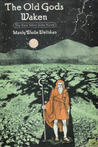
The Old Gods WakenThe Old Gods Waken by Manly Wade Wellman
My rating: 3 of 5 stars

While Silver John is staying with his friend Creed Forshay and Creed's son Luke, odd things start happening, odd things that seem to center on Forshay's new neighbors, two Englishmen named Brummitt and Hooper Voth. Can Silver John stop the Voth's from using Druidic magic to release an ancient evil?

Silver John is back in a full length novel. If you've read Who Fears the Devil, you know what to expect. The Old Gods Waken reads like an expanded version of a Silver John short story. All the things I liked about the Silver John short stories were here: Silver John himself, his bits of lore, and ancient evils lurking just around the corners of the Appalachian mountains.

The supporting cast was a little ahead of its time. Reuben Manco could have easily been a stereotypical Indian character and it was nice to see him mocking such stereotypes. Holly was a much stronger character than most female characters of the period, back when women in pulp stories were either victims or bait. The Voth brothers were suitably creepy and I loved how Wellman wove the Raven Mockers of Indian mythology into a story about druids.

It wasn't all roses and sunshine, though. I felt like parts of the story were a little on the convenient side and I didn't think the writing was as good as it was in the short stories in Who Fears the Devil.

Really, no big complaints. It was nice to read about Silver John again. I'd give it a 3.5 if I could.

Still on Goodreads

Monday, November 18, 2013

A Busy Spring in the 87th Precinct


Reviewed by James L. Thane
Three out of five stars


Spring finds the detectives of the 87th Precinct busy as usual. As the book opens, Detective Steve Carella has to deal with a beautiful young woman who decides she has nothing to live for and who has climbed out onto a ledge high above the street in her nightgown. She's ready to jump and in 1962, the PD doesn't yet have trained specialists to deal with a situation like this. Carella will do the best he can, but this really isn't his area of expertise.

Meanwhile, a hairbrush salesman is making his rounds. (Remember, it's 1962 when people other than the Girl Scouts apparently still sold things door-to-door.) The unsuspecting salesman rings the doorbell at an apartment which, unfortunately is filled with leaking natural gas. The electrical impulse from the bell touches off an explosion which blows the salesman and his hairbrushes all to hell.

When the dust settles, the police discover a man and a woman lying virtually naked in the bedroom dead from inhaling the gas. They also find a couple of empty Scotch bottles and a suicide note. But something seems off and most of the detectives believe that the deaths were really homicides.

Sadly, their investigation leads them nowhere. They discover some quirky facts about the case but nothing that absolutely disproves the apparent suicide and nothing that points the finger at a viable suspect. In the meantime, some unknown person has made it his hobby to periodically kick the crap out of Steve Carella, which does nothing to improve the detective's disposition. And unless the detectives catch a break soon, it appears that none of this will be resolved to anyone's satisfaction.

This is another very good entry in this series. As always, it's a pretty quick read and fans of the series are certain to enjoy it.

That is "Some Badass Pig"!

Charlotte's WebCharlotte's Web by E.B. White
Reviewed by Jason Koivu
My rating: 5 of 5 stars

I don't give a fig if it is a kid's book, Charlotte's Web is one of the most well-crafted stories ever written. This classic children's tale deserves 5 stars for story craft and language usage alone! (Read your Strunk & White to understand this man's talents in that regard.) The fact that it's a heart-warmer/wrencher clinches it. Never was I made to love pigs and spiders so much in my life. Charlotte's Web will always rank high amongst my favorites. But why, for the love of god, did they make us watch the cartoon version of this tear-jerker in school? Did they want to make us weep embarrassingly in front of one another? If so, mission accomplished, you sadistic school district!

View all my reviews

Sunday, November 17, 2013

Curse of the Spellmans. Lol.


CURSE OF THE SPELLMANS
Lisa Lutz

2008 by Simon & Schuster

Reviewed by Carol
three and a half stars


Lisa Lutz‘ Isabel Spellman series is a little like Janet Evanovich‘s Stephanie Plum. Not the recent ones but the early ones, the ones that made me laugh out loud before they got progressively more absurd and recycled the same plots. The Spellmans, however, are a family team and the nature of the family business means they can’t really escape each other, although they may periodically try. Book two, Curse of the Spellmans, was just as much fun as the first and perhaps even a smidge better. I found it to be an enjoyable, light read that was a load of fun on a sick day.

Plotting is typical Spellman craziness.  Rae accidentally runs over her police detective friend, Henry, who has to stay in the hospital with a mild concussion. A new neighbor moves in, equal parts cute and mysterious, and Isabel finds herself wondering if he has ex-boyfriend possibilities. Bernie is back from Vegas after his wife left him, so Isabel finds herself crowded out of her sublet by his all-night poker games and is forced to return home. Mom and Dad are trying out their own series of vacations, aka ‘disappearances;’ neighbor Mrs. Chandler wants Isabel to discover who’s re-creating her childhood pranks with her elaborate lawn displays; and Isabel’s best friend Petra is strangely out of touch. Eventually, Isabel gets arrested four times (but #2 and #4 don’t count) and learns some lessons, although perhaps not the ones she should.

This time the mysteries were more interesting, perhaps because with so little initial information, Isabel’s problem solving stays pretty true to real life. Unfortunately, her unsanctioned techniques result in a string of arrests, resulting in a legal needs. As brother David is AWOL, she turns to the octogenarian Morty, former D.A., who meets clients (she’s case #2) in his unfinished garage. Or the deli. Isabel has to call him to bail her out:
“‘I brought you a sandwich,” Morty said, and then handed me the abused paper bag. ‘It’s your favorite. Pastrami on rye.’
‘No, Morty, it’s your favorite, which would account for why there’s only half a sandwich left.’”

One of the interesting aspects of the Spellman series is Lutz’ unusual storytelling. The latest devices are chapters on “Suspicious Behavior Reports,” transcripts from Morty’s “Law Offices,” chapters peppered with footnotes and frequent taped conversations between Henry and Rae that become known as the “Stone and Spellman Show.” I don’t mind the footnotes, which are used well enough that they don’t break the rhythm of the story. Many of them reference book one, The Spellman Files. As far as series recap, that’s a nice way of saying, “find info here if you missed it,” while reminding current readers who might have forgotten and not annoying other readers with better memories.
Isabel’s voice is interesting. She has plenty of wry observations, but only shares them with the reader. I got a giggle out of Morty’s wife offering them an extensive list of refreshments, all of which Isabel politely declines. But then Morty interrupts:
“She’d like a cocoa,’ Morty said to Ruth, apparently placing his own secret order.”  

Isabel is self-aware enough that there are times when she realizes she’s pushing boundaries or obsessed, yet she still can’t let go. So far her awareness is interesting and adds possibilities for personal growth:
“On those occasions I may cross some ethical boundaries to reach my goal, simply to get answers to questions that won’t go away. I have many flaws, but I suppose the only one that truly damages my life is that I believe all questions have answers and I believe that I am entitled to those answers.”

Isn’t that the truth?

The Henry and Rae interludes are fascinating. Isabel’s mom encourages Rae’s association with Henry, figuring he’s probably the best role model she could find. Isabel finds herself playing chaperone to them, acting as the beard so they aren’t accused of an improper relationship, and taping the conversations at her mom’s request. Henry’s the straight foil to the general weirdness of the Spellmans, and Isabel just might be falling for him. An episode from the Stone and Spellman Show called ‘Henry’s Choice’ cracked me up:
Rae: Did you read any of that organ-donation material in the hospital?
Henry: Yes. It’s very sad.
Rae: More people need to donate their organs.
Henry: I agree completely….
Rae: Henry, if you ever needed a kidney, you could have one of mine.
Henry: Thanks, but I think you’re too young to be donating kidneys.
Rae: So you wouldn’t take it?…
Henry: So, I wouldn’t want to take a kidney from either of you.
Rae: But you have to pick. That’s the game.
Henry: I’m unaware of any such game existing.
Rae: I just made it up. It’s called Choose Your Organ Donor.
Henry: I don’t want to play that game.
Rae: Please.
Isabel: Just answer the question, Henry.

Absurd, misguided, melancholic with a touch of romance and a dollop of fear. I’ll check out the next when I need a light read, hoping that Lutz can manage some character development for Isobel while continuing interesting storytelling.


Cross-posted at  http://clsiewert.wordpress.com/2013/10/21/curse-of-the-spellmans-by-lisa-lutz-more-lolz/

Friday, November 15, 2013

Boy A


Jonathan Trigell
Serpent’s Tail
Reviewed by: Nancy
5 out of 5 stars

Summary

A is for Apple. A bad apple.

Jack has spent most of his life in juvenile institutions; he's about to be released with a new name, new job, and a new life. At 24, he is utterly innocent of the world, yet guilty of a monstrous childhood crime.

To his new friends, he is a good guy with occasional flashes of unexpected violence. To his girlfriend, he is strangely naive and unreachable. To his case worker, he’s a victim of the system and of media-driven hysteria.

And to himself, Jack is on permanent trial: he struggles to start from scratch, forget the past, become someone else.

At a time when the privacy of the individual is under threat from all sides, BOY A raises fundamental questions about the morality of the media.


My Review

If I hadn’t come across Mariel's review, I’d probably never have found out about this chilling story. To my surprise, it won multiple literary awards and was adapted to film. I really need to get out from under my rock more often.

Boy A is Jack, newly released from prison for the brutal killing of a young girl. He was a child himself when the crime occurred. Now he is 24 years old and trying to adjust to a world that has passed him by while he was imprisoned.

This story is not an exploration of the criminal mind, or about life in prison. It is about Jack’s life as an adult living under an assumed identity while he works, makes friends, and finds love. Jack has the support of his “uncle” Terry, who helps him adjust to life on the outside while protecting him from those who would not let him live his life if they knew about his crime.

I am reminded of Walter Mosley’s Always Outnumbered, Always Outgunned, a gripping story about a black man released from prison for a murder he committed while in a jealous rage. This story is different, because the man is an adult when he killed. There is no awkward transition between childhood and adulthood. He must live the best life he can while enduring poverty and prejudice.

Because Jack was a child when he killed, public outrage and media hysteria are at its worst. It is not enough for a criminal to do his time. He must pay for his mistakes the rest of his life. While Boy A is Jack’s story, it is also a commentary on the inadequacy of the prison system, how media can damage lives, and the influences parents, friends, and others can have on impressionable young lives.

I want to believe that Jack made it to the boat safely.

Also posted at Goodreads.

Thursday, November 14, 2013

A British National Treasure Indeed!

Moab is My Washpot

Stephen Fry

Review by Zorena

Five Stars

Summary

Stephen Fry has already given readers a taste of his tumultuous adolescence in his autobiographical first novel, The Liar, and now he reveals the equally tumultuous life that inspired it. Sent to boarding school at the age of seven, he survived beatings, misery, love affairs, carnal violation, expulsion, attempted suicide, criminal conviction and imprisonment to emerge, at the age of eighteen, ready to start over in a world in which he had always felt a stranger. One of very few Cambridge University graduates to have been imprisoned prior to his freshman year, Fry is a brilliantly idiosyncratic character who continues to attract controversy, empathy and real devotion.

My Review


How can you not love a man, that in the middle of why he kept his crooked nose veers off to discourse on how the monarchy is the crooked nose of Great Britain. Brilliant stuff!
Stephen has such a command of language and the written word that I felt his pains and triumphs. He agonizes over his lack of musical ability yet in the next breath he's soaring with his first tale of love. His love of words. His toys as he calls them. Using them to give this memoir a very unique title and strengthening my own love of language.
Unlike others, I knew a few things going in so I didn't find a lot of what he relayed quite so shocking. What I did find surprising is just how sincere he is over the pain some of his misadventures had caused others. A lot of biographies of celebrities either celebrate their crimes or try and sweep them under a rug. Stephen faces his head on and I found that profoundly heartening.
I am absurdly glad that I already have The Fry Chronicles so that I don't have to wait to continue Stephen's memoirs.

A Fine Piece of Work

Dirty Work
by Larry Brown
Published by Algonquin Books of Chapel Hill


5 Out of 5 Stars
Reviewed by Amanda

This is one of those books that I use to size up other people. If you've read Dirty Work and you didn't love it, I wish you well but I doubt I want to know you. This was the first Larry Brown book that I ever read and, after re-reading it, it is still as powerful and haunting the second time around.

The novel focuses on two Vietnam veterans in the VA hospital two decades after the war has ended, but the spiritual battle for these men goes on. Braiden, a black quadraplegic, has spent this entire time in the hospital and his imagination is his only means of escape. When Walter arrives under mysterious circumstances, Braiden thinks he's found his salvation. Walter's face was horribly mutilated and shell fragments lodged in his brain cause him to have uncontrollable "blackouts" from which he awakens with no memory. As these two men talk about their lives as they were and as they are, they revisit the painful landscape of Vietnam and Brown reveals how the war took much more from them than their bodies. The damage is emotional, spiritual, and mental; as Braiden says at one point, "It do something to you to kill another person. It ain't no dog lying there. Somebody. A person, talk like you, eat like you, got a mind like you. Got a soul like you . . . You look in somebody's eyes, then kill him, you remember them eyes. You remember that you was the last thing he seen."  The novel also reflects how it was the poor and, in particular, the black soldiers who were asked to give the most and expect nothing in return--not even valid reasons for fighting.

Brown's writing is simple, direct, and often bitingly funny when one least expects it. He knew how to capture the cadences and culture of working class Americans always one paycheck away from the brink of poverty and he always did so with the utmost respect, never denigrating or lessening their value to American society. When Brown died, we lost one of the finest writers of the American South and this novel is a testament to his gifts.

Wednesday, November 13, 2013

Thy Bros Well Before Thy Hoes

The Two Gentlemen of Verona
William Shakespeare
reviewd by Anthony Vacca
3 out of 5 stars

Academic squabbling and gauntlet-tossing over content and form aside, The Two Gentlemen of Verona stands as one of the earliest recorded attempts at the comedic form we have from the Shake. We see here many of the themes and plot devices that will surface again and again throughout the man’s body of comedic work, such as women disguising themselves as male pages, rings symbolizing fealty, bros rivaling over who has first dibs on the hottest of the hoes, lamebrain suitors, servants whose speech are littered with malapropisms (yet more often than not they’re the only ones spouting out anything closely-resembling wisdom), social structures being flung out the window once you leave the comfort of the castle and go out into the wilds of Italy’s forests, and a nice and neat ending with the necessary bombardment of marriages. This play is certainly clumsy and ridiculously implausible in places, but still it ends up being a satisfying and fun bit of witty merriment for any self-proclaimed lover of the Shake. Loved the Outlaws of Love who pop up in the last two acts to help facilitate the pulling of heads out of respective asses, and also Launce’s touching and funny soliloquy about his dog, Crab, which oddly enough is the closest thing to a genuine display of love and devotion found anywhere in this play about bratty and over-privileged rich kids and their feelings.

Even in the Galactic Demimonde Manners Matter


Star Well

Alexei Panshin

Ace

Reviewed by: Terry 

 3 out of 5 stars


 _Star Well_ by Alexei Panshin is an entertaining comedy of manners in the SF mode with a hint of the demimonde thrown in for flavour. Our protagonist is Anthony Villiers, Viscount Charteris, an aristocrat and fop whose life seems to be a perpetual Grand Tour of the Nashuite Empire, chasing the stipend afforded him by his father from port to port and resorting to what might, in impolite circles, be considered illicit means to gain funds when he is unable to catch up with it. He is no career criminal or grifter, though, and is content rather to live a life of comfort and fashion without sullying his hands with anything so low as labour or outright criminality. He is, in a word, a gentleman.

His travelling companion is the enigmatic Torve the Trog, a giant befurred frog who seems equal parts Yoda and Chewbacca. Torve is generally a rather stoic companion, at least in this volume, and is content merely to evade customs officials anxious to restrict Trog travel, sit cross-legged in the Palatine Suite composing indecipherable poetry seemingly based upon the single word “Thurb”, and utter gnomic phrases repudiating causality to Anthony whenever confronted by the latter’s concerns or problems:  “No, you have very strange mind. I do not understand. But is no mattering: favourable line of occurrence and friendship travel together. I like you – means nothing to me.” He is rather a charming fellow.

Star Well is a space port tunnelled into an asteroid which resides in the Flammarion Drift, an empty reach of space “where the stars don’t grow” and which is known primarily for some gambling, a little shopping, and an otherwise complete lack of interest. It is thus generally used as little more than a stopover by travellers on their way to somewhere else. This suits its owners and operators fine, since it is, of course, also the home of illegal smuggling and other illicit activities. We follow Anthony as he becomes embroiled in these activities, quite by accident of course, and meets such varied characters as Godwin the deadly enforcer of low birth and aristocratic yearnings (a man who, if it can be believed, has an even more accomplished toilet than that of Villiers…though of course it is somewhat vulgar in its ostentation); Godwin’s boss the cow-towing Hisan Bashir Shirabi who might make a formidable criminal if only he could overcome his awe of his betters; a corpulent and red robed priest of Mithras who may be more than he appears; and the charming and capable Louisa Parini, a fifteen year old girl of shadowy parentage en route to a finishing school for girls which she would most heartily like to avoid.

There is another character even more prevalent in the tale, the narrator, whose asides and commentary make up most of the ‘mannerism’ of the tale. I generally don’t mind an intrusive narrator like this (in fact I quite love it when done with panache, as in Dumas), and usually such a tale demands one, but I think Panshin needed a slightly lighter touch with him than was on display here. Some of the bon mots were a little too strained and it would have been nice to see a few more in the mouth of Villiers himself, though he does get a few of his own.

All in all this was an enjoyable tale and if you like the comedy of manners mode and light sci-fi then you will likely enjoy this. Despite its slight beginnings the story ends in a satisfactory manner and leaves open some room for the development of Villiers and his adventures to something more substantial. Two volumes follow (a fourth, concluding volume, was never produced due to disputes between Panshin and his publishers).

Also posted at Goodreads