Choker
by Elizabeth Woods
Reviewed by Sesana
Four out of five stars
Publisher Summary:
Sixteen-year-old Cara
Lange has been a loner ever since she moved away from her best and only
friend, Zoe, years ago. She eats lunch with the other girls from the
track team, but they're not really her friends. Mostly she spends her
time watching Ethan Gray from a distance, wishing he would finally
notice her, and avoiding the popular girls who call her "Choker" after a
humiliating incident in the cafeteria.
Then one day Cara comes
home to find Zoe waiting for her. Zoe's on the run from problems at
home, and Cara agrees to help her hide. With her best friend back,
Cara's life changes overnight. Zoe gives her a new look and new
confidence, and next thing she knows, she's getting invited to parties
and flirting with Ethan. Best of all, she has her BFF there to confide
in.
But just as quickly as Cara's life came together, it starts
to unravel. A girl goes missing in her town, and everyone is a
suspect—including Ethan. Worse still, Zoe starts behaving strangely, and
Cara begins to wonder what exactly her friend does all day when she's
at school. You're supposed to trust your best friend no matter what, but
what if she turns into a total stranger?
My Review:
The cover is pretty, but a little misleading. It looks like your average, run-of-the-mill YA PNR. There is some romance in this book, but it's limited. It's important to Cara, of course, but it isn't the most important thing, and it doesn't occupy her thoughts to the exclusion of all else. Especially later on in the book, as Zoe's behavior becomes more and more unpredictable, and stranger things happen around her.
I'll be honest and say that I saw the ending coming from very early on in the book. That didn't bother me as much as it maybe should have. I think that a lot of other readers, especially the teen girls who are the actual target audience, will take much longer to catch on, even be entirely surprised. And because I knew where it was going, I could see and appreciate how much thought and effort Woods put into making the ending work.
Cara's narration will probably make or break the book for many readers. She's painfully self-conscious around other people, verging on paranoia, and her train of thought goes off the rail with increasing frequency. This will, I'm sure, annoy some readers and leave others cold. But I found her narration to be painfully real in its details.
This is one of those books that just flew by as I was reading it. Yes, it's fairly short, but I was surprised at just how quickly I was taking it all in. Once I survived the painful second-hand embarrassment of the first chapter, I simply couldn't put it down. And I couldn't add Woods's second book, Figment, to my TBR fast enough.
Sunday, February 16, 2014
Friday, February 14, 2014
Winter's Bone
Daniel Woodrell
Little, Brown and Company
Reviewed by: Nancy
4 out of 5 stars
Summary
My Review
This
short novel has many things I enjoy in dark fiction – quirky, dysfunctional
characters, a determined heroine struggling to survive and keep her family
together, a bleak setting, a sense of hopelessness, people who pay the price
for their bad choices. This is a quiet
story that crept up on me slowly and haunted me for days afterward.
Actually,
it terrified me and made me glad I grew up in New York City. Sure, there were shootings, muggings,
carjackings, and stabbings. You just had
to watch your back constantly and try to stay out of the dangerous
neighborhoods. Once I was home and the
six deadbolts locked, I felt safe.
16-year-old
Ree Dolly has no sense of safety. Her
mother is mentally ill and unable to care for her children, her dad has disappeared,
her relatives are downright scary, and meth is a major source of the family’s
income.
I have
never been to the Ozarks and have no idea how accurately this story portrays
the region and its inhabitants, though I’m sure these characters really exist
somewhere.
What
keeps me from giving a five-star rating, is the prose. At times, it felt overwritten, taking me out
of the story. I also felt it was too
brief, making the characters and relationships too remote. In the end, I wanted more than an empty,
hollow feeling in the pit of my stomach.
Also
posted at Goodreads.
Thursday, February 13, 2014
The Sensei and the Student
Soseki
Matsume
Translator
Edwin McClellan
Review
by Zorena
Four
Stars
Summary
This
thought-provoking trilogy of stories explores the very essence of
loneliness and stands as a stirring introduction to modern Japanese
literature. It unfolds as three stories that are all related. The
story of the student (narrator), the student and the Sensei and
lastly the Sensei himself.
My
Review
It's
funny but I find myself returning to Japanese literature if I've been
either feeling unsettled in my reading or life. It makes a great
palate cleanser for me. This is also a return to this book. The first
time I read it I was far from being in the right place to appreciate
it and only read about half. On the re-read I'm finding I appreciate
it much more. The change in narrative perspective really helped to
balance the story. Going from an almost cold and distant recital of
the Narrator's life then starting to show the Narrator's struggle
with his own ethics and finally to the more heartfelt history of the
Sensei's life.
The simplicity of his writing conveys the ideas of loss, betrayal and loneliness far better than the most flowery prose. Not that this novel is written without beauty. There is much that is gentle and serene to be found here. Also we see that things unsaid may do more damage than good.
Death and suicide seem to figure prominently in a lot of Japanese literature and this story is no exception. Honour is so closely paralleled with them that it's a part of the culture. I still find it odd that Murakami's book Norwegian Wood dealing with it had less of an impact on me than Soseki's. I think it's because Murakami's characters lacked the depth and reasoning that Soseki's did. Soseki's Narrator and Sensei live in a world of honour whereas Murakami's characters seem to live in a world of selfish indulgence. Don't get me wrong. I love Murakami but sometimes I prefer this form of writing.
The simplicity of his writing conveys the ideas of loss, betrayal and loneliness far better than the most flowery prose. Not that this novel is written without beauty. There is much that is gentle and serene to be found here. Also we see that things unsaid may do more damage than good.
Death and suicide seem to figure prominently in a lot of Japanese literature and this story is no exception. Honour is so closely paralleled with them that it's a part of the culture. I still find it odd that Murakami's book Norwegian Wood dealing with it had less of an impact on me than Soseki's. I think it's because Murakami's characters lacked the depth and reasoning that Soseki's did. Soseki's Narrator and Sensei live in a world of honour whereas Murakami's characters seem to live in a world of selfish indulgence. Don't get me wrong. I love Murakami but sometimes I prefer this form of writing.
This
is a great first read for someone wanting to explore classic Japanese
Literature.
Wednesday, February 12, 2014
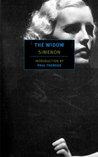
The Widow by Georges SimenonMy rating: 4 of 5 stars
”Murder shall entail the death penalty when it precedes, accompanies or follows another crime.”

“It just happened. As though a moment comes when it's both necessary and natural to make a decision that has long since been made. ”
― Georges Simenon
When Jean meets the eyes of the widow Tati on the bus he feels a slight shudder in the universe; and decides, on the spur of the moment, that he is going to get off the bus. It is the French countryside, so when Tati sees Jean walking up to her door she knows he is there for her.
Tati was indentured to the Couderc farmstead at the age of 14. She became pregnant by the son necessitating a quick wedding leaving two sisters, now sister-in-laws, bitter that the hired help now has the inside track on the inheritance. She has a father-in-law, Couderc, who chased her around the stables, the table, and eventually into a mound of hay or bed if one is convenient. This is long before her husband dies.
She is now 45 years old and would not be considered beautiful.
”...he pursed up his lips as though smiling to himself. Perhaps he was amused at widow Conderc’s wen. Everyone called it ‘the wen’. It was on her left cheek, a spot the size of a five-franc piece, a spot covered with hundreds of brown, silky hairs, as if a piece of animal’s hide, a marten say, had been grafted there.”

The Wen was the size of a Five franc coin.
She has a squat and solid body made for farm work. As Conderc starts to have more and more marbles rattling loose in his head. The bulk of the work has fallen to Tati. She has ideas about how to produce more income from the farm. Her “cunning eyes” are not just for show. She needs help and Jean’s arrival could not have been more perfectly timed.
She takes Jean to bed... right after church.
She explains that she will still need to give a “bit of fun” to the demented, but still horny Conderc. That does not concern Jean, after all he has just been released from prison, and from both perspectives it only seems practical that they will occasionally have sex. It isn’t love, nor lust, but simply a business arrangement.
There is one fly in the milk.
”He had nothing to say to her. He craved to be near her, but he had never thought of saying this or that. As he walked, he observed her profile and noted that her lower lip was full, almost swollen, which gave her a reflective, even a pouting look. She also had a very white, very fine skin, like all red-haired women, and very tiny ears.”
Ahh the girl next door.
Tati’s niece... Felicie. She is only sixteen, but she already has a child. The arrangement with Jean might be business, but no 45 year old woman wants to find herself competing for the attentions of a man with a 16 year old girl. Business or not, the green-eyed monster of jealousy stirs to life.
”Every person condemned to death shall be decapitated.”
As word of Jean’s criminal background circulates the countryside, the two sisters decide that it is too dangerous for Conderc to reside with someone so dangerous. There becomes this comical tug of war between the three women for possession of an old fool, that except for the inheritance, has no worth to anyone.
Simenon has so many potential flashpoints percolating throughout the plot. The speculation becomes what will happen first. There is this growing unease as the suspense reaches this high pitched sound like a teapot singing under heat. As Jean is put under more and more pressure we wonder can he escape himself.

Albert Camus...the rival.
I did not realize until I read the fascinating introduction for this book written by Paul Theroux that Georges Simenon had a rivalry with the decade younger Albert Camus. Theroux gives us an idea of the comparison.
”If reading Camus represents duty, Simenon represents indulgence, a lavishness that seems frivolous, inspiring a greedy satisfaction that shows a self-consciousness in even the most well-intentioned introductions to his work, the critic’s awkwardness over a pleasurable text, together with a shiver of snooty superfluity and the palpable cringe, common to many introducers of a Simenon novel, What am I doing here?
Simenon takes some sorting out, because at first glance he seems easily classified and on second thought (after you have read fifty or sixty of his books) unclassifiable. The Camus comparison is not gratuitous--Simenon often made it himself, and Andre Gide brought the subject up a few years after The Stranger appeared, favoring Simenon’s work, especially this novel.”
Interesting enough The Stranger and The Widow were both published in 1942.
In 1937 Simenon predicted he would win the Nobel Prize within ten years. When Camus won the Prize in 1957 Simenon was most gracious.
”Can you believe that asshole got it and not me?”
It is easy to dismiss Simenon because of the prodigious size of his oeuvre especially in comparison to the slender collected works of Camus. Quantity can be assumed to mean a loss of quality. In regards to Simenon that is simply not true.
We can be distracted by Simenon’s life. He boasted he’d slept with 10,000 women ( long before Wilt Chamberlain boasted a similar number). Simenon’s second wife, after putting pen to paper, came up with a number closer to 1,200, still he was a busy little beaver. He also had an unusual arrangement, living with three women including his ex-wife, his wife, and his secretary all of whom also provided him with sexual entertainment. Despite their best efforts he still constantly sought the services of the bordellos that were, and probably still are, in plentiful supply in Paris. His style is easy to read. You will not be looking up words. He would consider that a failure of style. Nor will you have moments of confusion over a complicated sentence. His books are gritty, real, and always have a final punch that leaves you staring up at the stars thinking to yourself “I didn’t see it coming.”
”Any murder committed with premeditation or preceded by ambush is defined as assassination…”
View all my reviews
A World Teetering on the Edge of Apocalypse
The Judging Eye
R. Scott Bakker
Penguin Books
Reviewed by: Terry
4 out of 5 stars
Despite some trepidation with the thought I keep coming back to the idea that R. Scott Bakker’s ‘Prince of Nothing’ and ‘Aspect Emperor’ series are, if not the true inheritors of Tolkien’s legacy, at least the most innovative step forward in the realm of epic fantasy that is consciously derived from the genre-changing (or creating) impact of JRRT. Most other fantasies that are obviously influenced by the Professor are at best re-treading the same, or similar, ground in fairly limited ways or, at worst, are nothing more than poorly written pastiches or bad copies with the serial numbers filed off. Bakker, on the other hand, doesn’t just reproduce Tolkien’s tropes as they ended up being presented in his Middle Earth books, instead he does what most other fantasy writers seem unable to do: examine the fundamentals that lie behind these tropes and reinterpret them in his own unique and (very) different ways. Thus we have the ‘Nonmen’, something analogous to Tolkien’s Elves, though re-imagined in a way that really points out their alien nature when compared to humanity. The Sranc and the No-God may have obvious similarities to Goblins/Orcs and the Dark Lord trope, but they are presented in such a visceral and, to me at least, different way that they really do bring something new to the party. Part of me is certain that Tolkien would be horrified at the idea of Bakker as his ‘true heir’ given the obvious darkness, one should probably even say cynicism or pessimism, of the secondary world that Bakker has created, but that is neither here nor there really. This tone is not even necessarily the point of greatest departure between them, since contrary to what many pundits assume there is actually a fair bit of darkness, even pessimism in Tolkien (especially if you have read The Silmarillion which I think for various reasons Bakker took as his primary model rather than the more famous The Lord of the Rings. The fact remains, though, that Tolkien’s works are coloured by his fundamentally Christian viewpoint that is tinged with the hope inherent in his belief in the eucatastrophic chance of salvation and this alone gives them a *very* different flavour from Bakker’s more ‘post-modern’ and secular perspective. I think it might also be the rape-aliens…but I’m getting a bit ahead of myself here.
First off, while this may indeed be the first volume in the ‘Aspect Emperor’ series it is definitely not the place to start with Bakker since this series is actually the sequel to his ‘Prince of Nothing’ books which ultimately set up the main conflict that is to be the driving force of the new trilogy. Both series are set in the world of Eärwa and this new volume picks up twenty years after the close of the former following the lives of the same characters, so if you have not yet read the first set of books then most of the impact of the characters and plot will be diminished, if not utterly lost on you, so check them out first. Secondly, keep in mind that this is a dark book (one whose fantasy has moments that, for me at least, blend into the realms of horror). While it is certainly true that the bad guys are utterly despicable and even grotesque in their evil (see mention to rape-aliens above), even the ‘good guys’ (really there aren’t any) are so shaded into grey that one wonders whether or not they aren’t actually black. In many ways this ‘realism’ and darkness put Bakker in the same group as writers such as Joe Abercrombie and Steven Erikson who are considered proponents of a ‘new’ sub-genre in epic fantasy which owes as much to the pulp Sword and Sorcery stories of the 20’s and 30’s as it does to traditional epic fantasy and dwells more on moral relativism and a ‘gritty’ portrayal of violence that sometimes seems to be part of a consciously ‘anti-Tolkien’ movement. It’s interesting to see, though, the way in which Bakker seems to meld a ‘high fantasy derived from Tolkien’ approach with this ‘dark fantasy based on realism and violence’ in a way that shows they need not be purely antithetical.
The nub of the tale Bakker tells in The Judging Eye revolves around three main plotlines: the exiled wizard Drusas Achamian and his quest to uncover the truth behind the uncanny powers of former friend and pupil and now hated enemy and Aspect-Emperor Anasûrimbor Kellhus; the struggles of Varalt Sorweel titular King of Sakarpus and hostage of Kellhus as he follows in the train of said emperor’s incalculable army that is embarking upon ‘the Great Ordeal’ in an effort to traverse Eärwa and destroy the Consult (aka rape-aliens) and halt their attempts to invoke the Second Apocalypse by resurrecting the ‘No-God’ Mog-Pharau; and finally the trials of Empress Esmenet, Kellhus’ wife and Achamian’s former lover, as she attempts to maintain the reigns of power of her husband’s vast empire as the cracks are beginning to show. Each strand is connected to the others and it will be interesting to see how things come together in the end. For now, though, each of the main protagonists has their own journey to undertake and set of trials to overcome and by the end of the novel things still remain very much uncertain for all and sundry.
A few things that struck me upon reading: Kellhus’ kids are whacked-out scary (no surprise given the seemingly inhuman nature of their father) and I can totally see how comparisons to Dune and the model of the Kwisatz Haderach can be made; really cool to see more about the mysterious culture of the nearly extinct Nonmen and especially the taciturn Nonman scalper Cleric (heck the entire crew of the dirty, violent, and all-around scum-bag Skin Eaters and their imperious Captain Kosoter were pretty intriguing); the Consult was pretty quiet in this one…only a few skin-spies to be seen, but it was made up for by a veritable horde of Sranc and some other not-before-seen baddies; still it will be interesting to see how they plan to combat not only Kellhus and his Great Ordeal, but Achamian as both make their way to the blasted North. Bakker also manages to have an extended sequence that is a direct homage to an event in Tolkien’s The Lord of the Rings without in any way seeming derivative or unnecessary to the story that he wants to tell. Let’s just say that Frodo and company had it easy when they traversed the Mines of Moria…’nuff said.
These books do tend to make me uncomfortable, primarily because of the effective way in which Bakker portrays evil. I don’t think I have ever read any other fantasy where even the orc-analogue foot soldiers seemed so terrifying (and they do here, the Sranc are utterly bestial creatures of pure hatred, unending hunger, and violence), let alone the leaders of the forces of darkness whose evil runs the spectrum of world conquering hubris to the most petty evils and banal vices. No one’s motives are pure, even when their ends seem good, and the complexity of the characters is compelling. Add to that the fact that Bakker is a damn fine writer of prose and I think I’ll keep coming back to these books, even if they make me feel a little queasy sometimes. Recommended for those who enjoy epic fantasy and have read the previous series.
Also posted at Goodreads
Tuesday, February 11, 2014
A Good Samaritan Detours from the Road to Nowhere

Reviewed by James L. Thane
Four out of five stars
A man who sometimes calls himself Sam is on the road after a tragedy that destroyed his family and alienated him from his only child. He moves across the country, never staying very long in one place, a rootless man who is tethered only to the cell phone on which he hopes in vain that he will one day hear the voice of his daughter.
Then one rainy evening, while riding the elevated train through the streets of Chicago, he chances to look out the window and sees a young woman being assaulted in a parking garage. Instinctively, he leaves the train at the next stop and races back to the scene where he finds the woman unconscious on the floor of the garage. The assailant has fled, leaving in his wake a clue that gives “Sam” a pretty good idea of where the guy is headed.
After calling 911, Sam takes off after the attacker. There’s no reason for him to be involved, and for a long time now, he has made a habit of remaining uninvolved with the world as a whole. But his moral underpinnings have been outraged by the brutal attack, and almost instinctively he determines to mete out some justice, if at all possible.
Following the lead, Sam surprises the assailant and gives the thug a taste of his own medicine, but in doing so, he unwittingly inserts himself into a mysterious and very dangerous drama that is playing out between the victim of the original attack and the powerful forces that are arrayed against her. And once he has done so, he makes a target of himself and others as well.
What follows is an engrossing tale that plays out in unexpected ways. “Sam” is a very intriguing protagonist, and Jim Fusilli has placed him in a well-written, clever and compelling story. This is the first book in a new series from the author of the excellent Closing Time, and readers will look forward to the next installment in Sam’s story, Billboard Man.
A Magical Summer
Lost Lake by Sarah Addison Allen
2014
Reviewed by Diane K. M.
My rating: 3.5 rounded up to 4
"You can't change where you come from, but you can change where you go from here. Just like a book. If you don't like the ending, you make up a new one." -- Lost Lake
I read so much heavy stuff that it was nice to escape into this lovely story about a woman trying to start a new life after her husband's death. Kate and her daughter, Devin, find an old postcard from Lost Lake, Georgia, which is where Kate spent a wonderful summer when she was a girl. On a whim, the pair drive down to see if her aunt is still renting out cabins there, and discover that the lake holds a bit of magic for them.
There's a colorful cast of characters at the lake that summer, including a woman who has special charms to seduce men, a French cook who can't speak but who has a persistent admirer, and a local handyman who fell in love with Kate when they were kids. Ooh la la!
Your enjoyment of this book will probably depend on how much you like the Women's Fiction genre. (I hate the term Chick Lit.) This is the fourth Sarah Addison Allen novel I've read, and it's filled with the same southern charm, magical realism, romance and family drama that are in her other stories. My favorite book of hers is still The Peach Keeper, but Lost Lake is a delightful read.
In the Acknowledgments, Allen says she was diagnosed with advanced-stage breast cancer in 2011 and has now had two years in remission. She wrote, "The year of horrible change brought me to an amazing place in my life." There was more grief in this novel than in her previous books, and the writing was deeper. Good for her for breaking through and finding the strength to write again.
2014
Reviewed by Diane K. M.
My rating: 3.5 rounded up to 4
"You can't change where you come from, but you can change where you go from here. Just like a book. If you don't like the ending, you make up a new one." -- Lost Lake
I read so much heavy stuff that it was nice to escape into this lovely story about a woman trying to start a new life after her husband's death. Kate and her daughter, Devin, find an old postcard from Lost Lake, Georgia, which is where Kate spent a wonderful summer when she was a girl. On a whim, the pair drive down to see if her aunt is still renting out cabins there, and discover that the lake holds a bit of magic for them.
There's a colorful cast of characters at the lake that summer, including a woman who has special charms to seduce men, a French cook who can't speak but who has a persistent admirer, and a local handyman who fell in love with Kate when they were kids. Ooh la la!
Your enjoyment of this book will probably depend on how much you like the Women's Fiction genre. (I hate the term Chick Lit.) This is the fourth Sarah Addison Allen novel I've read, and it's filled with the same southern charm, magical realism, romance and family drama that are in her other stories. My favorite book of hers is still The Peach Keeper, but Lost Lake is a delightful read.
In the Acknowledgments, Allen says she was diagnosed with advanced-stage breast cancer in 2011 and has now had two years in remission. She wrote, "The year of horrible change brought me to an amazing place in my life." There was more grief in this novel than in her previous books, and the writing was deeper. Good for her for breaking through and finding the strength to write again.
Choosing Work Over Love
The Remains of the Day by Kazuo Ishiguro
1989
Reviewed by Diane K. M.
My rating: 5 out of 5 stars
Why did I wait so many years to read this book? It's beautiful. I loved it so much that I finished it in almost one sitting. I feel a bit like Mr. Stevens, sitting on the pier at the end of the story, wondering how his life could have been different. While Mr. Stevens is thinking of a lost love; I'm thinking of the bad books that could have been avoided if I had picked up Ishiguro instead.
The story is told by Mr. Stevens, a traditional English butler, who served under Lord Darlington for several decades. The narrative begins in 1956 with Stevens adjusting to a new master, who is an American gentleman. Stevens sets out on a car journey across England to meet with a former housekeeper, Miss Kenton. During the journey, Stevens reminisces about his pre-war experiences at Darlington Hall and his relationship with Miss Kenton. There are themes of dignity, the purpose of life, how time is spent, choosing work over love (or love over work), and what constitutes greatness. Everything is shared from Mr. Stevens' perspective, who relates his thoughts in a stream of consciousness, occasionally recounting conversations with others.
Let me pause here to discuss a theory I have, which is that there are two kinds of readers: those who like stream-of-consciousness narrative and those who don't. I am firmly in the former camp, but I've heard several readers say they loathe SOC. The structure of "Remains of the Day" reminded me of another book that I loved: Virginia Woolf's "To the Lighthouse." Both involved SOC narration, both stories take place over only a few days, and both had themes of lost time.
I liked the movie version of "Remains of the Day," but the text moved me even more. I desperately wanted to shake Mr. Stevens and try to get him to wake up to his present life, instead of being so consumed by his profession. Of course, Miss Kenton tries to do this several times -- she brings him flowers, she teases him about a romance book he's reading, she tries to comfort him when his father dies -- but Stevens is so obsessed with being dignified and restraining his emotions that he can't break free.
Because this story is so well-known, I think I can get away with sharing a favorite passage toward the end of the book. Stevens is in a reflective mood after saying goodbye to Miss Kenton; he's sitting on the pier and is chatting with a stranger:
"Lord Darlington wasn't a bad man. He wasn't a bad man at all. And at least he had the privilege of being able to say at the end of his life that he made his own mistakes. His lordship was a courageous man. He chose a certain path in life, it proved to be a misguided one, but there, he chose it, he can say that at least. As for myself, I cannot even claim that. You see, I trusted. I trusted in his lordship's wisdom. All those years I served him, I trusted I was doing something worthwhile. I can't even say I made my own mistakes. Really -- one has to ask oneself -- what dignity is there in that?"
My dear Mr. Stevens, I shall remember your story and will keep it on my bookshelf. I'm sure our paths will cross again.
1989
Reviewed by Diane K. M.
My rating: 5 out of 5 stars
Why did I wait so many years to read this book? It's beautiful. I loved it so much that I finished it in almost one sitting. I feel a bit like Mr. Stevens, sitting on the pier at the end of the story, wondering how his life could have been different. While Mr. Stevens is thinking of a lost love; I'm thinking of the bad books that could have been avoided if I had picked up Ishiguro instead.
The story is told by Mr. Stevens, a traditional English butler, who served under Lord Darlington for several decades. The narrative begins in 1956 with Stevens adjusting to a new master, who is an American gentleman. Stevens sets out on a car journey across England to meet with a former housekeeper, Miss Kenton. During the journey, Stevens reminisces about his pre-war experiences at Darlington Hall and his relationship with Miss Kenton. There are themes of dignity, the purpose of life, how time is spent, choosing work over love (or love over work), and what constitutes greatness. Everything is shared from Mr. Stevens' perspective, who relates his thoughts in a stream of consciousness, occasionally recounting conversations with others.
Let me pause here to discuss a theory I have, which is that there are two kinds of readers: those who like stream-of-consciousness narrative and those who don't. I am firmly in the former camp, but I've heard several readers say they loathe SOC. The structure of "Remains of the Day" reminded me of another book that I loved: Virginia Woolf's "To the Lighthouse." Both involved SOC narration, both stories take place over only a few days, and both had themes of lost time.
I liked the movie version of "Remains of the Day," but the text moved me even more. I desperately wanted to shake Mr. Stevens and try to get him to wake up to his present life, instead of being so consumed by his profession. Of course, Miss Kenton tries to do this several times -- she brings him flowers, she teases him about a romance book he's reading, she tries to comfort him when his father dies -- but Stevens is so obsessed with being dignified and restraining his emotions that he can't break free.
Because this story is so well-known, I think I can get away with sharing a favorite passage toward the end of the book. Stevens is in a reflective mood after saying goodbye to Miss Kenton; he's sitting on the pier and is chatting with a stranger:
"Lord Darlington wasn't a bad man. He wasn't a bad man at all. And at least he had the privilege of being able to say at the end of his life that he made his own mistakes. His lordship was a courageous man. He chose a certain path in life, it proved to be a misguided one, but there, he chose it, he can say that at least. As for myself, I cannot even claim that. You see, I trusted. I trusted in his lordship's wisdom. All those years I served him, I trusted I was doing something worthwhile. I can't even say I made my own mistakes. Really -- one has to ask oneself -- what dignity is there in that?"
My dear Mr. Stevens, I shall remember your story and will keep it on my bookshelf. I'm sure our paths will cross again.
Don't Be Cruel: An interview with Edward Lorn
Today's guest is Edward Lorn, author of Cruelty, an episodic horror novel, and other works.
What was your first published work?
A coming-of-age novel entitled BAY’S END. I caught a lot of flack over the language used by the kids in the book. I don’t regret a thing though. Growing up, I could have made sailors blush with the language I used. I wanted to capture that time. To this day, BAY’S END is still my favorite out of all my work.
What made you decide to go the self-publishing route for your most recent works?
This answer is easy and kind of boring. My publisher doesn’t take serial novels or novelettes. CRUELTY is an experiment I’m trying, and CRAWL just didn’t want to be any longer than it was. I refuse to lengthen a piece simply to catch a publisher. I also missed the fun of self-publishing. Being a cog in the wheel of a company isn’t half as much fun as running the show. It also gives you more freedom; freedom to succeed and call that success your own, or to fail without having to worry about letting someone else down.
What was your first published work?
A coming-of-age novel entitled BAY’S END. I caught a lot of flack over the language used by the kids in the book. I don’t regret a thing though. Growing up, I could have made sailors blush with the language I used. I wanted to capture that time. To this day, BAY’S END is still my favorite out of all my work.
What made you decide to go the self-publishing route for your most recent works?
This answer is easy and kind of boring. My publisher doesn’t take serial novels or novelettes. CRUELTY is an experiment I’m trying, and CRAWL just didn’t want to be any longer than it was. I refuse to lengthen a piece simply to catch a publisher. I also missed the fun of self-publishing. Being a cog in the wheel of a company isn’t half as much fun as running the show. It also gives you more freedom; freedom to succeed and call that success your own, or to fail without having to worry about letting someone else down.
What was the inspiration behind Crawl?
Strangely enough, a sad love song. “Say Something” by A Great Big World/feat. Christina Aguilera came on the radio one day and I absolutely fell in love with it. I wanted to delve into the broken relationship between two people on the verge of a collapsed marriage. I’d never tackled something like that before. Very quickly, the first half of CRAWL spooled out in front of me. When I got to the car accident I knew the story would be a keeper. I had no idea CRAWL was going to turn out so intense though. All I wanted to do was tell a tale about a couple whose relationship is crumbling. Sorry, Juliet.
What was the inspiration behind Cruelty?
Baby dolls have always terrified me. I have an eight-year-old daughter and I won’t allow her to keep them in the house. Luckily she makes due with her Monster High dolls. With my debut novel, I tackled a fictitious version of a dog bite incident I had when I was a preteen. It was cathartic. I figured I’d try that again with CRUELTY. I’ll just say that the magic did not work twice. I’m even more scared of dolls now than I was before. But at least now I get to share my nightmares.
What made you decide to do Cruelty as a serial novel?
Because the novel was 150,000 words of disjointed madness. It wasn’t until I finished the first draft of the novel that I sat back and said, “Who the hell is going to read this?” I jumped back into it with the intention of rewriting. While I was doing my first real read-through, I felt like I was watching a television show, the literary equivalent of a cable TV drama, only with slasher film overtones. I started doing some research and I found that Kindle serials weren’t all that uncommon. Scott Nicholson had announced his McFall serial, and the guys behind YESTERDAY’S GONE seemed to be doing pretty well, so I thought, “Why not?” So I self-pubbed it and rode the risk. It paid off in the end and the serial is becoming quite popular.
How many episodes are currently slated for Cruelty?
Ten in all. Episode Five will be a mid-season finale. I’ll take a break for a month or two then come back for the final five episodes.
Biggest lesson you've learned with Cruelty?
That I should have had the entire book edited all at once instead of a chapter at a time. I’m having more and more problems finding quality editors with openings in their schedules. I think I found the answer though, so all’s good.
Any plans for non-horror works?
BAY’S END and HOPE FOR THE WICKED aren’t technically horror. One’s a coming-of-age tale with a single horrific incident that changes a group of friends’ lives forever, and the other is a thriller about a married couple who just so happen to be retried killers with a code of ethics, respectively. In the near future I have a collaboration with Linton Bowers, who’s new to the publishing scene. It’s a science fiction outing about a murder on a space station. The book is called PORT IN A STORM, and we’re halfway through with it.
Jason vs. Leatherface: Who comes out on top?
Machete beats chainsaw in my world. I never saw Leatherface as an unstoppable killer. In fact, Leatherface’s family scared me far more than he did. I’d hear that engine coming from a mile away. Blades and arrowheads and sleeping bags don’t make a sound. Extra points to anyone who knows why I included sleeping bags. One of my favorite kills of all time.
What are you reading now?
STEELHEART, by Brandon Sanderson. I’ve been branching out as of late and reaching beyond the horror genre. Any writer worth his salt is an avid reader. Need to keep your skill set honed.
What is your favorite book of all time?
Currently, NIGHT FILM, by Marissha Pessl. That book infected me, and I will be judging books based on that novel for a long time to come. Before that, Stephen King’s IT held the top spot for me for over twenty years.
What writer would you say is your biggest influence?
This is a tie between Stephen King and Richard Laymon. King is far more verbose than Laymon ever was, but King can make you care for a slice of cheese if he tried. Laymon was much quicker with his character development, if he developed character at all. What I loved about Laymon was how twisted that man was. He didn’t give a flying fornication for sensitive readers or censorship. He knew his audience and he wrote to please them. His content is the most intense I’ve seen outside of dark fantastic, gorehounds like Edward Lee and Brian Keene, who seem only to be doing what they do with the sole intent of making people sick to their stomachs. Characters be damned. Jack Ketchum is the present day Laymon, but he’s not really an influence of mine.
Is there a particular book that made you want to be a writer?
DOLORES CLAIBORNE, by Stephen King. Before that novel I thought horror was all about monsters: vampires, werewolves, and masked serial killers. I got to part where she throws her husband down the well and had to put the book down. I heard that man scratching at the walls of the well every night for a full month. I ended up finishing it, but I’ll never read it again, and I have reread almost everything King’s ever produced. I went away from that book with one goal. I wanted to do that to a reader. Scare the bejeebus out of them with nothing but my imagination and some well placed words.
What's next on your plate?
PENNIES FOR THE DAMNED, the sequel to HOPE FOR THE WICKED, will be out at some point. I’m in the thick of rewrites now, and not sure when I’ll be done. I have a collaboration other than PORT IN A STORM with Linton Bowers, too; a novel entitled CHUCKLERS that author Jeff Brackett and I are writing together. The book is based on a short story I wrote called “He Who Laughs Last.” Then I have two novellas, SICK LOVE and PRETZEL, that I’m currently writing, and a novel, OLD SCRATCH. I’m always busy, but 2014 will be my busiest year yet.
Any words of wisdom for aspiring writers?
Everything you write should be looked upon as expendable. Never write a story, novelette, novella, novel, epic, anything with the sole intention of getting it published or publishing it yourself. Write for you first then the reader. If you find yourself bored with a story, odds are your reader will be bored as well. Finish everything you write, no matter how much you hate it, and then tuck it away. This is about practice, and you should practice how you want to perform. If you’re constantly throwing away manuscripts, you’ll never learn how to complete one. This writing game is a game of averages. You’ll eventually come across the diamond in the rough. Or you won’t. Then I suggest taking up another hobby, like collecting your toenails or cat hoarding.
Strangely enough, a sad love song. “Say Something” by A Great Big World/feat. Christina Aguilera came on the radio one day and I absolutely fell in love with it. I wanted to delve into the broken relationship between two people on the verge of a collapsed marriage. I’d never tackled something like that before. Very quickly, the first half of CRAWL spooled out in front of me. When I got to the car accident I knew the story would be a keeper. I had no idea CRAWL was going to turn out so intense though. All I wanted to do was tell a tale about a couple whose relationship is crumbling. Sorry, Juliet.
What was the inspiration behind Cruelty?
Baby dolls have always terrified me. I have an eight-year-old daughter and I won’t allow her to keep them in the house. Luckily she makes due with her Monster High dolls. With my debut novel, I tackled a fictitious version of a dog bite incident I had when I was a preteen. It was cathartic. I figured I’d try that again with CRUELTY. I’ll just say that the magic did not work twice. I’m even more scared of dolls now than I was before. But at least now I get to share my nightmares.
What made you decide to do Cruelty as a serial novel?
Because the novel was 150,000 words of disjointed madness. It wasn’t until I finished the first draft of the novel that I sat back and said, “Who the hell is going to read this?” I jumped back into it with the intention of rewriting. While I was doing my first real read-through, I felt like I was watching a television show, the literary equivalent of a cable TV drama, only with slasher film overtones. I started doing some research and I found that Kindle serials weren’t all that uncommon. Scott Nicholson had announced his McFall serial, and the guys behind YESTERDAY’S GONE seemed to be doing pretty well, so I thought, “Why not?” So I self-pubbed it and rode the risk. It paid off in the end and the serial is becoming quite popular.
How many episodes are currently slated for Cruelty?
Ten in all. Episode Five will be a mid-season finale. I’ll take a break for a month or two then come back for the final five episodes.
Biggest lesson you've learned with Cruelty?
That I should have had the entire book edited all at once instead of a chapter at a time. I’m having more and more problems finding quality editors with openings in their schedules. I think I found the answer though, so all’s good.
Any plans for non-horror works?
BAY’S END and HOPE FOR THE WICKED aren’t technically horror. One’s a coming-of-age tale with a single horrific incident that changes a group of friends’ lives forever, and the other is a thriller about a married couple who just so happen to be retried killers with a code of ethics, respectively. In the near future I have a collaboration with Linton Bowers, who’s new to the publishing scene. It’s a science fiction outing about a murder on a space station. The book is called PORT IN A STORM, and we’re halfway through with it.
Jason vs. Leatherface: Who comes out on top?
Machete beats chainsaw in my world. I never saw Leatherface as an unstoppable killer. In fact, Leatherface’s family scared me far more than he did. I’d hear that engine coming from a mile away. Blades and arrowheads and sleeping bags don’t make a sound. Extra points to anyone who knows why I included sleeping bags. One of my favorite kills of all time.
What are you reading now?
STEELHEART, by Brandon Sanderson. I’ve been branching out as of late and reaching beyond the horror genre. Any writer worth his salt is an avid reader. Need to keep your skill set honed.
What is your favorite book of all time?
Currently, NIGHT FILM, by Marissha Pessl. That book infected me, and I will be judging books based on that novel for a long time to come. Before that, Stephen King’s IT held the top spot for me for over twenty years.
What writer would you say is your biggest influence?
This is a tie between Stephen King and Richard Laymon. King is far more verbose than Laymon ever was, but King can make you care for a slice of cheese if he tried. Laymon was much quicker with his character development, if he developed character at all. What I loved about Laymon was how twisted that man was. He didn’t give a flying fornication for sensitive readers or censorship. He knew his audience and he wrote to please them. His content is the most intense I’ve seen outside of dark fantastic, gorehounds like Edward Lee and Brian Keene, who seem only to be doing what they do with the sole intent of making people sick to their stomachs. Characters be damned. Jack Ketchum is the present day Laymon, but he’s not really an influence of mine.
Is there a particular book that made you want to be a writer?
DOLORES CLAIBORNE, by Stephen King. Before that novel I thought horror was all about monsters: vampires, werewolves, and masked serial killers. I got to part where she throws her husband down the well and had to put the book down. I heard that man scratching at the walls of the well every night for a full month. I ended up finishing it, but I’ll never read it again, and I have reread almost everything King’s ever produced. I went away from that book with one goal. I wanted to do that to a reader. Scare the bejeebus out of them with nothing but my imagination and some well placed words.
What's next on your plate?
PENNIES FOR THE DAMNED, the sequel to HOPE FOR THE WICKED, will be out at some point. I’m in the thick of rewrites now, and not sure when I’ll be done. I have a collaboration other than PORT IN A STORM with Linton Bowers, too; a novel entitled CHUCKLERS that author Jeff Brackett and I are writing together. The book is based on a short story I wrote called “He Who Laughs Last.” Then I have two novellas, SICK LOVE and PRETZEL, that I’m currently writing, and a novel, OLD SCRATCH. I’m always busy, but 2014 will be my busiest year yet.
Any words of wisdom for aspiring writers?
Everything you write should be looked upon as expendable. Never write a story, novelette, novella, novel, epic, anything with the sole intention of getting it published or publishing it yourself. Write for you first then the reader. If you find yourself bored with a story, odds are your reader will be bored as well. Finish everything you write, no matter how much you hate it, and then tuck it away. This is about practice, and you should practice how you want to perform. If you’re constantly throwing away manuscripts, you’ll never learn how to complete one. This writing game is a game of averages. You’ll eventually come across the diamond in the rough. Or you won’t. Then I suggest taking up another hobby, like collecting your toenails or cat hoarding.
Oh, and for the love of Tom Cruise, read! Read, read, and read some more.
Cruelty - Episodes 1 & 2
Cruelty by Edward LornMy rating: 4 of 5 stars
When Will Longmire went to a prostitute's house, he didn't think she'd kidnap him at gunpoint and he damn sure didn't think he'd see her run over by a grotesque baby doll driving a car...
Yeah, you read that right. This is one messed up little story. Cruelty is a Kindle serial novel by Edward Lorn, a self-published author who seems to do everything right. Other author-publishers take note: Having someone else edit your stuff and getting a professional do to the cover goes a long way. Being a talented writer doesn't hurt either.
This is the first episode and if the quality holds, this thing this is going to take off like a wildfire by the time its finished. A giant murdering baby doll named Cruelty is scary enough but having it call its victims mama is the icing on the creepy cake.
At the end of the tale, there's an author's note saying you're probably cursing at your ereader at the way the first episode ends. He wasn't wrong. The first episode of Cruelty is satisfying as a short story but hints at greater and gorier things to come.
If you're looking for an example of self-publishing done right, look no further. Four out of Five stars.
Cruelty by Edward LornMy rating: 3 of 5 stars
While police are investigating the crime scene Cruelty left behind, some meth dealers are looking for William, and Innis is held captive...
The second episode isn't as horror-packed as the first installment but it has its share of creepiness. The cast of characters swells to include a host of cops and a couple meth dealers, along with William's friend Kirk.
Cruelty isn't in this one as much but he makes the most of his screen time. Edward Lorn stuck a disclaimer at the beginning of this episode and he was right. Cruelty is not for the squeamish.
My favorite chapter was the last one. It featured Merlo the cowardly dog.
And now the wait for the third episode begins. With Will in trouble and Innis in much much deeper trouble, episode 3 should be the best one yet.
Ed assured me it would be released in short order so I won't have to drive to his house and punch him in the junk. 3.5 out of 5 stars.
Subscribe to:
Posts (Atom)


