Friday, September 18, 2015

The Evening Crowd at Kirmser's


Ricardo J. Brown
University of Minnesota Press
Reviewed by Nancy
5 out of 5 stars


Summary


For many, it is often difficult to imagine gay gathering places in the decades before the Stonewall riots of the 1960s, and nearly impossible to think of such communities outside the nation's largest cities. Yet such places did exist, and their histories tell amazing stories of survival and the struggle for acceptance and self-respect. When Ricardo J. Brown died in 1999, he left a compelling memoir of his youth and experiences as a young gay man in St. Paul. After being discharged from the navy for revealing his sexual orientation to a commanding officer in 1945, Brown returned to his hometown with a new self-awareness and a desire to find a group of people like himself. He discovered such a place in Kirmser's.

A small neighborhood bar owned by a German immigrant couple in St. Paul's downtown, Kirmser's served working-class customers during daylight hours, but became an unofficial home to the gay men and lesbians who gathered there nightly in the years following World War II. The Evening Crowd at Kirmser's introduces us to often humorous but frequently tragic stories of those who would become the author's friends: Flaming Youth, a homely, sardonic man who carried the nickname from his younger years ironically into middle age; Bud York, the "All-American Boy," who seduced all with his wholesome good looks and confidence; Dickie Grant, a likable, gentle boy who is arrested for writing bad checks and is murdered while in prison; and Dale, the author's best friend, who suddenly loses his job of six years after an anonymous note informed his employer that he is gay.

A revealing look at the origins of gay culture in a mid-sized city and among working-class people, The Evening Crowd at Kirmser's is destined to become a rare and unique classic.

My Review


After reading Jeb and Dash: A Diary of Gay Life, 1918-1945, I decided to look for other books about gay life before Stonewall and found this little treasure at the library. As much as I enjoyed Jeb’s observations of the world, the historical details, and glimpses of famous personalities, I found his story somewhat dry, plodding, and lacking in personality.

I breezed right through Ricardo Brown’s story of his early sexual experiences, his brief military career and dishonorable discharge for disclosing his homosexuality to his superiors, his family, the friends he made, and the bar they hung out at. Owned by a German couple, Kirmser’s was the only sanctuary for the gay and lesbian working-class inhabitants of St. Paul, Minnesota in the 1940’s. Even with the daytime crowd safely at home, one had to be careful entering the bar in order to avoid being seen. In those days, it was essential to live a double life, or risk abandonment, harassment, termination of employment, or arrest. Among friends, it was still necessary to be cautious. No one wanted to disclose too much personal information, or to be seen together outside of Kirmser’s. Engaging in subterfuge and lying was the only way to survive.

“We didn’t always trust one another at Kirmser’s, but we did have a feeling of kinship. We had been brought up in stable, family-oriented, religious homes, and we tried to apply the values we learned there to the small brotherhood and sisterhood at Kirmser’s. We might be jealous of one another, suspicious, even hateful at times, but there was no denying our blood bond. We were family.”


In a time where men and women were expected to adhere to rigid gender expectations, deviating from the norm resulted in humiliation and punishment by well-intentioned family members.

“After Ruth introduced us, we stood there for a few minutes talking. It was hard for me to concentrate on what the mother was saying, because I was trying not to stare at Ruth. Her cheerful, unassuming confidence was gone. She stood there, stricken, our stocky little packer from Kirmser’s, in a pink dress with a lot of buttons on it, in ladies’ shoes and nylon stockings, her face pink with embarrassment, her lips painted. She was almost cowering, as if she were trying to draw in upon herself, to somehow conceal this awful exposure.“


When things were bad and people needed an escape, there was always the movies.

“Movies gave us an enchanted, shared sensation, like sex without the body parts. It was something you could almost feel embrace you, a ghostly encounter, and we responded, tense, expectant, enthralled. We were manipulated toward the cinematic climax with emotions so strong, of such rarely touched depths, that we alternately laughed or cried until finally, at the end, an involuntary shudder and a profound relief spread through the audience like an immense ejaculation. It was escape. It made anything seem possible. It was a feeling so breathtaking we never wanted it to end.”


Though this is a short book, it is well written, engaging, and comprehensive. The intimate style exudes humor and warmth. While there is a glimmer of happiness for some of the characters, all of them suffer hardships and carry on with strength and dignity despite the prejudice that was a fact of their lives.

Thursday, September 17, 2015

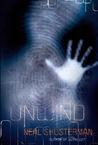
Unwind

Unwind (Unwind, #1)Unwind by Neal Shusterman
My rating: 5 of 5 stars

The Heartland War was the country's second civil war. It was fought over pro-life and pro-choice. When the war ended a new law was enacted. Abortion was illegal, but children between the ages of 13 and 18 could be unwound. Unwinding is a process where a child is surgically dismembered and by law every part of them must go to someone else. The theory being if every part of the child goes to different people life doesn't end. Three young people Connor, Risa, and Lev now face the process for different reasons. Connor has a habit of lashing out in words and actions so his parents signed him up for unwinding. Risa is a ward for the state and isn't considered special enough to continue living. Lev is a tithe, a child born and raised to be unwound. The three of them are running for their lives and hoping against hope to survive.

Unwind is one of those books where I wanted to jump into the book and fight almost everyone. I wanted to fight the parents who signed their kids away, the state counselors especially the one who said "my nephew was unwound there", all the lackadaisical juvey-cops, and every other person who looked away rather than helping the lawfully murdered children. If it wasn't for the kind people who care enough to do something throughout the book then I'm not sure I could have finished it.

So the three protagonists Connor, Risa, and Lev represented the three different type of children who were unwound. Connor's parents signed his life away, the foster care system vetoed Risa's life, and Lev was born to be unwound. All three types sickened me for different reasons. The notion a parent would choose to have their child dismembered seemed unfathomable. It surprised me that the threat of unwinding didn't lead to docile children who'd try to destroy the world once they reached 18. I imagine I'd be too scared to do anything wrong while unwinding was a possibility. Tithing a child shows religion at its worst. The parents and pastors even used the bible to justify tithing a child.

The foster care wards being sent for unwinding was different yet equally disturbing. Because of the drastic change in laws with unwinding an additional law was created, storking. Storking allows new parents to leave their child on someone's doorstep and if they aren't caught the family is legally obligated to take custody of the child. This in turn leads to the overloaded foster care system with limited funds. Which leads to teenage wards of the state often being sent for unwinding if they aren't deemed valuable enough to society.

The story is rife with concepts that are familiar. The pro-life pro-choice argument that leads to war is one that our world is facing today with little to no signs of ever ending. The juvey-cops and doctors felt every inch like the Gestapo hunting down Jewish people during the Holocaust.

Unwind made me want to scream and thrash to think about how people could just stand by and do nothing. Especially since people, me included more often than I'd care to admit, are unfortunately quite like this even today.

View all my reviews

Hail to the Queen

Hail to the Queen (Sage Saga, #3)Hail to the Queen by Julius St. Clair
My rating: 4 of 5 stars

Hail to the Queen was a satisfying conclusion to the Sage Saga trilogy. I will admit that things felt a bit rushed towards the end, but nonetheless it was another strong novel by Julius St. Clair.

Hail to the Queen picks right back up from the ending of The Dark Kingdom. The Sages are scattered and trying to survive. James is struggling to hold his manifestation up to protect himself and Catherine from the Quietus. Kyran and Dominic are fleeing Quietus to head to get the Prattilian Stone. Scarlet is caring for Arimus's injuries.

James growth continues as he keeps seeming like Naruto and a bit like Ichigo (early in Bleach when he would Hollowify is quite similar to James Quietus transformation.) His rapid power growth at times doesn't seem to line up, but it works out overall.

Kyran continues to deal with the loss of Chloe plus the fact that he isn't really the loner assassin he's thought to be. Arimus opens up to James about his life. Scarlet finally explains why she hated Chloe and eventually grows up a bit. Catherine continues to be the steady constant never wavering from who she is and what she believes. 

Hail to the Queen definitely makes me glad that I took a chance on the free download of The Last of the Sages. This is a good series that I've never heard anyone talk about. It has some flaws as all series do, but it's definitely fun.

View all my reviews

Wednesday, September 16, 2015

PLAY IT AS IT LAYS BY JOAN DIDION

Play It As It LaysPlay It As It Lays by Joan Didion
My rating: 4 of 5 stars

“There was silence. Something real was happening: this was, as it were, her life. If she could keep that in mind she would be able to play it through, do the right thing, whatever that meant.”

 photo Joan20Didion_zpsxckspaho.jpg
Joan Didion

Whenever Maria called, it was as if the ringing of the phone heralded the end of any conviviality I might have been harboring. I always had the impression when I talked with her that the Fun to Be Around Maria was dying in another room, and all I was left with was the beautiful corpse.

She was beautiful. Even though we had all seen changes to her appearance recently. So beautiful, in fact, she could still get acting jobs without too much trouble. I could see this all ending soon because she was so morose that her mood permeated the whole movie set. She had become so lost, so indifferent to everything. She was a zombie, long before Hollywood became infatuated with them.

Her relationship with men was not particularly complicated. They wanted to sleep with her, and she was rather indifferent as to whether she slept with them or not. When we had first met, I’d “seduced” her while blinded by her glamour and allurement. It was only after we were entangled that I realized that all of that was only skin deep.

“By the end of the week she was thinking constantly about where her body stopped and the air began about the exact point in space and time that was the difference between Maria and other.”

She had leaned on one elbow and shared that revelation with me. Her hair was still rummaged from my fingers. Her lipstick was smeared from my lips. There was something gone from her. The worms in her head had eaten into the core of her. The flame that had made her a star was nothing, but ashes. I left her with vestiges of misery clinging to me as if I’d been tainted by her own unhappiness.

But we remained friends.

I worried about her and worried about myself whenever I knew I had to see her. Things weren’t going well with her husband, Carter, or with her other lovers for that matter. They all were finding it harder to find the woman that first made them want her. Her mantra of late was: “I know what "nothing" means, and keep on playing.”

Her circle of friends continued to take her calls because we were all afraid that by not answering we might be putting her life in danger. Someone so miserable had to be suicidal. It was like a guillotine hanging over all of us, waiting for her to decide when and how. It was frustrating to see someone who had been given so much not being able to find any way to enjoy the life that many desired.

I’d been drinking one night after losing yet another part that would have insured many years of future success when she called. Her unhappiness fueled the fire of my own dejection. I heard myself scream into the phone, “For all our sakes just get it over with.” I’d slammed the phone down and poured myself a couple of fingers more of scotch. I couldn’t afford to know Maria anymore. It was too debilitating, too disheartening, and inspired too many ugly thoughts of resentment. I wanted her melancholy to be left to song.

Remorse wrapped crumpled newsprint around all my further thoughts.

If you wish to see more of my most recent book and movie reviews, visit http://www.jeffreykeeten.com
I also have a Facebook blogger page at: https://www.facebook.com/JeffreyKeeten


View all my reviews

Tuesday, September 15, 2015

Husk by J. Kent Messum

HuskHusk by J. Kent Messum
My rating: 4 of 5 stars

In the future, death doesn't mean the end for everyone, if you have the readies, your memories and your very essence can remain for as long as you see fit or until your computerized sanity finally flips and initiates a master reset. Mapping of the brain makes copying the human mind a reality that is of course exiting and a touch worrying.

Digitization of the brain is a decision that must be made before flat-lining, only for the extremely wealthy is this choice available. A real time copy can be kept alive via computer support and algorithmic programs. A post-mortem can then upload to a husk through a Ouija, a converter mechanism that allows them limited visitations in the flesh. The dead can live in computer generated realities or beam me up Scotty, over to a lifelike robot via a wireless connection.

A husk is a prostitute, hiring out their body to any client with the necessary means, they have to invest in the operation to install the device that allows another's conscience to take control of their body, a risky procedure that not everyone survives. A husk is usually a pretty attractive specimen, it's an illegal enterprise where the dead pick the prettiest and abuse their bodies for a few days. Drugs, sex, the things they crave most and there are no limits nor recollection.

Rhodes is a husk, so is his girlfriend Ryoko, he's chosen a lucrative career selling his body, not being in control of his body or his actions for days at a time and things start to go askew when he starts to get visions, flashbacks and then a woman he's never seen before attacks him in a bar. His perfect life is peeling at the edges, he has no idea what his clients do with him and he starts to realise that it might not all be good.

'My last controlled thought wonders where Winslade will go with my body. I settle down in the recesses of my mind, cocooned by the dark for what seems like ages, unmoving, unthinking. When the dreams finally come they are vivid, like memories playing on a movie screen.'

There's no overloading on the technological aspect of this vision of the future, enough to explain what's needed for the plot and it's full of intrigue. The emphasis is on the characters and that is always a major positive for me. Although there's holographic TV's, fancy guns, cures for cancer, Aids and every STI that a well-used prostitute is likely to catch. Yet people still smoke, drink expensive brandy and travel by car, life doesn't change too much it seems.

Husk is a darkly vivid portrayal of future life, seedy in places, sexually charged, full of power hungry people clinging to an idea of life via a line of program code but things are ever changing, adapting. All told an extremely well written thriller with excellent characterization, plenty of depth and world building that is easily imaginable. Certainly an exciting page turner that you will not want to put down, an intrepid imagination definitely helps and brings a dark mental image of human nature and power that accepts no limits. I really enjoyed Husk and shall definitely seek out his award winning debut novel Bait.

Also posted at http://paulnelson.booklikes.com/post/...

View all my reviews

Voices of the Damned by Barbie Wilde

Voices of the DamnedVoices of the Damned by Barbie Wilde
My rating: 5 of 5 stars

I must admit to never having heard of Barbie Wilde before she kindly sent me a review copy of Voices of the Damned and after reading it, I'm overcome with the sense of discovering something new, something horrifically bloody, lascivious and wickedly shocking.

Voices of the Damned contains eleven short horror stories, each story is prefaced by a piece of artwork malefic in origin, provocative and enticing hallucinatory visions. Produced by artists synonymous with the genre, Clive Barker, Nick Percival, Steve McGinnis, Daniele Serra, Eric Gross, Tara Bush, Vincent Sammy, & Ben Baldwin. Published by SST publications in Birmingham and available for pre-order now.

The spine of this collection is three stories set in the world of Clive Barkers Hellraiser, Barbie Wilde played the female Cenobite in Hellbound: Hellraiser II released in 1988, a mutilated visage that inspired the exploration of 'Sister Cilice' in the Cilicium trilogy. Sister Veronica's life was work and prayer, her prayers were replied with a cruel empty silence and so the depraved dreams took over. There was a darkness in Sister Veronica that could not be abated, her sanity slowly slipped away and obsessed with her desires, she continually tormented her wretched body until laced with scars. Finally assigned to the library archives she found an ancient manuscript that allowed her passage into the world of the Cenobites.
'The good Sister's adoration for mutilation, sensation and agony would be legendary, even in Hell.'

The Zulu Zombies takes its origins from Rorke's Drift where in 1879, 150 British Soldiers took on a small army of Zulu warriors and if you've ever wondered how powerful an orgasm you'd get whilst being 'seen to' by a zombie, then Trish will arrest your wonder. John Jones holds unbeknownst to him a container that imprisoned the spirits of the dead Zulu warriors and in a fit of panic he's just thrown it out of the window. Now it's time for a Zulu Zombie calamity, Zombie rape and rituals of spirit trapping proportion. Great fun in a dark and twisted fashion.

In American Mutant the Reverend Billy Bob Bannon is the epitome of the smarmy religious TV personality, charismatic, smooth as silk, he owns a cable TV company and preaches to his adoring flock as the donations come in. About to knock one off while dreaming about his last sexual conquest all those years ago he's woken from his reverie by a cough.
'Holy Roller levitation was not Billy Bob's specialty, but it almost looked like it as he leapt out of bed.'
A woman and child, no, could it be the call girl from his dreams, things slide neatly into place in Billy Bob's mind, ruination and blackmail beckon. But she's giving him the kid, what to do? Damage limitation and much more.

Next up is The Alpdrucke, a weirdly nightmarish tale of demon harassment, sleep deprivation and the offer of help from an old men who seems to know all about demons and their wicked ways. Botophobia sees Lorraine go back to her parents’ house after the recent car accident that killed them both, a surprise awaits when she discovers an underground shelter and a devastating discovery.

Valeska, is a woman, a Seminal who drains the very essence of a man through his sexual fluids, an erotic story that leaves you hanging on every word for a number of reasons. After a kill she's kidnapped by the Sanguines and we take a trip into the history of the Saguine, the blood, the fluid and a powerful race that live somewhere in the shadows. Now this is a vampire tale at its heart, blood drinking, cannibalism and plenty of sex, only without the happy ending you'd normally get.

Joining the erotic horror theme is Gaia, a girl raped in the younger years of her life, she shuns contact unless strictly necessary and when two thieves break into her house, hiding is the last thing on her mind. She lies on the floor, and starts to, you know, do something a little unexpected, but hidden in the most unlikely of places is a knife and guess who's going to feel it glide across their throat.

Polyp is a bit of a worrying creature feature, when Vincent goes into hospital for a colonoscopy, something awakens in his bowels and you might say it objects to the attempted biopsy, it’s not fucking happy.
'Finally, the endoscope came shooting out of Vincent's rectum like a missile, whacking one of the nurses so hard on the forehead that she collapsed.' And then something else, with pretty bad intentions.

In Writers Block, Bartholomew Atkins is going through a bit of a phase, hopefully a trip to Brighton and the Frighteners horror convention can pull him round. Just finishing his wine in the bar before bed, an incredibly attractive woman makes a beeline for him and he's instantly smitten. And when she asks if he'd like to go to bed with her, well how could he say no. This isn't a Misery style fan this is something much worse, dominatrix sex, tied up with no way out and the added ingredient of the Prince of Darkness. Can't go wrong.

Did I like this? no I absolutely loved it, Voices of the Damned is hotter than sex in a sauna, bloody as a severed artery and more twisted than a Zombie's stomach churning acid orgasm. My favourites? all of them, they all seriously rock and they're all as captivating as the old handcuffs to the bed post, and we all know you never want out of them unless you're the guy in Writers Block. If testosterone jumping erotica combined with heart racing fear is your bag of horror then this is just what you're looking for and Voices of the Damned ranks highly in my box of favourites.

Highly recommended.

Also posted at http://paulnelson.booklikes.com/post/...

View all my reviews

The Girl with the Deep Blue Eyes

The Girl with the Deep Blue EyesThe Girl with the Deep Blue Eyes by Lawrence Block
My rating: 4 of 5 stars

When private eye Doak Miller goes undercover to catch a woman attempting to hire a hitman to murder her husband, he doesn't count on falling in love with her. There's just the little matter of getting her husband out of the way...

When you get home from work to find a mysterious package containing the upcoming Lawrence Block book on your doorstep, you drop what you're doing and get readin'.

The Girl with the Deep Blue Eyes is a modern take on the classic noir tale of a man falling for a woman and then bumping off her husband, only to be consumed by madness and guilt. Doak Miller is a former cop and a lady's man who finds himself face to face with his fantasy girl. How will he attempt to bump off her husband?

Block's writing is as crisp as ever and there's a lot of sex in this book. It's like Lawrence Block ripped a page from the James M. Cain playbook and thrust it repeatedly into one of his early smut novels. Not only does The Girl with the Deep Blue Eyes read like a sexualized modernization of Double Indemnity or The Postman Always Rings Twice, the character of Doak adds some additional wrinkles I won't give away here. As more is revealed of Doak's true nature, you have to wonder if anyone will make it out alive.

The Girl with the Deep Blue Eyes is a worth addition to the Hard Case Crime Series and everything I've come to know and love about Lawrence Block's Hard Case novels. Four out of five stars.


View all my reviews

Monday, September 14, 2015

A Princess of Mars

A Princess of Mars (Barsoom, #1)A Princess of Mars by Edgar Rice Burroughs
Reviewed by Jason Koivu
My rating: 2 of 5 stars

I'm not saying I didn't like it, but what in the hell was that?!

Okay, I kinda am saying I didn't like it, but I didn't HATE it either.

A Princess of Mars is a forerunner in the sci-fi genre and as many of them suffer from ignorant science, so suffers this one. Modes of transportation are silly, alien races are simplistic at best, etc etc...(I know I'm nitpicking).

On the other hand, one has to be impressed with the guesswork a fictional novelist made regarding living conditions on another planet, considering he was writing at a time prior to space exploration. Hell, this was written a mere nine years after the first flight by man.

The real reason this didn't resonate with me had to do with the story's hero, John Carter. He's just too good at everything to be interesting. "Oh yeah, he can do that, too? Ho-hum..." I found myself saying at about the mid-way point...a point at which I was still trying to suss out how he'd actually arrived on Mars.

The writing also suffers from stiff formality. The rigidity of the language Burroughs' used lacked elegance and deflated exciting action scenes. However, there was plenty of action and that alone kept me turning pages.

All the same, the errors mounted. Burroughs made the mistake of giving the game away. Use of the diary style of narration is a technique in fiction that should never have happened. If the hero of the story is writing about his adventures ten, twenty, whatever number of years after it all went down, it completely gives away the fact that he lived to tell the tale and thus takes the wind out of tension's sails. Present tense for action, always present tense!

View all my reviews

A Change Is In The Wind, But All's Well

Much Obliged, JeevesMuch Obliged, Jeeves by P.G. Wodehouse
Reviewed by Jason Koivu
My rating: 4 of 5 stars

Aw, this makes me sad. Much Obliged, Jeeves is one of Wodehouse's last books in the Jeeves & Wooster series and it's just starting to show a some life, after so many books-by-rote.

The usual plot and characters are all in order. Finicky friends and daffy family members all seemingly conspire to thrust Bertie Wooster neck-deep into the soup, then jam him between a rock and a hard place. Hovering about the periphery is the all-knowing, gentleman's gentleman extraordinaire Jeeves, ready to extract his master and set all to rights.

Where this book differs from other Wodehouses is in the little details. Bertie's narration makes it plain that Much Obliged, Jeeves comes later in the Wodehouse oeuvre by referencing past exploits...and I'm not just talking about that scripture prize he won in school or the article he wrote for Milady's Boudoir on "What the well-dressed man is wearing." I'm not even talking about the big reveal that Jeeves actually has a first name. The real difference is in how Jeeves interacts with Wooster. It's not a vast shift to the left, but there is a slight subversion in his tone, a sort of sauciness to his lip service, a kind of sass to his soliloquy. Yes indeed, Jeeves expresses himself here with more than just a raised brow and I found it shocking...SHOCKING I SAY!

Seriously though, it was nice to see an old familiar character being appropriately stretched a bit. After all the patience-straining nonsense Jeeves endures, it seems quite natural for such a clearly superior mind to grow a tad surly over such trying times. I only wish Wodehouse had started this process and expanded upon it years, nay, decades prior.

In summary, Much Obliged, Jeeves is a solid book in the series, but if you're a newcomer, I'd suggest starting somewhere earlier. Perhaps, Right Ho, Jeeves or The Code of the Woosters would be more suitable. These books don't need to be read sequentially, and you'd be fine if you read this one first, but I think the newb would be better severed with a more elementary introduction. Wouldn't want to muddle the grey matter, now would we?

View all my reviews

Friday, September 11, 2015

Gracefully Grayson


Ami Polonsky
Disney-Hyperion
Reviewed by Nancy
4 out of 5 stars


Summary


Alone at home, twelve-year-old Grayson Sender glows, immersed in beautiful thoughts and dreams. But at school, Grayson grasps at shadows, determined to fly under the radar. Because Grayson has been holding onto a secret for what seems like forever: “he” is a girl on the inside, stuck in the wrong gender’s body.

The weight of this secret is crushing, but leaving it behind would mean facing ridicule, scorn, and rejection. Despite these dangers, Grayson’s true self itches to break free. Strengthened by an unexpected friendship and a caring teacher who gives her a chance to step into the spotlight, Grayson might finally have the tools to let her inner light shine.

Debut author Ami Polonsky’s moving, beautifully-written novel shines with the strength of a young person’s spirit and the enduring power of acceptance.


My Review


"White and black. Light and dark. And me, in the middle of it all. Gray."

This book caught my eye, but I was going to give it a pass, thinking it was more suitable for much younger readers. Then I came across a friend's review and grabbed it from the library. Surprisingly, the book was difficult to put down and I got through it in no time at all.

I am not going to summarize the plot here, since there is really none to speak of. This is a sensitive and delicately written portrayal of Grayson Sender, a 12-year-old who is harboring a deep secret. Grayson’s parents were aware of that secret and respectful of their child’s uniqueness, but they were killed in a car accident when Grayson was little. Grayson is now living in the home of an aunt, uncle, and older cousin, all of whom show love, but not the support or understanding Grayson needs.

Grayson struggles with loneliness and isolation and eventually makes a new friend. Auditioning for the female lead in the school play allows Grayson the opportunity for self-expression outside of established gender norms. While Grayson has the support of a progressive teacher and the play’s cast members, there is still fear and prejudice to contend with.

My only gripe with this story was that it lacked complexity. I would have liked to see a deeper exploration of Grayson’s desire to be a girl. The experimentation with clothing, hair and jewelry heavy-handedly presented outdated feminine ideals with no attempt to dismantle gender stereotypes.

Nevertheless, I liked this story a lot and found Grayson to be a very sympathetic and dynamic character. Grayson’s family was also realistic as they dealt with their fears and concerns.