Wednesday, April 11, 2018

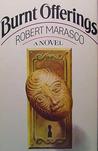
BURNT OFFERINGS BY ROBERT MARASCO

Burnt OfferingsBurnt Offerings by Robert Marasco
My rating: 5 of 5 stars

”The hum that drew her to the door at the end of the sitting room had become deeper and stronger, but almost imperceptibly so. It was the door itself that caught her attention now. It was white, and framed within the narrow, smooth border was an intricate pattern of lines and curves carved into the wood, so delicate in the room’s dim light that she hadn’t noticed the design until she came within a few feet. Swirls and garlands were cut into triangular panels that met in a small, raised pistil. She moved closer and the design became more intricate and abstract and impenetrable: a globe, a web, a sunburst, a maze, a slab carved with ancient pictographs.”

It all begins with an advertisement.

UNIQUE SUMMER HOME
Restful, secluded. Perfect for large
families. Pool, private beach, dock.
Long season. Very reasonable for the
right people.


Marian Rolfe likes fine things. She even takes temporary work occasionally to afford an extra fine desk or a lovely bureau. She also loves to clean, and more days than not when Ben returns from teaching, he is greeted by the aroma of lemons and polish.

Ben believes she is a bit obsessive.

Marian is determined to escape Brooklyn for the summer. With a thought to protecting their modest savings, Ben wants to stay in Brooklyn and venture out on a few trips to upstate New York when they need some relief from the oppressive heat of summer. Ben is overmatched, of course, with battling a splash of feminine wiles, a dash of not so subtle manipulations, and a smattering of outright deception.

Once Marian sees the palatial, crumbling Allardyce mansion, she is in lust.

The old adage if it is too good to be true is manifesting in Ben’s mind in neon colors and mile high letters. It doesn’t help that the brother and sister team of Arnold and Roz are not only odd, but are as creepy as a pair of zombie monkeys tethered to Pennywise the Dancing Clown.

The house is full of all the wonderful things that Marian can only dream of every possessing. Ornate furniture, delicate vases, expensive dinnerware, and antique clocks are scattered throughout the house, all shrouded with dust and cobwebs. The walls and floors of this faded beauty are drab and dingy. All of this would give most anyone else pause, but Marian sees beyond the dreariness and knows with buckets of Lemon Pledge, warm water, elbow grease, and a pile of fresh rags she can make it gleam again.

I was looking up Lemon Pledge (Marasco never does say exactly what Marian uses to make everything smell of lemons), and believe it or not, there is a “sexual act,” involving two usually elderly men, called Lemon Pledge. I won’t share what act that is, but it definitely falls under gross, moronic, and Never Doing That categories for me. This description, though, of Lemon Pledge made me laugh: “The purest most addictive artificial smell in the history of humankind. As its aroma ventures into your unworthy nostrils, it plants the seeds of ecstasy and euphoria into the womb of your mind.”

Despite Ben’s misgivings, they take the house. After all, it is a bargain, and when would they ever get this opportunity again? Part of the stipulations is that Marian has to feed the matriarch of the family, Mrs. Allardyce, the glorious mother, three times a day by leaving a tray for her outside her ornately carved door. Marian never sees her and only occasionally gets a proof of life by noticing that some of the food on the plates she leaves... has been picked apart.

So this novel is written with a slow burning fuse. There are sprinklings of foreshadowing that add to the unease of the reader. Things start out strange, but not too strange. It was interesting to see the acceptable level we have for the unusual before we start to feel alarmed. Clocks spring to life that refused to work. Weathered roof tiles fall to the ground revealing new tiles. Everything about the house starts to take on a healthy shine. The tendrils of gray hair that start to appear in Marian’s hair are just natural,...right?

Ben starts to feel his personality change. He starts to know with more and more certainty that he needs to get away from this place, whether Marian wants to go or not. Things long buried are being pulled out of the recesses of his brain. ”It wasn’t there. He knew that. It didn’t exist, not outside those childish and unreasonably frightening nightmares. There was absolutely no way something could creep back from the distant past and be real; or out of the tiny, vulnerable part of his brain where the image had lodged itself. And be real and no more than ten feet from him.”

And then there is the creepy chauffeur…*shudder*. He reminds me of Charles Manx from Joe Hill’s book NOS4A2. I wonder if Marasco’s chauffeur had some influence on Hill when he was creating Manx. Certainly, Joe’s father, Stephen King was influenced by this novel when he wrote The Shining, which came out four years after Burnt Offerings was published. This book makes the cut for most lists of Best Haunted House novels or even Best All-Time Horror Novels. It is certainly a classic of the genre. No slashing arcs of blood or piles of steaming gore, just good old fashioned psychological terror. I loved it! It was another perfect addition to my reading resume as part of my nostalgic tour through 1970’s horror. A movie was made in 1976 starring Karen Black, Oliver Reed, Bette Davis, and Burgess Meredith. I will definitely be cuing that up in the near future.

If you wish to see more of my most recent book and movie reviews, visit http://www.jeffreykeeten.com
I also have a Facebook blogger page at:https://www.facebook.com/JeffreyKeeten

View all my reviews

Monday, April 9, 2018

The Language of Fantasy

The Art of Language Invention: From Horse-Lords to Dark Elves, the Words Behind World-BuildingThe Art of Language Invention: From Horse-Lords to Dark Elves, the Words Behind World-Building by David J. Peterson
Reviewed by Jason Koivu
My rating: 4 of 5 stars

"This is just a toe dip." That line is in the concluding chapter of David J. Peterson's The Art of Language Invention and I couldn't agree more.

The topic and practice of language creation feels EXHAUSTING after having read this. And yet, once you've read it, you're quite aware that you've merely glimpsed the tip of the iceberg.

I wanted to learn how to create a new language, which I could incorporate into my fantasy world. As I finish up book two and begin fleshing out number three, all while developing four and five, it has become more and more apparent that I will be creating new races and vocal creatures that should not be speaking English, if my readers are going to have any chance at suspending disbelief. I know it has been done that way and is readily accepted in mainstream productions, but to me, that is the cheese. It is the cheesiest of cheese, by which I mean it stinks. Why would any kind of "alien" race naturally speak English? Obviously advanced civilizations could have translation devices or could be intelligent and advanced enough to cope with learning ESL, but I'm writing old timey fantasy with monsters beating each other over the head with clubs. I doubt they'd have time to enroll in adult ed night courses. So, I wanted to add some realism to my humanoid races. Enter The Art of Language Invention.

Very quickly I realized I was in over my head. This, my friend, is complicated stuff. As an example for your benefit and for my own recollection down the line, here is a list of contents:

Chapter One: Sounds
- Phonetics
- Oral Physiology
- Consonants
- Vowels
- Phonology
- Sounds Systems
- Phonotactics
- Allophony
- Intonation
- Pragmatic Intonation
- Stress
- Tone
- Contour Tone Languages
- Register Ton Languages
- Sign Language Articulation
- Alien Sound Systems
Case Study: The Sound of Dothraki

Chapter Two: Words
- Key Concepts
- Allomorphy
- Nominal Inflection
- Nominal Number
- Grammatical Gender
- Noun Case
- Nominal Inflection Exponence
- Verbal Inflection
- Agreement
- Tense, Modality, Aspect
- Valency
- Word Order
- Derivation
Case Study: Irathient Nouns

Chapter Three: Evolution
- Phonological Evolution
- Lexical Evolution
- Grammatical Evolution
Case Study: High Valyrian Verbs

Chapter Four: The Written Word
- Orthography
- Types of Orthographies
- Alphabet
- Abjad
- Abugida
- Syllabary
- Complex Systems
- Using a System
- Drafting a Proto-System
- Evolving a Modern System
- Typography
Case Study: The Evolution of the Castithan Writing System

There's also a short phrase book at the back that includes approximately one page each of Dothraki, High Valyrian, Shivaisith, Castithan, Irathient, Indojisnen, Kamakawi, Vaeyne and Zaanics.

Some of you GoT fans are probably getting all giddy in your pants at the idea of learning Dothraki. And well you should! This isn't the book to teach you the Horse Lords' language, but it's a start!

That and High Valyrian are Peterson's two most famous creations. They made him semi-famous. Famous enough to be mentioned by the lovable Emilia Clarke on late night tv: https://www.youtube.com/watch?v=OuKcZ...

He does a great job in this book of explaining the basics. You could, if you had plenty of time, construct your own brand new and very real language just from reading this book. It probably would be rather basic itself, but it would function. There aren't exactly step-by-step instructions, but Peterson does lay out this book, feeding you the info you need when you need it, in a way that naturally walks you through a language building education. One way to look at it is that instead of taking the full semester's course, you're reading over the syllabus.

Even if you're not interested in creating a new language, The Art of Language Invention is informative to those who are interested in words and language in general. Peterson relays a good amount of language history to the reader in order to explain his theories and practices. I found that quite educational. Also, this is written in a very casual tone. I think the man knew he needed to sugar-coat this stuff for the vast majority of his audience to get it down. If you're into GoT to the point of reading blogs for background information, you'll definitely get something out of this.


View all my reviews

Tolkien's Languages

The Languages of Tolkien's Middle-EarthThe Languages of Tolkien's Middle-Earth by Ruth S. Noel
Reviewed by Jason Koivu
My rating: 4 of 5 stars

An excellent book for those interested in J.R.R. Tolkien's created languages.

With The Languages of Tolkien's Middle-Earth Ruth Noel gives you the foundation for Tolkien's famous elven language, which I always like to proudly point out is based in Finnish. Hey, us Finns don't always have a lot to shout about!

The book also includes about a dozen other languages, such as various human tongues, the Black Speech of Mordor, high ancient tongues, common speech, etc. It takes all the words Tolkien gave us, translates them and offers some samples on how to elaborate on the fragments of the languages we have, such as verb conjugation.

Included are various glossaries, essays on Tolkien the conlanger's technique, and a Tolkien dictionary. While not for the average reader, this book is indispensable for fantasy fiction language lovers.

View all my reviews

Sunday, April 8, 2018

Norse Mythology

Norse MythologyNorse Mythology by Neil Gaiman
My rating: 4 of 5 stars

Norse Mythology by Neil Gaiman is a compulsively readable retelling of various myths from Norse Mythology.

Once upon a time, in that hazy prehistoric time before Goodreads, Neil Gaiman was my favorite author. Sandman was the gateway drug but I read all the Gaiman works I could get my hands on: American Gods, Neverwhere, Coraline, Stardust, you get the point. As the years went by, some of the shine wore off that penny. As I explored Gaimain's influences, like P.G. Wodehouse and Ray Bradbury, some of the magic was diminished.

Anyway, I heard Gaimain was writing this book and my interest was rekindled. I've been curious about Norse mythology since reading my first Thor comic. Gaimain delivers the goods here.

In Norse Mythology, Gaimain retells fifteen Norse myths, from the creation of the Aesir to Ragnarok, the twilight of the gods, making them accessible to the modern reader.

All of the Norse gods you're familiar with from pop culture, namely Odin, Thor, Loki, Balder, and Heimdall, are here, as well as a slew of others like Vidar, Kvasir, and Hod. I was tangentially aware of some of what transpired, like Loki giving birth to a six-legged horse and Odin hanging from Yggdrasil, the world tree, for nine days and nights before gaining his wisdom, but a lot of it was new to me. The Aesir sure liked to booze it up, didn't they?

While there was quite a bit to like about this book, the thing that really stuck in my mind was Naglfar, the ship of the dead made out of fingernails. Really. Loki tying his junk to the beard of a goat for entertainment purposes was right up there, though.

Reading Norse Mythology, I noticed echoes of it in fantasy novels I've read in past couple decades, most notably The Elric Saga Part II and The First Chronicles of Amber. For my money, this is the best thing Gaimain has done since The Graveyard Book (though Doctor Who: Nothing O'Clock was also pretty sweet.) Four out of five stars.

View all my reviews

Friday, April 6, 2018

The Eighties: Images Of America


Vincent Virga
Harper Collins
Reviewed by Nancy
3 out of 5 stars


Summary


It was the decade when the dreams of the '60s turned inside out and the yuppie emerged, along with home computers, E.T., and Madonna. It was a time of wealth and homelessness, when the drug culture raced toward oblivion and recovery became a crusade. Our ambitions in space were chilled by the tragedy of Challenger, and as the decade closed, Wall Street's money lords stumbled. The party was over.

But the moments of triumph were bright: the building of the Vietnam Veterans Memorial, which seemed finally to heal an old wound in the nation's psyche; the discoveries made by Voyager; the warming of U.S.-Soviet relations; the tumbling of the Berlin Wall.

Vincent Virga's book is not, however, simply a collection of spectacular photographs of events and personalities. It is a narrative in pictures that gives the heart's view of our recent past.

As Richard Rhodes says in his Foreward, "The images that follow are primary. They're irreducibly 'true.' What Virga does here corresponds to what historians do: he picks and chooses among the available evidence and arranges it so that it shows forth its meaning."


My Review


I liked the 80’s, even though it was a time where people were preoccupied with money and possessions, celebrity obsession was all the rage, and conservatism was on the rise. My brother came out at the same time as the warnings about the new “gay cancer.” I took out a loan from the bank I worked at and bought my first new car, proving my dad wrong on two points – that women were incapable of buying a car on their own and couldn’t drive a manual transmission. I had to ask the guy who sold the car to me for a driving lesson, but managed to get the car home safely. Then I moved out of my parents’ house in 1980, ready to take on the world.

This was a fun, photographic journey through the 80’s. Politics, celebrities, sports, fashion, protests, strikes, and significant world events were covered. There was a poignant photo of the NAMES Project AIDS Memorial Quilt the same year President Reagan first mentioned the word. There was a photo of the Guardian Angels, patrollers of the graffiti-covered New York City subways, kids and teens playing Pac-Man and Galaxian at an arcade, and a photo showing effects the Valdez oil spill had on animals. Each year ended with obituaries. Though there was mention made of John Lennon’s murder in 1980, it must have been an oversight that he was not included in the 1980 obituaries along with Alfred Hitchcock, Steve McQueen, Jean-Paul Sartre, Mae West and others. Starting in 1981, there was a caption with the AIDS death toll (163). By 1989, that number reached 83,681.

I would have liked more narrative details about certain events and the people I didn’t recognize. Other than that, I enjoyed the trip down memory lane.

Sadly, two photos were ripped out of the 1985 section. People who deface library books should be publicly flogged.

Thursday, April 5, 2018

The Night Dahlia (Nightwise #2) By: R.S. Belcher

The Night Dahlia (Nightwise, #2)The Night Dahlia by R.S. Belcher
My rating: 5 of 5 stars

I loved the first book in this series and Mr. Belcher ramped it up big time. Urban fantasy should be this type of book, a thinly veiled world where the unreal rubs elbows with the mundane and dirty. The main character Laytham Ballard, in my opinion, is a better "John Constantine" than the actual character (best way I could put that thought..but feel free to tell me I'm wrong, I'm not).

There is a thick layer of dirt and grime and REAL that soaks through the mystical world buried under ours and it is how urban fantasy SHOULD be. America is a perfect melting pot setting for all the various magics to meet up in and this book is fast paced, gritty and tons of fun.

read this series. 20 stars out of 5.

View all my reviews

The Library of Engriole: Book 1: Promise & Betrayal

The Library of Engriole: Book 1: Promise & BetrayalThe Library of Engriole: Book 1: Promise & Betrayal by Isaac Lind
My rating: 3 of 5 stars

Oakentere is a teenage boy that is skilled with a bow. When a war party comes looking for new members, Oakentere convinces the Lord in charge of the party to allow him to join. The Lord tells Oakentere's parents that he won't be involved in any fighting, but plans change. Shortly after reaching their destination, another kingdom's general enlists the war party to kill his king and disaster follows.

The Library of Engriole Book 1 is aptly subtitled Promise and Betrayal. There is especially no shortage of betrayal. General Sarim is the cause as he wants the throne and all the royals in his way dead. Sarim simply can't be trusted as Oakentere learns.

The story is simple yet solid. Oakentere like many young protagonists is simply too skilled and good to be believable.

2.5 out of 5 stars

View all my reviews

Wednesday, April 4, 2018

STILL LIVES BY MARIA HUMMEL

Still LivesStill Lives by Maria Hummel
My rating: 5 of 5 stars

”For the four years I’ve lived in Los Angeles, the Rocque Museum has been my workplace and my university, offering me a degree in contemporary art and the cosmopolitan life---brilliant as the blues in a Sam Francis painting, decadent as a twenty-four-karat cast of a cat testicle. Most days pass in a pleasurable blur of words and pictures. Most nights I hate to leave my little office, especially on April evenings like this, when I can look over my mess of proofs, out to the greening city, and imagine I am still happy.”

 photo Blue20Sky20Painting20Sam20Francis_zps4tkf7y1x.jpg
Blue Sky Painting by Sam Francis

Unfortunately, we can rarely appreciate how happy we are until the moment has passed.

For Maggie Richter, Los Angeles offers an opportunity to find a career where she can work with intelligent, creative, and passionate people who care about the same things she does. Any relationship with L.A. would be listed on Facebook as complicated, what with its convoluted history involving more crushed dreams than realized aspirations. It is a place where glimmering fantasies are merely shimmering shapes that never fully materialize, and luck is as necessary as talent. Maggie knows that, with a city like L.A., there is give and take, but right now she feels she may have given too much.

”What happened between us still mystifies me: how two lovers can move to a city, and the city itself wraps around them like vines, pulling them apart, pushing them toward others, until they become so entwined in their separate lives that they can no longer recognize what they once felt, or even who they once were.”

Greg SHAW Ferguson, or I guess I should just call him SHAW since he is trying to morph himself into the Prince or the Sting or the Moby of the art gallery world, drops Maggie like a bag full of fire ants and scatters her emotions in all directions. Soul mated for life? Well, at least until he meets Kim Lord.

Kim Lord has a reputation for producing edgy, progressive art, but she has been out of circulation for a while, so this new exhibition, Still Lives, that she does in conjunction with the Rocque Museum, is not only going to reestablish her reputation, but also give the Rocque some much needed publicity, as well.

Maggie needs to meet someone new.

Work is still a great way to meet potential mates because of the ridiculous amount of time we spend with people we toil with, but for Maggie, the percentages are not so good at the museum. ”Of the less than fifty percent of museum employees that are men, half are gay and a quarter are married. The other quarter tend to date cocktail straws.” Ok, I laughed out loud at cocktail straws. I’ve met a few of those California cocktail straws who seem to exist on celery, coffee, and cigarettes.

The other problem that can not be denied is that Maggie is still hung up on Greg, pardon me, SHAW. She is suffering as a swan, a penguin, or a gray wolf, all creatures who scientists tell us mate for life. The problem is Greg seems to be a bunny, a ground squirrel, or maybe a flighty chickadee.

She can’t just move on, even though she knows she should. She has some caring friends who encourage her to jump back on the horse (Maggie does have a horse incident believe it or not), and she begins the endless setup dates of friends of friends that are bandaids on a situation that really needs a tourniquet.

 photo Judy20Ann20Dull_zpsn5xnc6ll.jpg
Model Judy Ann Dull was murdered by Harvey Glatman in 1957. Glatman took several pictures of his victims tied up in numerous poses.

And then there is Kim Lord’s face everywhere, even in the art for the show. The exhibit is highlighting women who have been brutally murdered, such as Elizabeth Short, famously known as The Black Dahlia, Nicole Brown Simpson, and Judy Ann Dull. In Lord’s art, it isn’t Elizabeth, Nicole, and Judy, but Kim Lord herself who is posing in the place of the original victim.

Can you imagine being constantly reminded of your rival everywhere you turn? Rival might be the wrong word, for how can one compete with the explosive vivacity and intensity of a force of nature like Kim Lord?

Then Lord has the audacity to go missing.

Suspect #1 Greg SHAW Ferguson. That middle name comes in handy now because serial killers, terrorists, and murderers are usually identified with all three names in the newspaper. Not much farther down the list of suspects would probably appear the name Maggie Richter. No middle name necessary at this point.

It might not be the best decision for a museum copy editor to become a gumshoe, but she is driven by a need to find out what happened to Lord, free Greg, and in the process hopefully find herself again.

These art museum people who populate this novel are culturally tuned in and have many similarities to the bookstore people I used to hang out with. They are clever, jaded, cruel, caring, driven, spontaneous, but capable of still believe the world can be made a better place. They don’t want a job. They want a calling. These are my kind of people.

Maria Hummel has a light touch. She is observant and descriptive in clever ways, with word choices that bring a smile to my lips. She makes me want Maggie to do more than just solve a mystery. I wanted her to go beyond just imagining being happy. I wanted her to find a way to BE happy.

I want to thank Megan Fishmann and Counterpoint Press for supplying me with a free copy in exchange for an honest review.

If you wish to see more of my most recent book and movie reviews, visit http://www.jeffreykeeten.com
I also have a Facebook blogger page at:https://www.facebook.com/JeffreyKeeten

View all my reviews

Monday, April 2, 2018

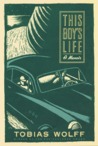
This Boy's Life

This Boy's LifeThis Boy's Life by Tobias Wolff
Reviewed by Jason Koivu
My rating: 5 of 5 stars

I don't know if I've been specifically targeting good reads subconsciously or if I've just been lucky that they're falling into my lap. Regardless, the kinda funny, a little sad, quite insightful This Boy's Life by Tobias Wolff struck the old chord with me and continued that trend. Long may it last!

As a somewhat rudderless boy myself I enjoyed this story of a somewhat rudderless boy growing up with only a transient mother and the occasional uncaring, abusive stepfather. This is a fairly typical coming-of-age tale, which in this case includes vignettes on getting into fights, making and breaking friendships, girls and their potential for a horny young man, trying to be cool, cars, guns, etc and then some.

Published in '89, this feels a whole lot older. Probably because it mostly describes things that happened in the late '50s and early 60s. It reminds me a bit of A Christmas Story in that way, just more morbid. Perhaps likening it the tv show "The Wonder Years" would be more to the mark. Yes, just think of the young Tobias as a more real, less Hollywood-chipper Kevin Arnold.

Wolff's prose is a joy to read. Every once in a while he lays down a sweet-ass line that makes ya go "hmmm". *does the Arsenio move* There were times when I got quite lost in his words. However, this is a particularly intimate memoir and there are a few intense moments that draw you right into the scene, making you hold your breath and possibly pray for a positive outcome. That's quality writing.

While I doubt this will be a five star book for everyone, Wolfe's writing style and the stories he told were utterly relatable in my mind. The book felt familiar to me and some of the aspects of my own coming-of-age story. However, even readers who can't relate personally to the content should still be able to derive a good deal of enjoyment from it.

View all my reviews

The West-Coast Block

Cinnamon Kiss (Easy Rawlins #10)Cinnamon Kiss by Walter Mosley
Reviewed by Jason Koivu
My rating: 4 of 5 stars

When I feel like a west coast version of Lawrence Block's Matthew Scudder series, I turn to Walter Mosley's Easy Rawlins series, and so far I haven't been let down.

Scudder is a white, middle-aged New Yorker, who's been through some shit.

Rawlins is a black, middle-aged Los Angeleno, who's been through some shit.

The narration of both relates a world-weary, experience-wise character with a plethora of baggage that keeps him simultaneously on edge as well as away from the edge, for who will care for their children or at least pay the child support should they act rash and get their head blown off?

Cinnamon Kiss is the tenth in the Rawlins series, which is set in the '60s. This one takes place in '66, so approximately a year after the Watts Riots and just as the hippie movement got going. Rawlins heads north to San Francisco to take on a high money case that could keep him from having to take part in a more lucrative, but more dangerous job: a heist that he would do if he had to, because his daughter is dying of a rare disease that would cost dearly to treat if it were even attempted.

As you see, Mosley is great at putting his MC's back straight up against the conflict wall. Human emotion and humanity's wide-ranging behavior infest everyone who walks through his scenes. There's barely a stiff to be found, unless we're talking about the dead kind.

I loved the look back at the Haight-Ashbury scene. I enjoyed how Mosley portrayed the older, war vet Rawlins as completely new to and somewhat baffled by these long-haired, free spirits. The mystery and detective work Rawlins is tasked with is quite contentious and plays hard upon the character's moral indignation. At times the book slides into heated romance that gets slightly pornographic to the point of feeling a bit out of place, but really it's just taking the old detective fiction of the '40s and '50s one step further than they were already treading.

Every time I finish one of Mosley's great books I always end up telling myself, "I need to read more Mosley!"


View all my reviews