Monday, April 16, 2018

A Fantasy Adventure Begins

The Sword of Bedwyr (Crimson Shadow, #1)The Sword of Bedwyr by R.A. Salvatore
Reviewed by Jason Koivu
My rating: 4 of 5 stars

Once upon a time I met R.A. Salvatore. He came to my high school and talked to a small group of us 9th graders. He had just signed his first book contract and was about to embark upon a very successful career as a fantasy writer. This impressed me a great deal, because Salvatore is from Leominster, Massachusetts....I know, that's incredible, right?!....Okay, so the reason that impressed me was because Leominster is right next to Townsend, and Townsend was where I was born and raised. So, the thought of a local boy making good as a writer thrilled me! I wanted to be a writer and here was living proof that a kid from the sticks could live that life!

Salvatore's achievement was a far greater influence upon me than his actual writing, only because it took me 30 frickin' years to read one of his books. I find that amazing. I don't know how it happened. Ever since the day I meant him I've meant to read his stuff, but somehow I never got around to it until this past week. It's one of the great reading snafus of my life.

However, all that is being rectified beginning with the Crimson Shadow series. Book one, The Sword of Bedwyr kicks off the trilogy in a way that promises the kind of fun and adventure I was hoping for! There's battles and monsters and treasure and more!

The book plays out sort of how a game of D&D runs. First you get the party together. In this instance it's just a warrior and thief. A wizard happens along later on, but he's not quite a full member of the band. In this case, we're not starting with first level characters. We've got a skilled swordsman and a practiced thief. They're jumping right into the tough stuff, slaying a bit of sword fodder before diving into some truly tough monster encounters.

The actual characters are at least interesting, if not absolutely enthralling. The thief, a charming and funny halfling, is straight out of a Monty Python sketch. Actually, I mean that literally. He speaks with the heavy accent and delivers the same lines as the castle guard with outraaageous French accent, played by John Cleese, in The Holy Grail. That's borrowing perhaps too heavily from a preexisting source, but I enjoyed it so I let it slide. However, when you have a halfling thief enter a dragon's lair and proceed to flatter the dragon in hopes of escaping the encounter alive, well then you've gone too far with the borrowing. That scene from The Hobbit is just too famous to tread upon. Of course, dragon encounters are nothing new to literature. They go as far back as the Old Testament and Greek epics of the 5th century BCE. It's just, well, that particular scene combination is very Tolkien-specific.

Irregardless, this is still great fun and I'll be moving on to book two soon! I plan to dive into Salvatore's other series, and one day I'll no doubt devour his Drizzt stories. I'm told those are the shit, so I'm saving them and working my way up to them. Hey, ya gotta have something to look forward to!

View all my reviews

Sunday, April 15, 2018

Twice Bitten - Rediscovering My Love of Professional Wrestling

Since time out of mind, wrestling was always part of my life.  Some of my dimmest memories are sitting on the floor while my dad watched Wrestling at the Chase on KPLR every Sunday morning.  Watching Randy Savage cheat to beat Tito Santana for the Intercontinental title was what eventually made the wrestling bug bite me.  For years, watching wrestling was my favorite part of the weekend.  Once we got cable when I was in my teens, I was a terminal case.  Or so I thought.

Years passed, occupied by the British Bulldogs, Ricky Steamboat, Bret Hart, Curt Hennig, and many more.  I played Champions of the Galaxy religiously, as well as any wrestling video game I could get my hands on.  The rise of the cruiserweights changed wrestling forever.  While I was a diehard WWF fan, I couldn't deny the thrill of watching the smaller guys compete.  Ultimo Dragon, Eddie Guerrero, Chris Benoit, and Dean Malenko lead to me watching both Monday night shows simultaneously on side by side TVs in my parents' basement.  I saw the first Hell in the Cell match live at the Kiel Center and drove three hours each way to see the second last show of the original ECW in Poplar Bluff.  I saw The Rock win the WWF Heavyweight title for the first time and was in attendance at the somber RAW the night after Owen Hart died.  I wish I still had the ticket stubs.

Once the Monday Night Wars ended and both ECW and WCW were wiped out, my interest started to wane.  The job was getting in the way and wrestling seemed to be a lot more talk than I liked, although the first year of Ring of Honor kept the flame going a while longer.  My friends that also watched wrestling were drifting away.  Couple that with two of my favorites dying in the space of two years, Chris Benoit and Eddie Guerrero, and wrestling faded into the background for a while.

Sure, I still followed it from a distance and played the Legends of Wrestling card game from Filsinger Games, but I just didn’t have the time or desire to watch wrestling on TV anymore.  I played my wrestling card game and was pretty content.

Finally, after a drought lasting almost a decade, wrestling started worming its way back into my life, like Damien on a hapless victim of a Jake Roberts DDT.  A co-worker of my wife was a backyard wrestler and we went to one of his shows.  It wasn’t great, although the Vortex knew what he was doing, but it got me thinking about wrestling again.

A couple weeks later, I saw NXT was coming to town and the tickets were cheap. I grabbed the Vortex and had an enjoyable evening but it wasn’t enough. Nor was the WLW show where we met Vader a few weeks later.


Glory Pro had already run a couple shows at that point and they were bringing in some bigger name indy guys to work with the local wrestlers.  The first Glory Pro show I went to featured Michael Elgin vs. Cody Rhodes and Naomichi Marufuji vs. Dijak.  My rationale was that even if the rest of the show was crap, how often does Marufuji come to the greater St. Louis area?

Not only did Glory Pro hook me, I swallowed the hook all the way down to my asshole, as my dad would say.  While the bigger names drew me in, it was the other guys that captured my attention.  Since then, I’ve been to every Glory Pro show and bought every DVD, along with some shirts.

I’ve seen Curt Stallion go from being an underdog to a crowd favorite to a cowardly heel.  I’ve seen Jake Something climb the ladder to be Glory Pro champ.  I’ve seen Stephen Wolf go from being a substitute for DJZ to being part of the biggest angle in the company.  Not to mention Jake Parnell and Gary Jay brutalizing each other, Tyler Matrix’s chest chopped into hamburger, Davey Vega getting pounced through the ropes to the outside by T-Money, Hakim Zane becoming a contender, C-Lo Banks being the best referee in the business, and the whole slew of Indy names who have come through Glory Pro in the last year.

Naito!  I’ve gone from not watching wrestling at all to seeing Naito wrestle in the United States in less than a year!  I’ve seen LuFisto, AR Fox, Martin Stone, Ethan Page, Space Monkey, MJF, Shane Strickland, Jeff Cobb, Mance Warner, Air Wolf, ACH, DJZ, Shigehiro Irie, The Lucha Bros, the list goes on and on.


Funny how I don’t want to commit to a three hour wrestling show on TV but I’ll drive an hour each way on a Sunday afternoon to sit on an uncomfortable steel chair for five or six hours to watch wrestling in a crowded legion hall.  The appeal indy wrestling holds for me is a lot like the preference I have for going to smaller clubs to see bands.  There's an intimacy there, the performers are accessible, and you feel like your presence makes a difference, a far cry from a 20,000 seat arena.  I'd much rather risk having Cole Radrick backdropped into my lap than watch the WWE flavor of the month anyway.

And that’s it, I guess.  I’m looking forward to more Glory Pro events this year and I’ve got tickets to the steel cage showdown between Gary Jay and Jake Parnell in Mattoon for Zero One USA in May.  It’s a great time to be a wrestling fan.

Imperial Valley

Imperial Valley (Jimmy Veeder Fiasco)Imperial Valley by Johnny Shaw
My rating: 4 of 5 stars

When Tomas Morales tracks down Juan's grandfather, Jimmy Veeder and his wife head to Mexico for a honeymoon and to meet up with him, with Bobby Maves and Grizelda in tow. Little does Jimmy Veeder know that he's stepping into a hornet's nest of drug dealers and killers...

I got this from Netgalley.

Johnny Shaw's dimwitted duo, Jimmy Veeder and Bobby Maves, are back and in fine form. Jimmy gets married and heads to Mexico, only to stir up trouble as only he and Bobby Maves can. Things have changed since the last book, however. Jimmy has built a good life with Angie and Juan and has a lot more to lose.

As with the previous book, the humor is the star of the show. The book is peppered with hilarious lines, shades of early Joe Lansdale. In fact, if Joe Lansdale ever chooses to die and his estate wants to farm Hap and Leonard out to someone, he could do a lot worse than Johnny Shaw.

Speaking of Lansdale, Imperial Valley reminded me of Captains Outrageous, both because of the humor and of the structure, with the first half taking place in Mexico and the second, when the conflict comes home. While I knew Jimmy and Bobby wouldn't die, there were some tense moments.

One thing did irk me, however. When a book is this hilarious, it kind of deflates the sense of jeopardy. When everyone is cracking wise, it's hard to take the violence seriously. That being said, this book is high on violence but higher on laughs. I lost count of lines I would have uttered aloud if anyone was sitting within earshot.

Honestly, the third Jimmy Veeder fiasco does not disappoint. It's as funny as the previous two. Four out of five stars. Special bonus points to Shaw for including the World's Deadliest Mexican from Blood & Tacos #1 for a cameo appearance.

View all my reviews

Saturday, April 14, 2018

Jim C. Hines "Terminal Alliance" is a smart funny unconventional space opera.


Jim C. Hines "Terminal Alliance" is a fresh funny take on the classic science fiction trope of smart humans seizing their rightful place in a galactic universe controlled by a higher technologically alien races. Its slightly reminiscent of Andre Norton's "Star Guard", a classic sf novel originally published in 1955, in which Terrans have finally joined a galactic empire but are not allowed by the aliens who control the empire to go to the Stars on their own, but are only used as mercenaries because the galactic empire fears humanities talents, but some resolute Terrans are not content with the hand they have been dealt.

In "Terminal Alliance", Earth has suffered a devastating plague, which causes most of humanity to revert to a feral state. The alien Krakau have sought to help humanity. They choose, modify and "re-educate" selected adult humans who are then sent to help the Krakua Alliance as mercenaries or as sanitation specialists aboard spaceships. The Krakua have bio-engineered the human survivors with super human reflexes and strength making them the perfect soldier for their alliance. So short of a spinal or head injury, they can continue to fight. They have also changed the human physiology to remove what they think are impediments, essentially giving everyone a stomach line for food intake, because the Krakua think human food is disgusting.

Hines audaciously focuses on a group of mop wielding sanitation specialists with an expertise in cleaning machines, plumbing and spills as the main characters who have to thwart an alien plot aimed at their crewmates and the Krakua. And he pulls it off superbly.

Hines winning formula features a lot of humor surrounding cleaning, but also around smart characters thrown into unfamiliar circumstances. It takes real talent to turn accepted space warfare situations, gun battles on space stations and dealing with alien mob families and ratchet up both smart reasonable solutions in clever and funny ways. Hines keeps the action fast and the fun high.

Twelve years after being "re-educated" by the Krakua, Mops Adamopoulus is a Lieutenant and commander of a small Shipboard Hygiene and Sanitation janitor team (SHS) on the Pufferfish, a Krakua space cruiser. During a small military action, some human crew members are infected with something and start to revert to ferals. It appears that they have taken out the Krakua command crew leaving Mops in charge of the Pufferfish with just her small contingent of janitors and a single alien Gron, a Glaciade, who rather play space invader like video games, facing the enemy Prodryans and having to fend off the ferals as well. Mops is supported by her AI Doc, a computer linked to the shipboard systems that Mops has upgraded, Wolf, a muscular crew mate who wishes she was a mercenary and Monroe, the ex-mercenary with a metal arm.

Mops and her team are soon on the Krakua wanted list, who want to "put down" the 200 feral humans on the Pufferfish. Forced into unfamiliar roles, Mops goes in search of the Prodryans, who infected her crew. Figuring out how to use the ship weapons, space battles, dealing with multiple alien species on an space station. Hines powers the story using wit and verve. Mops soon learns a Krakuan secret about how humanity devolved into ferals on Earth. We may not have caused the plague.

Six months after my first read, I zoomed through the book again this week. It's just a great fun unconventional read. The Janitors are taking over the Universe. Watch out.

Friday, April 13, 2018

Greater Boston's Blizzard of 1978


Alan R. Earls (introduction by Michael Dukakis)
Arcadia Publishing
Reviewed by Nancy
4 out of 5 stars


Summary


The great blizzard of 1978 is an event seared in the memory of anyone who lived through it. Most of Greater Boston was quickly overwhelmed by the storm, which shut down all forms of transit, stranded thousands of cars and motorists along Route 128, and virtually shut down most of the state for a week. But for many coastal communities, the impact of the storm, which brought record high tides and pounding surf, was pure devastation. The common thread shared by almost everyone in the region was positive memories of neighbors and strangers helping each other and finding new bonds of community. Greater Boston's Blizzard of 1978, illustrated with approximately 200 photographs from government archives and private collections, brings alive the fading experiences of February 1978 for those who were there and those who can only imagine.


My Review


This was the perfect book to read on my lunch hour after getting hammered with 12 inches of snow. Points south got considerably less, and there were lots of school cancellations, so my commute wasn’t deadly and I got to work at a reasonable hour.

Full of amazing photos showing a city buried under more than two feet of snow, cars stranded on highways, intrepid pedestrians using skis to get around the city, shovelers digging out their buried cars and houses, and the emergency workers and volunteers who provided shelter and aid.

The coastal communities north and south of Boston were hit particularly hard. Streets were flooded and property damage was extensive. Houses were battered, split in half. It was a tragedy for many people. For me, it was winter fun. School was closed for a week and it was several days before I could even leave the house.

I’m sure Governor Dukakis did all he could at the time. He declared a travel ban, which remained in effect for a week, yet thousands of drivers were stranded. Weather forecasting was not as advanced in those days and people were simply unprepared. The sad thing is that Boston is still woefully unprepared for a major storm. They do a shit job removing snow from roads and clearing sidewalks. Poor drainage causes street flooding in many areas of the city. The city is congested and there’s too much traffic. The public transportation system is old and unreliable. And Boston seems to have a difficult time controlling its rats. The zombies who hang around outside the methadone clinics in Boston should be given shovels to clear the messy sidewalks and crosswalks, and all drivers should be required to have snow tires like they are in Canada.

Where were you during the Blizzard of ’78?

Thursday, April 12, 2018

Into Exile

Into Exile (Teutevar Saga, #0)Into Exile by Derek Alan Siddoway
My rating: 3 of 5 stars

Lady Guinevere, her old friend Reginlief, and her young son Revan are forced to flee their home in hopes of perseving their lives and the royal Teutevar line. Guinevere's husband Lord Mathyew stayed behind to fight The White Knight, a man he once called friend, in hopes to buy her time to escape. Unfortunately the group is being hunted, their supplies are limited, and they have no particular destination except escaping the growing power of The White Knight.

Into Exile is a story of escape and survival. Athelon has been sacked and it's people are fleeing for their lives and freedom. It appears most of the lands people are unable to preserve either in the onslaught. Lady Guinevere and Reginlief are not a typical lady and her proper friend, they are Valkyries. If not for Mathyew's last request to flee with their son, Guinevere and Reginlief would have battled to the death. The story revovled around the duo and thankfully for them they were far from prim and proper.

While the story was engaging a lot of information was lacking about the world and why their land was attacked. Outside of the normal policy of capturing and executing anyone with a claim to rule, it's not clear why the events were taking place. Some small bits of information were provided that undoubtedly will tie into key plot points in the books to come.

Into Exile was a solid and familiar story of survival, family, and legacy.

View all my reviews

Wednesday, April 11, 2018

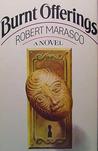
BURNT OFFERINGS BY ROBERT MARASCO

Burnt OfferingsBurnt Offerings by Robert Marasco
My rating: 5 of 5 stars

”The hum that drew her to the door at the end of the sitting room had become deeper and stronger, but almost imperceptibly so. It was the door itself that caught her attention now. It was white, and framed within the narrow, smooth border was an intricate pattern of lines and curves carved into the wood, so delicate in the room’s dim light that she hadn’t noticed the design until she came within a few feet. Swirls and garlands were cut into triangular panels that met in a small, raised pistil. She moved closer and the design became more intricate and abstract and impenetrable: a globe, a web, a sunburst, a maze, a slab carved with ancient pictographs.”

It all begins with an advertisement.

UNIQUE SUMMER HOME
Restful, secluded. Perfect for large
families. Pool, private beach, dock.
Long season. Very reasonable for the
right people.


Marian Rolfe likes fine things. She even takes temporary work occasionally to afford an extra fine desk or a lovely bureau. She also loves to clean, and more days than not when Ben returns from teaching, he is greeted by the aroma of lemons and polish.

Ben believes she is a bit obsessive.

Marian is determined to escape Brooklyn for the summer. With a thought to protecting their modest savings, Ben wants to stay in Brooklyn and venture out on a few trips to upstate New York when they need some relief from the oppressive heat of summer. Ben is overmatched, of course, with battling a splash of feminine wiles, a dash of not so subtle manipulations, and a smattering of outright deception.

Once Marian sees the palatial, crumbling Allardyce mansion, she is in lust.

The old adage if it is too good to be true is manifesting in Ben’s mind in neon colors and mile high letters. It doesn’t help that the brother and sister team of Arnold and Roz are not only odd, but are as creepy as a pair of zombie monkeys tethered to Pennywise the Dancing Clown.

The house is full of all the wonderful things that Marian can only dream of every possessing. Ornate furniture, delicate vases, expensive dinnerware, and antique clocks are scattered throughout the house, all shrouded with dust and cobwebs. The walls and floors of this faded beauty are drab and dingy. All of this would give most anyone else pause, but Marian sees beyond the dreariness and knows with buckets of Lemon Pledge, warm water, elbow grease, and a pile of fresh rags she can make it gleam again.

I was looking up Lemon Pledge (Marasco never does say exactly what Marian uses to make everything smell of lemons), and believe it or not, there is a “sexual act,” involving two usually elderly men, called Lemon Pledge. I won’t share what act that is, but it definitely falls under gross, moronic, and Never Doing That categories for me. This description, though, of Lemon Pledge made me laugh: “The purest most addictive artificial smell in the history of humankind. As its aroma ventures into your unworthy nostrils, it plants the seeds of ecstasy and euphoria into the womb of your mind.”

Despite Ben’s misgivings, they take the house. After all, it is a bargain, and when would they ever get this opportunity again? Part of the stipulations is that Marian has to feed the matriarch of the family, Mrs. Allardyce, the glorious mother, three times a day by leaving a tray for her outside her ornately carved door. Marian never sees her and only occasionally gets a proof of life by noticing that some of the food on the plates she leaves... has been picked apart.

So this novel is written with a slow burning fuse. There are sprinklings of foreshadowing that add to the unease of the reader. Things start out strange, but not too strange. It was interesting to see the acceptable level we have for the unusual before we start to feel alarmed. Clocks spring to life that refused to work. Weathered roof tiles fall to the ground revealing new tiles. Everything about the house starts to take on a healthy shine. The tendrils of gray hair that start to appear in Marian’s hair are just natural,...right?

Ben starts to feel his personality change. He starts to know with more and more certainty that he needs to get away from this place, whether Marian wants to go or not. Things long buried are being pulled out of the recesses of his brain. ”It wasn’t there. He knew that. It didn’t exist, not outside those childish and unreasonably frightening nightmares. There was absolutely no way something could creep back from the distant past and be real; or out of the tiny, vulnerable part of his brain where the image had lodged itself. And be real and no more than ten feet from him.”

And then there is the creepy chauffeur…*shudder*. He reminds me of Charles Manx from Joe Hill’s book NOS4A2. I wonder if Marasco’s chauffeur had some influence on Hill when he was creating Manx. Certainly, Joe’s father, Stephen King was influenced by this novel when he wrote The Shining, which came out four years after Burnt Offerings was published. This book makes the cut for most lists of Best Haunted House novels or even Best All-Time Horror Novels. It is certainly a classic of the genre. No slashing arcs of blood or piles of steaming gore, just good old fashioned psychological terror. I loved it! It was another perfect addition to my reading resume as part of my nostalgic tour through 1970’s horror. A movie was made in 1976 starring Karen Black, Oliver Reed, Bette Davis, and Burgess Meredith. I will definitely be cuing that up in the near future.

If you wish to see more of my most recent book and movie reviews, visit http://www.jeffreykeeten.com
I also have a Facebook blogger page at:https://www.facebook.com/JeffreyKeeten

View all my reviews

Monday, April 9, 2018

The Language of Fantasy

The Art of Language Invention: From Horse-Lords to Dark Elves, the Words Behind World-BuildingThe Art of Language Invention: From Horse-Lords to Dark Elves, the Words Behind World-Building by David J. Peterson
Reviewed by Jason Koivu
My rating: 4 of 5 stars

"This is just a toe dip." That line is in the concluding chapter of David J. Peterson's The Art of Language Invention and I couldn't agree more.

The topic and practice of language creation feels EXHAUSTING after having read this. And yet, once you've read it, you're quite aware that you've merely glimpsed the tip of the iceberg.

I wanted to learn how to create a new language, which I could incorporate into my fantasy world. As I finish up book two and begin fleshing out number three, all while developing four and five, it has become more and more apparent that I will be creating new races and vocal creatures that should not be speaking English, if my readers are going to have any chance at suspending disbelief. I know it has been done that way and is readily accepted in mainstream productions, but to me, that is the cheese. It is the cheesiest of cheese, by which I mean it stinks. Why would any kind of "alien" race naturally speak English? Obviously advanced civilizations could have translation devices or could be intelligent and advanced enough to cope with learning ESL, but I'm writing old timey fantasy with monsters beating each other over the head with clubs. I doubt they'd have time to enroll in adult ed night courses. So, I wanted to add some realism to my humanoid races. Enter The Art of Language Invention.

Very quickly I realized I was in over my head. This, my friend, is complicated stuff. As an example for your benefit and for my own recollection down the line, here is a list of contents:

Chapter One: Sounds
- Phonetics
- Oral Physiology
- Consonants
- Vowels
- Phonology
- Sounds Systems
- Phonotactics
- Allophony
- Intonation
- Pragmatic Intonation
- Stress
- Tone
- Contour Tone Languages
- Register Ton Languages
- Sign Language Articulation
- Alien Sound Systems
Case Study: The Sound of Dothraki

Chapter Two: Words
- Key Concepts
- Allomorphy
- Nominal Inflection
- Nominal Number
- Grammatical Gender
- Noun Case
- Nominal Inflection Exponence
- Verbal Inflection
- Agreement
- Tense, Modality, Aspect
- Valency
- Word Order
- Derivation
Case Study: Irathient Nouns

Chapter Three: Evolution
- Phonological Evolution
- Lexical Evolution
- Grammatical Evolution
Case Study: High Valyrian Verbs

Chapter Four: The Written Word
- Orthography
- Types of Orthographies
- Alphabet
- Abjad
- Abugida
- Syllabary
- Complex Systems
- Using a System
- Drafting a Proto-System
- Evolving a Modern System
- Typography
Case Study: The Evolution of the Castithan Writing System

There's also a short phrase book at the back that includes approximately one page each of Dothraki, High Valyrian, Shivaisith, Castithan, Irathient, Indojisnen, Kamakawi, Vaeyne and Zaanics.

Some of you GoT fans are probably getting all giddy in your pants at the idea of learning Dothraki. And well you should! This isn't the book to teach you the Horse Lords' language, but it's a start!

That and High Valyrian are Peterson's two most famous creations. They made him semi-famous. Famous enough to be mentioned by the lovable Emilia Clarke on late night tv: https://www.youtube.com/watch?v=OuKcZ...

He does a great job in this book of explaining the basics. You could, if you had plenty of time, construct your own brand new and very real language just from reading this book. It probably would be rather basic itself, but it would function. There aren't exactly step-by-step instructions, but Peterson does lay out this book, feeding you the info you need when you need it, in a way that naturally walks you through a language building education. One way to look at it is that instead of taking the full semester's course, you're reading over the syllabus.

Even if you're not interested in creating a new language, The Art of Language Invention is informative to those who are interested in words and language in general. Peterson relays a good amount of language history to the reader in order to explain his theories and practices. I found that quite educational. Also, this is written in a very casual tone. I think the man knew he needed to sugar-coat this stuff for the vast majority of his audience to get it down. If you're into GoT to the point of reading blogs for background information, you'll definitely get something out of this.


View all my reviews

Tolkien's Languages

The Languages of Tolkien's Middle-EarthThe Languages of Tolkien's Middle-Earth by Ruth S. Noel
Reviewed by Jason Koivu
My rating: 4 of 5 stars

An excellent book for those interested in J.R.R. Tolkien's created languages.

With The Languages of Tolkien's Middle-Earth Ruth Noel gives you the foundation for Tolkien's famous elven language, which I always like to proudly point out is based in Finnish. Hey, us Finns don't always have a lot to shout about!

The book also includes about a dozen other languages, such as various human tongues, the Black Speech of Mordor, high ancient tongues, common speech, etc. It takes all the words Tolkien gave us, translates them and offers some samples on how to elaborate on the fragments of the languages we have, such as verb conjugation.

Included are various glossaries, essays on Tolkien the conlanger's technique, and a Tolkien dictionary. While not for the average reader, this book is indispensable for fantasy fiction language lovers.

View all my reviews

Sunday, April 8, 2018

Norse Mythology

Norse MythologyNorse Mythology by Neil Gaiman
My rating: 4 of 5 stars

Norse Mythology by Neil Gaiman is a compulsively readable retelling of various myths from Norse Mythology.

Once upon a time, in that hazy prehistoric time before Goodreads, Neil Gaiman was my favorite author. Sandman was the gateway drug but I read all the Gaiman works I could get my hands on: American Gods, Neverwhere, Coraline, Stardust, you get the point. As the years went by, some of the shine wore off that penny. As I explored Gaimain's influences, like P.G. Wodehouse and Ray Bradbury, some of the magic was diminished.

Anyway, I heard Gaimain was writing this book and my interest was rekindled. I've been curious about Norse mythology since reading my first Thor comic. Gaimain delivers the goods here.

In Norse Mythology, Gaimain retells fifteen Norse myths, from the creation of the Aesir to Ragnarok, the twilight of the gods, making them accessible to the modern reader.

All of the Norse gods you're familiar with from pop culture, namely Odin, Thor, Loki, Balder, and Heimdall, are here, as well as a slew of others like Vidar, Kvasir, and Hod. I was tangentially aware of some of what transpired, like Loki giving birth to a six-legged horse and Odin hanging from Yggdrasil, the world tree, for nine days and nights before gaining his wisdom, but a lot of it was new to me. The Aesir sure liked to booze it up, didn't they?

While there was quite a bit to like about this book, the thing that really stuck in my mind was Naglfar, the ship of the dead made out of fingernails. Really. Loki tying his junk to the beard of a goat for entertainment purposes was right up there, though.

Reading Norse Mythology, I noticed echoes of it in fantasy novels I've read in past couple decades, most notably The Elric Saga Part II and The First Chronicles of Amber. For my money, this is the best thing Gaimain has done since The Graveyard Book (though Doctor Who: Nothing O'Clock was also pretty sweet.) Four out of five stars.

View all my reviews