Showing posts with label boston. Show all posts

Saturday, June 29, 2019

Inside the O'Briens


Lisa Genova
Gallery Books
Reviewed by Nancy
4 out of 5 stars


Summary


Joe O’Brien is a forty-four-year-old police officer from the Irish Catholic neighborhood of Charlestown, Massachusetts. A devoted husband, proud father of four children in their twenties, and respected officer, Joe begins experiencing bouts of disorganized thinking, uncharacteristic temper outbursts, and strange, involuntary movements. He initially attributes these episodes to the stress of his job, but as these symptoms worsen, he agrees to see a neurologist and is handed a diagnosis that will change his and his family’s lives forever: Huntington’s Disease.

Huntington’s is a lethal neurodegenerative disease with no treatment and no cure. Each of Joe’s four children has a 50 percent chance of inheriting their father’s disease, and a simple blood test can reveal their genetic fate. While watching her potential future in her father’s escalating symptoms, twenty-one-year-old daughter Katie struggles with the questions this test imposes on her young adult life. Does she want to know? What if she’s gene positive? Can she live with the constant anxiety of not knowing?

As Joe’s symptoms worsen and he’s eventually stripped of his badge and more, Joe struggles to maintain hope and a sense of purpose, while Katie and her siblings must find the courage to either live a life “at risk” or learn their fate.


My Review


Alice Wexler’s brilliant scientific memoir, Mapping Fate, made me want to further explore the horror that is Huntington’s disease, so I decided to check out Lisa Genova’s fictional account of a Boston-area family who is affected.

Joe O’Brien, a Charlestown police officer, finally agrees to see a neurologist when his symptoms begin to affect his job performance. Not only does his diagnosis change his life, it also affects the lives of his wife, Rosie, and their four children, who have a 50% chance of inheriting this incurable and crippling disease.

While this story explores the disease and its devastating impact on Joe, it also, through the perspectives of his children, explores what it means to live a life at risk.

I loved getting to know the O’Brien’s, with all their quirks and flaws. I would have liked some deeper insight into the family’s relationships, particularly between the two sisters, Katie and Megan, and Joe’s relationship with his own sister, who moved across the country. I wanted to know more about what it was like for them growing up with a sick mother and not understanding what was wrong.

It must be difficult to watch a parent deteriorate from a disease knowing that there is a 50% chance a child may or may not get it. Though predictive testing is available for those at risk for Huntington’s, results from testing can have a major impact on every aspect of one’s life and the decision must be thought through carefully.

Lisa Genova does a wonderful job portraying the human, personal side of Huntington’s disease and the difficulties surrounding the decision to be tested. This is not the best fiction I’ve ever read. The prose, while not dazzling, is light, functional and accessible. I cared deeply about the O’Brien’s and appreciate the author’s efforts to raise awareness about this rare neurogenetic disorder while avoiding excessive sentimentality and melodrama.

I very much look forward to her other novels.

Friday, April 20, 2018

Boston's South End


Anthony Mitchell Sammarco
Arcadia Publishing
4 out of 5 stars
Reviewed by Nancy


Summary


Originally a narrow, barren strip of land known as the Neck, Boston's South End grew from a lonely sentry post and execution grounds to what is today the largest Victorian neighborhood in the United States. With the filling of the South Cove in the 1830s, the area became one of the greatest planned residential districts of its time, a heritage preserved in unique architectural features such as red brick swell bay facades, elaborate balusters, and fanciful porches.

My Review


This is a nice pictorial history of the South End in Boston, MA. The neighborhood is known for its Victorian style houses and parks. It was once known as the Neck, a barren strip of land connecting Boston to the city of Roxbury that was once the site of executions. The South End is now a flourishing neighborhood, home to a diverse population and known for its restaurants, boutiques and art galleries. Though the South End is very expensive, there are a number of low-income housing projects.

The pictures featured here include schools, hospitals, the library, businesses, and transportation. There was an interesting tidbit about Dr. Mary Jane Blake-Safford, among the first female gynecologists in the US and a lecturer at Boston University. There are pictures of trolleys, a perfectly efficient and inexpensive mode of transportation that gave way to cars and buses. Like many urban areas, the South End underwent urban renewal, demolishing many old buildings. It would have been fun to see some “then and now” pictures. Instead, I found myself referring to Google Maps to see how some areas stayed exactly the same while others were completely changed.

Reading this makes me want to learn more about the neighborhood I enjoy hanging out in.

Friday, April 13, 2018

Greater Boston's Blizzard of 1978


Alan R. Earls (introduction by Michael Dukakis)
Arcadia Publishing
Reviewed by Nancy
4 out of 5 stars


Summary


The great blizzard of 1978 is an event seared in the memory of anyone who lived through it. Most of Greater Boston was quickly overwhelmed by the storm, which shut down all forms of transit, stranded thousands of cars and motorists along Route 128, and virtually shut down most of the state for a week. But for many coastal communities, the impact of the storm, which brought record high tides and pounding surf, was pure devastation. The common thread shared by almost everyone in the region was positive memories of neighbors and strangers helping each other and finding new bonds of community. Greater Boston's Blizzard of 1978, illustrated with approximately 200 photographs from government archives and private collections, brings alive the fading experiences of February 1978 for those who were there and those who can only imagine.


My Review


This was the perfect book to read on my lunch hour after getting hammered with 12 inches of snow. Points south got considerably less, and there were lots of school cancellations, so my commute wasn’t deadly and I got to work at a reasonable hour.

Full of amazing photos showing a city buried under more than two feet of snow, cars stranded on highways, intrepid pedestrians using skis to get around the city, shovelers digging out their buried cars and houses, and the emergency workers and volunteers who provided shelter and aid.

The coastal communities north and south of Boston were hit particularly hard. Streets were flooded and property damage was extensive. Houses were battered, split in half. It was a tragedy for many people. For me, it was winter fun. School was closed for a week and it was several days before I could even leave the house.

I’m sure Governor Dukakis did all he could at the time. He declared a travel ban, which remained in effect for a week, yet thousands of drivers were stranded. Weather forecasting was not as advanced in those days and people were simply unprepared. The sad thing is that Boston is still woefully unprepared for a major storm. They do a shit job removing snow from roads and clearing sidewalks. Poor drainage causes street flooding in many areas of the city. The city is congested and there’s too much traffic. The public transportation system is old and unreliable. And Boston seems to have a difficult time controlling its rats. The zombies who hang around outside the methadone clinics in Boston should be given shovels to clear the messy sidewalks and crosswalks, and all drivers should be required to have snow tires like they are in Canada.

Where were you during the Blizzard of ’78?

Monday, March 12, 2018

Travel to Boston's Sleazy Side with Lehane

The DropThe Drop by Dennis Lehane
Reviewed by Jason Koivu
My rating: 4 of 5 stars

I just love this guy! Dennis Lehane writes the stuff I want to read. He could write my obituary and I'd be like, "Man, that was great!"

Even when his material isn't top shelf, his prose and characterization still knocks it over the green monstah....Uh-oh, I've started to slip back into my roots. Hell, it can't be helped. Lehane's Boston-based books mesh sublimely with my Masshole upbringing. I love his settings because they remind me of home.

With The Drop we enter a typical Boston dive bar and hang out with typical Southies. Like pretty much everybody else in the fuckin' place, the bartender is a hopeless nobody. But hey, this is a frickin' fairytale, so the guy finds a little ray of sunshine in the form of an emaciated dog. Yeah, that's blue collar Boston for ya, a fucking half-dead dog is enough to add some hope in this schmuck's life.

But this is a Lehane book. It ain't gonna be as simple as all that. Mobsters, petty pricks, and psychopaths gotta wave their dicks around and people are gonna die for it. Let's hope it's the douchebags, but who knows. You never know with this fucking guy. And that's why I love him!

View all my reviews

Monday, October 23, 2017

Boston Crime in the '90s

A Drink Before the War (Kenzie & Gennaro, #1)A Drink Before the War by Dennis Lehane
Reviewed by Jason Koivu
My rating: 4 of 5 stars

A crime drama set in '90s Boston?! Yes and thank you!

I came of age in the 1990s just 45 minutes outside of Boston. So much of this book speaks to me.

What didn't feel as intimate was the race relations/strife plot. There was one black family in my sleepy little suburban hometown when I grew up. I'm sure we had racists, but racism wasn't a thing because there weren't races, just a bunch of whities. The subject didn't come up unless it was in the newspapers. The city had its problems, has had its problems right along. A Drink Before the War touches upon Boston's race problem in a grand, as well as intimate, way.

Plot summary quickie: Two private investigators are tasked by local politicians to retrieve certain documents. The pair end up in the middle of a gang war. But something deeper and darker is going on, which pushes our heroes to go above and beyond the call of duty. Also, during the investigation one of the investigators struggles with memories of his own past while the other deals with an abusive husband. Big and small, political and personal storylines pulse throughout A Drink Before the War.

I loved the two main characters, maybe not as people, but at least as well developed characters. Why not as people? Well, no one is clean. I mean, just about everyone in this book has flaws. Some are bigger and harder to overlook than others. But Dennis Lehane was looking to prick his readers' moral repugnance and he did a hell of a job, all while telling a fast-paced thriller.

There's nothing wrong with this book from my perspective. So why didn't I give this a five star rating? It's fantastic! And yet, it doesn't quite feel like a masterpiece. Maybe it's because it spends most of its time in the dirt. You feel filthy after reading this one, tarnished by the crooked politicians, the degenerates, gangland violence, unrepentant slayings, etc. However, that was its intent and it succeeds...oh man, does it ever succeed.

View all my reviews

Friday, July 29, 2016

Dirty Old Boston


Jim Botticelli
Union Park Press
4 out of 5 stars
Reviewed by Nancy


Summary


When Jim Botticelli launched the Dirty Old Boston Facebook page as a salute to the gritty city he once knew, he discovered that thousands of people were equally nostalgic and curious about Boston s recent past. And for good reason; after World War II, Boston changed rapidly, without apology, for better and worse, and in many ways forever. Dirty Old Boston chronicles the people, streets, and buildings from the postwar years to 1987. From ball games to dive bars, Dirty Old Boston also covers some of the city's most tumultuous events including the razing of neighborhoods, Boston s busing crisis, and the continual fight for affordable housing. Photographs assembled from family albums, student projects, institutional archives, and professional collections reveal Boston as seen from the streets. Illuminating Boston's tenacity and spirit, Dirty Old Boston presents proud moments and growing pains. Raw and beautiful, this book is an evocative tribute to the city and its people.


My Review


I saw this book on display in the Kenmore Square Barnes & Noble while walking to work in the morning. Once I got to the office, I requested a copy from the library.

I was unaware the author created the Dirty Old Boston Facebook page. I’m not on Facebook, but if you are, it’s definitely worth a visit.

This is a gorgeous collection of color and black and white photos from the 1940s through the 1980s that vividly portrays the transformation of the city of Boston. I didn’t grow up in the city, but have visited quite a bit in the mid-1980s through the 1990s. Now that I work in Boston, it was fun looking at the dramatic changes that occurred in many of the city’s neighborhoods and suburbs. Some of those neighborhoods, like Scollay Square, are no longer there, while others are almost unrecognizable. I also enjoyed the changes in cars, clothing and hairstyles over the years.


In many ways, I like Boston now much better than I did in past years. It’s cleaner, safer, and more diverse. The downside of course, is that the city lost a lot of its grittiness and character. All those grungy nightclubs and music venues with the sticky floors were replaced with hotels, upscale restaurants and bars, and overpriced shops. It made me sad seeing all those photos of neighborhoods demolished to make room for roads, buildings, and businesses. It must have been a terrible time for the families who were displaced.


I’d love to live in one of those luxury high-rises overlooking the Charles River and within walking distance from public transportation, or one of the quaint neighborhoods in the South End, but, sadly, the city is way out of my price range.

Friday, June 17, 2016

Fire in Boston's Cocoanut Grove


Paul Benzaquin
Branden Press Publishers
Reviewed by Nancy
5 out of 5 stars


Summary


A detailed account of the deadliest nightclub fire in history.


My Review


Reading Stephanie Schorow’s excellent, but short, The Cocoanut Grove Fire, made me hungry for more details, so I borrowed Paul Benzaquin’s history, which is far more comprehensive. It was first published in 1959, and while the language felt dated in places, it enabled me to feel closer to an event that occurred well before I was born and helped provide more insight into life in the 1940’s.

Paul Benzaquin began his career as a journalist for the Boston Globe in 1948 and later became known as a talk radio host.

His crisp, lean writing style worked well for imparting facts from that tragic day on November 28, 1942, while the tension and energetic pacing would have worked well for an action-packed thriller.


“First came a fast-moving puff of black smoke. A rosy dart of flame shot along the ceiling fabric for ten or twelve feet. It was instantly followed by a massive ball of flame – bright, noisy, and terrifying. It seemed to burn in the air, without need of fuel. Suddenly everyone in the room was in motion, desperately seeking escape.”


Schorow focused more on the history of the nightclub and its owners and government corruption, while Benzaquin covered life stories and details surrounding the aftermath of the fire, including significant medical advances made in the treatment of burns.

In the center of the book there are photos of Cocoanut Grove guests, some of whom were among the dead or injured, including Western star Charles “Buck” Jones. There are harrowing photos of servicemen, firemen and volunteers who helped evacuate victims, and pictures of the building after the fire. There is a photo of Clifford Johnson, who recovered from massive burns and made medical history, only to die in a fiery car crash in 1956.

At the end of the book is an acknowledgment section outlining the author’s sources of information and the individuals and groups who contributed toward his research. He spoke with reporters, photographers, fire and police departments, government officials, medical personnel, and survivors who shared their stories.

492 people died in this fire, making it the deadliest nightclub fire in history. Because of this tragedy, laws have been made and fire codes revised to ensure the safety of people in public buildings.

This is a detailed, informative, and gripping story of the events and people involved. Very highly recommended.


Friday, February 26, 2016

The Cocoanut Grove Fire


Stephanie Schorow
Commonwealth Editions
Reviewed by Nancy
4 out of 5 stars


Stephanie Schorow’s excellent Drinking Boston briefly mentioned the tragic Cocoanut Grove fire, an event I had no knowledge about prior to reading. 492 people died in the blaze, and over a hundred were injured. The glamorous Cocoanut Grove nightclub was frequented by couples and families celebrating special occasions, celebrities, servicemen, politicians, and athletes. Famous people were not immune to the horrors of that tragic night of November 28, 1942. Several members from entertainer Mickey Alpert’s house band perished, along with Buck Jones, a Hollywood cowboy star. Fortunately, the Boston College Eagles suffered a devastating loss to the Holy Cross Crusaders and canceled their victory celebration at the Cocoanut Grove.


This concise, well-researched and very readable little book provides a history of the nightclub and its owners - first Mickey Alpert, then Charles “King” Solomon, a mob boss who controlled Boston’s bootlegging operations, and finally, his lawyer, Barney Welansky, who used his connections with the Mafia and corrupt city officials to willfully violate the safety standards in existence at the time by overcrowding, blocking side exits to prevent guests from walking out without paying their tabs, using highly flammable decorations throughout the nightclub, hiring unlicensed electricians, and employing minors.


Not only does this book provide details about the fire and its aftermath, it also tells the stories of victims and survivors who courageously rescued others from the fire and the firefighters who tirelessly battled the blaze and hauled out hundreds of charred bodies. There was the head cashier who perished for refusing to leave her post and the club’s profits unattended, and other staff members who waited to be rescued and ended up losing their lives. There were numerous reports of cash, wallets, watches and rings stolen from burned and trampled bodies. There were heartbreaking stories of people who survived the fire only to die horrible deaths later on.

Boston City Hospital (now Boston Medical Center) and Massachusetts General had their work cut out for them. Though treating extensive burns was their major focus, there were large numbers of patients with severe respiratory problems from inhaling smoke and toxic chemicals, infections, and fluid loss. During this time, there were considerable advances in burn treatment, as well as the use of penicillin, which was used by the military and not yet widely available to civilians.


It makes me sad to know that greed and corruption is still the order of the day in Boston.

Friday, January 15, 2016

Another Bullshit Night in Suck City


Nick Flynn
W.W. Norton & Co.
3 out of 5 stars
Reviewed by Nancy


Summary


Nick Flynn met his father when he was working as a caseworker in a homeless shelter in Boston. As a teenager he'd received letters from this stranger father, a self-proclaimed poet and con man doing time in federal prison for bank robbery. Another Bullshit Night in Suck City tells the story of the trajectory that led Nick and his father onto the streets, into that shelter, and finally to each other.


My Review


The bold and colorful title and cover caught my eye at the library. I wasn’t sure I wanted to read another depressing memoir about homelessness, but since it took place in Boston, a city I’m quite familiar with, I decided to give it a go. There were some darkly humorous moments, as I’d expected from the title. Overall, this was a poignant, honest, and intense story about Nick Flynn’s relationship with his absent, alcoholic, and delusional father.

I learned after I started reading the book that Nick Flynn is a poet. This must explain his writing style, random scenes, and frequent jumping back and forth in time. It took me nearly half the book to warm up to Flynn’s style and start really caring about the characters.

There are lots of exquisite and evocative passages and inventive turns of phrase that I know will stay with me long after I return the book to the library, and I wish I could love this story more than I did. I wonder if it was the author’s style that made me feel distanced from the characters and kept me from empathizing with their situation until much later in the story.

Still, this unusual memoir is definitely worth reading.

Friday, October 16, 2015

Drinking Boston: A History of the City and Its Spirits


Stephanie Schorow
Union Park Press
Reviewed by Nancy
5 out of 5 stars


Summary


From the revolutionary camaraderie of the Colonial taverns to the saloons of the turn of the century; from a Prohibition period rife with class politics, social reform, and opportunism to a trail of nightclub neon so vast, it was called the Conga Belt, Drinking Boston is a tribute to the fascinating role alcohol has played throughout the city's history. Teasing out this curious relationship in particular, the clash between a constrained Puritanism (lingering like a hangover today) and a raucous revolutionary spirit, Drinking Boston introduces the cast of characters who championed or vilified drinking and the places where they imbibed legally and otherwise. Visiting some of Boston's most storied neighborhood bars, this pub crawl ends with Boston's distinct recipe for the current cocktail renaissance sweeping the nation. Stephanie Schorow serves up a remarkable cocktail representative of Boston's intoxicating story: its spirit of invention, its hardscrabble politics, its mythology, and the city's never-ending battle between personal freedom and civic reform.


My Review


Since Boston has the dubious honor of coming in first place on the Daily Beast's 25 Drunken Cities list for two years in a row and I regularly enjoy the pleasure of working, eating, and drinking there, I knew this book would be right up my alley.

This is a very well laid out chronology of Boston’s drinking history starting with the city’s revolutionary past and Prohibition and continuing with a detailed exploration of the city’s changing landscape, the public’s drinking tastes and habits, and an interest in classic drinks while inventing new creations using a variety of ingredients not available in years past. It covers saloons, taverns, nightclubs, jazz bars, gay bars, dive bars, and today’s neighborhood eateries that serve craft cocktails.

The mention of Cocoanut Grove’s tragic fire in 1942 that killed 492 people makes me want to visit its former location and explore the subject further, since it is a part of the city’s history I wasn’t aware of.

One of Boston’s oldest surviving bars is Jacob Wirth’s. I enjoyed reading about how it survived Prohibition by serving “near beer” that had less than .5% alcohol and loved how customers celebrated Repeal at Jacob Wirth’s even though the establishment had not yet obtained a liquor license. 

Getting smashed at Jacob Wirth's (est. 1868)
 photo jacob wirths_zpskdggsius.jpg

It was also interesting reading about McGreevy’s (formerly called the Third Base Saloon), a long-standing sports bar and baseball museum that is now owned by the Dropkick Murphys. Even though I’m not into sports bars, I’m tempted to visit just for its history.

Reading about some of the bars that have come and gone made me a little nostalgic for the Rathskeller (known as The Rat), a punk club in Kenmore Square known for its music scene, sticky floors, and fights. I remember seeing The Neighborhoods there in the early 80’s.


Along with the history, there are lots of interesting black & white photos and illustrations. Each chapter concludes with a drink recipe.

This is a thoroughly enjoyable and comprehensive history that I was glad to find at the library.

Monday, May 25, 2015

As Fun As A Stranger's Family Photo Album

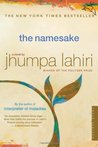
The NamesakeThe Namesake by Jhumpa Lahiri
Reviewed by Jason Koivu
My rating: 3 of 5 stars

I thought of a better title! An Indian Family Moves To America And Proceeds To Live. One of these days a publishing house is going to snatch me up and make me Head of Titlings!

The Namesake is an expertly crafted, boring slideshow. It reads as if you were listening to someone do a documentary-style narration over stills...

*click!*

A young Indian couple came from Calcutta to America.

*click!*

They started a family in Cambridge, Massachusetts.

*click!*

Et cetera

*click!*


Things happen and more things happen, and some of it's interesting, but none of it's captivating. The story lacks purpose, drive and offers up the tiniest morsel of tension. Certainly life-changing moments occur for the Ganguli family, but the reader is never given that certain something needed to give an honest shit.

I really thought I was going to love this. It's got the epic immigrant story, I like learning about other cultures, much of it is set in Boston and it name-drops some of my favorite locales (hello Brattle Theater!), but it's about as interesting as flipping through a stranger's photo album.

I'm sure some asshole will come along and tell me I'm a provincial-minded lout who doesn't understand some archaic Bengali literary tradition from which The Namesake has been stylized, but I don't care. This kind of book doesn't move me. Me, that's the operative word there.

For all that, I still enjoyed reading this. I mean literally, I enjoyed how Lahiri put one word after another. They were nicely arranged! She's clearly a talented writer. Her scenes and characters are so well-crafted they feel reach-out-and-touch-them real! In many instances through out the book I became entranced by the imagery, lost in the luxuriously decorated background, but then I'd notice the principle players at center stage speaking their lines so eloquently, yet without purpose. I felt like I was watching people walk through life and that annoyed me. When I read a book, watch a play or a movie I expect to see something more than everyday life. I can get plenty of that at home!


View all my reviews

Monday, May 18, 2015

My New Favorite Writer!

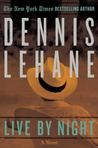
Live by Night (Coughlin, #2)Live by Night by Dennis Lehane
Reviewed by Jason Koivu
My rating: 5 of 5 stars

"This writer's got this"...It's nice as a reader when you realize that and can sit back and enjoy the story. Dennis Lehane is a writer who will put you in that easychair.

Live by Night was my first Lehane and midway through the first chapter I knew I was in safe hands. His writing flows, it touches on all the plot's necessary points and no more. Scenes breathe, characters grow, and the story seldom slows down.

This may not be a 5-star book for everyone. I'm giving it an extra bump up for the content. Part of it's about Boston gangsters during the 1920s prohibition days. Right up my alley! I was born and raised right outside of Boston and I'm a big fan of gangster lore. Live by Night marries two of my favorite things!

The story follows small-time criminal Joe Coughlin from a speakeasy heist to his career as a regional mob boss. It takes us from Boston down to Tampa, Florida and ropes in Cuba to boot. That last part really reminded me of The Godfather. I'm not saying Lehane copies Coppola. Mobsters from the Northeast U.S. historically migrated to Cuba. It was a natural progression. Lehane does a fantastic job with the period details, tastefully inserting real figures-of-the-day like Lucky Luciano and creating a marvelous historical fiction.

It's been a long time since I've been able to say this, but I'm really excited to read more from this author!


View all my reviews

Friday, May 9, 2014

Gone Baby Gone

Dennis Lehane
William Morrow & Co.
Reviewed by Nancy
5 out of 5 stars

Summary


Boston private detectives Patrick Kenzie and Angela Gennaro are hired to find four-year-old Amanda McCready, abducted from her bed on a warm, Indian summer night. They meet her stoned-out, strangely apathetic mother, her loving aunt and uncle, the mother's dangerous drug-addled friends, and two cops who've found so many abused or dead children they may be too far over the edge to come back. Despite enormous public attention, rabid news coverage, and dogged police work, the investigation repeatedly hits a brick wall. Then a second child disappears....As the two detectives intensify their search, they encounter a media more interested in sensationalizing the abductions than solving them, a midnight ransom drop that explodes into a firefight, a city seething with secrets and rage, and a faceless power determined to keep the children lost forever.


My Review

I knew this was going to be a very dark story. After reading the very disturbing Darkness, Take My Hand, about a vicious and sadistic serial killer who knew no limits when it came to human depravity, I didn’t imagine it could get much worse. I was wrong.

Though Patrick and Angie are tired of the violence and inhumanity that plagued their earlier cases, they agree to accept this latest case of a four-year-old girl who was abducted from her bed. Amanda’s mom, Helene, who is far from the perfect parent, uses drugs, drinks, and is addicted to TV. Amanda has a loving aunt and uncle who desperately want her to be found.

Patrick and Angie realize that a child’s disappearance must be solved quickly, or it will never be. With the help of two detectives in the Boston Police Department who believe in their own brand of justice, the denizens of their rough Dorchester neighborhood, and of course, Bubba, Patrick and Angie plunge headlong into one of their most difficult, complex, and emotional cases, confronting bad parenting, child abuse, pedophilia, and murder. They learn about themselves and each other, and discover that life and justice are not always black and white.

I had a difficult time putting the book down and enjoyed the growth of Angie and Patrick’s relationship, their feelings about children, and the questionable characters with good intentions. The story left me shaken and numb and thinking about it for days.

It was a great movie too!

Also posted at Goodreads

Friday, April 18, 2014

Sacred


Sacred
HarperTorch
Reviewed by: Nancy
4 out of 5 stars


Summary

Dennis Lehane won a Shamus Award for A Drink Before the War, his first book about working-class Boston detectives Patrick Kenzie and Angie Gennaro. His second in the series, Darkness, Take My Hand, got the kind of high octane reviews that careers are made of. Now Lehane not only survives the dreaded third-book curse, he beats it to death with a stick.Sacred is a dark and dangerous updating of Raymond Chandler's The Big Sleep, as dying billionaire Trevor Stone hires Kenzie and Gennaro to find his daughter, Desiree. Patrick's mentor, a wonderfully devious detective named Jay Becker, has already disappeared in St. Petersburg, Florida, while working the case, so the two head there to pick up a trail. Desiree, of course, is nothing like the sweet and simple beauty described by her father, and even Chandler would have been amazed by the plot twists that Lehane manages to keep coming.


My Review

In the third book of the Kenzie/Gennaro series, Patrick and Angie are hired to find a dying billionaire’s missing daughter. They learn that the detective he previously hired and who trained Patrick, has also disappeared under mysterious circumstances.

There are lots of twists and turns in this case, a grieving daughter, people who are not what they appear to be, a cult that exploits the grief and vulnerabilities of its recruits, a family who behaves badly, and a lot of missing money.

I was beginning to tire of the dreary and gray streets of Boston and was thrilled that the trail eventually led the intrepid detectives to hot and sunny Florida. Patrick and Angie are still recovering from their pain and losses from the previous two novels and have an opportunity to explore the friendship, love and tenderness that is growing between them.

While this story lacked the intensity and pace of the first two books, it was still very satisfying.

Also posted at Goodreads.

Friday, April 11, 2014

Darkness, Take My Hand


Dennis Lehane

Bantam Books

Reviewed by Nancy

5 out of 5 stars


Summary


The master of the new "noir," Dennis Lehane magnificently evokes the dignity and savagery of working-class Boston in this terrifying tale of darkness and redemption.

Patrick Kenzie and Angela Gennaro's latest client is a prominent Boston psychiatrist running scared from a vengeful Irish mob. The private investigators know something about cold-blooded retribution. Born and bred on the mean streets of blue-collar Dorchester, they've seen the darkness that lives in the hearts of the unfortunate. But an evil for which even they are unprepared is about to strike as secrets long-dormant erupt, setting off a chain of violent murders that will stain everything--including the truth.


My Review

This second book in the Kenzie/Gennaro series is even better than the first. It retains some of the humor of the first, but is considerably darker and more violent. Bubba, the one-man army who cares for no one but Patrick and Angie, has a much more significant role which involves a fire hydrant and a bowling alley. Angie’s abusive ex-husband, Phil, has quit drinking and starts to show his decent side to a point where I actually began to like the guy. Patrick now has a steady girlfriend, his friendship with Angie deepens, and we learn more about his abusive father. Angie and Patrick are hired by a psychiatrist who received a picture of her son in the mail from a stranger and now believes her son is in danger. The psychiatrist mentions a mysterious student who shares Patrick’s last name and is a girlfriend of someone in the Irish mafia.

This case is not so simple. There are lots of twists and turns, more pictures, mysterious and gruesome deaths, the mafia, a convict serving life in prison, a college professor with a secret life, vicious and depraved serial killers, and atrocities from the past tainting the present.

So, after reading this book I had a crazy-ass dream that made me bolt out of bed at 3:00 in the morning, feeling shaky and nauseated. Even after I was fully awake, I swear I could hear people bowling.

In the dream I was walking into my office at work. I saw someone’s head dangling from the suspended ceiling, then I saw an arm hanging off a filing cabinet and a leg in the blue recycle barrel in my office. In the conference room were fingers, toes, and male parts arranged in various shapes on the table. I ran screaming down the hall and into this big dude who looked like Bubba. He was looking for my boss. I told him that my boss was in a meeting all day. He didn’t believe me and wanted me to take him to my office. When I refused, he yanked my arm hard, pushed me ahead of him and wanted to know why there was blood all over my shirt. When we got to my office, he went to my desk and found a bloody stiletto. I screamed at him, telling him I had no idea how any of this happened. He said he had to make a few phone calls and made me sit in the conference room. While I was waiting, I picked up two small jars of paint, one gold and one silver, and proceeded to paint the male parts, fingers and toes that were arranged so perfectly on the table.

OK, so I’m recovered now. I am hoping the next one won’t disturb my sleep.

Also posted at Goodreads

Friday, April 4, 2014

A Drink Before the War

Dennis Lehane
Avon Books
Reviewed by Nancy
4 out of 5 stars

Summary


Patrick Kenzie and Angela Gennaro are tough private investigators who know the blue-collar neighborhoods and ghettos of Boston's Dorchester section as only natives can. Working out of an old church belfry, Kenzie and Gennaro take on a seemingly simple assignment for a prominent politician: uncover the whereabouts of Jenna Angeline, a black cleaning woman who has allegedly stolen confidential Statehouse documents. But finding Jenna proves easy compared to staying alive once they have. The investigation escalates, implicating members of Jenna's family and rival gang leaders, while uncovering extortion, assassination, and child prostitution extending from bombed-out ghetto streets to the highest levels of state government.


My Review

Patrick Kenzie and Angela Gennaro are offered big bucks to find a cleaning woman who made off with some confidential documents. It sounds like a simple case, but there’s a lot more to those documents than just state secrets.

Kenzie and Gennaro both grew up in blue-collar Dorchester and even though they’re tough, dealing with sleazy politicians and dangerous gangs takes all their energy, resolve and determination.

The detectives have their own issues to deal with too. Angie is married to an abusive husband, yet harbors some feelings for Patrick, who is her childhood friend. Patrick can relate, having suffered abuse at the hands of his own father.

I loved this dark, gritty, and violent story that explores racial and class conflicts, politics, and the evil that lurks in people’s hearts. I love the witty banter between the detectives and their growing relationship. A believable and realistic urban setting, gun battles, car chases, and a rich cast of secondary characters help make this a very fun and worthwhile start to a series.

Also posted at Goodreads

Monday, November 25, 2013

It was at Breed's Hill, dumbass

Bunker Hill: A City, a Siege, a RevolutionBunker Hill: A City, a Siege, a Revolution by Nathaniel Philbrick
Reviewed by Jason Koivu
My rating: 5 of 5 stars

I just love the hell out of Nathaniel Philbrick! That fella could write my obituary and I'd be happy as a pig in shit.

As a born and bred New Englander, I'm fairly well-versed in American Revolution history, but even I learned a few things from reading Bunker Hill: A City, a Siege, a Revolution.

Since it's more focused on a specific event rather than the entire war, Philbrick is able to dive deeper into the details, so the reader gets more info about the second tier players below the Washingtons and Adamses in fame, such as Joseph Warren, Thomas Gage, Henry Knox and John Hancock. Their backgrounds as well as the workings of their inner minds are elaborated upon. The strategies and maneuvers of the Colonials and British are laid out more minutely. Readers come to grips with this confusing conflict all while getting wrapped up in it.

Because these events are so precisely described and deliberated, I can't recommend this to everyone. But to anyone looking to learn more about the whys, whats and whos that make up the incorrectly named Battle of Bunker Hill, you may find a more scholarly text, but you're not likely to find one so deftly written in a prose that is a pleasure to read.