Thursday, August 15, 2013

Jay Lake Pre-Mortem Readathon, Review #8


ENDURANCE (Green Universe #2)
JAY LAKE
Tor Books
$15.99 trade paper, available now

Reviewed by Richard, 3.75* of five

The Publisher Says: Green is back in Copper Downs. Purchased from her father in sunny Selistan when she was four years old, she was harshly raised to be a courtesan, companion, and bedmate of the Immortal Duke of Copper Downs. But Green rebelled. Green killed the Duke, and many others, and won her freedom. Yet she is still claimed by the gods and goddesses of her world, and they still require her service. Their demands are greater than any duke’s could have been.

Godslayers have come to the Stone Coast, magicians whose cult is dedicated to destroying the many gods of Green’s world. In the turmoil following the Immortal Duke’s murder, Green made a God out of her power and her memories. Now the gods turn to her to protect them from the Slayers.

Jay Lake brings us an epic fantasy not “in the tradition of Tolkien,” but, instead, sensual, ominous, shot through with the sweat of fear and the intoxication of power.

My Review: How on earth does Jay Lake do this? He writes a series of first-person narratives from a female late-adolescent person's PoV and makes me like it.

The man is a sorcerer. I feel more sure of it now than ever. No other fact explains his ability to snare me in something I am not automatically a fan of.

Green, in this entry in the series, is as embattled as she was before. The difference is that, as an older and "wiser" character, she's battling for something outside herself. Yes, the battle will still benefit her in the winning. But she is not, unlike in Green, solely on a personal vendetta.

My main issue with Green was how frustrating I found it not to have a fuller, richer sense of the world that she inhabits. I put this down to first-person narration.

I was wrong. It was Lake working his magic. Green is a younger person in the first book, and like every single younger person on the surface of any planet, she is self-absorbed. We all were. Some of us get past it, some don't. And for some who get past the self-absorption of adolescence, it's a demanding external process that sets the gears turning.

With Green, the external source is...epic. Godlike. (You'll get the pun in the last 40pp of the book.) (Which you need to read.) (No, really.) And once we're acquainted with the quest Green needs to follow, once we're back in the leftover first-book conflict with Mother Vajpai, once we're involved and eager to follow the thread to its new, startling, and still inevitable conclusion...
...
...
...pages 317, 318, and 319 happen. I was so glad that I was reading this book AFTER the next one, Kalimpura, was published and was in my hot, grubby fists, I cannot adequately inform you of the good feeling.

A guy who can write from a girl's perspective, a young woman's perspective, and make a mean old misogynist care, not just care but CARE and want to know what happens next, is a sorcerer.

Light the torches. We need to get a stake put up. Who's got the pitchforks? Road trip to Lake-land, there to demand explanations for his powers.

Creative Commons License
This work is licensed under a Creative Commons Attribution-NonCommercial-ShareAlike 3.0 Unported License.

Wednesday, August 14, 2013

A Broken Family Picks Up the Pieces

Then Came the Evening
by Brian Hart
Published by Bloomsbury USA


5 Out of 5 Stars
Reviewed by Amanda 

Despite not being the focal point of the narrative, all of the events in Brian Hart's Then Came the Evening can be traced back to one defining moment: Bandy Dorner enlisted for Vietnam. We never know what Bandy experienced during his tour of duty because the novel begins after his return home, but we know it had a profound effect. He returns a changed man and, after learning that his home has burnt down and believing his young wife, Iona, to have been inside, a drunk, grief-stricken Bandy turns to the familiarity of violence, shooting and killing the officer trying to subdue him. Little does Bandy know that his pain will only beget pain as his wife, Iona, has left him for another man but is pregnant with Bandy's child--a child who will later be marked and judged by his father's actions.

Now before you chastise me for spoilers, all of this happens in the first few pages of the novel. Then Came the Evening picks up nearly two decades later, as Bandy's son, Tracy, decides to reconnect with the father who never knew of his existence. Bandy's release from prison is imminent and, hoping to mend the shattered family, Tracy sets about reclaiming the abandoned family ranch, restoring the gutted house in anticipation of Bandy's return home. As his wayward parents are drawn back to the hometown and the past they left behind, Tracy, Iona, and Bandy tentatively attempt to recapture a sense of family despite old wounds and fresh betrayals, learning the futility of trying to recapture what never was.

Then Came the Evening is about people who are broken beyond repair, who have been shaped by proximity to violence and live in a world with sharp teeth. The narrative moves at a slow, unhurried pace and may frustrate readers who crave more external action, but I enjoyed Hart's refusal to rush a story that should unfold for us as it unfolds for the characters. There shouldn't be a race to the finish line here as Hart is writing about life as it is lived, exploring how people are marked by choices made in mundane circumstances. I also enjoyed lingering over the novel's brutally poetic descriptions of the physical landscape that reflects and explores the internal landscape of the characters--especially in the case of Iona and Bandy as they struggle to reconnect with a time and a place and a version of themselves that was, but is no more. These are not characters who are keenly in touch with their emotions, for whom words come easily. Told in vignettes adrift in time and from varying perspectives, the novel allows the stories of each character to jostle against the other like pieces of a puzzle trying to find a way of fitting together.

While Hart does a fine job of depicting the depths to which Iona has sunk after Tracy initially leaves her to find Bandy, it's his portrayal of Bandy that is the real genius of the novel. A man who has been in prison for the last 20 years, Bandy's return home is painful and raw as Bandy's fear and disorientation are palpable. While his crime was admittedly a heinous one, there's also a realization that this Bandy Dorner is not the same one who pulled the trigger years ago. There's something heartbreaking about his cautious hope that maybe something can still be salvaged from the wreck he made of his family; he knows he doesn't deserve it, but it doesn't stop him from wanting it. However, the novel is not interested in making a case for justifying the circumstances of the crime (as Bandy's mother says, "Everybody blames the war for everything. I'm sick of it" [13]), but more interested in making a case for Bandy as a human being--one still capable of brutality, but one who has not forgotten how to feel.

While the characters in Hart's novel aren't necessarily likable, I admire how they try--with varying levels of success--to make something better of themselves and of each other. While the reader knows the odds are against these shattered people being able to mend one another, there's an inherent nobility in the attempt.

Tuesday, August 13, 2013

Celestial Matters

Celestial MattersCelestial Matters by Richard Garfinkle
My rating: 3 of 5 stars

Commander Aias of the Celestial Ship Chandra's Tear is charged with heading up operation Sunthief, using a ship to steal a piece of the sun and drop it on the capital city of the Middle Kingdom, the enemy of the Delian League.

This is one of those books that's hard to classify. Can something be classified as hard sf if the science in question is that of the ancient Greeks and equally ancient Chinese? That's right. Celestial matters is part hard sf, part alternate history. The Delia League is a Greek Empire founded on the spurious science of the ancient Greeks, which works in this universe. Spontaneous Generation farms are used to create animals. Space is full of air. The humors govern the health of the body. The Delian League is at war with the Middle Kingdom, which is an equally large empire built upon Taoist science.

As you can tell, the world behind Celestial Matters is a very interesting one once you wrap your head around the science. That being said, while the story is good, the writing drags. It took me about seventy pages to be fully invested in the book. It's not a light read and the science takes a bit of getting used to.

Still, I recommend this to alternate history fans who are into the ridiculous and magical science of 2000 years ago.


Also on Goodreads

Quintessence

QuintessenceQuintessence by David Walton
My rating: 3 of 5 stars

In a world where the Earth is flat and alchemy works, Alchemist Chistopher Sinclair and physician Stephen Parris leave their uncertain futures in England and flee to Horizon, a colony on the edge of the world. But even as they unravel the island's many wonders, can they truly escape the religious upheavals in England?

The Quintessance is part alternate history and part what I'm now calling alternate science. It takes place during the Age of Exploration, only in this world, the Earth is flat and the world is ruled by alchemical principles, and alchemist search for the Quintessence, the mysterious fifth element. It reminded me of Celestial Matters, another alternate history/alternate science tale.

The two leads, Sinclair and Parris, contrast each other nicely. Parris is a rational-thinking family man and Sinclair is a driven alchemist seeking to beat death. Parris's relationship with his family does a lot to flesh out his character. The wonders of the quintessence got me interested in the story before the gang ever left England, especially Catherine and the manticore.

Once they drew closer to Horizon and began encountering all sorts of magical creatures, the story took off to me, only to bog down once they reached the colony. While the experiments with the quintessence were interesting, not a lot happened until the mysterious earthquake and the bad guys showed up.

The bad guys were a bit of a problem. Parris' cousin Vaughan was almost unbelievable he was such a selfish douche and Tavera, late of the Spanish Inquisition (NO ONE EXPECTS THE SPANISH INQUISITION!), was practically twirling his mustache in villainous delight, although I actually found him the more believable of the pair. The best villains are the ones that think their actions are justified and Tavera certainly had that going for him. If the story had gone another way, I could easily see Sinclair playing the villainous role.

That's about all I have to say. Quintessence was an enjoyable read but I'm not wetting myself in anticipation for the sequel. 3.5 out of 5.

ALso on Goodreads

Monday, August 12, 2013

Nobody Likes To Share...

Elysium

Reviewed by Kemper

3 out of 5 stars with giant space habitats orbiting them.

Like a lot of people, I was eagerly anticipating Neill Blomkamp’s follow up to District 9, but while there’s a lot to like about Elysium, it doesn’t live up to the D9 standard.  It almost seems like  Blomkamp came up with the idea after drinking heavily and flipping channels between a cable news debate about illegal immigration and one of the Jason Bourne movies.  I picture him waking up in the middle of the night shouting, “The space station is America and Earth is Mexico and I’ll give robot arms to Matt Damon to make him even more deadly!”

In the year 2154 the Earth is so polluted and overpopulated that the wealthy have relocated to a huge space habitat called Elysium.  On Elysium everything is clean and beautiful, and best of all, automated medical pods can cure any disease or heal any injury.  The citizens have robots to serve and guard them from any Earth riff-raff trying to use shuttles to sneak in illegally.  Elysium’s chief guard dog is the ruthless Delacourt (Jodie Foster) who doesn’t hesitate to use lethal force to keep out any undesirables, but she is chafing under the restrictions of the president and the ruling council who think that blowing up shuttles full of desperate people seems a bit harsh.

On Earth, Max (Matt Damon) is an ex-convict who has dreamed of going to Elysium since he was a young orphan, and he’s delighted to bump into his old childhood sweetheart Frey (Alice Braga).  Max is trying to keep his nose clean, but the automated parole system and demanding boss at the factory he works in make it nearly impossible.  After Max is the victim of an industrial accident that leaves him dosed with a lethal amount of radiation, his only chance is to get to Elysium within a few days and use one of the med pods.

Max turns to Spider (Wagner Moura) who tries to smuggle people onto Elysium with little success.  Spider offers Max a ride if he’ll help kidnap a wealthy Elysium citizen on Earth so that they can hack the financial and security data they all have loaded in their brains.  Since Max is sick from the radiation poisoning, Spider has him augmented with some spare cybernetic parts, and Max targets John Carlyle (William Fichtner), the heartless owner of the factory where he worked.  Unknown to them, Delacourt has been conspiring with Carlyle to initiate a reboot of Elysium’s system that will put her in charge, and Carlyle now has that program loaded into his brain.  To try and keep the codes out of anyone else’s hands, Delacourt dispatches a dangerous and crazy operative named Kruger (Sharlto Copley).

Part of the problem is that there’s no subtly here.  Elysium is filled with spoiled assholes and Earth is made up of the common good-hearted folks just trying to get a break.  Damon does an adequate job of making Max relatable, especially in early scenes where his frustration at the rigid laws and bureaucracy is boiling just under the surface.  However, things are especially weak on the villain’s side. Foster’s Delacourt is heartless and ruthless. Carlyle is a greedy spineless weasel.  Kruger is a sadistic killer and that’s about it even though Copley does some entertaining scenery chewing at times.  None of their motives are explained, and there’s no perspective given on how Elysium can live so well when the Earth has supposedly been used up like a paper towel.

In fact, the plot doesn’t make a lot of sense in that almost everyone wants to get to Elysium simply for the medical treatments there.  Yet the pods seem to work so magically that withholding them from Earth is stupid because it’d make a lot more sense for Elysium to use them to keep people in line by offering or withholding medical treatment.  To universally deny it sets Elysium up as the targeted destination of the desperate and creates most of their problems.

This would have been a lot more interesting if the story was about resources in general and not just mainly about the magical cures that Elysium refuses to share for no reason that‘s explained.  If they were denying the medical treatment because the machines require too much power or rare materials to work, it’d make more sense.  Or perhaps the world’s overpopulation requires a brutal thinning of the herd.  If Delacourt saw herself as acting in the interest of humanity by trying to save precious resources for a few that would carry on, that would have made her a much more effective villain than someone who just doesn’t want any of those filthy Earth people on her space station.

The movie looks great visually and the contrast of Elysium which looks like the spiffiest gated community ever built against a Los Angeles which is now nothing but filth and squalor makes the point that this is definitely the Haves vs. the Have-Nots.

Blomkamp also delivers cool sci-fi action and weaponry just as he did in District 9, but he fell into the common trap of using choppy editing for many of the fight scenes so that at times it’s nearly impossible to tell what’s going on.  That’s made even more frustrating because at some points there are some cool shots like a robot being torn apart by explosive bullets in slow motion that is simply stunning so it’s even weirder that Blomkamp chose to make other scenes practically incomprehensible.


At the end of the day, Elyisum is weird mix in that it’s a big action sci-fi movie that has a few too many ideas to be a pure shoot ‘em up, yet the plot lacks the kind of detail and character motivation needed to lift it up to the level required for a more thoughtful kind of sci-fi story.  I cared more about the alien creatures of District 9 than I do the humans stuck on Earth in Elysium even though both stories are about the plight of immigrants in one form or another.


Reviewed by James L. Thane
Five out of five stars


Homicide 69 is another excellent book from Sam Reaves, an author who doesn't have nearly the following nor the reputation that he deserves.

The book is set in the summer of 1969. Richard Nixon is in the White House; war is raging in Vietnam; Neal Armstrong is walking on the moon; the Manson family is on its murderous rampage, and American society is in the process of being torn apart.

Against that backdrop, Mike Dooley, a solid, decent homicide detective, is doing what he can to redress the injustices committed by his fellow Chicago residents against each other. He's also trying, with marginal success, to navigate the treacherous waters of his own personal life. And a veteran of World War II, Dooley worries day and night about the safety of his son Kevin, a Marine who has been deployed to Vietnam.

Late one night, Dooley and his partner are called to the scene of an especially horrific homicide. A young woman, Sally Kotowski, has been brutally tortured and murdered. Kotowski was a former Playboy Bunny who hung out with mobsters, and Dooley quickly concludes that her death was mob-related.

A solution to the murder appears almost magically, and Dooley's bosses are happy to sign off on the case and declare it closed. Dooley is not. He believes that the solution is too neat and tidy and that the real killers are still at large. Through a long and difficult summer, he pursues the case relentlessly, often on his own time and at the risk of destroying his own career. And his journey takes him deep into the dark side of Chicago life in the late 1960s.

Homicide 69 is much more than a conventional crime novel. The reader knows fairly early on who the guilty parties are and so this is not a "mystery" novel in the traditional sense. It is, at heart, the story of one lone man, struggling against seemingly impossible odds, to do the right thing and to achieve one very small measure of justice in a world gone mad.

It's a story brilliantly told. Reaves has captured perfectly the tenor of the time in which the story is set and he has created an absolutely riveting protagonist in Mike Dooley. Even at nearly 600 pages, the story is way too short, and one closes the book wishing that you could follow Dooley's career indefinitely.

After being hard to find for some time, Homicide 69 is now available in a new e-book edition. It's hard to imagine any fan of crime fiction who would not enjoy it.

Sunday, August 11, 2013

Jay Lake Pre-Mortem Read-a-thon, Lucky Seventh Review


GREEN (Green Universe #1)
JAY LAKE
Tor Books
$15.99 trade paper, available now

Rating: 3.6* of five

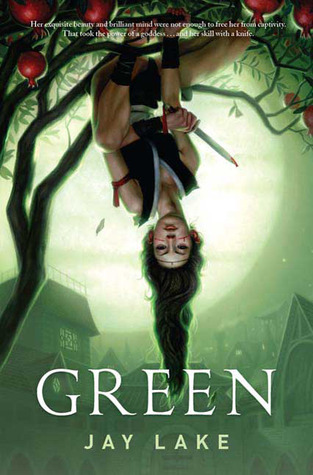
The Publisher Says: Her exquisite beauty and brilliant mind were not enough to free her from captivity. That took her skills with a knife, plus the power of a goddess.

She was born in poverty, in a dusty village under the equatorial sun. She does not remember her mother, she does not remember her own name--her earliest clear memory is of the day her father sold her to the tall pale man. In the Court of the Pomegranate Tree, where she was taught the ways of a courtesan…and the skills of an assassin…she was named Emerald, the precious jewel of the Undying Duke’s collection of beauties. She calls herself Green.

The world she inhabits is one of political power and magic, where Gods meddle in the affairs of mortals. At the center of it is the immortal Duke’s city of Copper Downs, which controls all the trade on the Storm Sea. Green has made many enemies, and some secret friends, and she has become a very dangerous woman indeed.

Acclaimed author Jay Lake has created a remarkable character in Green, and evokes a remarkable world in this novel. Green and her struggle to survive and find her own past will live in the reader’s mind a long time after the book is closed.

My Review: And here we have the proof that no author can match one's tastes perfectly. Green is about an adolescent girl whose birth makes her Special.

My very least favorite trope featuring my very least favorite PoV character.

Emerald, aka Green, is an orphan whose father sold her into life as a thing. Females are always things in these stories. She's a well-made thing, in that she's trained in all the arts a woman needs training in...including murder...and she's got the attitude to prove she's as good as any boy.

She lacks ambition.

Her voyage around her world fetches her up in Kalimpura under Mother Jaivai, where her honing is completed. Her return to Selistan, to confront the pale wraith of her past, is a foregone conclusion. Her actions are inevitable. Their outcome is too much to pack in to the confines of one novel, so....

This sounds like something that would be ripe for a hatchet-job from the likes of me. But, as always, it's the way it's done that makes it or breaks it. The story as it's told here is made of small, lovely moments. Green telling us her story directly gives the discovery of the various parts of her world she inhabits a personal immediacy for the reader. The sensory world, while circumscribed, is that much more intense for being personal.

Where that works less well is in the overarching story of what happened to make this world Green inhabits the way it is. A bit like trying to infer the Constitutional Convention of 1787 from what a fourteen-year-old twenty-first century Canadian kid knows and sees.

In the end, with any book introducing a series, the important question is: Do you care about what comes next? Do you want to buy the next book?

To my surprise, yes, I do. Quite a job to make me want to, given my natural disinclination to read books about adolescents as well as fantasy novels.

Creative Commons License
This work is licensed under a Creative Commons Attribution-NonCommercial-ShareAlike 3.0 Unported License.

A Fortunate Read

DIVINE MISFORTUNE
A. Lee Martinez
Reviewed by Carol
Recommended for: people who almost liked John Dies at the End, people who like humorous fantasy
Read from July 17 to 19, 2013
★  ★  ★  1/2

Divine was the perfect little quickie, a fast irreverent read at a time when I couldn’t give a book quality attention. You know how it is–some books deserve contemplation (Claire DeWitt, I’m talking to you), some require intellectual engagement (China is notorious for this), some insist you immerse in their world (Sanderson, you’re so demanding), some want your emotional commitment (I usually avoid the needy ones). But Divine doesn’t require any more than availability.

Based in a current version of America populated by the gods, Divine doesn’t break any new ground, but does have fun playing with old myths. Phil, the main character, was recently denied a promotion and discovers his competitor’s edge is his supportive divinity. On the way home, he’s in a minor fender bender (“The other driver pulled out a special knife and ran it across his palm, drawing some blood to offer to his god as he incanted, “Blessed by Marduk, who keeps my insurance premiums down”) and pulls into his driveway only to discover his neighbor now has the only perfect lawn in the subdivision, courtesy of a lawn service that worships Demeter. Phil decides he needs a god of his own and convinces his reluctant wife to choose a deity from Pantheon.com.

What they select is an amenable raccoon-headed god of minor good fortune. What they get is a raccoon version of You, Me and Dupree, a Hawaiian shirt wearing food hound, throwing parties for the gods and inviting his Mayan god friend Quetzalcoatl to crash on the couch (“Y’know, he was only joking about the alter thing,’ said Quick. ‘I was never into human sacrifice, even when it was legal.’ ‘Oh, I know. Conquistador propaganda.’”). Adjusting to life with a couple of gods isn’t easy for the straight-and-narrow Phil and Teri, and it’s even harder when strange things start happening.

Truly, it’s just simple fun. The plot is decent and the countering evil actually seems evil. There is an interesting parallel storyline with a former goddess of love spreading gloom and despair ever since being dumped–her discovering a new line of work was amusing. There’s a multitude of small bits like that, little common twists on deification that entertained me with their absurdity. Something about Charion bringing a dead potted plant as a house-warming gift and a Fury enforcing subdivision covenants entertains me. It does get a little absurd by the end, but it never veers so far out of control that it verges on acid fantasy, ala John Dies at the End.

Leave an offering of a worn copy of the Hitchhiker’s Guide and a homemade bookmark and the god of quick reads will oblige.

Strange Maps

Strange Maps: An Atlas of Cartographic Curiosities
by Frank Jacobs

Three of five stars
Reviewed by Sesana

I love the look of maps, especially antique ones. They're so intricate and beautiful and exact. So naturally, this particular book really caught my interest. But what, exactly, is a strange map? Lots of things, really. Strange Maps started as a blog of the same name (<a href=http://bigthink.com/blogs/strange-maps>still going</a>, as it turns out) where Jacobs essentially posted any map that drew his attention and was out of the ordinary. This book is more than 100 of those maps, reproduced in full color and with a thorough explanation by Jacobs.

There's a huge variety here, everything from fictional lands to rejected border ideas to geographic oddities. I don't know if I'd call myself a map buff, but it was fascinating to me. Jacobs's commentaries were usually enlightening (he seems fairly knowledgeable, and he could point out some interesting details on the maps that I might have missed), though probably a pretty close match to what you could find on his blog. If you've been a regular reader of his blog, you probably won't get much extra out of the book version. But I'd never read his blog before, and don't think I'd even heard of it. I think I will be going through the archives now, though.

It isn't a perfect book, though. Not all of the maps are that interesting, and some of them are barely maps at all. And if I hadn't been taking my time and only reading one or two chapters at a sitting, I probably would have gotten bored of the maps eventually. That said, there were more than enough maps that were interesting enough for me to share, so I would say that this is worth a read, but only if you take it in chunks.

Also reviewed at Goodreads.

Friday, August 9, 2013

White Time


Margo Lanagan
Eos 
Reviewed by: Nancy 
4.5 out of 5 stars

Summary


Lose yourself in White Time

White Time is mind time, body time, soul time, heart time.

White Time is other worlds, other dimensions, other states of being.

White Time is out of time.

In this transcendent collection of short stories, Margo Lanagan, author of the award-winning story collection "Black Juice," deftly navigates a new set of worlds in which the boundaries between reality and possibility are paper-thin . . . and sometimes disappear altogether.


My Review


Anthologies are fun to read because they feature a wide variety of authors and styles. With their hit-or-miss qualities, however, they can also end up being disappointing. If I run into a real dud of a story, do I set the book aside and pick up something else or skip the story and continue reading? I have several partially read anthologies just because that dud was stuck somewhere in the middle.

Short stories by one author are a little different. At least I can expect more consistency in quality. With Margo Lanagan, especially, I know I won’t get a dud. This is the third collection of stories I’ve read by her and all three times I’ve read the stories consecutively with hardly a break in between. Her writing is exquisite, rich and lovely, and the stories imaginative, moving and unsettling. I hope she plans to write forever!

White Time
One of my favorite stories in this collection is the very first one, White Time. Sheneel gets a taste of work experience, called “occupation tasting”. Her friends get to do something fun and undemanding while Sheneel gets the more fascinating job of redirecting entities that got caught in “white time” that netherworld between time periods. It’s work, so there are boring duties like number crunching and there are hazards involved. A haunting, thought-provoking story. 5/5

Dedication
An engrossing little story that explores family relationships, death and grieving. 4/5

Tell and Kiss
In Evan’s world it is not food that makes you gain weight, it is all the thoughts and feelings kept inside. Now at the end of his program, he has reached his goal weight. Will he be able to keep it off? 5/5

The Queen’s Notice
A first-hand perspective of life in an ant colony. Will the queen get her mate? 3/5

Big Rage
Billie is married to a total jerk who belittles her constantly and has to have the last word. While relaxing at the beach, she meets a wounded man in armor who is badly in need of help and in turn, he helps her unleash her pent-up emotions and anger toward her husband.
I love stories about powerful women! 5/5

“What comes out of me is fire. A roar of fire, a blast of fire, a curling, teeming, many-coloured chameleon-tongue of fire. It curves up the dune-side and scorches the scrub at the top. James’s spread hand, with the wedding ring on it, sticks out like a drowning man’s. He falls, he claws himself upright, he flounders flaming up over the dune-top and out of sight.”


The Night Lily
A sad and moving story which shows the effects of war on a group of children. 4/5


The Boy Who Didn’t Yearn
Tess Maxwell can read people. Their weaknesses, pain, emotions that are so apparent to her are not to others. Then she meets Keenoy Ribson, seemingly so happy with his life. How does he do it? 5/5

Midsummer Mission
Cute, funny and full of love. 3/5

Welcome Blue
A quiet story about a girl who gets a job snipping flowers to welcome the arrival of a special visitor. Little about the visitor, but more about the town’s varying reactions. 4/5

Wealth
In this class-oriented world, it’s not about how much money you have, but how luxurious your hair is. Probably one of the most accessible stories in this collection, and I don’t mean that in a negative way. 5/5


Also posted at Goodreads.