Monday, July 20, 2015

A Fun Old-School Dungeon Crawl

The Citadel Of Chaos (Fighting Fantasy, #2)The Citadel Of Chaos by Steve Jackson
Reviewed by Jason Koivu
My rating: 3 of 5 stars

Assassination, sorcerer style, is the name of the game in The Citadel of Chaos!

Steve Jackson has been pumping out these gamebooks for decades. I believe there's something like 60 of them. In them you play an adventurer on a quest that involves a dungeon crawl, a term gamers use to describe an adventure in which your character is going room-to-room through some kind of controlled area, like a dungeon, crypt, catacombs, caves, etc. For the purpose of books like this, which are very much modeled upon the Choose Your Own Adventure style of reading, it's necessary to keep "on track," if you will. More on this will be explained below.

But now for some book-representative illustrations!

description
description
description

Not all fantasy art is created equal, but Russ Nicholson's got the goods!

With the advent of ebook readers, you can now read/play these without having to keep track of ability scores, health level or inventory. You don't even have to make a map of your progress. That's a good thing, because I just don't have the time or desire to do all that. I just want a bit of fun and, after purchasing it for my kindle, that's what a book like this provides.

In The Citadel of Chaos you play a wizard and the coolest part about that of course is that you get to cast spells. That was an exciting first for me! The spell choices are limited and the ones on offer (Strength, Stamina, ESP, Levitation, Fire, and a few others) are designed to be useful at some point in the dungeon. Some more so than others, and if you take a certain path through the dungeon you may not find a use for some of these spells at all.

These books aren't "open world," meaning you can't investigate the whole place, at least not in a single adventure. You see, the story is linear and although this is a game you can manipulate, it too is fairly linear. Per each adventure, you pick a path. Usually you're given a couple choices. But you must keep moving forward, no backtracking. It's a drawback and failing of these kinds of books.

Occasionally the writer is able to include choices that allow readers to experience variant parts of the adventure that would normally only be found by following a different path than the one you're on. That's difficult and if not handled correctly could lead to an infinite loop, which would be embarrassing for the publisher. I think I've only come across one of those, so the editors/testers have done their due diligence.

Anyhow, the linear nature of these books is honestly a minor quibble and just one of the rules of the game you must abide by. No big whoop.

A fun aspect to these particular books is the creatures you meet. Sure, you encounter your standard goblins, leprechauns and witches as well as the slightly more rare golems and lizardmen, which are still fairly well known in the fantasy world, but you also get some often delightfully original - or at least oddball - creatures and characters. For instance, that Whirlwind was a breath of fresh air! *rimshot*

Overall, this was fun. I've enjoyed the two of these books by Jackson that I've read so far and I will no doubt read more.


View all my reviews

Friday, July 17, 2015

Don't Let Me Go


J.H. Trumble
Kensington Publishing
Reviewed by Nancy
5 out of 5 stars


Summary


Some people spend their whole lives looking for the right partner. Nate Schaper found his in high school. In the eight months since their cautious flirting became a real, honest, tell-the-parents relationship, Nate and Adam have been inseparable. Even when local kids take their homophobia to brutal levels, Nate is undaunted. He and Adam are rock solid. Two parts of a whole. Yin and yang.

But when Adam graduates and takes an Off-Broadway job in New York—at Nate’s insistence—that certainty begins to flicker. Nate starts a blog to vent his frustrations and becomes the center of a school controversy, drawing ire and support in equal amounts. But it is the attention of a new boy who is looking for more than guidance that forces him to confront who and what he really wants.

J.H. Trumble’s debut, DON’T LET ME GO, is a witty, beautifully written novel that is both a sweet story of love and long-distance relationships, and a timely discourse about bullying, bigotry, and hate in high schools.


My Review


If you decide to read this book, there are two things you need to overlook.

- The frequent time jumps throughout the story can be disorienting. Considering that very bad things happen to the main characters, I appreciate the author’s use of this technique that in some ways helps to lessen the intensity of the events and in other ways makes them even more horrifying. Just pay attention and you will find the story flows nicely and comes together in the end.

- The end! The craptacular ending that takes place 10 years after the story’s events. Though it was nice to see most of the story’s main conflicts resolved, I wanted more evidence of the characters’ work to get to that point. I also felt that certain significant issues were not addressed, which left me feeling vaguely unsatisfied.

Nate and Adam meet in high school and are joined at the hip. Their love is true, but Adam heads off to New York to take an acting job after graduation, putting great strain on their relationship. Nate and Adam’s relationship has all the passion and intensity of young people in love and was portrayed so effectively and authentically, that I found myself remembering my own difficult teenage years. It was easy to empathize with Nate and Adam, even if they lacked communication skills that would have prevented many of their problems. This is not just a love story, though. There is pain, heartbreak, and betrayal in spades. And there is the brutal sexual assault that left Nate emotionally wounded long after his injuries healed. Sensitive readers need not worry. Trumble skillfully interweaves details of the attack and its aftermath delicately through flashbacks.

I loved this book and gobbled it up in two days, discreetly swiping my tears while I was riding the bus to work. Nate and Adam were so real that I wanted to reach through the pages and hug them. Though Nate’s neediness and insecurity irritated me at times, I had to keep reminding myself that he is a teenager who suffered a traumatic experience. I’m glad Nate and Adam had the support of their friends – Danial, a straight ally of Pakistani descent; Juliet, Adam’s best friend who has a crush on Nate; and Luke, a sensitive, closeted boy who is drawn to Nate and is equally as needy. While I liked the supporting cast, I couldn’t help being slightly annoyed by Juliet. One of these days I would like to read about a strong female character who can have a close gay male friend while still having a fulfilling life of her own. I realize this is a book for young adults, but I was slightly bothered that the sexual intimacy between Nate and Adam was perfunctorily handled and lacking in sensuality. It would have been nice to have a tender love scene contrast with all the homophobia and brutality.

Minor complaints aside, this was an amazing book. Very highly recommended!

I can’t wait to read Luke’s story.

Wednesday, July 15, 2015

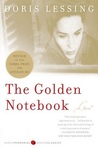
THE GOLDEN NOTEBOOK BY DORIS LESSING

The Golden NotebookThe Golden Notebook by Doris Lessing
My rating: 4 of 5 stars

*****WINNER OF THE NOBEL PRIZE FOR LITERATURE*****

“I was filled with such a dangerous delicious intoxication that I could have walked straight off the steps into the air, climbing on the strength of my own drunkenness into the stars. And the intoxication, as I knew even then, was the recklessness of infinite possibility.”

 photo 1e298600-b5b0-4d65-8b91-7ee9bc3ff2e4_zpsql8qrqdc.gif
I would say that Miss Lessing was very fetching when she was younger, but I don’t want to be accused of objectifying her. :-)

Anna keeps four notebooks, each representing different versions of herself, all with the intent of discovering the truth about herself. The red, the yellow, the black, and the blue covers, if all goes well, will merge into one golden notebook. An evolution of understanding that will set her free.

Free of what you might ask?

If she can ever discover her true self, she can escape the traitorous self she has always been. It is proving nearly impossible. ”I read this over today, for the first time since I wrote it. It’s full of nostalgia, every word loaded with it, although at the time I wrote it I thought I was being ‘objective.’ Nostalgia for what? I don’t know. Because I’d rather die than have to live through any of that again. And the ‘Anna’ of that time is like an enemy, or like an old friend one has known too well and doesn’t want to see.”

The only way to escape our past is to understand it. We must be at peace with it, but the past seeps into the present and the future, despite our best efforts to control it. ”At that time in my life, for reasons I didn’t understand until later, I didn’t let myself be chosen by men who really wanted me.” She isn’t that person now, not that it has made her any happier. By believing this, it says a lot about how she felt about herself. Any man who found her attractive or interesting became less desirable to her. Now she does let men choose her, and that has led to a series of temporary, unfulfilling relationships with married men. Did she learn from her past or is this just another form of avoiding commitment?

Their marriages are of no interest to her nor is she interested in the prospect of a marriage for herself. How can she discover who she is if she has to live in the shadow of a man as Mrs. _______? Marriage allows him to define her, and that elusive free self she is looking for will be forever buried under the avalanche of lost time given to achieving his desires, satisfying his whims, and helping him be successful. ”I am always amazed, in myself and in other women, at the strength of our need to bolster men up. This is ironical, living as we do in a time of men’s criticising us for being ‘castrating’…. for the truth is, women have this deep instinctive need to build a man up as a man…. I suppose this is because real men become fewer and fewer, and we are frightened, trying to create men.”

As women are trying to find themselves, define themselves, men are losing themselves. Men used to have clearly delineated roles... hunt, kill, protect... that evolved into... sports/academics, careers, providing. They were the head of household, but now that is less likely as women are becoming more successful in the work force. Men are being diminished as the balance of power in a household has shifted to something more equal. This is not a bad thing, but it is creating necessary adjustments for men who used to have a simple defined goal as to how they would be considered successful. This role is evolving into a blending of responsibilities where much of what they do is not weighed and measured.

Of course, it feels like a step back as men are not needed to be men in the same way they were sixty years ago or a thousand and sixty years ago. Giving up this power has been a long time coming, but women who are dismissive of men who still hold on too tightly to old traditional roles must understand that it is scary to think of who we are without them.

”You’re such a perfectionist. You’re an absolutist. You measure everything against some kind of ideal that exists in your head, and if it doesn’t come up to your beautiful notions then you condemn it out of hand. Or you pretend to yourself that it’s beautiful even when it isn’t.”

I’ve always believe in the old adage that has been attributed to Albert Einstein. “Men marry women with the hope they will never change. Women marry men with the hope they will change. Invariably they are both disappointed.” I don’t know which is more unrealistic.

I was flipping around the channels one day and landed on Oprah, not sure why because I never watch daytime talk shows, but there was a crowd of mostly women complaining about men. As I was listening to them speak, I realized that these women didn’t want more sympathy or more consideration from men, but actually wanted men to be more like them. They wanted men to have similar emotional responses to circumstances as women do. Narcissistic to say the least. Why would anyone want to hold up a mirror to their spouse and see themselves? I think it is important that we react somewhat differently to situations. My son leaving for college was very emotional for my wife who thought she was losing something. For me, his leaving was a matter of pride because I could see him as a man instead of a boy.

So when women talk about changing a man, are they truly talking about changing him into being more like themselves? Are they molding him to fulfill their vision of a progressive, successful future? If this is the case, I would say that the shifting power is having a detrimental effect and could be contributing to an increasing divorce rate. Couples, in my opinion, should be working towards common goals, but also in some cases towards separate goals as well. As women free themselves, they need to make sure they aren’t incarcerating their spouses (unless that turns him on) in the process.

”His green eyes were fixed, not seeing his mouth, like a spoon or a spade or a machine-gun, shot out, spewed out, hot aggressive language, words like bullets. ‘I’m not going to be destroyed by you. By anyone. I’m not going to be shut up, caged, tamed, told be quiet keep your place do as you’re told I’m not...I’m saying what I think, I don’t buy your world.’

It disappoints Anna that when she falls in love with the American, who has been kicked out of the communist party for being anti-Stalinist too soon (It never pays to be right first.), that she falls into a traditional role of wanting exclusivity and finding herself consumed by jealousy. Her whole life’s work has come undone. The golden notebook proves more elusive than the golden snitch.

 photo 4afccf76-8110-47da-9546-1967ba340f62_zpstq3ymkun.gif

This book has carried a heavy load as one of the major pieces of feminist literature. Doris Lessing in 1962 was exploring concepts of what women should be striving for just as a growing number of women were starting to reject the idea that they had to fulfill the male version of what it means to be female. (They may have lost their way in the 1980s with the big shoulder pads. I was so glad when women quit dressing like offensive linemen. The last thing women should do is try to be more like men.) Though there were aspects that I disagreed with in this book, I thought overall it was fairly balanced. Lessing also points out some fallacies in thinking by women even as she celebrates Anna’s attempt to achieve true freedom. Although freedom can sometimes be a very lonely existence.

Understanding yourself so that you can express your true needs is important. Don’t expect others to intuitively know what you want. A revolution without a platform leads to blaming others instead of asking for change. People can make you unhappy or happy for a short time, but ultimately we all have to find ways to make ourselves happy. We have to understand and accept that we will never truly completely know ourselves. Don’t become so wrapped up in a personal philosophy that you forget to live.

Equality doesn’t scare me as long as women are raised up instead of men being brought down.

If you wish to see more of my most recent book and movie reviews, visit http://www.jeffreykeeten.com
I also have a Facebook blogger page at:https://www.facebook.com/JeffreyKeeten


View all my reviews

Tuesday, July 14, 2015

The Vagrant

The VagrantThe Vagrant by Peter Newman
My rating: 4 of 5 stars

A sword-wielding mute, a baby, and a goat cross a post-apocalyptic landscape, heading for the Shining City. But will they reach their destination before the demonic horde on their trail overtakes them?

After reading about this book on Chuck Wendig's blog, I couldn't wait to dig in. However, at the time, Harper Voyager wanted $20 for the e-book. Since everyone knows that's horseshit, I held off until I found a new hardcover and I'm quite pleased with my treeware purchase.

The story of the last of the Seraph Knights is quite good, though on the surface doesn't look all that original. At first glance, it reminded me of Jay Posey's Three and Peter Brett's The Warded Man, with heavy doses of The Gunslinger. However, The Vagrant kicked my ass.

The way the story unfolds is masterful. You don't notice how much of the text in a lot of novels is dialogue until you come across a book where the three lead characters don't speak. As a result, it seemed like I wasn't making any progress in the book a lot of the time. The reading experience was a rewarding one, though.

Peter Newman's writing was superb and having to infer the Vagrant's nature and motives from his actions elevated the reading experience quite a bit. I never thought I'd get this attached to a nameless baby and a goat. The worldbuilding was interesting, mostly through the dialogue of the characters around the Vagrant and his gang. There were some infodumps in the form of flashbacks but they were easily digestible.

I don't really have anything bad to say about this book. It's a more difficult read than most fantasy books out there but it's also more rewarding. Four out of five stars.

View all my reviews

Monday, July 13, 2015

Philip Marlowe Finds Himself in Another Very Tangled Mess


Reviewed by James L. Thane
Four out of five stars

The High Window is another excellent novel featuring Raymond Chandler's hard-boiled L.A. detective, Philip Marlowe, although to my mind it's not quite on a par with Chandler's masterpieces, The Big Sleep and The Long Goodbye.

The case opens when a wealthy, twice-widowed Pasadena woman named Elizabeth Bright Murdock hires Marlowe to discreetly recover a valuable coin that has been stolen from her first's husband's collection. The client insists that her daughter-in-law, whom she hates, has taken the coin although she has no proof. The daughter-in-law has either left or been driven from the home. Mrs. Murdock wants Marlowe to quietly find the woman and get the coin back. The police are most certainly not to be involved.

All in all, this is a pretty strange household that also includes Mrs. Murdock's wimpy son and a severely repressed young secretary whom the widow treats like a doormat. Marlowe takes the case, although he pretty much knows from the git-go that everyone is lying to him, including his client.

Well of course they are, and before long poor Marlowe is up to his neck in a case that involves gambling, infidelity, blackmail and a small handful of murders. As is the case with any Raymond Chandler plot, it's all pretty confusing, although in the end, this one gets sorted out better than most.

As always, it's great fun to follow Marlowe through these tangled webs and, as always, the book is beautifully written in a style that has often been imitated but never matched. Raymond Chandler and his tattered detective were each one of a kind. 


Glory in Gaming Throughout the Ages!

Designers & Dragons: The '70s (Designers & Dragons, #1)Designers & Dragons: The '70s by Shannon Appelcline
Reviewed by Jason Koivu
My rating: 4 of 5 stars

Beware thou weary reader, for herein lies waaay the fuck more than you ever need to know about the beginnings of fantasy role playing games.

But wait up! Before you even get started on rpgs, Designers & Dragons goes even farther back. RPGs began with wargaming, which actually originated around the '50s. Well, if you want to be technical, you could say it started before that. Napoleon used huge maps and figurines representing army and navy units. Such miniature warfare was played in the Middle Ages as well. But gaming as we know it started with those WWII and Vietnam vets who liked to play out war strategies.

description

The emergence of fantasy literature, such as Lord of the Rings, in the late '60s meant it wasn't long before someone married the two ideas. After all, once a fan was done reading the book, s/he often wanted to continue on with the adventure, to inhabit the fantasy world just a little longer.

Thus was born Dungeons & Dragons. Appelcline's book is heavy on D&D, and rightly so as it dominated the RPG landscape. It was the game all the kids were playing. Other game-makers acknowledged this by attempting to license side products for the D&D system in the early days.

When I was a kid, it seemed like D&D came about around 1979-80. But that was only when the game "went viral". It had already long since enveloped the gaming underground. The original set was put out in 1974 and its true creation really started years before that in the late '60s.

Original D&D
description

My main interest in reading this was to get a better understanding of the game I knew and loved as a boy. My version looked more like this...

description
(I go into more detail on it here, if you're interested: https://www.goodreads.com/review/show...)

However, I prefer to get to know my history from the human perspective. In this instance, I wanted to know who created what or how so-and-so had to sleep in their van while they attempted to get their start-up off the ground. It was a brave new world and these fellows were courageous pioneers. I wanted to hear about them. Appelcline gives you plenty of that good stuff. Unfortunately, the book also gets bogged down in litigation and who licensed what to whom. For instance, owner of D&D, TSR Inc was a big ol' suer-rat. If it moved and there was money to be had, TSR sued it. So, D&D's history is embroiled in lawsuit after lawsuit, and Appelcline goes to great length in explaining it all. Frankly, I tired of it very quickly.

This is supposed to be about gaming in the 1970s, but it goes WAY beyond that. It would feel weird, incomplete in almost every case, to shut the door on a company's history at midnight on 12/31/1979 regardless of the story. So you get the whole story, from start to finish, even if that finish takes us right up to today. It was more than I expected and it gave me the opportunity to get to know all those game-makers I was in the dark about until reading this, like...

Chaosium and their main game Call of Cthulhu, a mindbendingly good time, so I'm told.

description

There was also Middle Earth-esque Tunnels & Trolls as created by Ken St. Andre, who got in on the ground floor with his simplified version of D&D. T&T never gained the same mass-popularity, but it survives to this day.

description

And then there was "satellite" creators, like Lou Zocchi, the man behind those enigmatic, odd-shaped dice role playing games are so well-known for.

description

That was good and all, but it took me a damn long time to finish this one, because it is very put-down-able. By which I mean, many of the company's stories are similar enough that reading the whole thing at once would be overkill. Plus, the book is logically broken into company-by-company sections, so once I was done, say, reading about Flying Buffalo, I'd put the book down before moving on to Games Workshop. Days upon days might pass before I was ready to read more.

One of my main gripes is that the writing is a bit amateurish at points. I guess I've grown used to today's writer's of history (Winchester, McCullough, Philbrick) with their smooth style. It really took me out of the story when I'd hit one of the many lines like "More on that later" or "Well return to that soon." It would be a minor point not worth mentioning but that there were so damn many instances of it. And another thing, if you say that a product was recalled due to its artwork and thus has become a hard-to-find collector's item, you really should explain what it was about the artwork that was so scandalous, because I have a very vivid imagination!

Complaints, yes, I had a few, but all in all this was good, good fun!

As a boy, D&D popped into my world almost as if by magic, so I was thrilled to finally get the chance to really learn about the world of gaming and discover the behind-the-scenes, origin stories that once mystified me. For that, I am grateful this book was created, and created with such obvious love for the subject matter. Appelcline once worked for Chaosium, so clearly this book and everything it stands for is important to him. It shows. Well done!

View all my reviews

Friday, July 10, 2015

Like They Always Been Free

Georgina Li
Queer Young Cowboys
Reviewed by Nancy
5 out of 5 stars


Summary


Men play guitar at bonfire parties and find comfort in parking lots. Soldiers find sex and love amidst a devastated America. A shape-shifting surfer hunts a man he can’t stop thinking about. A magician follows the secret messages beneath the graffiti and signs of an urban landscape. A young woman traces the story of her grandfathers: scientists and lovers who established a new colony on a distant moon.

Georgina Li writes with humane poetry, capturing both the profane staccato of soldiers and the blown-grass whispers of country boys. In these eight short stories, Li explores the literal and metaphorical wars of men: on the battlefield, in poverty, and of the heart. Her men are complex, covered in grit but filled with love.

Li’s work slides comfortably from genre to genre, proving that good storytelling is good storytelling regardless of literary conventions.


My Review


I love short story collections, but I am always a little hesitant about trying a collection from a writer I know nothing about. Getting the opportunity to read it for free and knowing it was a finalist for this year’s Lambda Literary Award for Gay Romance gave me that extra push I needed.

Though these eight stories explore the vagaries of love and lust, classifying this collection as m/m romance is reductive. These gorgeous, sensual, and unforgettable stories easily transcend into the literary realm. They are loosely constructed, each one unique, and the characters wonderfully real and very much alive. Their love is a tangible thing, powerful, emotive, and natural. There were times I hated leaving the characters behind, but had no trouble getting immersed in the next story.

Georgina Li’s writing style is fluid and never gets bogged down in extraneous details or too many adjectives.

My favorites are Closer to the Sky; Spill Your Troubles On Me, Love; Shark Bait; and Notes of the Founders.

If you are tired of the usual m/m romances, give this one a try. This rich and diverse collection surprised me in only the very best ways.

Thursday, July 9, 2015

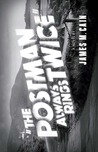
THE POSTMAN ALWAYS RINGS TWICE BY JAMES M. CAIN

The Postman Always Rings TwiceThe Postman Always Rings Twice by James M. Cain
My rating: 5 of 5 stars

”Stealing a man’s wife, that’s nothing, but stealing his car, that’s larceny.”

 photo POSTMAN_MAIN1520_zpsem8cp40h.jpg
John Garfield and Lana Turner in the 1946 movie.

Frank Chambers is a drifter, a man who, when life gets too heavy, catches the next boxcar out of town or puts his thumb out on the nearest highway. Being comfortable or achieving normalcy comes with too much responsibility. He’d rather bum it than have anyone relying on him.

It all begins with a sandwich in a California diner on a road in the middle of nearly nowhere. Nick “The Greek” Papadakis owns the diner and is in need of some help. The Greek offers Frank a job which even though he is broke still sounds like...well..work.

Until he meets Cora.

”Then I saw her. She had been out back, in the kitchen, but she came in to gather up my dishes. Except for the shape, she really wasn’t a raving beauty, but she had a sulky look to her, and her lips stuck out in a way that made me want to mash them in for her.”

He takes the job.

Something sparks between them, something desperate, something twisted, something so bad it is good. The first time The Greek leaves them alone, Frank is all over her:

”I took her in my arms and mashed my mouth up against hers….'Bite me! Bite me!'
I bit her. I sunk my teeth into her lips so deep I could feel the blood spurt into my mouth. It was running down her neck when I carried her upstairs.”


 photo ThePostmanAlwaysRingsTwice1981_large_zpsf9pm84lm.jpg
The steamy kitchen scene from the 1981 movie starring Jessica Lange and Jack Nicholson

The pain they inflict on each other in that encounter is only the beginning of this passionate, sadomasochistic relationship with unexpected moments of what could be termed romance. ”Tomorrow night, if I come back, there’ll be kisses. Lovely ones, Frank. Not drunken kisses. Kisses with dreams in them. Kisses that come from life, not death.”

Which would all seem very sweet except for the fact that they are planning to kill The Greek. Frank would have never had the ambition for such a deed on his own. His idea is that they just take off, become gypsies, live off the land, but Cora wants to be free, and she also wants the diner.

She is a femme fatale.

“I ripped all her clothes off. She twisted and turned, slow, so they would slip out from under her. Then she closed her eyes and lay back on the pillow. Her hair was falling over her shoulders in snaky curls. Her eye was all black, and her breasts weren’t drawn up and pointing up at me, but soft, and spread out in two big pink splotches. She looked like the great grandmother of every whore in the world. The devil got his money’s worth that night.”
 photo postman-always-rings-twice-poster_zpsnelw1zes.jpg
1946 poster for the movie

Frank is caught up in this woman who is game for anything. She lets him do things to her that would have most any other woman screaming for help. It is hard to determine if Cora actually had any feelings for Frank or for The Greek. Certainly, The Greek and Frank liked each other more than Cora liked either of them. Was she playing the game she had to play to get the accomplice she needed? Was the perversion of their relationship something she needed as well? The Greek was too old for her, but Frank as it turns out was not who she needed either.

The trial sequence is convoluted, crafty, and artful as their attorney builds this elaborate defense designed to defeat his frenemy, the prosecutor. He doesn’t care if they are guilty. He only cares about winning. Frank turns on Cora; Cora turns on Frank (another form of foreplay?) which is all part of the defense attorney's plan to set them free. The ending of the novel certainly seems a commentary by James M. Cain that people do not escape their guilts nor their destinies.

 photo Postman20Poster_zpsrbl1u3ax.jpg
One of the more suggestive movie posters from 1981.

There has been much puzzlement over the title because there is no postman involved in the story or anything that would readily suggest a reason for the title. I’ve been doing some research, and it seems that the most logical explanation that people have come up with is that in this time period when the postman delivered the mail, he would ring the bell on the house once, but if he had a telegram, he would ring twice. Telegrams were expensive, and to receive one generally meant that something bad has happened. The title probably made more sense to people in 1934 than it does to us today. If we accept this explanation, then Cain is warning his audience that nothing good is coming.

This is a terrific noir novel, a prime example of the genre. This book and this writer have certainly had an enduring impact on not only the hard boiled mystery novel, but also on literature and Hollywood. The book has been filmed seven times with most people agreeing that the 1946 version with John Garfield and Lana Turner was the best. The book was banned in Boston for being too sexually violent. There were several scenes that even by contemporary standards had me squirming due to the graphic nature, but I was also reading with a certain amount of awe at the audacity of an author trying to depict the very real, dark aspects of a deranged, desperate relationship. HIGHLY RECOMMENDED!!

If you wish to see more of my most recent book and movie reviews, visit http://www.jeffreykeeten.com
I also have a Facebook blogger page at:https://www.facebook.com/JeffreyKeeten


View all my reviews

Tuesday, July 7, 2015

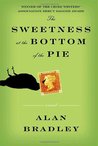
The Sweetness at the Bottom of the Pie

The Sweetness at the Bottom of the Pie (Flavia de Luce, #1)The Sweetness at the Bottom of the Pie by Alan Bradley
My rating: 4 of 5 stars

When young Flavia de Luce, aspiring chemist, finds a body in the cucumber patch outside her father's house, she finds herself caught up in a web of deceit and murder...

I'm not really sure how my love of detective fiction led me to this tale of an eleven year old girl in 1950s England solving a mystery involving stamps but I'm glad it did.

Flavia de Luce is a precocious English girl with a passion for chemistry in general and poisons in particular. She lives in an English country house with her father and two sisters, Ophelia and Daphne. The mystery component of the book is secondary to the delightful antics of Flavia. She's funny as hell and wise beyond her years.

Bradley's writing takes what probably would have been a two star mystery and kicks things up several notches. The writing style reminds me of Agatha Christie and Dorothy Sayers with a pinch of P.G. Wodehouse and was a delight to read.

The mystery itself isn't that great, although Bradley red herring-ed my ass about a fourth of the way through. Parts of it reminded me of Nancy Drew and others reminded me of the cozy mysteries of yore. I was less than 100 pages in when I resolved to read the entire series.

Four out of five stars. I'm looking forward to reading more adventures of Flavia de Luce.

View all my reviews

Monday, July 6, 2015


Reviewed by James L. Thane
Four out of five stars

Nick White is having a pretty crappy couple of months. He's lost his job; his efforts to make money as a card player are not going well, and his wife has recently kicked him out. So one can readily understand why the poor guy might be sitting in a bar on a rainy night, sucking down Scotch.

It appears that Nick's luck might finally be changing for the better, though, when an attractive blonde walks into the bar, steps over to Nick and asks, "Are you him?"

Nick decides that he has nothing to lose by playing along and responds by saying, "That depends. Are you her?"

This leads to some witty repartee, but it quickly becomes apparent that the two are talking past each other and that Nick has totally misjudged the situation. If he didn't realize it initially, he gets the picture pretty quickly when the blonde walks back out the door but not before giving him an envelope containing a flash drive, $20,000 in cash, and a photo of the young woman he's supposed to kill before he gets a second twenty thousand.

Once he gathers his wits and realizes what has just happened, Nick races out of the bar after the woman, but she has disappeared into the night and is nowhere to be seen. Totally confused, Nick returns to the bar, finishes his drink, and, of course, is still sitting there, dazed and confused, when the REAL hit man arrives and gets a good look at him.

Of course the logical thing for Nick to do would be to call the cops and turn the whole mess over to them, but then the story would stop dead in its tracks and we wouldn't have the guilty pleasure of watching poor Nick get put through the wringer.

John Rector is a master of taking ordinary people like Nick White, who are usually down on their luck anyhow, putting them into situations like this, letting them make the wrong decisions, usually one after another, and then letting it all play out. It's always great fun watching him do this and Ruthless is a very worthy successor to Rector's earlier books like The Cold Kiss and The Grove.

Suffice it to say that Nick decides not to go to the police but that he should at least warn the young woman who has been targeted for death. And as any fan of noir fiction knows, that means that the excrement is about to hit the fan. This is a book with any number of diabolical twists and turns, one that will keep readers turning the pages very quickly. It's a great summer read.