Monday, November 16, 2015

Unexpected Flavors

Not Becoming My Mother: and Other Things She Taught Me Along the WayNot Becoming My Mother: and Other Things She Taught Me Along the Way by Ruth Reichl
Reviewed by Jason Koivu
My rating: 3 of 5 stars

Expecting a comedic Shit My Dad Says diversion? Keep moving. Not Becoming My Mother is not the book you're looking for.

Having read another of food critic Ruth Reichl's books, I rashly assumed this too would be light-hearted and humorous. It's not. In fact, it's a rather depressing look at the repression that became the keystone of her mother's life. Instead of quirky-funny stories about a mad-capped mom as might be expected by the first few pages, the reader is treated to sad tales of psychotherapy and antidepressant drug addiction.

While not a hoot of a read by any means, this is an insightful cautionary tale, the sort to give any feminist the willies. Ruth's mother grew up in a time when American women fought for suffrage rights, were not allowed into the male-dominated business world, tasted the ironic freedom of hard labor during WWII, and then had it taken away and replaced with the surprising drudgery of doing absolutely nothing. A life of idle boredom was the spoils of war for middle class women in America, and the long, slow death of Ruth's once creative and ambitious mother.

Through discovered letters, Ruth pieces together her mother's past, learning the hows and whys behind her mother's odd behavior. Not Becoming My Mother is at times touching and heartbreaking. It is also short and feels a tad perfunctory, like a feature story Reichl the journalist extended beyond the normal allotted newspaper article word count.

View all my reviews

Friday, November 13, 2015

Travels with Lizbeth: Three Years on the Road and on the Streets


Lars Eighner
Ballantine Books
Reviewed by Nancy
5 out of 5 stars


Summary


The true story of a modern Robinson Crusoe and Huckleberry Finn, a homeless man and his erstwhile companion, a dog named Lizbeth, and their unbelievable, funny and poignant adventures on the road and on the streets.


My Review


Travels With Lizbeth is a candid and thoughtful chronicle of Lars Eighner's three years of homelessness. The author writes very eloquently and with a sense of humor about his friendships, traveling companions, jobs, and hardships. He is a keen observer of people and places and the love he has for his dog, Lizbeth, is heartwarming. Eighner sheds light on the problems that still exist today within the U.S. medical and mental health care systems and debunks common myths about homeless people. He writes without self-pity, yet very humanely about a problem many people would rather forget existed.

A wonderful book!

Thursday, November 12, 2015

Lord of the Silver Bow

Lord of the Silver BowLord of the Silver Bow by David Gemmell
My rating: 4 of 5 stars

Lord of The Silver Bow is book one in a reimagining of the Trojan War. It revolves around a man known by many names. Those familiar with the Trojan War know him as Aeneas, but in this book he's also known as Helikaon and The Golden One. The man himself is one fit for the era. Helikaon is strong, brave, and brutal. His brutality has earned him no friends among his enemies, but then who has friends among their enemies.

I went into this book really not having a clear idea of what to expect. I think the author wanted it that way because there was no true continuous storyline other than Helikaon is a lost man trying to fight his demons to find his way and that Agamemnon wants to conquer all.

In many ways this story seemed quite true to life. David Gemmell hit many different areas such as duty, honor, pride, shame, love, and lust. He displays some truly human qualities in the characters which made me feel their emotions right along with them.

There were only two things I found I didn't enjoy about Lord of the Silver Bow. The first thing was that the story skips to some truly random point of view characters that seemed unnecessary. The second thing is that the middle fluctuated from interesting to boring so often that I wasn't sure if I could finish this book. The author ended the book quite well though so I must say I was more than satisfied.

One last positive to mention is that Odyseuss, in all his tall tale glory, appears in this book. He's quite the character and absolutely left me smiling.

After finishing book one, I know I'll be heading back to David Gemmell's Troy to finish this interesting series.

View all my reviews

Tuesday, November 10, 2015

The Ghosts of Watt O'Hugh

The Ghosts of Watt O'HughThe Ghosts of Watt O'Hugh by Steven S. Drachman
My rating: 3 of 5 stars

Watt O'Hugh the Third is a gunslinging cowboy in a wild west show but he's also something much more. When J.P. Morgan gets Watt thrown into a Wyoming prison, what has he gotten himself into? And can he bust out and reunite with the woman he loves?

The Ghosts of Watt O’Hugh is the first part of a memoir written by a time-traveling cowboy. Watt goes from roaming the West to starring in a Wild West show to finding himself railroaded by J.P. Morgan into stopping whatever it is that's going on in the paradisaical mountain town of Sidonia.

As you might be able to tell, The Ghosts of Watt O'Hugh is a genre-bender with an epic scope. It's also a tale of lost love since Watt can't put his feelings for Lucy Billings aside.

The book was actually pretty funny at times, although there's an underlying current of sadness. There were enough unanswered questions to keep me plowing through the book when I should have been doing other things.

I liked this book but I wanted to love it. I don't know if it was a case of wrong book, wrong time, but I felt like I was in the dark for a lot of it. Watt's a pretty interesting character, though, and I'm curious about what finally shakes out. I'll probably wait until the trilogy is completed, though. Three out of five stars, though I plan on re-reading it once the trilogy is complete.

View all my reviews

Monday, November 9, 2015

Dry Sailing

The Autobiography of a SeamanThe Autobiography of a Seaman by Thomas Cochrane
Reviewed by Jason Koivu
My rating: 4 of 5 stars

One of my favorite '90s bands, The Jon Spencer Blues Explosion spat lyrics that often included their band name or shrilled, "You gonna know my name!", as if they were doing their own advertising right there and then, in song, because if you don't blow your own horn...fuck, no one else will.

That's how it was back in the old days. You had to toot your own flute to get ahead, and sometimes just to get your own, your just desserts. Military leaders of the past especially had to head up their own public relations. Some had rich and influential friends and relations who might round out the PR team, but mostly it was DIY.

Such were the times for Admiral Lord Cochrane, one of the courageous and daring British naval captains during the Napoleonic Wars. Forester's Hornblower series and Patrick O'Brian's long-running Master and Commander series both modeled their heros after Cochrane. So exciting was his career, little in the way of fiction needed to be invented by either writer. And so effective was Cochrane against the enemy, that the French named him "The Sea Wolf" and that notorious megalomaniac Napoleon would write about him in his post-war diaries.

Never heard of Cochrane? Well there are reasons for that...

Having served aboard numerous ships, Lord Cochrane gained insight into the workings of the navy and had ideas to improve matters. To do so, one needed to change laws, so he took up politics, joining the House of Lords. However, Cochrane's ideas for change pigeon-holed him as a naval reformer. It was a bad name as far as his bosses at the Admiralty were concerned. A reformer was a "radical" and those were considered as dangerous as liberals to conservatives.

But all Cochrane wanted was to do away with naval excess and costly dockyard practices, namely the thievery and bribery undermining the service. All the same, this made him an enemy of the establishment, who saw nothing wrong with the way things worked.

Cochrane, having some of his father's inventiveness in him, was also known as an innovator. Along with "radical", "innovator" was another scarlet letter stamp. Again, this sounds like it should be a good thing. However, the British Navy was fond of tradition and not fond of anything that might disturb the old ways. They'd been successful up to that point and "you don't fix what ain't broke!" huff-huff, grunt and grumble...

The situation is almost too absurd. Here was this brilliant young naval officer evading ships of the line, harrying the enemies coast and halting its trade, disrupting the progress of enemy troops, taking ships six times the size of his own in tonnage, crew and armament, and yet his achievements were constantly overlooked, his commendations for junior officers ignored. In essence, he was doing all and more that the British Navy asked of their captains and they just wanted him to go away. Very shabby treatment indeed. Ah, if only his politics aligned with the crusty old gents lining their pockets with the King's gold, a good deal of which belonged in the pockets of the officers and sailors for doing all the dirty work as was the "custom of the service," which might be conveniently overlooked now and then or out-and-out ignored if a technicality could be grasped upon. There's hypocrite defined for you.

One of the most egregious cases of discrimination against Cochrane came when he once came up with a smart way in which to keep ships afloat longer, which was summarily shot down regardless of its merits. When the same idea was later presented by an unrelated 3rd party, the money-saving idea was accepted and was about to be implemented right up until it was discovered it was Cochrane's idea, and the whole thing was scrapped. The Tory government preferred to lose money and ships rather than use the opposition's ideas. And if ships sunk faster, the shipbuilders providing His Majesty with new ships certainly were in favor of the status quo. That's politics.

Much of Lord Cochrane's The Autobiography of a Seaman rails against such naval abuses and laments the aforementioned discrimination --RECORD SCRATCH!!!-- "Hold your horses, Koivu!" you might be thinking. How much sympathy and assistance does an admiral and lord need or even deserve? In the case of Cochrane, much. His lordship was a nobleman in name alone, being that he was the "second son" of a father who spent the entirety of his fortune on inventions that never struck gold. His promotion to admiral only came years later as the government and its practices changed, and even then it took a pardon by the Crown to reinstate him so he could gain his admiral's flag.

By now, if you're still reading this review, I'd say this book might be for you. It can only be recommended to those who've enjoyed the kind of historical naval fiction as mentioned above or by those who love pure naval history at its rawest. For herein are described, without affecting much drama, events like the burning of a ship that took over 600 lives. No sir, no melodrama shall be employed! The narrative uses a dry descriptive style similar to one Cochrane would've used in his official dispatches to his superior officers. Having said that, he does thankfully lace in a little more colorful detail than those officers would've thought proper.

Granted, by modern standards this is dry and most readers not used to such plain language may be bored. If you want to attempt it anyway, I suggest keeping an ear open for the true meaning of his mild language in order to visualize, for instance, the carnage he is suppressing. Think of it in the same way you imagine the horrific scenes Hitchcock refrained from showing in his films. When Cochrane says a sailor was "cut down by shot" (a concentrated cluster of large marble-sized lead balls) or that a soldier fell fifty feet from a wall and was "in bad shape", you can freely imagine the worst.

The sea actions described are interesting to those eager for insight into war stratagem. Cochrane's fight against the Admiralty and Tory government might intrigue political historians. Everyone else might want to pass on this one, though it would be a shame not to get to know a historical figure so deserving of our remembrances, one who fought against a tyrant who himself stated how much more effective Cochrane would have been had he the support of his own government.

Admiral Thomas Cochrane, 10th Earl of Dundonald
description
YOU GONNA KNOW MY NAAAAMMME!!!


View all my reviews

Your Own Alternative Jesus

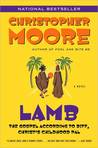
Lamb: The Gospel According to Biff, Christ's Childhood PalLamb: The Gospel According to Biff, Christ's Childhood Pal by Christopher Moore
Reviewed by Jason Koivu
My rating: 3 of 5 stars

Mel Brooks and Monty Python have been there, done that.

description

Christopher Moore retraces the steps of those comedy greats of the past in his Lamb: The Gospel According to Biff, Christ's Childhood Pal, a lighthearted take on what Christians call "the greatest story ever told."

Sure, it's a good story, but it's also rife with parody potential and humorists have been squeezing it for laughs probably since it was first told. That being the case, Moore's book travels a well-trodden path and so the laughs just didn't come for this reader. Certainly it was an enjoyable enough read. It wasn't until the end that I had to push myself to finish what was becoming an increasingly dry, straight up retelling of Jesus' crucifixion. Prior to that, Moore takes a few popshots at other religions during the son of god's trek through self-discovery and sometimes his aim is true.

Lamb... is quite a good book, and yet I may seem to be down on it. I blame hype. When you hear and read a great deal of praise for a writer, as I did for Moore, your expectations rise to an unreasonable height. I'm afraid mine were higher than he could reasonably obtain.

View all my reviews

Friday, November 6, 2015

Serpentine


Mark Laita
Abrams Books
Reviewed by Nancy
5 out of 5 stars


Summary


Photographer Mark Laita unveils a pantheon of spectacular snakes in this electrifying collection. Inciting both allure and alarm, shining pastel pythons and vibrant green vipers slither across the pages. An illuminating essay by William T. Vollmann accompanies the images, delving into the associations with snakes that haunt our collective imagination.

From the iridescent blue Malaysian coral snake to the candy-cane-striped albino Honduran milk snake, the aptly named beautiful pit viper, and the gleaming black mamba, the world’s most dangerous and gorgeous snakes are pictured in Serpentine, showing off their fascinating colors and textures—as well as the sensual forms their movement creates. Through Laita’s lens, there is nothing they can do, no position they can take, that fails to be anything but mesmerizing.


My Review


I’ve been fascinated by all things reptilian since childhood, and that interest persists today. It’s just an interest, not an obsession, so there’s no need to worry about me filling my apartment with monitor lizards and turning the thermostat to 80 just so they can be comfortable like Ron Huff did.

By the time I reached the sixth grade, I amassed a little collection of books about reptiles and memorized their contents, so I felt pretty confident that I could identify any I came in contact with.

During show and tell, when my teacher was looking for volunteers to get up close and personal with a boa constrictor, my hand shot up. Even though I knew that snakes are not slimy, its warmth and smooth texture still surprised me. I liked the feel of its strength and solidity while it was draped around my neck and wondered why people would fear such magnificent creatures.

Since then, I’ve seen lots of reptiles at zoos, and a furious rattler at Mt. Diablo National Park that was blocking traffic, but didn’t have the opportunity to handle a snake again until I attended a reptile show at PetSmart. Once again, my hand shot up when the handler was looking for volunteers. It turned out I was the only one with a boa constrictor around my neck while all these little kids were watching. Too bad they were missing out on all the fun. My husband was clear across the store playing with a Rottweiler pup named Bruiser and wanted nothing to do with me while I was wearing the boa necklace.

This book is all kinds of awesome! The plain black background enhances the color, texture, beauty, and graceful motion of a wide variety of snakes. There is a nice introduction by William T. Vollmann and a glossary featuring each breed’s vital stats. It looks great on my coffee table and I’m sad about having to lug this great big book back to the library.

Thursday, November 5, 2015

The Great Bazaar & Brayan's Gold

The Great Bazaar & Brayan's GoldThe Great Bazaar & Brayan's Gold by Peter V. Brett
My rating: 5 of 5 stars

Before becoming the fearsome tattooed warrior The Warded Man, Arlen Bales was a messenger. The Great Bazaar and Brayan's Gold shows two of Arlen's notable messenger adventures.

Brayan's Gold depicts Arlen's first overnight trip as a messenger. From nearly the beginning things go wrong for the demon magnet Arlen Bales, but Arlen is willing to do whatever it takes to ensure his trip goes as planned. Arlen's fearlessness is on display in this novella in absurd proportions.

The Great Bazaar takes Arlen to multiple desert locations most notably Fort Krasia. Arlen has risked his life and wealth in search of the battle wards of old yet has repeatedly come up empty handed. Thanks to a boast from the khaffit Abban, Arlen is once more prepared to risk his life to obtain the battle wards.

These short stories make me love that wild man Arlen Bales even more. Arlen repeatedly refuses to be swayed from his long term goal of freeing the world from demons. Arlen just doesn't seem to fit with most of humanity who cower behind their wards at night yet call that freedom.

The story introductions, excisions, and Ward Grimoire are all interesting additions that show just how The Demon Cycle came to life for the author Peter V. Brett. I especially enjoy the Ward Grimoire because it has detailed explanations of all the wards in the series along with images of the wards.

I love The Demon Cycle series and in world novellas so The Great Bazaar and Brayan's Gold give me the best of both worlds.

5 out of 5 stars

I received this ARC from NetGalley in exchange for an honest review.

View all my reviews

Wednesday, November 4, 2015

THE TURN OF THE SCREW BY HENRY JAMES

The Turn of the ScrewThe Turn of the Screw by Henry James
My rating: 5 of 5 stars

“No, no—there are depths, depths! The more I go over it, the more I see in it, and the more I see in it, the more I fear. I don’t know what I don’t see—what I don’t fear!”

 photo the-innocents-1961_zpsjib312lw.jpg
Screen shot from the 1961 version of The Innocents based on the James short story.

A governess is hired to look after the nephew and niece of a man who has inherited the responsibility for the children after the death of their parents. He is very explicit in his instructions to the governess that he is not to be bothered with excessive communications. The governess is young and pretty and wants to impress her new employer by doing exactly what he wishes. She wants to be seen as competent, and in a sense this need to please proves to be a vulnerability that, as she tries to shield and protect, she actually puts everyone at more risk.

Risk of what you might ask?

That becomes the unknown element of the story. The reader doesn’t really know what to be afraid of. What nature of evil are we dealing with?

The children are ethereally beautiful. The governess is compromised immediately by preconceived notions, that we all have to a certain extent, that beauty equates to goodness. ”I was dazzled by their loveliness.” When the boy Miles is kicked out of his exclusive school for unrevealed reasons, the governess cannot fathom what he could have possibly done to deserve this level of embarrassing punishment. It was inconceivable to her that he was capable of anything remotely improper.

As the governess begins to try to understand her young charges, she also begins to discover that there are swirling questions about what has happened to other people who have been associated with the children in the past. She cross examines the housekeeper and more carefully the children, ferreting out bits and pieces of information that leave a murky picture in her mind. The reluctance which everyone shows in speaking about the past makes the governess more and more suspicious that something potentially perplexing lies in the truth.

She starts to see dead people.

”I was ready to know the very worst that was to be known. What I had then had an ugly glimpse of was that my eyes might be sealed just while theirs were most opened.”

Her first thought was to protect the innocence of the children, but maybe what she should have been more worried about was protecting her own innocence. It becomes a game of ignoring these phantoms in the hopes that the children would not become aware of the existence of these ghosts, of Quint, the butler, and Miss Jessel, the ex-governess. Both of these people were obsessed with the children when they were alive. The question becomes what do they want with the children now?

Of course, without confirmation of the existence of these supernatural events from other people, one does naturally tend to start questioning one’s own sanity.

Henry James weaves in these awkward interactions between the governess and Miles. There are moments when the young lad seems to be attempting to seduce his governess. He calls her ‘my dear,’ which sounds innocent enough, but when coupled with innuendos, the words take on a more unseemly connotation. The governess is not totally immune to the charm of the handsome boy. “Of course I was under the spell, and the wonderful part is that, even at the time, I perfectly knew I was. But I gave myself up to it; it was an antidote to any pain, and I had more pains than one.”

Scholars have debated whether the governess was actually seeing the phantom manifestations or not. There is certainly a desperation to how she attempts to protect the children, fully determined to keep the situation under control without having to contact her employer. We watch her naivety crumble as she is battered by the strange and distant attitudes of the children and the extraordinary circumstances of the spine-chilling past intruding on the present. I was firmly on the side of believing the governess was losing a firm grasp on her sanity, but then James throws a wrinkle into my firm resolve when Miles makes this statement to the governess that they should not miss his sister and the housekeeper (after they have fled the circumstances):

”I suppose we shouldn’t. Of course we have the others.

Or is Miles just playing her.

This is a short story, but it is a short story by Henry James. He has some of the same convoluted, difficult sentences that show up in his novels. They may bewilder on a first read, but after another go they start to make more sense. I’ve read enough James to find those complicated sentences, when they appear like Gordian Knots, more amusing than frustrating. This tale left me jangled and apprehensive as if an apparition were still strumming their fingers along the length of my sciatic nerve. If you read it on the most basic level as a ghost story, you will certainly find it unsatisfying. As I started to understand the deeper psychological implications of the interplay between characters, I started to realize that this is a tragedy with elements of horror that left lasting traumatic issues for those that survived.

If you wish to see more of my most recent book and movie reviews, visit http://www.jeffreykeeten.com
I also have a Facebook blogger page at:https://www.facebook.com/JeffreyKeeten


View all my reviews

Tuesday, November 3, 2015

Skinner by David Bernstein

SkinnerSkinner by David Bernstein
My rating: 2 of 5 stars

Skinner is a supernatural overcoming the monster horror story from David Bernstein. A simple premise with three couples on their way to a cabin retreat, they attempt to drive over a mountain during an inexplicable storm. First filling up with gas at a rather creepy 'last fuel stop', they encounter an old man surrounded by and wearing wolf pelts.

Going up the mountain the snow worsens and they narrowly avoid running over, yep, the old man from the gas station, by plummeting down the side of the mountain. It's then a conveniently found cabin in the woods and a battle for survival scenario as one by one they succumb to a foe that has been playing this game for an eternity.

What we have is a fairly standard horror story that plays out somewhat like a movie script, more an intricate description of events as they happen and to be honest I was a little bit bored by the whole thing. There's the usual inner group squabbles, a bit of deception and questionable loyalties but I really didn't care for any of the characters, nor whether they lived or died.

The story wasn't too predictable regarding who survives, it just didn't grab my interest. I think it was more the style than anything, very little character depth and some cringe worthy conceptual metaphors. I mean comparing falling down a cliff in a car to shoes in a tumble dryer set on the highest possible speed and smells compared to the sharpness of a thousand newly minted pennies. It just didn't work for me, I normally read and highlight the good, the bad and the ugly in any story, and when I go over the notes if there's lots of things that are grouped by a 'nah' and there's no quotes I liked then it doesn't bode well.

A book that plays out like a movie has to have some way of getting involved with the story, I've read stuff like this before and enjoyed it. Over the top, riotous fun, with some humour, anything in fact to make you want to pick it up again, sadly this didn't have much in the way of redeeming qualities. If you like your stories in a sense almost articulated, simple to comprehend with little concentration required you might enjoy this. On the other hand if you want to experience a story, think about it, even when you're not reading it, desperate to get back to it, then this won't be for you.

Also posted at http://paulnelson.booklikes.com/post/...

View all my reviews