Tuesday, March 29, 2016

Snakewood by Adrian Selby

SnakewoodSnakewood by Adrian Selby
My rating: 3 of 5 stars

Ok, I am a bit torn, first of all, Snakewood has a extremely cool idea for a fantasy world, and then wrap it in one of the most difficult, obtuse ways to tell your story, in another words..not good.

I read reviews for this before hand, so I knew that it jumped perspectives and viewpoints so IF you go into the book with that in mind, it takes a bit of the edge off, but if you DON'T, you will drop it quick. That is a shame because there is hints of cool all throughout and I am intrigued once you get past the author trying to be all "fancypants" with his storytelling.

If you like the grimdark fantasy and willing to suffer a little bit, check this out, the story pacing is all over the damn place and there is NOT a likeable character in the bunch, there is a very interesting concept behind the world and honestly me being a world building freak, my three stars are almost solely based on it.

So dear readers, I leave the choice up to you, take a chance or not.

View all my reviews

Javelin Rain by Myke Cole

Javelin RainJavelin Rain by Myke Cole
My rating: 5 of 5 stars

First of all, The Shadow Ops books are automatic buys for me, and if you follow my ranting reviews you should have already read this series, and I will not spoil any of you slow arses who haven't yet. (so there)

Myke Cole's world and storytelling gets tighter, better and more bad ass with each book and how the HELL that's possible is beyond me. It is the perfect storm, the balance between strong well developed fantasy and sheer fist pumping badassness (that's not a word, I'm on a roll I don't care) Even though it is the middle book in this current trilogy it really doesn't in my opinion suffer from middle book syndrome, matter of fact, I think it is among if not his current best book.

Yes, I am a unabashed fan, and not objective at all, but if you want a terrific read for the upcoming summer months, go buy all the Shadow Ops books, give this man MONEY! He has stories to tell, and wargame stuff to buy. A strong 27 out of 5 stars from me! (common core math)

View all my reviews

Monday, March 28, 2016

Nothing Fishy About The Big Oyster

The Big Oyster: History on the Half ShellThe Big Oyster: History on the Half Shell by Mark Kurlansky
Reviewed by Jason Koivu
My rating: 4 of 5 stars


The title of The Big Oyster: History on the Half Shell is a nod to The Big Apple and could very well be considered a solid stand-alone history of New York itself.

Mark Kurlansky's book titles do not get the reader's blood pumping:

Salt
Nonviolence
Cod

You'd half expect to fall asleep before finishing the intro. But keep pushing on and you'll find a highly enjoyable read filled with interesting facts. Seriously, Kurlansky can make oysters and cod interesting. That's impressive!

The Big Oyster takes us through the history of the oyster, its life cycle, its biology and its importance to mankind.*

That last topic mainly focuses on North America's relationship with the oyster and more specifically New York city's, for Manhattan and this particular shellfish are particularly linked in growth and decline. It doesn't seem to matter if you're a Wall Street fat-cat or a loincloth-wearing native, humans used and abused the little buggers. Though I enjoyed the detailed descriptions of both (with a great section on the "Gangs Of New York" Five Points area), it's the whens, hows, wheres, and what fors that make truly make The Big Oyster a fascinatingly good read!


* FUN FACT: Did you know pearls do not come from oysters?

View all my reviews

Sunday, March 27, 2016

Archie vs. Predator

Archie vs PredatorArchie vs Predator by Alex de Campi
My rating: 4 of 5 stars

When Archie and the gang return from spring break in Costa Rica, a teenage Predator follows them back to Riverdale. Will anyone survive the carnage that ensues?

Confession time: I read my share of Archie comics when I was 11-12 and have much love for the Predator. How could I not give this a chance?

What do you get when you mix the saccharine, G-rated teen comedy of Archie with the wholesale carnage that is the Predator? You get a bizarre comic book the likes of which have never been seen!

The first issue was a little light on the Predator but had more blood than the all the previous Archie comics I've read combined. When the Predator gets to Riverdale and starts his mass decapitations, things get gory in a hurry. Seeing someone's head and spinal column get yanked off, drawn in the Archie style, is something to behold.

The body count is surprisingly high. Since it's not bound by the Archie continuity, whatever that is, no one is safe and very few people walk out alive. It's a surreal contrast to the never-changing, ever-teenage world of Archie I remember.

Four stars, mostly for the book's train wreck appeal. That's all I have to say about that.

View all my reviews

The Legend of Zelda: Hyrule Historia

The Legend of Zelda: Hyrule HistoriaThe Legend of Zelda: Hyrule Historia by Patrick Thorpe
My rating: 4 of 5 stars

Hyrule Historia is a book celebrating 25 years of Zelda games.

Confession time: I played a shit ton of video games from the age of 8 until sometime in my late twenties. A lot of that time was spent playing various Zelda games.

Hyrule Historia is packed with info about the various games, fitting them together in a nice chronology and explaining why almost every damn one features Link, Zelda, and Ganon, despite taking place at different points in the timeline. A lot of focus was put on The Skyward Sword, which was the most recent release at the time of this book's publication. It also made me want to buy a Wii on which to play it.

The games other than Skyward Sword were given a few pages each. Did you know Zelda was named after Zelda Fitzgerald? It was interesting to see how the games evolved over time and it made me want to fire up the N64 to play Majora's Mask again, which I did. Since I hadn't played it for almost fifteen years, it's like a whole new game!

The remainder of the book was unused concept art, which was very interesting, and some translated manga, which was kind of meh.

For the Zelda enthusiast, Hyrule Historia is a must have. Now if you'll excuse me, I have masks to collect.


View all my reviews

Friday, March 25, 2016

Ink and Shadows


Rhys Ford
DSP Publications
Reviewed by Nancy
3 out of 5 stars


Summary


Kismet Andreas lives in fear of the shadows.

For the young tattoo artist, the shadows hold more than darkness. He is certain of his insanity because the dark holds creatures and crawling things only he can see—monsters who hunt out the weak to eat their minds and souls, leaving behind only empty husks and despair.

And if there’s one thing Kismet fears more than being hunted—it’s the madness left in its wake.

The shadowy Veil is Mal’s home. As Pestilence, he is the youngest—and most inexperienced—of the Four Horsemen of the Apocalypse, immortal manifestations resurrected to serve—and cull—mankind. Invisible to all but the dead and insane, the Four exist between the Veil and the mortal world, bound to their nearly eternal fate. Feared by other immortals, the Horsemen live in near solitude but Mal longs to know more than Death, War and Famine.

Mal longs to be… more human. To interact with someone other than lunatics or the deceased.

When Kismet rescues Mal from a shadowy attack, Pestilence is suddenly thrust into a vicious war—where mankind is the prize, and the only one who has faith in Mal is the human the other Horsemen believe is destined to die.


My Review


Having already read two Rhys Ford stories, I knew I was going to enjoy her first novel in a new urban fantasy series. I expected complex and believable characters, frenetic pacing, and a unique storyline. While the story mostly met my expectations, there were a lot of flaws that were difficult for me to overlook.

First, the pacing could have been more consistent. There was so much exposition in parts of the story that slowed my reading down enough that I had to set it aside and pick up something else. At times, the story moved along at such a blistering pace that I had to reread sections to make sure I didn’t miss anything important.

While I enjoyed the world building, imagery, grittiness, and horror elements, the wordiness and awkward sentences got to be wearisome, confusing, and painful at times. The shifting points of view made me dizzy and I often found it difficult to figure out which character was performing the action.


“Standing against one another in the kitchen, they touched casually, although Death was cautious, knowing Ari would take even the slightest hint of intimacy and run away with it. Ari had laid siege more than once around the dark-haired immortal, each time falling back and licking his wounds while promising never to approach again, then swearing under his breath when he renewed pursuit. Now they were at a rare peace, Ari circling and looking for an opening while Death was seemingly unaware.”


Rhys Ford knows how to write scary scenes and conjure horrific imagery. I really loved the descriptions of Kismet’s nightmarish, dreamlike paintings of the sinister characters that dwell behind The Veil and the believable portrayal of his struggle with the heroin that keeps those visions at bay. Unfortunately, The Veil is thinning and the shadows of the immortal world are clashing with humanity.

I loved the relationship and banter between The Four Horsemen – Death (Shi), War (Ari), Famine (Min), and Pestilence (Mal) and the human, Kismet. This is not a romance, though the budding friendship between Mal and Kismet and the love and respect between the two oldest Horsemen, Shi and Ari, lead me to think there will be some emphasis on the romance in future installments.

I appreciate the diversity of the characters and the inclusion of well-rounded women.

Despite the flaws in this story, I am invested enough in the characters and look forward to continuing the series.

Thursday, March 24, 2016

Snakewood

SnakewoodSnakewood by Adrian Selby
My rating: 1 of 5 stars

Kailen's Twenty was a legendary group of mercenaries. They were so capable that whoever hired them won. Many years after they disbanded the members of the Twenty are being hunted down.

Promises of mystery, intrigue, and betrayal along with magic made Snakewood sound really interesting. Unfortunately those aspects weren't displayed in a compelling fashion. The story starts off with a scholar recounting various stories written with significantly different pacing. The choice to tell the story this way broke up any flow the story established. I personally feel this type of storytelling just hinders the success of first books in a series. The recounting of various stories and varied time periods is far more appropriate for a sequel, world book, or basically any story where the world is already established.

The story also bombarded the reader with terminology specific to the story with no explanation of what any of it means. The characters in Snakewood all utilize plants for a variety of purposes. A myriad of poisons are produced using the plants as everyone seems content to poison their adversaries. The characters also use a special drink called fightbrew to empower their fighters to battle. These brews take a toll on the users as their skin changes color from repeated use of the brew. I can imagine this being interesting with some early explanation, but the way things are explained just makes it all frustrating.

My biggest issue is that the general storytelling kept me from liking any of the characters. I can get past significant issues if I'm interested in the characters involved in the story, but when that's absent I quickly become disengaged.

In the end I have to say Snakewood wasn't for me.

1 out of 5 stars

I received this ARC from NetGalley in exchange for an honest review.

View all my reviews

Ink Mage

Ink MageInk Mage by Victor Gischler
My rating: 4 of 5 stars

The city of Klaar is impregnable. It's Long Bridge and massive walls have never been bested by an enemy...until it was betrayed by one of their own. The Duke and Duchess were murdered, while their daughter Rina Veraiin was able to escape with the help of her bodyguard and teacher Kork. Kork following the Duke's last wishes takes Rina to an old mage who bestows upon her the special tattooed based magical power of an Ink Mage. Rina sets out to get help to reclaim her home.

When I read the synopsis for Ink Mage, it sounded interesting to me so I decided to give it a try. I didn't imagine I'd enjoy it as much as I did. Victor Gischler created an interesting world with compelling characters and amazing abilities.

By far the most interesting part of the story was the abilities of an Ink Mage. It's an old power that mages tattoo on people. A power source is tattooed on the back called a prime and additional tattoos can be added to provide different abilities. I've seen tattoos used to bestow power in other series, but never in such a unique fashion. It's somewhat akin to the wandering warriors from old stories who travel from master to master in search of new techniques. The difference is that instead of teaching techniques mages gift them to those seeking powers by tattooing them. No lessons needed really, it's simply a matter of gaining the tattoo and learning to wield the power.

The story is told from multiple point of views. The protagonists are the primary point of view characters, but the antagonists also receive point of view chapters from time to time. I enjoy having a story told by multiple characters, it gives a more diverse experience and allows the reader to really understand a multitude of characters rather than just one.

Ink Mage was perhaps one of the more sexually graphic fantasy novels I've read in a while. There is no fade to black when things get physical. There are quite a few of these scenes as a myriad of prostitutes appear throughout the story.

In the end I have to say Ink Mage was really a good story. I'm excited to read the sequel.

4 out of 5 stars

I received this ARC from NetGalley in exchange for an honest review.

View all my reviews

Wednesday, March 23, 2016

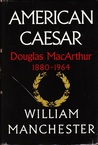
AMERICAN CAESAR BY WILLIAM MANCHESTER

American Caesar: Douglas MacArthur 1880-1964American Caesar: Douglas MacArthur 1880-1964 by William Manchester
My rating: 5 of 5 stars

“The soldier above all others prays for peace, for it is the soldier who must suffer and bear the deepest wounds and scars of war.”

 photo Douglas20MacArthur20West20Point_zpsczuluj8y.jpg
Douglas MacArthur at West Point. Following in his father’s footsteps.

The blare of trumpets, the clash of arms, the screams of the wounded, the bullets whizzing through the air, and the acrid smell of cannon smoke were all part of the life of Douglas MacArthur since the day he was born. His father’s exploits hung on him like a second skin. At the Battle of Missionary Ridge in 1862, Arthur MacArthur Jr. seized and carried the regimental standard to the top of the hill and planted it. He was 18 years old and 8 feet tall. By 19 he was a colonel. By 1899 he was a Brigadier General and at the Battle of Manila. In 1901 he was a Major General and appointed the Military Governor of the Philippines.

This is a lot to live up to. It is difficult, in some cases, to see the amount of influence a father has on his son, but in the case of the MacArthur’s, you don’t need much speculation. It would have been perfectly understandable if Douglas had decided to go into a profession that was different from his father’s, but in many ways they are cut from the same cloth. Douglas MacArthur’s own son, Arthur MacArthur IV, went his own way, a polar opposite direction from his father, even to the point of being a recluse and avoiding the spotlight his father craved so much.

 photo I20Will20Return_zpss36ap5h3.jpg
MacArthur’s famous ‘I will return’ photograph. He promised when he was forced to leave the Philippines that he would return and liberate that nation. He also knew a good photo opportunity when it saw one.

William Manchester’s book covers MacArthur from cradle to grave. Douglas was a momma’s boy, but in no way did that make him weak or unsure of himself. It did make him dependent for the rest of his life on other people to do those things for him that he didn’t want to take the time to do for himself. He was an avid reader and book collector. He added to his father’s library clear up until the time the collection was lost in Manila during the Japanese occupation during WW2. I cringed along with him at the descriptions of the books turned to charcoal. His second wife, Jean, was the perfect companion. She was with him as much as possible, even following him into war zones. She and his son were both trapped with him in the Philippines and were part of his daring escape. Jean was a wife, a mother, and a constant comfort to him.

 photo Douglas MacArthur world war one_zpsslfr5qzb.jpeg
Brigadier General Douglas MacArthur looking very comfortable with himself in 1918

MacArthur really became MacArthur on the battlefields of WW1. He was horrified by the slaughter and the useless losses of life due to the hubris or incompetence of commanding officers. He was a legitimate war hero, earning seven silver stars. By the end of his career he had been awarded almost every ribbon for heroism that was available. During WW2, troops, weary of the war and tired of being in harm’s way, referred to him as Dugout Doug, which is ironic given his propensity to put himself in harm's way needlessly. When he was asked about his insistence on remaining standing where bullets are flying by like buzzing bees or where bombs were exploding close enough to hear the whine of the shrapnel, his answer gives us a good idea of why he felt it was necessary: ”If I do it, the colonels will do it. If the colonels do it, the captains will do it, and so on.”

He is considered one of the best tacticians of World War Two. Where Ulysses S. Grant and George “Old Blood and Guts” Patton ground up soldiers in their command giving new definitions to the term cannon fodder, MacArthur developed campaign strategies with the intent of sparing as many GI lives as possible. His men killed ten Japanese soldiers for every one of their own they lost.

 photo MacArthur arriving in Japan_zpswbbcrxpd.jpg
MacArthur arriving in Japan to take charge.

His most remarkable work, in my opinion, was when he was overseeing the occupation of Japan from 1945-1951. He gave equal rights to women for the first time in the history of that country. He abolished adultery laws that were geared only towards punishing women. It has been estimated that he saved over 2.1 million Japanese lives with inoculations alone. He was more than a soldier during this time. He was a statesman. Though I may have questioned his ability to be POTUS in the past, after reading Manchester’s observations of his job performance during this period of time, I have reevaluated his qualifications.

MacArthur was beset with paranoia for most of his career. Some of it was based on fact. Some of it was just a highly intelligent brain with too much time to think about why he was passed over for a promotion or how a man who was once an assistant on his staff (Dwight D. Eisenhower) became his boss. I think part of the issue that MacArthur had with Washington and the presidents he served is the amount of time he spent overseas away from the politics. He was getting most of his information second hand or from telegrams that don’t always convey the full meaning of what someone means. It is so much easier to mislead yourself on what someone thought when you are reading a telegram much the same way we misinterpret text messages or emails. The human face to face element is missing and so much communication is lost when you can’t read the other person’s facial expressions.

For the most part, Washington and the command staff of the army were hands off in regards to MacArthur. He was able to do what he wanted to do and, generally, with a lot less in regards to supplies than say the generals operating in the European sector of the war.

 photo Douglas20MacArthur20Korean20War_zpsonzsqzxc.jpg
MacArthur still exudes that same confidence and swagger in Korea that we see in his face as a young man in World War One.

I’ve always been a bit hazy on what happened in Korea. Manchester is enamoured with his subject so he may have put a rather rosy spin on these events. It was the first modern war that the United States fought that was not really a war, but those now dreaded words... policing action. It is a first cousin to conflicts in Vietnam, Iraq, and Afghanistan, to name a few, that the United States have continued to mire themselves in clear up to present history. In World War Two objectives were clear--destroy the enemy and push them back to where they came from. In Korea, politics played such a heavy hand. The war became more about the struggles between politicians in China and the United States. The Koreans were pawns in a much larger conflict between communism and capitalism.

Terms like 38th parallel became phrases that Americans became familiar with.

 photo 38th20Parallel_zps1shfsx9j.jpg

Manchester makes the case that a lot of the problems between MacArthur and President Truman stemmed from the fact that no clear objective had been handed down to MacArthur. What is considered a win? What are the objectives? I think that Truman was unsure about the right answers to those questions. I don’t think anyone expected as many Chinese to pour across the border in defense of the North Koreans either which changed the whole complexity of the situation and bordered on beginning World War Three. My uncle was in that war, and he described to me scenes of unarmed Chinese running behind the Chinese soldiers who had rifles, waiting to pick up their weapon when they were killed.

Crazy right? A type of crazy that is somehow sane in a country with people to spare.

He also told me about capturing Chinese “soldiers” dressed in rags, without wearing any shoes in temperatures below zero. The GIs would give them clothes and boots and as the trucks would leave to transport them to a prisoner-of-war camp, coats, shirts, pants, socks, and boots would come flying out of the back of the truck, out of ignorant fear that the US was merely trying to contaminate them with some deadly disease.

It was unnerving to be fighting people who were seemingly unhinged.

I can remember how irritated I was by the Rolling Stone article that lead to President Obama dismissing General Stanley A. McChrystal. Of course, it wasn’t difficult to draw comparisons to Truman’s dismissal of MacArthur in Korea. It was a very unpopular decision with the American public. In fact, Truman’s approval rating fell to 22%, which is still the lowest rating ever of a sitting president.

I think the problem lies in the amount of power that a commander has, running a war a long ways away from the civilian power in government. He has autonomy, and for most of MacArthur’s career, the president and joint chiefs of staff were willing to let him have as much power as he felt he needed. Korea was a political war, which also means that politicians were more concerned about everything regarding that war. They are worried about perception as much as they are worried about winning. Roosevelt was a man so comfortable in his own skin and also shared so many natural characteristics with the dramatic MacArthur that he could have probably handled the situation without creating a political nightmare for himself at home. Truman made assumptions about MacArthur’s intentions that also showed his own insecurities with his own political power.

MacArthur was wrong to embarrass Truman by communicating with Congress, but I really feel that he was trying to get some definitive answers about the overall objective they were fighting for in Korea. He wanted to make sure his boys were dying for the right cause. MacArthur might have been talking about WW1 when he made this statement, but it applied equally well to Korea. ”It’s the orders you disobey that make you famous.” Unfortunately, his dismissal from Korea cast a long shadow over a brilliant career.

MacArthur impressed me again in his twilight years when he begged President Johnson not to escalate Vietnam. He took one last stab at saving thousands of American lives, but unfortunately, Johnson was too insecure not to “stand up” to communism in Southeast Asia.

 photo Douglas20MacArthur20Statue_zpspuuu5vzj.jpg
Statue of MacArthur at West Point.

There is always an ending, and MacArthur had one last chance to embrace the pageantry.

”I’m closing my fifty-two years of military service. When I joined the Army, even before the turn of the century, it was the fulfillment of all my boyish hopes and dreams. The world has turned over many times since I took the oath on the Plain at West Point, and the hopes and dreams have long since vanished. But I still remember the refrain of one of the most popular barrack ballads of that day which proclaimed, most proudly, that ‘Old soldiers never die. They just fade away.’ And like the soldier who tried to do his duty as God gave him the light to see that duty.’ The word was a hush: ‘Goodbye’.

After spending several weeks with Douglas MacArthur, I have to say that when I read his farewell speech I had a lump in my throat.

If you wish to see more of my most recent book and movie reviews, visit http://www.jeffreykeeten.com
I also have a Facebook blogger page at:https://www.facebook.com/JeffreyKeeten


View all my reviews

Tuesday, March 22, 2016

The Brotherhood of the Wheel by R.S. Belcher

The Brotherhood of the WheelThe Brotherhood of the Wheel by R.S. Belcher
My rating: 4 of 5 stars

I want more of this series..like yesterday.

Urban fantasy done absolutely 130 percent correctly, tons of action, fun, great characters I cared about, and a world that hinted at much deeper (which by God, he better go back to)

This tale rocked pretty much from top to bottom, seriously took me about 2 days to read. My issues are few, I only docked it one star, this was mainly due to how things wrapped up. The final act was a bit too tidy and clean, but considering I hope this is a new series, it's easily forgiven.


go buy this and buy Nightwise too, pay Mr. Belcher so he can feed my jones with new stuff.


View all my reviews