Thursday, September 7, 2017

The Core

The Core (The Demon Cycle, #5)The Core by Peter V. Brett
My rating: 5 of 5 stars

The Warded Man Arlen Bales and the Shar'Dama Ka Ahmann Jardir in their passion to rid the world of demons have unintentionally triggered a swarm which threatens to devour mankind. All hope is not yet lost as Arlen has a plan to exterminate the Mother of Demons by going to the Core.

Peter V. Brett saved his best for last as The Core is an exceptional novel and ending to the Demon Cycle series. All the characters from the series seem to have a part to play or a mention from Rusco Hog to Arlen's old sweetheart Mery. The tensions are high and every character displayed their true selves by the end...for better or worse.

The fear of the night returned in The Core. Humanity thought the night was terrifying before the return of the combat wards, but they didn't know what terror truly was yet. The mindless demons were never far from a Mimic to lead them when the Mind's were away. The Mind demons made their former battles look like a warm-up act as the true show was displayed in The Core. I didn't imagine just how devastating or sadistic the Mind's could be.

The true strength of The Core and the series as a whole was it's characters. The main stars lovingly grew from page to page and book to book until they were warriors worthy of the great demon war. My pulse raced as I devoured the book and anxiously sought to know what happened to everyone especially Arlen and Jardir.

The Demon Cycle couldn't have ended in any finer way than it did in The Core. This book is now one of my all-time favorites. In fact I think I'll flip to page one and start reading it again.

5 out of 5 stars

I received this ARC from the publisher in exchange for an honest review.

View all my reviews

Cloak and Dagger

Cloak and Dagger (The IMA, #1)Cloak and Dagger by Nenia Campbell
My rating: 2 of 5 stars

An organization of mercenaries called the IMA had their mainframe hacked. One of their operatives Michael Boutilier follows his leads to a man named Rubens Parker. He plans to apprehend the man, but when he arrives at his house he only finds Parker's daughter, Christina, who he takes as a hostage.

I'm not sure what I expected when I picked up Cloak and Dagger, but I didn't expect what I read. There are so many things that irritated me about this book. The utter lack of sense from the majority of the characters was alarming. Christina for instance had quite possibly the worst parents of all time. I mean how can people be scared enough of an organization that they flee the country yet they don't consider taking their child or having her hidden away. Nope just leave a note on the fridge saying to get out of the house. The note should have read, "if you're reading this, your father and I have completely screwed you. Sorry hun. Love Mom. PS: don't forget to diet, no one likes a fat hostage."

If the parents were the only thing that bothered me in the story, then I could have read it without being annoyed. Unfortunately there is more. Christina has practically no sense of self preservation. The girl gets kidnapped and she can't stop giving her kidnapper attitude. What does a kidnapper have to do to instill fear? Michael hit her repeatedly, pistol whipped, and attempted to rape her. Only the rape attempt slowed Christina's mouth down at all. Where is the girls common sense? I don't know the answer because it certainly isn't on display in the book.

In all honesty I felt like Christina wasn't the only hostage in Cloak and Dagger. As a reader I felt like the story held me hostage in hopes of a coherent enjoyable story that didn't arrive. In it's place the story was long and meandering with lots of kidnappings, imprisonments, and out of nowhere emotions. The storytelling as a whole fell flat throughout the entire book.

1.5 out of 5 stars

View all my reviews

Wednesday, September 6, 2017

THE NIGHT MARKET BY JONATHAN MOORE

The Night MarketThe Night Market by Jonathan Moore
My rating: 5 of 5 stars

”He didn’t know what was going on with him. He felt so hollowed out, he could almost hear the rush of the emptiness inside him. It was the blank sound at the mouth of an elevator shaft.

He had no idea what would fill that hole, no sense of what he was looking for.”


”I have kissed honey lips
Felt the healing in the fingertips
It burned like fire
This burning desire
I have spoke with the tongue of angels
I have held the hand of a devil
It was one empty night
I was cold as a stone
But I still haven't found
What I'm looking for
But I still haven't found
What I'm looking for”

I Still Haven’t Found What I’m looking for---U2


The ethereal sounds of the Joshua Tree album kept floating through my head as I read this book, played at a slower speed so Bono’s enunciation was elongated. Blue and red electric sheep froliced on the periphery of my vision. I watched my cell phone spin slowly in a pitcher of water. Bubbles streamed upward as if it were drowning. I put a book on top of the pitcher, not a good book, but one of those books that trees weep over the making. I’d already turned the TV to face the wall. I unplugged everything electronic in the house. It took a sledgehammer to break my computer into enough jagged pieces to ease the bubbling anxiety in my stomach. I looked at the scattered plastic pieces on the lawn and resisted the urge to fling them over the fence or better yet throw them into the nearest bog and watch them sink from view. I shut the blinds to keep from looking at them.

Where’s Deckard when you need him?

I’m writing this on a Big Chief Tablet with a #2 pencil. (I tore the cover off the tablet because the Indian was inducing me to buy Indian Motorcycle Cigars.) Old school, you say? Well read this book, and you might think that old school is as hip as you want to be. I have a friend who is going to pick these pages up and take them to another friend and so on. Some brave soul in Russia will be the one who actually loads my words up to the web. I hope the glow worms in his head don’t make him give me up for a lifetime supply of Black Aria perfume.

Need, want, desire. Who can separate them anymore?


”Three women were taking shelter from the rain beneath the bar’s awning, their faces lit by the paper-thin glowcard advertisements they held. Every few seconds, one of the women would tap a glowcard against her cell phone to consummate a purchase. Discarded screens pulsed like LED embers around their feet, twinkling with soft music and looping videos.”

If you resemble this ensemble, then you probably should stop reading this review now because it is probably pointless. This review will not tell you what you want to hear. It will not liberate you. You are probably already lost.

What do I tell you about Ross Carver? He is a cop who lands in…”gray moss. Like a carpet of it spread across a rot-shrunken log. Carver could see the bones of his fingers, could see the riverine fissure marks in his skull where patches of scalp had eaten away.” He is thrown into a decontamination unit along with his partner, Jenner. He wakes up in his bed with no memory of...well...much of anything. His beautiful and intriguing neighbor Mia is sitting by his side reading a book to him.

It all feels right with a serpentine twist of something very wrong.

"If she's not crazy," Jenner said, "then she knows something. But maybe it's not the same thing she's telling you."

There is absolutely nothing wrong with Mia’s apartment, though.

”He saw no TVs, no computers, no telephones and no radios. Instead, she had books. Hundreds and thousands of hardback volumes on shelves built throughout the apartment. It smelled like the Rare Books room of the San Francisco Library--aged leather and the exotic musk of dry paper.”

Oh sweet nectar...daddy’s home.

Mia peels the labels from her wine bottles. That might sound eccentric, but not to me. I want to drink a bottle of wine because I’ve chosen to drink a bottle of wine.

Carver, the poor bastard, really tries, but he is caught in a situation where, even if he wins every battle, he will still lose the war. The conspiracy is bone deep. To bring it down, he’d have to reboot civilisation and leave it...dark. This book is set in the near future, or so they say. I’m the one sitting here watching my cell phone drown in the present, or is it already the past?

Jonathan Moore has written a loosely connected San Francisco trilogy which frankly ends with a glow-rious bang. The writing is top shelf; the thrills bring chills, and the noir atmosphere drips with the metallic essence of Blade Runner. It is only science-fiction if you don’t want to believe.

If you wish to see more of my most recent book and movie reviews, visit http://www.jeffreykeeten.com
I also have a Facebook blogger page at:https://www.facebook.com/JeffreyKeeten

View all my reviews

Monday, September 4, 2017

Last Days

Last DaysLast Days by Brian Evenson
My rating: 4 of 5 stars

Former undercover cop Kline is at rock bottom, depressed and missing a hand, when a religious sect forcibly drafts him into service, ferreting out the killer of their leader. But is the leader really dead? And what sacrifices will Kline have to make to finally learn the truth?

This was one powerful little book. I devoured it in one sitting while waiting for car repairs, wondering how the rest of the patrons weren't shaken up by the events within.

It starts simply enough. Kline is at rock bottom when the phone calls start and eventually will look upon rock bottom with great fondness as he bores through the earths crust into greater depths of blood, fanaticism, and severed body parts.

When the tale begins, Kline is minus a hand courtesy of a gentleman with a meat cleaver on his last undercover job. The calls start and a certain religious sect who equate amputations with salvation make him an offer he can't refuse.

Kline skate the edge of sanity throughout most of the tale and goes through a large succession of meat grinders. The book has a creepy paranoid feel throughout. The simple put powerful style reminds me of Richard Stark in some ways, clipped and brutal.

As Kline descends into a haze of carnage and chaos, you have to wonder that even if he does survive, would he be better off dead? The Brotherhood of Mutilation makes for a great foil, probably because the idea isn't that far-fetched.

In The Last Days, Brian Evenson uses the tried and true hard-boiled PI template to tell one hell of a horror story. Four out of five stars.

View all my reviews

Much less rapey than Casino Royale!

Live and Let Die (James Bond, #2)Live and Let Die by Ian Fleming
Reviewed by Jason Koivu
My rating: 3 of 5 stars

It might have been For Your Eyes Only...

description

...or more likely Octopussy...

description

...but I want to say Live and Let Die...

description

...may have been the first James Bond movie I ever saw. Regardless, it stands as one of my first recollections of the thrilling spy and his over-the-top escapades.

I LOVED these movies as a kid. As an adult my fervor wore away, but remnants of that love never left me and eventually I became intrigued enough to check out the novels out of a curiosity to see how true the movies were to the books. Also, it just so happened that as a kid I spent some time down in Florida, where part of this novel takes place, thus upping the intrigue slightly.

In this, the second installment in the series, British spy James Bond is sent to America. After taking a beating from operatives of SMERSH, a Soviet counterintelligence agency of Fleming's making, Bond is set on a bit of revenge. Does that make him, a white Brit, the ideal spy to infiltrate the black organized crime scene? Perhaps not, but woohoo, let's go along for the ride anyhow!

There's plenty of action in Live and Let Die, but there's also a little social commentary and local color. Fleming did some research on this and that and he wants to show you what he learned. That's how this book reads at times. I like detail and setting a scene, just don't go Moby Dick on me. This is far too short to come near that, but it edges towards it at times.

The movie differs from the book in a few ways. It's been a while, but if I recall correctly the focus is on drugs over pirate treasure, and it's set at times in New Orleans, not Florida. The blaxploitation is still there though!

Ah, racism. It's hard to talk about this book without mentioning it. The constant use of the word negro alone is cringe-worthy. There are very few portrayals of positive, black community role models. Many are depicted as still being under the spell of Caribbean voodoo.

description
description

However, this is a spy thriller, not a political commentary. The "bad guy" and his henchmen are black, so they're going to be portrayed negatively. It seems some have mistaken the racial overtones within this book to be blatant racism. For instance, the chapter title "Nigger Heaven" is a reference to a pro-black and pro-Harlem renaissance novel of the same name. If you didn't know that, you would indeed form a low opinion of Fleming...unless you're a white supremacist. But I don't see hatred here by Fleming. Some of his characters may reflect prejudiced attitudes, but others do not. M, the pinnacle of intelligence herein, sees blacks as coming into their own and rediscovering their own attributes after throwing off the yoke of oppression. Anyhow, that's enough of that. I'm a middle aged white guy and so I'm apparently predisposed to turn a blind eye to racism against minorities. However, that's not me. I stand for equality right down the line. Anyway, back to the book...

When comparing the movies to the books, it's tough on the books (at least what I've read so far). The movies are designed to squeeze every bit of excitement they can out of the story. Here, the books are a little more leisurely when it comes to the action. Perhaps Fleming was remembering his own experiences working for and with intelligence agencies during the war. It was no doubt not half as exciting as it's portrayed in the movies.

In summary, this is not essential reading unless you're a diehard for spy books. If anything approaching un-sanitized racial discussion triggers you, I'd steer clear too. But hey, those who prefer their hero not rape anyone, take heart! Live and Let Die is much less rapey than Casino Royale!


View all my reviews

Sir Harry Hotspur Of Humblethwaite

Sir Harry Hotspur Of HumblethwaiteSir Harry Hotspur Of Humblethwaite by Anthony Trollope
Reviewed by Jason Koivu
My rating: 3 of 5 stars

If you've read every Austen book and finished off Gaskell as well, if you've watched up all of Downton Abbey and polished off Upstairs, Downstairs too, and yet you still want more uptight British aristocracy drama from the Victorian/Edwardian era, Sir Harry Hotspur Of Humblethwaite by Anthony Trollope is just what you're looking for!

This book is all about the social mores of the times, mid 19th century rural England. Watching these characters act and live by these intricate and sometimes convoluted rules of behavior can be frustrating for the modern reader. In this respect, Trollope excels himself, exceeding all expectation for a trying read indeed!

If you've read Sense and Sensibility, the plot of Sir Harry Hotspur Of Humblethwaite will feel very similar to that of the Marianne Dashwood storyline. The good girl wants the bad boy and there's nothing that can be said by her rational, thoughtful friends to dissuade her, because they are rational and thoughtful, thus too cold to understand true love. Kids will be kids, as the saying goes. You can lead a girl to Colonel Brandon, but she'll drink up Willoughby until she bursts!

None of the above truly mars this novel. What makes this a less-than-stellar read is the author's fourth wall breaking and use of exposition in place of storytelling: Dear reader, let me tell you about the feelings of these characters rather than showing you. Again, different eras, differing tastes. I'm not saying Trollope couldn't do it, but he didn't...for the most part. Don't get me wrong, there are some quality dramatic scenes that play out in a satisfying way, which save the book from being an utter drudge read.

However, this was not a pleasure. It was mostly mechanical and dull in many places, while the ending is rushed and melodramatic. I could still recommend this to those who REALLY go in for the Austen/Downton kind of thing, but only them.

View all my reviews

Friday, September 1, 2017

Keith Haring: The Authorized Biography


John Gruen
Prentice Hall
Reviewed by Nancy
5 out of 5 stars


Summary


Keith Haring's talent was first recognized on subway platforms, where his trademark chalk-drawn figures could be seen for the price of a token. By the time of his death in 1990 at the age of thirty-one, Haring's career had moved from underground New York to the most prestigious galleries and museums in the world.

Here Keith Haring's story is told by those who knew him—and by the artist himself. He candidly reflects on all aspects of his life, including his approach to art, being gay, and how he came to terms with AIDS. John Gruen masterfully combines Haring's own words with the observations of those who knew him best, including art dealer Leo Castelli; Madonna; artists Roy Lichtenstein, Francesco Clemente, and Kenny Scharf; Claude Picasso; Timothy Leary; and William Burroughs, among others. Haring emerges as both a courageous and enigmatic personality—a champion of art for all people.


My Review


I became familiar with Keith Haring’s artwork while doing the AIDS walk in Boston with my friend, Mark, and a few of our close friends. Though it wasn’t the height of the AIDS epidemic, there were still an alarming number of deaths. Mark wanted to walk to honor the memory of his former partner, who died two years before. Our little group did three more walks together before Mark died of AIDS in 1995.

Keith Haring’s Ignorance=Fear, Silence=Death was one of his well-known artworks that raised AIDS awareness during a time when people had little knowledge and a lot of fear. People who had the disease kept silent for fear of stigmatization. I saw it on t-shirts, buttons, and posters. It was bright and colorful, with three yellow figures against an orange background. Each figure has eyes covered, ears covered, and mouth covered, and each has a pink “x” across their chest, representing the disease.

While I was aware of Keith’s death at 31 in 1990, I knew very little about his short life.

John Gruen’s biography is a perfect introduction to the artist’s life and work. Told chronologically from Keith’s perspective and through the eyes of family, friends, teachers, lovers, peers, collaborators, and employees, the reader gets a candid and intimate glimpse into a life lived fully and passionately in between gorgeous illustrations. Keith’s unflagging energy and devotion to his creative work, even after diagnosis, is inspiring.

He was a versatile artist, starting out with chalk drawings in subways and moving on to complex designs on a wide variety of surfaces. His work was colorful, energetic, and imbued with a childlike innocence. At the same time, it was personal and intense.

Madonna said it best:

“Anyway, I’ve always responded to Keith’s art. From the very beginning, there was a lot of innocence and a joy that was coupled with a brutal awareness of the world. But it was all presented in a childlike way. The fact is, there’s a lot of irony in Keith’s work, just as there’s a lot of irony in my work. And that’s what attracts me to his stuff. I mean, you have these bold colors and those childlike figures and a lot of babies, but if you really look at those works closely, they’re really very powerful and really scary. And so often, his art deals with sexuality – and it’s a way to point up people’s sexual prejudices, their sexual phobias. In that way, Keith’s art is also very political.”


If you love Haring’s work and want a glimpse into the gritty 80’s New York art scene, this is your book.

Thursday, August 31, 2017

Civil Blood

Civil Blood (Best Left in the Shadows #2)Civil Blood by Mark Gelineau
My rating: 4 of 5 stars

Someone is attacking one of Pious Black's Captains and setting up Alys in the process.

Civil Blood like it's predecessor Best Left in the Shadows is a mystery. Someone is setting Alys up and of course she won't tolerate such foolishness. Who could it be and what does this individual want? Oh Alys will find out.

Civil Blood delves into what led to the rift between Alys and Dax. I have to imagine if they each were honest with one another it would change things, but they each hold back which appears likely to lead to misery. That being said their relationship seemed much better in Civil Blood than it did in the duos previous novella.

The hints of the largely story of Echoes of the Ascended are driving me nuts. I really wish the authors chose a more fleshed out format than novellas. There is so much I need to know, but the novellas stick to their single story more than anything.

Civil Blood was a solid mystery and addition to the larger Echoes of the Ascended series.

View all my reviews

Wednesday, August 30, 2017

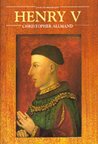
HENRY V BY CHRISTOPHER ALLMAND

Henry VHenry V by Christopher Allmand
My rating: 4 of 5 stars

”Although king, Henry V did not rule alone. It is easy to see him as a man closely involved in the affairs of ruling his kingdom, taking decisions, implementing them, in general stamping his personality upon events. Such an observation is generally well founded: Henry was very much a king who ruled.”

 photo HENRY205TH_zpsxbg7gaz9.jpg
Henry V

Kenneth Branagh is the face of Henry V for me. As I was reading this book and picturing Henry striding through his life, I was seeing Branagh. The 1989 movie was the first Shakespearean play I saw on the Big Screen in a movie theater. Seeing the play so vividly depicted sparked an interest in Shakespeare’s plays that has never waned for me. When others think of Henry V, they might think of Sir Laurence Olivier, who played Henry in the 1944 version. Hollywood doesn’t make movies of Henry’s life; they make movies of William Shakespeare’s play.

In comparison to most kings, Henry was a rock star. He first showed his mettle fighting against the Welsh during the Owain Glyndŵr revolt, which gave him the confidence to stand up to his father, who had been suffering from ill health for some time. In 1413, his father died, and Henry was chomping at the bit to be in charge.

He had plans.

French plans.


He was inspiring to his men. He was a natural tactician. He was highly organized, which was a trait that served him well campaigning in France where he was outnumbered, outgunned, and fighting men who were defending and preserving their country. Henry quickly rolled up some victories that gave him confidence to continue.

Henry’s goal: add the throne of France to that of England.

He was not the first English king to claim the throne of France, but he was the first one who did not take the settlement of lands in exchange for renouncing his claim. He believed that he was going to be king of France, and maybe if he had lived longer, he could very well have pulled it off.

 photo Henry20V20Branagh_zpsqhyembdm.jpg
Kenneth Branagh giving the St. Crispin’s Day speech in the 1989 movie.

His big moment came at the Battle of Agincourt. I’m sure he gave a great rousing speech for his men, but it is doubtful that he had one as rousing or as memorable as the one Shakespeare writes for him in the play.

Be in their flowing cups freshly rememb'red.
This story shall the good man teach his son;
And Crispin Crispian shall ne'er go by,
From this day to the ending of the world,
But we in it shall be rememberèd-
We few, we happy few, we band of brothers;
For he to-day that sheds his blood with me
Shall be my brother; be he ne'er so vile,
This day shall gentle his condition;
And gentlemen in England now a-bed
Shall think themselves accurs'd they were not here,
And hold their manhoods cheap whiles any speaks
That fought with us upon Saint Crispin's day.


 photo Schlacht_von_Azincourt20BATTLE20OF20AGINCOURT_zpszcz0w0sw.jpg

Depending on which historian you believe, Henry was outnumbered either 4:3 or 6:1 or somewhere in between, but all historians agree that he was indeed outnumbered. His men were tired and had been dreaming for weeks of going home. They certainly were not in the best shape to fight a battle against fresh French troops.

The English had a few things on their side.

A young, healthy, inspiring King. In contrast, the French King Charles VI was not even at the battle due to a psychotic illness that frequently debilitated his mental proficiency.
80% of their army were the fabled English Longbow archers.
Their king situated them so that the French had to cross an open, freshly plowed field that had been rained on heavily the night before. The French sunk to their knees in the muck.

It was frankly a slaughter. Approximately 9 Frenchmen died for every Englishman killed. Thousands were captured, and this led to the one black mark that resides on the otherwise sterling record of Henry V.

He ordered the prisoners executed.

It was shockingly unchivalrous. He was preparing for a French counter attack, and his fear was that, if the tide of the battle turned against him, those French prisoners would join their compadres. Henry could only spare a handful of men to contain the prisoners, and they would be easily overwhelmed by the sheer number of prisoners. The other problem, of course, was how to go about executing thousands of prisoners in a short period of time. Fortunately, only a few prisoners were executed before Henry reversed his command. He must have felt confident that victory was his.

Still it showed a ruthlessness previously unrevealed. Henry’s ambition knew no limits. He had high ideals for himself as well, not only in war, but also in the management of his kingdom. He wanted to be a good steward in addition to being a conquering hero. Agincourt fulfilled the expectations that he had for himself and confirmed for his subjects that their king was worthy of shedding blood for, besides providing him with the funds he needed to continue his quest for the French throne.

 photo Henry20V_zpsehnizenj.jpg
Henry V effigy at Westminster.

Henry V died on page 182 with 261 pages remaining in the biography. Unless you are George R. R. Martin, this is a bit of a pickle to find yourself in, losing your main character before you are even half way through the book, but Christopher Allmand made the decision to separate out major topics, like the Army and Navy, Papal Relations, Family Circle, Parliament, and Finances, to name a few. Most biographers would have chosen to weave those elements into the plot surrounding the life of the main subject.

The reader could choose to abandon the book after 182 pages, but they would be foregoing a plethora of information about the structure of medieval England in the early 1400s. For me, it was a lot of bonus material that added to my understanding of a time period I’m woefully ignorant about.

I still struggle to separate the King Henry V in real life from the King Henry V who Shakespeare created. Certainly, Shakespeare captured the essence of the man. The grand promise of a king who, if he had lived longer than 36 years, quite possibly could have permanently changed the configurations of Europe. As it was, dying so young, he left his nation vulnerable, with only a baby in swaddling clothes to take his place. If he had lived, the Wars of the Roses, in which his son became such a pawn in the struggle for power, may never have happened. With his success on the battlefield in France, he did achieve a wife, Catherine of Valois, daughter of the French king, and a treaty naming him heir to King Charles VI of France. Henry inspired loyalty because he had very tangible goals and a natural ability to make everyone believe that it was impossible for him to lose.

If you wish to see more of my most recent book and movie reviews, visit http://www.jeffreykeeten.com
I also have a Facebook blogger page at:https://www.facebook.com/JeffreyKeeten

View all my reviews

Tuesday, August 29, 2017

A Song for Quiet (Persons Non Grata #2) By; Cassandra Khaw

A Song for Quiet (Persons Non Grata, #2)A Song for Quiet by Cassandra Khaw
My rating: 5 of 5 stars

I am reviewing both books in the Persons Non Grata series at the same time (this one and Hammers on Bone). I have spent the year trying to read things I don't usually, horror and novellas, and honestly, I am kind of glad I did.

I recently told a friend of mine, (Hey Dan) I thought that some writers did Lovecraft better than Lovecraft did himself (weird sentence there..) Ms. Khaw happens to be one of them. As a reader who enjoys the Chulthu mythos more than the actual Lovecraft works, I love the fact that while her characters maintain a deep level of humanity, the beings encountered in the world have a more visceral punch than the dry, cosmic horror usually brought out. The things they face are not remotely like us, for the most part we are beneath them and they will do whatever they want. To me, that's where the horror lies. The things that lie under the surface of our perfect little world will destroy you, eat you up and never stop just because you scream. That's the kind of punch that makes Ms. Khaw's stories a strong read. I spent 2 hours and read them both, and can't wait for more.

If you like your horror on the more weird alien side, these are for you.


View all my reviews