Wednesday, February 28, 2018

IN THE SHADOW OF 10,000 HILLS BY JENNIFER HAUPT

In The Shadow of 10,000 HillsIn The Shadow of 10,000 Hills by Jennifer Haupt
My rating: 5 of 5 stars

”After her family was murdered, she didn’t speak for a month Maman tells her, although it felt longer. She stayed in her bedroom, listening to the rustle of the pines in the forest that seemed to cry for her; the fear had drained her of tears. Most of the people in her village were dead. It was being alive, not the deaths, that was somehow shocking. Her existence seemed to be an accident of fate, her life spent waiting in this room in Lillian’s home, this room that was not hers. She was paralyzed, for the inevitable correction.”

The inevitable correction, when the universe finally realizes that she is still alive. It doesn’t have to be a boy with a machete and a wild look in his eyes. It could be a Biblical bolt of lightning from the sky, or maybe she just falls down dead as if her life string has been plucked.

It is hard to live when being alive feels like an offense against the natural order. When being alive feels like a mistake, as if the angel of death just missed scooping her off the earth by a fraction of inches. The swoop of the scythe makes a sound of displaced air as it...misses her.

Nobody escapes this life without losses, but for most of us it is a slow trickle spaced out over decades, so the burden grows, and we can adjust to the weight even though we feel whittled down, weaker, exposed, moved up in line to be the next one to be taken. We are the only species on Earth who knows, without a shadow of a doubt, that we will die. As children we are barely aware of that inevitability, but as we age that awareness grows steadily to the point that we have to even start preparing for it.

For Nadine, a lifetime of loss is crunched into two minutes of madness.

During the Rwandan genocide, a million people, most of them of the Tutsi tribe, were massacred in a matter of a 100 days. 10,000 people a day. Rape has always been an unfortunate part of war, but in the Rwandan genocide it was used as an act of war. It was an insidious tactic to instill fear and make sure that even the survivors were left forever scarred.

This story is not about the genocide, but about the ability of people to grieve and find the scattered pieces of themselves so that they can forge a path to a new life. It is the story of three women. I’ve already introduced you to Nadine. Let me give you an idea of the woman Lillian Carlson. She is an activist in the United States. When Martin Luther King Jr. is assassinated, she is disillusioned with her ability to make a difference. She finds that she can make a difference in the lives of orphans in Rwanda. She takes in as many as she can and even more than she should have, but when children have no one she chooses to be their someone.

The third woman is Rachel Shepherd, who is searching for her father. He disappeared when she was a child. With some amateur sleuthing and the benefit of the internet, she traces him to Kwizera, the place of hope built by Lillian in Rwanda. Henry ties these three women together. He knew Lillian in Atlanta and never forgot her. He is the perfect father for Rachel, attentive, fun, and always as interested in her as he is interesting for her. He proves to be the same great substitute father for Nadine when he comes to Rwanda to find Lillian again.

He proves to be an enigma for all three women. He is amazing, and then he just disappears. He is a famous photographer, and maybe, just maybe, he sees things too clearly through the aperture of his camera.

How about this for a snapshot of Kwizera? ”The backyard, if you can call it that, is more of the same, a slash of red dirt and scrubby bushes with some kind of irrigation ditch tricking down the center like a tear. But it’s not totally hopeless. There’s a tall stack of lumber to one side, a rusty green tractor that may or may not work, and an assortment of shovels and rakes splayed on the ground. Two monkeys sit atop the tractor, examining a purple gardening glove. One flicks his tongue at it like a child might test the flavor of a lollipop.”

To some, all they see is desolation in that scene, but for me, all I see is a chance to make paradise.

Jennifer Haupt spent a month in Rwanda interviewing victims of the genocide. She was there as a journalist, but came home with a story that she felt compelled to tell. It is a novel, but like many novels nothing in this book is untrue. We must tell the stories to try to keep the dangerous fallacies of the past from becoming the future. I came away from this book thinking about how life continues after tragedy. I thought about how important it is for survivors to continue to live for those who perished. I thought about how hard it is to find a path when the universe feels so arbitrarily brutal. This book is about finding a place beyond grief and about gathering those around you who need you as much you need them and discovering together a path that will raise you all up together.

I want to thank Jennifer Haupt and Central Avenue Publishing for sending me an advance reading copy in exchange for an honest review.

If you wish to see more of my most recent book and movie reviews, visit http://www.jeffreykeeten.com
I also have a Facebook blogger page at: https://www.facebook.com/JeffreyKeeten


View all my reviews

IN MONTMARTRE BY SUE ROE

In Montmartre: Picasso, Matisse and the Birth of Modernist ArtIn Montmartre: Picasso, Matisse and the Birth of Modernist Art by Sue Roe
My rating: 5 of 5 stars

”It is a wonderful thing how much courage it takes even to buy a clock you are very much liking when it is a kind of one everyone thinks only a servant should be owning. It is very wonderful how much courage it takes to buy bright coloured handkerchiefs when everyone having good taste uses white ones or pale coloured ones, when a bright coloured one gives you so much pleasure you suffer always at not having them. It is very hard to have the courage of your being in you, in clocks, in handkerchiefs, in aspirations, in liking things that are low, in anything.”
---Gertrude Stein


 photo Pablo_Picasso_1904_Paris_photograph_by_Ricard_Canals_i_Llamb1_zps2tlwizxs.jpg
The young Pablo PIcasso, circa 1904, photographed by Ricard Canals i Llambi.

As I continue to add prints of Modernist and Impressionist painters with a few Da Vinci’s and Vermeer’s to my growing collection,I find it so inspirational to have surrounded myself with such divergent artistic concepts. When I look at a Matisse or a Picasso or a Vlaminck or a van Dongen or a Modigliani or a Dali or a Van Gogh, their expressions of ideas are so unique to them that it is as if I’m seeing the world through their eyes. I can steal the eyes of a painter, at least briefly, and even once my eyes have flicked away from the painting, the dazzling array of colors can transform my reality into a Matisse or a Picasso masterpiece.

I decided to paint some of the walls of my house a celery green. It is bold. Bolder than I expected, but maybe there was a part of me as I looked at those color chips that wanted to break loose from the safe color scheme of beiges, grays, and creams. A benefit I hadn’t expected is this color sensuously frames the art on my walls and seems to give each painting more depth. I also discovered that looking at celery green makes me happy. So when I read that quote by Gertrude Stein, I thought about my celery green and the reactions I’ve received so far from neighbors and friends who see this, dare I say, courageous color for the first time and look like they have just bit into a piece of raw rhubarb.

Americans came to Paris to experience the Montmartre district, to see the scandalous shows, drink too much, flirt with beautiful Parisian girls, and hopefully brush shoulders with some of these almost famous celebrity painters. These painters are known in certain circles, but not known as well as they soon would be. These Americans were being shown paintings unlike anything they had ever seen before, and for those who could really SEE these paintings, they were mesmerized and bought as many as they could afford. I can only imagine, when they returned to America and unboxed some of these lurid beauties with vivid colors that overwhelmed the eye, what reactions they would have received from friends and family. Those paintings might even have left some of the viewers, with a delicate disposition, feeling as if they have been punched in the gut.

It is interesting to observe the varied reactions that people have to bold colors before we can even discuss, say, a painting of a woman with three noses.

 photo Henri20Matisse_zps0v3g1duv.jpg
Henri Matisse circa 1891.


Sue Roe deftly balances all these diverse personalities who came together in Paris at the turn of the century and she shares these wonderful stories that vividly bring them back to life. The fashion designer Paul Poiret, who was immersed in this dynamic culture, shared a story that has stuck with me long after finishing the book. ”Many years later, Poiret remembered watching Vlaminck and Derain as they trudged along the riverside, forced to move out of their lodgings (their shared studio, presumably) when the landlady grew tired of giving them credit. ‘I can still see them by the flowery banks,’ he reminisced, ‘their boxes of colours under their arms, their canvases piled in a wheelbarrow.’” The book is full of intriguing snapshots, daubed in paint. These brilliant, impoverished painters were just beginning to have an idea that they were part of another renaissance in art. Another one of my favorite vignettes is of a clever, fussy writer : ”Marcel Proust sat quietly at a corner table drinking hot chocolate like a pale-green ghost.” To think of him out in the Montmartre district, observing all that decadent behavior, made me smile.

The women of Montmartre were probably some of the most liberated women on the planet in the early 1900s. They were models, lovers, dancers, mistresses, and in many ways their emancipation added fuel to the creative energy of the artists, writers, designers, and buyers who flocked to Montmartre to be inspired. One of the most alluring of these creatures was Fernande Olivier, who caught the eye of many painters, but absolutely captivated Pablo Picasso.

 photo fernandeolivier_zpsz4ewaipy.jpg
”Here she was now, the beautiful, tall redhead. She seemed languid, aloof, more voluptuous than the girls he was accustomed to, with strong, vivid features and a contrasting aura of lightness. From now on, wherever he went, he kept seeing her.”

The rivalry between Matisse and Picasso was one of those necessary driving forces that makes really great artists keep creating masterpieces. They would cringe and look with awe in equal measure whenever they viewed each other’s latest creations. Their relationship was cordial, honest, but sometimes mildly disagreeable. As Francoise Gilot (muse of PIcasso) put it: ”‘In their meetings, the active side was Pablo; the passive, Matisse. Pablo always sought to charm Matisse, like a dancer, but in the end it was Matisse who conquered Pablo.’” There are many great artists of this period; one of my favorites is Amedeo Modigliani, but without a doubt, the names that emerge as champions of the era are Matisse and Picasso.

I always find reading about artists so inspirational, even more so than reading about writers. I’m not sure why, except maybe that there is so much more for me to learn about artists. I don’t usually pick up overviews like this, but Sue Roe does such a wonderful job capturing the place and the people with such precise sketches that I am indebted to her for moving the needle of my understanding of the artists and of this era forward in a leap rather than just a bound.

If you wish to see more of my most recent book and movie reviews, visit http://www.jeffreykeeten.com
I also have a Facebook blogger page at:https://www.facebook.com/JeffreyKeeten

View all my reviews

Tuesday, February 27, 2018

Lucius: The Faultless Blade By: Ian St Martin

Lucius: The Faultless BladeLucius: The Faultless Blade by Ian St. Martin
My rating: 4 of 5 stars

I am still exploring my current fascination with Warhammer and jumping deep into the chaos(bad guy) side of things. Without getting too far into lore, each of the legions of space marines that joined and went over to the bad side of things follow various evil deities, and Lucius and his faction serve a being who is into extreme sensations, indulgence in pain and pleasure. These guys have overdone it to a point that their bodies don't feel anything so their search for sensation has moved to a sadistic and horrifying level.

I really dug this book, rarely in my view can you enjoy a tale with no "good guy" Lucius and his band are HORRIBLE beings. Murderers who visit mass destruction on people just because they can. But this tale is a super fast paced gore fest of Warhammer violence. Very well written look into the legion of the Emperor's Children and the horrors within. If you are squeamish..go the other way, if you want a fast paced look into the chaos space marines, come on in, if you dare.

View all my reviews

Monday, February 26, 2018

Diamond Smuggling Is Forever!

Diamonds Are Forever (James Bond, #4)Diamonds Are Forever by Ian Fleming
Reviewed by Jason Koivu
My rating: 3 of 5 stars

Bond slips into the diamond smuggling market and the American mafia.

Not a bad installment in the Bond series. I don't recall ever seeing the movie version, so I can't say if they parallel much or at all, but I can say that Diamonds Are Forever makes for a fine little read.

It's not exactly the most exciting spy thriller ever. In fact, there were a number of spots through out the book that had me ho-humming. It seems like Fleming wanted to flex his prose muscles a bit with this one. There are some nice descriptions of characters and places, but they do tend to slow down the action a bit. Or perhaps there just wasn't all that much action to begin with. I guess there was a shoot out and a tense, butt-clenching moment during a hot mud bath scene, but that didn't really even involve Bond.

There are also some racial issues with Diamonds.... I was listening to this on audiobook and during a moment when I wasn't paying the closest of attention, I thought I heard a distressingly racist passage. Racist dialogue is one thing, but when the writer includes it in the narrative it's an entirely different thing. I don't know, I could be wrong. I didn't bother going back to verify. Maybe I should have, but ya know, I just didn't feel like wallowing in that kind of mire. If I were black, I'd probably just stay away from the Bond series all together. For example, I know "negro" was once acceptable, but its usage comes from an error of an era that ought never to have happened and one that needs to be burned, buried and put in the past forever.

View all my reviews

Jesus Christ!

Zealot: The Life and Times of Jesus of NazarethZealot: The Life and Times of Jesus of Nazareth by Reza Aslan
Reviewed by Jason Koivu
My rating: 4 of 5 stars

Jesus was no messiah, but rather a kind of zealous bandit. This is what you will take away from biblical scholar Reza Aslan's Zealot: The Life and Times of Jesus of Nazareth.

After having read the book, I can't disagree with his conclusions. Not everything Aslan proposes rings true or is backed with solid evidence. But hey, we're talking about a sketchy 2000 year old history here! No matter where you stand on the topic, a lot of so-called "facts" about Jesus are clearly tenuous at best. However, Aslan's suppositions on some key points seem solid.

As a kid, I was baptized, circumcised and christianized. I understood what all that meant and had a vague notion that they didn't all jell together, but lately I've been reading up on the world's religions for shits and giggles, and just it has occurred to me just how disparate these acts and ideas are: how divorced from Catholics were the Baptists; how peculiar it seems for a Catholic to undergo a very Jewish ritual with the wee-willy snipping. Zealot: The Life and Times of Jesus of Nazareth drove home these points.

The book starts off playing all nicey-nice, acting as if everything's kosher, there ain't nothing wrong, and we're all gonna act cool like a bunch of Fonzies. However, by the midway point Aslan really begins tearing down Jesus, denying the miracles, calling him out on his lack of messianic achievements, and basically attempting to reveal that Jesus was just a Jewish hero, not a Christian god. That's not going to sit well with the people that love their Baby Jesus and Virgin Mary. And honestly, if you want to believe in the Bible with all your heart and refuse to see any fault in it, go ahead. Cling to your beliefs if you feel it's doing you any good. Just avoid faith-shaker books like this. Me, I enjoyed this. I'm not all caught up in the myth, the legend, the whatever-it-is. I don't need all the extracurricular Christian activities, I just like the "be a good person" message and I'll continue to live by that, regardless of what really happened 2000 years ago.

View all my reviews

Sunday, February 25, 2018

The Damned Highway

The Damned HighwayThe Damned Highway by Brian Keene
My rating: 3 of 5 stars

Uncle Lono leaves Colorado behind and heads east for Arkham, Massachusetts, in search of the American Nightmare. He winds up caught in a conspiracy that will see Richard Nixon raise Cthulhu from the depths of the ocean to destroy the world...

After reading Fear and Loathing in Innsmouth in Whispers from the Abyss, I was delighted to discover this work existed. Dr. Gonzo visiting Miskatonic University, Arkham, and Innsmouth, written by Brian Keene and Nick Mamatas: how could I lose?

The subtitle of this work is Fear and Loathing in Arkham so I knew what I was getting into. The Damned Highway is written in a voice very similar to Hunter S. Thompson. Only his drug-addled psyche could withstand the cosmic horrors of the Cthulhu mythos.

Without giving too much away, this is a road book peppered with references to Fear and Loathing in Las Vegas and the Cthulhu mythos. Uncle Lono encounters Deep Ones, Cannocks, shoggoths, fungi from Yuggoth, and a lot of other crazy shit. It's a good mix of comedy and cosmic horror.

I have to admit I was a little skeptical at first but Keene and Mamatas did a great job weaving Hunter S. Thompson's style with Lovecraftian horror. Casting Nixon as the villain was a great touch. The last sixty pages or so were really hard to put down.

The Damned HIghway is a fun piece of Lovecraft-inspired fiction, penned by two of the best currently active horror writers. 3.5 out of 5 stars.

View all my reviews

Friday, February 23, 2018

Quid Pro Quo


Aleksandr Voinov and L.A. Witt
Self-Published
Reviewed by Nancy
5 out of 5 stars


Summary


For the past six months, Jared’s been selling sex at Market Garden, a London club that caters to the better-off. But business is slow in the run-up to Christmas, when businessmen and bankers are too busy bickering over bonuses to rent themselves a little high-class action.

Though Jared’s wallet finds the downtime unnerving, the rest of him rather enjoys the opportunity it gives him to admire Tristan, an old hand in the club whose reputation usually sees him well-booked. Jared has been crushing on Tristan for months — he’s no more immune to Tristan’s cockiness and confidence than the johns, and those are just Tristan’s inner qualities.

Just as Jared’s about to chat Tristan up, a businessman asks for something a little different: he wants to book them both. They agree — and Jared finds himself going from crush to mind-bending lust as he’s made the pawn in a sexual power game. Tristan shows him how a pro handles a john while delivering the top-shelf sex for which the Market Garden is so rightly renowned.


My Review


“I’m curious to find out if everything I’ve heard about you through the grapevine is true.”

The Market Garden is a high-class club in London frequented by the wealthy and staffed by a stable of young men who are paid very well to please their clients and cater to their kinks.

Jared is a college student and new employee at Market Garden who’s very much attracted to the popular and in-demand Tristan, though he’s not really sure Tristan feels the same way.

An American with a pocket full of cash wants Jared and Tristan together. The negotiations between client and prostitutes were fun, erotic, and extremely torturous for Jared, who would do this even if there were no money involved. I very much enjoyed how all three men took things slowly, ramping up the tension, and going all out to please their client and each other.

Though this is a short story at just 36 pages, it is well crafted, extremely hot, and it is complete. But why stop here? You’ll want to find out if Jared and Tristan fall in love, get to know Nick and Spencer, and meet the Market Garden’s owner.

This is a wonderful start to a terrific series.

Thursday, February 22, 2018

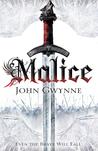
Malice

Malice (The Faithful and the Fallen, #1)Malice by John Gwynne
My rating: 3 of 5 stars

Giants and men have battled one another throughout the history of the Banished Lands. The giants lost the great wars of the past yet some of their fortresses still stand and giants still hold them. Prophetic utterigs appear to be coming to fruition and High King Aquilus summons the Kings of the banished lands to forge an alliance to stand against the rising darkness. The prophecy states two will arise as champions of darkness and light, the Black Sun and the Bright Star. All will be forced to choose a side in the battle to come.

Malice was a solid story overall. No groundbreaking ideas are present so anyone looking for unparalleled originality should look elsewhere.

One thing above all else surprised me about Malice, I struggled to connect to the characters for the majority of the book. I usually can find someone to root for, but I didn't feel anything for the characters until I had some brief stirrings for Corban and Cywen around page 300. It wasn't until page 580 or so that my heart was pounding and I firmly felt engaged in any part of the story. Even then it was still largely only Corban and Cywen. The other point of view characters didn't elicit any feelings from me.

The story was long and felt long. Malice has a slow build up. I believe at least two years pass from the first to last chapter. A lot of the story was spent seeing the lives of the point of view characters Corban, Cywen, Veradis, and Kastell. The writing was fine, but I struggled to keep my interest especially early on. The last 40 pages or so were really interesting.

Malice was a solid start to the series and the ending left me somewhat curious as to what happens next. I may continue the series, but not right away.

View all my reviews

Wednesday, February 21, 2018

MARCH VIOLETS BY PHILIP KERR

March Violets (Bernie Gunther, #1)March Violets by Philip Kerr
My rating: 4 of 5 stars

 photo Berlin_zpsv4rg6648.jpg

”Back in the bedroom, she was still standing there, waiting for me to come and help myself. Impatient of her, I snatched her knickers down, pulling her onto the bed, where I prised her sleek, tanned thighs apart like an excited scholar opening a priceless book. For quite a while I pored over the text, turning the pages with my fingers and feasting my eyes on what I had never dreamed of possessing.”

I have to appreciate the fact that Bernhard “Bernie” Gunther compares having sex with a beautiful woman with the same excitement that a scholar/book collector might feel with possessing a rare book.

I knew I was going to like this guy.

Bernie has been watching with bitter amusement as the powers that be are slowly sanitizing the city of, in particular, their malicious anti-semitism, in preparation for the 1936 Olympic Games. They do not want to offend all those people who will be coming to Berlin from all over the world to see Jesse Owens kick some Aryan ass.

 photo Jesse20Owens_zpsclmq7njo.jpg

It is inconceivable that a black man can beat the best athletes of the master race. ”Watching the tall, graceful negro accelerate down the track, making a mockery of crackpot theories of Aryan superiority, I thought that Owens was nothing so much as a Man, for whom other men were simply a painful embarrassment. To run like that was the meaning of the earth, and if ever there was a master race it was certainly not going to exclude someone like Jesse Owens.”

The Nazis are even letting books that have been previously banned reappear in local bookshops. A woman even says to Bernie that he better run down and buy Alfred Doblin’s great novel Berlin Alexanderplatz and read it before it is banned once more.

My question is, if the Nazi Party truly believes that what they are doing and what they believe is correct, then why do they feel the need to hide their behavior from other people?

Bernie used to be a Bull for the police department, but has found that his personality is better suited to private investigation. He might still have to deal with hypocrisy, but he doesn’t have to work for hypocrisy. He takes a job working for the ultra wealthy Hermann Six, who wants him to recover a necklace that was stolen from his daughter’s house the night that she and her husband were murdered. Bernie also almost meets Six’s movie star wife, Ilse Rudel. ”I watched her walk towards the library door behind me. Frau Six---I couldn’t get over it---was tall and blonde and as healthy-looking as her husband’s swiss bank account. There was a sulkiness about her mouth, and my acquaintance with the science of physiognomy told me that she was used to having her own way: in cash.

Bernie about catches a chill as she walks by him. She’d eventually warms up.

The case takes Bernie places he never wanted to be, like in the middle of a power play between Hermann Goering and Heinrich Himmler. He also has the distinct displeasure of meeting Reinhard Heydrich. Truly, this is a trio of SOBs who, if there is such a place as hell, should be burning at the deepest, darkest, stankiest level of perpetual agony. ”I am Obergruppenfuhrer Heydrich,” which just about makes me toss my cookies.

 photo Heydrich_zpseszxhgwu.jpg
Reinhard “Psychopath” Heydrich

It is difficult living in a society in so much upheaval. People are disappearing, concentration camps are already being established, and no one knows what the code for living is anymore. It changes, and given time, everyone feels like eventually they will trip up and be punished for some infraction that they didn’t even know existed.

”You are Nothing, Your Nation is Everything.”

Just when you think that Bernie has taken all the thumps to the head, the body blows, and the mind twists of multilayered lies that he can take, he gets sent to Dachau by the Gestapo to extract information that is dire to key individuals important to the party. He finds it or he stays. Needless to say, he is incentivized. ”His luck hadn’t so much run out as jumped on a fucking motorcycle” and is heading for the horizon.

Philip Kerr manages, between all the hardboiled dialogue, to layer in a real sense of what is really going on and how everyone at every level of society is being affected by such a radical regime change. It is like a galloping horse that no one is strong enough to haul back on the reins and slow it down. It is truly a scary time for all German people, even those who feel like they are in the favored groups. For Jews, we all know what they go through; I just had no idea it was beginning this early. Some of the hardboiled dialogue is really good; some is ridiculous, and sometimes it is hilarious, as well. I’m definitely looking forward to the other two books in the Berlin Noir trilogy. I’m also looking forward to picking up Doblin’s book before it disappears from the stores again.

If you wish to see more of my most recent book and movie reviews, visit http://www.jeffreykeeten.com
I also have a Facebook blogger page at:https://www.facebook.com/JeffreyKeeten

View all my reviews

Tuesday, February 20, 2018

Fabius Bile: Primogenitor By: Joshua Reynolds

Fabius Bile: PrimogenitorFabius Bile: Primogenitor by Joshua Reynolds
My rating: 4 of 5 stars

I am still off on my Warhammer kick and I found this book. I have tended so far to find the chaos side of the Warhammer universe more interesting. Fabius Bile is a scientist, a total madman, for those who don't follow Warhammer, the simple version of him is imagine Dr. House from T.V. with no good redeeming qualities at all. He has a plan for the universe and his kind and honestly that's all he really gives a flip about.

But life and other factors come to call and he gets embroiled in a wild, bloody high speed affair that is a reallly fun read.) If you like military scifi, chances are you already know about these books, if NOT..check it out.


View all my reviews