Friday, August 24, 2018

301 Smart Answers to Tough Interview Questions


Vicky Oliver
Sourcebooks
Reviewed by Nancy
3 out of 5 stars


Summary


In today's job market, how you perform in an interview can make or break your hiring possibilities. If you want to stand a head above the rest of the pack, 301 Smart Answers to Tough Interview Questions is the definitive guide you need to the real, and sometimes quirky, questions employers are using to weed out candidates.

Do you know the best answers to:

--It looks like you were fired twice. How did that make you feel?
--Do you know who painted this work of art?
--What is the best-managed company in America?
--If you could be any product in the world, what would you choose?
--How many cigars are smoked in a year?
--Are you a better visionary or implementer? Why?

Leaning on her own years of experience and the experiences of more than 5,000 recent candidates, Vicky Oliver shows you how to finesse your way onto a company's payroll.


My Review


I have been in my current position for nearly 5 years and was hoping to stay until I retire. The pay is low and the commute is deadly, but my supervisor is undemanding, lets me work from home once a week, and the work is easy. In spite of the long drive, I do quite a bit of walking (at least 10,000 steps a day, so I can enjoy all the fabulous restaurants!). Sadly, my supervisor is going on sabbatical and no longer has a need for my position. Instead of laying me off, he is allowing me to stay and use a large chunk of my workday for job search activities. Though I’m grateful he’s doing that, I’m apprehensive about being over 50 and looking for work.

These are 301 commonly asked interview questions answered by the author. In the beginning of the book, she suggests you tailor the questions and answers to your own situation. In all my years of working experience, I have not been asked many of these questions during my interviews. Thankfully so, because I am not good at those questions that have no right or wrong answer or brainteasers:

“If you could be any product in the world, what would you choose?”
“How many cigars are smoked in a year?”


I found many of the questions and answers tailored to higher-level corporate jobs. Those of us who work in public safety, service, trades, or clerical jobs would benefit by looking for help elsewhere. The information contained in the gray boxes was useful. Here you could find condensed chapter summaries, interviewing tips, how to handle personal questions or insensitive questions, etc.

Though I read it from cover to cover, and found some of the answers entertaining, they were a lot saucier than I’d feel comfortable with, and I found little that was relevant to my own situation.

Nevertheless, I got a job offer today, so it must have been helpful enough.

Thursday, August 23, 2018

The First Adventure

The First Adventure (Feyland #0.5)The First Adventure by Anthea Sharp
My rating: 2 of 5 stars

Jennet lives with her video game producing Dad. She's largely on her own as her Dad is often working, but he let's her beta test the games he's working on. Unbeknownst to him, Jennet has his account passwords and is able to access all the games he's working on. Including one that's more than it seems. That game is Feyland.

The First Adventure was largely an introduction to the Feyland world. Jennet stumbled in and doesn't realize Feyland is basically a digital portal into the faerie realm. Since she's a teen it's obvious she gets hooked on the game and sneaks on whenever she has the opportunity.

The story being told isn't one I found compelling. It immediately let's the reader know that Feyland is real despite the fact Jennet doesn't know. There's a lot of implications regarding the world and what's going on, but nothing is explained or explicitly said. Jennet could be any teen as she has no overly distinctive traits other than she's a girl who plays video games and looks down on her peers she seems unworthy of her time.

The First Adventure didn't do enough to make me interested in learning more about the Feyland series.


View all my reviews

Wednesday, August 22, 2018

BEL-AMI BY GUY DE MAUPASSANT

Bel-AmiBel-Ami by Guy de Maupassant
My rating: 5 of 5 stars

”There are many women who would give way to a passing whim, a sudden violent desire or an amorous fancy if they weren’t afraid that their brief moment of happiness would end in a dreadful scandal and bitter tears.”

Georges Duroy comes from the provinces of France to Paris with the determination to make something of himself. He finds a job making a pittance, but fortunately he runs into an old friend from the army named Charles Forestier. Even though Duroy has no real writing experience, Forestier decides to get him hired on at La Vie Francaise as a journalist. He wants Duroy to write about some of his experiences in the army, but the cursed white page that plagues even the most experienced writers is consuming his words before he can even dip his pen to paper.

Forestier sends Duroy to his wife Madeleine. She will get him sorted. It doesn’t take long for Duroy to realize who in the Forestier family is doing most of the writing. As he starts to mix in the circles surrounding the newspaper, he starts to see the potential for not only continuing to better his position but also the plethora of opportunities to seduce other men’s wives.

He is a handsome rake.

”He had a fund of small talk, a pleasant voice, a caressing glance and his moustache was irresistible. Crisp and curly, it curved charmingly over his lip, fair with auburn tints, slightly paler where it bristled at the ends.”

It isn’t long before the women, and even the men, are referring to him as Bel-Ami.

As he gains confidence, he also becomes bolder. His first conquest is Madame Clotilde de Marelle.

”’I’ve never seen such pretty earrings as yours, Madame de Marelle.’

She turned to him with a smile.

‘It’s an idea I had to fasten a diamond like that, simply on the end of a wire. They look just like dew, don’t they?’

Alarmed at his temerity and terrified of saying something silly, he murmured:

‘It’s charming...but the ear must take some of the credit, too.’”


Her ample bosom first catches his eye, but of course, only a low class lout would compliment a woman’s breasts. By showing an interest in her earrings, he unknowingly hits upon something of which she is proud, her creativity. As you will see when you read this novel, Duroy frequently gets luckier than he deserves. At the same time, I can’t help rooting for him even as he takes on characteristics that are beneath a man on the rise.

Forestier is very sick with tuberculosis. The disease is wasting him away. A young man, only in his late twenties, he will not only leave a higher position open at the newspaper, but he will also leave a young, beautiful, ambitious woman a widow. Both the job and the widow are of interest to Duroy. To him, she represents the pinnacle of success, but she will only prove to be a stepping stone for a man as ambitious as he is.

The Forestier death scene is particularly poignant because of his deathbed terror of the unknown, which even envelopes Madeleine and Duroy, who are devotedly attending his last moments, despite already scheming about a life after Forestier. When Guy De Maupassant was writing this novel in the 1880s, he already knew he was living under a death sentence. Syphilis was eroding his health at an alarming rate. When he wrote Forestier’s last moments, I couldn’t help thinking that he was recording his own fears and projecting his last curtain call upon this man who was dying too young.

First things first, Madeleine changes his name. He is now Duroy de Cantel or D. de Cantel. There are reasons why actors and actresses change their names, not only to be someone else, someone larger in even their own minds when they are acting, but to also have a memorable name that will easily trip off the tongue of those who hear it. Duroy is becoming an accomplished actor in the drama of his own life.

He has come a long way from the first squalid rooms he used in Paris. ”His wallpaper, grey with a blue floral pattern, had as many stains as flowers, ancient, dubious-looking stains that could have been squashed insects or oil, greasy finger-marks from hair cream or dirty soap suds from the wash-basin. It all reeked of poverty and degradation, the poverty of Parisian furnished lodgings.”

I know it isn’t possible for everyone to experience poverty, but for me, while trying to pay for college and at times walking around with just a few slender dimes in my pocket, the prospect of missing meals certainly honed my appreciation for what being successful really means. Though being successful takes on different meanings for different people, my vision of what a successful life is has certainly changed in the last few years. ”The road to success is thus largely paved by wily mediocrity; but, fortunately, as a counterbalance and a sort of poetic justice, Maupassant takes pains to underline the basic futility of ambition.” We see this philosophy in how Duray, excuse me, D. de Cantel adjusts to his rising prosperity. He is besotted by bitter envy of the triumphs of others to the point that he can’t enjoy the vaulted position he has achieved.

Achieved may be too strong a word.

He does still recognize who he is.

”A smart, low, open carriage came by drawn at a brisk trot by two slim greys with flowing manes and tails, driven by a small blonde young woman, a well-known high-class tart, with two grooms sitting behind her. Duroy stopped and felt like waving and applauding this woman whose success had been won on her back and who was boldly flaunting her luxury by taking her drive at the same time as these aristocratic hypocrites.”

I wonder, if we looked in on Duroy twenty years in the future, if he would still see the woman as an act of defiance to be celebrated, or will he be so steeped in the conventions of his new class that he will see her as someone to be vilified for her impertinence?

The women are so well drawn in this book. I find myself admiring them more than the men. They are competent, intelligent, and in many cases, use Duroy as much as he uses them. I especially admire Madeleine Forestier, who,
through her subtle astute suggestions, guides Duroy to better opportunities, and even suggests women he should strategically get to know better. She has no illusions about how either one of them are ever going to rise to a place of comfort.

The spectre of death, the dissatisfaction with success, the unseemliness of unquenchable ambition, and the hypocrisy of the aristocracy all make for a scathing, enjoyable romp through the dark alcoves, the boudoirs, and the secluded settees of Paris, as seeking fingers grope for the flesh beneath the silk.

If you wish to see more of my most recent book and movie reviews, visit http://www.jeffreykeeten.com
I also have a Facebook blogger page at:https://www.facebook.com/JeffreyKeeten

View all my reviews

Tuesday, August 21, 2018

The Tower of Living and Dying (Empires of Dust #2) By: Anna Smith Spark

The Tower of Living and Dying (Empires of Dust #2)The Tower of Living and Dying by Anna Smith Spark
My rating: 5 of 5 stars

Amazing, amazing, and amazing. The Queen of "grimdark" returns to her throne with the next installment of the Empires of Dust trilogy. This book is a masterwork of brutality covered in a silk glove, This is a bleak, bloody place...everything is crashing together to meet the most violent of ends and yet, the story Ms Spark weaves keeps you entranced and wanting to see it through to the very end.

If you haven't read this series, DO SO NOW, Imagine if George RR Martin took lots of acid and ratcheted up the tension on his books, you would sort of get the idea what this is like.

READ IT, I don't do you wrong. 900290 stars out of 5

View all my reviews

Monday, August 20, 2018

Rumpole Keeps on Ticking!

Rumpole Rests His CaseRumpole Rests His Case by John Mortimer
Reviewed by Jason Koivu
My rating: 3 of 5 stars

Rumpole is getting up there in years (it's seems like in every Rumpole book the poor old blighter is "getting up there in years") and the overall tone of this book makes you think perhaps it's time for him to hang up his wig. But what the hey, how about a few more cases?!

Rumpole Rests His Case treads upon familiar plots and characters, so much so that I was half way through and sure I'd read this one before I realized it was just that I recognized the stories from the tv version, and yes, most of the storylines play out like most all of John Mortimer's enjoyable books about the ethical humanitarian lawyer Horace Rumpole.

The short stories that make up this volume -at least the first half of them- do not seem as cohesive as other Rumpoles I've read. The theme thread does surface by the end though.

What's most interesting about this one, to me at any rate, is that it was written later in Mortimer's writing career, so Rumpole is faced with some new technology, such as "The Internet". It's interesting, because Rumpole is an old dude -an old lovable dude- but old one nonetheless and set in his ways. I find charm in his cantankerous ways, especially his repulsion to most new things. He's a great chap who will go to the wall for a defendant wrongly accused, but he is a grump. I probably like it because it makes me feel a little less curmudgeonly than I am.

Rumpole Rests His Case does not gather together the best of Mortimer's work, imo, but it is a serviceably good read that should bring a bit of joy to fans.

View all my reviews

Friday, August 17, 2018

American Road Trip


Sarah Black
Dreamspinner Press
Reviewed by Nancy
3 out of 5 stars


Summary


A single moment—or a single mistake—can change everything.

When Captain James Lee Hooker and his lover, Sergeant Easy Jacobs, were in the Army, they made a mistake that got a young soldier hurt. Three years later, they’re civilians again, living far apart, haunted by what they lost. Now that young soldier needs their help.

With his grandmother’s one-eyed Chihuahua riding shotgun, James Lee climbs into Easy’s pickup for a trip across the American Southwest. They set out to rescue a friend, but their journey transforms them with the power of forgiveness.


My Review


This is a nicely written, lightly humorous romance about two Army veterans, Captain James Lee Hooker and Sargeant Easy Jacobs, who were former lovers. Separated for three years because of demands of their rank and the injury of a soldier in their charge, Easy now needs Jamie’s help tracking down the young soldier, who is Easy’s cousin.

I love road trips and second-chance romances, and this story was full of tenderness and heart, but I was missing the intense emotional scenes, the pain, and the healing that come from such a long separation and guilt about Austin’s injury.

This is a slow-burn romance. Long hours in Easy’s truck force both men to talk about the past, share their feelings, and rekindle their love. I enjoyed their journey and the people they met on the way.

Truth be told, I crave the angst, which this story had none of. The conversations Jamie and Easy had were superficial, mostly in an attempt to avoid conflict.

Tino, the one-eyed Chihuahua, was full of personality and his antics made me laugh out loud. I loved all the reasons the guys came up with for how Tino lost his eye.

Overall, a pleasant enough story, but not one I’d visit again.

Thursday, August 16, 2018

The Crown Tower

The Crown Tower (The Riyria Chronicles, #1)The Crown Tower by Michael J. Sullivan
My rating: 3 of 5 stars

Some unexpected things are happening and a university professor appears to be behind them all. Professor Arcadius has brought together a fighter without equal and an incredibly skilled thief. The two are polar opposites and hate one another, but Arcadius has managed to convince them to do one job for him. To steal a single book from a seemingly impregnable fortress.

The Crown Tower could easily have been titled how Hadrian met Royce. Michael J. Sullivan made a good point in saying that Hadrian and Royce wouldn't have been an instant success as a team because of their differences. It's amazing neither tried to kill the other one. For anyone who has read Riyria Revelations suffice to say Hadrian is even more of an optimist while Royce is far more pessimistic.

The story is told largely from three perspectives. Two of these perspectives are obvious as they come from Royce and Hadrian. The third, for me at least, was unexpected. The third perspective came from Gwen. I have to admit I rarely gave Gwen much thought despite her unique position and abilities in Riyria Revelations. I also have to admit, I wouldn't have cared in the least to see her storyline almost completely abandoned. There were at most two or three things about her I was curious about and those simply didn't warrant the number of pages spent detailing her rise from prostitute to lady of her own house.

The Crown Tower was good, but didn't quite hit the spot for me. I did find myself feeling the old Riyria magic towards the end of the book though.

View all my reviews

Wednesday, August 15, 2018

DYNASTY: THE RISE AND FALL OF THE HOUSE OF CAESAR BY TOM HOLLAND

Dynasty: The Rise and Fall of the House of CaesarDynasty: The Rise and Fall of the House of Caesar by Tom Holland
My rating: 5 of 5 stars

 photo Augustus203_zpsbcjgqzkl.jpg
Octavian the man. Augustus the God.

”When people think of imperial Rome, it is the city of the first Caesars that is most likely to come into their minds. There is no other period of ancient history that can compare for sheer unsettling fascination with its gallery of leading characters. Their lurid glamour has resulted in them becoming the archetypes of feuding and murderous dynasts.”

The women are schemers, and the men are ruthless. Even Augustus and Claudius, who are considered the more humane and least insane of the Caesars, also wade through the blood of their enemies, those confirmed and those suspected, to maintain their always tenuous hold on power.

”Tiberius, grim, paranoid, and with a taste for having his testicles licked by young boys in swimming pools.

Caligula, lamenting that Roman people did not have a single neck, so that he might cut it through.

Agrippina, the mother of Nero, scheming to bring to power the son who would end up having her murdered.

Nero himself, kicking his pregnant wife to death, marrying a eunuch, and raising a pleasure palace over the fire-gutted centre of Rome.”


”The first Caesars, more than any comparable dynasty, remain to this day household names. Their celebrity holds.”

I discovered Tom Holland when I picked up his first book Lord of the Dead, which was a novel about Lord Byron as a vampire. Of course, Lord Byron would make a perfect vampire. I then started hunting down his other horror novels as assiduously as Van Helsing, and in many cases I had to order them from England to be able to read them.

Then he disappeared.

Or so I thought.


Then I discovered his book Rubicon, which ends where this book begins. At first, I thought it must be a different Tom Holland, but after some research, I discovered it was the same man, a horror scrivner remade into a writer of the horrors of history. He doesn’t list his novels in the first few nonfiction works; after all, he has become a serious writer of history and doesn’t want to muddy the waters with claiming those rather lurid novels that I found to be delicious fun. (As I’m writing about them, I’m getting the itch to go read one again.) In this book, listed along with his nonfiction work, are those early horror novels. He must have reached a point in his career where he no longer had to think of those books as orphaned children, written by another man who was lost in the fetid, murky waters of pulp fiction.

 photo Tom20Holland_zpsqlk5kh9b.jpg
There is a vampire horror novelist still lurking behind those eyes.

The significance of this for you, dear reader, is that his nonfiction books are written to entertain you. That does not mean they are not serious in nature for it is obvious he has done his research. He has a practiced eye, from writing to fiction, to know what readers want to know. For instance, Augustus saves the empire twice from complete destruction, which is actually fascinating with all the power struggles that the death of Julius Caesar causes. What is equally fascinating is that as Augustus grows older and becomes a God (the wheels might have started to come off the chariot), he becomes more conservative. He imposes those views on a traditionally hedonistic Roman population. The problem is the only child of his loins, Julia, doesn’t get the message, or she feels that being the child of a god that she is beyond reproach.

 photo Julia20the20Elder_zps9nymdguj.jpg
Julia, one of history's most famous adulterers.

The stories regarding her infidelities are numerous and legendary, but for me, the following statement attributed to her actually makes me gasp. ”Far from dismissing the rumours of adultery, she dared to mock the censoriousness of those who spread them. How could the stories that she had cheated on Agrippa possibly be true, she was once asked, when Gaius and Lucius look so very like him. ‘Why,’ she answered, ‘because I only ever take on passengers after the cargo-hold has been loaded.’”

There are plenty of people to scurry back to her father and relate these outrageous statements to him. Whether there is truth in all the allegations that land at her sandals, who can say? She certainly does not quell those rumors, but merely breathes more life into them. The end result is that Julia is exiled to an island by her dictorial father. Ovid, the poet concerned with the artistry of the bedroom, in particular seducing married women, is another thorn in the godly backside of Augustus. He too pushes things too far and is exiled, which is worse than death to a man obsessed with culture.

It is hard to like Augustus in his later years simply because he becomes more concerned about his own immortality, even more than preserving the few remaining members of his family. His heirs have been dropping like flies, and the rumors of his wife Livia poisoning them to clear the way for her son by her first marriage, Tiberius, are becoming harder to ignore.
 photo Germanicus2020Agrippina20Rubens_zpsa6p3ks5n.jpg
Germanicus and Agrippina by Rubens, the power couple of the Roman Empire representing all that Rome believed themselves capable of.

Germanicus and his wife Agrippina are the apple of the eye of the Roman Empire. They are not only a beautiful power couple (bigger than Benniffer or Brangelina), but they are also proving very capable quelling any uprisings across the wide expanse of the reach of Rome. She, unlike most Roman wives, travels with her husband on his military campaign so his successes are more their mutual achievements, and that makes the people of Rome love them even more. When Germanicus dies under rather odd circumstances, that clears the way for Tiberius.

Tiberius is so stiff necked and puckered assed that he was must have squeaked like the Tin Man from The Wizard of Oz when he walked. Holland sums him up very well. ”Bloodstained pervert and philosopher-king: it took a man of rare paradox to end up being seen as both.” We focus on his perversions, but he is actually very capable. Before succeeding Augustus, he wins several critical military campaigns. He just is horrible at promoting himself. He feels above it all and winning is just what he is supposed to do. Why should it be a surprise to anyone? He spends a good deal of time on his pleasure island of Capri and basically tells the world to go screw itself. He has a peaceful reign but, like all the Caesars, certainly becomes ruled by rampant paranoia.

 photo 4a444aaf-167b-4b55-808a-1b352f2ef4dd_zpsm2cthx89.png
Tiberius

It isn’t paranoia if people are really trying to kill you. The problem with the House of Caesar is that they don’t always target the right people or, in the course of suppressing conspiracies, bring death to such a broad sweep of people, who may or may not have been involved in a conspiracy, that they leave their friends about as equally depleted as their enemies.

Next in line is the infamous Caligula, who kills just about everyone who could possibly be considered a legitimate heir. He is the son of Germanicus, and any empathy that he was born with must have been burned out of him in the course of watching his family members die one by one. Tiberius’s comment was: ”I am rearing them a viper.”When Caligula is killed by his own Praetorian Guard, well mostly for being a psychopathic asshole, the only real option as his successor is his gibbering fool of an uncle.

Claudius survives numerous purges of his family by acting like a simple minded, helpless imbecile. The senators that bring him to power probably have it in mind that he will be easy to control.

He is not.

He is a student of history and natural science. He is infinitely smarter than anyone could comprehend. Because of his infirmities, he mostly has to travel through the eyes of others. Ambassadors knowing his interest in the arcane bring him specimens from all over the world. (If you have not watched the miniseries I, Claudius starring Derek Jacobi, it is excellent.)

 photo Claudius_zpsz4td1aji.jpg
Claudius

When Claudius breathes his last, the empire is left with Claudius’s great nephew Nero. His mother is Agrippina the Younger, daughter of Germanicus. The rumors of imperial incest between mother and son run rampant throughout Rome. Instead of denouncing those rumors, much like Julia, he embraces them. ”It was noted that he kept as one of his concubines a woman who looked exactly like Agrippina. And that whenever he fondled her, or showed off her charms to others, he would declare that he was sleeping with his mother.”

When Rome burns and Nero is one of the main suspects (after all his main concern is beautifying Rome, and how better to do that than to have a clean canvas to start from), he blames those pesky, noisy, obnoxious Christians. Between 900 and 1000 are killed and murdered (St. Jerome calls them martyrs.) in various creative ways. We don’t know for sure if the Christians had anything to do with the burning of Rome, but given the Sodom and Gomorrah events being sponsored and encouraged by Nero, I can see them convince themselves that burning Rome would be doing God’s work.

 photo Nero20Wikipedia_zpsebk451vd.jpg
Nero was a cheeky looking bastard.

Nero believes strongly in applying pageantry to all aspects of his life, including executions. ”Spectacle, illusion, drama: these were the dimensions of rule that truly mattered. Attentive though Nero might be to the grind of business, his true obsession was with a project that he felt to be altogether worthier of his time and talents: to fashion reality anew.”

Augustus dies in bouts of blood, possibly from a poisoned fig. Tiberius may have been smothered by a pillow. Caligula is hacked to pieces by his own guard. Claudius may have been poisoned, but the wily, old bastard might have just died from old age. Nero commits suicide moments before a sentence of death is to descend upon him. The women don’t fare any better. They are starved to death, exiled, beheaded, run through with swords, and poisoned.

What a family! Despite their best efforts to destroy themselves they manage to hang onto power from 27BC to 68AD. It isn’t long after their passing, despite the bloody uncertainty of their reigns, that Rome misses them.

They must have missed the flair, the pageantry, and the insanity.

If you wish to see more of my most recent book and movie reviews, visit http://www.jeffreykeeten.com
I also have a Facebook blogger page at:https://www.facebook.com/JeffreyKeeten


View all my reviews

Monday, August 13, 2018

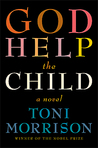
God Help The Child

God Help the ChildGod Help the Child by Toni Morrison
Reviewed by Jason Koivu
My rating: 3 of 5 stars

Giving a Toni Morrison book only 3 stars seems ridiculous in light of some of the 4 and 5 star ratings I've doled out. What I'm saying is, Morrison can write the pants off of most writers. Whether you like her stuff/style or not, it must be admitted that the woman can string together one word after another in a very pleasing manner.

Having said that, God Help the Child did not enthrall me as others of hers have. I'm not 100% sure why. There could be a number reasons, here are some of them:

There weren't too many characters in this one that I particularly liked. Most were repulsive in some way shape or form, at least the main characters, of which there are nearly a half dozen. It's not that Morrison did a poor job creating them, it's that she did too good a job and by chance I'm not a fan of who these people are.

Another issue might be that I prefer Morrison's stories when they're set in the past. This one was her most modern setting yet, out of the books of hers that I've read. I love when she sets the scenes of days past. She does it so well and her style meshes with bygone eras like peanut butter and chocolate.

The subject matter here -child molestation- is particularly hard reading. The characters may be fictional, but that doesn't lessen the kick-to-the-gut feeling you get every time the narrative focuses on the subject.

All in all, it's a tough read. Certainly not bad, just tough for the aforementioned reasons.

View all my reviews

Sunday, August 12, 2018

The Winter Box

The Winter BoxThe Winter Box by Tim Waggoner
My rating: 5 of 5 stars

Todd and Heather's marriage has been on the rocks for some time. When they get trapped at home with no power during a blizzard, they're forced to confront their problems by the terror that lurks within... the Winter Box!

Okay, I made The Winter Box sound like a Twilight Zone episode. I guess it could be but it's more like a ghost story/cautionary tale.

Todd and Heather have drifted apart over the years and the specter of divorce is lurking in the background. When they get snowed in, weird things start happening and they're forced to work on their marriage, though it may be too late.

The Winter Box is a chilling tale in many ways. The blizzard and power outage are the least so. Much more chilling is what they let happen to their marriage and the shitstorm emanating from the Winter Box.

I've said many times that ebooks have once again made the novella a viable form and this is a prime example. The Winter Box is a fantastic story. I can't say enough good things about it. Five out of five stars.

View all my reviews