Showing posts with label lawrence block. Show all posts

Monday, October 22, 2018

Block's Best?

A Ticket to the Boneyard (Matthew Scudder, #8)A Ticket to the Boneyard by Lawrence Block
Reviewed by Jason Koivu
My rating: 5 of 5 stars

This might be the most intense Matt Scudder book yet!

Block kept up the tension by putting his main character at risk. That's something you can't do in every book, not in a detective series, and still maintain realistic integrity. But slid it in now and then and wow does it heighten the suspense!

Creating a thoroughly despicable and tenacious villain is helpful, too. It's been a while since I've hated a character quite as much as James Leo Motley. (Is it mandatory that all serial killers have three names?)

An almost perfect balance is struck between Scudder's professional and personal life. When Block allows his main character to breathe it makes sense and paces the book quite well.

A Ticket to the Boneyard continues Block's Scudder series in great style!

View all my reviews

Monday, September 24, 2018

Block On Writing

Telling Lies for Fun  ProfitTelling Lies for Fun Profit by Lawrence Block
Reviewed by Jason Koivu
My rating: 5 of 5 stars

Crime writer Lawrence Block's book on writing is one of the best I've ever read. By being specific and giving practical advice from long experience, it's much more helpful than many others.

Telling Lies for Fun & Profit is like a 47 chapter course on how to write like a pro...well, hold up! It doesn't propose to turn you into the great American writer. You won't necessarily become a rich and famous novelist because of this book. What I mean is, Block gives you a career's worth of tips on how to hone your craft after you've mastered the basics. Quite literally, you must be able to arrange your nouns and verbs in the right order before a book like this will be of any use to you. Sound simple enough? Well, you'd think so...

Having read a dozen or more how-to-write books from established writers, I found that Telling Lies for Fun & Profit treads on some familiar territory now and then. But even when it did, I still garnered some useful knowledge just from Block's unique take on a subject. Even if it wasn't completely unique, it would at least have a fresh angle to its approach.

One of my favorite parts was when Block admitted that he essentially hates writing. Here's the whole excerpt. I'll underline the specific part, but as a whole it makes more sense:

...writing’s not much fun.

I really wonder why that is...It’s been my observation that painters, both professional and amateur, love to paint. They get genuine enjoyment out of the physical act of smearing paint on canvas. Sometimes they’re blocked, sometimes they’re frustrated, but when they’re painting the very process of creation is a joy to them.

Same thing certainly holds true for musicians. They only seem to feel alive when they’re performing. The jazz musicians I’ve known spend their afternoons practicing scales and such, work all night performing, then jam for free at an after-hours joint until dawn, just for the sheer pleasure of it.

In sharp contrast, almost every writer I know will go to great lengths to avoid being in the same room with his typewriter. Those of us who are driven to produce great quantities of manuscript don’t necessarily get any real pleasure out of the act; it’s just that we feel worse when we don’t write. It’s not the carrot but the stick that gets most of us moving.

I don’t mean to suggest that there’s no positive pleasure connected with writing. I enjoy getting ideas, for example—both the initial plot germs and the ideas that develop in the course of extended work on a novel. And I very much enjoy having written; the satisfaction of having completed a taxing piece of work can be monumental.

This latter pleasure, come to think of it, is a negative one, isn’t it? When I’m delirious with joy over having finished something, my joy stems in large part from the fact that I do not have to work on it any more, that the dratted thing is over and done with. So it’s nice being about to write, and it’s nice to have written. But is there no way to enjoy writing while it’s going on?

One thing that impedes enjoyment, I would think, is that writing’s hard work. Painters and musicians work hard, too, but there’s a difference. You can’t really relax and go with the flow while you’re writing—at least I can’t, and if anyone can show me how, I’ll be delighted to learn. Writing demands all of my attention and focuses me entirely in the present. I can’t let my mind wander, and if my mind wanders in spite of itself I find I can’t write, and when I want to write and can’t write I find myself possessed of murderous rage.

When a painting doesn’t go well the artist can keep on painting and cover it up. When a musician’s not at his best, the notes he plays float off on the air and he can forget about them. When I’m off my form, the garbage I’ve written just sits there on the page and thumbs its nose at me. And when it gets into print that way, it’s there for all the world to see, forever.


Painters and musicians would probably quibble over a few points there, but from a writer's perspective, it was nice to hear this sort of stuff from a seasoned professional.

From the standpoint of a fan of Block's fiction, this was also fun to read, because it was written in the early '80s. By then he'd published countless books and even completed a series or two. At the time though, he was just getting back into the flow of working on his Scudder detective series, the one that most Block fans seem to regard as his best work. To hear him talk about it with uncertainty provided a nice, autobiographical insight.

Highly recommended to writers, as well as to Block's fans!


View all my reviews

A Honeymoon Gone Wrong

Deadly HoneymoonDeadly Honeymoon by Lawrence Block
Reviewed by Jason Koivu
My rating: 3 of 5 stars

After being attacked by some underworld thugs, instead of a rolling over and playing the victim, a couple decides to get revenge on their attackers.

This was originally one of Donald Westlake's (aka Richard Stark) ideas, which his friend Lawrence Block asked to use since Westlake didn't think he would ever have the time to get around to it. As Richard Stark, he was busy pumping out volumes in his Parker series. Block took the idea and ran with it. Without realizing it, his course veered somewhat from Westlake's original idea, so by the time he was done, he had completed his own book, one that would not have existed without his personal touch.

The story itself is solid. The execution is decent. Since Block's career spans from the '50s to today, this late '60s book could be called an early work. As such it suffers somewhat. Block's easy, flowing style wouldn't really click into place until the '70s. So Deadly Honeymoon feels a little stiff in places. Generally it's not bad, but for instance, towards the beginning the narrative skips an emotional beat and that threw me off for a while. I needed the closure of a certain reaction from one of the two main characters that I didn't get and didn't set right with me. It took a while for me to get over it and except that it just wasn't going to happen. Eventually though, the thrilling tale that is this book took over and I could enjoy it to its satisfying conclusion.


View all my reviews

Monday, August 6, 2018

Not the Best Block, But Still Damn Good

Out on the Cutting Edge (Matthew Scudder, #7)Out on the Cutting Edge by Lawrence Block
Reviewed by Jason Koivu
My rating: 3 of 5 stars

Not topnotch in the Scudder series, Out on the Cutting Edge is still nonetheless a quality Block book.

While the three star rating (it would be closer to 3.5 and I rue GR's lack of half stars!) might seem low for a "quality" book that I would still recommend, I have my reasons. The biggest problem with this one is that our aging, alcoholic, ex-cop turned unlicensed private detective hero Matthew Scudder doesn't really solve the crime. I mean he puts the pieces together, but the pieces fall into his lap by chance.

HOWEVER! He does solve another crime that you might not have seen coming. There's a nice twist towards the end. But that's part of the problem. A lot happens at the very end and the lead up to it is long and drawn out due to a lack of action. Scudder books could hardly be called "action-packed" by the longest of stretches, but usually there's a little more balance. Even the tension, that harbinger of action, is mostly absent.

None of that hardly matters though. I can still find a good deal of enjoyment in these books even when the plot doesn't pack a punch and all we do is watch Scudder go on dates and to AA meetings. Block's descriptions of NYC from back in the day (this one is set in the late Summer of '86, if I have my baseball references correct) and his excellent characterizations are utterly enjoyable to lose oneself in. He makes you feel like one of Scudder's buddies (if Scudder had anyone you could call a "buddy"), just hanging out with him during his wanderings about the city, like taking a Sunday drive with someone real chill. But no one here is what you would call "cool". These people have seen some shit and have the scars to prove it. The good guys, the bad guys, and all the guys in between (actually most fall into the "in between" category) have been slapped about by life. In this series, Block paints life perfectly.

View all my reviews

Monday, July 2, 2018

A Mixed Bag From Block

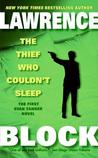
The Thief Who Couldn't Sleep (Evan Tanner, #1)The Thief Who Couldn't Sleep by Lawrence Block
Reviewed by Jason Koivu
My rating: 4 of 5 stars

Is this a caper comedy? A spy thriller? Revolutionary tract? Social commentary? Who the hell knows, but it doesn't matter. The Thief Who Couldn't Sleep by Lawrence Block is just good, solid fun!

Evan Tanner is a complicated fella. A war vet with terminal insomnia, Tanner put his eight hours -give or take- to learn and practice a good many things. He's a multi-talented individual who decides to use those talents to steal a massive pile of gold. Will he put it to good use? Probably...perhaps. That's not really the point. This is about good old action-adventure good times...I think.

At times I felt like I was reading a James Bond novel. This was assisted by Block mentioning Bond about a dozen times. Then the story will take a comedic turn and it feels more like Candide. The comedic turns pile up so much that when the book switches gears and becomes very For Whom the Bell Tolls with a dryly-related and graphically bloody revolution it's somewhat jarring. Hell, it's very jarring to have women and children getting cut in half and heads blown off by gun fire after you've settled into a lighter, more humorous style.

This is the first in the Tanner series and one of Block's earlier books. Not earliest. I believe he had at least ten years of published work under his belt already. So, while this is rougher than his later work and a bit stiff, The Thief Who Couldn't Sleep is still competent material with an exciting flair that makes for flat out fun reading. I'll probably continue on with the series in the future.

View all my reviews

Monday, October 2, 2017

Scudder #4 Slows the Good Times Train

A Stab in the Dark (Matthew Scudder, #4)A Stab in the Dark by Lawrence Block
Reviewed by Jason Koivu
My rating: 3 of 5 stars

These Matthew Scudder books aren't action-packed, sometimes they're even slow, but boy howdy, do I ever enjoy them!

I like the picture you get of New York City in the '70s (At least with these first few books in the series. I'm not sure about the rest, because I haven't read them). I love Scudder's character. He's not in it for the money. Admirable. I like the light mystery involved in each book. Lawrence Block keeps you guessing! All of these things and probably a few more I'm forgetting right now just jive really well with my reading tastes!

Usually with these books there's a certain amount of psychology, as in the psychology of the killer. However, in A Stab in the Dark we get even more of a look at "why?". Psycho killers and their copycats are given a decent an examination here. It's not super deep. These Scudder books are fairly short after all. However, it is about as long as you'd want it to be in a crime fiction pleasure read.

So, book #4 in the series was a success and I'll definitely be moving on to #5!

View all my reviews

Monday, June 5, 2017

Murder as a Comfort-Read

Time to Murder and Create (Matthew Scudder, #2)Time to Murder and Create by Lawrence Block
Reviewed by Jason Koivu
My rating: 4 of 5 stars

When a criminal "friend" goes belly up in the river with a bump on his head, retired cop Matthew Scudder takes it upon himself to find out whodunnit.

In this, the second of the so-far-enjoyable Scudder series, our hero is tasked with figuring out which of three shitty people with a darkened past was the one who did-in his friend. None of the three are likable, hell, even Matt has some unpleasant skeletons in his closest, so why the hell is this such a good read?!

I've pondered that quite a bit. In fact, I was just saying to Kemper how Lawrence Block's books are fast becoming one of my comfort-reads. I find that strange since you don't usually think of crime, murder, rape, pedophilia, and other shitty things as something you find comfort in. And yet, I do. Obviously, it's not the subject matter. I find comfort in the way the subject is handled, the way Matt Scudder handles the situation, and the way Lawrence Block handles his words. He's got a way with them, that man does!

Also, I've been listening, as opposed to reading, this Scudder series, and I absolutely love the narrator, Alan Sklar's voice, cadence, etc etc. He's done a fantastic job. His somber tone melds with the material meticulously. I believe he is a down-and-out, former cop trying to forget his past in drink.

Somber! Yes, I just called this stuff somber. So, we've got despicable criminals doing shitty things, a detective who's a decent man but not the most likable of people, and a somber narrator. WHY DO I LOVE THIS SERIES SO MUCH?!?!?

View all my reviews

Monday, May 29, 2017

Solid Building Blocks to a Series!

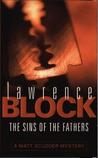
The Sins of the Fathers (Matthew Scudder, #1)The Sins of the Fathers by Lawrence Block
Reviewed by Jason Koivu
My rating: 4 of 5 stars

Once upon a time I picked up a Lawrence Block book. I liked it, so I tried another. The next one was from his Matthew Scudder series. Now I'm hooked.

Scudder debuted in 1976's The Sins of the Fathers as an alcoholic ex-cop who had recently quit the NYPD and left his family after accidentally causing the death of a young girl. Living in a rent-controlled hotel room in Hell's Kitchen, he earns his living as an unlicensed private investigator—or, as he puts it, "doing favors for friends." - Wikipedia

Scudder's not a prototypical "lovable" guy and yet I love him. I wanna be best buds with him. What I would give to hang out, have a beer and shoot the shit with this guy! Oh the stories he could tell!

Block has spun a solid yarn here with The Sins of the Fathers. Some might call it a yawn, as there's not a lot of action considering this is a crime story. I admit the pace is a bit slow and there's no explosive climax.

However, this is still great reading. I was totally engaged with the character and the story. Everything felt very real. I chalk that up to Mr. Block's chops. You can tell the dude's done some writing prior to this point. I'm definitely moving on to Time to Murder and Create!

View all my reviews

Monday, December 19, 2016

A Tasty Drop of Block

A Drop of the Hard Stuff (Matthew Scudder, #17)A Drop of the Hard Stuff by Lawrence Block
Reviewed by Jason Koivu
My rating: 4 of 5 stars

It's high time I started on book one in Lawrence Block's Matthew Scudder series, because I am LOVING what I'm reading so far!

Scudder is a once-cop, once-private investigator cum investigator (just seems to depend on the day and his finances) who's battling alcoholism. (view spoiler) He's forced into a case somewhat close to his hardened heart, so he ends up looking into it just as much for the pay as for his own conscience.

In fine Block fashion, the reader is left wondering "Is this the guy who done it?...No wait, it's gotta be this guy! Or maybe..." almost right up to the end. I might've figured it out sooner, but I got stuck on this one character and having made up my mind it was him, I spent a third of a book looking for clues specifically for this one guy, thus missing any clues that would've pointed to the real killer. I swallowed the red herring bones and all. The clue that I was on the wrong track came when my killer got killed. Doh!

Folks that are looking for a straightforward mystery or crime story won't get it in A Drop of the Hard Stuff. Nope, and that's the beauty of it for me. I prefer books with some literary merit (SNOB ALERT!) and this has it. I'm not talking about highfalutin poetical bs, I'm talking about a little more character development than what you usually get with the genre stuff. You get plenty of character in this one! Scudder is working on his first year of sobriety and so many of the scenes take place in AA meetings. Block described some dynamite scenes of temptation and inner turmoil that really made you feel for these sad sods.

Even though I felt like this book provided some great insights into that world, of course not everyone's going to be down with reading about depressing AA meetings. Even I got a tad bored a time or two. There isn't a lot of action in this one, but when it heats up, it gets intense.

Now, it's time for me to start from book one. I am completely ready to get to know this Scudder fellow from the beginning!</["br"]></["br"]></["br"]></["br"]></["br"]></["br"]></["br"]></["br"]></["br"]></["br"]>

View all my reviews

Monday, April 6, 2015

A Relaxed Thriller

All the Flowers Are Dying (Matthew Scudder, #16)All the Flowers Are Dying by Lawrence Block
Reviewed by Jason Koivu
My rating: 4 of 5 stars

Block lulls you into a sense of ease. His words read like a meeting of two long-time friends over a cup of coffee. They don't necessarily have a great deal to say to one another, they just enjoy each other's company. And then next thing you know someone's been shot/stabbed/raped and a murder is being solved.

That happens through out All the Flowers are Dying. There's an ebb and flow of action from start to finish that sometimes switches between the two like flicking on and off the lights. It's a good pace. Just before you have the chance to get too bored with a slow scene, Block's there at the switch to wake you up.

Some of his writing is quite vivid and gorily graphic. At other times he shows Hitchcockian restraint with a crafty subtly that reminded me of Patrick O'Brian's work. It's been a long career for Block, who began with dimestore crime novellas. What we have with this sixteenth edition in his Scudder series is a maturation of the often ham-fisted crime noir potboiler of yesteryear into a more earthy, human story. Characters are fleshed out, motives delved into more deeply.

Yes, I've intentionally avoided summarizing the book on any level. Spoilers would abound with any attempt. Just know that there are bad guys, good guys...no...there are bad people, good people, but topping the population are your average-joe gray people. There is crime. There is resolution. There is also a good deal of reality and graspable humanity, as well as repulsive inhumanity. It's a veritable melting pot of all that is now.

View all my reviews

Monday, February 23, 2015

Lawrence Block Heads Across the Borderline in Thie Classic Pulp Novel


Reviewed by James L. Thane
Three out of five stars

Borderline is a recent release from the folks at Hard Case Crime that brings together a relatively short novel and three short stories by Lawrence Block that were first published in the late 1950s and early '60s, while Block was still cutting his teeth in the crime fiction business. The novel is one that reader would have found on the rotating rack of paperback "pulp" novels down at the local drugstore back in the day, while the short stories originally appeared in the men's magazines of the era.

The crimes at the heart of these stories all basically involve human beings exploiting each other in one way or another, most often sexually. The only real "crime" story here is the last, "Stag Party Girl," in which a young woman jumps out of a cake at a bachelor party and is shot to death. A private detective, who happened to be at the party, must then sort through the other guests to determine who might have killed the poor woman and why.

The short novel, Borderline, takes place on the U.S.-Mexico border where the cities of El Paso and Juarez lie astride the border only yards apart from each other. The story is set in a much earlier day and age when people crossed back and forth across the border pretty much at will, with only an occasional cursory glance from the border patrol.

A number of characters are thrown together in the two cities, including a gambler named Marty, a recent divorcee named Meg, and a young hitchhiker named Lily who has recently arrived from San Francisco and taken up hooking in Juarez as a means of earning enough money to go to New York and live out her dreams. Finally, there's a psycho named Weaver, an ugly man who's never had a friend and who now buys a straight razor and begins to live out the violent fantasies that, until now, he's only entertained in his mind.

There's a lot of sex and violence in the book, reflecting the fact that Block first cut his writing chops by turning out soft-core porn. Meg, in particular, has come out of a sexless marriage and arrives in El Paso hot and ready to experiment with virtually no holds barred. Marty, the cynical gambler, is only too happy to oblige and takes her across the border into Mexico for some experiences she'll never forget. The real borderlines here are mostly psychological, of course, and once the protagonists begin crossing them, they soon discover that sometimes there's no crossing back.

This is a book that will appeal principally to fans of Lawrence Block who, like this one, are only too happy to read virtually anything that the MWA Grand Master ever wrote. But no one should expect that it's on a par with the material he wrote later, beginning with his brilliant Matthew Scudder series. And certainly it will appeal to those who enjoy the pulp novels of this era and continue to seek them out in used bookstores everywhere. All will be grateful to Hard Case Crime for presenting these stories in this fresh edition, complete with one of the classic pulp covers that the publisher does so well.

Monday, January 12, 2015


Reviewed by James L. Thane
Five out of five stars

This is the eleventh entry in Lawrence Block's excellent Matthew Scudder series, and it remains my favorite book in the series. As the story opens, Scudder and his girlfriend, Elaine, are thrown together with a young couple named Glenn and Lisa Holtzmann. Elaine and Lisa are taking a class together; the Holtzmanns live in the same neighborhood as the hotel where Matt lives, and the two couples wind up going out to dinner one night.

Matt is not overly impressed. He and Elaine have little in common with the younger couple and there's something about Glenn that puts Matt off. Given that they're something like neighbors, Matt runs into Holtzmann occasionally on the street and Holtzmann keeps proposing that they get together for lunch. Matt always manages to find a reason for refusing the offer and then, suddenly, he no longer needs one when Holtzmann is gunned down while using a pay phone a couple of blocks from his apartment.

The police immediately charge a street person named George Sadecki with the killing, and the evidence seems overwhelming. The police do not recover the weapon used, but Sadecki, a Vietnam vet, has policed the area and the police find the shell casings in his jacket pocket. Sadecki, who has never been quite "right" mentally, admits that he might have killed Holtzmann, but he doesn't remember one way or the other.

Sadecki's brother, Tom, knows Matt from AA, and doesn't believe that George would have been capable of killing anyone. He knows the odds are long, but he convinces Matt to look into the case in the hope of giving him some sort of closure. Matt agrees, although the case looks open-and-shut, and he warns Tom Sadecki not to expect much.

In a case like this, SOP is to start by investigating the victim to see who, if anyone, might have had cause to wish him harm. On the surface, Glenn Holtzmann appears to be a pretty straightforward yuppie lawyer, but as Scudder begins poking around, he uncovers some secrets about the late Mr. Holtzmann that are troubling, to say the least.

The case itself is intriguing, but what sets this book apart for me, above all the others in the series, is that Scudder is presented with two very critical moral issues that are not really directly related to the case itself. The real strength of this series has always been the development of the characters, Scudder in particular, and it's extremely interesting to watch him wrestle with these two issues.

To describe either dilemma would be to give away too much. Suffice it to say, that neither is easy, and both will require that Matt look deeply into his own soul in the hope of finding some sort of resolution. Fair warning: watching him do so may well require the reader to examine his or her own conscience as well. This is at least the third time I've read this book, and I'll eagerly look forward to it again as I make my way through this series the next time--one of my favorite crime novels of all.

Monday, May 5, 2014

Matthew Scudder faces Danger and a Moral Quandry


Reviewed by James L. Thane
Four out of five stars


This is the second book in Lawrence Block's excellent series featuring Matthew Scudder. It doesn't pack quite the emotional wallop of the first, The Sins of the Fathers, but it's a very good read nonetheless.

For those who don't know, Matthew Scudder is an ex cop who lives in New York City and who works as an unlicensed P.I. He left the force under tragic circumstances and has since developed a drinking problem which is here noticeably worse than it was in the first book. His "office" is in a saloon, where he passes most days and evenings drinking coffee laced with bourbon.

One afternoon an old acquaintance, "Spinner" Jablon, finds Matt in Armstrong's, the saloon where Matt spends much of his time. Spinner is a minor criminal that Matt knows from his days on the force. Jablon has apparently gotten himself into some sort of trouble and believes that his life may be in danger. He asks Matt to hold an envelope for him and to open it only in the event that something happens to him. Matt presses for an explanation, but Jablon tells him that he'll know what to do if and when he has to open the envelope.

Well, obviously, we all know what's going to happen next. Poor Spinner winds up floating in the East River, and when Matt opens the envelope, he discovers that Jablon had been blackmailing three fairly wealthy people. Jablon assumes that one of them will have been responsible for his death and leaves three thousand dollars in the envelope along with the blackmail materials. He wants Matt to discover who killed him and bring him or her to justice.

Matt could just stuff the three grand in his pocket and forget about it since his client is no longer around to complain about it. But Matt isn't that kind of guy, and Spinner knew it. Matt feels morally obligated to follow through and so develops a plan for smoking out the killer. But naturally, the best laid plans sometimes have unintended consequences. As a result, Matt finds himself in the middle of a moral quandary and discovers that his own life may now be on the line.

This book is now nearly forty years old, but the story is still as gripping as if it were written yesterday. One gets so caught up in it that you're only marginally aware of the fact that it takes place in an era when there were no cell phones or computers and when investigative techniques were significantly more primitive than they are today. Given that this is one of the most celebrated series in all of crime fiction, it's hard to imagine that there's any fan of the genre who has not yet discovered it, but if that should somehow be the case, do yourself a very great favor and look for it.

Monday, March 17, 2014


Reviewed by James L. Thane
Five out of five stars


The Sins of the Fathers would be a solid four stars from me on any day. I'm giving it five because it's the first book in what I've always believed to be the best P.I. series that anyone's ever done, if not the best crime fiction series that anyone's ever done. The Matthew Scudder saga now runs to seventeen books and a large number of short stories, and it's hard to think of any other writer who has done a series consisting of this many books over this many years while maintaining this standard of excellence. And for as many times as I've read this book by now, and for as well as I know the story, it's always a treat to pick it up and read it all over again.

In particular, the first chapter is excellent. In a lean, crisp thirteen pages, Block not only sets up the mystery to be resolved but provides a brilliant introduction to the character of Matthew Scudder. Although the character will continue to grow and develop over the course of the series, the first chapter essentially tells you everything you would ever need to know about the man.

Scudder is an ex-cop who left the force for very personal reasons. He now works as an unlicensed P.I. Clients don't hire him in any traditional sense, but occasionally he does a favor for someone and they show their appreciation by giving him monetary gifts.

In this case, the someone is a businessman from upstate New York named Cale Hanniford. A few days earlier, Hanniford's daughter, Wendy, had been savagely murdered in the apartment she shared with a young man named Richard Vanderpoel. Minutes after the killing, Vanderpoel was found covered in the victim's blood, exposing himself and shouting obscenities in the street in front of the apartment. The police arrested him and less than forty-eight hours later, the young man hanged himself in his cell.

The police have closed the case and Hanniford accepts their obvious conclusion that Vanderpoel killed his daughter. But he wants to know why. Hanniford and Wendy had been estranged for several years and he knows nothing of her life during that period. He now knows that she was living in an expensive apartment with no visible means of support, which suggests the obvious to everyone involved. Still, no matter how sordid the details, Hanniford wants Matt to dig into Wendy's life so that he will know how she came to such a tragic end.

Scudder accepts the job and begins investigating in his usual methodical way, turning up one thing after another, asking one question after another, and in the process learning things about both Wendy and Vanderpoel that no parent might ever want to know.

The story is spare and lean--there's not a wasted word, and it draws you inexorably into the lives of all the characters, but especially into that of Matthew Scudder. It's a haunting and intoxicating introduction that sets the stage for all of the great books and stories to follow.

Monday, December 30, 2013

Welcome Back Bernie!


Reviewed by James L. Thane
Four out of five stars

After an absence of nearly ten years, Bernie Rhodenbarr, burglar and bookstore owner, returns in The Burglar Who Counted the Spoons. For those who haven't yet made his acquaintance, Bernie is the creation of Lawrence Block, who is also known for his hit man series featuring John Keller, and his brilliant P.I. series that features Matthew Scudder.

The Rhodenbarr books are much more light-hearted that the Scudder books, and Bernie is blessedly free of the demons that have haunted his stable mate through the years. Bernie thinks of himself as the last of the Gentlemen Burglars and he's much quicker with his wit than with his fists or with any other sort of weapon.

These books generally follow a formula in which Bernie is burgling a house or an apartment, almost always belonging to someone who can well-afford to lose whatever it might be that Bernie is about to relieve them of. Then, in the course of things, a body inconveniently appears, though never as a part of Bernie's handiwork.

The case will be investigated by Bernie's nemesis, the fumbling police detective, Ray Kirschmann. Ray always assumes that Bernie is responsible for the homicide and Bernie then has to solve the crime in order to save his own skin. Almost always this involves gathering all the potential subjects together at the end, in the style of Agatha Christie, so that Bernie can explain the logic of the crime and finally point the finger at the Real Killer.

It's always a lot of fun to watch the story unfold and while this book deviates slightly from the traditional formula, it's certain to entertain anyone who's enjoyed the series through the years.

In this case, a man named "Smith" hires Bernie to commit a series of burglaries to retrieve objects of value to the client which he cannot obtain legally. Meanwhile, Ray Kirschmann is investigating a puzzling homicide and no one will be surprised when the two cases intersect. As always, along the way there's a good deal of banter between Bernie and his best friend, Carolyn, who is a lesbian dog groomer.

Readers who have enjoyed the earlier books will certainly like this one as well. Readers who find the concept intriguing but who haven't read the earlier books might want to start at the beginning of the series with Burglars Can't Be Choosers. While neophytes would probably enjoy this new entry, there's a fair amount going on that would be better appreciated by those who have watched Bernie's career and his relationships develop through the years. We can only hope that Bernie is not now in for another ten-year vacation.

Monday, April 22, 2013

Matthew Scudder's Last Case?

This, the sixteenth Matthew Scudder novel, opens as a psychologist comes to a Virginia prison to visit a man condemned to death for the brutal murders of three young boys. Although the evidence against him was overwhelming, the prisoner continues to protest his innocence. The psychologist claims to believe in the man's innocence, and he's the only one who does. The two men develop something of a relationship over the course of several visits and, at the end, the condemned man asks his new friend to witness his execution.

Meanwhile, up in New York City, P.I. Matthew Scudder is now in his middle sixties and in semi-retirement. He's given up the license he briefly held and no longer actively solicits business. But he will take the occasional client if one seeks him out. After all, no one in his or her right mind could imagine Matthew Scudder living in Florida, playing golf and lining up for the 4:30 p.m. early bird buffet.

A woman pays Matt $500.00 for what seems like a fairly simple task. She's dating a new man. She likes him, but he's a bit on the mysterious side. For example, they always go to her place and she's never been to his. She's worried that the guy might be a serial killer or--even worse--married, and she wants Matt to check him out.

Matt takes the case and he and his sidekick, T.J., immediately run into a brick wall. The guy has a fairly common name, and they can't get a whiff of him. They attempt to tail him one night after he leaves the client's apartment, but the guy gives them the slip.

Meanwhile, the psychiatrist from Virginia has evaporated into thin air and bad things begin to happen to unsuspecting people in New York. Matt will ultimately realize that something very bizarre and extremely dangerous is afoot. Even worse, a serial killer from a previous case may have Matt and his wife, Elaine, dead in his sights.

This book continues some unfinished business from the previous Scudder novel, Hope to Die, and it's great to see Matthew Scudder back in action. Many familiar characters put in an appearance, and the book has an elegiac feel about it. Matt realizes that he's getting close to the end of the line, and after following him for nearly forty years, readers are bound to feel as unsettled about that as Matt does.

This is a very good read and, when first published, had the feel that it might be the last of the Scudder series. Happily, that turned out not to be the case, but the book that followed this one, A Drop of the Hard Stuff, is a flashback to an earlier time in Scudder's life and so it seems entirely possible that this could be Scudder's last adventure. Thus
, even re-reading the book, one is torn between the temptation to devour it whole and the desire to stretch it out for as long as possible rather than let it go.

My only objection to the book is that here again, as he did in Hope to Die, Block alternates between Scudder's POV and that of the villain. After fourteen books in which the only voice was Scudder's, it's still more than a little jarring to have another one intrude, but still, I enjoyed this book immensely.

Tuesday, April 2, 2013

The Stamp Collecting Hit Man Returns


Hit Me  

by Lawrence Block

Mulholland Books

Reviewed By Kemper
4 of 5 stars.

Back at the beginning of this series, professional hit man Keller would often fantasize about retiring and buying a house in one of the cities he visited while on the job, and circumstances beyond his control eventually pushed into that very situation.  When we last saw him, Keller was living in New Orleans under a new name and with a new job that didn’t involve murdering people for money.  It seemed as if Lawrence Block had written a happy ending for the guy, and it was a very satisfactory way to close out Keller's story.

So I was a little nervous when I heard that Block had a new Keller book coming out. It felt like there was a lot of potential to screw up an ending that I liked a lot. I should have had more faith in the writer who has brought Matt Scudder back from apparent conclusions several times.

Keller is happy in New Orleans with his wife and infant daughter. The construction business he got into has taken a hit with the housing bust, but he still has enough money banked to make ends meet.  Of course, a serious philatelist like Keller could always use more money for his hobby, and when an opportunity to resume his former job in Dallas coincides with a stamp auction he wanted to attend, Keller finds himself back in the murder-for-hire game.

Like most of the other Keller books, this is really a series of long short stories about different jobs that Keller works. (Note to TV executives, if you’re looking for another book series to adapt, check this out.  Each Keller’s story could be an episode.  I have some ideas.  Call me.)  In addition to his Dallas trip, Keller also takes a cruise, makes a homecoming trip to New York and tries to work a job around his appraisal of  a large stamp collection.

While this is as entertaining and engaging as the other Keller books, I gotta say that I was a little depressed while reading it.  Keller enthusiasm for his work always waxed and waned, but there was always the feeling that he was working towards getting out someday.  Seeing Keller back on the job when he really doesn’t need the money saddened me a bit.  I feared that it was making him seem more selfish and unfeeling than he’d been previously.


Fortunately, Block deals with this directly, and I still thought that Keller is a petty decent guy despite what he does by the end of the book.  It’s a testament to Block’s skill in crafting such a great character that I think I’d be more than happy to read another book if it was just Keller’s adventures in stamp collecting with absolutely no murder-for-hire.

Also posted on Goodreads.