Showing posts with label religion. Show all posts

Monday, February 5, 2018

Getting to Know Hinduism

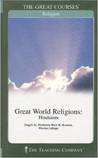
Great World Religions: HinduismGreat World Religions: Hinduism by Mark W. Muesse
Reviewed by Jason Koivu
My rating: 4 of 5 stars

These Great Courses are great! If you're not hearing Tony the Tiger in that line, I don't even know how to talk to you.

Seriously though, I'm really enjoying them. When I first discovered them I thought they were on par with those Learning Annex "courses", which do not have a good reputation. However, Great Courses puts together very solid lectures from highly qualified teachers. The dude who did this one, Mark W. Muesse is a Harvard-educated professor.

This lecture is an overview of Hinduism, and I mean overview literally. This is a quick, entry-level course that touches upon the basics: the important philosophies and beliefs, the major gods, etc. That's fine, because it's exactly what I was looking for. Since I'm a Hindu noob, anything deeper would've been right over my head.

Muesse is a good speaker, who clearly conveys his thoughts. Even so, I still felt slightly confused by concepts like the Vata. This is where the value of an intro course like this ends. You get a mere taste of a belief system, not the intricacies. Also, the history and world impact of Hinduism was brief. Little more than Gandhi's movement was touched upon. Again, further research will be necessary, however, this is a solid first step introduction and I highly recommend it for the beginner.


View all my reviews

Monday, November 6, 2017

Genghis Khan was a Swell Guy

Genghis Khan and the Quest for God: How the World's Greatest Conqueror Gave Us Religious FreedomGenghis Khan and the Quest for God: How the World's Greatest Conqueror Gave Us Religious Freedom by Jack Weatherford
My rating: 5 of 5 stars

Genghis Khan was a baaad man...if you were a shitty ruler who oppressed your people and lived fat off the sweat of those less fortunate.

Jack Weatherford knows his subject inside and out. He's written numerous books on the Mongols and the khan in particular. He did an excellent job in helping me garner a better understanding of perhaps the greatest ruler of all time.

Genghis Khan and the Quest for God: How the World's Greatest Conqueror Gave Us Religious Freedom succeeds in portraying Genghis Khan as a man to be admired for his ability to gracefully accept the religious beliefs of our cultures and nations when he had absolutely no need to. In fact, it would seem to behoove him to squash the beliefs of all who came under his power, if for no other reason than to have uniformity of belief under his sway entirely.

Instead, this man had the wisdom and foresight to allow the people he subjugated to retain their believes, whatever they may be. That did away with the necessity of fighting a secondary religious war with highly fanatical partisans.

As I was flying through these pages I was remained of a modern day parallel that may help you understand the kind of ruler Genghis Khan was. Think Khaleesi from Game of Thrones. Both are warlike and brutally slaughtered many, but both brought about freedom for the previously oppressed. Yes, I'm drawing on fantasy fiction for an analogy, but hey, the legendary stories that make up Genghis Khan's life seem like they have to be the stuff of some master writer's wild imagination.

View all my reviews

Monday, October 17, 2016

Poetry or just religion re-write?

The ProphetThe Prophet by Kahlil Gibran
Reviewed by Jason Koivu
My rating: 3 of 5 stars

Kahlil Gibran is a name that's been revolving around the fringes of my to-read possibilities. As one of the most widely read writers in the world, how could he not?

The Prophet combines faith and philosophy in a series of questions and answers on life and death and all the big topics in between, all delivered in a style similar to the Socratic Method...except that it's not really promoting any kind of critical thinking. Yes, there are some fundamental truths to be gleaned herein, same as you'd find in the Bible for example. But then there are passages that essentially say: don't bother learning, you know it all already. I guess you just have to coax it out of yourself by yourself. Or just listen to God. Have faith and you'll know all you need to know. Oh, and don't bother talking. Gibran says talking murders thought. Certainly it's tough to get any thinking done while someone is talking to you, but is really does help your thoughts to evolve when you talk things over with others with experience and wisdom.

Poetry isn't my thing anymore, so I was hesitant to read The Prophet. Luckily it's not poetry. Well, it's "prose poetry". But to me this sort of writing has very little resemblance to poetry...which is a good thing, as far as I'm concerned. However, many of the lines do have a certain poetic flair. There is a melodic flow and it is a pleasure to read, especially when one of Gibran's philosophical tidbits rings true.

I'm not surprised this saw a resurgence in popularity with the counterculture of the 1960s. This offers up the sort of loose philosophy that would attract those in search of something to believe in outside of organized religion. There was some good to be found within the pages of The Prophet. There was also some good within The Bible. I'd rather read this again though. It's a lot shorter.

View all my reviews

Monday, September 26, 2016

Religion and Art: World Builders

Heretics and Heroes: How Renaissance Artists and Reformation Priests Created Our WorldHeretics and Heroes: How Renaissance Artists and Reformation Priests Created Our World by Thomas Cahill
Reviewed by Jason Koivu
My rating: 4 of 5 stars

Thomas Cahill's Heretics and Heroes is a great look at the interwoven connection between the Reformation and the Renaissance, taking in a large swath of the primary leaders in religion, politics and the artists during that time period.

To be honest, history buffs won't find much new here as Cahill runs over the basics on the various kings, queens, popes, bishops, painters and sculptors of the 14th through 17th centuries. Take this as a good intro to that period, covering what any history course or book would touch upon.

However, beyond that, it delves deeper into the specifics of religion's grip upon Europe at the time, never wholly with or against the grand edicts of the day. Balance and clear thought are struck through out.

A few relatively minor personages come in for a sort of Wikipedia treatment and add nuance to the history. These were some of my favorite passages in the book, perhaps because they were the least known stories to me. The world is a strange...mainly because of the nonsense us kookie humans have gotten up to.

This is my second Thomas Cahill and I enjoyed it a good deal more than the first, Sailing the Wine-Dark Sea: Why the Greeks Matter. It made me feel more confident about this writer, enough that perhaps now I'll overcome move my fear of overhype and move on to his most popular book, How the Irish Saved Civilization.

View all my reviews

Monday, December 21, 2015

Beautiful Pictures of Horrible Things

Gandhara: The Memory of AfghanistanGandhara: The Memory of Afghanistan by Bérénice Geoffroy-Schneiter
Reviewed by Jason Koivu
My rating: 4 of 5 stars

Who destroys 1400 year old gargantuan statues? The Taliban, that's who. See, this is why we can't have nice things.

The Bamiyan Buddhas, carved from the stone cliffside in the Bamiyan Valley of eastern Afghanistan, stood for fourteen centuries until a rival organized religion came along and decided it was too much of a threat. They couldn't build up their own impressive monuments. Nope, they had to dynamite someone else's, least their own grasp upon the people be impinged.

description

Seriously, that is such weak-sauce.

Gandhara tries to salvage something of the remains. It gives a brief, and not altogether succinct, summary of the history, surmising upon the origins of this land where Greek art met Indian Hinduism. Author Berenice Geoffroy-Schnieiter, a French archeologist and art historian, is suited to talk about the French archeologists given permission to work in the area and unearth the ruins. Perhaps something was lost in the translation or perhaps the author isn't a gifted writer (that's no knock on Berenice, I mean, how many skills can one person excel at?!) as not all of this was described in an English easily digested. Or maybe I'm ignorant of the culture and art of that part of the world. Actually, yeah, that's more likely.

On the other hand, this slim volume is two-thirds photos. There isn't a lot of room for elucidation in an 80 page book when 60 of those pages are pictures. However, the photos are gorgeous and there are summary explanations at the back giving the pertinent details of each.

descriptiondescription
description


View all my reviews

Monday, June 15, 2015

Hellishly Good

Paradise LostParadise Lost by John Milton
Reviewed by Jason Koivu
My rating: 5 of 5 stars

Who but a blind man could so vividly write of the darkness of Hell?

Paradise Lost is fire and passion. It is the pinnacle and the bottomless pit. It is the struggle for all that is good. It is the struggle within the evil of all evils.

In the mid-1600s John Milton, aging and gone blind, dictated his most famous work, Paradise Lost, an epic poem that harkens back to Homer and Virgil. It not only tells the so very well-known story of Adam and Eve, it also describes the downfall of Satan in dramatic fashion. The empathy shown for this most famous of fallen angels is, for me, one of the most outstanding sections of this early work of English literature.

Epic is a laughably overused word these days. However, the depiction of Mammon and Beelzebub marshaling their demonic minions for the coming war is the stuff of ancient epics.

descriptiondescription

Tolkien and Lewis most definitely borrowed heavily from these passages of Milton's when penning their own epics.

The language has aged. Some of this is archaic and occasionally difficult to understand. But stick with it and you shall be rewarded.


View all my reviews

666 Silliness

The Satanic BibleThe Satanic Bible by Anton Szandor LaVey
Reviewed by Jason Koivu
My rating: 2 of 5 stars


Why did I buy The Satanic Bible way back when I was a teenager? Well, it's like this...

Rock music has always been seen by some as a source of evil and there's a history of musicians who supposedly sold their souls to the devil.

description

There were rock & roll "gods" like my hero Jimmy Page, who it is rumored followed occultist Aleister Crowley. As a guitar playing teen I idolized them and wanted to be them to the point of buying a book like this. I wondered, was there magic within? Would the devil make me a rock god, too? Or just getting me laid would be cool...

I expected sex, blood, magic, horror, demons, and more sex and way more magic.

witchesritual
womanbaby

Then I read it and what I got was more like...

description
(Just to the left of the clock I believe is George Bush #2 and that's pretty satanic in and of itself.)

Honestly, this book is just not as exciting as I'd hoped. I'm sure it would scandalize a churchy type, but it didn't do much for me.

It didn't start well. Right up front you learn that Anton LaVey, the founder of the Church of Satan, was a carny. A carny who gets his panties in a bunch because he sees men being pious hypocrites, so he shaves himself bald and starts a cult, no sir, that is not a good start to a new religion.

There's a foreword by a journalist, who describes meeting and getting to know LaVey. I thought this was a nice touch. It showed a more human side to the story. I'm one of those people that believe journalists should be unbiased, people who you can rely on to give you the facts, just the facts. But then you learn this particular journalist became a high priest in the Church of Satan, and well, that kind of crushed his unbiased credibility.

Moving on to LaVey's theories and ideas, we see some ridiculousness and some common sense. On the one hand, I very much doubt LaVey would want to live in the world of chaos that his vision would create. "Do whatever you want" sounds fun, and certainly some people do need to lighten up, but when you live in a world of chaos (I spent sometime living in a house run by anarchist punks, so I got a taste of what that'd be like) you learn the value of a few basic societal rules. LaVey's militant eye-for-an-eye-and-then-some (Meaning he believes you strike down those who offend you with even greater force) outlook coupled with a world of chaos would've put LaVey himself in harm's way very quickly.

The first half of the book expounds upon his theories. This section is much more relaxed than I expected. He speaks off the cuff, using slang and humor. It's an interesting approach to the writing of a religious text. Definitely a relief from the stuffy Holy Bible. By the way, any Satanists reading this can relax. Yes, I'm bagging on your boy a bit here, but I also think Christians are ridiculous, too. I'm one of those people who has faith in themselves, that they will do the right thing. So far I'm doing all right. Haven't murdered any one yet!

Later The Satanic Bible gets into the whole "spell casting" thing, the reason I bought the damned book in the first place. Much is made of sex, blood essence, speaking accursed names aloud and none of it was as cool as I'd hoped. I did like that LaVey calls out the people who sacrifice animals as cowards for not having the balls to draw their own blood for these rituals.

The last half of the book is a very short, quick read. There's barely more than a dozen lines on some of the last hundred or so pages. Sometimes it's just a title page or one simple sentence and blank space on the back side. This was done for aesthetics and it's a big waste of paper. The book would be a lot smaller otherwise.

All in all, I think Christians get their panties in a bunch over nothing much here. And as LaVey says, they need Satan. It's the Yin and Yang. God, Jesus and the other goodie goodies have to have a counter point. The good guys need the bad guys.

View all my reviews

Monday, January 12, 2015

A Jesus For Everybody!

Muhammad: A Prophet for Our TimeMuhammad: A Prophet for Our Time by Karen Armstrong
Reviewed by Jason Koivu
My rating: 4 of 5 stars

Muhammad

description

Looks a little like Jesus, doesn't he?

This was one of my first forays into the life of a man who has meant so much to so very many. Muhammad: A Prophet for Our Time felt easily digestible to me, an outsider and an utterly ignorant one at that.

Having lived about 500 years after Jesus, we seem to know more concrete information about the life of this prophet, thought by Islamists to be the last prophet, than we do of the Christians' "son of god". He came from Mecca and is the man who brought all of the Arabian nations under one religious umbrella. He was a fighter, who raised a Jihadist army that he turned upon his own hometown, in the name of god of course.

Perhaps that sounded too snarky. I do not intend to belittle the man or his religion. My scorn is for all organized religions. However, I try to set aside my prejudices when reading non-fiction on religious matters or biographies regarding their saintly figures. For instance, some of Muhammad's deeds did not seem entirely honorable in hindsight, but that is hindsight, which is distorted by the distance of time.

Muhammad: A Prophet for Our Time is a nice primer, a good first step towards greater knowledge. During these difficult times, when many of us Americans do not readily accept the followers of Islam with open arms, getting to know the history of the people is an important step in realizing our overwhelming similarities as humans, the one an only tribe of man and woman that should truly matter.

View all my reviews

Tuesday, January 14, 2014

The Historical Jesus

Zealot by Reza Aslan
2013
Reviewed by Diane K. M.
My rating: 5 out of 5 stars


This is a fascinating look at the historical, social and political context of the First Century in Palestine and of Jesus the man. The information will be familiar to religious scholars, but Reza Aslan writes so well and synthesizes so much knowledge that he makes it accessible to the layperson. 

The book begins with a touching author's note, which tells how he first became interested in Jesus. It happened when Aslan was attending an evangelical summer camp in California: 

"For a kid raised in a motley family of lukewarm Muslims and exuberant atheists, [Jesus' sacrifice and resurrection] was truly the greatest story ever told. Never before had I felt so intimately the pull of God. In Iran, the place of my birth, I was Muslim in much the way I was Persian. My religion and my ethnicity were mutual and linked. Like most people born into a religious tradition, my faith was as familiar to me as my skin, and just as disregardable. After the Iranian revolution forced my family to flee our home, religion in general, and Islam in particular, became taboo in our household. Islam was shorthand for everything we had lost to the mullahs who now ruled Iran. My mother still prayed when no one was looking, and you could still find a stray Quran or two hidden in a closet or drawer somewhere. But for the most part, our lives were scrubbed of all trace of God. That was just fine with me. After all, in the America of the 1980s, being Muslim was like being from Mars. My faith was a bruise, the most obvious symbol of my otherness; it needed to be concealed. Jesus, on the other hand, was America. He was the central figure in America's national drama. Accepting him into my heart was as close as I could get to feeling truly American."

Aslan, who became a religious scholar, goes on to explain his interest in the origins of Christianity: 

"The moment I returned home from camp, I began eagerly to share the good news of Jesus Christ with my friends and family, my neighbors and classmates, with people I'd just met and with strangers on the street: those who heard it gladly, and those who threw it back in my face. Yet something unexpected happened in my quest to save the souls of the world. The more I probed the Bible to arm myself against the doubts of unbelievers, the more distance I discovered between the Jesus of the gospels and the Jesus of history -- between Jesus the Christ and Jesus of Nazareth. In college, where I began my formal study of the history of religions, that initial discomfort soon ballooned into full-blown doubts of my own. The bedrock of evangelical Christianity, at least as it was taught to me, is the unconditional belief that every word of the Bible is God-breathed and true, literal and inerrant. The sudden realization that this belief is patently and irrefutably false, that the Bible is replete with the most blatant and obvious errors and contradictions -- just as one would expect from a document written by hundreds of hands across thousands of years -- left me confused and spiritually unmoored."

After sharing his personal background, Aslan sets the stage for the First Century in Palestine, which was teeming with political activity and zealotry. The Romans were in control and demanded high taxes from everyone they conquered, which often led to revolts. Anyone charged with sedition against Rome was put to death. Meanwhile, the Romans disliked the Jews and tried to wipe them out. In 70 C.E., Roman soldiers stormed the gates of Jerusalem, massacring Jewish citizens and setting the city on fire. 

This is important to note because Aslan is trying to correct the long-held belief that the Jews killed Jesus, when it's more historically accurate to say that the Romans put Jesus to death because he was a revolutionary and was threatening sedition by trying to be "King of the Jews." 

Aslan goes through the Gospel stories and explains how and why they were written. For example, the Book of Mark has a story that Pontius Pilate offered to release a prisoner to the Jews, and instead of picking Jesus, the Jews demanded the release of a murderer named Abbas. Aslan argues that the scene makes no sense, especially since Pontius Pilate was "a man renowned for his loathing of the Jews, his total disregard for Jewish rituals and customs, and his penchant for absentmindedly signing so many execution orders that a formal complaint was lodged against him in Rome." 

So why would Mark write such a fictitious scene, one that Jews would have recognized as false? "The answer is simple: Mark was not writing for a Jewish audience. Mark's audience was in Rome, where he himself resided. His account of the life and death of Jesus of Nazareth was written mere months after the Jewish Revolt had been crushed and Jerusalem destroyed ... Thus, a story concocted by Mark strictly for evangelistic purposes to shift the blame for Jesus' death away from Rome is stretched with the passage of time to the point of absurdity, becoming in the process the basis for two thousand years of Christian anti-Semitism."

That's just one example of how knowing the historical context of the New Testament helps to better understand what was really going on. There are many other insightful details in the book, such as addressing Jesus' birth, his baptism, the prophecies, the title of Messiah, how Jesus died, and the stories of his miracles and resurrection. Each chapter focuses on a different aspect of Jesus' life, and Aslan references the religious texts and historical documents to better understand it.

Perhaps I should share that I do not belong to a religion, although I was brought up in the Christian faith and spent my share of childhood in Sunday school. I thoroughly enjoyed reading this book, and I loved learning the details of what some biblical phrases and stories really meant. I would recommend it to anyone interested in the history of Christianity.

Tuesday, November 12, 2013

Surviving the Taliban


I Am Malala by Malala Yousafzai
2013
Reviewed by Diane K. M.
My Rating: 5 out of 5 stars


Reading this book reminded me of how much I take for granted every day: Freedom of speech. Freedom of religion. The freedom to go to the store without needing a male escort. And the ability to get an education, regardless of gender.

"I was a girl in a land where rifles are fired in celebration of a son, while daughters are hidden away behind a curtain, their role in life simply to prepare food and give birth to children."

Malala, who is now 16, is an outspoken advocate for girls to have the same right to go to school as boys. In her native Pakistan, she lost that ability when the Taliban took over: "I was 10 when the Taliban came to our valley ... It seemed to us that the Taliban arrived in the night just like vampires. They appeared in groups, armed with knives and Kalashnikovs ... They looked so dark and dirty and that my father's friend described them as 'people deprived of baths and barbers.'"

The Taliban started bombing schools and decreed that girls couldn't get an education. Malala's father was a school principal and encouraged her to speak out. She was only 15 at the time, but threats were made against her and her family. And in October 2012, when she was riding the school bus with her friends, a man with a gun climbed aboard the vehicle and shot Malala in the head.

Amazingly, Malala survived the bullet and was able to recover. She and her family currently live in England, but Malala writes about how much she misses her home country and wishes she could return to be with her friends. Her graciousness was such that she did not wish revenge on her attacker, and instead prays for peace.

"I thank Allah for the hardworking doctors, for my recovery and for sending us to this world where we may struggle for our survival. Some people choose good ways and some choose bad ways. One person's bullet hit me. It swelled my brain, stole my hearing and cut the nerve of my left face in the space of a second. And after that one second there were millions of people praying for my life and talented doctors who gave me my body back. I was a good girl. In my heart I had only the desire to help people."

Malala's story is both heartbreaking and inspiring. I admire her courage and her tenacity, and also hope that her country will one day find peace. "Why are we Muslims fighting with each other? ... We should focus on practical issues. We have so many people in our country who are illiterate, and many women have no education at all. We live in a place where schools are blown up. We have no reliable electricity supply. Not a single day passes without the killing of at least one Pakistani."

The book is lovingly written, and I also appreciated her stories about the history of Pakistan and her people, the Pashtuns. While reading the book I realized that I knew more about the history of other countries in the region, such as Afghanistan, Iran and India, than I did about Pakistan, and it was very informative. I would highly recommend the book to anyone interested in women's rights, current events, history or inspirational memoirs.

"Today we all know education is our basic right. Not just in the West; Islam too has given us this right. Islam says every girl and every boy should go to school. In the Quran it is written, God wants us to have knowledge. He wants us to know why the sky is blue and about oceans and stars ... The Taliban could take our pens and books, but they couldn't stop our minds from thinking."

Sunday, June 16, 2013

Magnificent Corpses: Searching Through Europe for St. Peter's Head, St. Claire's Heart, St. Stephen's Hand, and Other Saintly Relics
Anneli Rufus

Reviewed by Sesana
Four out of five stars

Publisher Summary: 

Holy relics -- the bodily remains of saints and other sacred figures -- were for centuries the most revered objects in the Western world, at center-stage in Europe's great churches and cathedrals. Today some relics have been shunted to side chapels and dark crypts, yet many continue to draw prayerful pilgrims, as they have for centuries, seeking solace, inspiration, and signs of miracles. In Magnificent Corpses, Anneli Rufus recounts her visits to 18 of Europe's most significant relics. With an engaging mix of history and personal narrative, Rufus tells their secret stories and, along the way, revisits with a fresh eye the compelling accounts of the saints whose physical bodies the relics represent.

My Review:

Don't read this expecting a glowing hagiography of the saints depicted here. Rufus is not a Catholic, and makes no attempt to be particularly reverent. But neither is she disrespectful, in my opinion. But consider the source: her lack of belief was a selling point for me, somebody interested in the subject who was happy to see a book that dispensed with breathless accounts of poorly attested to miracles. And I, for one, would have a tough time with a book that glossed over how closely the bodies of supposedly incorruptible saints resemble Egyptian mummies, or didn't mention some of the troubling similarities between a lot of female saints.

What Rufus does deliver is a series of trimmed down biographies of the saints, and what happened to their bodies after death, and her impressions of what it's like to visit the relics today. Which means that in one section, she might be talking about the graffiti in the street outside, and in another what a bored child says in the middle of a visit. It certainly isn't to everyone's tastes, but I liked that it gave a more complete sense of her experience than simply describing the gilded angels would have done.

This is one of those books that's ideal for a coffee table. The sections are short, easily and quickly read, and it can be put down and picked up at will. I read it more or less straight through (with a few small detours) because I was hooked. Alas, there are no pictures. Anyone with enough morbid fascination to want to see what Rufus saw will either have to go to Europe themselves or try to google pictures. And let's face it, the number of people interested in this book who won't have that morbid fascination will be very small indeed. And so I am off to google.

Also reviewed at Goodreads.