Sunday, November 24, 2013
A beautiful dystopia
China Mountain Zhang
Maureen F. McHugh
1992
Reviewed by Carol
Read November, 2013
★ ★ ★ ★ China Mountain Zhang is an impressive work, well deserving of its Hugo and Nebula nominations and its Tiptree and Lambda awards. Thoughtful, precise writing and Zhang’s fully developed characterization make this a stand-out read, with only overall structure and the subject of one point of view preventing me from awarding a full five stars.
Setting is thoughtfully built; information about society is shared indirectly through character experience. China appears to be the dominant world power after the economic collapse of America and a subsequent socialist revolution. Naturally, a change in social order accompanies the shift, and China-born Chinese are at the top, followed by the ABCs (American-Born Chinese), and then the non-Chinese. In this distant future, bio-engineering has progressed enough that people can go in for genetic re-engineering. Everyone has an implanted machine interface/implant that not only provides personal information on demand but allows people to link their nervous system into computer systems. Mars has been colonized, overcrowding is a serious issue, and like many visions of future bureaucracies, getting a job or housing is almost impossible without connections or money.
One of the strengths of the book is fabulous characterization. Interestingly, in the beginning, I found the character China Mountain Zhang hard to like. A bit immature, he spends most of his time at work, with a friend, Peter, or at the flier races. Zhang is of mixed race, Hispanic and Chinese, but since his parents paid for genetic engineering when he was young, he appears to be full-blood Chinese. Born in Brooklyn, he has remained a New Yorker even after his father has left for California and his mother for Pennsylvania. His first challenge comes from his Chinese boss, who wants to introduce Zhang to his unmarriageable daughter. Issues of respect, his boss’ economic power over him and a Chinese emphasis on ethnic purity are a delicate dance to negotiate, particularly because Zhang is gay. Although New York gay culture is lively, being ‘bent’ is technically forbidden, and in China is likely to merit the firing squad. I found Zhang’s management of the his boss and the daughter somewhat immature, but appreciated it later as contrast for his personal development.
Zhang wrestles with emotional issues on a ‘date’ with malformed San-xiang:
This is a night she will remember all her life, the night when she went to the kite races. How many nights do I remember? How many special nights have I had in my life? Is it so much to give up a night?
‘Let’s get something to eat and then see how late it is, maybe stop in for a drink,’ I say. She smiles up at me. Oh, the dangers of pity.
The writing shines. McHugh negotiates the world through her characters, and the clean prose captures Zhang’s voice well, along with the voices of the colonists. Sophisticated philosophical and emotional truths are communicated in Zen-like essence. San-xiang, the boss’ daughter, shares a personal insight and the emotional core of the book:
“‘I used to think I was unhappy because my father was in trouble and we had to come here, but now I don’t think it makes any difference. If you’re a certain kind of person, you’ll be unhappy wherever you are.’
I have no doubt she considers herself that certain kind of person…
It doesn’t make any difference if you did or you didn’t,’ [go to China] she says, ‘because you would still be you. And if you were unhappy here, you’d be unhappy there.“
Zhang at dinner with his mother encapsulates years of history in one short meal:
“‘It’s a lie,’ I say, ‘and you always told me that a lie always creates complications.’ But my face is a lie as well, and she condoned that. I am sure she hears the accusation, but we never talk about my mother’s contradictions.
She does not touch me, although for a moment I think she is going to cover my hand with hers and I am afraid.“
My trouble with the structure of China Mountain Zhang is not the writing, nor the characters. In her post on Tor, writer Jo Walton calls the style of China Mountain Zhang a ‘mosaic novel,’ and goes on to call it one of the best mosaic novels ever written. After doing a little research on the term, I’d have to disagree with her; interestingly, my difficulties with the book are same reasons it doesn’t quite work as a mosaic. The term ‘mosaic novel’ refers to a collection of stories “with the aim of telling a linear story from beginning to end” despite each individual chapter reflecting multiple viewpoints or styles (sadly, at least according to academia, I’m quoting Wikipedia here). Much like it’s visual art equivalent, intention is to create an uniform whole out of individual pieces.
However, the undeniable focus of the book is Zhang, both in title and subject. In a linear timeline about a decade long, we follow Zhang through a significant emotional and professional development. Out of a multitude of chapters, there are only four where he is on the periphery, guest appearance only: a story about a cyber-kite flier, Angel; one centering on an ‘ugly’ Chinese woman, San-xiang, who seeks genetic modification; and two set on Mars, one focused on each member of a farming collective couple, Martine and Alexi. The flier’s story is interesting, but thematically peripheral. The Martian couple’s story collective story gives insight into the new society and is satisfactorily self-contained. San-xiang’s explores issues attractiveness post-genetic modification. Given that the title is the main character’s name, and the bulk of the collection is focused on Zhangs’s viewpoint, growth and experience, as a book it doesn’t quite achieve the goal of the mosaic, but also falls strangely short of linear narrative.
My one other concern is (hidden after the break)
The Iron Thorn
The Iron Thorn
by Caitlin Kittredge
Four out of five stars
Reviewed by Sesana
Publisher Summary:
In the city of Lovecraft, the Proctors rule and a great Engine turns below the streets, grinding any resistance to their order to dust. The necrovirus is blamed for Lovecraft's epidemic of madness, for the strange and eldritch creatures that roam the streets after dark, and for everything that the city leaders deem Heretical—born of the belief in magic and witchcraft. And for Aoife Grayson, her time is growing shorter by the day.
Aoife Grayson's family is unique, in the worst way—every one of them, including her mother and her elder brother Conrad, has gone mad on their 16th birthday. And now, a ward of the state, and one of the only female students at the School of Engines, she is trying to pretend that her fate can be different.
My Review:
There's a lot going on in this book. The setting is unusual. Steampunk, in 1950s America. It's set in a city called Lovecraft (Boston, I think), which is, appropriately, infested with horrible things that would be at home in one of Lovecraft's stories. But they aren't supernatural, of course. That wouldn't be rational. Instead, the creatures that stalk the city of Lovecraft, ghouls, nightjars, and springheel jacks alike, are people infected by the necrovirus. Some infected turn into bloodthirsty creatures, and others go mad. Like Aoife's mother, and brother, and, in time, probably herself. All of this is set up in just the first 50 pages, and it only gets more complicated from there. So many writers wouldn't have been able to handle such a huge, complicated system of ideas. But Kittredge is able to weave it all together into an easily comprehensible, complete world. And although she can't entirely avoid infodumping, she does it as little as possible, and spreads the exposition through the book.
There's also a good cast of characters. Aoife is a good narrator, bright, capable, and with the best of motivations throughout the book: her family and friends. At no point did I find her thoughts or actions unbelievable or inconsistent with her character. Her growing relationship with Dean didn't take over the book, because she had more important things to worry about, and the trajectory of it was plausible to me. I also liked her friendship with Cal. Kudos to Kittredge for giving Cal the sort of casual, paternalistic brand of sexism that I'd expect to see out of characters from the 50s, without letting it turn Cal into a villain or even an unsympathetic character. Hard balancing act.
My one small complaint about the book is that there's so much exposition at the front, out of necessity, that the first half drags a bit. But once the world's been set up, it's a much quicker read. It's the one thing that kept me from loving this book entirely. Since so much has already been established, I expect that the other two books in the series will have less of that. And the ending is enough of a game-changing cliffhanger that I'm eager to read them.
by Caitlin Kittredge
Four out of five stars
Reviewed by Sesana
Publisher Summary:
In the city of Lovecraft, the Proctors rule and a great Engine turns below the streets, grinding any resistance to their order to dust. The necrovirus is blamed for Lovecraft's epidemic of madness, for the strange and eldritch creatures that roam the streets after dark, and for everything that the city leaders deem Heretical—born of the belief in magic and witchcraft. And for Aoife Grayson, her time is growing shorter by the day.
Aoife Grayson's family is unique, in the worst way—every one of them, including her mother and her elder brother Conrad, has gone mad on their 16th birthday. And now, a ward of the state, and one of the only female students at the School of Engines, she is trying to pretend that her fate can be different.
My Review:
There's a lot going on in this book. The setting is unusual. Steampunk, in 1950s America. It's set in a city called Lovecraft (Boston, I think), which is, appropriately, infested with horrible things that would be at home in one of Lovecraft's stories. But they aren't supernatural, of course. That wouldn't be rational. Instead, the creatures that stalk the city of Lovecraft, ghouls, nightjars, and springheel jacks alike, are people infected by the necrovirus. Some infected turn into bloodthirsty creatures, and others go mad. Like Aoife's mother, and brother, and, in time, probably herself. All of this is set up in just the first 50 pages, and it only gets more complicated from there. So many writers wouldn't have been able to handle such a huge, complicated system of ideas. But Kittredge is able to weave it all together into an easily comprehensible, complete world. And although she can't entirely avoid infodumping, she does it as little as possible, and spreads the exposition through the book.
There's also a good cast of characters. Aoife is a good narrator, bright, capable, and with the best of motivations throughout the book: her family and friends. At no point did I find her thoughts or actions unbelievable or inconsistent with her character. Her growing relationship with Dean didn't take over the book, because she had more important things to worry about, and the trajectory of it was plausible to me. I also liked her friendship with Cal. Kudos to Kittredge for giving Cal the sort of casual, paternalistic brand of sexism that I'd expect to see out of characters from the 50s, without letting it turn Cal into a villain or even an unsympathetic character. Hard balancing act.
My one small complaint about the book is that there's so much exposition at the front, out of necessity, that the first half drags a bit. But once the world's been set up, it's a much quicker read. It's the one thing that kept me from loving this book entirely. Since so much has already been established, I expect that the other two books in the series will have less of that. And the ending is enough of a game-changing cliffhanger that I'm eager to read them.
Friday, November 22, 2013
The Liars' Club
Mary Karr
Penguin Books
Reviewed by: Nancy
5 out of 5 stars
Penguin Books
Reviewed by: Nancy
5 out of 5 stars
Overview
When it was published in
1995, Mary Karr's The
Liars Club took the world by storm and raised the art of the memoir
to an entirely new level, as well as bringing about a dramatic revival of the
form. Karr's comic childhood in an east Texas oil town brings us characters as
darkly hilarious as any of J. D. Salinger's—a hard-drinking daddy, a sister who
can talk down the sheriff at twelve, and an oft-married mother whose
accumulated secrets threaten to destroy them all. Now with a new introduction
that discusses her memoir's impact on her family, this unsentimental and
profoundly moving account of an apocalyptic childhood is as "funny,
lively, and un-put-downable" (USA
Today) today as it ever was.
My Review
After reading Will's intriguing
review of Lit: A Memoir, I decided it was time to
explore Mary Karr’s work, so I went to the library and borrowed The Liars' Club. Written in 1995, this
memoir explores the author’s dysfunctional childhood in sweltering and swampy
Leechfield, Texas.
Though Mary Karr and I did not have similar childhoods, there were definitely certain life situations and reactions to them that I could relate to and I came to realize that no matter how different people’s lives are, there are always things that will connect us. I was enthralled by her writing, which is very intimate and lyrical and enabled me to empathize with her.
Just like my dad, Mary’s dad saved receipts from nearly every bill he paid (and he always voted Democrat).
Though Mary Karr and I did not have similar childhoods, there were definitely certain life situations and reactions to them that I could relate to and I came to realize that no matter how different people’s lives are, there are always things that will connect us. I was enthralled by her writing, which is very intimate and lyrical and enabled me to empathize with her.
Just like my dad, Mary’s dad saved receipts from nearly every bill he paid (and he always voted Democrat).
“It was a feat Daddy never got to perform, but on nights when he spread the receipts out chronologically, he made it clear to my sister and me that every day some suit-wearing, Republican sonofabitch (his term) weaseled a working man out of an extra three dollars for lack of a receipt. He would not be caught short. These notorious Republicans were the bogeymen of my childhood. When I asked him to define one (I think it was during the Kennedy-Nixon debate), Daddy said a Republican was somebody who couldn’t enjoy eating unless he knew somebody else was hungry, which I took to be gospel for longer than I care to admit. Maybe the only thing worse than being a Republican was being a scab.”My brother was an obedient child and always stayed still while my dad was smacking him. To me, that made no sense and just made it easy for my dad. If I put enough energy into evading and escaping, dad had to spend energy grabbing for my wrist or bending over to yank me out from under the bed. This did not exhaust him, as I hoped it would, but only made the beating worse when he finally got a hold of me.
“Of course, I am famous for running in the middle of a spanking. It makes me proud that Daddy used to run too. I always figured only a dumbass would just stand still and take it.”So Mary’s parents weren’t so great, but I loved the details she used to bring them to life. Even with all their flaws, I found it difficult to dislike them totally. My parents weren’t so perfect either. For the most part I was able to get past that when I remind myself they are human beings with flaws, and children don’t come with an instruction manual, and people just do the best they can. It’s not always good enough, but it’s easier to understand and empathize with your flawed parents when you’re not putting them up on a pedestal attributing superhuman qualities to them.
This is a very worthwhile story about hardship, family relationships, survival, and growing up. It is absorbing, disturbing, hilarious, honest and difficult to put down. I am looking forward to reading about Mary’s teen years.
Also posted at
Goodreads.
Thursday, November 21, 2013
Calling All Smegheads!
Reviewed by Zorena
Summary
The first lesson Lister learned about space travel was you should never try it. But Lister didn't have a choice. All he remembered was going on a birthday celebration pub crawl through London. When he came to his senses again, with nothing in his pockets but a passport in the name of Emily Berkenstein.
So he did the only thing he could. Amazed to discover they would actually hire him, he joined the space corps and found himself aboard Red Dwarf, a spaceship as big as a small city that, six or seven years from now, would get him back to Earth. What Lister couldn't foresee was that he'd inadvertently signed up for a one-way jaunt three million years into the future... a future which would see him the last living member of the human race, with only a hologram crew mate and a highly evolved cat for company. Of course, that was before the ship broke the light barrier and things began to get really weird...
My Review
I'm not usually a fan of book tie ins with movies and television but this was so much like the BBC show's episodes in book format that of course I loved it! I've been a fan of the show since it started and was gleeful when I found there were actually novels I had to at least try them. It tells the tale of the Red Dwarf crew from the start. It includes a lot of what was in the first two series as well as a ton of details that you wouldn't know if that was your only source. Then it throws in whole new story lines and tangents. Lister's back story of how he ended up on Red Dwarf was something I had wanted to know for a long time.
This is one book I would compare to Adams style and it holds its own admirably. Kudos to Grant and Naylor. I really must find the rest of the books they have written for Red Dwarf. I've also noted there are audiobooks of this and the other novels read by Chris Barrie (Rimmer)! I would be a total smeghead if I didn't add then to my listening list as well.Red
Dwarf: Infinity Welcomes Careful Drivers
Red
Dwarf #1
Bob
Grant and Doug Naylor
Five
Stars
Wednesday, November 20, 2013
Have Sword, Will Travel
Lone Wolf & Cub, vol. 1: The Assassin's Road
Kazuo Koike & Goseki Kojima
Dark Horse Comics
Reviewed by: Terry
4 out of 5 stars
A ground-breaking manga first published in Japan in 1970, Koike & Kojima’s “Lone Wolf & Cub” series follows the exploits of a laconic master assassin whose most defining characteristic, aside from his near unstoppable lethality and ingenious tactics, is probably the fact that he wanders Tokugawa- era Japan pushing a baby cart containing his three-year-old son Daigorō. As a result they are known throughout the country as Lone Wolf and Cub, a mysterious assassin ‘team’ who, for 500 ryu (gold pieces) will kill anyone so long as all details about the victim and circumstances are provided. The series became a pop-culture phenomenon in Japan, spawning six movies (they’re quite good), four plays (thanks Wikipedia!), a television series, and numerous rip-offs and homages. This volume is part of the reprint series published by Dark Horse comics starting in 2000 and contains nine of the adventures of Lone Wolf and Cub.
If you’re going to read this series you should be prepared for a few things: graphic violence involving samurai combat and assassinations is prevalent as is (usually violent) sex scenes and nudity…so not one for the kiddies. Also keep in mind that the basic premise behind each of the stories is usually a depiction of the various assassinations undertaken, and invariably completed, by Lone Wolf and Cub. There can, as a result, be an apparent sameness to many of the stories once the novelty of a new victim being dispatched in a unique way loses some of its shine. Keep in mind, however, that as the stories build we begin to get glimpses into the life and motives that drive Ogami Ittō (the eventually revealed name of the assassin) and each individual ‘adventure’ starts to tie in to the larger story arc of his tale of loss and vengeance. You will also be treated to some wonderful artwork and storytelling depicting both the stunning natural beauty and convincing historical details of 17th century Japan.
One thing to note is the way in which, while we come to learn a lot about both Ogami and Daigorō as the stories progress, in many ways it is the secondary characters who really shine in these stories. Even though they are usually people we will never see again, often because they don’t survive the issue, they really do come to life on the pages and often resonate far beyond the confines of their individual stories. Their diversity is also impressive as they exemplify a truly varied range of characters, lifestyles, and outlooks within the Tokugawa-era Japan that Koike & Kojima bring to such vivid life on the pages. One final element to note: Ogami is an assassin who has willingly ostracized himself from normal human society and he acts accordingly, thus we do not have the somewhat dubious paradox of the ‘good guy assassin’. Ogami is certainly often sympathetic, and when he is able to do so he is often more than willing to help those in need, but he is first and foremost an assassin with an agenda of his own that overrides all other concerns and thus he will always finish the job, whether we think his victim deserves their end or not.
“Son for Hire, Sword for Hire”: Koike & Kojima drop us in media res as we are observe a secret meeting between a nobleman and an unknown assassin. His assignment is to kill a high ranking noble who schemes to gain control of his Han as well as ‘the Guardian Eight of Mibu‘ who defend him. Ogami uses both his skill with weapons and tricky planning to earn his gold as he faces off against the group of famed warriors that guard his mark, a fairly typical scenario for LW&C. We see that Ogami plays the long game even in this very first story as he safeguards himself against not only his opponents, but also his employer.
“A Father Knows his Child’s Heart, as Only a Child Can Know his Father’s”: We learn that Ogami is truly single-minded in his devotion to his path of vengeance, even to the point of using his own son as a tool in his missions, whether that be as bait or in other ways. As far as Ogami is concerned both he and Daigorō truly are united in their endeavour and both father and son “walk the path of meifumado”, or Hell on Earth.
“From North to South, From West to East:” Ogami uses his martial skill to despatch many assailants, but proves that it is his strategic and tactical decisions that truly make him formidable. A child once again proves the key to Ogami completing his mission, though this time it isn't Daigorō.
“Baby Cart on the River Styx”: Ogami and Daigorō are caught between corrupt government officials, a shift in local power, double crosses, and an imminent gang war between rival Yakuza clans. I have to admit that I didn't fully follow the intricacies of the plot in this one, maybe they got the story from Raymond Chandler?
“Suiō School Zanbatō”: Ogami again uses Daigorō in his plans, this time to draw a samurai into a fight he can't win. When his victim’s friends look for vengeance Ogami utilizes the secret of his Suiō School Zanbatō technique to even the odds.
“Waiting for the Rains”: Ogami uses Daigorō as a way to secretly transport both instructions and payment from his current employer and then shows how his thorough research into both his victims and his employers leads him to success. Even though only drawn with minimal strokes the background story of two of the secondary characters revolving around love deferred and promises kept even in the face of death was pretty striking.
“Eight Gates of Deceit”: Ogami proves his martial skill as he faces off against eight famed female assassins and then proves his superior strategy and forethought in the midst of a wily trap.
“Wings to the Bird, Fangs to the Beast”: Ogami and Daigorō come across a village famed for its hot springs spa that has become overrun by a gang of rōnin where they meet a hooker with the proverbial heart of gold. This seemed like a pretty light issue with not much to it aside from the proverbial fight and a partial reveal about Ogami’s background.
“The Assassin’s Road”: The final story of the volume gives us a flashback glimpse into the events that led both Ogami Ittō and his son Daigorō to choose the path of meifumado and head out on the ‘Demon’s Road’ of assassination. Schemes at the highest levels of government have targeted Ogami and his family and only his cleverness allows him to escape his most dangerous foes with his life.
What can I say? LW&C is truly a classic of the genre and as long as you can stomach some significant scenes of violence and a ‘hero’ whose gray shades significantly into black at times, then I highly recommend it. Especially excellent for its depiction of a historical era and society so different from what we know that still manages to bring the characters it presents to vivid life.
Also posted at Goodreads
Tuesday, November 19, 2013
The Lost Boy
Coreyography by Corey Feldman
2013
Reviewed by Diane K. M.
My rating: 4 out of 5 stars
Once you get past the ridiculous title and intense cover photo, this is a good memoir. I read very few celebrity biographies, but Corey Feldman's appealed to me because I grew up watching his movies. I loved "The Goonies" and "Stand By Me," and even the campiness of "The Lost Boys."
What I didn't know back then was that Corey's personal life was hell. His parents were abusive and neglectful, and for much of his childhood he was the sole breadwinner of the family. He had started acting in commercials when he was 3, and he worked steadily until he was a teenager. Both of his parents did drugs and Corey's paychecks were frittered away. If he lost an acting job, his mother would beat him. Once she beat him so hard that he blacked out. She also tormented him by constantly telling him he was fat and ugly, and that he was klutz.
Corey was so miserable that he tried to kill himself. When he was 12, he swallowed a bottle of aspirin. Later he found one of his grandfather's guns and came close to pulling the trigger, but he couldn't go through with it.
The first time Corey slept over at a friend's house, he was shocked when the boy's parents tucked his friend in at bedtime and said they loved him. Corey realized what he was missing and that his family wasn't normal. He often cried himself to sleep and wished he could escape. Eventually he started experimenting with drugs and alcohol, which set him on a path to addiction and gave him a bad reputation.
As if that wasn't awful enough, Corey wrote about how he was frequently molested by older men, and said pedophilia is a serious problem in the entertainment business. His longtime friend and fellow actor, Corey Haim, was raped on a movie set when he was just 11. In a disturbing description, Feldman looked at a photo from his 15th birthday party and saw that there were five different child molesters in the picture, along with himself and Haim. He said they were surrounded by "monsters." Feldman said he later tried to bring charges against one of his abusers, but the statute of limitations had run out.
One of Corey's childhood idols was Michael Jackson, who became a good friend. Corey's home life was so screwed up that Michael's house was a safe haven for him. The memoir has several sweet stories of hanging out with Michael, going to Disneyland with him while wearing a disguise, and attending Michael's elaborate parties. Years later, when MJ was accused of molesting children, Corey spoke up in his defense. In 2001, Michael broke off their friendship when he heard a rumor that Corey was writing a book about him, which Corey denied.
Hollywood is so far removed from my world that I had never seriously considered the plight of child actors. It's just not fair to put kids under such pressure to earn a living and support a family. When parents ask Corey for advice on how to get their child into the movie industry, he tells them to "get these kids out of Hollywood and let them lead normal lives."
I'm glad I read this memoir, even though I'll never again be able to watch those beloved 80s movies the same way. Corey tells some good behind-the-scenes stories about making "Gremlins," "The Goonies," "Stand By Me," and "The Lost Boys," and fans will probably appreciate this book. But the details of his abuse and neglect are very disturbing and sensitive readers should be warned.
Corey closes the book on an upbeat note, saying he's been sober for years and he's happy to have a son, Zen, who is now 8, and is still focused on his movie and music career. He hopes that talking about his abuse may help prevent other children from the same fate.
History Is Important, You Guys
1776 by David McCullough
2005
Reviewed by Diane K. M.
My Rating: 4 out of 5 stars
There are several reasons why I think this book is important, and it has a lot to do with the state of our schools. You've probably heard that public education in America is becoming more of a shambles each decade. I work at a community college and often feel like I'm on the front lines of this battle. While we have a number of good students, we also have a fair number 18- and 19-year-olds who simply aren't prepared for higher education and who, if the economy weren't so degree-oriented, probably wouldn't choose to go to college at all. A number of factors have been blamed for the decline of American schools, but one of the biggest culprits in my opinion is the overemphasis on standardized testing, especially as codified by the dreadful No Child Left Behind Act.
Both students and teachers have complained that high schools place so much emphasis on memorizing facts for the annual tests that it leaves little room for critical thinking, or interesting stories of history and literature, or anything else that makes learning fun and inspiring. I think this is a travesty, and it's not just the students who are being cheated — it is all of society, because without an educated citizenry we are lost.
We. Are. Lost.
Every time I see the title of McCullough's book, 1776, it reminds me of this issue because of an incident in a colleague's classroom. An English professor was making a point about how people today rely so much on their smartphones and the Internet that no one bothers to remember anything anymore because they assume they can just Google it. The professor pointed out that this lack of internal knowledge can hinder understanding and complex thinking. As an example he asked his students when America was founded.
Dead silence.
There were about 30 students in the class, and none of them knew. The professor said, "Seriously? You don't know when our country was founded?" After a few more moments of silence a student meekly raised his hand and said, "If we didn't have to memorize it for the test, we probably don't know it."
Big sigh.
OK, boys and girls, America was founded on July 4, 1776, when the Declaration of Independence was approved by the Continental Congress. This event happened in the midst of the American Revolutionary War, which is the focus of McCullough's book.
I wanted to read 1776 for several reasons. First, I had loved McCullough's biography on President Harry Truman and was eager to read more of his books. Second, it has been almost 20 years since I was in an American history class, and I wanted to revisit the details of how my country was founded. The stories, myths and legends about each nation are passed through the generations and become part of someone's culture and identity. I don't think these stories should be forgotten.
The book focuses on battles with the British between 1775 and 1777. It opens with a quote from a letter written by General George Washington in January 1776: "The reflection upon my situation and that of this army produces many an uneasy hour when all around me are wrapped in sleep. Few people know the predicament we are in."
Reading this book reminded me of how fragile America's independence was. Few of the "rebels" had military experience. Weapons and gun powder were in short supply. Because the colonial men had volunteered to fight, some resisted following military orders and didn't understand army discipline. Plus, the Brits controlled the sea. But for a few lucky turns of fate, the British might have won the war. McCullough concluded the book with this summation: "Especially for those who had been with Washington and who knew what a close call it was at the beginning — how often circumstance, storms, contrary winds, the oddities or strengths of individual character had made the difference — the outcome seemed little short of a miracle."
My favorite stories in the book were of the fortification of Dorchester Heights during the Siege of Boston, the Battle of Long Island and how the colonialists managed to retreat the entire Army in one night, and Washington's crossing of the Delaware. McCullough weaves a pleasant narrative and makes long-ago events seem very real. I liked his inclusion of quotes from letters, and the details of each military strategy, including how the weather was that day. And his description of Washington made me want to read a good biography about him.
I listened to this on audio CD, and McCullough is an excellent narrator. I highly recommend it to fans of history. Hooray for lifelong learning!
2005
Reviewed by Diane K. M.
My Rating: 4 out of 5 stars
There are several reasons why I think this book is important, and it has a lot to do with the state of our schools. You've probably heard that public education in America is becoming more of a shambles each decade. I work at a community college and often feel like I'm on the front lines of this battle. While we have a number of good students, we also have a fair number 18- and 19-year-olds who simply aren't prepared for higher education and who, if the economy weren't so degree-oriented, probably wouldn't choose to go to college at all. A number of factors have been blamed for the decline of American schools, but one of the biggest culprits in my opinion is the overemphasis on standardized testing, especially as codified by the dreadful No Child Left Behind Act.
Both students and teachers have complained that high schools place so much emphasis on memorizing facts for the annual tests that it leaves little room for critical thinking, or interesting stories of history and literature, or anything else that makes learning fun and inspiring. I think this is a travesty, and it's not just the students who are being cheated — it is all of society, because without an educated citizenry we are lost.
We. Are. Lost.
Every time I see the title of McCullough's book, 1776, it reminds me of this issue because of an incident in a colleague's classroom. An English professor was making a point about how people today rely so much on their smartphones and the Internet that no one bothers to remember anything anymore because they assume they can just Google it. The professor pointed out that this lack of internal knowledge can hinder understanding and complex thinking. As an example he asked his students when America was founded.
Dead silence.
There were about 30 students in the class, and none of them knew. The professor said, "Seriously? You don't know when our country was founded?" After a few more moments of silence a student meekly raised his hand and said, "If we didn't have to memorize it for the test, we probably don't know it."
Big sigh.
OK, boys and girls, America was founded on July 4, 1776, when the Declaration of Independence was approved by the Continental Congress. This event happened in the midst of the American Revolutionary War, which is the focus of McCullough's book.
I wanted to read 1776 for several reasons. First, I had loved McCullough's biography on President Harry Truman and was eager to read more of his books. Second, it has been almost 20 years since I was in an American history class, and I wanted to revisit the details of how my country was founded. The stories, myths and legends about each nation are passed through the generations and become part of someone's culture and identity. I don't think these stories should be forgotten.
The book focuses on battles with the British between 1775 and 1777. It opens with a quote from a letter written by General George Washington in January 1776: "The reflection upon my situation and that of this army produces many an uneasy hour when all around me are wrapped in sleep. Few people know the predicament we are in."
Reading this book reminded me of how fragile America's independence was. Few of the "rebels" had military experience. Weapons and gun powder were in short supply. Because the colonial men had volunteered to fight, some resisted following military orders and didn't understand army discipline. Plus, the Brits controlled the sea. But for a few lucky turns of fate, the British might have won the war. McCullough concluded the book with this summation: "Especially for those who had been with Washington and who knew what a close call it was at the beginning — how often circumstance, storms, contrary winds, the oddities or strengths of individual character had made the difference — the outcome seemed little short of a miracle."
My favorite stories in the book were of the fortification of Dorchester Heights during the Siege of Boston, the Battle of Long Island and how the colonialists managed to retreat the entire Army in one night, and Washington's crossing of the Delaware. McCullough weaves a pleasant narrative and makes long-ago events seem very real. I liked his inclusion of quotes from letters, and the details of each military strategy, including how the weather was that day. And his description of Washington made me want to read a good biography about him.
I listened to this on audio CD, and McCullough is an excellent narrator. I highly recommend it to fans of history. Hooray for lifelong learning!
Silver John
Who Fears the Devil by Manly Wade WellmanMy rating: 3 of 5 stars
Silver John travels the Appalachian mountains, encountering all manner of strangness, with only his silver-stringed guitar for a companion...
I have a confession to make: I think 95% of fantasy stories are derivative and unoriginal. This collection is neither. Who Fears the Devil is the complete collection of Silver John short stories, 30 in number, ranging for three or four paragraphs to fifteen pages. Silver John is a wandering balladeer, modeled after a young Johnny Cash, who wanders from one strange event to the next.
The first thing I noticed about the stories were how skilled Manly Wade Wellman was at rendering Southern dialogue without making the speakers seem stupid. Once I dug in, the book was hard to set aside for too long and I'm not a big fan of short stories by any means.
The best way to describe the stories would be to call them American fantasy. The stories explore different aspects of Southern and mountain folklore, much having to do with witches, ghosts, demons, and other supernatural creatures. The line between fantasy and horror is blurred in some of them while others are pretty humorous. Silver John outwits supernatural beasties, encounters a giant, a house that's acutaly a living organism, and other things too odd to mention, all the while playing songs on his guitar and singing.
If you like fantasy that isn't derived from Tolkien, you could do a lot worse than spending a few evenings with Silver John.
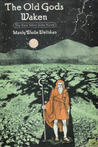
The Old Gods Waken by Manly Wade WellmanMy rating: 3 of 5 stars
While Silver John is staying with his friend Creed Forshay and Creed's son Luke, odd things start happening, odd things that seem to center on Forshay's new neighbors, two Englishmen named Brummitt and Hooper Voth. Can Silver John stop the Voth's from using Druidic magic to release an ancient evil?
Silver John is back in a full length novel. If you've read Who Fears the Devil, you know what to expect. The Old Gods Waken reads like an expanded version of a Silver John short story. All the things I liked about the Silver John short stories were here: Silver John himself, his bits of lore, and ancient evils lurking just around the corners of the Appalachian mountains.
The supporting cast was a little ahead of its time. Reuben Manco could have easily been a stereotypical Indian character and it was nice to see him mocking such stereotypes. Holly was a much stronger character than most female characters of the period, back when women in pulp stories were either victims or bait. The Voth brothers were suitably creepy and I loved how Wellman wove the Raven Mockers of Indian mythology into a story about druids.
It wasn't all roses and sunshine, though. I felt like parts of the story were a little on the convenient side and I didn't think the writing was as good as it was in the short stories in Who Fears the Devil.
Really, no big complaints. It was nice to read about Silver John again. I'd give it a 3.5 if I could.
Still on Goodreads
Monday, November 18, 2013
A Busy Spring in the 87th Precinct

Reviewed by James L. Thane
Three out of five stars
Spring finds the detectives of the 87th Precinct busy as usual. As the book opens, Detective Steve Carella has to deal with a beautiful young woman who decides she has nothing to live for and who has climbed out onto a ledge high above the street in her nightgown. She's ready to jump and in 1962, the PD doesn't yet have trained specialists to deal with a situation like this. Carella will do the best he can, but this really isn't his area of expertise.
Meanwhile, a hairbrush salesman is making his rounds. (Remember, it's 1962 when people other than the Girl Scouts apparently still sold things door-to-door.) The unsuspecting salesman rings the doorbell at an apartment which, unfortunately is filled with leaking natural gas. The electrical impulse from the bell touches off an explosion which blows the salesman and his hairbrushes all to hell.
When the dust settles, the police discover a man and a woman lying virtually naked in the bedroom dead from inhaling the gas. They also find a couple of empty Scotch bottles and a suicide note. But something seems off and most of the detectives believe that the deaths were really homicides.
Sadly, their investigation leads them nowhere. They discover some quirky facts about the case but nothing that absolutely disproves the apparent suicide and nothing that points the finger at a viable suspect. In the meantime, some unknown person has made it his hobby to periodically kick the crap out of Steve Carella, which does nothing to improve the detective's disposition. And unless the detectives catch a break soon, it appears that none of this will be resolved to anyone's satisfaction.
This is another very good entry in this series. As always, it's a pretty quick read and fans of the series are certain to enjoy it.
That is "Some Badass Pig"!
Charlotte's Web by E.B. WhiteReviewed by Jason Koivu
My rating: 5 of 5 stars
I don't give a fig if it is a kid's book, Charlotte's Web is one of the most well-crafted stories ever written. This classic children's tale deserves 5 stars for story craft and language usage alone! (Read your Strunk & White to understand this man's talents in that regard.) The fact that it's a heart-warmer/wrencher clinches it. Never was I made to love pigs and spiders so much in my life. Charlotte's Web will always rank high amongst my favorites. But why, for the love of god, did they make us watch the cartoon version of this tear-jerker in school? Did they want to make us weep embarrassingly in front of one another? If so, mission accomplished, you sadistic school district!
View all my reviews
Subscribe to:
Posts (Atom)