Monday, February 23, 2015

Whatever If America Turned Fascist?

The Plot Against AmericaThe Plot Against America by Philip Roth
Reviewed by Jason Koivu
My rating: 5 of 5 stars

Some said Philip Roth is the new messiah of modern writers. Philip Roth is overrated, said others.

So I read a couple of Roth's books, Exit Ghost and Everyman. With only those to go on, to me, Roth seemed like your typical aging curmudgeon. Nothing special, just an old man venting through literature his disgruntled annoyance at no longer being able to get an erection. I was ready to call it quits on him, but felt like maybe I should try one more.

So I read The Plot Against America. Boy, am I glad I did. What a joy!

Indeed, I enjoyed everything about this "what if", coming-of-age tale where horrors, both real and imagined, feed into and upon the novel's building tension. Horrors and the heart of a child. Childhood and the heart of a family. This is war vs. peace. The good, the bad and all that falls in between.

This is the story of a young Jewish boy growing up as American as can be in the New Jersey suburbs of the early 1940s. Germany is at war with the world. Hitler and his Nazis are at war with the Jews. President Roosevelt is campaigning for a 3rd term in office.

Then Roth throws a monkey wrench into the works, presenting an alternative universe where, instead of facing off with and defeating Wendell Willkie, FDR is confronted with and defeated by the intensely popular Charles Lindbergh. With their flyboy hero at America's helm, the isolationist Republicans as well as the Nazis themselves can use Lindbergh as a tool to meet their ends.

Aside from some fiddling with the Lindbergh baby history, that's about where the historical fiction ends. Lindbergh was an isolationist. He did occasionally let slip with an antisemitic remark. He did receive a medal from Goring on behalf of Hitler, and he did refuse to give it up. FDR did believe Charles Lindbergh to be a Nazi. Lindbergh's wife did privately wonder in her diary what the *bleeep!* her Swedish, Arian husband was thinking when he spouted anti Jewish nonsense.

There's so very much more that truly did happen, whether you believe it or not, which Roth includes in his novel, but I won't spoil the glorious tapestry that lavishly drapes the background of what is actually Philip Roth's childhood autobiography, at least a fictionalized recounting.

Much of The Plot Against America feels just like the movie Stand By Me. Boys being boys, having fun, experiencing life through youthful eyes, making mountains out of mole hills, and nearly getting buried beneath the true mountains. As a coming-of-age tale, you'll find few finer. Prior to reading this, I would've described Roth's work as Vonnegut-esque but without the humor. Here though, the humor - on occasions a bit dark - is in full throat and fine form. I love nothing more than connecting with human behavior via the stories of our interconnect childhoods. We were all young once and it is a pleasure to share that common ground. Roth shares his suburban American-Jewish upbringing at the height of Jewish persecution in the modern age and it is a joy to read.


View all my reviews

The Candy Man Can

Charlie and the Chocolate Factory (Charlie Bucket, #1)Charlie and the Chocolate Factory by Roald Dahl
Reviewed by Jason Koivu
My rating: 5 of 5 stars

I was ten years old and already the magic was gone from the Tooth Fairy, the Easter Bunny, leprechauns, Santa Claus and his buddy the Krampus. All was stripped of its power to enthrall. Heck, even sex had been demystified years prior.

Then along came Charlie and the Chocolate Factory. It gloried in candy, my number one passion of the day. But not only that, eating candy was the means to getting even MORE candy!

description

Ah, the golden ticket. How, oh, how I longed for it to be a real thing! I would've traded in a half dozen Christmasses for that.

For those few who haven't read the book or seen one of the movies, finding a golden ticket in a candy bar meant you got to visit Willy Wonka's mysterious chocolate factory, which had been closed to the public and rumored to be run by a madman.

Once poor-and-ever-so-grateful Charlie makes it inside the factory everything comes alive! The amazing sights, sounds, smells and tastes! The sky's the limit (quite literally we discover in the second book). Wonka's childlike imagination seems to know no bounds!

But then things turn a bit queer. One by one, the children invited into the factory start dropping off and in the most interesting of ways. This is a fight to the finish and it becomes clear that there can be only one!

I don't know what was better, the candy or the killing off of brats. Ah but to be serious, Charlie and the Chocolate Factory brought back the wonder and excitement of my earliest memories. Thank you Roald Dahl for giving me back magic, the sweetest gift of all.


View all my reviews

Saturday, February 21, 2015


 CITY OF STAIRS
Robert Jackson Bennett
Broadway Books 2014

Reviewed by carol

★    ★    ★    ★    ★ 


Read this.


I almost didn’t, wary of the disappointment an over- hyped book can bring. But once I started, it was very hard to put down (sorry, fellow jurors, for ignoring your social overtures during our breaks). Picked as a monthly read, I started right before being called for federal jury trial. At first, I was glad of the opportunity to get in some reading time–nothing better than sitting around reading as the gears of bureaucracy grind away–but imagine my dismay when I was picked. Suddenly my reading time dissipated like smoke. Still, a lunch hour here, a judge’s meeting there, and I was able to make serious progress, until I got far enough in the book (and the trial) that I sacrificed sleep for resolution.
A very quick synopsis, but don’t let it fool you. The complexity of the story is built well and is by no means a dizzying array of foreign place names and concepts:

The city of Bulikov has been conquered by the Saypur people, its powerful divinities killed or missing, and the history of its religion erased. Much like Greek and Indian gods, the Divinities of Bulikov were very present in their followers’ lives. Now, however, it has become taboo to worship, to even speak of the gods or to acknowledge the daily miracles they created for their followers. Shara is a covert operative who has come to Bulikov intending to discover why scholar Efrem Pangyui, who was researching various miracles and mysteries of the gods, has been murdered. In disguise as a new ambassador, she brings her faithful protector Sigrud with her. Shara’s Aunt Vinya is the Minister of Foreign Affairs and gives Shara one week to solve the murder before she needs to leave Bulikov for the next mission. As Shara investigates, not only does she have to confront the possibility that Restorationists in Bulikov are trying to overthrow the Saypur, she has to confront her own past.

Characterization is wonderful. The characters are complex, conflicted, with multiple motivations and loyalties. Even a brief interrogation of an elderly female maid had nuance. Questions are gradually built about Sigrud, at first a seemingly typical silent bodyguard character, until the reader is as curious about his history as Shara’s. It is also delightful to find an author who uses language well enough to imbue physical description with hints of the spirit. The first time we meet Ambassador Shara Thivani, the assistant sent to meet her notes: 

Pitry finds there is something off about her eyes… The giant’s gaze was incredibly, lifelessly still, but this woman’s eyes are the precise opposite: huge and soft and dark, like deep wells with many fish swimming in them. 

The woman smiles. The smile is neither pleasant nor unpleasant: it is a smile like fine silver plate, used for one occasion and polished and put away once finished.” 

The setting is primarily focused on the city of Bulikov and receives equally lavish description: 

The house of Votrov is one of the most modern homes in all of Bulikov, but you could never tell by looking at it: it is a massive, bulky, squat affair of dark gray stone and fragile buttresses… To Shara, who grew up seeing the slender, simplistic wood structures of the Saypur, it is a primitive, savage thing, not resembling a domicile as much as a malformed, aquatic polyp.” 

Like life, such a serious tale of conquered and conqueror is leavened with humor. Much is cynical, based on Shara’s sardonic nature and a friend’s irreverent one: 

“‘She gives him a taut, bitter grin. ‘And you’re still so smugly, blithely ignorant.’
‘Is it ignorance if you don’t care to know it?’
‘Yes. That is almost the definition of ignorance, actually.'”
 
What builds depth for me is Shara’s curiosity about the divinities and their cultural effects, as well my growing realization that no one here has the moral high ground. The Saypuri were the slaves of the Continentals until they rose up, and a hero killed one of the Continental gods. Now, the Saypuri keep the Continentals on a tight leash, hoping to prevent the return of their oppressors: 

While no Saypuri can go a day without thinking of how their ancestors lived in abysmal slavery, neither can they go an hour without wondering why. Why were they denied a god? What was the Continent blessed with protectors, with power, with tools and privileges that were never extended to Saypur? How could such a tremendous inequality be allowed? And while Saypuris may seem to the world to be a small, curious people of education and wealth, anyone who spends any time in Saypur soon comes to understand that in their hearts lives a cold rage that lends them a cruelty one would never expect. They call us godless, Saypuris occasionally say to one another, as if we had a choice.


Something about this reminds me of Guy Gavriel Kay in its finely balanced blend between personal and political, the past and present and love and family, all woven through with the miraculous and colored with lyrical language. 

I’ll be adding it to my library and looking for more from Bennett.


cross posted at my own blog at  https://clsiewert.wordpress.com/2015/02/06/city-of-stairs-by-robert-jackson-bennett-or-stairs-rising/

Friday, February 20, 2015

With or Without You

Lauren Sanders
Akashic Books
Reviewed by Nancy
4 out of 5 stars


Summary


Summer 1987. Lillian Ginger Speck, high-school graduate, sits in her jail cell contemplating the steps and missteps that led her to murder soap opera star Brooke Harrison in cold blood one bright and muggy New York afternoon. Lily had admired the young star for some time, and her loss is palpable. Her story is therefore part apologia, part love note and suicide pact. Meanwhile, Brooke Harrison’s mother has a tale of her own to tell. In this edgy and compelling “whydunit,” the accounts of predator and victim intertwine. The result is a wry exploration of the contemporary American melting pot of status, beauty, celebrity, violence, and obsession.

With or Without You combines the aching adolescent heart of The Catcher in the Rye with the dark suburban soul of The Great Gatsby—set against the starstruck voyeurism of American Idol. This book asks the quintessentially American question: Is life worth living if you can’t be famous?


My Review


“She stroked the back of my neck. I folded into her body and put my arms around her. She held me tight around my waist, moved her legs against mine, and there was her smell—the brandy, the hair dye, the powder—and there were her hands rubbing my back beneath the Delta T-shirt, her silk nightie soft against my cheek, and the motion, the rocking together as she hummed the angel song softly and wrapped me up slo-mo, tight as that string around her tea bag, and I had a vision or memory, I couldn’t tell the difference sometimes…”

I wonder if Lillian G. Speck’s life would have turned out differently if her next-door neighbor, stewardess, and friend, Blair, had not boarded a plane to Paris so shortly after her 13th birthday and never returned.

Lily’s brief friendship with Blair reminded me of my own friendship with Valerie, the 16-year-old daughter of the woman who used to sew most of my clothing and a few of my mom’s dresses. Valerie’s mom was amazingly talented. She always used high-quality materials and her garments fit so perfectly that no one in school knew my clothes were homemade. Though I could have done without the frilly dresses, I loved the green corduroy gauchos and hooded vest, the pink bellbottoms, and the colorful tunics that worked as a dress but easily went over a pair of shorts or pants.

The more time Valerie spent at our house, the closer I became to her. She was smart, funny, talented, and rebellious. Even though we were just 5 years apart, that length of time feels like an eternity when you’re just 11. She was my second girl crush (the first being my second grade teacher). Her long, golden hair, edgy clothing, and generous smile were a turn-on. While we lay in bed together listening to records or reading magazines, the warmth of her body and the scent of Coty Wild Musk made my head spin.

One day Valerie’s mom announced they were moving and that was the last I ever saw of them. My parents were indifferent to my pain, just as Lily’s parents were indifferent to hers.

Oh, how I wanted to hug Lily when Blair left.

I loved reading Lily’s story, starting with the morning after her crime on July 2, 1987, and ending in April 15, 1988, as she is reflecting on her actions. The story jumps back and forth a lot and the prose felt a little rambly at times, but the characters, dialogue, and setting felt very authentic. In between Lily’s accounts of her childhood and teen years (family, friends, loneliness, alienation), her gradual obsession with soap opera star Brooke Harrison, and prison life, we also get a glimpse of Brooke’s life, told from the perspective of Brooke’s mother.

Lily’s obsession with Brooke seemed to start shortly after Blair’s departure:

“He said it didn’t have to be people, but he liked that best. It was a way of keeping them with you even when they went away. And hearing those simple words I knew why I’d been struggling for three days to mix the browns and yellows and whites of your skin, knew I’d finally found a use for that sketchbook Blair had given me just before she left. Now both of you would be with me always.”
and
“You were the first person since Blair who really knew my mind. But you were having a tough time in Hollywood and just like Blair you needed someone to look out for you: I was up for the job. The first step was getting to know each other privately, until I could leave home and become famous. We needed to be on equal footing in the outside world.”

Lily’s friend, Edie, was on a mission to rid Lily of her virginity. Lily was concerned about falling behind on her favorite soap opera and had no idea how to tell Edie that Brooke was her priority.

“How was I supposed to tell her you were more important than anything I’d find outside? Even a de-virginizer. Someone I’d never even met. Our philosophies were totally opposed.”

Overall, I liked spending time with Lily and getting to know her. Her story was told with warmth, humor, intelligence, and honesty. In many ways, she was a likable character and easy to relate to. In others, she made me realize how fine that line is between an adolescent celebrity crush and unhealthy obsession.

*Review copy provided by Akashic Books.

Tuesday, February 17, 2015

Funny Guy Eats Food, Gets Fat

Food: A Love Story by Jim Gaffigan
2014
Reviewed by Diane K.M.
My rating: 3 out of 5 stars

Warning: Do not read this book when you are hungry. The discussions of pizza, cheeseburgers, bacon, doughnuts, steak, and all kinds of yummy foods could break your diet.

Comedian Jim Gaffigan loves food and talks a lot about it in his standup routines, including his popular bit on Hot Pockets. This fun book talks about the different foods he likes and dislikes, and his favorite restaurants around the United States. I was tickled to note that I had eaten at a few of the places he mentioned, and filed away other recommendations for future trips. 

He has a good sense of humor about being overweight, and says he never takes food or restaurant advice from a skinny person because they aren't passionate enough about food to overdo it. He also takes issue with the dieters' claim that Nothing tastes as good as thin feels. "I for one can think of a thousand things that taste better than thin feels. Many of them are two-word phrases that end with cheese. Even unsalted French fries taste better than thin feels."

I think my favorite section in the book is when he shows a map of the U.S. and has divided it into different food sections, such as Coffeeland in the Northwest, Seabugland in the Northeast, Steakland in the Plains, Wineland in Northern California, Mexican Food land in the Southwest, Super Bowl Food land in the Midwest, etc. He reserves the distinctive name "Food Anxiety Land" for New Orleans, because the food there is so good and he whenever he visits he panics because he feels he never has enough time to eat enough of their delicious food.

I also liked that Gaffigan doesn't call himself a foodie; instead, he prefers the term "eatie."

"I don't have anything against foodies. I appreciate their love of food and I envy their knowledge and culinary escapades, but I'm generally satisfied with what I've been eating. Foodies seem to be on a never-ending search for new restaurants and interesting dishes. I don't have an insatiable desire to discover what makes something taste good or to find exotic combinations ... There is plenty of regular food I still want to enjoy."

This is an amusing and enjoyable book and I frequently laughed out loud while reading it. I recognized some parts from his standup routine, but it was still funny in print. My one criticism is that it is a bit long for a humor book — it's more than 350 pages. It was my mistake that I tried to read it straight through, when it's better to give comedy a little time to breathe, like wine. Trying to gulp a humor book down in one sitting means it will get repetitive and taste like slop. However, I would still recommend this to anyone who likes Gaffigan's humor or who also likes American food; just don't try to imbibe it all at once.

Now if you will excuse me, I need to go order some pizza.

The Secret History

The Secret HistoryThe Secret History by Donna Tartt
My rating: 4 of 5 stars

When Richard Papen joins an exclusive group of Classics students, he has no idea of the secret world of drugs, alcohol, and violence he's about to be thrust into. When one of the students winds up dead, can the rest cope or destroy themselves?

Yeah, it sounds like the crime books I usually read but it's a whole lot deeper than that. This is one of those Big Important Books, full of things like themes and literary references. Like Jim Thompson getting the sauce under control and writing about college kids.

While Donna Tartt tarts it up a bit, the plot is straight out of the noir playbook. Rich kids get in trouble, cover up a murder, commit another murder to cover up that one, and continue down the path of self-destruction. Fortunately, Donna Tartt can write the shit out of things and the whole is much greater than the sum of its parts.

The characters and the writing set it apart from many similar books. The characters were a well-realized bunch of overly-privileged college brats and their disintegration was very well done. Tartt's writing was several notches beyond what I expected.

That being said, I did not love this book hard enough to crush it to death against my manly chest. While the writing was good, it took forever for things to actually happen. I thought it was well done but I'm not precisely sure I actually liked it. Another thing about it that didn't set my world on fire is that I've recently read The Likeness and felt it was a little too soon to read about such a similar group of asshole college kids.

All things considered, I guess I was enraptured enough to give this a four. It was good but probably overwritten for what it was.

View all my reviews

Monday, February 16, 2015


Reviewed by James L. Thane
Five out of five stars

This is a classic hard-boiled novel, the first book in a series that would ultimately run to twenty-four books published between 1962 and 2008. The series featured a brutal, smart, amoral professional criminal known only as Parker who worked with crews of other professional criminals and usually focused on robbing banks, armored cars or other such targets. Parker was not a professional killer, although he never balked at killing anyone who got in the way of the job at hand.

He also never hesitated to kill anyone who double-crossed him, and as the book and the series open, Parker has been double-crossed in the worst possible way, shot by his wife at the end of a job and left for dead. The wife then ran off with one of Parker's partners from the job, along with Parker's share of the loot. Needless to say, Parker, who luckily survived the attempt on his life, is not in a good mood when we first meet him, and Stark's introduction of his protagonist ranks as one of the best in crime fiction.

Pissed at the world and determined to get revenge, Parker is stalking across the George Washington Bridge into New York City, a "big and shaggy" man, with "flat square shoulders and arms too long in sleeves too short....His face was a chipped chunk of concrete, with eyes of flawed onyx. His mouth was a quick stroke, bloodless."

"Office women in passing cars looked at him and felt vibrations above their nylons....They knew he was a bastard, they knew his big hands were born to slap with, they knew his face would never break into a smile when he looked at a woman. They knew what he was, they thanked God for their husbands, and still they shivered. Because they knew how he would fall on a woman in the night. Like a tree."

Parker has traced his wife to New York and arrived there virtually penniless. He's determined to deal with her and, through her, to find the partner who betrayed him and stole the money that was Parker's share of the job they had pulled.

It won't be easy, and complications ensue, one after the other. But Parker will not be deterred, even when he learns that the man who betrayed him has used his money to repay a debt to the Outfit and is now protected by them. To get his revenge, Parker will have to take on the Outfit all by himself. But what the hell does he care; he won't rest until he gets what he's owed.

Richard Stark is the pen name of Donald Westlake, a prolific writer who is otherwise best known for the comedic Dortmunder crime novels that he wrote under his own name. But the Parker novels are really his crowing achievement. They are taut, spare stories cut close to the bone and without a wasted word. And there's absolutely nothing funny or redemptive about them. Parker's is a tough, brutal and dangerous world; there's no room for any sentimental nonsense and watching him make his way through that world is one of the most enjoyable experiences in the world of crime fiction.

As a side note, this book was ultimately filmed twice, once as "Point Blank," in 1967, starring Lee Marvin as Parker, and again in 1999, as "The Hunter," with Mel Gibson in the role. The Lee Marvin Version is much the better of the two, and Marvin captures the character about as well as anyone could.
  

Going Back To The Old School

Players Handbook (Advanced Dungeons & Dragons Core Rulebook)Players Handbook by Gary Gygax
Reviewed by Jason Koivu
My rating: 4 of 5 stars

Tired of being a boring accountant or a lowly sales rep at a big box chain store? The cube farm got ya down? Well, open up the Players Handbook and turn yourself into a wizard or assassin! Come on, grow a pair!...A pair of pointy ears and become an elf! Sick of being 7' tall? Try a dwarf's skin on for size! The sky's the limit when you jump into the world of Dungeons & Dragons!

Okay, let's be honest, your own imagination is the real limit. TSR, the company that made D&D, put out this game and created books like this one, which gave gamers pretty much all they'd need to create worlds of fantastical fun. How far you took that fun and ran with it was entirely up to you.

The Players Handbook was the book the players used to create their characters in preparation for the game. Honestly, I had just as much fun creating characters as I did in playing the actual game. You were giving birth to potential, creating an alternate you! How exciting is that?!

Character creation usually started with the player picking what class (profession) and race they wanted to be. Let's start with race...

At this point in the game's history, round about 1980, D&D had on offer humans, elves, dwarves, halflings, gnomes, half-elves (a human/elf mix) and half-orcs (a human/orc mix).

description

Because orcs are generally evil beings, it was assumed that the half-orc was the result of orc-on-human rape, to put it bluntly. So, you can see why years later - especially after the game was attacked in the early '80s as Satanic by Bible thumpers - D&D removed the half-orc race from the game as a character option.

Some people really cared about race. By which I mean, they REALLY wanted to be elves. I wasn't very particular about what race I was. Lord of the Rings was my first intro into fantasy, so I was a big fan of hobbits, which were called halflings in D&D to avoid a lawsuit from the Tolkien family one assumes. The problem with halflings and most non-human races was that there was a limit to how far they could advance in level, which was the measuring stick for the experience, knowledge and skill you obtained while adventuring. These ethnic limitations could be seen as racist, quite frankly. That's right, I just called D&D racist. Seriously though, I never really did understand why they put a cap on it. If any players know, please fill me in.

The other main character factor, and usually more important to players than race, was what class you wanted to be. Class was the term used in D&D for what adventuring profession you chose. It didn't matter if you flunked out of high school. You didn't need a degree to become a cleric, druid, fighter, paladin, ranger, magic-user, illusionist, thief, assassin, or monk.

I'd be embarrassed to know how much of my young life I spent in wonderful agony trying to decide which class to choose, as well as creating characters that I knew damn well would never be used in a game. Holy hell did I love this part of the game!

I was quite young when I first started playing D&D, 9 years old, I believe. I played with older kids, who knew what they were doing. They got to play the difficult (and fun) classes, like the wizards and thieves. I played the simple ones, the warriors and priests. The warriors hacked and slashed the monsters with weapons. The priests generally sat back and healed the wounded. There wasn't a lot of intricacies going on there for me in the early going. Later I got to play a paladin, a noble knight with the power to heal. This character is the ultimate in angelic goodness. To be a paladin you really have to want to stand high on that pedestal of moral incorruptibility. It was a full-time crusade against the demons and devils of the underworld as well as the evil-doers blighting the earth.

description

The assassin and monk classes were late-comers to the game. They were also early-exiters. When Dungeon's and Dragons popularity soared, so did the flack TSR caught for its more evil and violent nature. Assassins being people who exist solely to terminate life, didn't set well with some gamers' moms. I guess TSR figured the thief class was besmirching their good name enough already.

description
Look at that happy, shirtless thief! If it said "7-11" above that door it would totally remind me of my days living in LA!

I think the monk got the can, because his skills unbalanced the game. He was not a holy man, but rather styled more like the fighting Shaolin monks. It was all about the martial arts with these monks. They could mess monsters up six ways to Sunday.

OH! One more class before we move on! The bard. This musician-adventurer was such a late-comer to this edition of D&D that he was included in the appendixes at the back of the book. The bard was a combination of fighter, thief, and druid (nature-based spell caster) who played an instrument with magical affect. Oh yes, and he/she also automatically acquired new languages when advancing every few levels. This jack-of-all-trades-master-of-none was such a ridiculous hodge-podge of a character that some dungeon masters (the game referee) refused to allow it in the game. The less said about the bard, the better.

description

Most people chose a class suitable to their skill scores, aka ability scores. What the hell am I talking about? Well now, this is the really fun...and the really frustrating part of character creation. Each character has a set of abilities: Strength, Intelligence, Wisdom, Dexterity, Constitution, Charisma. These were the physical and mental make up of your character. Your score on each determined your skill level in that area and usually determined what class you'd pick. The ability score was determined by a random roll of dice. That's where the frustration part comes in. With six categories to roll for, seldom did you end up with an across-the-board killer character. Usually you'd get one or two good scores but get stuck with a couple really low scores, or worse, all your scores were average, meaning you weren't really good for anything.

A lot of ability score fudging went on. I played with one kid who flat out gave his character maximum scores in all categories and told me with a straight face that he'd rolled it up that way. There's "dumb" luck and then there's "What, do you think I'm an idiot?" luck. We only played together the one time. I mean come on, I understand getting a little creative or allowing the occasional do-over, but this kid had basically plugged in his NES Game Genie, beat the game on invincibility mode and tried to pass it off as pure skill.

Okay, now that you had the basics of who and what your character was, it was time to kit him/her out with weapons, armor and provisions. The Players Handbook had all that covered with prices included. Oh yeah, you had to pay for this shit, my friend.

Here's an instance where the game got a little more complicated than necessary, in my opinion. Honestly, who needs to know the speed factor of a club or how much space is needed to wield a fauchard-fork…and what the hell is a fauchard-fork anyway? Some players gobbled up such roleplaying minutia. Not me. Incorporating that crap slowed the game down considerably. Sure, when I got older and became the dungeon master, I tried to keep things realistic and used common sense for plausibility's sake ("No, you may not light that on fire, it's under water."), but I seldom referred to the rules. I knew them pretty well, but for things that really didn't matter that much in the grand scheme of things, I'd just wing it.

description

One of the best parts of playing Dungeons & Dragons was casting some of the wicked awesome spells the game makers came up with. Half of this book is just about spells. Pages and pages are filled with full and fun descriptions on the different kinds, what they do, how to cast them, and sometimes what you needed to cast them.

Firing off fireballs was always everyone's favorite and often first choice, but lordy, D&D gave you so many other options with spells like Invisibility, Lightning Bolt, Mirror Image, Shocking Grasp, Charm, Web, Conjure Animals, Wall of Fire/Ice/Stone/Iron, Hypnotize, Exorcise, Polymorph, Regeneration, Fly, Wish, Monster Summoning, Disintegrate, Speak with Dead and Raise the Dead. That last one might seem a little sinister, but boy did it come in handy when your pals went down.

description

My favorite instance of creative spell use came from my cousin Jeremiah, who was quite young at the time. He was playing a druid and the group he was with was getting their butts handed to them by an evil giant who'd already pounded one character into the ground. Miah told me he wanted to turn himself into a hummingbird and fly into the giant's ear to peck at its eardrum. You're not going to find that one in the rulebook! I had to allow it, I mean, the kid came up with a such great and fun idea, of course I was going to make it work. I rolled dice to fake that I was checking to see if his plan worked and let him know that he'd successfully flown in and distracted the giant, which gave his group the opportunity to recover and take it down. Miah was playing with his older cousins (just like me back in my early days) and was often ignored, making his input minimal, so this was probably his most proud moment.

The Players Handbook was absolutely indispensable if you wanted to play the game. All the same, it could sometimes be more practical than engrossing. For instance, it seemed to have endless lists, tables and charts. Hell, if you needed to know how much a chicken cost, there's a list of livestock with prices. Btw, the going rate was three copper coins. Granted, the game might not hinge on the rise and fall of the fowl market, but such details definitely added more depth to the layers of imagination Dungeons and Dragons could potentially suck you into...while providing more information than any player would ever really need.

Oh, before I go, I would be remiss if I didn't mention the book's iconic cover, which caused me to add gem-eyed statues to more than a few of my own adventures. The artwork within varied in quality, but that Caravaggio-esque cover - with one of the most realistic depictions of the dungeon crawl in action - kicked many kinds of ass! The image is so well known, it's spawned more than a few mock-ups...

descriptiondescription

View all my reviews

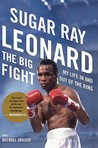
Sugar Ray And The Sweet Science

The Big Fight: My Life In and Out of the RingThe Big Fight: My Life In and Out of the Ring by Sugar Ray Leonard
Reviewed by Jason Koivu
My rating: 4 of 5 stars

Boxing champ Sugar Ray Leonard KOs the squeaky-clean image that made him famous in his revealing autobiography The Big Fight: My Life In and Out of the Ring.

description

Beginning with his tough childhood in a rough city suburb, the book moves through his triumphant gold medal Olympic performance and into an unintended pro career peppered with the pitfalls of fame, which constantly threatened his personal and professional life.

description

Some passages could be longer and segues occasionally misfire; however, even those scenes that fail to deliver the expected punch at least provide interesting anecdotes from a life filled with high contrasts. Boxing fans will enjoy the many colorful reminiscences of his former bouts against such luminaries as...

Roberto Durán
description

Tommy "The Hitman" Hearns
description

"Marvelous" Marvin Hagler
description

Leonard details the strategies he used to defeat his opponents in the ring, but by the end of the book you realize his biggest opponent was always himself.

View all my reviews

Saturday, February 14, 2015

We aren't in London Anymore

FOXGLOVE SUMMER
Ben Aaronovitch
Gollancz 2014

reviewed by carol

★    ★    ★    ★    1/2


I haven’t yet been able to review a Peter Grant book immediately after finishing. I suppose I’m basking in book afterglow. Once again, Aaronovitch writes an engrossing, unpredictable urban fantasy, perhaps his best yet.
A good story, a generous sprinkling of dark police humor, decent police procedural all combine for a read that fully occupied my Sunday afternoon. 

Chuckles as I started:

Sarcasm about family:
“I sighed–policing would be so much easier if people didn’t have concerned relatives. The murder rate would be much lower, for one thing.”

About procedure:
‘I’m fairly certain you’re violating our human rights here,’ she said.
‘No,’ I said with the absolute certainty of a man who’d taken a moment to look up the relevant legislation before leaving home.”


About official-speak:
“I made a mental note to wheedle the list of old codgers out of Nightengale and get it properly sorted into a database. Hugh’s ‘grapevine’ might be a useful source of information. If I’d been about four ranks higher up the heirarchy I’d have regarded it as an opportunity to realise additional intelligence assets through enhanced stakeholder engagement. But I’m just a constable so I didn’t.”

Okay, maybe that’s not that funny. I thought so, but then I’m the sort to read the corporate bulletins, marveling at the abuse of language.

What I really love about Aaronovich–srsly, now–is that he brings a much looked for but seldom found level of social commentary to his urban fantasy. Grant has dark skin, and is painfully obvious out in the posh suburbs. At one point, there’s a nice little aside when he notes the casual joking racism from an officer he’s just met. He considers his normal snide comment, half laughing, half calling it out but then decides to let it go with the assumption that the officer wouldn’t even recognize the rebuke. I’m always impressed the way Aaronovich weaves multiculturalism into his tales, in the most ideal of ways: acknowledging a different cultural experience, but not fetishizing it or diminutizing the truth of the experience. Grant understands the because he is a dark-skinned copper he will end up being ‘poster boy’ for the investigation. There’s a world of cynicism, weariness and acceptance in the role he plays for the suburban police. 

Grant has his own prejudices about the country, partly because he feels so out of his element, only going into the country when required on school trips.
The air was still fresh but the sun was already sucking up the moisture from the fields and you didn’t need to be chewing on a straw to know it was going to be another hot day.”

There’s also writing that is nicely balanced between description and action, occasionally even making a foray into lyricism:
The pack [of reporters] has swept back into the village less than ten minutes after they’d left, and come boiling up the cul-de-sac like the return of a tide, licking at my heels as I ran up the path and only stopping at the hedge line because it was held by a special constable called Sally Donnahyde who was a primary school teacher in her other job and so wasn’t going to take any lip from a bunch of journalists. The kitchen was at the back of the house, but I could still here them as a restless murmur, like surf on a pebble beach.”

Oh yes, I liked the mystery, one of the most coherent storylines yet. The supernatural take is interesting, even if it comes to a somewhat familiar ending, but I appreciate the modern twist. It did trouble me somewhat that this might be a plot point that comes back to bite Peter in the butt, which led to unpleasant echoes of Dresden. But again, that’s what fairy tales and mythology is about, putting the storyteller’s spin on a cultural archetype.

Characterization is decent, with the majority of time spent on Peter. I don’t mind; he’s an interesting, thoughtful lead. I came to like his country partner. This time, Beverly Brook’s role seemed appropriate and a little more fleshed out, if still slightly incoherent (must she always speak in riddles? must we have weird watery dalliances?) 

In a rare moment for me, I would have liked a little more punctuation; at times it takes a minute to figure out the inflection (see above quote). But that’s a stylistic quibble.

The ending, perhaps, was almost the least satisfying part of the story. Oh, don’t worry; everything wraps up nicely with no nasty cliffhangers, except that giant multi-book arc that’s going on. No, it is that the ending seemed a little too cinematic, and meant to appeal to the current UF reader, instead of being more character consistent. But that’s me, and I’d be happy to discuss below with spoiler tags.
Still, Peter Grant remains one of the most consistently satisfying UF series out there, and I remain committed to reading whatever Aaronovitch releases.

Four and a half country stars

from my blog at  https://clsiewert.wordpress.com/2014/12/17/foxglove-summer-by-ben-aaronovich/