Wednesday, December 19, 2018

Salem's Lot by Stephen King

Salem's LotSalem's Lot by Stephen King
My rating: 5 of 5 stars

 photo Salems-Lot-Barlow_zpskagsbdny.jpg
From the 1979 movie version of Salem’s Lot

”It would be years before I would hear Alfred Bester’s axiom ‘the book is the boss,’ but I didn’t need to; I learned it for myself writing the novel that eventually became Salem’s Lot. Of course, the writer can impose control; it’s just a really shitty idea. Writing controlled fiction is called ‘plotting.’ Buckling your seatbelt and letting the story take over, however...that is called ‘storytelling.’ Storytelling is as natural as breathing; plotting is the literary version of artificial respiration.”

This nugget of wisdom is shared by Stephen King in the introduction to the 2005 illustrated edition of Salem’s Lot. I have to say that I completely agree with this philosophy. I have talked to many would-be writers who are so bogged down in getting the outline of their story completely figured out that they never actually get to the writing part of the process. I like having a few concepts in my head before I start whacking away at that mesmerizing whiteness of the blank page, but if I have it all figured out,...then why write it? The fun part is discovering the nuances of the maze before I find the exit.

Stephen King grew up in a small town in New England, and it seems like he has been waging war on small towns every since. ”There’s little good in sedentary small towns. Mostly indifference spiced with an occasional vapid evil--or worse, a conscious one. I believe Thomas Wolfe wrote about seven pounds of literature about that.” I, too, grew up in a small town and fully intend, in the scope of my writing, to eviscerate some of the more heinous aspects of small town “values.”

I love Paul Bettany’s line from the movie Knight’s Tale. Chaucer: “I will eviscerate you in fiction. Every pimple, every character flaw. I was naked for a day; you will be naked for eternity.” I always like to say that my career is littered with the corpses of my enemies.(Hyperbole) Just a word of warning for those still breathing: I will reveal you for the bloody bastards/bitches you are in my fiction. If you think it isn’t you...it probably is. #evillaughwahaha

Jerusalem’s Lot is that typical small town that King loves to destroy on a regular basis, and this time his weapon is...vampires. The Marsten House, the scene of unspeakable tragedies, has been left empty for many years. It is a grand mansion falling into ruin by the very evilness that seems to fester in the walls and the rafters clear down to the bedrock. Ben Mears has come back to town to write about the place and intends to actually stay on the premises, but learns on his arrival that the house has been sold. Who would really want to stay there anyway? ”The house smelled. You wouldn’t believe how it smelled. Mildew and upholstery rot and a kind of rancid smell like butter that had gone over. And living things--rats or woodchucks or whatever else that had been nesting in the walls or hibernating in the cellar. A yellow, wet smell.”

The Marsten House is the perfect place for a vampire named Barlow and his assistant R. T. Straker to take up residence. The first clue should have been the initials; remember Dracula’s assistant...R. M. Renfield. The one word name as well...Barlow…. What does he think—he is Prince?

Yes, he does, and much, much more. He is, ultimately, a God fashioning people in his own image.

As Barlow picks off the residents of Jerusalem's Lot one by one and turns them into an army of hungry vampires, a small band of misfits start to fight back. After all, who else, but the freaks and oddballs would believe that there really are vampires? ”An old teacher half-cracked with books, a writer obsessed with his childhood nightmares, a little boy who has taken a postgraduate course in vampire lore from the films and the modern penny-dreadfuls.”

Barlow has certainly had better men and women than these who have tried to destroy him. He has become overconfident and underestimates the courage and resolve of this disenfranchised band of eccentrics he is dealing with. Check out this condescending speech he lays on Ben Mears:

”Look and see me, puny man. Look upon Barlow, who has passed the centuries as you have passed hours before a fireplace with a book. Look and see the great creature of the night whom you would slay with your miserable little stick. Look upon me, scribbler. I have written in human lives, and blood has been my ink. Look upon me and despair!”

No one is more shocked than Stephen King that his idea for a vampire hoard destroying one of his loathed small towns turns into an inspiring, uplifting novel of the weak fighting back against the most powerful. It is a slow burn of a plot. King uses the early pages of the novel to let us get to know these people before we see them tested beyond normal human endurance. Fortunately, his working title of Second Coming was vetoed for the published title by his wife Tabitha who, rightly so, decided it would be a better title for a sex manual. It is a nice ode to the classic vampire myth and manages to add some original stake splattering moments to the genre. Salem’s Lot has become a classic of fanged literature. King proves his storytelling chops.

If you wish to see more of my most recent book and movie reviews, visit http://www.jeffreykeeten.com
I also have a Facebook blogger page at: https://www.facebook.com/JeffreyKeeten

View all my reviews

Monday, December 17, 2018

A Memoir for Dratch Fans

Girl Walks into a Bar . . .: Comedy Calamities, Dating Disasters, and a Midlife MiracleGirl Walks into a Bar . . .: Comedy Calamities, Dating Disasters, and a Midlife Miracle by Rachel Dratch
Reviewed by Jason Koivu
My rating: 4 of 5 stars

I can understand why Rachel Dratch isn't beloved by the masses and getting lead roles in blockbuster rom-coms. I get that. But the woman tickles my funnybone and that's all that matters to me!

Perhaps it's partly that we're both from Massachusetts and I can't help but root for a hometown gal, but really what I really love is her off-beat humor and those out-of-left-field characters she's known for.

description
Qrplt*xk, the mutant offspring of Angelina Jolie and her brother

If you're not a Dratch fan why are you here? This is not the book for you. If you're hoping for some SNL insights, yeah, you'll get some in Girl Walks into a Bar, but they're limited to her experiences on the show and she doesn't do a lot of dirt-dishing. She is great at framing a story and she's got plenty of showbiz tales to tell. The first third of the book is about her journey up to SNL and the "What happened with 30 Rock?" aftermath. That is topnotch, fun stuff! Very well-written and performed on the audiobook.

The later two-thirds take on a much more personal tone and the subject matter veers off on another course. I'm being vague as not to spoil the content for potential readers. Suffice to say, if you're a Dratch fan, this second movement of the autobio should retain your interest. If you're not a fan, it'll probably be hit-or-miss whether or not you're interested in the specific topic(s) she dwells upon. I'll go so far as to say it's heavily relationship related.

The wife and I listened to this over the course of three long car rides and we enjoyed it so much we were actually looking forward to jumping back in the car asap!

View all my reviews

Friday, December 14, 2018

Haring


Alexandra Kolossa
Taschen Books
Reviewed by Nancy
5 out of 5 stars


Summary


By the time of his death from AIDS at the age of 31, Keith Haring (1958-1990) was already a wildly successful and popular artist. Haring's original and instantly recognizable style, full of thick black lines, bold colors, and graffiti-inspired cartoon-like figures, won him the appreciation of both the art world and the general public; his work appeared simultaneously on T-shirts, gallery walls, and public murals. In 1986, Haring founded Pop Shop, a boutique in New York's SoHo selling Haring-designed memorabilia, to benefit charities and help bring his work closer to the public and especially street kids, with whom he never lost contact.


My Review


“I live every day as if it were the last. I love life.”― Keith Haring, 1987

This is a lovely book and a wonderful introduction to the work of Keith Haring. If you read John Gruen’s biography of the artist and found it lacking in artistic analysis, this book is the perfect companion. Reading both books will provide a full picture of the artist and the man.

I would like to time travel to 1982 to see the Keith Haring exhibition at the Tony Shafrazi Gallery in New York, which was given a two-page spread on pages 25 and 26. At that time, I was not yet familiar with the artist’s work. It wasn’t until the late 80’s when I got to know his powerful AIDS-themed works.

I love Haring’s versatility. Starting out with chalk drawings in subway he moved on to a wide variety of surfaces, creating complex designs that were bold, colorful and energetic.

Keith Haring was an artist for the people. Though public recognition was important to him, acceptance by museums was a lot slower in coming. It wasn’t until after his death that his work was shown in major exhibitions.

“Everything happens for a reason. And I’m sure everything always happens at the right time and in the right place.”
― Keith Haring, 1987

The illustrations are well organized and the text is easy on the eyes. This is a worthy addition to any art library.

Thursday, December 13, 2018

Servant of the Crown

Servant of the Crown (Heir to the Crown #1)Servant of the Crown by Paul J. Bennett
My rating: 3 of 5 stars

Gerald is an old soldier who finds himself banished from the army, scapegoated, and nearly executed if not for the influence of his lifelong friend the Baron of Bodden. Instead he's sent away to work at a royal estate that rarely sees visitors. Gerald meets a young girl with an enormous secret and treats her largely like a daughter. This relationship changes life for him forever.

Servant of the Crown is a touching story about friendship, loyalty, and politics. I kind of wish I knew that before I picked it up because I was expecting a story about warfare. This isn't the kind of book I would have chosen to read if I knew what to expect. The story is light on battles, but has a lot of heart.

Gerald and Anna's relationship is a happy tear inducing drama. They're both alone. Each is without a family and they become that for one another. Gerald gets to help raise Anna like the daughter that he lost and Anna gets a father figure with the utmost integrity. I felt bad for Gerald overall, but it seems Anna got a better deal having Royal power along with Gerald as her father figure.

Servant of the Crown is a nice story.

2.5 out of 5 stars

I received this ARC from NetGalley in exchange for an honest review.

View all my reviews

Wednesday, December 12, 2018

WILL WORK FOR DRUGS BY LYDIA LUNCH

Will Work for DrugsWill Work for Drugs by Lydia Lunch
My rating: 4 of 5 stars

”But I’m too far gone now, too fucked up, too ill spent to really carry through. Shot to shit and forced to struggle against it. Broken down, battered. Used too much up. Nothing left inside my angel’s saving graces, that busted little cherub with dirty feet and greasy wings whose tender ruby-rich kisses have resuscitated so many burning embers and dying remains that I have become a mortician’s reanimator, stuck forever in a purgatory that so many dying men have come to rub their poison against.

Even my breath has become toxic. An aerosol taint of glue, sugar water, paint fumes, dead roses, and runoff. But young boys don’t know that yet. Don’t see it, can’t smell my true essence over the sweat of their own passion. Over the smell of their own vinegar, saltwater taffy, dirty towels, steam heat. They wouldn’t recognize it even if they did.”


 photo IMG_2247_zpseinraxpl.jpg


I knew vaguely of her existence, but I never really saw her until she showed up to have lunch with Anthony Bourdain on what would turn out to be the last episode of Parts Unknown. We see people all the time. We may even read their books or watch their TV shows or catch them in a movie, but we don’t always SEE them. So when I say I “saw her,” I mean that I finally created space in my brain for her. She is part of the Jeffrey D. Keeten universe now. If Lydia Lunch were to read this, she would probably kick me in the nuts, tell me to Fuck off, and be mildly offended that in 2018 I’m finally acknowledging her existence. Violence, profanity, and a marshmallow center are all part of the essence of Lydia Lunch.

She was born Lydia Anne Koch, but that name really doesn’t mean anything. The name Lydia Lunch means something because she earned it. She got the name because she stole food to feed her friends. People would see Lydia coming and know that lunch was coming with her.

I will contest her statement in the opening quote that she is “shot to shit.” I don’t believe it for one second. She might be tired, but after watching numerous clips of her talking about numerous subjects, she is far from worn out. Her soul has been on the verge of drowning, but her indomitable spirit, I’m convinced, will always breaks the surface of the water. Even shipwrecked deep at sea, somehow she will wash up on shore.

When she was twelve, she was living with her pathetic dad, who liked to have his buddies over for poker night. ”By 9:15 they were all shit-faced. Drunk as fuck and squealing like the insufferable sex pigs that they were. I was forced to play waitress, barkeep, and Barbie doll. Keep their busted cups full of rotgut, the pickled pigs feet coming, the corn dogs warm, and smile like I meant it. Yeah, right...Give me something to smile about, assholes.”

The scene only deteriorated from there, after her father ran out of money, but even amongst the barbarity of this situation, she related the impending nightmare with threads of humor that made me feel uncomfortable. Hmmm, Lydia Lunch making people feel uncomfortable. That would be her stock in trade.

 photo Lydia20Lunch20Smiling_zpsjzbojh56.jpg
I had to look through a lot of pictures to find one of Lydia really smiling or is this the fake smile? The wattage is dazzling.


In the back of the book, she conducted some interviews with several writers, but the two I really enjoyed were her discussions with her friends Hubert Selby Jr. and Nick Tosches. Selby discussed why it took so long, ten years, for him to write his book The Willow Tree. Some writers reading this might really identify. ”I’d write for a few weeks, then one day I’d get up to go inside and write and I’d get close to the door, but something would just pick me up and throw me out of the room.” The writing spirits had deemed him unworthy or at least in the wrong frame of mind. As if to say, come back when you are really serious, Selby! Don’t waste our time!

Writers take note of the following exchange:

Lydia Lunch: “What is a year overdue?”

Nick Tosches: “Garbage, complete, wretched, DRECK. I have to do two magazine stories, and then a book, and it’s all wretched dreck and I just need to work my way out to freedom. If I had the money I would just give everybody their money back and not do any of it. It’s too much.”

There was so much to unpack in this brief exchange. First of all, there was no way Tosches would be comfortable enough to be this honest with a normal reviewer but, given that he knew Lydia, she would truly understand that what he was talking about liberated him to just lay all his fears and anxiety right out on the cigarette scarred and wine stained table. Writers get asked to do projects they don’t want to do, as do most people in all professions. Writers are sometimes so desperate for money or validation that even a small roll of dough dangling before them will be too much of a temptation to resist. Nick freely admitted he was not the right writer for these projects, and then he was drowning in his own feelings of inadequacy.

The additional problem was that, with these projects hanging over his head, it was impossible for him to do the writing he wanted to do as well. The use of the word freedom resonated with me. He gave up his freedom, maybe too cheaply, and is now steeped in regret. So the moral of the story for writers is be careful about accepting money for projects for which they are ill suited. You know your capabilities better than the people offering the money, so don’t trap yourself in a project you are going to hate. On the other hand, if you are starving, take the fucking money.

This is a slender volume, and yet I could go on and on about about so many more things I found fascinating to think about. Keying on Elton John’s suggestion to get rid of all religions to have a chance at world peace, she took that thought a step further and suggested we should get rid of God. In typical Lydia fashion, cut the head off, not the tail. She made a very compelling argument. There are purple prose that feel over the top, but yet coming from her, they are merely part of her persona, and it would be unnatural for her thoughts to come at us any other way than as red hot, shotgun pellets that burrow and burn their way to the bone. ”An abstract portrait rendered in spunk.”

 photo Lydia20Lunch20Cigarette_zpsjxw8jdvv.jpg


This book will be too much for most of you. You’ll have all kinds of reasons not to like it. The book is uncomfortable, exaggerated, self-indulgent, criminal, and oh my goodness, a woman being very unlady like.

”We, especially as women, need to insist upon our Pleasure.

Demand our Pleasure.”


You may not understand her, but don’t try to marginalize her. You’ll get BURNED! Writer, photographer, actress, food provider, and musician who is still trying to make sense of a fucked up world.

If you wish to see more of my most recent book and movie reviews, visit http://www.jeffreykeeten.com
I also have a Facebook blogger page at: https://www.facebook.com/JeffreyKeeten

View all my reviews

Monday, December 10, 2018

The rhythm of crime writing

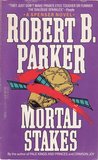
Mortal Stakes (Spenser, #3)Mortal Stakes by Robert B. Parker
Reviewed by Jason Koivu
My rating: 4 of 5 stars

Parker was really starting to get into a rhythm with these Spenser stories. You can see the character coming to life. Everything feels more natural and at ease.

The triangle of deceit he created in Mortal Stakes is not diabolically ingenious, but it suits. Spenser is shown sorting out the clues he gathers and going through a methodical process to get to the bottom of it all. I thought perhaps Parker took a shortcut to the main baddies rather too quickly. It was almost like Spenser was drawn to them for no apparent reason other than getting the show on the road.

Extra points for this one due to the inclusion of the Boston Red Sox, my favorite team. Hell, the major reason I started reading these was because they take place in my home city (well, I lived 45 minutes outside of it, but it's still "my city" in a way.) Anytime a writer wants to use Fenway Pahk as a setting is wicked pissah with me!

View all my reviews

Spenser Goes to Europe!

The Judas Goat (Spenser, #5)The Judas Goat by Robert B. Parker
Reviewed by Jason Koivu
My rating: 4 of 5 stars

Spenser goes on a working holiday to Europe and the Olympics. Hawk joins him. And then there's some canoodling with Susan.

This fifth episode in Parker's famous Spenser detective series keeps the ball rolling, but rolls it in a different direction. If I were to guess, I'd say Parker probably had taken a vacation to Europe and wanted to incorporate it into his books somehow. He managed and the result is fun.

I'm surprised to hear myself say that about The Judas Goat, because the topic/Spenser's target is a group of militant racists and the less of those in my life the better. I generally don't even want to read about them. But I suppose reading about Spenser kicking their butts is fun!

View all my reviews

Friday, December 7, 2018

Still Life


Jaime Samms
Dreamspinner Press
Reviewed by Nancy
5 out of 5 stars


Summary


When Allan Song’s ex, Mac, shows up to model for the life drawing class Allan teaches, he turns everything upside-down. Mac is still as infuriatingly attractive as when Allan first met him—and still trying to figure out where he fits on the gender spectrum. He’s more than a little out of control, and he’s taken some stupid risks that have come back to haunt him. If they’re going to get back together, Allan wants a real relationship—but for that, he and Mac will need to look below the surface.


My Review


I thought this was going to be a light, sweet Christmas romance. I’m really glad it wasn’t, as I’ve overdosed on holiday sweetness and am now craving conflict, intense emotions, and deep feelings. Jaime Samms delivered and after reading just one story, I now count myself among her fans. I also liked that the blurb for the story was kind of vague; still intriguing, but not enough to reveal too much information about the characters or spoil the plot.

Allen has known his roommate, Mac, for two years. Allen has always liked men, but Mac is straight, well at least until he starts flirting playfully with Allen while he’s working on his term papers and distracts him even further by coming out of his room in a dress. Jump ahead a couple of years to Allen’s classroom, where he is teaching art and Mac is the life drawing class’s model. By this time, the men are living separate lives, even though it is obvious they haven’t moved on.

It was just a small incident that caused Al and Mac to break up during a family visit at Christmas, but alcohol, flirting, insecurity, and stubbornness have blown the incident out of proportion and created a huge rift not only in Al’s and Mac’s relationship, but in Al’s relationship with his family.

The men are in for difficult times as they try to reconcile their differences and move forward. They are stubborn, hurtful and unwilling to bend. Despite all that, they are deeply in love with each other. A pregnancy, a death and the possibility of a major life-changing event conspire to bring the men back together. As they begin to admit their wrongdoings and deal with the consequences of their actions, they will become stronger individually and as a couple.

This story is far from a typical romance. Relationships, family life and friendships are explored realistically and a wide spectrum of emotions portrayed. I thoroughly enjoyed this story and loved both Mac and Al. I hope they have the strength to face the challenges ahead of them.

Thursday, December 6, 2018

Thor: God of Thunder, Volume 2: Godbomb

Thor: God of Thunder, Volume 2: GodbombThor: God of Thunder, Volume 2: Godbomb by Jason Aaron
My rating: 4 of 5 stars

The origin of Gorr the God Butcher is revealed. description
His family died trusting in gods that couldn't be bothered to help. So Gorr has devised his own plan with the help of time travel. He created a godbomb to annihilate every god who ever has and ever will live across all time in an instant.
description
The only thing left standing in his way are three Thors from different time periods.
description

Godbomb was a good conclusion to the tale of Gorr the God Butcher. It's easy to see why Gorr turned out to be the way he was and how he grew to despise all the gods. He's truly sympathetic because all he sought was help and what he got in return was seeing his entire family including his children die in front of him.

The three Thors were interesting.
description
I really wanted to see more of the All-Father Thor because he's the character who has been seen the least among the three.
description

Godbomb had some solid writing and I definitely enjoyed it.


View all my reviews

Wednesday, December 5, 2018

THE END OF THE END OF THE EARTH BY JONATHAN FRANZEN

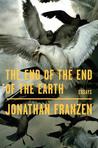
The End of the End of the Earth: EssaysThe End of the End of the Earth: Essays by Jonathan Franzen
My rating: 4 of 5 stars

”If you stand in a forest in Southeast Asia, you may hear and then begin to feel, in your chest, a deep rhythmic whooshing. It sounds meteorological, but it’s the wingbeats of Great Hornbills flying in to land in a fruiting tree. They have massive yellow bills and hefty white thighs; they look like a cross between a toucan and a giant panda. As they clamber around in the tree, placidly eating fruit, you may find yourself crying out with the rarest of all emotions: pure joy. It has nothing to do with what you want or what you possess. It’s the sheer gorgeous fact of the Great Hornbill, which couldn’t care less about you.”

I always love those moments when something reminds me of how insubstantial I am, compared to the forces of nature. The ultimate feeling of insignificance for me was to see, in a flash of lightning, a tornado, in all its beautiful glory, just off the road from where I was riding in a car. The sight of this destructive power of swirling winds inspired instant terror and awe, and as the lightning faded, the terror for me increased exponentially with the descending of complete and utter darkness. I was so unnerved I buckled my seatbelt (this was the 1980s) as if that act would shield me from the onslaught of such a power entity.

I’ve been remiss about reading Jonathan Franzen novels. I’ve liked what I have read. He has a self-deprecating style that allows me to see the human in the writer, even as he dazzles me with insightful prose. He questions his own beliefs and is a master at disputing both sides of an argument within himself. This could lead to indecision, but that doesn’t seem to be an insurmountable hazard for him. He still continues to move forward, even as he keeps a tongue pressed into his cheek to remind himself that he could be completely wrong in his assessment.

Franzen is a Bird Lister, and winged beasts figure prominently into these sixteen essays. As a gently mad book collector, I am always excited to find someone whom I can perceive to be more insane than myself. These bird listers go to great, sometimes dangerous, lengths to check a bird off their list. Franzen’s excitement at seeing a Jamaican Blackbird, or an Opal-rumped Tanager, or a Saint Lucia Black Finch are equal to my own excitement at finding a rare Graham Greene, or a bright copy of a Virginia Woolf vastly underpriced, or say an interesting appearing book by an author I’ve never heard of before. Of course, I slide my new acquisition onto my bookshelf, while he hopefully retains at least a mental image of the bird he has spotted. He might be slightly more mad than I.

Franzen’s girlfriend offers to go with him anywhere in the world. He suggests the idea of going to Antarctica, which he regrets almost immediately. He is unsure why, out of all the destinations in the world, he chose to torture her with the idea of attempting to vanquish the frozen, southern extremes of the planet. ”By this point, I, too, had a developed a vague aversion to the trip, an inability to recall why I’d proposed Antarctica in the first place. The idea of ‘seeing it before it melts’ was dismal and self-canceling: why not just wait for it to melt and cross itself off the list of travel destinations?”

I like the practicality of waiting for Antarctica to melt and crossing it off the bucket list. I’ve become more annoyed with the whole concept of a bucket list in recent years. This list has become a grand piano, suspended over my head, ready to fall on me the moment I show any weakness or hesitation in accepting an opportunity to cross something off the list. The list is not stagnant, either. As I cross things off, more things are added. It is a list that can not be conquered; by design, I am destined to fail.

The book is not all about birds, who are harbingers of the end of the end of the earth, as his title suggests, or about climate change. He also talks about his relationship with William Vollmann and his reverence for one of my favorite writers, Edith Wharton. He drops in a few mentions of writers like Rachel Cusk, whom I have not read, and Karl Ove Knausgaard, whom I have not read enough of. If I read a grouping of essays and don’t come away with an expanded book reading list (which is in some ways worse than a bucket list), I am disappointed.

Moreover, Franzen delves into the research of Sherry Turkle, who explores the impact that technology is having on who we are. ”Our rapturous submission to digital technology has led to an atrophying of human capacities like empathy and self-reflection, and the time has come to reassert ourselves, behave like adults, and put technology in its place.”

I have recently started feeling better about our future relationship with technology. I’ve heard more and more dissatisfaction coming from people twenty plus years younger than myself, so it isn’t just nervous old fuddy duddies, like me, who are starting to understand the diminishing returns of more advanced technology. It is the same theory as being rich. Once you reach a certain level of comfort, your happiness meter starts to plummet with the more money you acquire. What most people find is that you are happier when you are comfortable financially, which could be equated to reaching that level where technology is helping to improve your life. The trouble begins when money starts to rule your every thought or when technology begins to take over your life.

The big questions that Jonathan Franzen seems to be seeking answers to in writing these essays are, can we adapt our thinking enough to save the birds, save the planet, and in the process liberate ourselves from our own destruction? The environment should not be a political issue. Scientists are in agreement about the starkness of the facts. We should not be putting ourselves in a position where nature can bring her absolute worst against us. The tornados, the wildfires, the hurricanes, the torrential rains, the droughts are all punishments, increasing in frequency and velocity, as we continue to abuse this lovely, lovely blue planet. We, whether we want to accept the task or not, are the elected stewards, and we must make better, tougher, more responsible decisions going forward.

I want to thank Farrar, Straus, Giroux for providing me with a copy in exchange for an honest review.

If you wish to see more of my most recent book and movie reviews, visit http://www.jeffreykeeten.com
I also have a Facebook blogger page at:https://www.facebook.com/JeffreyKeeten

View all my reviews