Thursday, April 24, 2014

FOURTH OF JULY CREEK BY SMITH HENDERSON

Fourth of July Creek: A NovelFourth of July Creek: A Novel by Smith Henderson
My rating: 5 of 5 stars

”He was frightened for her and what was about to happen to her and felt the fullest burden of the fact that he was indeed a thing that had happened to her too and was happening to her yet and would be for a long time to come.”

Pete Snow is a good man, despite that fact, he is in the vortex of a tornado. Those close to him are flung far and wide, battered and bruised by the briefest of contact. His relationship to his larger than life father is nearly nonexistent. When his father dies he learns of it when people start offering him condolences. His brother has recently whacked the crap out of his parole officer and is on the lam. His wife sleeps with someone, purposeful, with the intent of watching Pete walk out the door. His daughter is on the verge of womanhood with a slutty mother as a role model and a father more interested in saving other people’s kids than his own. It is tragic to watch a man who wants to do so much good creating so much havoc.

There is also Cecil, a teenager Pete is trying to help out of a bad situation, but ends up lying to him in the course of trying to help him. Pete persuaded him to trust him, no easy task, and then threw it all away at the very moment he had a chance to save him. Sometimes we get expeditious when we need to slow down. We need to take the time to convince rather than be deceitful. Unfortunately life just throws too much crap through the fan for us to always do the right thing. We make mistakes.

And then there is Pearl and his son Benjamin. When Benjamin stumbles into town undernourished and in tattered clothes Pete has a kid where the needs are so obvious even he can’t screw it up or can he?

Let’s circle back around to the wife Beth.

”The loose beauty about her--the way her smile cracked across her face, her wide lopsided curls rigged into a bun that seemed liable to topple down--reminded him of a tooth about to come out, a button about to fall off. Everything about her always on the verge of falling down or out. Made a body want to screw her heart out. Even now. Even after she’d cheated on him and even though it still hurt like a purple bruise, he could see falling into bed with her. Just a look at her. The beer, eyebrow cocked, her condescending grin.
She said his name plain. Even that ached.”


Beth is the type of woman a man wants to be in the backseat with, beer breath making a plume every time tongues touch, rollicking down country roads hearing the gravel pinging in the wheel wells, and your heart beating like a loose ball bearing in your chest. ”The whole backseat a rolling cart of near to fuck.” She will make you forget yourself, stomping on your compass in the process. She will knock your center askew, permanently, from true North. She will make you batshit crazy.

Pete’s not that dissimilar, maybe just the male version. He still goes out with buddies when he needs to forget, gets drunk, ends up with women he wouldn’t give a second look to if he were sober. His father was a force of nature in the county, ruling without holding office, and casting an umbrella of protection around his sons that evaporates the moment he breathes his last. There is a whiff of landed gentry about Pete even though he tries his best to cast off any association with his own name. He expects women to want to sleep with him, and generally they do. As a social worker doors open for him that may have as much to do with his last name as it does with his own persistence. He denies who he is; and yet, he can’t be who he is without the father he had. One of those conundrums...most of us have them to varying degrees.

His wife moves to Texas taking their daughter Rachel with them. Pete is too passive, letting it all happen. It is only after they are truly gone that he starts to get an inkling of what he just gave up. His wife moves in with a trucker. Anybody ever heard of the expression ass, grass or gas nobody rides for free? Well I’ll let you decide which one Beth provides. The problem is Rachel is blossoming, just turned fourteen, and the revolving door of men that come through the house start to pay more attention to her than they do to Beth.

Rachel feels the power.

She also knows something critically important about her mom.

”Because her mother’s heart was wyoming, it was wyoming hard and she was days and years and maybe forever from a good man.”

Pete picks up with Mary, a fellow social worker and product of the system. She spent most of her life in foster care and bears the scars…”He reached across the table and got her wrist. A pair of hairline scars there too. He rubbed the groove they made. He didn’t think at all about why she’d done that. It was the past.” Pete is too worried about the present and not keeping an eye on the rearview mirror where the past is coming up fast. If the past is not dealt with and placed in a box wrapped in ribbon and notated with lessons learned then it is still just knocking around in your brain waiting for a new place to land.

It all lands hard when Rachel runs away from home.

Rachel picks up with a man, a boy really, playing pimp with dyed black hair and a penchant for manipulations. She gets busted doing something she thought was impossible to contemplate.

No. She volunteered nothing but her name. Rose Snow. She was a whore. Did they get it? They could put her in jail for all she cared. They could go ahead and shoot her in the head.
For.
All.
She.
Cared.


Pete finds Rachel/Rose just to lose her again. He sees enough of her to see the stark reality of his own failures. He ran a race with his daughter, but he took too many detours, and by the time he caught up with her she was past the tape and beyond him.

Pete Snow is a good man. I rode in the passenger seat with him for 467 pages through the Big Sky country of Montana, to the dusty plains of Texas and through the rain soaked city streets of Portland. I can attest to the fact that he is a good man, flawed, sometimes tilting at windmills, but ultimately trying to make a difference. Protocol becomes a harness that when it is finally flung aside allows Pete to finally start make a difference. The Pearls that I mentioned early, a man and a boy bound together through the religious madness of their wife/mother might be the final redemption for Pete.

I stepped out of my office door the other day to see if in some whiskey laced moment of craziness I had hung a shingle out. People come to me with their problems. I dispense wit and wisdom and sometimes with smug satisfaction feel like I’ve actually helped people. Reading this book and watching Pete fumble around, good intentions surrounding him like the dust devil around Pigpen, I realize that I rely too much on logic. It is a cold science, right and wrong are black and white. So many elements that we slice and dice away from a problem are the very things that make us human. When I should be listening I’m too busy pondering resolutions. Before offering solutions I would be better served to offer compassion. I’m not a priest, social worker, or a psychologist, but I am a person who can help. If I’m going to help I have a responsibility to make sure I do it in a way where I’m helping them more than I’m helping myself.

***4.5 stars out of 5***


View all my reviews

Tuesday, April 22, 2014

Dark Curtains

Dark CurtainsDark Curtains by Evans Light
My rating: 3 of 5 stars

A man buys the house across the street from where he grew up and moves in with his girlfriend. But what's the significance of the curtains in the tower room and why was him never removing them a condition of his buying the house?

This is the second Kindle Short by Evans Light I've read. Kindle Shorts are great for quick lunch break reads, aren't they? And free in the bargain!

Dark Curtains is a ghost story and is pretty spooky. Since it's a short story, I won't be divulging much more than that. Light's prose sets the mood and the revelation of the curtains was about what I expected. Like Crawlspace, I wasn't exactly crazy about the ending but I can't really complain that much.

Three out of five stars. I'm inching closer to actually giving Evans Light some of my money.

View all my reviews

Hounded

Hounded (The Iron Druid Chronicles, #1)Hounded by Kevin Hearne
My rating: 4 of 5 stars

Millenia-old druid Atticus O'Sullivan has a powerful magical sword in his possession and a Celtic god wants it in the worst way. But what does that have to do with a coven of witches? And which side are Flidais and the other gods on? Can Atticus escape with his skin, even with a pack of werewolves and a vampire lawyer on his side?

I had my eye open for a new urban fantasy series to try once the Dresden Files began tasting like ashes in my mouth. When the price on the ebook version of this dropped to 99 cents, my choice was made. It turned out to be a pretty good one.

Atticus O'Sullivan is a 2000 year old Druid that looks like a tattooed 21 year old. Once I accepted that was the reason he sounded like a modern man, I had a lot of fun reading this.

Hounded reads like the Dresden Files with a dash of American Gods thrown in. I found Atticus to be a much more likeable lead than Harry Dresden, primarily because he has personality traits above and beyond being a smart ass. Oberon, his Irish wolfhound, further sealed the deal. I liked the way Hearne depicted Atticus' magic and his Druidic abilities set him apart from a lot of other urban fantasy characters.

The supporting cast was equally interesting. The vampire and werewolf lawyer combo was a pretty novel idea and I liked that he didn't overuse them. I also liked Atticus' dealings with the Celtic pantheon and how careful he was when dealing with them and the witches.

The Arizona setting was a nice change of pace. The plot wasn't all that revolutionary but I thought it was well done for what it was. When dealing with the gods, a certain amount of treachery is expected and Hearne delivered the goods. It was a fun story.

I'm not going to pretend it didn't have some things that irked me. Things were wrapped up a little too nicely and even though I was able to push it aside, I didn't like that Atticus talked so much like a 21st century man. I also question the wisdom of running a store that happens to sell occult books. It's not on par with Tony Stark saying Iron Man is his bodyguard or Peter Parker mysteriously getting the best pictures of Spider-Man but it's in the ballpark.

Minor gripes aside, this was a really fun read and well-worth the ninety-nine cents I spent on it. I'll be looking to pick up the rest, hopefully for an affordable price. Four out of five stars.

View all my reviews

Monday, April 21, 2014

Another Epic Adventure from Joe R. Lansdale


Reviewed by James L. Thane
Four out of five stars


By turns violent and hilarious, The Thicket is Joe R. Lansdale in peak form.

The book is set in East Texas, early in the Twentieth century, just as the oil boom is reaching that area. Sadly, a smallpox epidemic has swept through the region, and sixteen-year-old Jack Parker and his fourteen-year-old sister, Lula have lost their parents to the disease.

In the company of their grandfather, the children are leaving Texas to live with a relative in Kansas. But the journey has barely begun when a group of savage bank-robbing outlaws kills the grandfather and abducts Lula. Jack runs to the law, but the sheriff has been murdered; the deputy has been frightened into resigning, and so Jack his left to his own devices if he is to rescue his sister.

He teams up with a group of accomplices that only the mind of Joe R. Lansdale could conceive. They include a bounty-hunting midget, an alcoholic grave digger who keeps a feral pig as a pet, and Jimmie Sue, a prostitute who winds up sweet on young Jack. The villains they are pursuing are as dark and amoral as anyone could imagine, and Jack is constantly reminded by his new-found friends that even if they do recover Lula, she will doubtless have been very ill-used in the meantime. To say that the author has created a number of memorable characters here would be the understatement of the year.

The manhunt takes a number of twists and turns, and the story, which is vaguely reminiscent of True Grit, rolls along without the slightest boring moment to a smashing climax. From start to finish, it's a true Lansdale epic that will appeal to any of his fans, old or new.

A Guidebook For Financially Responsible Hipsters

Official Price Guide to RecordsOfficial Price Guide to Records by Jerry Osborne
Reviewed by Jason Koivu
My rating: 4 of 5 stars

Indispensable reference for the record collector! When I owned a used cd shop, I carried albums and so this book came in very handy, keeping me from occasionally underselling a gem. I think my patrons would've loved to have seen this book burned.

Regardless of genre, nearly everything in the English language under the sun committed to vinyl is listed from A to Z. First the artist's name appears in bold. Under that are sections for singles and LPs. In each section the record company's label is given with the years the artist was under contract with them, and then there's a price range for the average value of the records produced during that time for that label. In special cases the information may be broken down further. Such is often the case with particularly well selling singles or rarities. And then occasionally there will be a slight bit of extra information, perhaps about a record's certain peculiarity or other associated acts the artist performed with/as.

However, extra information is kept to a minimum, after all, Osborne had a lot of records to get through and that would take up a lot of space. As such, while the book has just about every imaginable album from the days when records were king, it certainly doesn't contain everything. Yeah, you can find '80s stuff like The Smiths or even some early hardcore like Husker Du, but all those punks and emo kids of the early to mid-90s putting out the 7"s? They're on their own.

It's been fun going through my own sizable collection to see if I've got anything valuable. For the better part of a year I was convinced I had a $20,000 Beatles LP. Deep research and magnifying-glass-precise inspection unveiled its significantly lower value. When I figured it out I said, "fuck," loudly.


A Suspect Title, But A Great Kids Book!

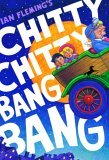
Chitty Chitty Bang BangChitty Chitty Bang Bang by Ian Fleming
Reviewed by Jason Koivu
My rating: 4 of 5 stars

"I'm not interested in your Shitty Shitty Gang Bang," is essentially what I told my bestbud back in elementary school when he was trying with all his ernest might to make me see the light and enjoy the wholesome, family-fun goodness that is this book. This was at a time when he was listening to Weird Al and I was learning how to bang my head to Quiet Riot.

Fast-forward about 30 years…I've finally read Chitty Chitty Bang Bang and I see the light! This book is delightful! There's kooky characters, a fast car, magic, old timey British thugs, mysteries, adventure and spelunking!

Basically this book is made up of a handful of short stories cobbled together in linear fashion so that they read like one continuous novel. That is one of the reasons I hesitate to give this a full 5 stars. That and the plot is not always as riveting as it could be. Even looking at it from the perspective of my younger self, I know at no age through out my life would I have been 100% satisfied with the ease with which the Potts, that enthusiastic family of wackos who own Chitty Chitty Bang Bang, get out of pickles and tight jams. The deus ex machina of a magic car makes it all too easy.

Nonetheless, these are fun tales and I think in a year or two I may attempt reading them to my young niece, who will no doubt say to me, "I'm not interested in your Shitty Shitty Gang Bang."


Friday, April 18, 2014

Sacred


Sacred
HarperTorch
Reviewed by: Nancy
4 out of 5 stars


Summary

Dennis Lehane won a Shamus Award for A Drink Before the War, his first book about working-class Boston detectives Patrick Kenzie and Angie Gennaro. His second in the series, Darkness, Take My Hand, got the kind of high octane reviews that careers are made of. Now Lehane not only survives the dreaded third-book curse, he beats it to death with a stick.Sacred is a dark and dangerous updating of Raymond Chandler's The Big Sleep, as dying billionaire Trevor Stone hires Kenzie and Gennaro to find his daughter, Desiree. Patrick's mentor, a wonderfully devious detective named Jay Becker, has already disappeared in St. Petersburg, Florida, while working the case, so the two head there to pick up a trail. Desiree, of course, is nothing like the sweet and simple beauty described by her father, and even Chandler would have been amazed by the plot twists that Lehane manages to keep coming.


My Review

In the third book of the Kenzie/Gennaro series, Patrick and Angie are hired to find a dying billionaire’s missing daughter. They learn that the detective he previously hired and who trained Patrick, has also disappeared under mysterious circumstances.

There are lots of twists and turns in this case, a grieving daughter, people who are not what they appear to be, a cult that exploits the grief and vulnerabilities of its recruits, a family who behaves badly, and a lot of missing money.

I was beginning to tire of the dreary and gray streets of Boston and was thrilled that the trail eventually led the intrepid detectives to hot and sunny Florida. Patrick and Angie are still recovering from their pain and losses from the previous two novels and have an opportunity to explore the friendship, love and tenderness that is growing between them.

While this story lacked the intensity and pace of the first two books, it was still very satisfying.

Also posted at Goodreads.

Thursday, April 17, 2014

Sorry, Leonidas, But THIS is Sparta

Sparta
by Roxana Robinson
Published by Sarah Crichton Books

4 Out of 5 Stars
Reviewed by Amanda

Inspired by the romanticized accounts of war in the ancient world, classics major Conrad Farrell joins the Marines in an attempt to enter into the venerable brotherhood of honor, sacrifice, and courage forged in the heat of combat.  Explaining his decision to enlist, Conrad naively tells his parents, "The classical writers love war, that's their main subject.  Being a soldier was the whole deal, the central experience . . . It seems like it's the great thing.  The great challenge" (22).  And so Conrad goes to Sparta--the nickname for the Marine military base in Haditha, Iraq.  However, he also goes to Sparta in the figurative sense, learning that what gave greatness to the ancient Greek city-state famous for its military might was also the chink in its armor:  when you surrender everything to war, you lose something intrinsic and necessary for the survival of the human spirit.

Sparta is not about Conrad's time in Iraq, although there are several well-written flashback sequences that give us insight into what Conrad endured as a soldier.  Instead, it is a powerful novel focusing on what happens when a warrior returns home.  What is his place when his service is done, when the mission is complete, and when what he found in war was not glory or purpose or righteousness, but waste and hypocrisy?  Roxana Robinson does a superb job of delineating Conrad's slow descent into existential darkness, finding it increasingly impossible to reconnect to an America and a family so materially comfortable and willfully insular that it knows nothing of what his time in Iraq was like.  As he tells his father, "It's hard to describe.  It's like I can't get in here.  It's as though I'm standing outside.  I can see everyone in here, rushing around and doing things, and I can't get in" (240).

Conrad's training as a Marine defines him, leading to a single-minded determination to fight against the anxiety, the fear, and the rage on his own; to seek outside help would be a sign of weakness and failure.  He begins to see himself as a man divided:  there is the Conrad who existed before the war, the one everyone expects him to be, and the soldier who is so defined by combat that he cannot exist in a world without it.  As it becomes more evident that he is losing the battle within himself, Conrad's plight is made all the more distressing when he begins to seek help from a disinterested and unforgivably slow VA.  While I know that many VA clinics are run by compassionate, engaged medical professionals, it is just as true that many are indifferent or ill-equipped to handle the task of treating our veterans.  That any man or woman who has been willing to sacrifice for our nation should have to wait months for needed medical treatment or tolerate a slow-moving bureaucracy is a shameful condemnation of our society's refusal to respect and honor the human cost of war.

Robinson's creation of a soldier's struggle is certainly admirable and, for the most part, surprisingly convincing given that it's written by a female author outside of the military.  Her real strength lies in depicting the complexity of the relationships:  the silent agony of his family, the confusion of his girlfriend, the awkward interactions with former friends, and the painful communications with his fellow Marines (many of whom are also struggling, but valiantly trying to hide it from their former lieutenant).  In particular, the sibling bond between Conrad and his younger brother and sister (a bond forged of shared experience and damaged by Conrad's isolated time outside of that bond) struck me as genuine and authentic.  Robinson is certainly to be commended for the beauty of the writing, as well as the light she sheds on the emotional toll of war.  Despite this, it does sometimes feel a bit too studied, too researched; it doesn't (brace yourselves for what you should have known would be the inevitable Tim O'Brien comparison) make me feel the effects in the way that The Things They Carried does.  And while Robinson is an impressive chronicler of the minutiae of daily life--the ever changing earrings worn by Conrad's sister, the flotsam and jetsam that inevitably end up on the kitchen refrigerator, the festive decor of a Christmas table--such details strike me as decidedly feminine; granted, Conrad's training has taught him to hone in on details, but these still seem like the things that make up the lives of women and might be briefly noted and then discarded as irrelevant by a masculine mind.

A brief history lesson on the Iraq War and on military life in Sparta are awkwardly shoe-horned into the narrative in the beginning, but once Sparta finds its focus in the mind of Conrad, it is a powerful and necessary reminder that not every soldier who comes home without injury is, in fact, whole.

Wednesday, April 16, 2014

An Officer and a SpyAn Officer and a Spy by Robert Harris
My rating: 4 of 5 stars

”There is no such thing as a secret--not really, not in the modern world, not with photography and telegraphy and railways and newspaper presses. The old days of an inner circle of like-minded souls communicating with parchment and quill pens are gone. Sooner or later most things will be revealed.”

 photo mugshots_alfred-dreyfus_zps80c4bb01.jpg
Captain Alfred Dreyfus’s mugshot

Georges Picquart was as convinced of Captain Alfred Dreyfus’s guilt as anyone else in 1894. In fact for the invaluable service he provided during the affair he becomes the youngest Lieutenant Colonel in the French military. He is also promoted to head the Intelligence department, not the most prestigious appointment given that spying was considered rather unseemly, rather ungentlemanly.

”The air warms up and very soon Paris starts to reek of shit. The stench rises out of the sewers and settles over the city like a putrid gas…. In the newspapers the experts are unanimous that it isn’t as bad as the original ‘great stink’ of 1880…. ‘It is impossible to stand on one’s balcony,’ complains Le Figaro, ‘impossible to sit on the terrace of one of the busy, joyful cafes that are the pride of our boulevards, without thinking that one must be downwind from some uncouth, invisible giant.’ The smell infiltrates one’s hair and clothes and settles in one’s nostrils, even on one’s tongue, so that everything tastes of corruption. Such is the atmosphere on the day I take charge of the Statistical Section.”

 photo Esterhazy_zpsdb49e406.jpg
Major Esterhazy. “His head in profile is flattish and tapers like a vulture’s to a great beak of a nose. His moustache is large and swept back. His eyes are round and protuberant: not natural, but crazy, like glass balls pressed into the skull of a skeleton in a medical school.”

The stench becomes all consuming when Picquart sees a photocopy of the famous Bordereau Letter that was so pivotal in the conviction of Dreyfus. The problem is Picquart recognizes the handwriting, an almost exact match to a Major Ferdinand Esterhazy. A man he suspects of trying to sell secrets to the Germans. In the course of convicting Dreyfus several handwriting experts were consulting until finally they found one that said that Dreyfus was “the probable author” of the letter.

You might be downwind of that uncouth Giant yourself about right now.
 photo Bordereau_zps1e59abc8.jpg
The famous Bordereau Letter that “incriminated” Dreyfus, but should have exonerated him. The original copy of the letter mysteriously disappeared in the 1940s.

So what is this really all about? The evidence against Dreyfus is built on such a tissue of lies that it is impossible to believe that any reasonable person could have found him guilty.

Did I happen to mention that Dreyfus was Jewish?

This all really begins back in 1870 when Germany started a unification program. Two regions Alsace and Moselle were annexed by the Germans. The result of this German aggression is the Franco-Prussian War that was disastrous for the French. They are soundly defeated despite having a large standing army and a jump start on mobilization. The Germans moved quickly, had a better understanding of the current technologies, and how to best deploy them in war. Their troops, to the surprise of the French, turned out to be better trained and were lead by more competent commanders. This defeat leads to a time of zealous nationalism and riding along in the sidecar right along with nationalism is a rise of antisemitism. When word spreads that there is a spy in the French army it only makes sense that it must be a Jew.

 photo DreyfusRabbit_zps4c040d1e.jpg
Dreyfus as a rabbit about to be stewed.

Down with the Jews. Death to the Jews. The anger of the population is boiling, misplaced though it may be, they are convinced that the Jews in some way, some mystical fashion, contributed to the defeat in 1870.

As Picquart continues to investigate Esterhazy, finding more and more evidence that he is a much better candidate to be the German spy than Dreyfus, it becomes apparent that his commanding officers, a covey of white haired generals, are not interested in reopening the Dreyfus case.

Picquart is inexplicably reassigned to a unit in Tunisia. The Siberia of French outposts.

 photo GeorgesPicquart_zpsf9968278.jpg
Georges Picquart in his Tunisian Uniform.

Finally after months of idleness with no word on when he can return to Paris, he requests a weeks leave and returns to Paris to turn over all his information to his lawyer who then takes that information to the man of impeccable character who also happens to be wealthy enough to withstand bribes or threats, Senator Auguste Scheurer-Kestner.

The French generals start to act guilty. Strange, potentially incriminating cables are sent to Picquart. He is arrested and brought up on a series of charges. Emile Zola, a great advocate of Dreyfus and Picquart, is arrested and imprisoned. The truth proves to be such a dangerous thing to know.

 photo EmileZola_zpsb99b2e42.jpg
Emile Zola was imprisoned for the zeal in which he called for Dreyfus to be released.

Picquart, when he discovers a mounting level of evidence that more than pokes holes in the flimsy conviction of Dreyfus, but actually completely destroys the case against Dreyfus, his first thought is that all of it needed to be brought into the light of day and dealt with before the newspapers get wind of the incongruities infesting the evidence against Dreyfus. After all a secret never remains a secret.

There is little one can do especially in this time period when the power of an organization as formidable as the army decides to fabricate charges against a citizen, backed by a population who wants to see a Jew convicted and wants to see Picquart broken for trying to defend a Jew. Imprisoned Picquart feels a strange sense of relief. The secrets are no longer just his secrets. His needs are simple. He merely needs to feed the mind.

”If my enemies on the General Staff imagine that this represents some kind of hardship for me, they are mistaken. I have a bed and a chair, pen and paper, and plenty of books---Goethe, Heine, Ibsen, Proust kindly sends me his collected writings, Les Plaisirs et les Jours; my sister a new French-Russian dictionary. What more does a man want? I am imprisoned and liberated.”

As a reader, if I have access to books, I’m almost impossible to imprison. Books allow me to be anywhere I want to be. Gray damp walls may surround me, iron bars might grid my vision, but my mind can always fly.

Picquart as a way to relax translates Fyodor Dostoyevsky into French. I liked and respected Picquart, but when I learned that nugget of information I came close to having a man crush.

Robert Harris and I have a long relationship going back to his first novel Fatherland, where he explored the idea of what the world would have been like if Hitler had won WW2. Picking up a Harris book for me has always been a sure thing. In this book he puts us in the mind of Picquart we see his fallacies, his doubts, his courage, his outrage, and ultimately his determination to find justice. His expectations for France are idealistic. No one would have faulted him for losing faith in the country and the army he loves. He never falters in his desire to remind them of how a man of honor and valor is expected to conduct himself.


View all my reviews

Tuesday, April 15, 2014

Life in the Gulag

One Day in the Life of Ivan Denisovich by Alexander Solzhenitsyn
1962
Reviewed by Diane K. M.
My rating: 5 out of 5 stars


"The degree of civilization in a society can be judged by entering its prisons." -- Fyodor Dostoevsky

This book was a good way to take my mind off of my own problems. Reading about the grueling conditions of a Soviet gulag made my daily worries seem trivial.

The novel is set in Stalin's Russia of the 1950s and follows the prisoner Shukhov from the moment he wakes up at 5 a.m. to when he finally goes to bed after laboring all day. Shukhov was sentenced to 10 years of hard labor, even though he was innocent. While fighting for Russia in World War II, he was captured by the Germans. He managed to escape and return to his own lines, but then he was accused of being a spy. Faced with being shot or doing hard labor, he signed a confession to spare his life.

Shukhov has already served eight years and knows how to survive in prison. He stays out of trouble and tries to do small favors for people who can get him a little extra food each day. He is a hard worker and believes that prisoners have to help each other to stay alive. He learned this lesson from his first squad leader, who told the new inmates: "Here, men, we live by the law of the taiga. But even here people manage to live. The ones that don't make it are those who lick other men's leftovers, those who count on the doctors to pull them through, and those who squeal on their buddies."

The prisoners are forced to work in brutally cold weather and have very little food. This book makes you appreciate being warm and well-fed, to be sure. When Shukhov is refused a favor from a guard who works indoors and who sits near a heater, he wonders, "How can you expect a man who's warm to understand a man who's cold?"

In other sections, we see how important it is to eat slowly and to treasure each bite: "More than once during his life in the camps, Shukhov had recalled the way they used to eat in his village: whole pots full of potatoes, pans of oatmeal, and, in the early days, big chunks of meat. And milk enough to bust their guts. That wasn't the way to eat, he learned in camp. You had to eat with all your mind on the food -- like now, nibbling the bread bit by bit, working the crumbs up into a paste with your tongue and sucking it into your cheeks. And how good it tasted -- that soggy black bread!"

While reading "One Day," I was reminded of some other great books about work camps, such as "Escape from Camp 14," which was about a North Korean prison, and several about the Holocaust: Viktor Frankl's "Man's Search for Meaning," Elie Wiesel's "Night" and Art Spiegelman's "Maus." Each of those books has their own insights into how people survive in subhuman conditions. 

I appreciated the spare, straightforward language of Solzhenitsyn. According to the introduction, Solzhenitsyn himself had served eight years in a Russian concentration camp, reportedly for making a derogatory remark about Stalin. The book was published in 1962 during Khrushchev's reign, and was considered an attack on Stalin's human rights violations. I admired Solzhenitsyn for having the courage to tell this story.