Tuesday, April 1, 2014

Early Autumn

Early Autumn (Spenser, #7)Early Autumn by Robert B. Parker
My rating: 4 of 5 stars

When Spenser is hired by a divorcee to bring back her kidnapped son from his father, he gets more than he bargained for. Paul's parents are using him as a pawn and neither really want him around. Spenser winds up taking the kid under his wing and soon has someone gunning for him...

Of the Spensers I've read so far, this one is in the top three. While it has all the Spenser hallmarks, like a long description of cooking a meal, wisecracks, discussions of Spenser's code, and Hawk being the baddest mother since Shaft, it also has an offbeat plot. When Spenser sees what a callow slacker Paul is and decides to mentor the kid, the book starts firing on all cylinders.

Paul's parents are both human garbage and deserving of kicks to the crotch. Paul and his attitude irritated the crap out of me (and Spenser) at the beginning but the kid grew on me toward the end. Hawk was in fine form, although I could have used a little more of him. I still can't decide if Parker includes Hawk as a mirror to hold Spenser up against or someone to do his dirty work. Possibly a combination of both. Susan Silverman was more tolerable than usual but I found her jealousy and bitchiness toward Spenser spending time with Paul kind of juvenile.

The book shows its age a little but not enough to cost it any stars. It's clear the book was written in the early 80's with its references to self-actualization and disco. Also, Paul would be on the internet or playing video games all the time if it were written today.

This Parker guy might have a future in the book business. I'll pick up the next one. Four out of five stars.


View all my reviews

The Bird Eater

The Bird EaterThe Bird Eater by Ania Ahlborn
My rating: 3 of 5 stars

His life in shambles, Aaron Holbrook returns to his home town to the house he grew up in, which also happens to be the house his aunt was murdered in. His plan is to rehab the house and sell it. Too bad The Bird Eater has other plans...

I got this as part of the Kindle First program.

The Bird Eater reminded me a lot of the Anne Rice Mayfair Witches series, which is high praise since I think The Witching Hour was the last good book Anne Rice wrote. The Holbrook House has been haunted by a ghostly twelve or thirteen year old boy, the Bird Eater of the title, for generations.

This is one creepy book. Aaron moves into the house and Birdie starts tormenting him from the start. Without giving too much away, Aaron's condition degenerates even as he reconnects with friends from his youth, Eric and Cheri, his first love.

While I enjoyed the story, it wasn't a fun read by any means. The creepiness was offset by the bleakness, which sucked the enjoyment out of it for me. I really felt bad for Cheri, particularly has her heart was torn to pieces as Aaron slid further into madness.

That's about all I can tell without giving away all the best bits. It was a chilling read and will be of interest to anyone who likes stories featuring creepy kids. 3.5 out of 5 stars.

View all my reviews

Monday, March 31, 2014

A Great New Protagonist from George Pelecanos


Reviewed by James L. Thane
Four out of five stars


The Cut introduces Spero Lucas, a new protagonist from George Pelecanos, the creator of such venerable characters as Derek Strange and Nick Stefanos. And as much as I've enjoyed those other characters, I can't wait to read more books featuring this one.

Spero Lucas is in his late twenties, an ex-Marine recently returned home to Washington, D.C. from the war in Iraq. He grew up in a racially mixed household where his Greek-American parents adopted three of their four children. He's devoted to the memory of his late father, who was clearly the strongest influence in his life; he visits his mother regularly and is close to his brother, Leo, a school teacher. His relations with his other two siblings are strained.

Like many other young people who spent much of their twenties in the military service, Spero is anxious to make up for lost time, and he has an eye for attractive women, even though he still may have some things to learn about relating to them. He remains fit and strong and is an avid cyclist and kayaker.

Lucas has no desire to be confined to an office and prefers working for himself. He's now an investigator, working principally for a defense attorney, but he takes on the occasional job recovering stolen property. His cut is forty-percent of whatever he recovers, which makes him a bargain relative to the legendary Travis McGee who always took fifty percent.

As the book opens, an imprisoned drug dealer hires Spero to recover three marijuana shipments that have been stolen from the D.C. crew that he runs from his cell. The crew cleverly Fed-Exes the dope to addresses where then know that the occupants will be away for the day. They then track the shipments on their smart phones and swoop in to pick them off the porches minutes after Fed Ex drops them off.

However, someone's managed to beat the crew to three deliveries within a matter of weeks, and the drug lord wants the thieves tracked down and the dope recovered. Lucas has no moral qualms about people who smoke weed--he smokes the occasional joint himself--and so takes the job. Given the value of the shipments involved, it could mean a huge payday for him.

Naturally, Lucas is now plunged into a world of seedy, amoral drug dealers, and before long, what seemed like a relatively simple investigation has become a complicated and very dangerous morass. A number of innocent parties get caught in the crossfire, and there's a very real chance that Spero's first major case may also be his last.

As usual, Pelecanos is at his best describing the D.C. environs that he knows and loves so well. There are, as always, a large number of musical references, most of them even more obscure than usual. (Or perhaps it just seems so to this reader who doesn't listen to much reggae. Happily, though, I am up to speed on The Hold Steady.) The dialogue is pitch perfect; the characters are all well-developed and the story carries you right along. I've been a huge fan of Pelecanos for years and, as I suggested above, I'm really looking forward to reading more of Spero Lucas.

Getting the Led Out

Led Zeppelin: Visual DocumentaryLed Zeppelin: Visual Documentary by Paul Kendall
Reviewed by Jason Koivu
My rating: 4 of 5 stars

"JIMMY PAGE" the first page essentially shouts as it launches into the guitarist's history without any introduction for the overall book.

Fine. I think we can guess where a book called Led Zeppelin: A Visual Documentary is going. A quick flip through shows that it is set up first to give musician-by-musician background. At this point, a diehard Zeppelin fan will notice that often-neglected bassist, John Paul Jones, does not actually come last this time around! No, each of the band members are "introduced" in the order in which they joined. Fan-books like this have not always been created with great intelligence, but rather blind elation, a sort of groupie's verve. While this book has a love for the Led, it is comforting to know a little thought went into it.

However, when it comes to '70s rock/heavy metal, I've found you can never juice it with enough of the grey matter. Spinal Tap is hilarious for a reason. And so with that in mind, let's continue on into the book. After the band member section, we find Kendall has tossed in, in scrapbook style, a bunch of pictures, none of which come with captions. Most of them are of the band, so no problem there. But there are quite a few pictures of Led Zeppelin's entourage, other musicians, shots of tour guidebooks, ticket stubs, fanzine covers, posters, and buttons, none of which come with an explanation. So what's a fan to do? The answer's this way -->

Laid out between the pictures is a diary-style timeline of the band's history from it's inception to late 1980, when drummer John Bonham died and Led Zeppelin closed up shop (well, at least for a good long while, but that's another story.) The almost daily entries give a synopsis of the band's activities at the time. Sometimes it's no more than:

January 1970
...
8
Bristol, Colston Hall


But often the entries are fuller:

December 1975
After completing the album, the group went back to Jersey to continue their tax exile as close to home as possible.
...
24
John Bonham, John Paul Jones and Robert Plant return home to spend Christmas with their family, while Jimmy Page flies to New York to mix the soundtrack for the film. [The Song Remains the Same]


Also included are band member quotes along with the timeline's happenings, which will be of immense interest to rabid fans. Occasionally within the timeline can be found information that clears up what the pictures pertain to, but good luck matching them up.

Perhaps the thing that will interest fans the most and make them seek out this little gem is that it was published in '82, less than two years after the band's break up when rumors were rife of them finding another drummer or possibly forming a "super group" with another legendary band also on the rocks. We now know the course Page, Plant and Jones took post-Zeppelin, but it's fun to see the turmoil that was brewing at the time.


A Graveyard For Words

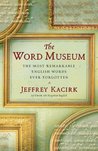
The Word Museum: The Most Remarkable English Words Ever ForgottenThe Word Museum: The Most Remarkable English Words Ever Forgotten by Jeffrey Kacirk
Reviewed by Jason Koivu
My rating: 5 of 5 stars

Glory of glories! A book about dead words! HUZZAH!

Some English words are no longer used. Jeffrey Kacirk poured through old dictionaries and found some gems. Let's go already!!! --->>>

Roozles: Wretchedness of mind; the "miserables".

Quanked: Overpowered by fatigue.

Spermologer: A picker-up of trivia, of current news; a gossip-monger; what we today would call a columnist.

Beblubbered: Swollen.

Puke-stocking: "Wilt thou rob this…puke-stocking [knave]?" 1 Henry IV Here, puke-stocking probably means dark-coloured, perhaps equivalent to puce. That it describes the material of the stocking or hose is less likely.


A few of the words have died, but been reborn…or maybe I mean reincarnated. Have a look...

Spooning: Spooning, in rowing, is dipping the oars so little in the water as merely to skim the surface.

All sorts: A slang term designating the drippings of glasses in saloons, collected and sold at half-price to drinkers who are not overly particular.


Some words could use a more detailed or clearer definition:

Special-bastard: A child born of parents before marriage, the parties afterwards intermarrying.

Spoops: At Harvard College, a weak, silly fellow, or one who is disliked on account of his foolish actions is called spoops, or spoopsy.

Biggening: Uprising of women. SEE Crying-cheese.

All righty…

Crying-cheese: Cheese given to neighbors and visitors on the occasion of the birth of a child.

…and that helped clear up biggening how?


Whereas some words mean just what you suspect (E.G. Egg-wife-trott: An easy jog, such a speed as farmers' wives carry their eggs to the market.), others do NOT (E.G. Babyshed: Deceived by childish tales. [I was sure it meant a place where babies were kept.]


The Word Museum is…scrumtrulescent! A must-read for wordies!


Rating Note: This is a ridiculous 5 stars. This book is not perfect. It's not even great. But it's just right for me, because I like words.


Here's a crusty old video I just re-uploaded for this review. It's of me reading and reenacting some of the words within this book. http://www.youtube.com/watch?v=08jR5g...


Sunday, March 30, 2014

The Alchemy of Stone

The Alchemy of Stone
by Ekaterina Sedia

Four out of five stars
Reviewed by Sesana

Publisher Summary:


Mattie, an intelligent automaton skilled in the use of alchemy, finds herself caught in the middle of a conflict between gargoyles, the Mechanics, and the Alchemists. With the old order quickly giving way to the new, Mattie discovers powerful and dangerous secrets - secrets that can completely alter the balance of power in the city of Ayona. However, this doesn't sit well with Loharri, the Mechanic who created Mattie and still has the key to her heart - literally!
My Review:

What a strange, lovely book. I fully admit that I decided to read this book solely because it features gargoyles. I kind of have a thing for <a href=http://en.wikipedia.org/wiki/Gargoyles_%28TV_series%29>gargoyles</a>. I'm pleased to report that Sedia delivered far more than just a favorite (and sadly underused) fantasy species.

The Alchemy of Stone is set in the fictional city of Ayona, built by the magical efforts of the stone-controlling gargoyles. The Ayona of the novel is in the middle of a power struggle, between forward-thinking, steampunky Mechanics and slightly more mystical Alchemists. Caught in the middle are the working classes, resentful of the power both Alchemists and Mechanics lord over them and of their often miserable positions in life. So yes, it is sort of a take on the Industrial Revolution, and revolution in general. It's a nicely constructed world, fascinating enough that I'd be happy to see Sedia write more books in this setting.

But as interesting as Ayona is, it's a backdrop to Mattie's story. Mattie is an automaton, an unusually bright one. She's smart enough to long for her own independence, and to have become as emancipated from her creator as it's possible to be. It's not enough. She wants to be the only one in control of her own destiny, to literally hold the key to her clockwork heart in her own hands and no one else's. It's Mattie's longing for freedom that drives the story, against her own construction and the will of her creator. The allegory there is obvious enough that it doesn't need to be pointed out, and it's effectively, movingly written.

I do wish that the revolution happening in the background had been a bit more than background, that we'd been able to see more of the wider story. But I'm also very, very happy with what Sedia did write, and with a perfectly ambiguous, open, satisfying ending. 

Saturday, March 29, 2014

Review: Kindle Paperwhite (2nd gen)

Amazon Kindle Paperwhite


For the last year and change, I’ve split my e-reading between my Google Nexus 4 phone and my Google Nexus 7 tablet and while they’re both excellent devices, reading novels on an LCD screen never really sat well with me. Before I go further, I should tell you that I’m not one of those people who refuse to make the shift from paperbacks and hardcovers to e-ink as I’ve previously been the owner of an e-reading device. I used to own a Kobo WiFi but it unfortunately met its untimely demise in the winter of 2012. Since then, I’ve been hemming and hawing over getting back in the e-ink game but for whatever reason, talked myself out of it.

“Why do you need that?”

“You have a tablet - it’s a waste of money.”

..I’m very good at sometimes talking myself out of things.

Friday, March 28, 2014

Steal Like An Artist


Austin Kleon

Workman Publishing

Reviewed by Nancy

3 out of 5 stars


Summary

You don’t need to be a genius, you just need to be yourself. That’s the message from Austin Kleon, a young writer and artist who knows that creativity is everywhere, creativity is for everyone. A manifesto for the digital age, Steal Like an Artist is a guide whose positive message, graphic look and illustrations, exercises, and examples will put readers directly in touch with their artistic side.


My Review

This eye-catching little book was wedged into the corner of one of the couches in the student lounge where I work. I was there for a cup of coffee, and since it was a rather slow day, I decided to pick up the book and read.

There’s a lot of common sense stuff in here for all types of creative people. You don’t have to be an artist or writer to benefit from these inspirational bits. They can help those who want to be more creative at work, or find room in one’s life for a hobby when time is in short supply. There are other tips for managing one’s life in order to be able to spend the time doing creative and fulfilling work.


I really like this advice:

"Your brain gets too comfortable in your everyday surroundings. You need to make it uncomfortable. You need to spend some time in another land, among people that do things differently than you. Travel makes the world look new, and when the world looks new, our brains work harder."

It’s a short, fun book, and not a bad way to spend 30 minutes. Perfect to read in the student lounge, on the bus, or on the toilet.

Also posted at Goodreads

Thursday, March 27, 2014

V For Versimilitude

V for Vendetta

Alan Moore, David Lloyd (Illustrator)

Review by Zorena

Four Stars

Summary

A frightening and powerful tale of the loss of freedom and identity in a chillingly believable totalitarian world, V for Vendetta stands as one of the highest achievements of the comics medium and a defining work for creators Alan Moore and David Lloyd.
Set in an imagined future England that has given itself over to fascism, this groundbreaking story captures both the suffocating nature of life in an authoritarian police state and the redemptive power of the human spirit which rebels against it. Crafted with sterling clarity and intelligence, V for Vendetta brings an unequalled depth of characterization and verisimilitude to its unflinching account of oppression and resistance.
"Remember, remember the fifth of November..."

My Review

In a way I'm glad I read Moore's Promethea series before V for Vendetta. It made me appreciate it so much more. It has more depth and far less surrealism and existentialism. I like the stark look of the artwork more then the kaleidoscopic colours of Promethea.

I know a lot of people like to compare the book to the film but these feel like two separate entities to me.
While the film is fantastic in it's own right I get more of a feel for V and the other main characters in the novel. The Evey in the book needs to learn to feel free far more then the self assured Natalie Portman does in the film.
V is more unbalanced but just as poetic as his film counterpart. You get far more glimpses into his psyche.

The totalitarianism rings more true now then it did when the book was written and can also be taken as a bit of a cautionary tale. How much power should and do we allow others to have over us?

I am now sincerely looking forward to reading more of Moore's masterworks then I was before. I also think this book is a great introduction to just how good graphic novels are. Comics, not just for children!


Serial Killer--Who? Me?

The Sixth Extinction:  An Unnatural History
by Elizabeth Kolbert
Published by Henry Holt and Co.

Reviewed by Amanda
4 Out of 5 Stars

Looking for a good horror novel that will keep you up late at night? One that features the most remorseless, inventive, and successful serial killer to ever stumble into the written word? One whose body count grows exponentially as his appetite becomes more ravenous, never sated? One who is so adept at killing that he does so without even seeming to try? Well, I have just the ticket: The Sixth Extinction by Elizabeth Kolbert. This is as frightening as it gets, people, and the villain here is us: me, you, and everyone else inhabiting this little blue marble called Earth.

Throughout history, there have been five mass extinction events: the Cretaceous-Paleogene, the Triassic-Jurassic, the Permian-Triassic, the Late Devonian, and the Ordovician-Silurian. All of these involve a cataclysmic shift in environmental conditions, some the result of an external impact. And now Kolbert reports that there may be a sixth extinction: the Anthropocene, caused by the impact of humanity on the environment. Many may believe that this is a byproduct of the Industrial Age, but Kolbert shows us how humans have always had a knack for wreaking wide scale environmental havoc. Always needing and wanting more from our natural resources, we, like kudzu, multiply rapidly, take over every inch of land available to us, and choke out the life that surrounds us.

Kolbert makes the case for recognizing the Anthropocene as a mass extinction event by exploring its casualties and its future victims. As she relates the extinction of the American mastodon, the great auk, and the Neanderthal, as well as the near extinction of the Panamanian golden frog, Hawaiian crow, Sumatran rhino, and several types of bats, one truth becomes increasingly clear: most of these extinctions began to take place when humans entered the environment.

Despite the disheartening nature of the topic, Kolbert writes with dry wit and gallows humor which (for me) always made an appearance at just the right time before things became too depressing. While there is a lot of science here, Kolbert keeps it accessible for those of us who don't while away our days reading scientific journals (you know, while our basic needs and consumer choices destroy everything around us), and her first person narrative keeps it from veering into textbook territory.

There's a lot here that I enjoyed, but three highlights stand out:

1) Kolbert's early chapters about men like Cuvier, Lyell, and Darwin, who were among the first to speculate on extinction and evolution. From our modern perspective, it's easy to forget that extinction, in particular, is a relatively new idea. There was a time when many scientists believed that nothing could become extinct over the natural progression of time; the discovery of fossils began to shift human understanding of the world and of creation. Reading as these men stumble in their understanding of the world, shifting and revising hypotheses, and ultimately discovering that there was a world that existed before mankind is fascinating.

2) The chapters on the sea and corals (which may eventually become extinct, taking with them several organisms that live symbiotically with corals) is particularly interesting for someone like myself who is happily landlocked. For those who don't live near or have a relationship with our seas and oceans, it's easy to see it as a vast nothingness and forget about the world teeming below our waters. The rate of ocean acidification is frightening.

3) The concept of a new Pangaea is an intriguing one. The ease with which we travel to other states, countries, and continents has, in a sense, reconstituted Pangaea in that we knowingly (and unknowingly) introduce new and often invasive plant and animal species into new environments. In doing so, these new host environments haven't developed nature's evolutionary safeguards to keep the balance between predator and prey, often with disastrous results.

While Kolbert makes all of this lucid and entertaining, as well as terrifying, I must admit to some fatigue when I got to the final chapters. Reading about mass extinction can really take a toll on someone whose worldview can basically be summed up as "people suck." Reading such incontrovertible evidence, and knowing that I myself cannot escape the guilt of this accusation, is, in the words of Kolbert on The Daily Show, "kind of a downer." However, we need more downers. We need to be more educated about what we're doing to our environment. Early man deserves a pass: you come into a place and think, "Damn. Look at all these mastodons. We can feast like kings!" So you settle in, live a life filled with mastodon hunts and mastodon meat, have several children, dress them in mastodon onesies, kill more mastodons, always assuming there will be more. After all, you've found the great all-you-can-eat mastodon buffet! You have no concept of the impact your consumption is having on the environment. You haven't seen Disney's The Lion King and therefore don't know of the majestic power of the circle of life (nor of the comedic gold of pairing a warthog with a meerkat). Such days of ignorance should be behind us. We know better, so we should do better.

Although, many of us are 4% Neanderthal because apparently early homo sapiens just couldn't resist the seductive power of a ridged brow. So maybe we're not so smart after all.