Blanche on the Lam
Barbara Neely
1992 Penguin Books
reviewed by carol
3/5 stars
Remember how I said I grew up on
Christie? It took college to really open my eyes to the insight that I
had read very few books by authors who were not white. It became a
personal project to increase the diversity of my reading (while still
hanging in my favorite genres of mystery, sci-fi and fantasy). I was
scanning through my college’s small bookstore, looking for my books for
the semester when I saw the Penguin paperback edition of Blanche, no doubt on the list for some literature class. I quickly grabbed it and settled down for a read. Blanche on the Lam held my attention, but even more than that, it shares and affirms an experience seldom portrayed in literature.
Blanche is an African-American domestic
worker, recently moved to North Carolina after unsettling events in NYC.
She’s barely making ends meet, living with her opinionated mother and
taking care of her deceased sister’s two children. When called into
court for a bounced check, nerves and claustrophobia get the best of her
and she makes a run for it before she can be taken into jail for a
multiple-month sentence. Needing someplace to stay, she decides to show
up at a temporary agency job she had already refused, claiming to be her
replacement. It turns out a couple, their elderly aunt and disabled
cousin will be traveling to their country retreat for a week, giving the
normal servants a week off. As she tries to mitigate the idiosyncrasies
of her new employers and come up with a strategy to deal with being a
fugitive, she realizes her employers are acting extremely strange, even
for white people. When an elderly black gardener shares his own concerns
with Blanche, she starts to fear for her safety.
Once I got past my struggle with the
idea that Blanche would become a fugitive over a check-cashing case, I
enjoyed the plot. It begins more like literary fiction, with Blanche
primarily focused on solving her current problem, as well as developing a
strategy for caring for herself and the children. Tempted to go AWOL
from her life, the story is about her as much as the mystery. In fact,
while she notes the oddness in her employer’s household, she isn’t
really drawn into their troubles until the black gardener is found
dead. Unlike many amateur sleuths, Blanche is a reluctant investigator,
adding a more realistic angle to the story.
“Blanche had learned long ago that signs
of pleasant stupidity in household help made some employers feel more
comfortable, as though their wallets, their car keys, and their ideas
about themselves were all safe. Putting on a dumb act was something many
black people considered unacceptable, but she sometimes found it a
useful place to hide.”
Characterization is interesting, and
clearly a strong point of the mystery. Blanche is a practical,
straight-forward person that has realized that sometimes the best way to
get along is to keep her mouth shut, but she’s only able to do that for
so long. Despite her own relative poverty, Blanche has had a wealth of
experiences providing insight into human nature. Neely stated in an
interview that she started the Blanche story as a way to deal with
writer’s block on another project and was surprised by the enthusiastic
reception Blanche received. As a lifelong activist, she was interested
in presenting “political fiction” as she wrote from the perspective of
the underrepresented, that of a “poor black woman (a nice interview with
Ms. here).
There’s aspects that do make this feel
like a first book. Although the plotting and characterization are quite
good, the tone can be a bit didactic, with Blanche doing a great deal of
‘telling’ through her inner voice. While insightful, it could have been
less heavy-handed, done through memories or experiences. During my
second read, I found myself far less tolerant of it; not that I minded
the message, but that it could have been so much meaningfully relayed
through action. Otherwise, the writing style is sophisticated, with nice
variety. Blanche’s observations give a nice sense of the opulent homes
and the Carolina setting.
A number of the reviews I’ve seen mentioned that they found this book through criticism of The Help,
and I’d definitely encourage reading about Blanche over the moviefied
version. I recommend the series it if you are a mystery fan interested
in broadening your reading experience. Won Agatha, Macavity and Anthony Awards for best first novel 1992.
cross posted at my blog at https://clsiewert.wordpress.com/2014/12/22/blanche-on-the-lam-by-barbara-neely/
Saturday, January 3, 2015
Friday, January 2, 2015
Welcome Back to the Night
Elizabeth Massie
Leisure Books
Reviewed by Nancy
5 out of 5 stars
Summary
A family reunion should be a happy event, a time to see familiar faces, meet new relatives, and reconnect with people you haven't seen in a while. But the Lynch family reunion wasn't a happy event at all. It was the beginning of a terrifying connection between three cousins and a deranged woman who, for a brief time, had been a part of the family.When these four are reunited, a bond is formed a bond that fuses their souls and reveals dark, chilling visions of a tortured past, a tormented presently and a deadly future -- not only for them, but for their entire hometown. But will these warning be enough to enable them to change the horrible fate they have glimpsed?
My Review
It all starts during the Lynch family reunion. Lindsay Hollin is wife to Hank, and mother of two girls, one of whom is mentally slow and was born without eyes. Norris Lynch has worked a variety of dead-end jobs before becoming a school teacher at an institution for society’s misfits and troublemakers. After an error of judgment involving a young man, Norris finds himself in a bit of trouble. Bernie Lynch abandoned her earthly possessions to find God.
The three cousins reconnect with relatives they haven’t seen in a while, including an “odd and smelly” girl who was once a part of their family. When Lena collapses at the reunion and Bernie comes to her aid along with her two cousins, a mysterious connection occurs between the four of them. All three have terrible visions of the past, present, and future that involve the odd Lena, themselves, and their hometown.
This story explores family relationships and secrets, small-town bigotry, and the deeds of a malignant group of people that hate anyone who is different. Elizabeth Massie is a master at creating unforgettable, twisted, and evil characters and a gripping, fast-paced story. The buildup of tension and atmosphere is intense right from the first page. I was gripped by a terrible sense of foreboding and had a very difficult time putting the story down even though it made me sick to my stomach.
Thankfully, this very dark story ended with some hope.
Sensitive readers, beware! There are some very graphic scenes of torture and murder.
Wednesday, December 31, 2014
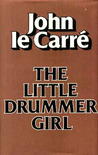
THE LITTLE DRUMMER GIRL BY JOHN LE CARRE
The Little Drummer Girl by John le CarréMy rating: 5 of 5 stars
”What would it be like really and absolutely to believe? (...) To know, really and absolutely know, that there's a Divine Being not set in time or space who reads your thoughts better than you ever did, and probably before you even have them? To believe that God sends you to war, God bends the path of bullets, decides which of his children will die, or have their legs blown off, or make a few hundred million on Wall Street, depending on today's Grand Design?”

Joseph proved to be more than just a fan with flowers.
Charlie is an English actress who has been reasonably successful on the stage and is one good role away from becoming an established actress when she meets a man on a beach in Greece. He isn’t like any other man she has ever met before. He has scars, unusual scars, scars that denote the violence that has been done to him, and because he was still alive she could assume that he had perpetrated violence, effectively, against his enemies .
’That Joseph was Jewish she had not doubted since her abortive interrogation of him on the beach. But Israel was a confused abstraction to her, engaging both her protectiveness and her hostility. She had never supposed for one second that it would ever get up and come to face her in the flesh.”
Charlie’s head is full of half formed radical left wing ideas about politics and social issues. She is promiscuous, always needing a man in her bed, and pretty enough to never have to look far for candidates. She thinks she understands what men want, but Joseph is an enigma who runs hot and cold. He keeps her emotions rising and falling like a stock market beset by outside forces beyond her understanding.
He wants more than sex from her. He wants her life.
Joseph is an Israeli spy and his job is to reel Charlie in for his boss Martin Kurtz. Martin is known by many names. He keeps several identities carefully separated in different files in his mind. He is a sword for the cause of Israel. He will use anyone or anything to protect his country. He has hand selected Charlie for a very specific task.
”You are definitely bastards. Wouldn’t you say so?” She was still looking at her skirt, really interested in the way it filled and turned. “And you are the biggest bastard of them all actually aren’t you? Because you are the biggest bastard of them all actually, aren’t you? Because you get it both ways. One minute our bleeding heart, the next our red-toothed warrior. Whereas all you really are--when it comes down to it--is a bloodthirsty, landgrabbing little Jew.”

Notorious with Ingrid Bergman and Cary Grant.
The relationship between Joseph and Charlie reminded me strongly of the Alfred Hitchcock movie from 1946…Notorious...which is one of my favorite Hitchcock films. T. R. Devlin (Cary Grant) plays a government agent who is tasked with recruiting Alicia Huberman (Ingrid Bergman) to infiltrate a Nazi organization. Alicia falls in love with Devlin and he with her, but the job takes precedence over any personal feelings he might have for her. He has difficulties fully trusting her very evident feelings for him because of her promiscuous past and he certainly doesn’t trust his own feelings for her either. There are some poignant scenes with rich, weighted dialogue where if either one would be completely honest with the other the personal would override the professional charade of their relationship. Alicia wants to be saved, but she also wants to please Devlin by doing what he wants. Joseph and Charlie find themselves in a very similar circumstances. Joseph would betray his country by saving her and Charlie would disappoint Joseph by refusing to go forward.
They interrogate Charlie, breaking down her past, her beliefs, and her personality to better weave her own life with the fabricated life they want her to assume. John Le Carre’s writing is simply brilliant in these scenes. It is painful to see Charlie having to face the reality of her own life and then having it wrenched and transfigured into a new reality that will best allow her to use her acting skills to convince an elusive Palestinian Bomber that she was once in love with his brother.
”She was holding back her tears with a courage they must surely admire. How could she take it? they must be wondering--either then or now? The silence was like a pause between screams.”
Through it all she was praying that Joseph would stop them. She hoped he would be her savior, her protector, and shelter her from the violent world they were asking her to be a part of.
Like T. R. Devlin in Notorious Joseph remains silent.
”Joseph emerged…. He came to the foot of the steps and looked up at her, and at first it was like staring into her own face, because she could see exactly the same things in him that she hated in herself. So a sort of exchange of character occurred, where she assumed his role of killer and pimp, and he, presumably, hers of decoy, whore, and traitor.”

The Master Spy Novelist, John Le Carre.
John Le Carre transcends the genre with this book. This is not just a spy book. Readers who struggle with this book are expecting a page turning thriller along the lines of a Robert Ludlum book, but this is so much more. This is literary espionage that challenges the reader with intricate details including the thoughts of the interrogator and the thoughts of the one being interrogated moment by soul wrenching moment. The book also explores the deeper human elements of what it really means to die for an idea, for a cause. As the plot advances Charlie also experiences the changing alliances that can happen as one becomes intimate with people you once perceived as enemies. Walking in the shoes of those you don’t understand blurs the lines of who is right and who is wrong and the black and white world in your head becomes a paler shade of both.

There is a 1984 movie starring Diane Keaton where Charlie is changed from an American actress instead of an English one. I have not seen the movie, but intend to very soon.
This is not an entertainment, but a marvelous piece of literary writing along the lines of Fyodor Dostoevsky or the very best of Graham Greene. I’ve read a lot of spy novels, and intend to read many more, but I must say without any reservation this is the best espionage/spy novel I’ve ever read and among one of the best books I’ve read from any genre.
View all my reviews
Tuesday, December 30, 2014
Americans Abroad
The Greater Journey by David McCullough
2011
Reviewed by Diane K.M.
My rating: 4 out of 5 stars
This book made me wish I could travel back in time to Paris in the 1830s. The collection of artists and writers there was remarkable.
In "The Greater Journey," David McCullough tells stories of a varied group of Americans who went to Paris in the 19th century, and then returned home with new ideas, new art, new writings and even new inventions. The group included James Fenimore Cooper, Oliver Wendell Holmes, Mark Twain, Henry James, Nathaniel Hawthorne, Ralph Waldo Emerson, Harriet Beecher Stowe, and Mary Cassatt, among others. One of my favorite chapters was about Samuel Morse, who studied to be a painter, but also ended up inventing the telegraph and Morse Code.
I also liked the story of Charles Sumner, who studied at the Sorbonne. When Sumner saw black students in the class with the same desire for knowledge as white students, it profoundly changed how he thought of African-Americans. After he returned home to the States, he became a powerful spokesman for abolition.
"It would be a while before Sumner's revelation -- that attitudes about race in America were taught, not part of 'the nature of things' -- would take effect in his career, but when it did, the consequences would be profound. Indeed, of all that Americans were to 'bring home' from their time in Paris in the form of newly acquired professional skills, new ideas, and new ways of seeing things, this insight was to be as important as any."
This is the third McCullough book I've read, the others being "Truman" and "1776," and I really like his writing style. He is a gifted storyteller and weaves in interesting details from history. I listened to this on audio (read by Edward Hermann), but I was glad I had a print copy to review because it includes some great photographs and pictures, especially of the artwork that was created in Paris.
There were so many fascinating people and great stories in this book, and I would highly recommend it to fans of history.
2011
Reviewed by Diane K.M.
My rating: 4 out of 5 stars
This book made me wish I could travel back in time to Paris in the 1830s. The collection of artists and writers there was remarkable.
In "The Greater Journey," David McCullough tells stories of a varied group of Americans who went to Paris in the 19th century, and then returned home with new ideas, new art, new writings and even new inventions. The group included James Fenimore Cooper, Oliver Wendell Holmes, Mark Twain, Henry James, Nathaniel Hawthorne, Ralph Waldo Emerson, Harriet Beecher Stowe, and Mary Cassatt, among others. One of my favorite chapters was about Samuel Morse, who studied to be a painter, but also ended up inventing the telegraph and Morse Code.
I also liked the story of Charles Sumner, who studied at the Sorbonne. When Sumner saw black students in the class with the same desire for knowledge as white students, it profoundly changed how he thought of African-Americans. After he returned home to the States, he became a powerful spokesman for abolition.
"It would be a while before Sumner's revelation -- that attitudes about race in America were taught, not part of 'the nature of things' -- would take effect in his career, but when it did, the consequences would be profound. Indeed, of all that Americans were to 'bring home' from their time in Paris in the form of newly acquired professional skills, new ideas, and new ways of seeing things, this insight was to be as important as any."
This is the third McCullough book I've read, the others being "Truman" and "1776," and I really like his writing style. He is a gifted storyteller and weaves in interesting details from history. I listened to this on audio (read by Edward Hermann), but I was glad I had a print copy to review because it includes some great photographs and pictures, especially of the artwork that was created in Paris.
There were so many fascinating people and great stories in this book, and I would highly recommend it to fans of history.
The Cry of the Owl
The Cry of the Owl by Patricia HighsmithMy rating: 3 of 5 stars
When a girl living in an isolated house spurns her fiancee for the peeping Tom that's been spying on her, things quickly circle the drain, lives destroyed in a maelstrom of hatred, jealousy, lies, and death...
I read The Talented Mr. Ripley in the fairly recent past and have been on the lookout for more of Patricia Highsmith and her twisted protagonists ever since. This one was only $1.99 on the kindle.
Robert Forrester is a soon-to-be divorced man working at an engineering firm in a small town when he chances upon Jenny alone in her home. Jenny soon gives her fiancee and decides she's in love with Robert. Robert decides he's not in love with her but not until after her ex-fiancee decides to ruin Robert's life with the help of Robert's crazy ass ex-wife Nickie. This is some twisted shit.
I have to think that Gillian Flynn is a big Patricia Highsmith fan since this thing has Gone Girl written all over it. I guess it's like what might have happened if Amy and Nick had gotten divorced but still remained a cancerous part of one anothers' lives.
I don't want to give away any more than I already have. Suffice to say, people lie, people cry, and people die.
I would have rated this much higher but Robert seems to be taking stupid pills throughout the book, every time his ex-wife appears, in fact. The ending is the worst offender.
However, the book is still a crazy read. There's not a person without a few screws loose among the main cast. Highsmith's writing is like a mannerly Jim Thompson. You get the feeling she knew first hand about the crazy shit she was writing about, much like old Jim.
3.5 out of five stars. It was a good read but not as good as Ripley.
View all my reviews
Monday, December 29, 2014

Reviewed by James L. Thane
Three out of five stars
In any long-running series, even one as good as this one surely is, inevitably some books have to be better and some weaker than others, and although I certainly enjoyed reading Invisible Prey, it's not among the best books in John Sandford's Prey series.
In every one of the books, at least thus far, the lead character, Lucas Davenport, and his supporting cast have always been consistently excellent--witty, intelligent, and always a lot of fun to hang out with, even if only vicariously. Given that, these books always tend to rise or fall depending on the quality of the villains involved, and through the years, Sandford has created some truly unique, creepy and compelling bad guys. Unhappily, that's not the case here. The crimes at the heart of the book are fairly pedestrian and the villains are sort of ho-hum, not nearly as capable of engaging the reader or of scaring the living bejeesus out of him or her as is often the case with a Sandford antagonist.
As the book opens, an elderly and very wealthy woman in St. Paul is murdered in her home, along with her maid. The house is chock full of paintings, antiques and other such things, some of which are very valuable and some of which are not. The problem is that there's so much of the stuff that no one knows for sure whether anything valuable is missing. It's possible that some junkie broke in and killed the women, simply looking to score enough loot to finance his next fix, especially since there's a half-way house, filled with offenders, right across the street. Or, of course, there could be something more involved.
As the chief investigator of the Minnesota BCA, Lucas Davenport would not normally be involved in an investigation of this type, but the wealthy victim was politically connected and so the governor puts Lucas on the job. At the same time, Lucas, along with that f***ing Virgil Flowers is involved in the investigation of a state official who may have been having hot, kinky sex with an underage girl. This is a very sensitive investigation politically, and it's a lot more interesting than the murder case.
The plot of the book is somewhat convoluted and involves antiques, quilts, frauds perpetrated against museums, and other such things. The villains are revealed early on and part of the story is told from their point of view. But they aren't all that interesting and they're not all that much fun to watch. The book flags a bit whenever the scene switches away from Davenport to them. Certainly these people don't hold a candle to Clara Rinker or to most of the other Sandford villains.
Again, that's certainly not to say that this is a bad book; it isn't. And even a mediocre book by John Sandford is a lot more fun to read than a lot of other books that one might pick up. I enjoyed the book, but it certainly won't rank among my favorites in the series.
Glorious Viking Gore
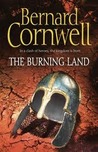
The Burning Land by Bernard CornwellReviewed by Jason Koivu
My rating: 4 of 5 stars
If reading this series doesn't make you wanna scream like this... http://ledzeppelin.alexreisner.com/so... ...then I just don't know what will!
The Burning Land continues Bernard Cornwell's bloodthirsty, battle-heavy and viciously violent viking saga.
England is still broken up into pieces. The Danes are threatening to overrun the land. Saxon King Alfred (later known as Alfred the Great) was holding on to Wessex and holding out hope of one day uniting the entire country under his banner. But needs the help of fighting men like our anti-hero hero Uhtred of Bebbanburg.
Though he's a pagan and acts like a Dane, Uhtred is actually a Saxon, who was raised by those viking Danes. He reluctantly works for Alfred, even if the piously Christian king and all his self-righteous priests get up Uhtred's nose. He's a fierce, skilled fighter who doesn't mind getting his hands dirty and his nose bloodied. It's what he's good at. However, he doesn't like to be anyone's lapdog, so any chance he gets, he heads north to threaten the impregnable fortress at Bebbanburg, his rightful seat of power, currently held by his usurping uncle.
Cornwell is a dab hand at crafting this particular character. You'll find him in the long-running Sharpe series as the titular main character. Cornwell is also quite adept at writing very exciting and highly realistic historical fiction. You're in capable hands on both counts. I especially like that he includes afterwards of real history information at the end of these books to let you know the true story behind the fiction. In this one he admits to falsifying the character of a historical figure to fit his novel and goes on to give a recommendation for further and more correct reading on said figure. That's a conscientious writer for you!
The Burning Lands is a particularly tight volume in this series. Each scene is meaningful and the action feels fast. Any lapse in the forward progress is a joy to read as Cornwell does his best to paint vivid settings and to portray all, from Saxon to Dane, man to woman and peasant to King.
View all my reviews
A Hunger For Lawrence
The Hunger Games by Suzanne CollinsReviewed by Jason Koivu
My rating: 3 of 5 stars
WARNING: Jennifer Lawrence is NOT in this book!

....Yah, I know, right?! What a rip-off! That delightfully precocious pixie of a full-grown girl who may not be the beauty of the world, but whose offbeat charm has vaulted her into the goddess stratosphere is missing and that's a crying shame.


"Pretty" is always nice, but give me the goofy girl every time!
Okay, let's move on from that barely-serious diatribe...
All the hoopla surrounding The Hunger Games had me expecting a reading experience so enthralling that it would whip my nipples off. Well, I've still got me nips. So, was this exciting at all? Yes. As exciting as the build up made it out to be? No, of course not. Is it ever? By now I should know better than to get too excited about reading a book said to be OMG!!!-good.
However, relative to other books, The Hunger Games had maybe a few more moments that kept me chained to it and reading on when I might have stopped, but in no way did I get irretrievably wrapped up in it. And that's probably because the story of a young girl fighting for her life and falling in love wasn't written with me in mind. Its appeal is not intended for a middle-aged grump.
This is a YA novel. I had to keep reminding myself of that and excuse its immature voice and some of the writing...although describing inanimate objects as being "heartless" gave me a chuckle, while the somewhat common use of adverb shortcuts couldn't help but annoy. I can see why The Hunger Games has become popular with teens. It's a coming of age tale in which the revelation that the real world and the people in it are not always black and white, good and evil, dawns upon the main character as it eventually does for teens.
Word of warning. I listened to the audiobook version of this as narrated by veteran television actress Carolyn McCormick. You may have seen her on Law and Order or One Life To Live. If you ever come across a book narrated by her, avoid it like the muthafncking plague! McCormick laid on the melodrama thick, stressing the last word in what seemed like every sentence. Go back to the start of this paragraph and lay on a heavy dose of languishing drama and epic intensity to the last word in each sentence and you can see how hit or miss the technique (if you can call that technique) works and how utterly annoying it is. It made me shout "Your speech pattern sucks!" for the first time in my life. Not to beat down on the woman, but she also has a baby-talk lisp that comes out when she pronounces "s", "th" and "oo" sounds. Listening to her pronounce "juice" is pretty funny. Listening to her for nine hours is not.
NOTE: I made sure to separate my negative feelings over the audiobook narration from my feelings on the book itself and my 3-star rating reflects that.
View all my reviews
Saturday, December 27, 2014
The Neon Rain by James Lee Burke
The Neon Rain
James Lee Burke
1987
First in the Dave Robicheaux series
Reviewed by Carol
★ ★ ★ ★
One of the movies on endless repeat with my best high school friend and I was The Big Easy with Dennis Quaid and Ellen Barkin. That and a couple trips to New Orleans are the sum of my Louisiana experience, and yet, when I read Neon Rain I feel as if I’m there, ghosting alongside Dave Robicheaux as he investigates. Burke’s writing is extremely evocative, in the very best way for the detective-centered mystery. A strong since of place, of the cultural gumbo of New Orleans and the surrounding rural area clinging to its heritage by fingertips.


It also has an equally strong sense of a narrator in turmoil. It’s a powerful book that begins with a New Orleans Police Department detective, Dave Robicheaux, visiting an former informant on death row, only to learn about a death threat against himself. Coincidentally, he recently discovered the body of a young black woman while he was fishing in the swamp. Something about the needle-tracks down her arm and her death doesn’t feel right to his instincts, and he starts hounding the rural sheriff’s department to follow through with investigating the death.


Characterization in this book is riveting. Robicheaux is the cop with his own code who slowly learns no one else shares, that he’s holding to values from another time. It’s interesting to watch his gradual realization; he believes he’s so cynical, so dialed in in the beginning, and he’s a bit right. Early on, when he meets with the parish sheriff to request an autopsy for the drowned girl, he ends up in a contest of wills that nearly becomes disastrous. Back in New Orleans, he harasses a porno theater owner, looking for the word on who wants to kill him. Both times, he’s so sure of his stance and the way to manipulate the situation for results–but then is surprised when it comes back at him. Slowly, it dawns that everyone is working their own angle. He suspects that, he halfway knows it, but he can’t quite conceive the absolute depth of the dishonesty.
Robicheaux also struggles with memories from the Vietnam war, and many of his coping strategies seem to stem from wartime experience. Its interesting being reminded of the psychological impact of a war that hasn’t been on our cultural consciousness for twenty-five years, overshadowed by more recent ones in sand and desert. My dad was in Vietnam, and I remember that period in the 1980s when I kept bugging him to talk about his experiences, first because of Platoon and then later Born on the Fourth of July. That’s the kind of book Burke has written, far-ranging and capable of recapturing a lost cultural time, and conjuring up memories of one’s own.

The lush descriptions of the setting are beautiful, and Burke does more with light and smells than any other mystery writer I can think of, immersing the reader in the scene. Yet when the action comes, it’s powerful and direct, even if it takes place in flashbacks. His first sentence guaranteed I would keep reading: “The evening sky was streaked with purple, the color of torn plums, and a light rain had started to fall when I came to the end of the blacktop road that cut through twenty miles of thick, almost impenetrable scrub oak and pine and stopped at the front gate of Angola penitentiary.”
The ultimate connections between the unknown woman’s drowning, [spoiler follows break]
Friday, December 26, 2014
Punkzilla
Adam Rapp
Candlewick Press
Reviewed by Nancy
4 out of 5 stars
Summary
For a runaway boy who goes by the name "Punkzilla," kicking a meth habit and a life of petty crime in Portland, Oregon, is a prelude to a mission: reconnecting with his older brother, a gay man dying of cancer in Memphis. Against a backdrop of seedy motels, dicey bus stations, and hitched rides, the desperate fourteen-year-old meets a colorful, sometimes dangerous cast of characters. And in letters to his sibling, he catalogs them all — from an abusive stranger and a ghostly girl to a kind transsexual and an old woman with an oozing eye. The language is raw and revealing, crackling with visceral details and dark humor, yet with each interstate exit Punkzilla’s journey grows more urgent: will he make it to Tennessee in time? This daring novel offers a narrative worthy of Kerouac and a keen insight into the power of chance encounters.
My Review
I really enjoyed this story about 14-year-old Jamie’s journey from Oregon to Tennessee to see his dying older brother. Jamie’s story is told in letters – long, honest and revealing letters, mostly to and from his brother Peter. Jamie keeps his letters in a notebook that never leaves his sight, many of which are not mailed. These letters tell of his brief experience in a military academy, his demanding father and unhappy mother, his strait-laced brother, Edward, his petty thievery, drug use, ADD, and the sad, violent, desperate and lonely characters he meets on the way. Peter’s letters tell of his career as a playwright, his artist lover, Jorge, and the disease that is ravaging his body.
This story was kind of sad, darkly humorous, and raw. I wanted to strangle Jamie at times. It drove me nuts that he referred to every woman as a “skeezer”, but I couldn’t help caring about this very troubled young man who was often mistaken for a girl and digs the Dropkick Murphys and wanting him to get to his brother in time.
“P it’s not like I WANT to look like I do. I wish I could grow some whiskers or have a scar over my eye. I’ve even thought about cutting myself I really have just like an inch-long slit over my right eye or across my cheek because that might help me look more manly or less soft or whatever.”
Subscribe to:
Posts (Atom)