Friday, October 13, 2017

Until We Meet Once More


Josh Lanyon
Just Joshin'
Reviewed by Nancy
3 out of 5 stars


Summary


Nothing cracks Army Ranger "Stone Man" Vic Black's granite front. A mission to retrieve an injured Navy SEAL from the treacherous mountains of Afghanistan is all in a day's work -- until he learns the missing SEAL is his former lover. This time it's personal.


My Review


Short, but intense.

I liked the tension that develops once Vic Black learns that the injured Navy SEAL he is about to rescue is his former lover, Sean Kennedy.

The story jumps back and forth between the mountains of Afghanistan and the year Vic and Sean were together while they were Midshipmen at the US Naval Academy.

Though I enjoyed the grueling search and rescue operation more than the sexual discovery, it was interesting to see how suppressed feelings, lack of communication, family expectations and career choices can easily end a relationship.

I’m glad Vic and Sean are getting a second chance.

Thursday, October 12, 2017

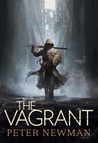
The Vagrant

The Vagrant (The Vagrant, #1)The Vagrant by Peter Newman
My rating: 3 of 5 stars

A silent warrior sets out on a dangerous path to reach the Shining City. All he carries with him is a baby, a powerful sword, and whatever meager supplies he has accumulated. Many tainted beings are searching to destroy the sword and only the man, The Vagrant, is able to protect and wield the divine weapon.

The Vagrant is a hard story to get into. First of all the title character doesn't speak. On top of that there is no internal dialogue that helps guide the story. Information is gathered from other characters along with flashbacks, but that's largely drips of information into a lake of a story.

The adversary in The Vagrant is rather vague. A breach has opened up in the world and the Seraph Knights along with one of the seven, Gamma, face off against the gaseous enemy that emerges from it. They are obliterated, but Gamma manages to wound the strongest of the enemy who becomes known as the Usurper. Before the sword can be destroyed a Seraph Knight flees with it.

The best way I can describe this gaseous enemy is that it's similar to the demons from the Supernatural TV series. Particularly early on before everyone and their mother had a demon killing blade. These gaseous enemies can possess living and dead people like the Supernatural demons. Doing so provides the possessed with a new personality and greater strength. They can also mildly alter others in a way known as the taint. The infected people can range from having full control of themselves to mindless pawns of the enemy. Many are physically altered as well.

Honestly I'm not sure I understand much else about what was happening in the story. The Vagrant seeks to reach the Shining City with the baby and travels from place to place doing good along the way even at the cost of ease and comfort to himself.

In the end The Vagrant is a story that took big risks with its storytelling and for me it didn't truly come together.

View all my reviews

Monday, October 9, 2017

The Poetic Philosophy of Thornton Wilder

The Bridge of San Luis ReyThe Bridge of San Luis Rey by Thornton Wilder
Reviewed by Jason Koivu
My rating: 5 of 5 stars

This is not mere writing. This is poetic philosophy.

I'd heard it was good, but I didn't know what to expect from Thornton Wilder's The Bridge of San Luis Rey. For all I knew, it took place somewhere along the Californian coast along with all the other Sans and Santas. After all, there is the San Luis Rey Mission in San Diego. But no, this is set in Peru. Even better! I love when a story transports me some place I've never been before.

The concept in a nutshell as explained on Wikipedia:

It tells the story of several interrelated people who die in the collapse of an Inca rope bridge in Peru, and the events that lead up to their being on the bridge. A friar who has witnessed the accident then goes about inquiring into the lives of the victims, seeking some sort of cosmic answer to the question of why each had to die. The novel won the Pulitzer Prize in 1928.

And well deserved! This is not a family saga of epic proportions. It's short. It's compact. It takes a slice or two of life and examines it. It does this three times for five people. The numbers are only slightly off and the stories don't all focus on one incident, but this is still quite reminiscent of Akira Kurosawa'sRashomon, itself based on two short stories by Ryunosuke Akutagawa.

The people and their problems are varied and interesting. Their choices and why they chose them are made even more so by Wilder. Maybe this isn't 5 star perfection, but it is damn good.


View all my reviews

O Pioneers!

O Pioneers!O Pioneers! by Willa Cather
Reviewed by Jason Koivu
My rating: 4 of 5 stars

Beginning with simplicity, innocence and hope, Willa Cather runs her pioneers through the ring of fire that is the hallmark of the pioneer's life and only some of them survive.

Perhaps I've made that sound more exciting than O Pioneers! actually is. There are far too many dull scenes in this book for me to call it a perfect classic, but it is a solid addition to American western frontier literature.

Writing from her experiences, Cather populated her novel with Scandinavian immigrants, gave them backbones and leathery hides, and set them upon the fields of Nebraska. Their characters bloomed into an organic array of flowers, weeds, fruit, and prickly briars. What she sacrifices in the way of drama and action, she more than compensates in personality and the study of human behavior.

The central figure is a strong-willed and whip-smart young woman, who grows into a successful lady of the land. Our heroine is also good-natured, well-loved and kindly even to killers. If it weren't for the slightest of faults, her named could be Mary Jane. However, she is too real to be thought of as some caricature of saintliness.

Cather's My Antonia outshines this novel in its stark-yet-evocative descriptions of immigrant life on the prairie, but this is a damn fine book and worthy of the accolades it has received.

View all my reviews

Friday, October 6, 2017

The Slave Catcher


Lilia Ford
Self-Published
Reviewed by Nancy
4 out of 5 stars


Summary


Star City, best known for its brothels and casinos, is one of the few planets in the quadrant that outlaws slavery—for everyone, that is, except the galaxy bullies, the Borathians. Telepaths and recent conquerors of a backwards planet named Earth, the Borathians are simply too powerful to refuse. A special treaty allows them to bring their pleasure slaves or “bonds” onto the planet, and if one escapes, they have five days to recover him.

Sam Beron, private locator, may have been born on a Maradi space cruiser, but Star City is his home now and he’d say he despises slavery as much as any native. Unfortunately, a run of bad luck at the casino tables leaves him flat broke and scavenging expired military rations out of a neighboring dumpster. Next thing he knows, the Borathians are offering him a fortune to track down one of their escaped bonds, a beautiful Earth boy named Liam. What's a hungry locator to do?


My Review


Through the eyes of Sam Beron, private locator, the reader gets a glimpse of life on the hedonistic planet, Star City. The story started off a little sluggishly, but I grew to love Sam’s musings on life, pleasure, family, sex, Earthish culture, and those intrusive Borathians who won’t stay out of his mind.

“The moment he looked at me, I couldn’t look away. I could feel his telepathic powers flooding my brain, like there wasn’t a single part of my thoughts he couldn’t see as easily as I could see his clothing. If you’d been there, you’d recognize that it wouldn’t have taken more than a thought for him to destroy my mind – or control me until I had no more independent will than a cleaning droid.”

Because Sam chose to live planetside, he was cast out from his family, a race that leads a nomadic existence cruising around the galaxy. While there are no prohibitions on worldly pleasures, slavery is outlawed for all but the telepathic Borathians, who are allowed to bring their human “bonds.” Because Sam is bad at gambling, he is forced to accept a job recovering a Borathian’s escaped bond even though he finds the idea of slavery abhorrent.

I liked this story a lot. It was wry and sexy, packing an emotional wallop as Sam reveals the soft center under his crispy exterior.

I nearly cried.

I expected a romance and got so much more.

Thursday, October 5, 2017

Hunt for Valamon

Hunt for ValamonHunt for Valamon by D.K. Mok
My rating: 3 of 5 stars

The Prince Valamon has been kidnapped from his room in Algaris Castle. Whoever committed the kidnapping used magic. Valamon's brother, Prince Falon, sends an unlikely pair to rescue Valamon, Seris a healing cleric and Elhan a cursed girl. During their search for the prince, Seris and Elhan realize that a missing prince isn't the Empire's biggest problem. A war is coming.

Hunt for Valamon is a sort of twisted fairy tale. Lightly twisted, but largely still in a Disney style. Everything was overly neat and taken care of nicely. The twist occurs in that the main protagonists aren't a knight and a princess, but rather a healing cleric Seris and a cursed girl Elhan. The two of them have a peculiar quest due to the fact that Seris isn't particularly useful for anything other than healing. While Elhan better known as the Kali-Adelsa, the accursed one, has a different problem. Her curse leaves a trail of destruction in her wake.

The main characters Seris and Elhan are easily the strongest part of Hunt for Valamon. Seris is the most sane cleric of Eliantora, which isn't saying much as there are only three clerics. It seems being a cleric of Eliantora effects one's sanity over time. Eliantora has a number of odd demands in order to receive her healing power, such as the fact that her clerics can't carry money. Seris mainly stays in the temple and away from people who don't need to be healed.

Elhan on the other hand has quite the personality due to her curse. She can't stay any one place for long as anyone she stays near and any place she stays for long is in danger due to her curse. Elhan is self-reliant and sarcastic yet surprisingly positive despite the fact everyone hates her and many try to kill her.

Hunt for Valamon is a solid story, but one that doesn't do anything particularly special or interesting.

View all my reviews

Wednesday, October 4, 2017

ALONE: BRITAIN, CHURCHILL AND DUNKIRK BY MICHAEL KORDA

Alone: Britain, Churchill, and Dunkirk: Defeat into VictoryAlone: Britain, Churchill, and Dunkirk: Defeat into Victory by Michael Korda
My rating: 4 of 5 stars

”Side by side...the British and French people have advanced to rescue not Europe only but mankind from the foulest and most soul-destroying tyranny which has ever darkened and stained the pages of history. Behind them gather a group of shattered states and bludgeoned races, the Czechs, the Poles, the Norwegians, the Danes, the Dutch, the Belgians--upon all of whom the long night of barbarism will descend unbroken by even a star of hope, unless we conquer--as conquer we must--as conquer we shall.”

----Winston Churchill


 photo Winston20Churchill_zpscfilx9vi.jpg
Winston Churchill addressing the nation, nay the world, he was trying to save.

If you ever feel the need to be inspired about humanity again, take the time to read or listen to the wartime speeches of Winston Churchill. He was not only a gifted writer, but a brilliant orator. He could move even his most ardent enemies to tears. I can’t imagine the world would be the place it is today if Churchill had not become Prime Minister of Great Britain at one of the most critical eras in the history of the World. There were many moments, especially during the early part of the war, when he took the fears of his whole nation on his back and molded that fear into an unshakeable resolve.

”We shall fight on beaches, we shall fight on the landing grounds, we shall fight in fields and in the streets, we shall fight in the hills. We shall never surrender and if, which I do not for the moment believe, this island or a large part of it were subjugated and starving, then our empire beyond the seas, armed and guarded by the British Fleet, will carry on the struggle until in God's good time the New World with all its power and might, steps forth to the rescue and liberation of the Old.”

----Winston Churchill


Michael Korda was a young boy of privilege during WW2. The actress Merle Oberon was his aunt. The great director and producer Alexander Korda was his uncle. His father was an art director in the movies, and his mother was an actress. When the war started coming to the shores of England, the Kordas were in America making movies, like That Hamilton Woman (1941), as propaganda films to raise morale in England. There is no better way to bring a tear to the eye of an Englishman than to evoke the name of Horatio Nelson. The movie, which stars Vivien Leigh and Laurence Olivier, is actually really good, so do watch it if you get a chance. Korda’s mother always felt guilty that they did not suffer in London with the rest of their friends, as if avoiding the pain and danger was somehow shirking the duty of her heritage.

A few years ago, I read this diary of a German soldier, and he wrote about how the Germans had such a hard time catching up with the French because they were fleeing like rabbits in front of them, but they knew instantly when they hit the British line. They weren’t running. They were there to fight. The blitzkrieg was blowing through countries within days that should have taken months. The French had one of the largest standing armies in the world, and the Germans were going through it like tinfoil. ”It was not for lack of brave officers and soldiers that the French Army was collapsing; it was more because of the fatal strategic misjudgment, paralysis of will, helpless pessimism, and political intrigue at the top, combined with certain areas in which the French armed forces were poorly equipped for a modern war, especially an inadequate and obsolete air force.” There was the lure of Paris, a mere 30 miles in their rear where their beautiful girlfriends/wives, good food, and bottles of wine were waiting for them. Korda commented that the French soldiers also felt like they were doing all the dying for the British. This bothers me given the fact that these French soldiers were defending their own soil. If that was their attitude, I can see why morale was an issue.

 photo Panzers_zpsx0x6lqgo.jpg
I can only imagine how terrifying it must have been to see a division of Panzer tanks coming down the hill towards me.

There were opportunities. The German tank blitzkrieg was running so far ahead of the German foot soldiers that some organization on the part of the French could have punched holes in the German line and cut the tanks off from their support and inflicted some defeats on an army that was starting to feel unbeatable. When I watch football and the defense is blitzing the quarterback, I always think about the opportunities that overcommitment from the defense has for a steely nerved quarterback who can hang in the pocket long enough to find those open receivers. The French needed that one guy who could provide the leadership to achieve victory out of defeat.

Meanwhile, the British Expeditionary Force (BEF) were doing all they could to slow the Germans long enough to find a way back to England. No one had expected the French army to be crushed so easily. As the BEF slowly compressed backwards onto the beaches of Dunkirk, the situation was dire; in fact, if the Germans managed to capture the British Army, the war would most certainly be over. The appeasers in the British government would gain the power to negotiate a peace settlement, which would have been dire for France, but would have most certainly gutted the British of their pride and joy...the navy. Hitler would have wanted that glittering array of ships.

Who would have stood in the way of Adolf Hitler?

The title of this book is apt…Alone; that is the situation that Britain found herself in, with the flower of her army trapped on a beach a mere thirty miles from the white cliffs of Dover.

 photo Dunkirk20movie20poster_zpsekjzwnsu.jpg


If you haven’t seen Dunkirk (2017) directed by Christopher Nolan, please do so. There are scenes in that movie that are going to haunt me for the rest of my life. It is simply brilliant. The quiet, the building tension, the desperation, and the moments of true heroics are just so splendidly balanced to leave the viewer completely emotionally wrung out by the ending credits.

I’ve always been emotional about Dunkirk because I feel it is quite possibly the grandest moment in world history. When the call is made to the British civilians to go get their boys off the beaches of Dunkirk, 850 crafts, a flotilla of shallow draft boats that could reach the beach, were launched.

Everything that floats.

I can only image what it must have looked like to see those tiny boats appearing on the horizon. They must have looked so fragile bobbing out on that big ocean. They helped save 198,000 British soldiers and 140,000 French soldiers.

 photo Little20Boats20of20Dunkirk_zpsokdis1da.jpg
The Little Boats of Dunkirk.

Korda will take you through it all, step by step. You will experience Churchill’s battles in Parliament and the rearguard action of those who slowed the German advance to give the men on Dunkirk beach a chance. The book is loaded with photographs, sprinkled throughout the text the way I like them best. Korda will also show you the important, baffling moment when Adolf Hitler... blinks... that allows Britain the slenderest of hopes of fighting on. They had to hold on until the New World could once again come and save the Old World.

If you wish to see more of my most recent book and movie reviews, visit http://www.jeffreykeeten.com
I also have a Facebook blogger page at:https://www.facebook.com/JeffreyKeeten

View all my reviews

Monday, October 2, 2017

Scudder #4 Slows the Good Times Train

A Stab in the Dark (Matthew Scudder, #4)A Stab in the Dark by Lawrence Block
Reviewed by Jason Koivu
My rating: 3 of 5 stars

These Matthew Scudder books aren't action-packed, sometimes they're even slow, but boy howdy, do I ever enjoy them!

I like the picture you get of New York City in the '70s (At least with these first few books in the series. I'm not sure about the rest, because I haven't read them). I love Scudder's character. He's not in it for the money. Admirable. I like the light mystery involved in each book. Lawrence Block keeps you guessing! All of these things and probably a few more I'm forgetting right now just jive really well with my reading tastes!

Usually with these books there's a certain amount of psychology, as in the psychology of the killer. However, in A Stab in the Dark we get even more of a look at "why?". Psycho killers and their copycats are given a decent an examination here. It's not super deep. These Scudder books are fairly short after all. However, it is about as long as you'd want it to be in a crime fiction pleasure read.

So, book #4 in the series was a success and I'll definitely be moving on to #5!

View all my reviews

Home is Where the Bryson Is

At Home: A Short History of Private LifeAt Home: A Short History of Private Life by Bill Bryson
Reviewed by Jason Koivu
My rating: 4 of 5 stars

Well that wasn't very "at home" at all, quite frankly! But hey, it was still good!

In At Home: A Short History of Private Life Bill Bryson, that transient American-Brit, is in England for this look at the house, that thing humans use to keep the rain off their heads. If you've ever gone out for a drive you've probably seen one.

Using the house he bought in the Norfolk area of England (northeast of London), Bryson takes us for a lengthy and meandering tour of each room of the standard home from the cellar to the attic. He also details a few different styles of homes over time and takes in a good deal of history in the bargain...Western history that is, and most of that is specific to the UK and US.

The function, usage, transformation and more of each room is described, occasionally exhaustively. Tangents ensue often and are sometimes longwinded. For instance, while discussing the bedroom Bryson goes beyond sex and sleeping, getting on to the topics of surgical practices and the Plague among other things.

As luck would have it, I'm the sort of person who loves facts, factoids, tidbits, walking encyclopedias, and brainiacs. When someone starts a sentence with "Did you know...", I'm the guy pulling my chair up closer. I am Bryson's perfect audience. Not everyone is, so I expect quite a few readers would be annoyed by the writer's wandering ways, especially house-lovers who aren't necessarily interested in Samuel Pepys' extramarital affairs and who just want to focus on the bloody house for the love of Frank Lloyd Wright!

However, even I have my limits and this is probably my least favorite Bryson book so far, but that's not to say it's bad. It's quite good and I really enjoyed it. The thing is, I REALLY enjoyed the other books of his I've read so far and this one lacks the joy and exuberance of the others. RATING: 3.5

View all my reviews

Sunday, October 1, 2017

Alice

Alice (The Chronicles of Alice, #1)Alice by Christina Henry
My rating: 4 of 5 stars

After her disastrous encounter with the Rabbit, Alice is confined to an insane asylum in the Old City. When a fire breaks out, she escapes the asylum with Hatcher, the axe-murdering inmate next door. However, the Jabberwock is on the loose as well, and to stop him, Alice will have to cross paths with the Rabbit once again...

Confession time: While I whiled away many a day playing Dungeons and Dragons, most of today's doorstop-sized fantasy novels don't hold a lot of interest for me. Alice, however, is another animal entirely.

While it has its roots in Lewis Caroll's familiar tales, Alice has a lot more in common with works like The Magicians and The Child Thief, deconstructions of older genre works. It bites like a horror novel at times and I was happy to let the bloody juices run down my chin.

Alice is not for the squeamish. She escapes the Rabbit's warren after he rapes her and soon finds herself locked up. Many figures from the earliest iterations of Alice's adventures are present and are crime bosses, many of them trafficking in women, in addition to their other vices.

The world building in Alice was exquisite, a Victorian era society where the rich live in the New City while the majority of people live in the dog eat dog world of the Old City, a world controlled by crime lords like The Walrus, Mr. Carpenter, The Caterpillar, Cheshire, and, of course, The Rabbit.

Aided by Hatcher, who may be an incarnation of The Mad Hatter, Alice goes careening through the back allies of the Old City, going up against all sorts of miscreants, discovering her birthright, and facing her darkest fears. That, and there is a shit load of violence. What more could a guy ask for?

Apart from thinking the ending was a little anti-climactic, I don't have anything bad to say about this book. It was creepy, unsettling, brutal, and a damn captivating read. It kicked a serious amount of ass and Christina Henry can come to my tea party any time. 4.5 out of 5 stars.


View all my reviews