Friday, September 6, 2013

Sprout


Dale Peck
Bloomsbury USA 
Reviewed by: Nancy 
4 out of 5 stars

Summary


How many secrets can you hide in plain sight?

Sprout Bradford has a secret. It’s not what you think—he’ll tell you he’s gay. He’ll tell you about his dad’s drinking and his mother’s death. The green fingerprints everywhere tell you when he last dyed his hair. But neither the reader nor Sprout are prepared for what happens when Sprout suddenly finds he’s had a more profound effect on the lives around him than he ever thought possible. Sprout is both hilarious and gripping; a story of one boy at odds with the expected.


My Review


Daniel Bradford (aka Sprout) is the new boy in school. He moved from Long Island to rural Kansas with his alcoholic father when he was twelve.  

He dyes his hair green, has a way with words, makes new friends, and even finds a boyfriend.  

This story was a little funny and a little sad. It dredged up some of my own painful memories of moving from the “Big City” to "the Country"). I can totally relate to Sprout's feelings about having to adapt to a whole new way of life in a small town, his inability to fit in, and difficulty making friends.  

At first, I felt Sprout’s voice was too adult and his vocabulary a little too advanced. As the story progressed, and I became closer to the character, I found him more believable. Because of his circumstances, Sprout has had to grow up a little faster than his peers with more ideal home situations.  

Sprout is a quirky and, at times, sarcastic character. I liked being a part of his thought process, learning about his friends, his family, his teachers, and seeing him mature.  

This is a great story for young and old alike. Those who have a hard time “fitting in” will surely relate.

Also posted at Goodreads.

Tuesday, September 3, 2013

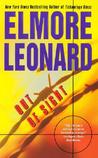
Out of Sight

Out of SightOut of Sight by Elmore Leonard
My rating: 4 of 5 stars

Ace bank robber Jack Foley breaks out of jail with every intention of resuming his old ways until he runs into US Marshal Karen Sisco. Sparks fly and each find themselves conflicted. Will Karen be able to do her job and bring Foley in when the time comes?

Out of Sight is the story of Jack Foley, bank robber extraordinaire, and Karen Sisco, bad ass US Marshal bent on bringing him in after he escapes from a prison and the two of them get locked in the trunk of a car when she happens to be in the prison parking lot.

Like all Leonard books, the lines between good and bad are as blurred as a photo of the Loch Ness monster. Jack and Buddy, while bank robbers, don't seem like bad guys. I like that Leonard made Jack likeable without feeling the need to Robin Hood him up. Karen's a capable lady and I love the relationship she has with her PI father.

Leonard did a good job with the relationship between Foley and Sisco as well. In lesser hands, it could have easily degenerated into romantic comedy drivel but Leonard makes it work. Without giving it away, they don't ride out into the sunset at the end and you get the feeling the time period in the book is all they'll ever have.

The really bad guys in this one, Maurice, Kenneth, and White Boy, are pretty bad by Leonard standards. I don't recall many of Leonard's other antagonists being rapists. They made Foley and Buddy look like angels by comparison.

Like a lot of Leonard's books, the tension builds until the shootout at the end. Can Karen set aside her feelings and bring Jack in when the chips are down? You'll have to read and see. As always, the dialog is as smooth as 40 year old whiskey.

For my closing remarks, it was interesting that one of the characters mentioned Pulp Fiction since Tarrantino's next movie was Jackie Brown, based on Rum Punch, an Elmore Leonard novel. Also interesting, Karen's contact in Detroit is Raymond Cruz, hero of City Primeval!

Some Elmore Leonard books are awesome and some are just ok. This one is out of sight! Get it? 4.5 out of 5 stars!

The Big Bounce

The Big Bounce (Jack Ryan, #1)The Big Bounce by Elmore Leonard
My rating: 3 of 5 stars

Washed up wannabe ball player Jack Ryan has a brush with the law and soon gets entangled with Nancy, a rich man's young girlfriend. Turns out Nancy is a thrillseeker and soon has Jack headed for another brush with the law...

If I'm not mistaken, this is Elmore Leonard's first crime book. While it's by no means as polished as his later works, it's the prototype from which the rest evolved.

Jack Ryan, the protagonist, is a conflicted guy pulled into a femme fatale's orbit and finds himself powerless to resist her pull, no matter how outlandish her ideas are. Nancy, the femme in question, gets her kicks by breaking windows at rocks, firing her .22 pistol at boats and windows while driving her mustang 70 mph. Complicating things are a pair of mugs Ryan did some B & E with at the beginning of the story and the boss of the cucumber-picking outfit Ryan was working for until he beat up his crew leader.

Like every Leonard book after this, there is a fair amount of double dealing. Also like it's descendents, the dialogue is slicker than a wet raft and the lines between good and bad are as blurred as the drive home after a weekend-long drunk.

Brief side note: This has been made into a movie twice but I have no inclination to see either since I don't buy Ryan O'Neal or Owen Wilson as Jack Ryan. Or as capable actors, for that matter.

For historical reasons, you'll want to give this a read as an Elmore fan. Otherwise, you could safely miss it. It's not bad but old Dutch hadn't hit his rhythm quite yet. It's like the demo version of one of your favorite songs. 3 out of five stars.

Monday, September 2, 2013

Old Soldiers Never Die, They Just Get New Comic Book Writers

Captain America Vol. 4
written by Ed Brubaker & Cullen Bunn
illustrated by Scot & Steve Epting

Reviewed by Kemper
4 out of 5 stars

Ed Brubaker wraps up his 8 year run of writing Captain America, and once again he does a nice job of making Cap a lot more than just a guy running around in a flag suit while punching out villains and shouting, “ ‘MERICA!”

Madame Hydra and Bravo are launching repeated attacks against civilians using a new pack of super baddies called the Discordians, but what’s even worse is that TV news host Reed Braxton is working the public into a frenzy by claiming that Cap is obsolete and incapable of protecting America.  Braxton starts blaming Cap for all of America’s woes and soon angry mobs begin rioting all over the country.  Even worse, Cap is starting to doubt himself.

The stuff with Cap and his pals versus Hydra is pretty standard superhero fare. The plot featuring Braxton tearing down Cap is where Brubaker makes an effective point about how cable news is a perpetual outrage machine used to manipulate American society.  There’s a particularly nice bit while Braxton reassures viewers that he’ll stay on the air during an attack to make sure that they get the truth and accountability they deserve, and all of this self-aggrandizement is juxtaposed against the images of Cap on the ground risking his life while fighting bad guys and saving people who berate him for it.

The Brubaker era has encompassed the death, replacement and return of Captain America, and he’s always been interested in exploring the concept of what it means to be a symbolic figure. Whether it was Steve Roger as the old war hero who was increasingly feeling the burden of wearing the red, white and blue as regrets piled up or Bucky Barnes struggling to fill Steve’s shoes and atone for his sins, Cap remained the guy people looked to for inspiration and leadership in the Marvel universe even if the man behind the mask doubted whether he was worthy of that trust.

The best part of this collection is Brubaker’s swan song in which Steve recounts his long history in conversation that also includes a nice nod to the first Captain America comic book and its creators, Joe Simon and Jack Kirby.  The point is underlined here that Steve never wanted to be a hero.  He was supposed to be the first of many super-soldiers, but circumstances forced him into becoming something more than a guy who did his part.  It also is a nice summary of how what started as a propaganda character to punch Nazis eventually became a way for various comic book writers and artist to explore the ideology of America at it’s best and worst.

Another Entertaining Read from Jamie Harrison


Reviewed by James L. Thane
Four out of five stars


This is the third of Jamie Harrison's novels set in the small town of Blue Deer, Montana, and featuring archeologist-turned county sheriff, Jules Clement. In the first two books, The Edge Of The Crazies and Going Local, a prominent theme was the interaction between the long-time residents of Absaroka County and the usually wealthy newcomers who were moving into the county, attracted by its beauty and recreational opportunities.

In this case, however, Harrison sets that conflict aside to examine the relationships that exist and the way that crime can affect those relationships, in a tiny community where everyone knows virtually everyone else and in which they are often related to each other by blood or marriage.

By now, Harrison has firmly established the basic cast of characters that inhabit Blue Deer and orbit around Jules, the principal character. The relationships among them are tested when a fisherman discovers a portion of a skeleton on an island in a nearby river. Much of the upper torso, including the head, is missing. But some hair has been preserved as has the man's ornate belt buckle. In addition, there's the two bullets that Jules discovers on the ground under the man's abdomen.

It seems clear that the body was buried on the island years earlier and only exposed now as the river gradually eroded away a portion of the island. Jules, who was an archeologist before returning to Blue Deer, is thrilled at the prospect of using his scientific skills to investigate the man's death.

Jules ultimately determines that the man was somewhere in his twenties at the time of his death and that he was killed sometime in the late 1930s, and he sets the elderly ladies of the town's historical society on the task of identifying someone who went missing about that time and who was never heard from again. In doing so, though, he inadvertently opens a can of worms that a lot of people, including members of his own family might wish had been left unexamined.

In the meantime, of course, Jules has to deal with the usual run of crimes that occur in a small town like his, including drunken driving, domestic abuse and juvenile delinquency. There's also a rapist attacking women who live alone and who seems to be increasing the frequency of his attacks.

A lot of eccentric characters populate this book and it's as much fun watching Jules navigate the complexities of the relationships among them as it is to watch him at work attempting to solve all these crimes. But the reader should not expect this to be a nice cozy mystery. It isn't, and Jules is no Miss Marple. Underneath the humor, there's a hard edge to these books.

The cast of characters is large, and sometimes it feels like you might need a flow chart to keep straight them and the relationships involved. A reader needs to pay attention, but the attention is well-rewarded by a solid, entertaining read. This is a book that would appeal to a large number of readers, but as is often the case, someone new to the series might well want to start with the first book rather than the third.

Sunday, September 1, 2013

Left Me in the Cold

COLD DAYS
Jim Butcher
2012
Recommended for: Dresden fans
Reviewed by Carol
★  ★   1/2


I dream of an urban fantasy novel that celebrates humanity in its many shapes and backgrounds.
I dream of an urban fantasy that integrates folklore, the myths of world cultures, the tricksters and thieves and intelligent life in many forms.
I dream of kindness paying unexpected dividends.
I dream of an urban fantasy that moves me, pushes my boundaries, questions my institutional beliefs as much as The Sparrow did, a book that left me an emotional wreck.
I dream of an urban fantasy that doesn’t make women out to be a collection of parts that inspire lasciviousness.
I dream of an urban fantasy that passes the Bechdel test.
In short, I dream of something besides the first eight chapters of Cold Days. Butcher isn’t the only one, mind you. He’s just the one that makes bestseller lists every time Dresden hiccups.

****************************************************************

Review thoughts

Ordinarily, I’m not one that usually pays much attention to the “show don’t tell” school of writing advice, but I immediately noticed how much of the book consists of Butcher/Dresden telling the reader about everything. Dude–you know it is book fourteen in a series, right? You don’t need to describe the Chicago skyline. (Or maybe you do–this could by Anycity, U.S.A.). You also don’t need to tell us what your apartment looked like, about Bob the skull, Butters’ job at the morgue, your creepy past feelings about Molly, your VW bug, how perfect Thomas’ body is, your preference for fire magic, leather dusters and charm bracelets or your soulfire–give us the action, how it feels and we’ll figure it out.

I confess I’ve read the series with lackluster enthusiasm since book 8 or so, but never before have I been so convinced Dresden is an asshat. I wouldn’t even friend him on Facebook, that’s how much of an Equus posterior he is. Sure, some of that might be the Winter Knight persona showing through. But most of it is the same ol’ that’s troubled him since book one. Like Rachel Morgan in Kim Harrison‘s witch series, character growth is glacial. In his continued ode to chauvinism, he admits he can’t hit a woman, even if she’s a psychopathic, possessed female who wants to start Armageddon.

Correlated to the character issues is the development of Dresden assuming mantle of the Winter Knight, one of the crucial points of this book. The power of the mantle causes intense feelings of rage and lust–at least, Dresden frequently attributes it to the ‘mantle.’ However, Butcher tells us a great deal about how ‘calculating’ Winter is, how the chief aspect is a focus on logic, reasoning, and elaborate plotting based on calculating the odds, even gauging for emotional response. So why is Dresden’s Winter aspect so prone to irrational rage and sexual rapaciousness? It felt inconsistent, and since significant plot points have to do with characteristics of the avatars of Summer and Winter fae courts, it was bothersome.

As usual, I most appreciated the supporting mythical characters. I enjoyed Demonreach, the island’s personification, and discovering the innermost workings of the island. Loved Odin. I rather liked the vicious Cat Sith. Butcher does a nice job of remaining true to the early folklore spirit of fae, their tricksy motives and inhuman ethics (although not pronunciation, natch). I liked Thomas’ brother relationship and calling Dresden out, although again, I felt like I had read that before. While I liked Molly’s character change and confident maturity, it seemed a little sudden from the Molly I remembered. Granted Dresden’s been gone at least 3 months during rehabilitation and somewhat longer during Ghost Story. But she seems like an entirely different person. I suspect her story is even more interesting… wish he could find someone to tell it.

That said, I did find the storyline rather engaging, particularly in the last half of the book, when the expositionary hiccups were ironed out and it finally progressed into steady action. I will note that a couple of plot points annoyed me. One, and this is small but telling, Dresden spent an hour telling his friends about the varied ways blood can be used for tracking (because it’s not like he hadn’t already used it as a technique in other books–eyeroll). Conveniently, he still forgets this a few hours later. Two, the overall plot continues to be

[SPOILER]
preventing Chicago from being wiped from the earth–as well as the earth from being wiped out by the Outsiders. This has been the penultimate threat in the last chunk of books (I can’t be bothered to count how many, but definitely in Death Masks and White Knight), so it’s a little repetitive.
END SPOILER]

Three, Dresden’s internal conflict is pretty much a repetition of a number of other books in the series as well, especially in Death Masks, when he picks up the silver coin and is fighting to identify self versus non-self urges and thoughts.

Writing remains uneven. Butcher continues his self-conscious writing, full of nudge-wink moments to the reader. There’s a very out front moment where Harry admits he “jokes under pressure” that sounds a great deal like Butcher trying to answer critics’ irritation with wise-cracking heroes in their moment of confrontation. Dresden misses a Firefly reference from Bob. Presumably the humor comes from the reader being in on the joke, but it did throw me out of the story long enough to consider why Dresden persistently quotes Star Wars and Princess Bride and yet remains challenged by more recent geek-culture phenomenona. There’s also an extremely awkwardly inserted “Not That There’s Anything Wrong With It” conversation on some (male) gay sexuality that occurs in the Magic Hedge (!!!). It’s very strange, non-sequitur and generally smacks of half-assed defensiveness. More than anything else, that threw me out of the story (and necessitated a quick trip to the opthamologist for an eye repair).

Had Dresden not been so focused on his male organs, I might have considered 4 stars. However, his general obsession with “possessing” every female in sight (Mab, his physical therapist, Maeve, fae women, Molly, Murphy, Lily, etc), coupled with Butcher’s general insistence of describing all females in the book in terms of sexual appeal (the two that weren’t were clearly defined by their lack of appeal) makes this a library-only recommendation, and that mostly for Dresden fans.

Two and a half schwing! stars

Death of Spider-Man

Ultimate Comics Spider-Man: Death of Spider-Man
by Brian Michael Bendis
art by Mark Bagley

Reviewed by Sesana
Four of five stars


This doesn't really need a plot summary. It's all right there in the title. Peter Parker will die. And because this is in the Ultimate universe, his death will be real and permanent. That's the plan, at least, and Marvel hasn't changed their minds yet.

I've read this book twice now. The first time around, it was first time I'd read Ultimate Spider-Man in years. I'd stopped somewhere around the fifth or sixth trade, and forgotten virtually everything that I'd read. Even without the background of 150+ issues, I was still absorbed by the story. Enough so that I went back and read those 150+ issues, and then this again. And let me tell you, it makes a huge difference.

It's not that you can't read and enjoy this trade alone, without any context but what most people have gotten through cultural osmosis. If you can vaguely identify who Peter Parker, Aunt May, Uncle Ben, Mary Jane Watson, Green Goblin, and Doctor Octopus are, you're good. Those little scraps of information are all you really need to know. And yet, I still heartily recommend reading more Ultimate Spider-Man first. Because context will help, greatly, and also because Ultimate Spider-Man, to this point, is almost uniformly good to excellent.

I'm glad that I came back and read, with context. I understand what Gwen and Johnny Storm and Bobby Drake are doing around here. I know where Peter is in his life, and what he had to do to get there. So I know exactly what he is sacrificing to protect his family. And I know this kid, in a way that I didn't on the first read. I thought this book was wrenching the first time I read it, but that was nothing compared to reading it after getting to know Peter so well, and loving him so much for being the flawed and inherently decent person that he is. And it also makes me sad to know that I'll probably be saying goodbye to the rest of his supporting cast, the family he built over 150+ issues. I'll miss them, too.

As far as "event" comics go, this is one of the better ones, possibly the best. Because Bendis put in the hard work of making me care for the characters, to get invested in them and their lives, to want so badly for them to be happy. And then he goes and punches me in the heart, curse him. Will people one day look back on this story as a classic, one of the shining moments of the early twenty-first century? I don't know if I'd go that far. But it absolutely does rise above the gimmick story and cash grab that I was afraid this would be before my first read. This is more than just an "event".

Also reviewed on Goodreads.

Friday, August 30, 2013

The Children of Men


P.D. James
Vision 
Reviewed by: Nancy
4 out of 5 stars

Summary


Told with P. D. James' s trademark suspense, insightful characterization, and riveting storytelling, "The Children of Men" is a story of a world with no children and no future. The human race has become infertile, and the last generation to be born is now adult. Civilization itself is crumbling as suicide and despair become commonplace. Oxford historian Theodore Faron, apathetic toward a future without a future, spends most of his time reminiscing. Then he is approached by Julian, a bright, attractive woman who wants him to help get her an audience with his cousin, the powerful Warden of England. She and her band of unlikely revolutionaries may just awaken his desire to live . . . and they may also hold the key to survival for the human race.


My Review


I went to the library to spice up my life and came across a display inviting me to go on a blind date with a book. Each one was covered in brown wrapping paper with a big red heart. Underneath the heart was a very brief description. The one I picked up said “Receptive and chilling”.
 

It was fun driving home with a book I knew absolutely nothing about. I couldn’t wait to get it home, pour myself a glass of wine, strip off its cover, and learn its secrets. To my disappointment, it was The Children of Men, a book I read shortly after it came out. I liked it well enough at the time, but found that years later nothing stood out for me but the Quietus and the feral Painted Faces. I saw the film around 2007 and can’t remember a single thing about it, only that there was more action and less reflection and introspection. 

In 2021, the world is ending quietly. No babies have been born since 1995, the last one killed when he was just 25. People are getting older, trapped in routines, becoming resigned. Infrastructure is falling apart from lack of maintenance and small towns are losing their population.  

Theodore Faron is a history professor who no longer has any children of his own and none to teach. He is keeping a journal to record the last half of his life and lives a solitary existence until he meets Julian and a small group of people who desire to revolt against the dictatorship of England, whose leader happens to be Theo’s cousin Xan.  

When I first read this book, I found the characters largely bland and uninteresting and much preferred the second half when Theo and the five revolutionaries were on the run. 

Now, I found I rather enjoyed reading about Theo’s childhood and relationship with Xan, his failed marriage, the people he encounters, his feelings about the events going on around him, and the gradual process of his falling in love.

“A failed marriage is the most humiliating confirmation of the transitory seduction of the flesh. Lovers can explore every line, every curve and hollow, of the beloved’s body, can together reach the height of inexpressible ecstasy; yet how little it matters when love or lust at last dies and we are left with disputed possessions, lawyers’ bills, the sad detritus of the lumber-room, when the house chosen, furnished, possessed with enthusiasm and hope has become a prison, when faces are set in lines of peevish resentment and bodies no longer desired are observed in all their imperfections with a dispassionate and disenchanted eye.”


I enjoyed this book much more with the second reading. Maybe it’s because I am now Theo’s age and can understand his feelings much better. Or maybe I have more patience and prefer rich characterization and lovely descriptions of countryside to lots of mindless action. Now that the book is fresh in my mind, I’ll think about watching the film again.

Also posted at Goodreads.

Thursday, August 29, 2013

A Magical and Melancholy Reflection on Childhood

The Stolen Child
by Keith Donohue
Published by Nan A. Talese


4 Out of 5 Stars
Reviewed by Amanda

Feeling ignored and tired of his infant twin sisters getting all of the attention, young Henry Day decided to run away one day in the 1940's. Henry never returned home; in fact, he ceased to exist, but no one noticed. Why? Henry was abducted by the hobgoblins who lived in the nearby forest and a changeling was left in his place--a changeling who had been studying everything about Henry and knew how to mimic him so perfectly that no one could tell the difference. The Stolen Child follows the boy and the changeling for the next 30 to 40 years and tells their story in alternating first person narratives that, in the beginning, are a little confusing, but rightly so as both children are confused about their identities as they each adapt to their new world. Their lives run parallel to one another and occasionally intersect to disastrous results.

A friend of mine described this book as "melancholy," and I think that's the perfect adjective to sum up my feelings after reading this book. For one, the changelings are not villains. They are all children who had their lives stolen from them and are now biding their time until they can reclaim what was forcefully and brutally taken from them. As a result, I feel sorry for both Aniday (the name given to Henry after he becomes one of the changelings) and Gustav (the changeling who takes Henry's place). Often in a fantasy, you get the joy of hating the evil-doer or the monster lurking in the dark, but here the evil is something nebulous and never clearly defined. I think this is partially due to the allegorical nature of the plot. In a sense, life is the monster in that it's a force of nature that can't be stopped or reasoned with. For each of us, our childhood must eventually end and, as children, we often can't wait to grow up and find out who and what we'll be. To do so, we have to cut ourselves away from the child we were so that we can embrace the adult we'll become. We leave a "changeling"--a collection of memories, childish desires, and emotions that revisit us throughout our lives, but the child version of ourselves is like a stranger we once knew.

Also, as we get older, many of us look back on the innocence of childhood with a sense of nostalgia and think, if only upon occasion, "if only I could go back" or "wouldn't it be great to be a child forever?" The answer provided by Donohue is no; that the romantic view of childhood is just that--the tinge of rose-colored glasses. The changelings are not The Wild Boys; sure they are given to fun, frivolity, and mischief, but theirs is not a life to be envied. It is a constant struggle for survival against the harsh elements and the encroachment of man as civilization and suburbia threaten the wilderness where they are able to secret themselves away. They long to grow up and are trapped in tiny bodies while their emotional and mental maturity continues, unimpeded. They wait and they yearn and they think about all they will never have and all they will never be.

In presenting the changeling myth for modern times, Donohue has given us a haunting and beautiful examination of childhood and the search for identity. And he has done so in humanity’s most enduring medium: that of myth.    

Wednesday, August 28, 2013

A Fantasy of Manners? Yes, please!


Jonathan Strange & Mr. Norrell

Susanna Clarke

Bloomsbury

Reviewed by: Terry 

4- 4.5 out of 5 stars


Fantastic story. One of the few that actually lives up to the hype. Be warned though: this is a loooong book and it is true that, from one point of view at least, it can be said that not too much happens in it. The title tells us what the two main sections of the book will cover: the lives of the last two true magicians in an alternate 19th century Britain. They are the bookish, annoying and altogether full of himself Mr. Norrell and the flighty, brilliant and altogether full of himself Jonathan Strange.

What follows is a fantasy book as written by Jane Austen by way of Neil Gaiman. Of course it's much more, and better, than that trite description implies. Mr. Norrell is a man who wants to 'own' magic. At the beginning of the story he is the sole active practitioner of the Art which has up to that point devolved into a purely academic pursuit. He has seemingly made it his life's work to hoard every available resource on the Art in England and force every other so-called Magician to abjure their claim to its practice if they cannot meet his challenge.

Jonathan Strange, on the other hand, is a young and carefree man of means flitting from interest to interest, unable to find any focus in his life. Until, that is, he discovers his unique talent for magic and ends up coming into direct contention with dour Mr. Norrell. The relationship that develops between these two characters is very interesting as Norrell, for his part, sees Strange as both his greatest adversary and, conversely, an apt pupil who is the only equal with whom the lonely old man can converse with any real pleasure or surprise. Strange finds Norrell infuriating and irritating in about equal measure, yet still seems drawn to the older man's knowledge.

In the background of the story of these two magicians and the rebirth of English Magic in general (and fueling its movement forward), are two figures of legend: the puckish Gentleman with thistledown hair (a fae inadvertently brought to the human world via some ill-advised early magic by Norrell) and the enigmatic Raven King (a human named John Uskglass, the once and future magical high-king of Britain, a human adopted into Faerie in the Middle Ages). These two figures loom large in the story, the former explicitly as he attempts to meddle with the human world for his own mischievous ends (as the fae are wont), the other much more subtly as his influence is more felt than seen behind the entirety of English magic.

The only great fault with the story is perhaps the fact that the two title characters, for all of their deeds and interactions, still sometimes seem to remain somewhat enigmatic cyphers in the background of their own stories. In many ways the secondary characters of John Childermass, Vinculus, and Stephen Black are more interesting than the protagonists. Despite this though, the story is well-told. It has a charming, archaic style that is thoroughly enjoyable which makes heavy use of academic footnotes, some of which are even more amusing and enlightening than the story on which they comment.

Overall a great story and very immersive book that I highly recommend.  


Also posted at Goodreads