Thursday, October 31, 2013

Happy Halloween!

The Year's Best Fantasy and Horror: Sixteenth Annual Collection

Ellen Datlow (Editor), Terri Windling (Editor)
Authors (Various)

Four Stars

Summary

The critically acclaimed and award-winning tradition continues with another stunning collection, including stories by Kelly Link, Kim Newman, Corey Marks, Eric Schaller, M. Shayne Bell, Helga M. Novak, Terry Dowling, Michael Libling, Zoran Zivkovic, Bentley Little, Carlton Mellick III, Brian Hodge, Conrad Williams, Tom Disch, Melissa Hardy, Joel Lane, Nicholas Royle, Tracina Jackson-Adams, Karen Joy Fowler, Jackie Bartley, Peter Dickerman, Ramsey Campbell, Adam Roberts, Robert Phillips, Jay Russell, Luis Alberto Urrea, Margaret Lloyd, Stephen Gallagher, Robin McKinley, Haruki Murakami, Theodora Goss, Kathy Koja, Lucy Taylor, Elizabeth Hand, Kevin Brickmeier, Sharon McCartney, Susan Power, Don Tumasonis, Nan Fry.

Rounding out the volume are the editors' invaluable overviews of the year in fantasy and horror, Year's Best sections on comics, by Charles Vess, and on anime and manga, by Joan D. Vinge, and a long list of Honorable Mentions, making this an indispensable reference as well as the best reading available in fantasy and horror.

My Review
I've always liked short stories. They are a great way to fit in a good read when reading time is limited or you just want a tasty morsel you can finish quickly. The whole problem with them is balance. Considering I grabbed this by mistake, thinking it was a fantasy, sci fi mix and not horror, it turned out a lot better and more balanced than a lot of anthologies I have read.

That might have to do with the editors. Datlow and Whitling have done not only a fine job of selecting the authors but also which of their stories were included in this volume. While not all were my cup of tea I can say that the majority of the writers managed to convey the mood they wanted in a short amount of time.

A couple of my favourites were represented, such as Gaiman and Murikami, but I've also discovered a few new authors that I've had on to read lists but now will now get bumped up the list a lot faster. China Mieville, Jeffrey Ford and Brian Hodge come to mind.

It's odd because I've already forgotten the misses in this book and can only remember the hits. Maybe that says something about the calibre of writing. A must read on Halloween night!

Snake Charmer

Two Serpents Rise
by Max Gladstone
Published by Tor


4 Out of 5 Stars
Reviewed by Amanda

**This review is of an Advance Uncorrected Proof provided by Tor in exchange for an honest and fair review**

A burgeoning desert city, Dresediel Lex depends upon Craft and the power of fallen gods to quench its ever growing thirst. When demons are planted in the city's water supply, Red King Consolidated, the utility that provides water to the city, suspects religious fanatics eager for the return of the gods or good old-fashioned corporate competition. Caleb Altemoc, a risk manager for the omnipresent Red King Consolidated and son of Temoc, a wanted religious terrorist, is sent to investigate. He soon finds himself falling for a potentially dangerous woman, questioning his loyalties to his employer and to his father, and learning that the deified twin serpents of Dresediel Lex survived the God Wars and slumber as they await an eclipse that will awaken a hunger that can only be sated with blood sacrifice.

Two Serpents Rise returns us to the world--if not the characters and city of Alt Coulumb--presented in Three Parts Dead, and this is a brilliant move on the part of author Max Gladstone. Neatly side-stepping the tendency of many authors to get locked into one character and a formulaic plot structure for a never-ending series, Gladstone continues to create this unnamed world of magic and technology that is at once primitive and futuristic, where humans and gods coexist. This world provides Gladstone with a broad canvas for his impressive, imaginative world-building, and he is at his best when writing of the terrible majesty of the gods, as fantastically varied as the cultures that spawn them. However, these gods, brought into existence by man's faith, have been destroyed or harnessed after the God Wars, when mankind realized they could kill what they had created or restructure the power of the gods to serve the needs of modern man.

The mythologies created by Gladstone capture the primal need for the divine and the rational, "civilized" mind's rejection of religious fanaticism--a dichotomy represented in the character of Caleb. The son of a once powerful Eagle Knight priest desperate to cling to the old ways of blood sacrifice, Caleb rejects the brutal and barbaric religion of his father, but is uncomfortable with the manner in which defeated gods have been utilized by concerns like Red King Consolidated to meet the needs of the people. As Caleb seeks the source of the water contamination, he must come to moral terms with Dresediel Lex's problematic history and the cultural divide created in the wake of the God Wars. Caleb's contentious relationship with his father provides the novel with more depth than one might expect of a standard fantasy novel, and I found myself wishing that Gladstone had jettisoned Caleb's strained, awkward, and perplexing romantic relationship with Mal in favor of more interaction between father and son.

The mystery at the core of Two Serpents Rise, when stripped of its magical accouterments, is fairly standard, but serviceable to moving the plot forward. There are few surprises and maybe a few too many red herrings and segues into nonessential plot elements, but these quibbles are fairly minor when stacked against the entertainment to be found in exploring Gladstone's complex, layered world.

Wednesday, October 30, 2013

The Last Good Lady Lover

Butch Fatale, Dyke Dick-Double D Double Cross
Christa Faust
2012
reviewed by Anthony Vacca
3 out of 5 stars

A labor of lust from everyone’s favorite hot mama of a pulp-noirist, Christa Faust’s Butch Fatale, Dyke Dick - Double D Double Cross is a breezy romp of an e-book starring the titular tough-talking, hard-hitting, sex-driven private detective as she finds herself knee-deep in a tricky case involving a missing call girl, some Armenian gangsters, a gorgeous mercenary, a corrupt rich person, and lots and lots of sex. To say that this book is an, um, eye-opening experience about the anatomical dynamics of girl-on-girl action is an understatement. If anything, the real star of the show is Faust’s energetic, unadorned zest for writing raunchy lesbian sex. If you don’t like reading about energetic, zesty, raunchy lesbian sex, then this is a book you might have to take a pass on, you philistine. Recommended for fans of PI novels looking for something fresh, and for all horny teenagers with a computer and a gift card for Amazon.

Tuesday, October 29, 2013

Insight Into Autism


The Reason I Jump by Naoki Higashida,
Introduction by David Mitchell
2013 (English translation)
Reviewed by Diane K. M.
My Rating: 5 out of 5 stars

This is the most illuminating insight into the mind of an autistic child that I've seen. Naoki Higashida was born in 1992 and was diagnosed with autism when he was 5. One of his teachers designed an alphabet grid to help Naoki communicate his thoughts, which were then printed into a book in Japan in 2007.

The writer David Mitchell, who has an autistic son, found it and pushed to get an English translation published. In the introduction, Mitchell wrote that the book was "a revelatory godsend. Reading it felt as if, for the first time, our own son was talking to us about what was happening inside his head, through Naoki's words."

The book is structured in short sections, with Naoki responding to questions about common behaviors of autistic people. When asked why he repeats what others are saying, Naoki explains how difficult it is for an autistic person to communicate:

"It's quite a complicated process. First, I scan my memory to find an experience closest to what's happening now. When I've found a good close match, my next step is to try to recall what I said at that time. If I'm lucky, I hit upon a usable experience and all is well. If I'm not lucky, I get clobbered by the same sinking feeling I had originally, and I'm unable to answer the question being asked. No matter how hard I try to stop it, that weird voice slips out, making me more flustered and discouraged, and so it gets harder and harder to say anything ... I swear conversation is such hard work! To make myself understood, it's like I have to speak in an unknown foreign language, every minute of every day."

Naoki justifies why autistic people often avoid looking people in the eye when they're talking. "To me, making eye contact with someone I'm talking to feels a bit creepy, so I tend to avoid it ... You might well suppose that we're just looking down, or at the general background. But you'd be wrong. What we're actually looking at is the other person's voice. Voices may not be visible things, but we're trying to listen to the other person with all of our sense organs. When we're fully focused on working out what the heck it is you're saying, our sense of sight sort of zones out ... What's bothered me for a long time is this idea people have that so long as we're keeping eye contact while they're talking to us, that alone means we're taking in every word. Ha! If only that was all it took, my disability would have been cured a long, long time ago."

He also explains why it is that autistic people often find themselves alone, and then everyone assumes that they'd prefer being alone and don't like being around people. Naoki says that isn't true, but being isolated is often a consequence of autism. "I can't believe that anyone born as a human being really wants to be left all on their own, not really. No, for people with autism, what we're anxious about is that we're causing trouble for the rest of you, or even getting on your nerves. This is why it's hard for us to stay around other people. This is why we often end up being left on our own."

There are a lot more questions and answers with Naoki, and he also shares a few short stories he wrote. My biggest takeaways from this book are that autistic people are much more empathetic than the literature shows, and how hard they are working to try and control their bodies and their thoughts. "You can't always tell just by looking at people with autism, but we never really feel that our bodies are our own. They're always acting up and going outside our control. Stuck inside them, we're struggling so hard to make them do what we tell them."

It is telling that as soon as David Mitchell started doing publicity for this book (I saw him interviewed on "The Daily Show" and Jon Stewart raved about Naoki's insights) that "The Reason I Jumped" became an instant bestseller. Autism has affected so many families around the world, and many people are trying to understand it better. I think this book will help light the way.

I would highly recommend it to anyone who works with autistic people or who has a loved one who is on the spectrum.

A Man of His Time


 Hitch 22 by Christopher Hitchens
2010
Reviewed by Diane K. M.
My Rating: 5 out of 5 stars


Now this is a memoir worth reading! We are in the Age of Memoir, but so few deserve the time. Christopher Hitchens lived enough for 10 lives — he was a revolutionary, journalist, provocateur, vagabond, contrarian, essayist, raconteur, socialist, intellectual, atheist and he loved a good Scotch.

Hitch, as his friends called him, started writing his autobiography when he turned 60. The story goes that in 2009 he was surprised to see the phrase "the late Christopher Hitchens" beneath a photo of himself at an art exhibition, and he knew that the description would eventually become true. Best not to wait too long to write my memoirs, he thought. It was fortunate that he wrote quickly because about a year later, he was diagnosed with esophageal cancer, and he died in December 2011.

Hitch was born in England but had traveled all over the world by the time he was 30. He came of age in the 1960s — the perfect time to be a socialist and a revolutionary. The book has great stories of Hitch's visits to Cuba, Argentina, Iraq, Greece, Africa, Asia, and also America. Hitch emigrated to the United States in the 1980s, and I enjoyed hearing his outsider's perspective on American culture.

One story that I liked happened while Hitch was visiting Cuba in 1968. He questioned whether writers and artists were being censored because they couldn't openly criticize Castro. "I made the mere observation that if the most salient figure in the state and society was immune from critical comment, then all the rest was detail." Later, he was told that his comments had been "counter-revolutionary," and Hitch was thrilled to be so labeled.

Hitch had a good description of his chats with American taxi drivers in the late 1960s. Back then, many cabs were driven by African-American veterans who had been to England during World War II. The cabbies would comment on how nice the English were. "For many of these brave gentlemen, segregated in their U.S. Army units, England was the first picture they ever saw of how a non-segregated society might look."

Hitch also has snort-out-loud tales of his friendships with Martin Amis, Salman Rushdie and James Fenton. My favorites were when Martin took Hitch to a whorehouse as "research" for a book, and Salman's gift at word games, which were frequently played when the men got together. "I boldly assert that a lot of friendships and connections absolutely depend upon a sort of shared language, or slang. Not necessarily designed to exclude others, these can establish a certain comity and, even after a long absence, re-establish it in a second."

In another chapter, Hitch downplayed stories of his excessive drinking and shared his rules for imbibing: "Don't drink on an empty stomach. Don't drink if you have the blues. Drink when you are in a good mood. It's not true that you should drink alone: these can be the happiest glasses you ever drain. Avoid all narcotics: these make you more boring rather than less. Be careful about upgrading to single malt Scotch: when you are voyaging in rough countries it won't be easily available."

A particularly moving section was Hitch's postscript to his chapter on Iraq. He talked about Mark Daily, an American soldier who was killed by an IED. Daily had been inspired by Hitch's earlier writings about Iraq and decided to serve. When Hitch learned of Daily's death, he reached out to the man's parents, and even went with them to scatter Mark's ashes. It was a tender antidote to the stories of Hitch's contrariness.

I listened to this on audiobook and would highly recommend it to anyone who likes politics, social commentary or a lively conversationalist. Hitch has a lot of opinions, not all of which I agree with, but I loved listening to his stories. Cheers to a life well-lived.

Two Very Different Books from Day Keene

Home Is the Sailor (Hard Case Crime #7)Home Is the Sailor by Day Keene
My rating: 4 of 5 stars

After a career at sea, Swede Nelson comes ashore with the thought of buying a farm in Minnesota and finding a nice girl to marry. It's a shame he runs into the widow Corliss Mason, the owner of the Purple Parrot, and her web of sex, lies, and murder...

Home is the Sailor, much like fellow Hard Case entry The Vengeful Virgin, is straight out of the James M. Cain playbook. You know the plot: a guy falls for a hot young woman and commits murder for her, then starts cracking under the pressure once he realizes she's bad news.

When Corliss comes to Swede the night before their wedding saying she's been raped, who wouldn't do what Swede did? Swede's drunken binges are believable, all things considered. The big reveal near the end was a little obvious but getting there was still one hell of a ride. When the cops start nosing around and Swede begins figuring out what Corliss is really up to, tension mounts and the story kicks into high gear.

So why didn't I give it a five? I found it a little unbelievable that Swede fell so hard for Corliss so fast. As I said before, the big reveal is telegraphed slightly.

If you're a Hard Case fan, this is one of the must-haves.

L.A. 46L.A. 46 by Day Keene
My rating: 3 of 5 stars

L.A. 46 is the story of the tenants of Casa del Sol, a LA apartment complex. That's pretty much it as far as summaries go.

Everyone's heard the old adage "You can't judge a book by its cover." You shouldn't but you also should give what's on the cover some consideration. My first exposure to Day Keene was Home is the Sailor, a bleak noir tale straight from the James M. Cain school. When I saw L.A. 46 on the vintage pile at my favorite used bookstore, I snapped it up, the blurb on the cover comparing the novel to Peyton Place barely registering.

L.A. 46 reminds me of the night time soap operas that were so popular in the 80's. All the stock characters are here: The psychiatrist in love with one of his patients, the two models who may or may not be lesbians, the reporter everyone hates, the pregnant woman harboring a dark secret, and many others.

It took me a little while before I realized no hot young vixen was going to get some schmuck to off her husband for her but by then, Keene had me hooked anyway. The bastard. It must have been the prostitute, the stripper, and the woman pregnant with her long-lost brother's child that did it for me. Keene managed to hold my attention, that's for sure.

The most memorable part of the book was the ending, however. I think all the violence Keene had been suppressing exploded from his typewriter at that point. Did Dallas or Dynasty ever have a bloody hostage situation?
While it wasn't what I expected, L.A. 46 was an engaging read. Just don't expect noir goodness like Home is the Sailor.


Still on Goodreads

Monday, October 28, 2013

Joe Gunther Hunts the Elusive Tag Man


Reviewed by James L. Thane
Three out of five stars


It's always fun to return to Vermont for a visit with Joe Gunther, the head of the Vermont Bureau of Investigation, and the rest of the cast that populates this long-running series. With the twenty-fourth volume in the series just appearing, this remains one of the best regional mystery series going.

As this book opens, Gunther is on personal leave, checking in occasionally with the rest of his team while he struggles to recover from a significant emotional blow that he suffered at the end of the preceding book. Joe is not a young man any more and through the years he's had more than his share of heartache. This latest tragedy has hit him particularly hard.

While he recovers, the city of Brattleboro is intrigued by the antics of a cat burglar who becomes known as the Tag Man. Adept at breaking and entering and at defeating the most sophisticated security systems, the Tag Man enters the homes of wealthy people and skillfully picks through their possessions, in the process deconstructing their lives for his own amusement. He apparently never takes anything of value, although at each stop he eats something out of the refrigerator. His calling card is a simple post-it note with the word "TAG" which he leaves at each scene.

To the press and to many other observers, it seems like simple fun and games. But it's not so funny to the people whose privacy is violated or to the authorities who are attempting without much success to put an end to that Tag Man's escapades. But then the Tag Man breaks into the home of a guy who rubs him the wrong way, and in this case he does walk away with something of great value to a very nasty man. Then, on his next outing, the Tag Man discovers something even more alarming, and suddenly his seemingly harmless hobby is no longer fun and games.

The Tag Man now has some very dangerous people after him, including the agents of the VBI. As the case heats up, Joe Gunther gradually emerges from his shell and ultimately takes the lead in the investigation. What follows is a dangerous game of cat and mouse that puts any number of people at risk, and as always, Archer Mayor spins a very engrossing tale. Readers who have not yet discovered this series would be well-advised to start with the earlier books, but old fans of the series will welcome this addition.

Two Dudes Having A Gay Old Time!

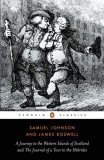
A Journey to the Western Islands of  Scotland and The Journal of a Tour to the HebridesA Journey to the Western Islands of Scotland and The Journal of a Tour to the Hebrides by Samuel Johnson
Reviewed by Jason Koivu
My rating: 3 of 5 stars

Two buds go for a romp in the Highlands of Scotland.

In A Journey to the Western Islands of Scotland... we get a glimpse of the bromance between dictionary man Samuel Johnson and lawyer James Boswell as they hike through the hills and lochs down to the isles along the west coast. Boswell, a Scot, plays host to Johnson, showing him the sights, which are nicely described, as well as introducing him to some of the more colorful characters of the area.

This is fairly light reading with a touch of airy philosophizing now and then. Johnson's sometimes jovial, sometimes truculent nature comes in for some good-natured ribbing. He was a larger-than-life character with some strong opinions. It's great to get this candid look at the man, someone who I've been intrigued with since I saw him played by Robbie Coltrane in the Brit comedy Black Adder. Whenever he's portrayed, it's as a blustery big man with even bigger, louder ideas. He's a liver of life, and since so much of his life was spent working with words, a bookworm like myself can't help but love him.


View all my reviews

Howards….What Was That?

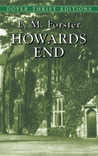
Howards EndHowards End by E.M. Forster
Reviewed by Jason Koivu
My rating: 4 of 5 stars

I've read three of Forster's most well known novels, and yet, I don't feel I know them at all. Even this one, as I read it, was fading from memory. I don't mean to say that his work is forgettable, but with every Forster book I've read - amazing human portraits and elegant, occasionally profound turns of phrase - somehow they all flitter on out of my head. It's as if they were witty clouds: intelligent and incorporeal. Heck, I've even seen movie versions for a couple of them and I still don't recall what the stories are about.

Why is that? If I could pinpoint it, well, then I wouldn't have started this review with that first paragraph. Perhaps it is because of Forster's penchant for pleasant diversions. He expounds upon ideas as the action unfolds, and that's wonderful! He gives the reader some very nice theories on human behavior to ponder upon. My problem is that I ponder too frickin' much! A writer like Forster is a danger to me. My imagination likes to fly and it's not very well tethered, so when I read books like Howards End with lines like "And of all means to regeneration remorse is surely the most wasteful. It cuts away healthy tissues with the poisoned. It is a knife that probes far deeper than the evil."...oh boy, off goes my mind in another direction and the next thing I know I've spent 20 minutes on a single page. Ah, but they are wondrous pages to linger upon. Perhaps it is worth the time.

View all my reviews

Friday, October 25, 2013

The Lucid Dreaming


Lisa Morton
Bad Moon Books
Reviewed by: Nancy
4 out of 5 stars

Summary


Ashley, a twenty-something California girl, is a post-punk who would rather be called Spike and who worries about money, her family, and freeway traffic. She’s also a violent paranoid schizophrenic living in a state facility west of Los Angeles, her disorder kept under control by confinement and the drug Prolixin.

One day Spike is shocked to find her cell door open and so she ventures out, only to find the walls smeared with blood and the staff missing or dead. She escapes and ventures into a world that’s been driven mad by waking nightmares, where she’s now the sanest person alive. Searching for answers, Spike embarks on a road trip that will lead her from Beverly Hills to a nightmarish Texas compound to the highest office in the land...

My Review

Ashley, who prefers to be called Spike, is doing time in Oxnard, an overcrowded, state-funded mental health facility about an hour from her home in Los Angeles. Her crime was stabbing a homeless man who was rummaging through the trash at her apartment complex while she was off her meds.

While Spike is serving her sentence, bizarre events begin to take place at the institution, and suddenly it seems as if she is the only one who is sane. Spike is a paranoid schizophrenic who doesn’t act according to the voices in her head. Instead, she has vivid pictures in her mind that direct her actions, and most of them are rather dark and violent. The Prolixin she is required to take prevents those vivid dreams from occurring and enables her to lead a relatively normal life.

While Spike is doped up on Prolixin, those who are entrusted to care for their mentally ill charges have not shown up
to provide food or dispense medication. Screaming, blood, incoherent mumbling, waking dreams and odd behavior finally drive Spike from the institution. On the way out, she grabs drugs, money, clothing, a gun, and an SUV and heads out in search of her best friend, Tommy.

Tommy is of no help. On her own, Spike encounters others suffering from the waking dream “epidemic” occurring all over the world. With her SUV and a companion with a gentle soul and passive nature who
has happy dreams, Spike journeys across the US and finds that there are others who have learned of a way to control the epidemic.

The paperback edition has 92 pages and was a fast-paced and fun read. The story was told from Spike’s own perspective. She was foul-mouthed, funny, resourceful, and had a cynical outlook on life that made her a vastly appealing young character.

I thoroughly enjoyed this story and plan to look for more by this very talented author.
Also posted at Goodreads.