Thursday, January 2, 2014

Not My Cup of Joe

Something More Than Night
by Ian Tregillis
Published by Tor


2 Out of 5 Stars
Reviewed by Amanda 

**I received a free copy of Something More Than Night from Tor in exchange for an honest review.**

A swell angel, Gabriel, takes a powder by way of the big sleep. But what kind of button man has the juice to take down a big player like an archangel? It's not long before heavenly forces put the screws to Bayliss, a two bit angel confined to the dive known as Earth, where he's spent centuries tipping a little rye, smoking pills, and eyeing dishy kittens who know how to fill out a skirt. Heaven wants Bayliss to case the joint and find a mortal palooka he can knock off to fill Gabriel's slot in the universe. Hoping for a mark who won't ing-bing, Bayliss instead ends up with a flametop twist who stirs up all kinds of heavenly trouble. Now Bayliss is behind the eight ball, the immortal bulls want answers, and Bayliss suspects he and this new dame may be the patsys in a universal game of whodunit. Savvy?

Of all the bookshelves, in all the towns, in all the world, this book makes it onto mine.

Something More Than Night is going to appeal to a niche group of readers: hardcore noir aficionados, of whom I am not one. I like my noir like I like my coffee--black. But with sugar and cream and flavoring so it barely resembles coffee anymore. In other words, I like my noir to be not-so-noirish.

Ian Tregillis presents a concept that sounds entertaining, but quickly becomes tedious. Beginning with the death of Gabriel as he flames across the night sky, questions are quickly asked by Bayliss, the only heavenly being who seems interested in getting to the bottom of the angel's murder. Through his investigation and the inclusion of Molly, the mortal Bayliss has bumped off to plug the hole in the universe left by Gabriel's untimely demise, we learn that, in the beginning, there was not light, but angels. Angels free to do and imagine the universe as they pleased until METATRON, the voice of a higher power, clipped the angels' wings by chaining them to the mortal realm. Denied the right to roam the universe as they once did, the angels chafed against their chains but their proximity to one another created the MOC (Mantle of Ontological Consistency) that ensured existence for mortals would continue through the angelic consensus of what reality is.

As Molly comes to terms with her divinity and Bayliss seeks the truth behind Gabriel's murder, Tregillis builds a heaven of quantum physics only tinged by religious philosophy. While I enjoyed his vivid descriptions of the angelic hierarchy and the individual Magisteriums each angel builds as a personal hideaway, his descriptions of the universe veer into physics-based purple prose. Initially, I found this inventive and enjoyed passages such as:

He'd been collecting little odds and ends since at least the double-digit redshifts. The interior reality of Gabriel's Magisterium burbled and shifted like convection currents in a star on the zaftig end of the main sequence. Because, I realized, that's what they were. Dull dim light, from IR to X-ray, oozed past me like the wax in a million-mile lava lamp while carbon, nitrogen, and oxygen nuclei did little do-si-dos about my toes. Every bubble, every sizzle, every new nucleus, every photodissociation tagged something of interest to Gabriel . . . Nuclear reactions unfolded with the calm susurration of solar wind upon Earth's atmosphere, seeding cloud formation and rain. Convective cells furled about me with the low, slow, sonorous peal of cathedral bells mourning a monarch's death. X-rays fizzed on my tongue . . . " (64).


Got physics? Because you'll need it to slog your way through endless passages like this, which, while serving to capture the complexity and immensity of creation, do nothing but slow down the narrative. The combination of unceasing physics jargon with the unending noir slang became too much for me. Add to that the fact that Tregillis's world-building on the Earthly plane is sketchy at best (we get the sense that it is set in a dystopian future, but the futuristic elements seem wedged in and serve no defined purpose) and the novel begins to buckle under too many clever ideas.

The ultimate twist is a letdown as it seems contrived to get the plot out of the corner it had painted itself into. As the reason for the narrative's reliance on the noir genre becomes obvious to the characters, one muses, "But why go to all this trouble? What did it achieve, turning himself into a hard-boiled detective pastiche in an archetypal story" (250).

Why, indeed.

Wednesday, January 1, 2014

The Ministry of FearThe Ministry of Fear by Graham Greene
My rating: 5 of 5 stars

”Ah, he thought, Tolstoy should have lived in a small country--not in Russia, which was a continent rather than a country. And why does he write as if the worst thing we can do to our fellowman is kill him? Everybody has to die and everybody fears death, but when we kill a man we save him from his fear which would otherwise grow year by year...One doesn’t necessarily kill because one hates: one may kill because one loves...and again the old dizziness came back as though he had been struck over the heart.”

 photo ministryoffearframed_zps1d23deb7.jpg
Ray Milland and Marjorie Reynolds star in the 1944 movie of Ministry of Fear.

Arthur Rowe is a murderer.

”A murderer is regarded by the conventional world as something almost monstrous, but a murderer to himself is only an ordinary man--a man who takes either tea or coffee for breakfast, a man who likes a good book and perhaps reads biography rather than fiction, a man who at a regular hour goes to bed, who tries to develop good physical habits but possibly suffers from constipation, who prefers either dogs or cats and has certain views about politics.”

A murderer could be someone sitting next to you on the subway. It could be the man with the heavy jowls looking like an accountant, innocuous, boring, with blunt fingers and deceptively more power in those slumped shoulders than you might first believe. Or how about the woman sitting next to the Asian couple with the clicking knitting needles, flashing like swords even in the muted light, looking like an aging Kathleen Turner with crisp blue eyes that would hold your gaze as she slipped one of those needles under your ribcage and shoved it upward seeking your heart. Then, there is the youth hiding behind the Oakland Raiders hat and the wrap around sunglasses with the trashy underage girlfriend, her eyes as old as Egypt, twinned around his arm. He doesn’t weigh a buck twenty, not a threat to a grown man except that bulge under his jacket, the Sam Colt descendent, the great equalizer, can kill a better man, a bigger man, a more powerful man with just one jerk of the trigger.

Let’s set that aside for a moment.

 photo GrahamGreenesketch_zps1ec6229a.jpg
“Tiger, darling,” Graham Greene’s wife used to say whenever she found a florid metaphor—and out it would go. His rival and fellow Catholic, Anthony Burgess, said that Greene sought in his writing “a kind of verbal transparency which refuses to allow language to become a character in its own right”. His voice is the driest of any great writer, drier than bone. From an article by Nicholas Shakespeare.


It all begins with Arthur Rowe deciding at the spur of the moment that he will attend a charity bazaar. It reminds him of tender memories of his youth. He guesses the weight of a cake, with real eggs, and doesn’t win. He gets his fortune told, and in the uncertain light he is mistaken for someone else, and the teller of fortunes plucks the thread of Rowe’s own destiny by giving him the “correct weight” for the cake. He wins the cake. This is during the Blitz.

”’I didn’t imagine war was like this,’ staring out at desolation. Jerusalem must have looked something like this in the mind’s eye of Christ when he wept….”

The Blitz was a good time to settle scores, an amazing opportunity to get away with murder, as people are being killed every day by bombs dropping from the sky and landmines. Food is scarce, and there are people that will kill for a cake with real eggs, but this cake is of interest to certain parties because of something else besides eggs in the batter. Arthur Rowe has been caught up in something sinister. There are people trying to kill him.

Graham Greene, I see you lurking between sentences, peering around the edges of paragraphs, pressed up, in the shadows, at the spine of the book.

 photo GrahamGreeneLurking_zps72612bce.jpg
Hey you, the guy lurking over there in the corner, come on into the room enter the frame.

Arthur Rowe launches his own investigation. He can’t go to the police because he doesn’t have a clue what to tell them. He hires a detective agency to help him try to discover who is trying to kill him. He meets a girl and her brother, twins, who offer to help him. He is accused of murder, which has the police after him as well as the killers. Rowe’s own past dogs him with every step.

”A murderer is rather like a peer: he pays more because of his title. One tries to travel incognito, but it usually comes out….”

He will be, for the rest of his life, on trial.

He is betrayed.

He is blown up.

He is incarcerated in an assisted living facility with his memories jumbled and missing. He pines for Dickens, whom he used to read over and over like other people read the Bible. He does have access to a book of Tolstoy, but finds little comfort there. (Books mentioned in books are always a comfort to me as if the author is giving me a wink of reassurance.) The investigative part of Rowe’s mind that was so essential to sinking him deeper into this nefarious plot is alive and well. He soon discovers that he is being held rather than being assisted.

He escapes, reluctantly.

”He put his hands on the dressing-table and held to it; he said to himself over and over again, ‘I must stand up, I must stand up.’ as though there were some healing virtue in simply remaining on his feet while his brain reeled with the horror of returning life.”

Things have changed in the two months he has been someone else. Not all of his memories have returned so he is not even a complete Arthur Rowe yet. The Twins, remember the twins, well they are not who he thought they were either.

He remembers his wife. He remembers what he has done. He sees it in everyone’s faces.

”He wants to warn them --don’t pity me. Pity is cruel. Pity destroys. Love isn’t safe when pity’s prowling around.”

 photo MarjorieReynoldsinMinistryofFear1944_zps08a948e6.jpg
Wonderful still shot from the 1944 movie starring Marjorie Reynolds directed by Fritz Lang.

This is Graham Greene at his best with a convoluted plot, with key elements hidden from us, and a host of characters impossible to trust. He puts us in the skin of Arthur Rowe, knowing only what he knows, which leaves us as bewildered as the main character. Greene plays on my own fears of being incarcerated without my own memories to defend myself, and yet, knowing full well that I’m not who they say I am. There is definitely a bit of Franz Kafka at play here. This book was published in 1943 during a time when all of England had been thrust into the war. Women and children are now at risk as much as a frontline soldier, with death whistling in everyone’s ears as it falls from the sky on a daily basis.

Like the plot of many episodes of Foyle’s War, one man’s troubles during such a time do not receive the same attention they would have been given before the war, but when it is discovered that the most dear secrets of England are in the wind, Rowe knows he can’t afford to fail. He is an unlikely hero who finds the courage to muster the shattered pieces of himself and help save a nation. Highly Recommended!!


View all my reviews

Tuesday, December 31, 2013

Brave Women


The Buddha in the Attic by Julie Otsuka
2011
Reviewed by Diane K. M.
My rating: 5 out of 5 stars


This novella has the most lyrical prose I've read in a long, long time. It begins on a boat in the early 1900s, with dozens of young Japanese women who were being shipped to husbands in San Francisco to begin new lives. The women didn't know it yet, but they had been sold a bill of goods. They had been promised that their husbands were successful, handsome and rich, and that they would love living in America, but the truth is they would become migrant workers in California, and that the women might have been better off staying home in Japan with their families. The book gives a breathless, kaleidoscopic account of the women's hopes and fears and the hard-working lives for which they settled.

I will share the opening paragraph because I think it is gorgeous: 

"On the boat we were mostly virgins. We had long black hair and flat wide feet and we were not very tall. Some of us had eaten nothing but rice gruel as young girls and had slightly bowed legs, and some of us were only fourteen years old and were still young girls ourselves. Some of us came from the city, and wore stylish city clothes, but many more of us came from the country and on the boat we wore the same old kimonos we'd been wearing for years -- faded hand-me-downs from our sisters that had been patched and redyed many times. Some of us came from the mountains, and had never before seen the sea, except for in pictures, and some of us were the daughters of fishermen who had been around the sea all our lives. Perhaps we had lost a brother or father to the sea, or a fiance, or perhaps someone we loved had jumped into the water one unhappy morning and simply swum away, and now it was time for us, too, to move on."

Another section I loved is from the first chapter about where the women came from: 

"Some of us on the boat were from Kyoto, and were delicate and fair, and had lived our entire lives in darkened rooms at the back of the house. Some of us were from Nara, and prayed to our ancestors three times a day, and swore we could still hear the temple bells ringing ... Some of us were from Hiroshima, which would later explode, and were lucky to be on the boat at all though of course we did not then know it."

After the sea voyage, the stories progress to how the husbands treated their wives, and the children that followed and the hard work they endured. And, U.S. history being what it is, we eventually arrive at the bombing of Pearl Harbor (but I don't think that name was ever mentioned), and the last 50 pages of the book show their shock at suddenly being labeled traitors and the fear mongering that persisted, and by the end, the Japanese have disappeared from the town. I thought it was a nice touch that in her acknowledgments, Otsuka admits having reappropriated some lines of dialogue from Donald Rumsfeld in 2001 and inserted them as the "mayor" in 1941. Same principles, different war.


I hope I haven't made the book sound gloomy. I actually found it inspiring and full of beauty and hope. Each sentence is its own little story, and the writing is so rich and visual that I was utterly absorbed in the prose. Would I have had the courage to sail off to a foreign land and a strange husband at such a young age? I doubt it. 

You'll Laugh Till You Cry

Hyperbole and a Half by Allie Brosh
2013
Reviewed by Diane K. M.
My rating: 4 out of 5 stars


This book had me laughing so hard I started crying. I mean that as a compliment. 

Allie Brosh writes the popular blog Hyperbole and a Half, and this is a collection of her favorite web comics and a few new ones. I first found her blog when her post titled "This is Why I'll Never Be an Adult" was getting shared on Facebook and Twitter. It's about her occasional bursts of motivation to Get Stuff Done, but how exhausting and frustrating it quickly becomes to be so responsible. I was happy to see this comic included in the book. 

Besides the Adult chapter, some of my favorite pieces were about Allie trying to train her dog, her early obsession with cake, a hilarious and terrifying attack by a goose, and some letters she writes to her younger self. I was laughing so loudly and uncontrollably that I think I annoyed my husband, who was trying to work in the other room. Of course I had to interrupt him every few minutes and thrust the book at him, saying, "Read this! It's so funny and clever!" (He did admit it was funny.)

Some of the comics are also insightful, discussing her experiences with depression and identity in a self-deprecating way. I highly recommend the book to anyone who wants a good laugh.

Needful Things

Needful ThingsNeedful Things by Stephen King
My rating: 4 of 5 stars

A store has opened in the Maine town of Castle Rock, a store selling objects a person most desires, at a price the buyer can afford. But are the goods worth the cost? Can Sheriff Alan Pangborn get to the bottom of Leland Gaunt and his Needful Things before he falls prey to the madness that's gripping the town?

In what originally was intended to be its final appearance, Castle Rock goes out with a bang in this Stephen King tome.

It reads like a love letter to Castle Rock at times. I caught references to The Dark Half, Cujo, Sun Dog, The Body, and I think Cycle of the Werewolf. Ace Merrill and Alan Pangborn are the only characters I remember from other books but I'm sure there were probably others.

The story starts off slow as, one by one, the citizens of Castle Rock fall prey to Leland Gaunt's charms, buying his trinkets for whatever cash they have on them and doing pranks for him. These pranks are as custom tailored to the victim as the trinkets he sells and soon the denizens of Castle Rock are fuming at one another. Once things escalate to the point of violence, there's no turning back, making Needful Things very hard to put down for such a heavy book.

There's not a lot more I can tell without giving things away. Alan Pangborn could have been a Gunslinger in another life and his relationship with Polly was pretty well done. Ace Merrill was a world class douche and fell into the #2 bad guy role pretty well. I thought Needful Things took the gossip and cattiness that's a staple of small town life and turned the dial up until it broke off.

Things I'm still pondering:
- Was the spider that appeared near the end a relative of the spider from It, only feeding on pain instead of fear?
- Are Leland Gaunt and Randall Flag the same person?
- What happened to Castle Rock after the conflagration at the end?

Needful Things is like cooking a pot roast in a crock pot. It starts out slow, begins to simmer, and is a churning cauldron of deliciousness by the end. Four out of five stars.

View all my reviews

Monday, December 30, 2013

Welcome Back Bernie!


Reviewed by James L. Thane
Four out of five stars

After an absence of nearly ten years, Bernie Rhodenbarr, burglar and bookstore owner, returns in The Burglar Who Counted the Spoons. For those who haven't yet made his acquaintance, Bernie is the creation of Lawrence Block, who is also known for his hit man series featuring John Keller, and his brilliant P.I. series that features Matthew Scudder.

The Rhodenbarr books are much more light-hearted that the Scudder books, and Bernie is blessedly free of the demons that have haunted his stable mate through the years. Bernie thinks of himself as the last of the Gentlemen Burglars and he's much quicker with his wit than with his fists or with any other sort of weapon.

These books generally follow a formula in which Bernie is burgling a house or an apartment, almost always belonging to someone who can well-afford to lose whatever it might be that Bernie is about to relieve them of. Then, in the course of things, a body inconveniently appears, though never as a part of Bernie's handiwork.

The case will be investigated by Bernie's nemesis, the fumbling police detective, Ray Kirschmann. Ray always assumes that Bernie is responsible for the homicide and Bernie then has to solve the crime in order to save his own skin. Almost always this involves gathering all the potential subjects together at the end, in the style of Agatha Christie, so that Bernie can explain the logic of the crime and finally point the finger at the Real Killer.

It's always a lot of fun to watch the story unfold and while this book deviates slightly from the traditional formula, it's certain to entertain anyone who's enjoyed the series through the years.

In this case, a man named "Smith" hires Bernie to commit a series of burglaries to retrieve objects of value to the client which he cannot obtain legally. Meanwhile, Ray Kirschmann is investigating a puzzling homicide and no one will be surprised when the two cases intersect. As always, along the way there's a good deal of banter between Bernie and his best friend, Carolyn, who is a lesbian dog groomer.

Readers who have enjoyed the earlier books will certainly like this one as well. Readers who find the concept intriguing but who haven't read the earlier books might want to start at the beginning of the series with Burglars Can't Be Choosers. While neophytes would probably enjoy this new entry, there's a fair amount going on that would be better appreciated by those who have watched Bernie's career and his relationships develop through the years. We can only hope that Bernie is not now in for another ten-year vacation.

Be Still My Heart!

Memoirs of a GeishaMemoirs of a Geisha by Arthur Golden
Reviewed by Jason Koivu
My rating: 5 of 5 stars

A Cinderella romance that unexpectedly swept me away! Memoirs of a Geisha is a very picturesque and dramatic tale of a young village girl taken from her family and raised in Kyoto as a geisha.

Usually I don't go in for romance. Don't get me wrong, I love love. But I prefer my love stories to be true. There is something immensely powerful about real love. As far as I've been able to discover, much of this story is based on the actual events of the life of former geisha Mineko Iwasaki. Why do I think so? She sued Golden for defamation of character. Apparently he included details she'd told him during their interviews that were not meant for print. Well, that's good enough for me!

I was dazzled by the details and enchanted by the well-paced plot. It's not for everyone, but if you liked the movie version you shouldn't be disappointed by the book, being that the two are identical in most ways.

Around the time I read Memoirs... I got the chance to visit Kyoto and made a point, as many tourists do, of seeking out the Gion District. The preservation of the area makes it worth the effort and cost of traveling in Japan. Almost medieval in its narrowness, the main historical road is a delight to behold, with its architecture and decor stuck in time as it is and the occasional geisha shuffling to and from buildings. I highly encourage a visit. Go when the cherry blossoms are in bloom. Go see a tea ceremony. Just go. You'll be glad you did.

View all my reviews

Oh Mother, Where Art Thou?

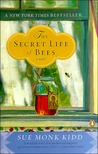
The Secret Life of BeesThe Secret Life of Bees by Sue Monk Kidd
Reviewed by Jason Koivu
My rating: 4 of 5 stars

Read it. Enjoyed it. Any day now I expect to be entirely swallowed up by my own home-grown vagina.

If you've read The Help, you don't need to read this. One contemporary coming of age book about a white southern girl amongst black women discovering life in 1960s is plenty.

Sue Monk Kidd's explosively popular (I'm going to go out on a very sturdy limb and guess that this was an Oprah book) The Secret Life of Bees is a perfectly enjoyable read that any mother would love. Oh the imagery, the ambiance, the estrogen! Halfway through I wanted nothing more than to curl up in my cardy on the couch with a cuppa herbal something-or-other and sip the sweet nectar of these succulent words. They flowed like honey: sweet, warm, and slow…

Oh so slow at times. There are only two or three moments in the 300+ pages that woke me from the pleasant droning (get it? the bees?) that entrances, captivating the reader's mind and attention. The soft ideas about religion, love and the mother-daughter bond hum against your ears, the buzz of thought never going beyond a distant whirring zzzzzzzz.

Sunday, December 29, 2013

Humans of New York. Recommended for humans.


HUMANS OF NEW YORK
Brandon Stanton
St. Martin's Press, 2013

Reviewed by Carol
 ★  ★  ★  ★  ★


I’ve been following Humans of New York on Facebook for some time now. As a long time NYC-ophile, it captures everything I love about the people-zoo that is my vision of New York. Although I’ve become a devoted library user in the interests of space, economy and the minimally acquisitive life, I recently decided I needed to make both space and budget for those I’ve been following for free on-line (The Oatmeal, Hyperbole and a Half and Sylvia, to name some others) and Stanton’s newly published collection from his HONY work was at the top of the list.

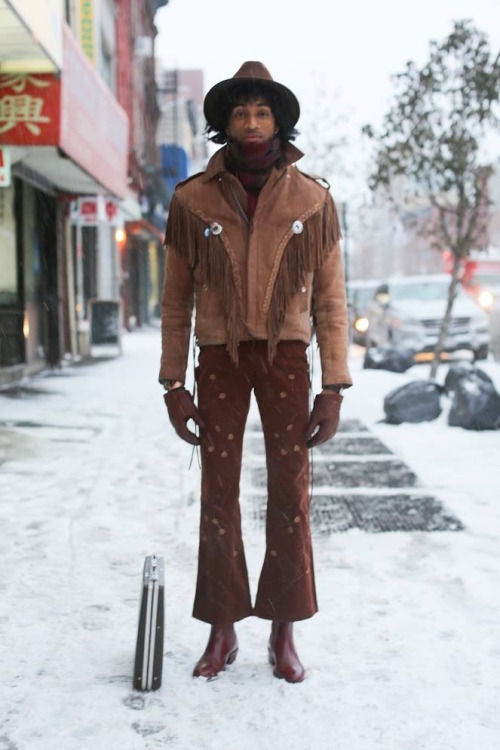
Humans of New York is a collection of a wide range of his works, both ‘earlier’ in his photography career and more recent. The only word I have for the variety of images is ‘amazing.’ I laughed out loud. I had moments of heart-clench and lip-biting. Many of the images in here are iconic New York: the homeless, the artists, the heavily tattooed, street performers, chess players in the park, the doorman hailing a cab, a boxer on the Brooklyn bridge and teens flashing gang signs. But Stanton’s style goes somewhat further, seeking to humanize the subject more than objectify. Many of his later photos come with a story: the drag queen who plans to become a rock star, the janitor who earned a Columbia degree after 11 years, elderly gay couples supporting each other through the snow, a child on a scooter escorting a grandpa in a wheelchair, a sidewise look from a dog while his owner works, a woman in furs in the park too busy painting to stop and chat, children hanging off fences for the camera after being stopped by a police officer. Stanton makes a point of asking permission, which occasionally interrupts spontaneity, but is ultimately respectful of his subjects.

Photos are loosely organized: sometimes a small collection of people holding hands, Central Park in spring, a collection of feet, a theme of success or love. He’s an all-opportunity photographer, sometimes seeking to including background as subject–subway tunnel steam rising around two child ballet dancers, a vacant lot, a cherry tree, graffiti, a field of flowers.

I can’t even say which one was my favorite, as it’s one of those books that has a favorite every other page. A man dressed suspiciously like Waldo and an Elmo costume in a net bag both made me laugh out loud, but I suppose if I have to choose, my favorites are the moments of wisdom from the elders (“I’m ninety-nine years old. Everything from my neck down is shit, but from my neck up is just as good as everyone else’s. How lucky is that?“) and the pictures of same-sex couples, the same-sexuality incidental to the visuals and the quotes. Stanton shows us the best of ourselves, celebrating our differences and emphasizing our humanity.

In Stanton’s more recent works, he’s branched out into interviewing, bringing another fascinating dimension to the visuals. Almost every day, at least one of his HONY posts move me, whether it’s with laughter, fondness, or compassion. The images remain fabulous, but it has been the quotes which seal the deal:

I didn’t sleep much last night. I’ve been feeling a little blue.”
“Why’s that?”
“Oh, you know. The holidays. Memories, memories…


Holiday memories


I could look poised in a paper bag. These are ladies’ pants, I don’t even care.


And finally:
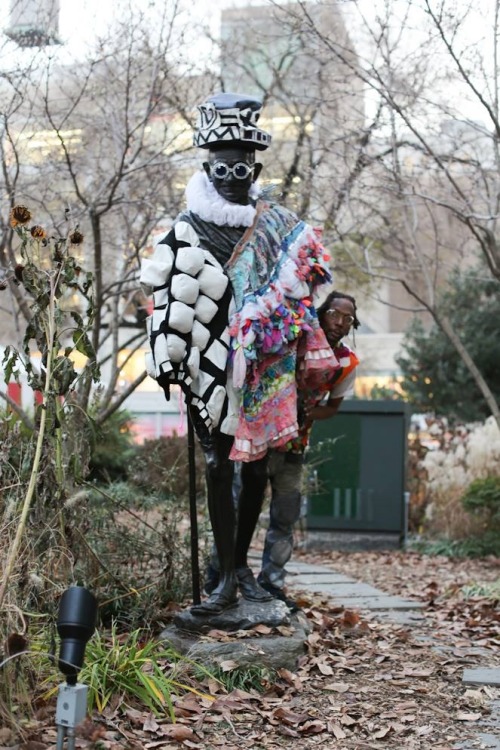
Wendell is hands down the greatest homeless fashion designer who ever lived. He makes almost all his clothes from things he finds. I hadn’t seen him in awhile, so I was quite thrilled to walk up on him Tuesday, doing this to a Gandhi statue.
statue


If you are a fan of New York, of the diversity of the ways humanity invents and re-invents itself, of those rare moments of self-exposure and sharing, you should check out Stanton’s site and his book.


Cross-posted at:  http://clsiewert.wordpress.com/2013/12/25/humans-of-new-york-by-brandon-stanton-recommended-for-humans/

Friday, December 27, 2013

North of Beautiful

Justina Chen Headley
Little, Brown Books for Young Readers
Reviewed by:  Nancy
5 out of 5 stars


Overview


As he continued to stare, I wanted to point to my cheek and remind him, But you were the one who wanted this, remember? You're the one who asked-and I repeat-Why not fix your face?

It's hard not to notice Terra Cooper.

She's tall, blond, and has an enviable body. But with one turn of her cheek, all people notice is her unmistakably "flawed" face. Terra secretly plans to leave her stifling small town in the Northwest and escape to an East Coast college, but gets pushed off-course by her controlling father. When an unexpected collision puts Terra directly in Jacob's path, the handsome but quirky Goth boy immediately challenges her assumptions about herself and her life, and she is forced in yet another direction. With her carefully laid plans disrupted, will Terra be able to find her true path?

Written in lively, artful prose, award-winning author Justina Chen Headley has woven together a powerful novel about a fractured family, falling in love, travel, and the meaning of true beauty.

My Review


Terra Cooper is blonde, beautiful, a talented artist, and dating a popular and athletic boy. She has everything going for her, or does she?

Well, she has one physical flaw, a port-wine stain birthmark in the shape of Bhutan on her right cheek. Along with her daily exercise regimen, Terra skillfully applies an assortment of cosmetics and moisturizers to conceal the red stain that brings her shame.

She lives in a small, boring town in Washington, has a father who is controlling and overly critical, and a mother who is overweight and passive. She wants to escape by attending a college far from home. When she gets accepted, her plans are thwarted by her father.

While Terra and her mom are in Seattle for laser treatment to lighten her birthmark, they get into a minor collision and Terra meets Jacob, a handsome Chinese boy with a propensity for black clothing and a physical imperfection.

Terra and her mom and Jacob and his mom decide to travel to China. Terra and her mom will be visiting Merc, Terra’s older brother now living and working in China. Jacob and his mom will be visiting the orphanage he lived in. Freed at last from her father’s biting comments and in a country where language, culture and customs are unlike anything she’s ever known, Terra reconnects with her mom, grows, changes, and learns new ways of being in the world. She gradually gains self-confidence, learns to accept herself, and becomes more open to life’s possibilities.

This book was truly a joy to read. It is beautifully written, thought-provoking, sometimes sad, and ultimately uplifting. The characters were realistic, complex and well-developed with all their imperfections. The maps, geocaching sites, geographic details and cartographic information were all fascinating.

Also posted at Goodreads.