Monday, January 12, 2015

Find Your Florence With Lonely Planet

Lonely Planet Florence Encounter (Travel Guide)Lonely Planet Florence Encounter by Robert Landon
Reviewed by Jason Koivu
My rating: 4 of 5 stars

Firenze, tu sei il mio preferito città Italiane!

I was working at a map company, was about to go on vacation to Italy, and this was the only book we carried specifically on Florence, so I bought it. It wasn't the most useful travel guide I've ever used, but it's very compact (an actual "pocket book" that fits in the pocket, wow!), it's got some fancy pictures and if you're looking for places to eat, it gives you a nice, general rundown of what to expect in this most wondrous city!

Slim and more snapshotty than other more thorough and comprehensive Lonely Planets I've used, Florence Encounter provides a few good ideas that may not have been on your vacation itinerary if you're a first time visitor to Florence. One of my favorite experiences, learned about in this little book, was I Fratellini, a curbside wine and sandwich shop that serves up a simple, but delicious and inexpensive meal that you eat standing in the street or while literally sitting on the curb as we and my others did. It's a fantastically quick and cheap way to get something good in your belly, so you can move along to more touristy sights without spend all afternoon at a restaurant (sometimes it takes a while to eat in Italy I've found).

Travelers' Tip: When my wife and I went to Italy a few years back I learned some basic Italian so we could get around via train and bus, order in restaurants and handle hotel reservations. Because we were always in the major urban areas, it probably wasn't necessary, but it did come in handy now and then. Many Italians speak English, but certainly not all. And heck, it's just polite to exchange pleasantries in your host country's language.

View all my reviews

A Jesus For Everybody!

Muhammad: A Prophet for Our TimeMuhammad: A Prophet for Our Time by Karen Armstrong
Reviewed by Jason Koivu
My rating: 4 of 5 stars

Muhammad

description

Looks a little like Jesus, doesn't he?

This was one of my first forays into the life of a man who has meant so much to so very many. Muhammad: A Prophet for Our Time felt easily digestible to me, an outsider and an utterly ignorant one at that.

Having lived about 500 years after Jesus, we seem to know more concrete information about the life of this prophet, thought by Islamists to be the last prophet, than we do of the Christians' "son of god". He came from Mecca and is the man who brought all of the Arabian nations under one religious umbrella. He was a fighter, who raised a Jihadist army that he turned upon his own hometown, in the name of god of course.

Perhaps that sounded too snarky. I do not intend to belittle the man or his religion. My scorn is for all organized religions. However, I try to set aside my prejudices when reading non-fiction on religious matters or biographies regarding their saintly figures. For instance, some of Muhammad's deeds did not seem entirely honorable in hindsight, but that is hindsight, which is distorted by the distance of time.

Muhammad: A Prophet for Our Time is a nice primer, a good first step towards greater knowledge. During these difficult times, when many of us Americans do not readily accept the followers of Islam with open arms, getting to know the history of the people is an important step in realizing our overwhelming similarities as humans, the one an only tribe of man and woman that should truly matter.

View all my reviews

Saturday, January 10, 2015

Embassytown

Embassytown
China Mieville
Del Rey 2011

Reviewed by carol

4/5 stars

In ninth grade, Mrs. Muench–who had an uncanny resemblance to Miss Marple‘s friend Dolly Bantry–endeavored to teach us the difference between similes and metaphors.
 
Similes use “like” and “as” to compare two unlike things.

Metaphors state two unlike things are the same.

But dear, enthusiastic Mrs. Muench could not have anticipated China’s sophistry: metaphors are lies.


Embassytown is a deep-thinking book, not one to pick up if you are in a the mood for a fast action read. China’s use of a futuristic language, coupled with representation of an alien speaking that tongue (in a form that looks disturbingly like a fraction equation), requires attention to detail, an ability to read for an hour or two at a time. Along with altered language, he throws in the isolation of a human city in the middle of an alien world on the edge of known space; altered biology, in an alien race that somehow biologically fuses/grows their mechanical needs out of organics, including their homes; and an alien race that not only speaks with two mouths simultaneously, but cannot lie. Further complications come from his solution to deep space travel, by way of the immer. The challenge for both races is in communication. In order to communicate with the alien Ariekei, two people have to speak simultaneously, mimicking the double Ariekei mouth. But since the Ariekei also sense the thought/mind behind the word, two different people speaking the same thing makes no sense to the Ariekei, so the solution was to raise human clones to function as Ambassadors to the aliens.

Forget Being John Malkovich. I’d like an hour in China’s mind.

Overall, I found it a fascinating, immersive read, reminding me strongly of The Dispossessed–and that is highest praise–although he doesn’t always have LeGuin’s kindness in contextualizing most oddities. Still, it’s well done, and balances the personal and the political well. He taps some eternal truths in the midst of alien outlandishness: “As I’ve grown older I’ve become conscious of how unsurprising I am.” There’s a sly sense of humor occasionally tempering the seriousness: “I knew something would (happen) as certainly as if this were a last chapter.” It shows again in the initials of the lead character’s name: “A.B.C.,” fitting in a book about language.

There is tenderness and compassion, however alien, when one of the self-aware bio-machines downloads herself into a new body, just so she can give Avice a hug.

The crux of the novel lies in the Arikei limitation to speak literally. Avice becomes part of their language when she takes part in an event, thus allowing the Arikei to use her as a simile. It is a fascinating and fun idea (ever wonder about the first cat out of the bag?) that allows China to play with the definitions of truth, lies, language and meaning. However, language evolves, and interaction with the humans is starting to push the Arikei language to it’s limits. Avice ends up pushing them even further. “I don’t want to be a simile anymore,” I said. “I want to be a metaphor.” He unfolds the examination of language within both Avice’s own life when she brings her linguist husband home to her world, and the politics of her province-city. China’s genius shows when he throws in issues of addiction and identity into the mix.

Why not five stars? It is not a comfortable book. It could have been tightened up a little bit; as I work my way through the review, I marvel at all the things China tried to accomplish, and wonder if he should have limited a variable or two in favor of greater coherence. Was the immer necessary, for instance? There’s interesting hints at Avice’s friendship with an autom/biological robot as the biological systems break down, but I’m not sure what role it really played, and if it just confused the story further. Still, an impressive work, and likely to be a classic.

Interesting quote:
“Beside him, Ez was like a ventriloquist’s doll, existing only when he spoke, or was spoken through.”
The army of hopeless and enraged had been driven to murder by their memories of addiction, and the sight of their compatriots made craven to the words of an interloper species. That degradation was the horizon of their despair.”


cross posted at my blog at  https://clsiewert.wordpress.com/2013/03/07/embassytown-by-china-mieville-or-limbo-with-language/

Friday, January 9, 2015

The Hour Before Dark


Douglas Clegg
Leisure Books
Reviewed by Nancy
5 out of 5 stars


Summary


As children, they played the Dark Game.

When Nemo Raglan's father is murdered in one of the most vicious killings of recent years, Nemo must return to the New England island he thought he had escaped for good, Burnley Island...and the shadowy farmhouse called Hawthorn. But this murder was no crime of human ferocity. What butchered Nemo's father may in fact be something far more terrifying...Something Nemo and his younger brother, Bruno, and sister, Brooke, have known since childhood.

There are secrets buried on Burnley Island.

Within the rooms of Hawthorn, beautiful Brooke Raglan has begun to go mad. She sees faces at the windows and wanders the night, trying to find what she believes is a monster.

Bruno Raglan has wiped the memory of a terrible event from his mind. Now he compulsively picks apart Hawthorn and discovers that within its walls lies a forbidden secret.

As he unravels the mysteries of his past and a terrible night of his childhood, Nemo witnesses something unimaginable, and sees the true face of evil while Burnley Island comes to know the unspeakable horror that grows in the darkness.


My Review


Nemo Raglan returns to his family home on a remote Massachusetts island after learning that his father had been brutally murdered. His sister, Brooke, was the one who found him in the smokehouse. She spent hours with him, sitting in a pool of blood. His brother, Bruno, who still lives on the island, is worried about Brooke’s deteriorating mental state as a result of her father’s slaughter. The three siblings attempt to figure out who could have butchered their father while they reconnect, discover dark family secrets, and recall old and painful memories.

The remote island with its harsh weather and provincial neighbors seems so far from the mainland that it may as well be another country. The large family home is old and creepy, with its many doors, secret compartments, and mysterious happenings.

This was a wonderfully written story, with believable and well-drawn characters that are easy to relate to, and a creepy and unsettling atmosphere. The horror is more of a psychological nature and does not rely on excessive amounts of gore.

I’m looking forward to more of Doug Clegg’s work.

Wednesday, January 7, 2015

THE FORGERS BY BRADFORD MORROW

The ForgersThe Forgers by Bradford Morrow
My rating: 5 of 5 stars

”Book collecting,” he memorably told me, though at the time I couldn’t fully grasp his theory, “is an act of faith. It’s all about the preservation of culture, custodianship, and that’s why when I add a book to the collection I’m taking on the responsibility of keeping it safe. And then there’s the joy of the chase, of striving to find a copy of a book that helped make me who I am. But not just any copy--the copy, the most historically interesting and finest copy you can find. Most of all it’s about something I’ve never quite been able to put into words.”

How about we look to Mr. Eliot?

”These fragments I have shored against my ruins.”
The Waste Land by T. S. Eliot


This book begins with a pair of severed hands.

Adam Diehl, a reclusive collector, is found nearly bled out surrounded by the trampled and torn remains of his exclusive, and expensive book collection.

His hands are never found.

His sister Meghan who runs a local bookstore is devastated because she is very close to her brother, but also because he is all the family she has left. Her boyfriend, Will, who also serves as the narrator of the story never liked Adam very much and the feeling was mutual. They should like each other. They even have the same interest in the same types of books, but see there is a factor here unknown to Meghan that creates a rivalry and a certain amount of disdain.

They are both forgers.

Will is better at it than Adam and like many perfectionists he finds it insulting that someone else would try to pass off what he can do so much better. Of course he is supposed to be reformed after he experienced a brush with the law that nearly landed him in prison.

The desire is still there.

”I would sometimes find myself physically aroused when my hand, my pen, my paper were coordinating so perfectly that a kind of calligraphic, pornographic ballet took place before my eyes.”

Will’s father was a great book collector. He was well respected and venerated in the book collecting world. In fact, the quote at the beginning of this review was his attempt to explain to his son the gentle madness of collecting. If his father had known he was defacing books with forged signatures or that he was changing literary history with his arrogantly conceived counterfeit letters and ephemera he would have been beyond disappointed. He would have felt a complete failure in his attempt to raise someone in his own image.

”Would he have had any choice other than to hand me my loathsome heart bundled up in the butcher’s paper?”

His father was always searching for a more perfect copy of a book for his library. When he did find a better copy he would even keep the inferior copy as well which is fascinating. I often do upgrade a book in my library, but usually I sell or trade the more inferior copy. It is a way to offset the cost of the upgrade and it also frees up more room on the shelves for...another book.

Now Will does see history in the same way as I do. It is all a muddled mess of half truths, but I would never be willing to add to the muddle.

”History is subjective. History is alterable. History is, finally, little more than modeling clay in a very warm room.”

Everyone strives to know singular truth, but the truth is that there are many truths. For any one truth there are several other versions just as true. A historian uses the most accepted version of the truth or makes a case for an alternative truth that he believes or wants to believe is more true.

It is one thing to add thoughts believed to be true to the narrative, but it is quite another to manufacture them from whole cloth.

I’m with Will’s father regarding his activities. Bring me the butcher’s paper.

When Will starts to receive threatening letters, cleverly written in the style and penmanship of Henry James he knows that his secrets are known by someone who holds all the threads of his life.

This starts a desperate search for solutions that will hopefully appease his accuser and keep his secrets safe.

This book may not be a five star book for most other people, but I have to give Bradford Morrow credit for writing a pitch perfect novel about the book business. Most books I’ve read about the subjects of book collecting or working in a bookstore ring falsely for me. I can assure those that are interested in books beyond just the words they hold that Morrow knows his stuff. I often found myself feeling a tingle as he made connections that only the “gently mad” will understand. Speaking of Gently Mad, Nicholas Basbanes, a hero of mine, also endorsed this book.

The character of Will is so interesting because I couldn’t help liking him and loathing him in equal measure. Both diametrically opposed aspects of my feelings about him were tangled in almost every thought I had regarding his behavior. Forgeries are hanging on walls in museums and are locked up under glass in prestigious universities all over the world, and are believed to be real. So a gifted forger like Will can forever alter literary history. He might buy, say an expensive first edition of a Charles Dickens book and add an association inscription to Wilkie Collins thus making the book a priceless one-of-a-kind item that he could then sell at a huge profit. Inscriptions are one thing, but writing letters perfectly in the handwriting of a writer to another writer or to a lover or to a publisher asserting thoughts that never existed before(or probably didn’t)is certainly taking the molding clay and constructing a fabricated creature of words.

The plot is good, but the perspective of the world of books that Morrow presents is like having a window in a flat with a panoramic view of the Hay-on-Wye in Wales.


View all my reviews

Tuesday, January 6, 2015

The Great Train Robbery

The Great Train RobberyThe Great Train Robbery by Michael Crichton
My rating: 4 of 5 stars

In Victorian London, can Edward Pierce and his cronies pull off a train heist and get away with a fortune in gold bullion?

Like quite a few of my reads over the years, this book appeared on my radar courtesy of Kemper. We were discussing the Breaking Bad episode Dead Freight and he asked if I'd ever read The Great Train Robbery. I said I hadn't and promptly forgot about it for a couple years until I ran across the Great Train Robbery in the local used bookstore.

The Great Train Robbery is a gripping heist novel set in the 1850's. Crichton doesn't skimp on the Victoriana, either. The social climate and attitudes of the time are in full force, as is Victorian criminal slang. Critchton throws the reader into the deep end with his talk of bone lays, twirls, drums, and gammons.

As with most capers, the joy is in the planning and watching Pierce deal with getting key impressions, ferreting out key impressions, and dealing with setbacks along the way. Pierce proved to be quite a cracksman and would make Richard Stark's Parker smile with admiration, if such a thing were possible.

The way Crichton tells the story is masterful, alternating the story as it occurred with newspaper clippings from after the caper went off and the subsequent trial. It was excellent way to misdirect readers such as me. I thought I had things pegged pretty early on but Crichton surprised me at the end.

If I had to justify not giving this a five, I would mention that the characters were a bit weak, Pierce included. However, the story is entitled The Great Train Robbery, not An Examination of the Psyche of a Train Robber so some slack must be cut.

Four stars. Now I want to track down the movie version.


View all my reviews

Monday, January 5, 2015

Fat Ollie Weeks Joins the Detectives of the 87th Precinct


Reviewed by James L. Thane
Four out of five stars

On a hot August afternoon, a man comes into the 87th Precinct demanding fast action on the investigation into a fire that destroyed his warehouse along with $500,000 worth of small carved wooden animals that were housed there. He insists that he has to get the insurance claim settled immediately so that he can afford to pay for the next shipment of animals that is already on the way from Germany.

About half of the precinct's detectives are on vacation, given that these are the dog days of summer, but Steve Carella, Cotton Hawes and the other detectives who are on duty promise to do what they can. The investigation turns out to be more complicated than your average arson case, though, especially when people start turning up dead. In addition to arsonists and killers, there are hookers and urban redevelopers running loose in the city and Carella and company have to get all these things sorted out before they can appease the guy who wants his insurance claim settled.

All in all, this is one of the more intriguing entries in this long-running series and this book is critical to the series because it introduces the character of Fat Ollie Weeks who will appear prominently in several books from here on out. Weeks is a miserable pig of a human being who does an awful impression of W. C. Fields, but he has great skills as a detective and so the other detectives of the 87th and the reader as well, will just have to grin and bear it. Another fun read from one of the masters.

A Whole Lotta Hormones

The Female BrainThe Female Brain by Louann Brizendine
Reviewed by Jason Koivu
My rating: 4 of 5 stars

The way some men talk about women I'd assumed they'd think The Female Brain was a work of fiction, "'Cuzzin' womens ain't got none brains, heeyuck, heeyuck!" It's too bad that most of those guys are illiterate, because they're the ones that need to read this the most.

In The Female Brain, neuropsychiatrist Dr. Louann Brizendine uses clinical research and the experience of counseling patients to examine how the many various hormones flowing through a woman's body may affect their actions and behavior. It covers the emotional development and brain processes of women through the various stages of their lives, beginning at the beginning with childhood, moving through the tumultuous teens and the horror that is puberty and progress through womanhood into old age.

The use of science to dissect human behavior is tricky since our moods, reactions, etc are slippery little fish. Brizendine's use of animal research raises validity questions (I.E. rats are not humans, so how can it apply?), however she is the first to admit that none of this is 100% pure, unadulterated fact. Just the same, there are some insights within The Female Brain that appear to be highly probable cause-effect truths, and even if they're not, this whole subject is still very fascinating!

I found the entire book entertaining and, admittedly, quite a bit of it to be enlightening, as I imagine it might be to most men. Even some women would do well to give this a read, because how often do you hear yourself say something like, "Sometimes I just don't understand my mother/daughter!"?

View all my reviews

Beautiful And Boring

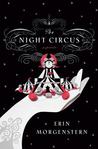
The Night CircusThe Night Circus by Erin Morgenstern
Reviewed by Jason Koivu
My rating: 2 of 5 stars

Like a beautiful picture book, The Night Circus is pretty and plot free.

The imagery is amazing. The story is not. There is nothing intriguing about "a challenge". All the important exposition (explained over static scenes) isn't even given to the reader until the later half of the book, well past my giving-a-shit point. If the challenge is a (view spoiler) one, put that info right up front!

The second-person interludes made me feel like I was reading a Choose Your Own Adventure book. If I had been, about half way through I would've been intentionally trying to kill myself off just to put an end to it.

Again, The Night Circus has some very beautifully written scenes with drool-worthy detail - Morgenstern really strived to put the reader into her circus - but once this reader was inside he soon bored of the eye candy.


Saturday, January 3, 2015

Blanche on the Lam

Blanche on the Lam
Barbara Neely
1992 Penguin Books

reviewed by carol

3/5 stars

Remember how I said I grew up on Christie? It took college to really open my eyes to the insight that I had read very few books by authors who were not white. It became a personal project to increase the diversity of my reading (while still hanging in my favorite genres of mystery, sci-fi and fantasy). I was scanning through my college’s small bookstore, looking for my books for the semester when I saw the Penguin paperback edition of Blanche, no doubt on the list for some literature class. I quickly grabbed it and settled down for a read. Blanche on the Lam held my attention, but even more than that, it shares and affirms an experience seldom portrayed in literature. 

Blanche is an African-American domestic worker, recently moved to North Carolina after unsettling events in NYC. She’s barely making ends meet, living with her opinionated mother and taking care of her deceased sister’s two children. When called into court for a bounced check, nerves and claustrophobia get the best of her and she makes a run for it before she can be taken into jail for a multiple-month sentence. Needing someplace to stay, she decides to show up at a temporary agency job she had already refused, claiming to be her replacement. It turns out a couple, their elderly aunt and disabled cousin will be traveling to their country retreat for a week, giving the normal servants a week off. As she tries to mitigate the idiosyncrasies of her new employers and come up with a strategy to deal with being a fugitive, she realizes her employers are acting extremely strange, even for white people. When an elderly black gardener shares his own concerns with Blanche, she starts to fear for her safety.


Once I got past my struggle with the idea that Blanche would become a fugitive over a check-cashing case, I enjoyed the plot. It begins more like literary fiction, with Blanche primarily focused on solving her current problem, as well as developing a strategy for caring for herself and the children. Tempted to go AWOL from her life, the story is about her as much as the mystery. In fact, while she notes the oddness in her employer’s household, she isn’t really drawn into their troubles until the black gardener is found dead.  Unlike many amateur sleuths, Blanche is a reluctant investigator, adding a more realistic angle to the story. 

“Blanche had learned long ago that signs of pleasant stupidity in household help made some employers feel more comfortable, as though their wallets, their car keys, and their ideas about themselves were all safe. Putting on a dumb act was something many black people considered unacceptable, but she sometimes found it a useful place to hide.”

Characterization is interesting, and clearly a strong point of the mystery. Blanche is a practical, straight-forward person that has realized that sometimes the best way to get along is to keep her mouth shut, but she’s only able to do that for so long. Despite her own relative poverty, Blanche has had a wealth of experiences providing insight into human nature. Neely stated in an interview that she started the Blanche story as a way to deal with writer’s block on another project and was surprised by the enthusiastic reception Blanche received. As a lifelong activist, she was interested in presenting “political fiction” as she wrote from the perspective of the underrepresented, that of a “poor black woman (a nice interview with Ms. here). 

There’s aspects that do make this feel like a first book. Although the plotting and characterization are quite good, the tone can be a bit didactic, with Blanche doing a great deal of ‘telling’ through her inner voice. While insightful, it could have been less heavy-handed, done through memories or experiences. During my second read, I found myself far less tolerant of it; not that I minded the message, but that it could have been so much meaningfully relayed through action. Otherwise, the writing style is sophisticated, with nice variety. Blanche’s observations give a nice sense of the opulent homes and the Carolina setting.


A number of the reviews I’ve seen mentioned that they found this book through criticism of The Help, and I’d definitely encourage reading about Blanche over the moviefied version. I recommend the series it if you are a mystery fan interested in broadening your reading experience. Won Agatha, Macavity and Anthony Awards for best first novel 1992.


cross posted at my blog at https://clsiewert.wordpress.com/2014/12/22/blanche-on-the-lam-by-barbara-neely/