Monday, October 28, 2013

Joe Gunther Hunts the Elusive Tag Man


Reviewed by James L. Thane
Three out of five stars


It's always fun to return to Vermont for a visit with Joe Gunther, the head of the Vermont Bureau of Investigation, and the rest of the cast that populates this long-running series. With the twenty-fourth volume in the series just appearing, this remains one of the best regional mystery series going.

As this book opens, Gunther is on personal leave, checking in occasionally with the rest of his team while he struggles to recover from a significant emotional blow that he suffered at the end of the preceding book. Joe is not a young man any more and through the years he's had more than his share of heartache. This latest tragedy has hit him particularly hard.

While he recovers, the city of Brattleboro is intrigued by the antics of a cat burglar who becomes known as the Tag Man. Adept at breaking and entering and at defeating the most sophisticated security systems, the Tag Man enters the homes of wealthy people and skillfully picks through their possessions, in the process deconstructing their lives for his own amusement. He apparently never takes anything of value, although at each stop he eats something out of the refrigerator. His calling card is a simple post-it note with the word "TAG" which he leaves at each scene.

To the press and to many other observers, it seems like simple fun and games. But it's not so funny to the people whose privacy is violated or to the authorities who are attempting without much success to put an end to that Tag Man's escapades. But then the Tag Man breaks into the home of a guy who rubs him the wrong way, and in this case he does walk away with something of great value to a very nasty man. Then, on his next outing, the Tag Man discovers something even more alarming, and suddenly his seemingly harmless hobby is no longer fun and games.

The Tag Man now has some very dangerous people after him, including the agents of the VBI. As the case heats up, Joe Gunther gradually emerges from his shell and ultimately takes the lead in the investigation. What follows is a dangerous game of cat and mouse that puts any number of people at risk, and as always, Archer Mayor spins a very engrossing tale. Readers who have not yet discovered this series would be well-advised to start with the earlier books, but old fans of the series will welcome this addition.

Two Dudes Having A Gay Old Time!

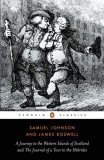
A Journey to the Western Islands of  Scotland and The Journal of a Tour to the HebridesA Journey to the Western Islands of Scotland and The Journal of a Tour to the Hebrides by Samuel Johnson
Reviewed by Jason Koivu
My rating: 3 of 5 stars

Two buds go for a romp in the Highlands of Scotland.

In A Journey to the Western Islands of Scotland... we get a glimpse of the bromance between dictionary man Samuel Johnson and lawyer James Boswell as they hike through the hills and lochs down to the isles along the west coast. Boswell, a Scot, plays host to Johnson, showing him the sights, which are nicely described, as well as introducing him to some of the more colorful characters of the area.

This is fairly light reading with a touch of airy philosophizing now and then. Johnson's sometimes jovial, sometimes truculent nature comes in for some good-natured ribbing. He was a larger-than-life character with some strong opinions. It's great to get this candid look at the man, someone who I've been intrigued with since I saw him played by Robbie Coltrane in the Brit comedy Black Adder. Whenever he's portrayed, it's as a blustery big man with even bigger, louder ideas. He's a liver of life, and since so much of his life was spent working with words, a bookworm like myself can't help but love him.


View all my reviews

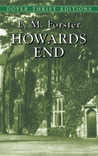
Howards….What Was That?

Howards EndHowards End by E.M. Forster
Reviewed by Jason Koivu
My rating: 4 of 5 stars

I've read three of Forster's most well known novels, and yet, I don't feel I know them at all. Even this one, as I read it, was fading from memory. I don't mean to say that his work is forgettable, but with every Forster book I've read - amazing human portraits and elegant, occasionally profound turns of phrase - somehow they all flitter on out of my head. It's as if they were witty clouds: intelligent and incorporeal. Heck, I've even seen movie versions for a couple of them and I still don't recall what the stories are about.

Why is that? If I could pinpoint it, well, then I wouldn't have started this review with that first paragraph. Perhaps it is because of Forster's penchant for pleasant diversions. He expounds upon ideas as the action unfolds, and that's wonderful! He gives the reader some very nice theories on human behavior to ponder upon. My problem is that I ponder too frickin' much! A writer like Forster is a danger to me. My imagination likes to fly and it's not very well tethered, so when I read books like Howards End with lines like "And of all means to regeneration remorse is surely the most wasteful. It cuts away healthy tissues with the poisoned. It is a knife that probes far deeper than the evil."...oh boy, off goes my mind in another direction and the next thing I know I've spent 20 minutes on a single page. Ah, but they are wondrous pages to linger upon. Perhaps it is worth the time.

View all my reviews

Friday, October 25, 2013

The Lucid Dreaming


Lisa Morton
Bad Moon Books
Reviewed by: Nancy
4 out of 5 stars

Summary


Ashley, a twenty-something California girl, is a post-punk who would rather be called Spike and who worries about money, her family, and freeway traffic. She’s also a violent paranoid schizophrenic living in a state facility west of Los Angeles, her disorder kept under control by confinement and the drug Prolixin.

One day Spike is shocked to find her cell door open and so she ventures out, only to find the walls smeared with blood and the staff missing or dead. She escapes and ventures into a world that’s been driven mad by waking nightmares, where she’s now the sanest person alive. Searching for answers, Spike embarks on a road trip that will lead her from Beverly Hills to a nightmarish Texas compound to the highest office in the land...

My Review

Ashley, who prefers to be called Spike, is doing time in Oxnard, an overcrowded, state-funded mental health facility about an hour from her home in Los Angeles. Her crime was stabbing a homeless man who was rummaging through the trash at her apartment complex while she was off her meds.

While Spike is serving her sentence, bizarre events begin to take place at the institution, and suddenly it seems as if she is the only one who is sane. Spike is a paranoid schizophrenic who doesn’t act according to the voices in her head. Instead, she has vivid pictures in her mind that direct her actions, and most of them are rather dark and violent. The Prolixin she is required to take prevents those vivid dreams from occurring and enables her to lead a relatively normal life.

While Spike is doped up on Prolixin, those who are entrusted to care for their mentally ill charges have not shown up
to provide food or dispense medication. Screaming, blood, incoherent mumbling, waking dreams and odd behavior finally drive Spike from the institution. On the way out, she grabs drugs, money, clothing, a gun, and an SUV and heads out in search of her best friend, Tommy.

Tommy is of no help. On her own, Spike encounters others suffering from the waking dream “epidemic” occurring all over the world. With her SUV and a companion with a gentle soul and passive nature who
has happy dreams, Spike journeys across the US and finds that there are others who have learned of a way to control the epidemic.

The paperback edition has 92 pages and was a fast-paced and fun read. The story was told from Spike’s own perspective. She was foul-mouthed, funny, resourceful, and had a cynical outlook on life that made her a vastly appealing young character.

I thoroughly enjoyed this story and plan to look for more by this very talented author.
Also posted at Goodreads.

Thursday, October 24, 2013

Been There, Done That Dude Lit

The Inquisitor
by Mark Allen Smith
Published by Henry Holt and Co.

3 Out of 5 Stars
Reviewed by Amanda 

In The Inquisitor, our protagonist wakes up in New York City with no knowledge of who he is or where he's been, but possesses a keen survival instinct. Managing to get work on construction sites for cash, he eventually gives himself the moniker of Geiger and earns the trust of the local mob. His friends in dark places provide him with the economic means to utilize his true talents and start up his own company in "information retrieval." An unconventional business model, sure, but a man with amnesia has got to make a living.

For the past 15 years, Geiger has become extremely skilled in his chosen profession and knows the best ways to push people to their limits through psychological rather than physical torture. Whether working for the government or for criminal enterprises, Geiger has only one drive: to get to the truth (there's some pretty broad symbolism in his name; like a Geiger counter detects radiation, our Geiger can detect the truth amid his victim's desperate lies). When a child is brought to him under questionable circumstances, Geiger finds a conscience and helps the boy, Ezra, escape. In doing so, the walls his mind put up to keep out the demons of his past begin to crumble, threatening not just his safety, but that of those he's vowed to protect.

I thought I would be getting a fresh take on the thriller and, while this is a serviceable entry into the genre, it tells a safe, by the numbers tale. Like most of its ilk, it's completely implausible, but it is better written than most, falling somewhere between David Morrell and Robert Ludlum. Still, it has a highly-polished movie script feel to it. (In my mind, I was already playing casting director, and that's not a particularly good sign as it usually means I'd rather be seeing the movie version--by the way, I've settled on either Jeremy Renner or Daniel Craig to play Geiger; have their people call my people and let's make this thing happen, baby). The big reveal in the end is a letdown and doesn't really seem like the type of thing that would kick up all of the fuss in the novel.

The biggest problem for me was the character of Geiger himself. Seemingly emotionless not just in the interrogation room, but in life as well, Geiger isn't the type of character one can connect or empathize with. He approaches his torture with a cold, clinical precision, but I suppose we're supposed to see the moral core hidden deep, deep down in his psyche because he tries to actively avoid physical harm. His lack of relationships and his refusal to engage with the world outside the limited one he's built for himself make him seem inhuman. There's some definite overtones of Terminator 2: Judgment Day here. Like the Arnold Schwarzenegger character, Geiger is a badass mofo who protects the young Ezra and in a hesitating, halting manner, begins to express human-like emotions. It's dude-lit in which men get to envision themselves as steely-eyed, square-jawed, testosterone-fueled protectors willing to sacrifice themselves so that others may live. Like I said, we've been here before.

The one thing that should make Geiger intriguing, his repressed past with a father whose motivations are unclear, is never as fully explored as I hoped (is he trying to protect his son from a known danger, or is he just a sadistic survivalist intent on making his boy as tough as possible?). While we do begin to get a clearer picture of what the young Geiger endured, Smith isn't putting all of his cards on the table yet as this is clearly intended to be an enduring series.

The Inquisitor is what it is and, for what it is, it's fairly well done. However, the stock characters and lack of psychological depth means I probably won't be coming back for seconds.

An Artist in the Floating World

An Artist of the Floating World

Kazuo Ishiguro

Four Stars

Summary

In An Artist of the Floating World, Kazuo Ishiguro offers readers of the English language an authentic look at postwar Japan, "a floating world" of changing cultural behaviors, shifting societal patterns and troubling questions. Ishiguro, who was born in Nagasaki in 1954 but moved to England in 1960, writes the story of Masuji Ono, a bohemian artist and purveyor of the night life who became a propagandist for Japanese imperialism during the war. But the war is over. Japan lost, Ono's wife and son have been killed, and many young people blame the imperialists for leading the country to disaster. What's left for Ono?

My Review
I've finally added Kazuo Ishiguro as a favourite author. I feel I should have when I read Never Let Me Go but I have yet to finish the book review for that one. So why am I writing this one first? I think it's because the other effected in a way I couldn't quite describe but this book feels more comfortable. The more I read of Ishiguro, the more I fall in love with his form of the written word.

I'm really not so sure this book is about post war Japan as it is about frailty and the weakness of pride. Told in a conversational way with occasional flashbacks to earlier times and conversations Masuji Ono sometimes let slip the pride he felt in being a propaganda artist. It's not until he is rebuffed by a former student and reminded of his duties to assure his daughter a good marriage match that it begins to dawn on him that his memories may be faulty. He soon realizes he may also have been wrong.

This is written so subtly that you, along with Masuji Ono, arrive at this at about the same time. You are allowed to make mistakes and learn from them if you confront them. This book has lessons but none of them are taught with force. I think I like learning that way.

The Curious Incident of the Dog in the Night-Time

 The Curious Incident of the Dog in the Night-Time

Mark Haddon

Four Stars

Summary

Christopher John Francis Boone knows all the countries of the world and their capitals and every prime number up to 7,057. He relates well to animals but has no understanding of human emotions. He cannot stand to be touched. And he detests the colour yellow.

My Review

What starts as a minor mystery ends up becoming a long and eye opening journey for 15 year old autistic, Christopher. While his autism isn't the main theme of the book it does play into how he interacts with the world around him. Reading this book really helped me understand the mindset of Asperger's Syndrome a lot more.

The story is told from Christopher's perspective which includes his likes and dislikes, dogs, math, prime numbers, Sherlock Holmes, and how he basically copes with his phobias. Some of the saddest and funniest parts of the story are caused by him being too literal minded. Most of which help to identify with and like Christopher that much more.

If you're looking for a mystery you might well look to a different book but if you want an interestingly written story of an odd coming of age then I highly recommend this one.


Wednesday, October 23, 2013

Tis the Season


Ghost Stories of an Antiquary

M. R. James

Dover

Reviewed by: Terry 

4 out of 5 stars


This volume contains eight tasty little nuggets of supernatural horror that I found very satisfying. In each of them the story is told second or even third hand by a genial narrator whose acquaintances, who are themselves of a decidedly scholarly bent, have been the victims of supernatural intrusion into our world. Often the stories revolve around an ancient artifact able to invoke the otherworldly that is discovered by these particularly luckless individuals (though they often feel themselves lucky indeed when they first make their discoveries). The tales are all good, but my favourites were “Canon Alberic's Scrap-book”, “Lost Hearts”, “”The Mezzotint”, and “Count Magnus”. I found myself thinking of both Lovecraft (in James’ use of made-up manuscripts and a reliance on protagonists of a learned bent whose curiosity proves to be their bane) and Clark Ashton-Smith (though with prose that was a little less flowery) though I think James is a much better stylist than the former and a little less given to the more extreme flights of fancy of the latter.

“Canon Alberic's Scrap-book” – An antiquary discovers a scrap-book of ancient manuscripts compiled by the titular Canon Alberic in the 17th century that is in the keeping of the sacristan of a church in France that he is studying. One picture, “The dispute of Solomon with a demon of the night”, proves to be particularly compelling…and why is the sacristan so eager to get rid of a book so obviously of great value? Great evocation of mood and the way in which the supernatural creature manifests itself was suitably creepy.

"Lost Hearts" – A rather moving tale of revenge from beyond the grave and the perils of devoting oneself to the arcane teachings of the ancients in the hopes of gaining eternal life. I knew where this one was going pretty much after the first paragraph, but I heartily enjoyed the ride.

"The Mezzotint" – I really liked the interesting way in which the artifact in question here, the mezzotint of the title, manifested the supernatural and the foreboding sense of a quiet yet unstoppable horror that was the result.

"The Ash-tree" – A nobleman and his descendants find that being the star witness in a witch trial probably isn’t a good idea. Good creepy/gross factor with the creatures invoked for vengeance.

"Number 13" – What happens when you book a room in an inn that used to belong to a man accused of having been an alchemist and magician several generations ago? Nothing good, especially if you rent the room right next to the one in which he mysteriously died. Space and time have a funny way of bending and twisting when the undead get involved.

"Count Magnus" – The titular Count reminded me a bit of Vigo the Carpathian from Ghost Busters 2: he was a mean-spirited son of a bitch who liked to torture people in his spare time and go on fun little trips with names like “the Black Pilgrimage”.  Perhaps it’s wisest if you’re a travel writer getting good copy from his native village to leave the crypt where he’s entombed alone. Just sayin’.

"'Oh, Whistle, and I'll Come to You, My Lad'" – Ah skeptics…they always learn their lesson in the end, don’t they? Well, they do in these kind of stories anyway. If you’re kind of a priggish and pedantic professor going on a holiday to sharpen up your golf game (golf is a re-occurring motif in these stories and I don’t think James was a fan) don’t promise to do some investigating of the local Templar preceptory for a colleague, and if you do for God’s sake don’t muck around with anything you find there. If you’re lucky you’ll run into an old military type who doesn’t trust papists.

"The Treasure of Abbot Thomas" – When the Abbot of a 16th century monastery basically dares you, though the enciphered clues he left behind in some striking stained glass windows, to uncover his hidden treasure don’t do it. Trust me on this.

I like the way in which James gives us enough of a glimpse at the ghosts and undead horrors he unleashes in his stories to avoid Lovecraft’s almost laughable (to me at least) approach of “oh, it was so horrible I can’t even begin to describe it, just trust me it was really, really, really, mind-crushingly horrible!” and yet was sufficiently vague to leave enough of the horror to the imagination of the reader. The charming, almost homely, voice of the narrator was also a nice contrast to the ultimate invocation of otherworldly menace in the tales. All in all a really solid collection of old-school ghost stories that may not leave you cringing in terror, but you may end up looking over your shoulder from time to time. And you’ll definitely take greater care the next time that weird old manuscript seems to fortuitously land in your lap.

Also posted at Goodreads


Tuesday, October 22, 2013

The Bennet Home Comes Alive


Longbourn by Jo Baker

2013
Reviewed by Diane K. M.
My Rating: 5 out of 5 stars

It's become a cliche to love Jane Austen's books. Her oeuvre is so popular that it has inspired a vast amount of fan fiction, much of it crap. I've been a Janeite for about 15 years and have read all of Miss Austen's works (excepting her Juvenilia, which I'm saving for a rainy day). I've also picked up dozens of the fan novels in an effort to extend the stay in her world. I say "picked up" rather than read, because a great deal of the fanfic is insufferable and must be tossed after the first chapter.**

"Longbourn" is one of the exceptions. The simple description is that it is a retelling of "Pride and Prejudice" from the servants' point of view. But it goes deeper than just a retelling -- Longbourn made the Bennet home come alive. For the first time in all of my readings of P&P, I felt as if I lived in the same house as Miss Elizabeth, Jane, Kitty, Lydia, Mary and Mr. and Mrs. Bennet. I know what time the housemaids got up to light the fires and draw the water. I know when the cook began preparing the dinner. I know how the linens got washed, and how muddy it was to walk to Meryton to get supplies. I even know a few secrets about the housekeeper that would have surprised Miss Austen.

And this is where the two novels diverge -- Jo Baker has created full characters out of the servants, who are almost invisible in P&P. The story is mostly told by Sarah, a housemaid who has been working at Longbourn since she was orphaned at age 6. The cook, Mrs. Hill, thinks of Sarah as family, and is worried what will happen to the staff if the estate is entailed away to Mr. Collins. I liked having the servant's perspective on this well-known plot line -- it was a good reminder of how many people were actually affected by Mr. Bennet's lack of a male heir.

The story picks up quickly when a new footman named James Smith is hired. Sarah thinks James has a secret and is determined to find out about his past. Meanwhile, her head is turned by a handsome servant who works for Mr. Bingley. Sarah, who reminded me a bit of the headstrong Jane Eyre, thinks that life should be something more than just emptying chamber pots every day and always washing other people's linens. If only someone would take notice of Sarah...

I should warn diehard P&P fans that if you're hoping to spend more time swooning over Mr. Darcy, you will be disappointed. Aside from Mr. Wickham, who likes to lurk around the servants and tries to seduce a young maid, the men from P&P are only on the periphery of this story. You'll see more of the Bennets as the servants interact with them, but the "downstairs" plot takes its own path.

Baker's prose is lovely, and I was enchanted with almost all of the book. My one criticism was that too much time was spent on James' back story, and I was anxious to return to Longbourn. But that is a mere quibble in an otherwise wonderful novel. Three cheers for Jo Baker for bringing the Bennet home to life!

**In addition to "Longbourn," my recommendations for the best Jane Austen fanfic are Pamela Aidan's "An Assembly Such as This" (part I of a trilogy), "Jane Fairfax" by Joan Aiken, and Amanda Grange's series of gentlemen's diaries, such as "Mr. Darcy's Diary," "Mr. Knightley's Diary," "Colonel Brandon's Diary," etc. I declare them charming and delightful reads.

Have Fun Storming the Memoir!


Still Foolin' Em by Billy Crystal
2013
Reviewed by Diane K. M.
My Rating: 2 out of 5 stars


Your reaction to this memoir will depend on how much you like Billy Crystal's comedy style. I'm meh about him, so I'm meh about this book. Other reviewers who adore him liked this book a lot more than I did.

Billy is now 65, which he will tell you over and over again, and several chapters are devoted to his shtick about getting old. There's nothing new here, except discovering that Billy has become a cranky old man, cursing about social media and teenagers and politics. Speaking of cursing, it was a bit shocking to hear Billy drop so many F-bombs. For decades now Billy has nurtured the persona of the sweet, goofy, schmaltzy, aw-shucks guy, and I was surprised to hear him swear so much.

Despite the F-bombs, Billy's comedy style remains firmly stuck in the 80s and 90s. Some of his jokes have punchlines that date back to then, and I rolled my eyes at the preciousness of it. He also relies heavily on Jewish humor — numerous tired quips are about how much Jews love food, and he ends several chapters with an exaggerated Oy! — plus there's a lot of baseball jokes. (Billy is a Yankees fan, which he will never let you forget.)

But I'm focusing too much on the negative. The parts I liked were the stories of how he got started in comedy and the behind-the-scenes anecdotes of his movies and TV shows. He talks about making "When Harry Met Sally," "City Slickers," "The Princess Bride," about hosting the Oscars and about visiting Russia for the comedy special "Midnight Train to Moscow." He also had good stories of his famous friends, such as Mickey Mantle, Sammy Davis Jr. and Muhammad Ali. One of Billy's early famous bits was his impression of Ali, and the two men became close, with Ali calling Billy "Little Brother" whenever they'd meet.

Billy also shared some nice family moments, such as the day his first daughter got married, and how much he likes being a grandfather. There were some emotional chapters, like when his dad died when Billy was 15, and how he later wrote those childhood memories into the Broadway show "700 Sundays."

I listened to this book on audio CD, and parts of it were performed in front of a live studio audience. Again, your reaction to this will depend on how much you like listening to Billy. He reprises all of his famous impressions, including Ali, Mantle, Sammy, Howard Cosell, "You look MAH-velous!" and the voice of Miracle Max. While I enjoyed most of the performance, at times I found it tedious and wished he would wrap it up already. Oy.