Friday, April 10, 2015

What We Talk About When We Talk About Love


Raymond Carver
Vintage Books
4 out of 5 stars
Reviewed by Nancy


Summary


This powerful collection of stories, set in the Northwest among the lonely men and women who drink, fish and play cards to ease the passing of time, was the first by Raymond Carver to be published in the UK. With its spare, colloquial narration and razor-sharp sense of how people really communicate, the collection went on to become one of the most influential pieces of literary fiction.


My Review


When I started reading, I found these stories a little too spare, a little unfinished. They were snippets of lonely people and troubled relationships, but nothing I could really sink my teeth into. I set the book aside and when I picked it up a second time, I discovered that these stories are better digested when read with fewer interruptions. Although these stories are about a variety of characters, I found their commonalities, differences, views and struggles very compelling, if not always enjoyable. Reading the stories consecutively helped to draw me in and connect me with the characters. The words, though brief and simple, were astonishingly effective at portraying the human condition with grittiness, humor, and poignancy and showing a glimpse of American society.

Here are a few memorable lines from some of my favorite stories:

"There was a little rectangle of lawn, the driveway, the carport, front steps, bay window, and the window I’d been watching from in the kitchen. So why would I want a photograph of this tragedy?” – from Viewfinder

"Things are better now. But back in those days, when my mother was putting out, I was out of work. My kids were crazy, and my wife was crazy. She was putting out too. The guy that was getting it was an unemployed aerospace engineer she’d met at AA. He was also crazy." – from Mr. Coffee and Mr. Fixit

"The thing was, they had to have a serious talk soon. There were things that needed talking about, important things that had to be discussed. They’d talk again. Maybe after the holidays were over and things got back to normal. He’d tell her the goddamn ashtray was a goddamn dish, for example." – from A Serious Talk

"But what I liked about knights, besides their ladies, was that they had that suit of armor, you know, and they couldn’t get hurt very easy. No cars in those days, you know? No drunk teenagers to tear into your ass." – from What We Talk About When We Talk About Love

Fix a drink, have a smoke, and discover Raymond Carver.

Tuesday, April 7, 2015

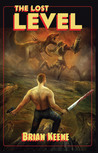
The Lost Level

The Lost LevelThe Lost Level by Brian Keene
My rating: 3 of 5 stars

When occultist Aaron Pace begins experimenting with travel between dimensions, he finds himself trapped in The Lost Level, a realm purported to be inescapable. Will Pace buck the odds and find his way back home?

I've never read Brian Keene before and this is far from his normal fare, a planetary romance of sorts rather than his usual horror fare. While it wasn't my favorite book of this type, it was quite enjoyable.

As I mentioned above, The Lost Level is Brian Keene's homage to the works of Edgar Rice Burroughs, Land of the Lost, and similar works. While it obeys the conventions of the Sword and Planet/Planetary Romance genre, complete with buxom warrior women and many-legged creatures, Keene puts his own twists on it.

Rather than being a dynamo like John Carter, Aaron Pace is an occultist but still fairly capable. While traveling The Labyrinth, a dimension connecting many others via portals, Pace stumbles into the Lost Level, an inter-dimensional Sargasso where the flotsam of the multiverse collects. Soon after arriving, he meets Bloop, a creature resembling The Beast of the X-Men, and Kasheena, a nearly naked warrior woman. Together, the trio try to find Kasheena's settlement in the hopes of getting Pace back to earth.

Keene does a good job aping the style of the genre without sacrificing his own voice. His descriptions of the denizens of the Lost Level were vivid without being too flowery and he managed to convey a feeling of jeopardy throughout, unlike a lot of similar books.

The Lost Level setting itself was pretty cool. I love the idea of an inescapable garbage dimension populated by all matter of things, from cowboys to dinosaurs to the Nazi Bell. Since I was a Keene virgin prior to this book, some of the references were lost on me but I did notice references to the Rising and the Clickers sequels.

The Lost Level was a lot of fun but I wished it was about twice as long. 3.5 out of 5 stars. Keene's Labyrinth mythos has me intrigued and I'll be sampling more of his works in the future.

View all my reviews

Monday, April 6, 2015

Poor Jack Reacher Is Just Trying to Hitch a Ride...


Reviewed by James L. Thane
Three out of five stars


Late one night in the middle of winter, Jack Reacher is standing by the road on an Interstate highway cloverleaf in the middle of nowhere, Nebraska. It's cold, there's very little traffic, and he's trying to hitch a ride that will get him to Chicago, from where he can make his way by bus or train to Virginia, which is his ultimate destination.

Catching a ride under these circumstances could be difficult in the best of times, but Reacher is a huge guy (much, much bigger than Tiny Tom Cruise), and he's sporting a recently broken nose that makes him look even more intimidating. Most reasonably normal travelers aren't going to take a chance on a guy who looks like this, especially at this time of night, and fifty-odd cars pass by without stopping. Finally, ninety-three minutes after Reacher first stuck out his thumb, a car finally stops.

The car is carrying two men and one woman who are wearing matching shirts and whom Reacher initially decides are on some sort of corporate team-building exercise. He accepts their offered ride and they speed off into the night. But as Reacher listens to them talk and watches their body language, he realizes that something is clearly off-norm here.

Meanwhile, back up the road, a man has been stabbed to death in an old pumping station by what would clearly appear to be a professional killer. Two men were seen leaving the scene and the local sheriff puts out an APB. Almost immediately, though, the FBI swoops onto the scene along with some other very secretive government types. Clearly, this is more than your average, run-of-the-mill homicide.

Thus begins another action-packed page turner from Lee Child. Reacher is on top of his game, broken nose or not, and there are two very interesting female characters along with an assortment of bad guys and government bureaucrats who, as we all know, should simply get the hell out of the way and let Reacher get the job done right.

I really enjoyed the first three-quarters of the book, but this is three stars for me, rather than four, because the last quarter of the book didn't measure up to the setup. I don't want to give anything away, and so I'll simply note that the payoff seemed a bit drawn out and even a little tedious.

One always has to suspend a great deal of disbelief when reading a book like this, and I have no problem doing so. But the end of the book seemed a little over the top even for a Reacher novel and not nearly as inventive or as interesting as the climaxes of most of the other books in this series. Still a fun read, but the first sixteen Reacher novels have perhaps set my expectations a bit too high for this one.

A Relaxed Thriller

All the Flowers Are Dying (Matthew Scudder, #16)All the Flowers Are Dying by Lawrence Block
Reviewed by Jason Koivu
My rating: 4 of 5 stars

Block lulls you into a sense of ease. His words read like a meeting of two long-time friends over a cup of coffee. They don't necessarily have a great deal to say to one another, they just enjoy each other's company. And then next thing you know someone's been shot/stabbed/raped and a murder is being solved.

That happens through out All the Flowers are Dying. There's an ebb and flow of action from start to finish that sometimes switches between the two like flicking on and off the lights. It's a good pace. Just before you have the chance to get too bored with a slow scene, Block's there at the switch to wake you up.

Some of his writing is quite vivid and gorily graphic. At other times he shows Hitchcockian restraint with a crafty subtly that reminded me of Patrick O'Brian's work. It's been a long career for Block, who began with dimestore crime novellas. What we have with this sixteenth edition in his Scudder series is a maturation of the often ham-fisted crime noir potboiler of yesteryear into a more earthy, human story. Characters are fleshed out, motives delved into more deeply.

Yes, I've intentionally avoided summarizing the book on any level. Spoilers would abound with any attempt. Just know that there are bad guys, good guys...no...there are bad people, good people, but topping the population are your average-joe gray people. There is crime. There is resolution. There is also a good deal of reality and graspable humanity, as well as repulsive inhumanity. It's a veritable melting pot of all that is now.

View all my reviews

Friday, April 3, 2015

I Can't Think Straight


Shamim Sarif
Enlightenment Press
3 out of 5 stars
Reviewed by Nancy


Summary


Tala, a London-based Palestinian, is preparing for her elaborate Middle Eastern wedding when she meets Leyla, a young British Indian woman who is dating her best friend.

Spirited Christian Tala and shy Muslim Leyla could not be more different from each other, but the attraction is immediate and goes deeper than friendship. As Tala’s wedding day approaches, simmering tensions come to boiling point and the pressure mounts for Tala to be true to herself.

Moving between the vast enclaves of Middle Eastern high society and the stunning backdrop of London’s West End, I Can’t Think Straight explores the clashes between East and West, love and marriage, conventions and individuality, creating a humorous and tender story of unexpected love and unusual freedoms.


My Review


This was the perfect book to read while I was snowed in and work was closed.

Tala is a Palestinian living in London. She’s very outgoing and forthright. After three engagements, her parents really hope this one will stick. Hani is a very nice guy and Tala loves him. Leyla is an Indian Muslim. She works at a job she’s not passionate about, while her true love is writing. Other than a mutual attraction, Tala and Leyla have little in common. They both come from strict, traditional cultures that don’t have a very positive view about homosexuality. Despite these difficulties, the two women eventually fall in love.

The romance happens a little fast, and the plot is rather predictable. Still, I gulped it down in one sitting and enjoyed this light and pleasant story. What I liked most about it is the glimpse into middle-eastern culture, the clash between traditional and western values, religious and class differences, and the interactions between lovers, friends, and family.

There was a large cast of interesting, well-developed secondary characters and other minor characters that could have been fleshed out a little more. I was especially curious about Tala’s uncle, Ramzi, who was likely gay. It would have been so much easier on Tala if they were closer and opened up to each other about their sexuality. Another interesting minor character was Rani, Tala’s mother’s Indian housekeeper who occasionally spits in her coffee. I get that she probably resented the family’s wealth, but I didn’t understand her acrimony.

If you are looking for graphic sex scenes, look elsewhere. This is a thoughtful and humorous story about two young women who eventually find themselves and choose a different path. The ending made me smile.

Maybe I'll watch the film while the book is still fresh in my mind.

Tuesday, March 31, 2015

The Spellmans Strike Again

The Spellmans Strike Again (The Spellmans, #4)The Spellmans Strike Again by Lisa Lutz
My rating: 4 of 5 stars

As Izzy tries to dig up dirt on rival PI Rick Harkey, her mother obsessively sets her up on dates with lawyers. But why do Izzy's parents kick everyone out of the house on Wednesdays? And why are fixtures and doorknobs disappearing from the Spellman house? And what's with David and the mystery blonde, or Rae and her new boyfriend?

The family of dysfunctional detectives is back in their fourth, and what would seem final if I didn't know it wasn't the last book, outing. Some series hit the skids around the fourth book but I found the Spellmans to be as entertaining as ever.

While they've all aged a bit, the Spellman cast is as hilarious as ever. Izzy has been dragooned into dating lawyers despite still being with future ex-boyfriend #12, Connor. Rae has dedicated herself to freeing a wrongfully convicted man. The Spellman parents are having intercourse. And the other characters like David and Henry are also acting strangely.

For a humorous series mystery, this sure had it's share of great moments. When spoiler and spoiler finally got together, I grinned like a mule eating an apple. When spoiler said he was dying of the cancer, I came close to shedding a silent man tear at lunch in front of a couple co-workers. While I'm glad it wasn't the final Spellman book, it felt like it was in a lot of ways by the end.

Honestly, that's about all I want to say to avoid spoilage. If you've come this far into the Spellman saga, you won't want to back out now. Four out of five stars.

View all my reviews

Monday, March 30, 2015

A Very Entertaining Debut Novel from Tom Cooper


Reviewed by James L. Thane
Four out of five stars

The denizens of Jeanette, a dying community in the Louisiana bayou, have never really recovered from the devastation of Hurricane Katrina. And then, as they are struggling to get back on their feet, they are walloped again by the disaster that flows to their shores in the wake of the BP oil spill. Many of the citizens of the tiny community barely eek out a hard scrabble living as shrimpers and as the oil fouls the waters for miles around, the already beleaguered shrimping industry is dealt a devastating blow.

But these are not the sort of people who will bow to the fates and give up easily. Fiercely proud and independent, they struggle on in a variety of ways, both legal and illegal, to preserve the way of life they've known for generations. The cast of characters includes a teenage boy named Wes Trench who has been estranged from his father since his mother was lost in Katrina. Wes and his father barely communicate any more, but tradition and the circumstances of fate decree that the two must continue to work side-by-side on the father's shrimp boat, falling further and further behind both emotionally and financially.

Meanwhile, a one-armed, pill-popping treasure hunter named Lindquist, when not working his own shrimp boat, pores over maps and spends countless hours roaming the bayous with his metal detector, searching for the long-lost pirate treasure that he's certain will allow him to finally fulfill his dreams. The cast also includes a pair of seriously twisted twins who are farming high grade marijuana on an island that they guard against all comers and a couple of small-time crooks on the lookout for an easy dollar.

Throw in a smarmy oil company representative who's trying to buy off for a pittance those who were harmed by the oil spill, including even his own mother, mix thoroughly, and the result is a great read that is at times hilariously funny and at others heart-breakingly sad.

Tom Cooper has gathered together a great cast of characters and set them loose in a perfectly rendered setting. He obviously knows the people and the landscape of this region very well; he writes beautifully and the story moves along at exactly the right pace. This is a wonderful debut novel that evokes echoes of writers like Carl Hiassen, Elmore Leonard and Daniel Woodrell, and I'm already looking forward to Cooper's next book.

Stewart Skewarting US Politics

America (The Book): A Citizen's Guide to Democracy InactionAmerica (The Book): A Citizen's Guide to Democracy Inaction by Jon Stewart
Reviewed by Jason Koivu
My rating: 4 of 5 stars

America (The Book) is not the Daily Show, but it's damn close.

This is one of those cases where it might seem like a good idea to listen to the audiobook and hear the actors' deliveries in order to mimic the feeling of watching the tv show as much as possible. However, then you'd miss out on the high school textbook mock-up layout and that's missing half the point.

A Citizen's Guid to Democracy Inaction is modeled after a civics class text replete with horrible study guides, misguided questions, those pop-out boxes for more incorrect information, etc and also etc. It's all one big lampoon of laughter and I loved it!

Yes, it can sometimes be silly in a juvenile way...

“It's not that the Democrats are playing checkers and the Republicans are playing chess. It's that the Republicans are playing chess and the Democrats are in the nurse's office because once again they glued their balls to their thighs.”

And its insight isn't exactly mindblowing (or is it?)...

“If "con" is the opposite of pro, then isn't Congress the opposite of progress? Or did we just fucking blow your mind?!?”

However, occasionally a particularly spot-on, cutting remark is made...

“Classroom Activities
1. Using felt and yarn, make a hand puppet of Clarence Thomas. Ta-da! You're Antonin Scalia!”


Stewart and crew roast the U.S. Government time and again, so as you could imagine, it's a great read for Jon Stewart Show fans, it's also a good one for liberals in general and a tolerable one for Republicans who can take a joke.


View all my reviews

Friday, March 27, 2015

Jeb and Dash: A Diary of Gay Life, 1918-1945


Ina Russell, Editor
Faber & Faber
Reviewed by Nancy
4 out of 5 stars


Overview


It occurred to me today with something of a shock how horrible it would be for this diary of mine to be pawed over and read unsympathetically after I am dead, by those incapable of understanding... And then the thought of the one thing even more dreadful and terrible than that - for my diary never to be read by the one person who would or could understand. For I do want it to be read - there is no use concealing the fact - by somebody who is like me, who would understand. Jeb Alexander was a gay man who lived in Washington, D.C., during the first half of the twentieth century. From 1918, when he was nineteen years old, until the late 1950s, he chronicled his daily life engagingly and unsparingly, leaving behind a unique record of ordinary gay life before Stonewall, a history that has remained largely hidden until now. Jeb came of age as the century did, witnessing and recording political and social change from the position of insider as an editor for the U.S. Government and outsider as a gay man. Painfully shy, and frustrated in his ambition to be a novelist by writer's block, Jeb turned to his diary as a way of expressing himself as well as recording events, creating a full emotional self-portrait and unforgettable sketches of the men who made up his lively circle of friends. Jeb and Dash also details the joy and anguish of an extraordinary on-and-off love affair between Jeb and C. C. Dasham (Dash), whom he met in college and with whom he remained friends throughout his life. A rare and important historical document, a beautifully written memoir, a love story, an ode to old Washington, D.C., Jeb and Dash is a remarkable find and an enduring literary achievement.


My Review


Finally finished!

This book took me months to read and even though I was tempted to set it aside more than once, I’m glad I was patient enough to see it through to the end.

This is a condensed version of Jeb’s diary edited by his niece, Ina Russell, starting from when Jeb was 12 years old and ending a year before his death in 1965. This diary covers the years between 1918 and 1959. I loved the glimpse of history between two world wars, politics, famous personalities, plays, literature, music, observations on life and the world, and the details about gay life in a time when the word “gay” had a different meaning and homosexuality was a crime. I presume Ina Russell left out many details of Jeb’s cruising in Lafayette Square to spare the sensibilities of mainstream readers, but I think these details would have added some spice and richness and shown how dangerous and difficult gay life was for many people.

Jeb meets Dash while in college and throughout his story relays his deep affection for him. Even though his feelings are not returned, the two men remain friends for many years.

August 25, 1920
“I have at last found a friend, a lovable, handsome fellow, a realization of the friend I have dreamed of during all those lonely nights while I walked alone through the streets.”

February 11, 1921
“I want love and affection. Damn it! All that Stevenson said about journals is true. This diary of mine is a tissue of posturing. My real thoughts on such matters as sex are not admitted even to myself. I will be frank. I am madly in love with C. C. Dasham.”

July 16, 1927
“Returned home tired and nervous. Dinner with Dash. His entrancing personality so enthralls me! So beautiful, so beautiful. I would do anything for him.”

August 1, 1936
“Dash got his ticket, checked his bag, and gave me a strong handclasp. The goodness, sweetness, and steadfastness of his loyal, generous nature shone from his wide, serious, green eyes. That may sound like a rhapsody, but it’s God’s truth.”

The love pouring from Jeb’s words made me sad, knowing that he and Dash were not meant to be. I wish Jeb had moved on and found someone else to love. I also wish he would have fulfilled his aspirations of becoming a writer instead of spending many lonely nights drinking and journaling about his sad life.

The center of the book contains photos of Jeb, Jeb and Dash, Jeb’s family, a copy of a handwritten page in his diary, and places he’s lived in and visited. I would have liked to see some photos of the friends who meant so much to him.

There was some lovely, evocative writing here and a sense of immediacy, particularly in the last section during the World War Two years. There were also a lot of mundane details and too much repetition, some of which became tedious to read.

I would recommend this to those interested in gay history, the history of Washington, D.C., and the impact significant historical events have on individual lives.

Wednesday, March 25, 2015

Double IndemnityDouble Indemnity by James M. Cain
My rating: 5 of 5 stars

“I had killed a man, for money and a woman. I didn't have the money and I didn't have the woman.”

One of the great Noir lines of all time. Cain wrote it. Raymond Chandler used it in the movie. I could stop my review right here because that line sums up the movie perfectly.

But I can't. I love writing about books.

Walter Huff met a woman. A married woman, a woman Huff would be willing to turn himself inside out if that would insure her love. Her name is Phyllis and she has a thought, not even a plan, just a thought of what she would like to do about her husband.

DoubleIndemnity
Fred MacMurray and Barbara Stanwyck

Much has been made of Phyllis being a femme fatale, maybe even one of the most viperous examples in history. It has been a while since I've seen the movie and maybe Stanwyck does portray Phyllis much more deviously manipulative than what I found the book Phyllis to be. Now I'm not saying she is an angel I'm just saying she ran into a guy that even surprised himself with what he was willing to do with the hope of getting the girl.

Huff has made a career out of reading people and when he meets Phyllis she asks him a handful of suggestive questions and the guy is already formulating a full blown plan for insurance fraud. He has been in the insurance game for a long time and he knows about every angle ever thought up by anyone to try and pull one over on an insurance company. He is uniquely qualified to formulate the perfect scam.

I don't like insurance. Life insurance they are betting I live. I'm betting I die. It is kind of crazy if you give it much thought. Car insurance they are betting I don't get in an accident. I'm betting that I do. The industry has convinced us to bet against ourselves and pay for the privilege. And yet, even though I'm aware of the situation, I pay thousands of dollars of insurance premiums every year to insure one disaster doesn't sink the ship. Walter Huff would love stopping by to see me.

Huff is so intent on the details of this insurance rip-off that he never learns much about Phyllis. He doesn't even really seem to care about why she would be interested in killing her husband. She is the bunny and he is the greyhound running around the track. There is no hesitation about Huff. He leaps at the chance to help Phyllis get the insurance money. I'm not sure what was more important to him pulling off the perfect swindle (my vote)or winning the girl.

Photobucket
James M. Cain

Crisp, wonderful writing with pitch perfect dialogue. My recommendation is read the book and then watch the movie, a perfect way to spend a Sunday afternoon. At least 18 films have been made from James M. Cain novels and stories. Besides this novel he wrote two other novels that are not only considered noir fiction classics, but also translated well to film, The Postman Always Rings Twiceand Mildred Pierce. In college I took a film and novel class and Mildred Pierce was one of the books/movies on the syllabus. One of the most enjoyable classes I ever took. I love the combination of two different art forms. I generally like the book better because there is usually more depth to the characters and more subplots can be incorporated into the flow of the novel. Film is restricted by length, but when they get it right they really get it right. I try, as best I can, to judge books and movies from books on separate scales. Even a movie that butchers the original source material can be a great movie. In the case of James M. Cain because he wrote such great dialogue Hollywood did not have to deviate far from his original intentions. Highly recommended!

View all my reviews