Friday, December 26, 2014

Punkzilla

Adam Rapp
Candlewick Press
Reviewed by Nancy
4 out of 5 stars


Summary


For a runaway boy who goes by the name "Punkzilla," kicking a meth habit and a life of petty crime in Portland, Oregon, is a prelude to a mission: reconnecting with his older brother, a gay man dying of cancer in Memphis. Against a backdrop of seedy motels, dicey bus stations, and hitched rides, the desperate fourteen-year-old meets a colorful, sometimes dangerous cast of characters. And in letters to his sibling, he catalogs them all — from an abusive stranger and a ghostly girl to a kind transsexual and an old woman with an oozing eye. The language is raw and revealing, crackling with visceral details and dark humor, yet with each interstate exit Punkzilla’s journey grows more urgent: will he make it to Tennessee in time? This daring novel offers a narrative worthy of Kerouac and a keen insight into the power of chance encounters.


My Review


I really enjoyed this story about 14-year-old Jamie’s journey from Oregon to Tennessee to see his dying older brother. Jamie’s story is told in letters – long, honest and revealing letters, mostly to and from his brother Peter. Jamie keeps his letters in a notebook that never leaves his sight, many of which are not mailed. These letters tell of his brief experience in a military academy, his demanding father and unhappy mother, his strait-laced brother, Edward, his petty thievery, drug use, ADD, and the sad, violent, desperate and lonely characters he meets on the way. Peter’s letters tell of his career as a playwright, his artist lover, Jorge, and the disease that is ravaging his body.

This story was kind of sad, darkly humorous, and raw. I wanted to strangle Jamie at times. It drove me nuts that he referred to every woman as a “skeezer”, but I couldn’t help caring about this very troubled young man who was often mistaken for a girl and digs the Dropkick Murphys and wanting him to get to his brother in time.


“P it’s not like I WANT to look like I do. I wish I could grow some whiskers or have a scar over my eye. I’ve even thought about cutting myself I really have just like an inch-long slit over my right eye or across my cheek because that might help me look more manly or less soft or whatever.”

Tuesday, December 23, 2014

Midwestern History

Flyover Lives by Diane Johnson
2014
Reviewed by Diane K.M.
My rating: 3.5 stars rounded up to 4


This was a charming memoir, even though it rambled in parts. But even the rambling parts were rather interesting.

Diane Johnson grew up in Moline, Illinois, which is part of the Midwest, which has been derisively called "flyover country" by those who live in big cities on the coasts. I was keen to read this book because I grew up in Iowa, which is next door to Illinois, and indeed, many of Diane's stories were similar to my experiences there, even though there is a 40-year difference in our ages. Much of the Midwest is not very changeable, you see.

"I had always wondered how the first settlers in Illinois, in the eighteenth century and the beginning of the nineteenth, survived the ruthless climate and isolation, how they managed to clear the tough woodlands to make their farms, how they taught their kids something about Shakespeare and Mozart, and eventually pitched in for a war like the Civil War though they'd barely seen a black person or encountered a slave. No one writes much about the center part of our country, sometimes called the Flyover, or about the modest pioneers who cleared and peopled this region. Yet their midwestern stories tell us a lot about American history. Migration patterns, wars, the larger movements, are after all made up of individual human beings experiencing and sometimes recording their lives."

Diane was one of those restless kids who dreamed of traveling and moving away from her small town, and eventually she did. At the beginning of the book she is living in France, and while at a house party, a French friend tells her that "Americans are naive and indifferent to history."

This quote bothers Diane to the point where she spends months researching her ancestors, going through family heirlooms and diaries, and ends up writing a book about them. (So take that, you obnoxious woman!)

"I became especially interested in some testimonies by long-departed great-grandmothers, simple stories but all the rarer because the lives of prairie women have usually been lost. Perhaps prairie women at the end of the eighteenth century didn't have the leisure to pick up their pens, or maybe they didn't think their lives were of interest."

Most of the history Diane dug up involves her great-great-great grandmother Catharine Martin (born in 1800), who took time to write a hundred pages about her life when she was in her 70s.

The prose in Diane's memoir is lovely, and I flagged numerous passages while I was reading. My only complaint was that some of the chapters jumped around in time and perspective, which was a bit jarring. Some pieces felt like they should have been magazine articles or essays, but got shoved in this book wily-nily. For example, there is an interesting section about Diane's experiences with writing screenplays and working with movie directors, including Stanley Kubrick, Merchant Ivory and Mike Nichols, but the placement seemed random. And some of the chapters were so short that they felt like afterthoughts.

Overall, this was a very enjoyable read, and I appreciated the historical details about Midwestern life in the 1800s, and also Diane's stories about growing up in the 1940s. Before this memoir, I had only read one of Diane's novels (Le Divorce), but I liked this so much that I think I'll look up her other books. 

Favorite Quote:
"As a little girl in Moline, I didn't expect to be a writer, because I didn't know a writer was something you could be; I had no sense that books were still being written."

The Getaway Car

The Getaway Car: A Donald Westlake Nonfiction MiscellanyThe Getaway Car: A Donald Westlake Nonfiction Miscellany by Donald E. Westlake
My rating: 3 of 5 stars

The Getaway Car is a collection of Donald Westlake's nonfiction work.

I arrived really late to the Westlake party. In fact, when he died, I think I'd only read a handful of his books. Since then, however, I've probably read 25-30 more and thus I was interested in this collection.

The Getaway Car offers up letters, introductions, and essays Donald Westlake wrote during his lifetime. He covers a wide range of topics, like how he wasn't able to support himself writing science fiction in a scathing letter to Xero, a sf fanzine, to his trials and tribulations involving Hollywood. Along the way, he covers such diverse subjects as Lawrence Block, Rex Stout, Peter Rabe, and his wife's tuna casserole recipe.

I liked this book as it shows Westlake was a clever guy no matter what he was writing. There wasn't a lot of meat to it, however. It was kind of thin and some of the selections seemed included to pad the page count.

That being said, I did enjoy a lot of it. It makes me want to read more Peter Rabe, for instance. It also drives home the point of how unknown and unappreciated Westlake was by the general public. With 90 novels under his belt, he was the James Patterson of his era, with the added bonus of actually being a good writer.

Three out of five stars. Maybe 2015 will be the year of the great Parker re-read.

View all my reviews

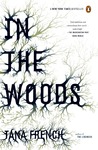
In the Woods

In the Woods (Dublin Murder Squad, #1)In the Woods by Tana French
My rating: 4 of 5 stars

When a twelve year old girl is found murdered at an archaeological dig, Detective Ryan and Maddox are on the case. But what does this case have to do with a similar case twenty years earlier, a case that saw an adolescent Ryan as the only survivor?

As a veteran of detective fiction, riddles, and brain teasers, I'm a big fan of mysteries that keep me guessing. In the Woods was one of those sorts of mysteries.

In the Woods is the story of two detectives looking for answers, both on the case they're working and inside themselves. Rob Ryan and Cassie Maddox are partners and best friends on the Dublin Murder Squad, detectives who catch all the murders that come down the pipe. When Katy Devlin is found murdered and sexually assaulted, they find themselves in the soup pretty quickly. Complicating things is the fact that Rob Ryan used to be Adam Ryan, a lad whose friends disappeared one afternoon, their bodies never found.

In the Woods is very well written and it could be read as simply a police procedural, and it would have been a very good one. The thing that sets it apart from most run of the mill books of this type are the main characters. Rob and Cassie are very well written, real to the point that I wanted to shout at them a few times. Even though it took place in Dublin, it kind of reminded me of The Wire in that there was no happily ever after ending and no action. It was all gritty police work and even grittier interpersonal stuff.

The mystery itself was solveable. Hell, the clues were even pointed out but I was too busy getting misdirected by French's skills. When the truth behind Katy's death was revealed, it was even more chilling than I'd imagined.

French really saw me coming when the Ryan-Maddox relationship took a turn. I wanted them to get together and have detective babies, not have their world come crashing down! Why do you have to be so mean, French? Why?

Great, great book. I wouldn't say it was the best book I read in 2014 but it's definitely in the top ten. Tana French can lead me In The Woods any day. 4.5 out of 5.

Monday, December 22, 2014

Patrick Hoffman Delivers a Huge Load of Trouble in The White Van


Reviewed by James L. Thane
Four out of five stars


This is a very dark debut novel featuring druggies, loan sharks, Russian gangsters, bank robbers and crooked cops, all fighting desperately for turf on the very mean streets of contemporary San Francisco.

Emily Rosario is a lost soul who relies on booze and drugs to make it from one day to the next. One evening, she meets a Russian man in a seedy bar called the Kum Bak Club. After a few drinks, she accompanies him to a hotel for more booze and drugs, but once there, the Russian and his accomplices keep her drugged to the point of incoherence, paying her two hundred dollars a day for her help in what they insist will be an identity theft scheme.

Emily is so totally blitzed that she goes along for the ride, thinking of what she might do with her promised end of the money. Then one day she's loaded into a white van and sent into a bank, only to discover that she's been conned into what is really a bank robbery.

At that point, as it usually does in a noir novel like this, the excrement hits the proverbial fan and Emily finds herself on the run, trying to stay one step ahead of the Russians and the cops all of whom are searching for her desperately. In particular, a troubled cop who's deeply in debt named Leo Elias, sees a chance to grab the money from the bank for himself and solve all of his financial problems.

What results is a wild ride where anything can happen to anyone and everyone. Patrick Hoffman has created a number of interesting characters and placed them into motion against a very well-rendered depiction of San Francisco. There are any number of twists and turns that the reader will not see coming and in the end, it's a very satisfying book that fits brilliantly into the noir tradition.

Hatin' On Harry? Nah

Harry Potter and the Order of the Phoenix (Harry Potter, #5)Harry Potter and the Order of the Phoenix by J.K. Rowling
Reviewed by Jason Koivu
My rating: 3 of 5 stars

Why won't I let myself give this more than 3 stars?! I want to, I really do, but my cursor-moving finger won't budge! Let's investigate the whys!

Length - This is the longest book in the series. I love the Harry Potter series, so I should want more of it, right? I don't know, sometimes a lot is too much. Rowling did her best to pack a lot into this one and it feels too bulgy. If this was carry-on luggage, TSA would make her check it for going over the size limit.

Dolores Umbridge - What a great evil character she is, isn't she? Quite the bitch. And the kicker is she's supposed to be on the good side! I like a well-crafted, dual-natured character as much as the next reader, but I do not like when characters are made to be so blind to what's going on that it's beyond belief. Umbridge's absolute unwillingness to believe in the return of Voldemort is trying to say the least. She's Hitler-esque at times. That's fine, a little over the top, but fine. But she cares sooo very much for the Ministry of Magic and Hogwarts, or at least in her position there, that one would expect her to do her due diligence in investigating any threat to her own power and interests.

Sirius Black - Now, this one's on me. I LOVE Sirius Black and I really wanted to see the development of a strong bond between he and Harry. Since book three I'd been waiting for some Black/Potter tag team action. I wanted to see them hanging out, doing Uncle/Nephew kind of things. That's not quite how it played out. Oh well... It's nobody's fault but mine that I let this missing aspect get me down. Still, a book review is subjective and so I must admit a personal bias that affected my overall enjoyment.

Harry's Yellow Fever - That's so racist! Okay, now that I've got that out of the way... I was disappointed when Harry's love affair with Cho Chang went south. I liked the relationship. It was complicated. It was difficult for him. It could have made for a fine romance. But no, Rowling had other ideas - very British ideas, like "keeping it in the family". Frankly, Harry's eventual attachment to Ginny Weasley felt too close. I mean, Harry and her feel almost like brother and sister. Plus she's a ginger. Eeeewww.

I could give Harry Potter and the Order of the Phoenix four or even five stars and there are reasons I might drop it as low as two. So, let's give it a very strong three and be done with it!

View all my reviews

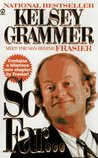
Audiobook Virgin No More

So Far...So Far... by Kelsey Grammer
Reviewed by Jason Koivu
My rating: 3 of 5 stars

Audiobooks have been a fantastic way for me to pass the time when stuck doing housework, yardwork and any other sort of long, dreary thing involving the word "work." They make it possible to muscle through a dry read and, because I'm able to get through so many more books than I otherwise would, audiobooks occasionally get me reading something outside of my comfort zone and I think that's a good thing.

The first audiobook I ever listened to was Kelsey Grammer's confessional So Far.... It was mom's and this was back in the mid '90s. It would be about 15 years before I picked up another audiobook, but that's on me, not this book's fault. Grammer's fans from his "Cheers" and "Fraiser" days who clamor for behind-the-scenes, personal details will find plenty. The man had drug problems. It wasn't pretty. But now you can read all about it!

In this, the Age of Rehab, So Far offers nothing new that hasn't been written a thousand times since. I gave it a good rating mainly because anyone willing to bare their faults to the world in such a revealing manner deserves a pat on the back, even if only out of pity.

View all my reviews

Saturday, December 20, 2014

Foxglove Summer. Read even if its winter.

Foxglove Summer
Ben Aaronovitch
2014 Gollancz

Reviewed by Carol
Recommended for fans of supernatural mysteries
 ★    ★    ★    ★    1/2


I haven’t yet been able to review a Peter Grant book immediately after finishing. I suppose I’m basking in book afterglow. Once again, Aaronovitch writes an engrossing, unpredictable urban fantasy, perhaps his best yet. A good story, a generous sprinkling of dark police humor, decent police procedural all combine for a read that fully occupied my Sunday afternoon. 
 
Chuckles as I started:

Sarcasm about family:
“I sighed–policing would be so much easier if people didn’t have concerned relatives. The murder rate would be much lower, for one thing.”

About procedure:
‘I’m fairly certain you’re violating our human rights here,’ she said.
‘No,’ I said with the absolute certainty of a man who’d taken a moment to look up the relevant legislation before leaving home.”


About official-speak:
“I made a mental note to wheedle the list of old codgers out of Nightengale and get it properly sorted into a database. Hugh’s ‘grapevine’ might be a useful source of information. If I’d been about four ranks higher up the heirarchy I’d have regarded it as an opportunity to realise additional intelligence assets through enhanced stakeholder engagement. But I’m just a constable so I didn’t.”

Okay, maybe that’s not that funny. I thought so, but then I’m the sort to read the corporate bulletins, marveling at the abuse of language and meaning.

What I really love about Aaronovich–srsly, now–is that he brings a much looked for but seldom found level of social commentary to his urban fantasy. Grant has dark skin, and is painfully obvious out in the posh suburbs. At one point, there’s a nice little aside when he notes the casual joking racism from an officer he’s just met. He considers his normal snide comment, half laughing, half calling it out but then decides to let it go with the assumption that the officer wouldn’t even recognize the rebuke. I’m always impressed the way Aaronovich weaves multiculturalism into his tales, in the most ideal of ways: acknowledging a different cultural experience, but not fetishizing it or diminutizing the truth of the experience. Grant understands the because he is a dark-skinned copper he will end up being ‘poster boy’ for the investigation. There’s a world of cynicism, weariness and acceptance in the role he plays for the suburban police. 

Grant has his own prejudices about the country, partly because he feels so out of his element, only going into the country when required on school trips.
The air was still fresh but the sun was already sucking up the moisture from the fields and you didn’t need to be chewing on a straw to know it was going to be another hot day.”

There’s also writing that is nicely balanced between description and action, occasionally even making a foray into lyricism:
The pack [of reporters] has swept back into the village less than ten minutes after they’d left, and come boiling up the cul-de-sac like the return of a tide, licking at my heels as I ran up the path and only stopping at the hedge line because it was held by a special constable called Sally Donnahyde who was a primary school teacher in her other job and so wasn’t going to take any lip from a bunch of journalists. The kitchen was at the back of the house, but I could still here them as a restless murmur, like surf on a pebble beach.”

Oh yes, I liked the mystery, one of the most coherent storylines yet. The supernatural take is interesting, even if it comes to a somewhat familiar ending, but I appreciate the modern twist. It did trouble me somewhat that this might be a plot point that comes back to bite Peter in the butt, which led to unpleasant echoes of Dresden. But again, that’s what fairy tales and mythology is about, putting the storyteller’s spin on a cultural archetype. 

Characterization is decent, with the majority of time spent on Peter. I don’t mind; he’s an interesting, thoughtful lead. I came to like his country partner. This time, Beverly Brook’s role seemed appropriate and a little more fleshed out, if still slightly incoherent (must she always speak in riddles? must we have weird watery dalliances?) 

In a rare moment for me, I would have liked a little more punctuation; at times it takes a minute to figure out the inflection (see above quote). But that’s a stylistic quibble.

The ending, perhaps, was almost the least satisfying part of the story. Oh, don’t worry; everything wraps up nicely with no nasty cliffhangers, except that giant multi-book arc that’s going on. No, it is that the ending seemed a little too cinematic, and meant to appeal to the current UF reader, instead of being more character consistent. But that’s me, and I’d be happy to discuss below with spoiler tags.
Still, Peter Grant remains one of the most consistently satisfying UF series out there, and I remain committed to reading whatever Aaronovitch releases.

Four and a half country stars


Friday, December 19, 2014

Black Girl in Paris


Shay Youngblood
Riverhead Trade
Reviewed by Nancy
3 out of 5 stars


Overview


Shay Youngblood's debut novel, Soul Kiss, received accolades from reviewers and writers alike. The Washington Post hailed it as "intelligent and erotic ... immensely engrossing and satisfying," while The Atlanta Journal-Constitution called it "exquisite." Tina McElroy Ansa described it as "extraordinary ... lyrical, intimate, funny, unsettling, enthralling." Now, in her second novel, Youngblood explores the endeavor of a creative coming-of-age, and infuses her story with the same mesmerizing, lush language and impressionistic style that won her so many fans the first time around.

Black Girl in Paris wends its way around the mythology of Paris as a city that has called out to African-American artists. Like James Baldwin, Langston Hughes, and Josephine Baker before her, Youngblood's heroine leaves her home, in the American South, nurturing a dream of finding artistic emancipation in the City of Light. She experiments freely, inhabiting different incarnations--artist's model, poet's helper, au pair, teacher, thief, and lover--to keep body and soul together, to stay afloat, heal the wounds of her broken heart, discover her sexual self, and, finally, to wrestle her dreams of becoming a writer into reality.

Youngblood's lyricism, as effortless as an inspired improvisation, and her respect for the tradition she depicts create a natural tension between old and new, reverence and innovation, and tell a story at once timeless and immediate.


My Review


I love Paris, its grandeur, its palaces, museums, monuments, breathtaking views, restaurants, cafes, its rich culture and history. It is a dynamic, international and happening place.

It’s been about 5 years since I’ve been there last, so I was really looking forward to taking a literary trip to Paris.

Eden, a 26-year-old Black woman from Alabama and an aspiring writer, journeys to Paris with just $200 in her pocket to follow in the footsteps of her literary heroes – James Baldwin, Richard Wright and Langston Hughes.

This could have been a fascinating story, but I found the descriptions of Paris vague, the main character too naïve for her age, and far too much of the story focused on her menial jobs. I wanted a little glimpse of the past, some insight into her heroes who were just names dropped on the pages. I also wanted to know more about France’s troubles – the racism, the struggles of the poor and working class, the problems of immigrants.

I wanted a more serious story and less whimsy. I could have done without the recipes and the silly musings about art and love. There were interesting secondary characters I would have liked to know more about – Eden’s androgynous boyfriend, Ving, and his friend Olu-Christophe, a Haitian living in Paris without papers, and Luce, Eden’s friend/lover who taught her how to take what she needed in order to survive.

The story was pleasant enough reading, but lacked passion and spirit, making my literary trip to Paris rather disappointing.

Wednesday, December 17, 2014

Mr. Shivers

Mr. ShiversMr. Shivers by Robert Jackson Bennett
My rating: 3 of 5 stars

When his daughter is killed senselessly by a disfigured drifter named Mr. Shivers, Marcus Connelly travels across the Despression-stricken country for vengeance in the company of several hobos, each with a reason for wanting Mr. Shivers dead...

This tale of death in the Dustbowl was an odd animal to pin down. The pursuit of a mysterious man in gray echoed the beginning of The Gunslinger. Much like the first volume in the epic Dark Tower series, Mr. Shivers is a novel of obsession and relentlessness. How far would you be willing to go to achieve your goals?

The writing reminds me of Joe Lansdale's more literary works like The Bottoms. The subject matter, however, has echoes of Steppenwolf, The Man Who Was Thursday, and Cormac McCarthy. When you track down great evil, you have to fight hard to avoid getting swept up by it. The metaphysical questions the book raises make this more than a Depression-era horror novel.

For a book that's less than 350 pages, it's fairly powerful. It might be overly ambitious for a first novel, though. The concepts were great and Mr. Shivers was suitably creepy but I didn't think Connelly or his hobo compatriots were very fleshed out. The book also seemed really linear and could have made more use of the hobo culture of the Great Depression.

At the end of the day, I'm not even really sure how I felt about it. I loved some of the ideas presented but the story itself was lacking. I guess we'll call it a three out of five.

View all my reviews