Wednesday, June 22, 2016

THE MONSTER OF FLORENCE BY DOUGLAS PRESTON

The Monster of FlorenceThe Monster of Florence by Douglas Preston
My rating: 4 of 5 stars

”This is the nature of the evil of the Monster of Florence. And this is the nature of the evil in each and every one of us. We all have a Monster within; the difference is in degree, not in kind.”

 photo Victims_zpsrzmkg8o0.jpg
The number of victims involving the Monster of Florence are staggering, those murdered and those accused.

We are all potential killers. Each and every one of us is capable of killing someone, usually that would be while protecting ourselves or protecting someone we love. Then there are those who live in a world of revenge fantasy. They are sensitive to every slight. They keep lists in their heads of every negative thing that has ever happened to them. They are a bomb building inside, and given the right circumstances, the fuse could be lit. They might kill their family or friends or coworkers and feel justified in doing so. They know who they kill. It is very personal.

Then there are what I think of as the soulless people, not in a religious sense, but people lacking a fundamental empathy for others. They are missing something critical that allows them to value life. They are empty and angry. They kill indiscriminately. They walk into night clubs, movie theaters, malls, schools, or churches and kill whoever happens to be there. They might say they have a cause or a specific hate, but fundamentally what it really comes down to is they hate us all.

The Monster of Florence killed 14 people, 7 couples, over the course of a decade...and he got away with it.

Douglas Preston decides to move to Florence, Italy, to write his next thriller. He has fond memories of living in Florence as a teenager and wishes to recapture some of the excitement and wonder he felt in 1969. Of course, as we get older we realize that gossamer wrapped memories are nearly impossible to recreate. Moments of true magic are fleeting and fickle and belong to the age that created them. So maybe Preston didn’t think he could recapture the Florence of his youth, but he certainly didn’t have a clue that he might be imprisoned.

It isn’t his fault.

What was he supposed to do.


 photo Spezi20Mario_zpsrqdowja3.jpg
Mario Spezi the Florentine reporter who spent decades hunting a Monster, and kept the pressure on the police much to his detriment.

He meets a reporter by the name of Mario Spezi, and he tells him a story. It is an intriguing story of murder, mayhem, Sardinian gangsters, sex, and illusive facts. These are the very things to make a writer’s nostrils quiver like a bloodhound catching the scent of a quarry. To add some more spice, the very olive grove in the backyard of the villa that Preston is renting was the scene of one of the most horrific double murders in Italian history. Most people would be alarmed to discover that such a terrifying event had happened in the place they have chosen to live, but for Preston it seems like his muse has given him a gift.

A living, breathing serial killer trumps a sketchy idea for a thriller.

The police files are full of false leads, bungled investigations, wild speculations, lost clues, and political pressure. Men are arrested and convicted of being the Monster of Florence only to have the true Monster kill again. If this were a novel, the reader would not be able to believe the level of incompetence shown by the Florentine detectives.

There is a desperation to catch the killer, not only because he is murdering necking couples, but also because he is screwing with the sex lives of the entire city. It has been speculated that 1 in 3 people in Florence was conceived in the backseat of a car in the Florentine Hills. As the murder tally grows, more fear is produced. The result is a frustrated city full of people in need of sexual release. The burner needs to be turned down on the boiling pot.

And what about the poor peeping toms or Indians as they are called? Those men who, almost on a professional basis, go out every night to creep around The Hills looking for a good vantage point to watch couples making out. Those perverts are also in need of release, one hand working furiously, as they live, at least for a moment, vicariously through the steamed windows of someone else’s passion.

It begs the question, with so many of these men out there every night, it is almost inconceivable that none of them ever saw anything suspicious. Of course, it is hard to explain to the police why a man is out in the Florentine Hills…ALONE, but then is a man ever alone when he has some spit and a firm hand?

As Mario Spezi and Douglas Preston sift through the evidence and become critical of the investigations initiated by the police, detectives start to focus on them. This is frankly baffling. ”As an American, an author and journalist, I had always enjoyed a smug feeling of invulnerability. What could they possibly do to me?” When two burly cops come to pick him up for questioning, his invincibility starts to feel like a house built on sand.

He became trapped in his own thriller.

I can certainly understand why Douglas Preston became so enthralled with this monstrous tale. He and Spezi even offer up their own ideas about who the killer was, and certainly convinced me that, in the end, the Florentine police abandoned a line of inquiry too soon that would have yielded the identity of one of the most notorious serial killers in world history.

Florence will never be the same for Douglas Preston.

 photo george-clooney_zpslhohrbfd.jpg
George Clooney

 photo Douglas20Preston_zpslpmzq53a.jpg
is Douglas Preston

The movie starring George Clooney (playing Douglas Preston) is due for release in 2016. I’m not sure at this point how loose an interpretation the movie will be of the book, but if you’re Preston you have to be thrilled that people will associate your name with Clooney’s face. Yes, George Clooney played me in a movie.

If you wish to see more of my most recent book and movie reviews, visit http://www.jeffreykeeten.com
I also have a Facebook blogger page at:https://www.facebook.com/JeffreyKeeten


View all my reviews

Monday, June 20, 2016

Up With Watership Down

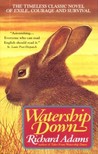
Watership DownWatership Down by Richard Adams
Reviewed by Jason Koivu
My rating: 5 of 5 stars

DAMN YOU, WATERSHIP DOWN, STOP MAKING ME CRY!!!

When I was in school, the teachers played the movie version (the one with Art Garfunkel songs, Zero Mostel as the bird, and a bevy of well-respected English actors providing voice-overs) of this epic drama of courageous rabbits and us kids just bawled. The sadness, she was too much!

It's been 30, maybe 35 years on since then and I figured, despite the tears, I have fond memories of the story, so why not finally read the book? Well I did and I cried at the end again, god damn it.

It's not an overly sad ending to be honest, however, I cried because author Richard Adams ends his book with the passing of life. The relatively long life of one of the rabbits depicted here is shown coming to an end and that shit gets me every time (ie Bilbo as he passes on to the Grey Havens...friggin' hell, I've got something in my eye). It makes me think of living out a long, beautiful life with my wife and then eventually having to say goodbye to her for the final time as we pass away. Dang it, it's getting to me again...

...just talk amongst yourselves. I'll give you a topic: Watership Down, which is the more important theme, the friendship bond or the struggle for survival? Discuss!

...

Okay, I'm back.

Another lovely thing about this epic novel is that it started out as an oral tale Adams told to his daughters on car trips. The best stories are organically homegrown. Plant the seed, water it, let it grow, nurture it and in the end you'll have...well, you'll have a plant, but you get what I mean.

In the intro it was revealed to me that apparently Watership Down is a real and locatable place out west of London, I think in the Hampshire area. So, now I've got another reason to go back to England, to track down the Down!

View all my reviews

Sunday, June 19, 2016

The Drive-In 3

The Drive-In 3: The Bus TourThe Drive-In 3: The Bus Tour by Joe R. Lansdale
My rating: 3 of 5 stars

Jack, Grace, and Steve leave the Drive-In behind for the open road in a bus. On their quest for answers, they encounter a catfish of enormous size and find things leading them to question the nature of their existence.

The third volume in the Drive-In series takes everything in a whole other direction. It keeps the lost world flavor of the second book but sends the gang on an odyssey to parts unknown. The first half is straight up Lansdale but the second half moves into Phillip Jose Farmer territory.

I didn't enjoy most of this book as much as the previous two, mostly because of the lengthy section inside Ed the giant catfish. Once they escaped the catfish, the book felt like a Twlight Zone episode written by Richard Matheson collaborating with the previously mentioned Phillip Jose Farmer. Either I read that Lansdale liked PJF in the past or just inferred it from some of his stranger writings.

The Lansdale flavor is in full effect here. I read a few lines out loud to my special lady, interrupting her Harry Potter read. Lansdale can wax philosophically with the best of them, in his trademark front porch style.

Anyway, the ending was fantastic, a stew of World of Tiers, Wizard of Oz, and The Dark Tower, in my opinion. While this is the final Drive-In volume, as far as I know, I'd eagerly read a fourth. 3.5 out of five stars.

View all my reviews

Friday, June 17, 2016

Fire in Boston's Cocoanut Grove


Paul Benzaquin
Branden Press Publishers
Reviewed by Nancy
5 out of 5 stars


Summary


A detailed account of the deadliest nightclub fire in history.


My Review


Reading Stephanie Schorow’s excellent, but short, The Cocoanut Grove Fire, made me hungry for more details, so I borrowed Paul Benzaquin’s history, which is far more comprehensive. It was first published in 1959, and while the language felt dated in places, it enabled me to feel closer to an event that occurred well before I was born and helped provide more insight into life in the 1940’s.

Paul Benzaquin began his career as a journalist for the Boston Globe in 1948 and later became known as a talk radio host.

His crisp, lean writing style worked well for imparting facts from that tragic day on November 28, 1942, while the tension and energetic pacing would have worked well for an action-packed thriller.


“First came a fast-moving puff of black smoke. A rosy dart of flame shot along the ceiling fabric for ten or twelve feet. It was instantly followed by a massive ball of flame – bright, noisy, and terrifying. It seemed to burn in the air, without need of fuel. Suddenly everyone in the room was in motion, desperately seeking escape.”


Schorow focused more on the history of the nightclub and its owners and government corruption, while Benzaquin covered life stories and details surrounding the aftermath of the fire, including significant medical advances made in the treatment of burns.

In the center of the book there are photos of Cocoanut Grove guests, some of whom were among the dead or injured, including Western star Charles “Buck” Jones. There are harrowing photos of servicemen, firemen and volunteers who helped evacuate victims, and pictures of the building after the fire. There is a photo of Clifford Johnson, who recovered from massive burns and made medical history, only to die in a fiery car crash in 1956.

At the end of the book is an acknowledgment section outlining the author’s sources of information and the individuals and groups who contributed toward his research. He spoke with reporters, photographers, fire and police departments, government officials, medical personnel, and survivors who shared their stories.

492 people died in this fire, making it the deadliest nightclub fire in history. Because of this tragedy, laws have been made and fire codes revised to ensure the safety of people in public buildings.

This is a detailed, informative, and gripping story of the events and people involved. Very highly recommended.


Thursday, June 16, 2016

Faith and Moonlight: Part 2

Faith and Moonlight: Part 2Faith and Moonlight: Part 2 by Mark Gelineau
My rating: 4 of 5 stars

Roan and Kay are students of the Faith School now. While they should be the happiest they've ever been, they are both disturbed by their dreams. Roan fears his past and Kay fears what she's becoming.

Faith and Moonlight: Part 2 is a case of the other shoe dropping. Not in a bad way, but in the sense that the school isn't the cheery place for talented students Roan and Kay believed it was. Like many fantasy schools, the Faith School is far more brutal than it appeared on the outside. Roan and Kay are fighting not just for their futures, but perhaps their lives as duels between students can become devastating and the possible future for those who don't make the tournament is dismal.

In the last book I was more interested in Roan as a character. His back story and devotion were significant. Roan doesn't show much growth in this story outside of learning more about the Faith School from Gideon and Dreah. Kay on the other hand had her deep well of fear and uncertainty turned into something quite intriguing. There are rumors that others have taken things to gain entrance in the Faith School and some say at least one person who did so became a monster because of it. Kay's worries are what makes this story work because it doesn't seem to simply be in her head like the last book.

Faith and Moonlight: Part 2 is a strong continuation in the unorthodox Echoes of the Ascended series.

3.5 out of 5 stars

I received this ARC from NetGalley in exchange for an honest review.

View all my reviews

Invincible Iron Man, Vol. 1: Reboot

Invincible Iron Man, Vol. 1: RebootInvincible Iron Man, Vol. 1: Reboot by Brian Michael Bendis
My rating: 5 of 5 stars

Tony Stark is concerned he hasn't been spending enough time in the lab. He's supposed to be the cutting edge for technology, but his Iron Man suit is behind the times. So Tony made a new, all in one suit.
description
Meanwhile Madame Masque is playing a dangerous game in Latveria that Tony is determined to stop. He receives help from the most unexpected of individuals.
description

Reboot was really good. Brian Michael Bendis's Tony Stark is more akin to the film version of Tony played by Robert Downey Jr. The brilliance, arrogance, humor, and occasional self loathing are fully on display and it just made the story a lot of fun.
description

Unbelievably Victor Von Doom, healed face and all after Secret Wars, has appeared to help Tony.
description
Doom isn't sporting a single recognizable part of his Dr. Doom outfit, but his power hasn't change at all.
description
For some unexplained reason Victor, who now looks like a simple businessman, wants to help Tony. He even goes through the effort to prove he's genuine.

Everything about Reboot was really fun. I hope to see Tony and Victor keep teaming up as the series continues.

View all my reviews

Wednesday, June 15, 2016

THE YELLOW WALLPAPER BY CHARLOTTE PERKINS GILMAN

The Yellow WallpaperThe Yellow Wallpaper by Charlotte Perkins Gilman
My rating: 5 of 5 stars

”If a physician of high standing, and one’s own husband, assures friends and relatives that there is really nothing the matter with one but temporary nervous depression---a slight hysterical tendency---what is one to do?”

Well, one must quit being a silly goose and get better.

The baby is fine; thank goodness, the baby is fine. It is safe, safe in another room. Away from the horrid yellow wallpaper. This wallpaper is an artistic monstrosity, an assault on the senses. It is so yellow it reeks of...yellow.

”It is the strangest yellow, that wall-paper! It makes me think of all the yellow things I ever saw---not beautiful ones like buttercups, but old foul, bad yellow things.”

 photo Yellow20Wallpaper_zpskkl3c7au.jpg

In such a room, too, a beautiful room with windows and light. John brought her here for a vacation away from the daily cares of their normal lives, to help her with her nervousness. She hasn’t been the same since the baby was born. She knows that, not that she was ever normal before, but something has shifted, an awareness of self that is tuned to a different frequency.

The wallpaper is hideous. It claws at her mind.

She should be happy, after all there is the baby. The girl is taking such good care of her baby. ”I cry at nothing, and cry most of the time. Of course I don’t when John is here, or anybody else, but when I am alone.”

It doesn’t happen if no one sees it or hears it.

In the middle of the night, lit by moonlight, the wallpaper moves. She touches it; she studies it. ”The faint figure behind seemed to shake the pattern, just as if she wanted to get out.”

She must write. They don’t want her to write, but those who write must write. It is not enough to write in the mind. The words must be taken from her mind to make room for more words. Words are precision, clarity, sanity.

John thinks it is best for her to rest in the room. The room has become the extent of her universe, and the wallpaper is more alive than she is. ”All those strangled heads and bulbous eyes and waddling fungus growths just shriek with derision!”

If she escapes the wallpaper, what then?

I kept thinking as I was reading this story that I hope Robert Louis Stevenson had the chance to read it, but probably not. This story was published in 1892. He bought a place in Samoa in 1890 and was cut off from most of the literary world until his death in 1894. It is certainly a story that would have appealed to his own obsession with the horrors of the mind. The building tension from a fairly typical domestic scene to the final horrors is so gothic and is still sending a cascade of shivers down my spine. Charlotte Perkins Gilman grew up under the tutelage of women who believed strongly in equality. Her father’s aunts, Isabella Beecher Hooker, a suffragist, Harriet Beecher Stowe, and Catharine Beecher, helped raise her after her father abandoned the family. Charlotte tried marriage. She even had a baby. Those attempts at being “normal” didn’t work out, but it did give us this wonderful autobiographical and, in my opinion, nearly perfect short story.

Charlotte grew up in an era where it was difficult for women to have any say in their fate. If they became too “hysterical,” they were locked up in an insane asylum. They were seen as delicate creatures, incapable of making rational decisions for themselves. I still believe that many women suffer from postpartum depression and still feel the need to hide their symptoms. After all, aren’t they supposed to be joyfully happy to be new mothers? There are too many women still trapped in the walls behind yellow wallpaper.

 photo Charlotte20Perkins20Gilman_zpsvimqurya.jpg

When Charlotte Perkins Gilman finds out she is dying of breast cancer in 1935, she takes control of her fate. In her suicide note she writes that she ”chose chloroform over cancer”. In the end, she escapes the yellow wallpaper on her own terms.

If you wish to see more of my most recent book and movie reviews, visit http://www.jeffreykeeten.com
I also have a Facebook blogger page at:https://www.facebook.com/JeffreyKeeten


View all my reviews
Tuesday, June 14, 2016

Living on the Volcano By: Michael Calvin

Living on the Volcano: The Secrets of Surviving as a Football ManagerLiving on the Volcano: The Secrets of Surviving as a Football Manager by Michael Calvin
My rating: 4 of 5 stars

I am not a real big sports person (suprise)..I come from an area that sports mostly consist of American football, baseball and basketball. So, always being the one who wanted to be out there, when I finally got into watching and being a fan of sports, I fell in love with hockey and recently soccer.

Why? mostly because of the passion and sheer borderline insanity fans have for their teams and clubs, Mr Calvin's book is a interesting well written book into a job that has to be maddening, nerve wracking, probably like a huge drug to those people who truly love the beautiful game.

I couldn't do this job, managing a football club on any level has to be one of the hardest jobs in all of professional sports, but I applaud those who love it enough to give everything they have to it.


View all my reviews

Monday, June 13, 2016

The Unknown Dumas

The Black Count: Glory, Revolution, Betrayal, and the Real Count of Monte CristoThe Black Count: Glory, Revolution, Betrayal, and the Real Count of Monte Cristo by Tom Reiss
Reviewed by Jason Koivu
My rating: 4 of 5 stars

Nothing can live up to the exciting, over-the-top adventures Alexandre Dumas concocted, except maybe the real life exploits of his father.

The subtitle "The Real Count of Monte Cristo" is speaking of the writer's father Thomas Alexandre Dumas, a mixed race soldier from the former French colonies in the Americas. He was the basis for the tragic, wronged, swashbuckling heroes of The Count of Monte Cristo, the Three Musketeers tales, and more.

Tom Reiss' biography tries to bring back the memory of an unfortunately forgotten hero of the French Revolutionary Republic. General Dumas rose up from a common soldier to lead thousands during France's Revolutionary Wars. Reiss portrays a man passionate about the cause and willing to risk his life in the most daring of ways for the ideal of equality for all.

The Black Count marches linearly ahead at an admirable pace, mixing the history of father and son (and even grandfather as it applies to his future generations), tantalizing and revealing at just the right moments. A high quality history text that, regardless of dwelling rightly upon human atrocities, can't help but entertain considering its adventuresome subject matter.

Reiss certainly seems biased towards his subject and even tries to put General Dumas on a pedestal...literally by the end there is discussion and lament over a statue of him. However, if you can forgive him his slant, I think you'll find this a highly enjoyable read!

View all my reviews

Sunday, June 12, 2016

The Drive-In 2: Not Just One of Them Sequels

The Drive-In 2: Not Just One of Them SequelsThe Drive-In 2: Not Just One of Them Sequels by Joe R. Lansdale
My rating: 3 of 5 stars

Jack, Bob, and Crier leave the Orbit Drive-In behind for the open road, encountering dinosaurs, slithering strips of film, and a martial artist named Grace. Will they find the end of the road before Popalong Cassidy finds them?

As you might be able to tell from the synopsis, the second Drive-In book is stranger than a fever dream. While in recovery from their crucifixion, Bob and Jack, with Crier, venture out into the wasteland the Earth became while they were trapped in The Orbit. A woman named Grace shows up and suddenly Jack decides they're heroes. As a man who has gone titty-blind (as Lansdale calls it) on occasion, it wasn't hard to relate to the guys in this one.

As with the last book, I read this book shortly after the dawn of time so I remembered very little about it. Much like the first book, it's a fun book full of gore, cursing, cannibals, and funny dialogue. The Lansdale wit, while still in its adolescence, was present in droves.

It's a pretty slim tale but a lot of interesting and often times hilarious shit happens. I liked it a little less than the previous one, though. It didn't feel like a retread in any way, unlike most sequels. Popalong Cassidy had big shoes to fill after the Popcorn King and left the shoes empty enough to leave blisters. Still, the aftermath was quite bizarre and I'll be taking my third trip to the Drive-In shortly. 3.5 out of 5 stars.

View all my reviews